Long-distance motorcycle touring is about freedom, rhythm, and endurance. Hours on the highway, changing weather, unfamiliar roads, and constant wind noise all test your gear — especially the communication system for touring. A touring motorcycle intercom is not the same as a short-ride or commuter intercom. On a multi-day trip, small weaknesses become big problems: […]

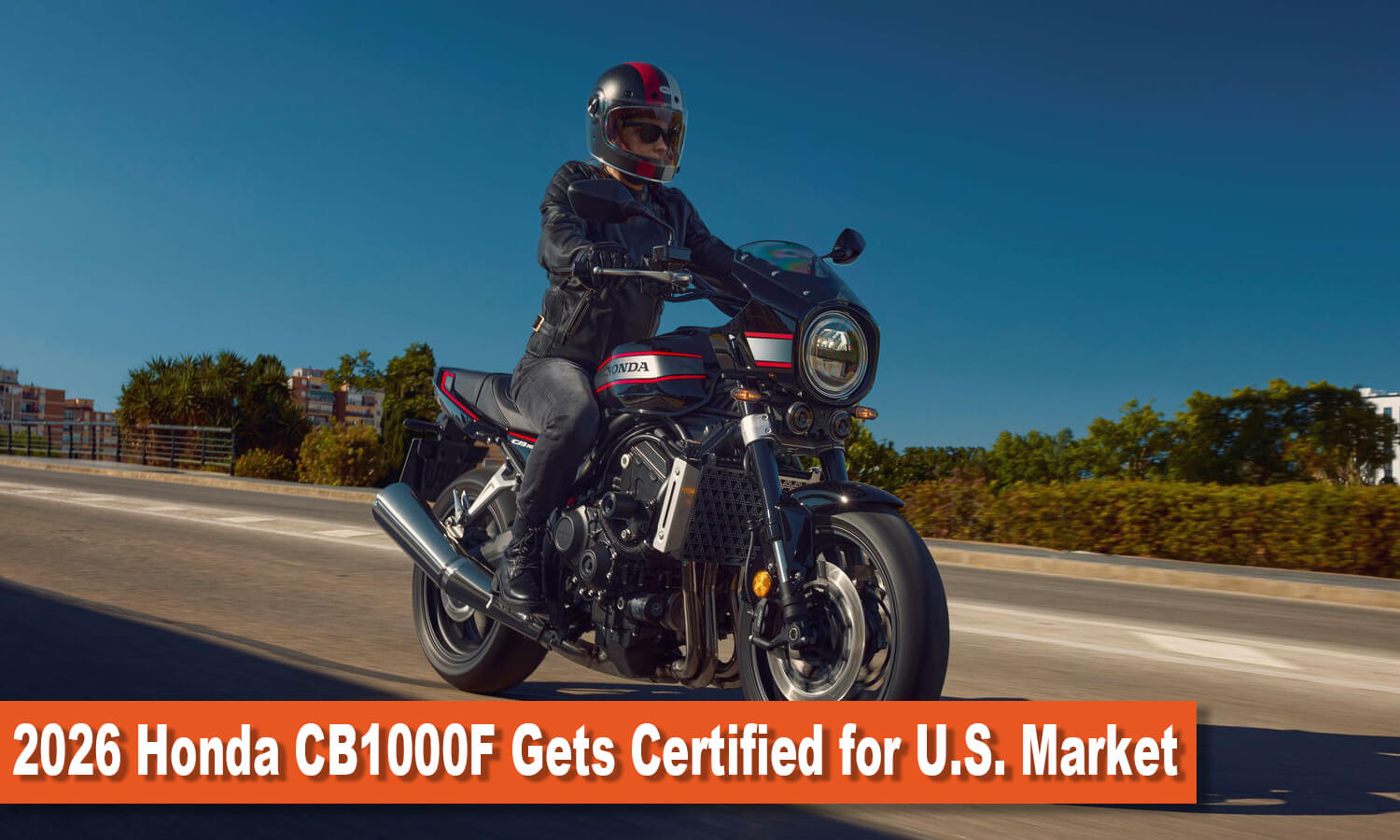
2026 Honda CB1000F Gets Certified for U.S. Market
The 2026 Honda CB1000F has officially cleared a major hurdle for American riders. Certification documents filed with U.S. regulatory agencies confirm that Honda’s retro-inspired liter-class naked bike is now approved for sale in the United States.
For enthusiasts who have been following the CB1000F’s debut in Japan and Europe, this development answers the biggest remaining question: Is it coming to the U.S.? Based on regulatory approval, the answer now appears to be yes.
Table of Contents
What U.S. Certification Means for the 2026 Honda CB1000F
Before a motorcycle can be offered for sale in the United States, it must comply with a comprehensive set of federal emissions and safety regulations.
This includes certification under Environmental Protection Agency (EPA) standards, which govern exhaust and evaporative emissions, as well as compliance with California Air Resources Board (CARB) requirements for any model intended to be sold in California and other CARB-aligned states.
These standards ensure that the motorcycle meets strict environmental benchmarks designed to reduce pollutants and improve air quality.
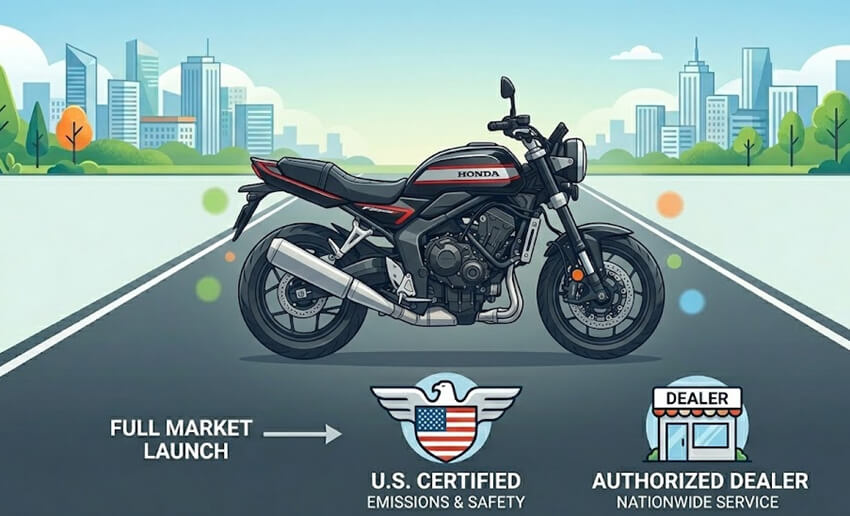
The Honda CB1000F has passed US certification
In addition to emissions compliance, the model must also satisfy Department of Transportation (DOT) safety regulations.
These rules cover critical components such as lighting systems, braking performance, mirrors, tires, reflectors, and overall roadworthiness.
Certification confirms that the motorcycle adheres to federally mandated safety specifications, allowing it to be legally registered and operated on public roads across the country.
In the case of the 2026 Honda CB1000F, the certification filings suggest Honda intends to distribute the motorcycle through official U.S. dealer networks rather than via limited or gray-market channels.
This typically indicates a full-scale market launch strategy, including factory-backed warranties, parts support, and nationwide service availability. For prospective buyers, such certification not only signals regulatory compliance but also reflects the manufacturer’s commitment to long-term support and integration into the U.S. market.
A Revival of the “F” Nameplate
The CB1000F designation marks a revival of Honda’s historic “F” naming convention, previously associated with performance-oriented standard motorcycles such as the Honda CB750F.
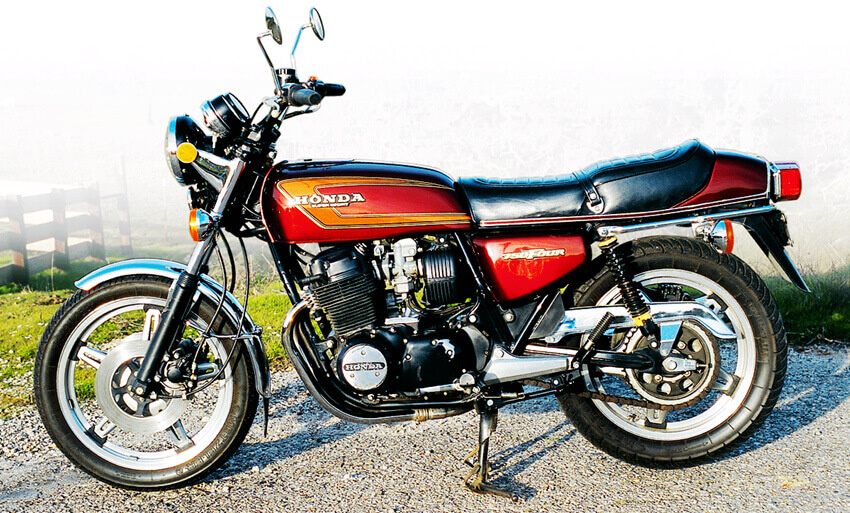
Honda CB750F
During the late 1970s and early 1980s, the “F” badge was used to distinguish sport-focused variants within Honda’s broader CB lineup, signaling sharper handling, more aggressive styling, and an emphasis on rider engagement compared to their more touring-oriented counterparts. The letter became shorthand for factory-backed performance within the universal Japanese motorcycle segment of that era.
By reintroducing the CB1000F name, Honda draws a deliberate connection between its heritage models and a new-generation platform.
The move reflects a broader industry trend in which manufacturers revive historically significant badges to reinforce brand continuity while appealing to both long-time enthusiasts and newer riders seeking authenticity.
The modern CB1000F adopts classic proportions that echo its predecessors, including a round LED headlamp, a sculpted fuel tank with pronounced knee cutouts, and a flat, horizontal seat profile.
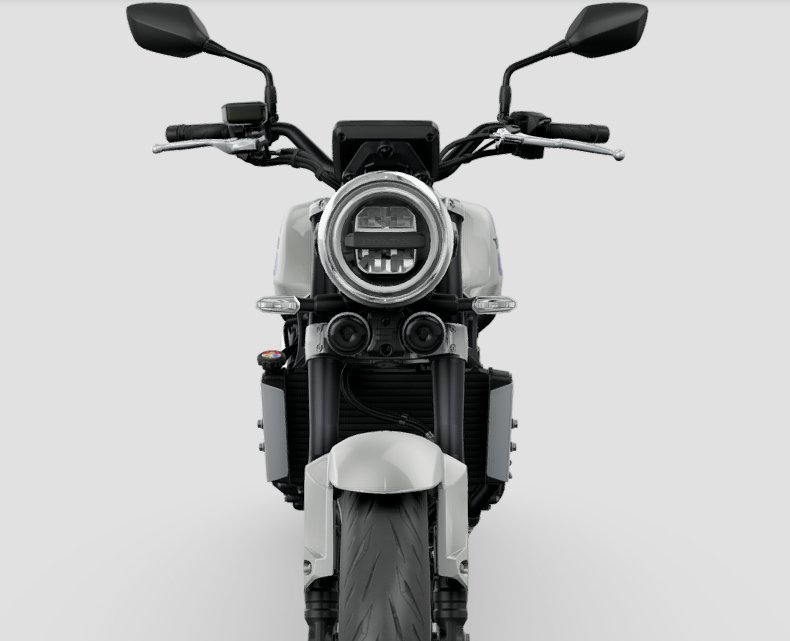
large circular LED headlamp on Honda CB1000F
At the same time, these retro design cues are paired with contemporary mechanical and electronic systems—such as advanced fuel injection, ride-by-wire throttle control, and modern chassis geometry—ensuring the motorcycle meets current performance and safety expectations.
The result is a model positioned squarely within the growing global demand for retro-styled motorcycles that blend nostalgic aesthetics with present-day engineering precision and everyday usability.
2026 Honda CB1000F Specifications
How the 2026 Honda CB1000F Compares to U.S. Competitors
In the U.S. retro performance segment, the 2026 Honda CB1000F will compete with popular models such as the Yamaha XSR900, Kawasaki Z900RS, and Suzuki GSX-S1000.
While each bike has its own strengths, the CB1000F stands out thanks to its smooth inline-four engine, balanced ergonomics, and Honda’s renowned reliability.
Estimated pricing in the U.S. places the CB1000F competitively in the liter-class retro segment.
If U.S. specifications follow the global model, riders can also expect advanced electronics like ride-by-wire throttle, traction and wheelie control, and a full-color TFT display.
2026 Honda CB1000F USA Price and Release Date
1. 2026 Honda CB1000F USA Price
Honda has not disclosed U.S. pricing for the 2026 CB1000F.
However, comparable retro-oriented motorcycles in the American market typically retail between $10,000 and $13,000, depending on specification and brand placement.
Final pricing will likely reflect the model’s equipment level and strategic role within Honda’s broader naked-bike lineup.
2. 2026 Honda CB1000F USA Release Date
No official U.S. release schedule has been confirmed.
Historically, Honda announces new street models several months prior to their arrival in dealerships.
With certification now complete, additional details may emerge in an upcoming model-year announcement cycle.
What This Means for the U.S. Market
The U.S. certification filing for the 2026 Honda CB1000F suggests Honda is preparing to strengthen its presence in the American retro-performance segment.
With growing demand for liter-class retro motorcycles in the United States, the Honda CB1000F USA launch could expand the brand’s lineup beyond previous offerings.
2026 Honda CB1000F U.S. Market FAQ
1. Has the 2026 Honda CB1000F been approved for sale in the United States?
Yes. Regulatory certification filings indicate that the 2026 Honda CB1000F has completed the necessary compliance process for U.S. road use. However, Honda has not yet issued a formal press release confirming pricing or dealership arrival dates.
2. When will the 2026 Honda CB1000F be available in U.S. dealerships?
Honda has not announced an official launch timeline. Historically, new street models are introduced several months before dealer arrival, suggesting additional details may be released in an upcoming model-year announcement cycle.
3. What engine does the 2026 Honda CB1000F use?
The CB1000F is powered by a 999cc liquid-cooled inline-four engine paired with a six-speed transmission and assist-and-slipper clutch. Output figures for the U.S. version have not been formally confirmed.
4. Is the CB1000F replacing the CB1000R in the United States?
Honda has not stated whether the CB1000F will directly replace the CB1000R. The certification suggests an expansion or repositioning within Honda’s liter-class naked lineup rather than a confirmed discontinuation of existing models.
5. How much is the 2026 Honda CB1000F expected to cost in the U.S.?
Official U.S. pricing has not been released. Comparable retro-oriented liter-class motorcycles currently retail between $10,000 and $13,000 in the American market, placing the CB1000F within a similar projected range.
6. Will the U.S. model include advanced rider aids?
International versions of the CB1000F are equipped with IMU-based electronics, traction control, selectable ride modes, and cornering ABS. Confirmation of identical specifications for the U.S. model is pending official release details.
Final Thoughts
The certification filing suggests Honda is preparing to strengthen its presence in the retro performance category at a time when demand for modern-classic motorcycles remains steady in the U.S. market. Further details are expected once the company issues a formal announcement.

With over 10 years of experience working on cars and trucks Item Training Supervisor Richard Reina is known around the office as one of our technical experts & real an "automobile person".
His rate of interest began, in his very own words, "at the age of two when his father educated him the distinction in between a Chevy and a Ford. Since then it's been cars regularly."
As a serious lover of practically all things with a motor Richard can address nearly any kind of inquiry related to car upkeep, fixing, or restoration & is a fact professional in electric motor background.
Subscribe
0 Comments
Oldest
You maybe like to read:
Adventure motorcycles, often called ADV bikes, are built to take you from smooth highways to rough backcountry trails. For new riders, picking the best adventure bikes for beginners can make all the difference. The right machine turns highways, gravel roads, forest tracks, and remote trails into places you actually want to explore, while the wrong […]
Riding in a group is thrilling, but without clear communication, even the best rides can turn chaotic. That’s where motorcycle intercom systems come in, letting you talk with your group, share GPS directions, listen to music together, and stay safer on the road. Whether you’re riding with a single friend or leading a pack of […]
I’ve used premium intercoms and budget ones on the same roads, in the same weather, on long touring days. The truth? Most riders don’t need a $400 system. Most riders still need the same basics: clear rider-to-rider talk, stable Bluetooth, and batteries that last a full day on the road. In 2026, budget motorcycle intercoms […]
What is the best motorcycle intercom for beginners? If you’re a new rider, the idea of adding another piece of tech to your helmet can feel overwhelming. I’ve been using motorcycle intercoms for years—on solo rides, long tours, group trips, and daily commutes—and I’ll tell you this upfront: A beginner motorcycle rider doesn’t need the […]
Mesh Intercom vs Bluetooth: Which Motorcycle Communication System Is Better? Mesh intercoms are best for riders who travel in groups because they automatically reconnect and stay stable, while Bluetooth intercoms are better for solo riders and two-up riding due to lower cost and simpler operation. As someone who both wrenches on bikes and rides long […]