The motorcycle communication systems field just got a significant upgrade with the release of the Fodsports FX7. This state-of-the-art Bluetooth mesh intercom is packed with many advanced features and techs. It will revolutionize the way riders communicate and enjoy their rides. Whether you're a solo rider or part of a group, the FX7 offers unparalleled […]

How Much Snow do You Need to Snowmobile? Safest Guide 2023
February 27, 2023

Understanding just how much snow you need to snowmobile is extremely vital.
Not only do you want to ensure you don't risk injury on your own, yet you do not want to damage the snowmobile either.
Below are some useful suggestions to see to it you await snowmobiling this period.
Table of Contents
How Much Snow do You Need to Snowmobile?
You require around 6 inches of snow to snowmobile.
There are some lighter snow sleds you can use on less than 6 inches, however, the larger designs normally need 6 inches at a minimum.
Many people will snowmobile in a lot more snow than this, however, it is essential to have a starting factor and a standard.
Numerous elements can impact the amount of snow you need, as well.
As an example, if the snow is actually soft and powdery, it is most likely to be much better to have a larger buildup.
With small and also tough snow, it will certainly be difficult for the snow sled to sink down, and also therefore you can probably get away with four to six inches of snow.
Riding a snow sled can be harmful whether you are riding when there is a great deal of snow or when there is not nearly enough snow.
How to Ride a Snowmobile Ultimate Guide
Why Snowpack important
Having sufficient snow on the ground is important when you ride a snowmobile for a few reasons. Certainly, it's a necessary facet of the sporting activity. It's not called 'mobilizing,' is it?
Snow covers the ground and develops a fairly smooth and a level surface for you to ride on.
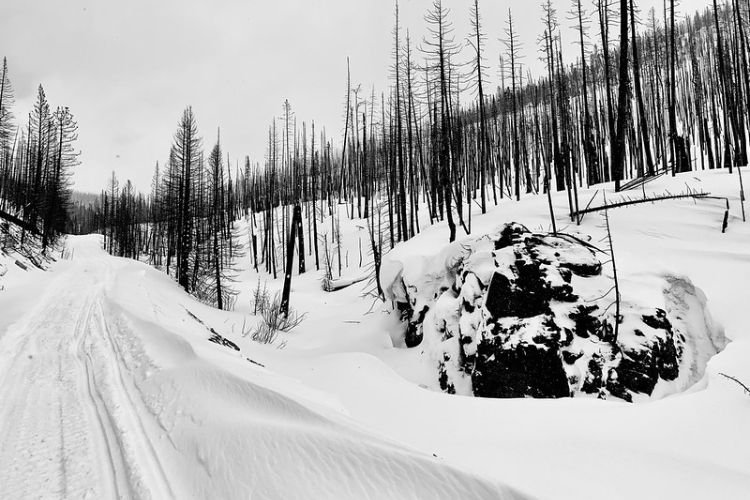
Think of just how the routes look when there is no snow. Tree stumps, rocks, branches, and all sorts of various other barriers exist.
You require sufficient snow on the ground to cover these challenges, so you do not run into them or ravage your maker.
Despite 6 inches of snow, you will experience even more challenges than when there is a few feet or more of a base.
Snow additionally assists to keep your sled from overheating.
A few of you may have fan-cooled engines, and this does not apply. The huge bulk of snow sleds currently on the routes depends on snow and ice to successfully cool down the engine.
If you ride when there isn't a lot of snow on the ground, that could be since it is warmer outside.
This mix of conditions can cause getting too hot, holding you up on the path, and even triggering long-term damage to an engine.
Additional knowledge

Sorts of Damages If You ride in Low Snow Conditions
If there isn't enough snow for your snowmobile, you can harm it in lots of methods. The most typical types of damage triggered by minimal-snow problems are as complies with:
Getting too hot
Even if you do not have to stress over your snowmobile's steel ski bars or track corroding from riding in too little snow, that does not suggest you run out of the woods.
Overheating is one more issue that can affect your sled.
A coolant system is among the extra popular approaches to cooling down sleds. You pour the liquid coolant in, and the closed-circuit allows the fluid to distribute to make sure that the engine does not get too hot and close down.
Snow, which your snow sled will naturally gather within the track, will keep the warmth exchangers in the snowmobile cool.
Without the snow, the coolant might not have the ability to keep your engine at a temperature low enough to avoid getting too hot.
Your sled can currently involve a full drop in the center of a residential road or any other asphalt surface you're riding on at any time.
You'll be stranded and also will certainly need to pay to have your snowmobile pulled to a regional repairman. This can be both costly and bothersome.
More Information
Track, Sliders, and Idler Wheel Damage
Improper lubrication is just among the numerous sorts of damages that shallow-snow conditions can cause.
If the track strikes a stump or a rock it might end in ripped lugs, particularly on the tracks with longer lugs. In the most awful situation, not just the lugs however the track itself can tear!
An additional problem is that if you ride your sled without the very little snow conditions, the track can pick up dirt, gravel, sand, and who understands what else from the ground.
These can harm not just the track, yet the sliders, and idler wheels as well. Dealers say that they can distinguish one appearance which sleds kept up adequate snow and which do not!
Damaging the Skis
Don't forget about the skis either. If there is enough snow but you need to ride on gravel, dirt, or asphalt for any kind of factor, this can greatly damage the skis and also the carbides.
Riding on these surface areas will certainly break your carbides in a very brief distance. (And they are not inexpensive!).
Lastly, don't fail to remember that beyond the sled, you can harm the ground as well.
Quick Answer
- How much ice do you need to snowmobile on a lake?
5 inches
Snow sleds require 5 inches of clear solid ice. Talk to a relied-on neighborhood resource (like a bait shop) and also check the ice yourself when you arrive.
- Do snow sleds require snow to cool down?
Fluid-cooled snowmobiles need snow to cool them, this can additionally be a problem on hardpack routes.
Finally, I hope you can leave a comment to share your opinion.

Motorcycle mechanic, writer. Interested in motorcycle gear for years. Like to stay up to date with the newest products and techniques of the motorcycle.
You maybe like to read:
Fodsports Brand Month: Unbeatable Deals and Top-Notch Service
Discover Fodsports Brand Month July and August mark a special occasion for motorcycle enthusiasts and tech lovers alike. Welcome to Fodsports Brand Month! This event is dedicated to celebrating everything that makes Fodsports a leading name in the motorcycle communication industry. Get ready for a fantastic promotions, exceptional service from Fodsports. Let's insights into Fodsports' […]
North Coast 500 Motorcycle Guide: Exploring Scotland in Autumn
Autumn transforms Scotland’s North Coast 500 into a memorable destination for motorcycle touring. Golden Highland forests, winding coastal roads, rugged mountains, and quiet fishing villages create a striking backdrop for an autumn ride. A North Coast 500 motorcycle trip, however, requires more than a scenic route. Rain, strong winds, wet leaves, and shorter daylight hours […]
Transalpina in Autumn: Romania’s Ultimate Motorcycle Riding Guide
Autumn brings a different atmosphere to Transalpina, Romania’s spectacular high-mountain road. Golden forests cover the lower slopes, open alpine ridges reveal sweeping Carpathian views, and winding asphalt makes this route a memorable destination for motorcycle touring. But an autumn ride requires more than choosing a scenic road. Temperatures can drop quickly at altitude, mountain weather […]
Motorcycle Camera Buying Guide: How to Choose the Right Camera for Your Ride
Every motorcycle ride has a story worth capturing: a winding mountain road, a weekend adventure with friends, or an unexpected moment in traffic. But choosing the right motorcycle camera is not simply about buying the model with the highest resolution. Shaky footage, poor audio, short battery life, and unreliable mounting can turn an exciting ride […]
Transfăgărășan in Autumn: Romania’s Ultimate Motorcycle Riding Guide
Autumn transforms Romania’s Transfăgărășan Highway into a dramatic mountain journey, with golden forests, rugged peaks, winding asphalt, and sweeping views across the Făgăraș Mountains. For motorcycle riders, it offers a memorable combination of technical corners, spectacular scenery, and opportunities to explore the Romanian countryside. But an autumn ride requires more planning than a summer trip. […]