The motorcycle communication systems field just got a significant upgrade with the release of the Fodsports FX7. This state-of-the-art Bluetooth mesh intercom is packed with many advanced features and techs. It will revolutionize the way riders communicate and enjoy their rides. Whether you're a solo rider or part of a group, the FX7 offers unparalleled […]

Top 10 Best Sounding Motorcycles that You Can Buy 2026
February 26, 2026
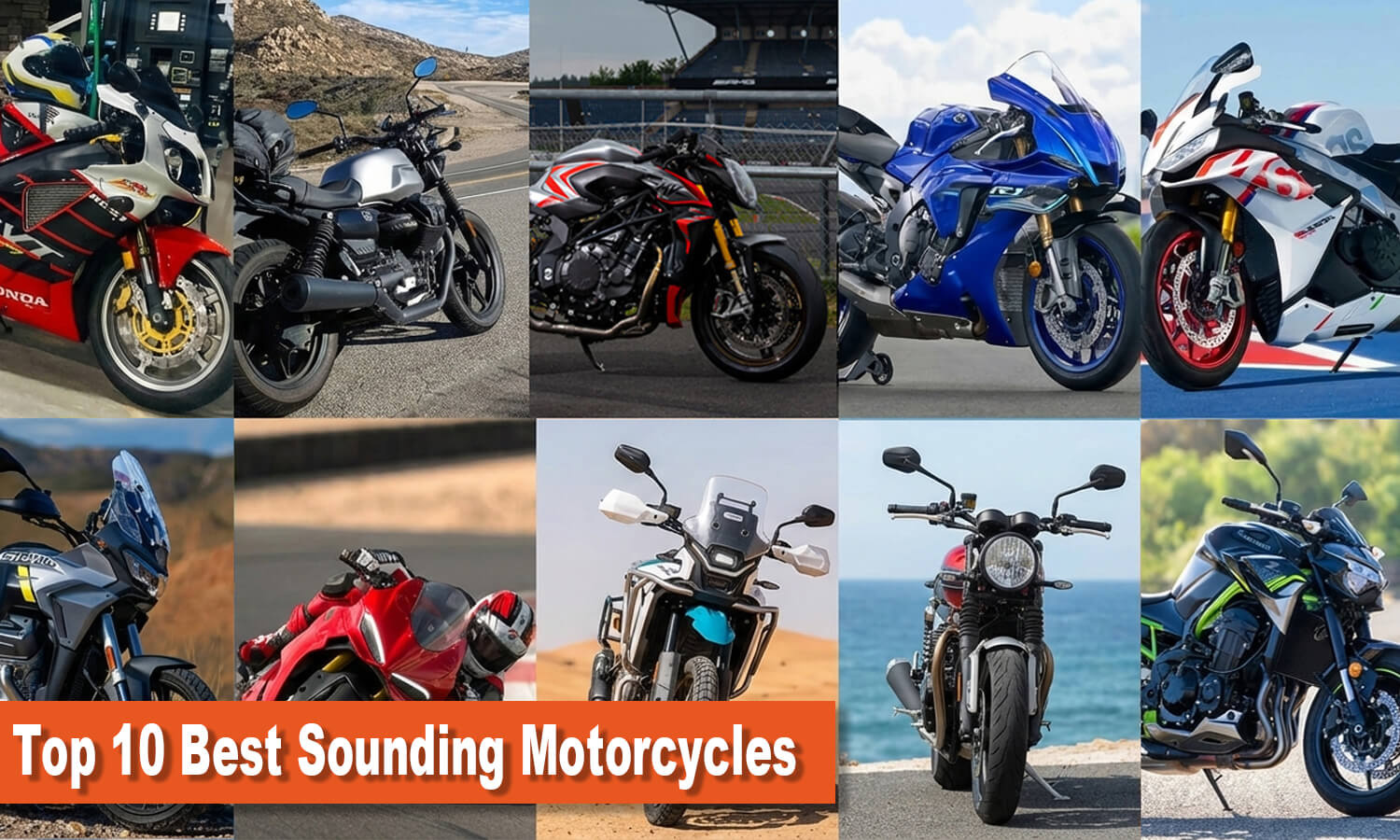
A motorcycle isn’t just about speed or looks — its sound is part of the thrill. From the deep rumble of a V-twin to the sharp scream of an inline-four, the right engine note can give a bike personality and presence. Engine layout and exhaust design shape this voice, and some machines simply stand out. In this guide, we’ll explore the best sounding motorcycles, highlighting ten bikes that turn every ride into a symphony of raw, exciting sound.
Table of Contents
Top 10 Best Sounding Motorcycles
These bikes are not ranked by performance, but by character and sound personality. Every rider hears things differently — this list reflects a passion for machines that speak with personality.
1. Aprilia RSV4
If you’ve never stood next to an RSV4 when it fires up, you’re missing half the experience. That 65° V4 isn’t just about numbers — yeah, it makes around 214 horsepower from 1099 cc — but the real magic is in the way it sounds and feels.
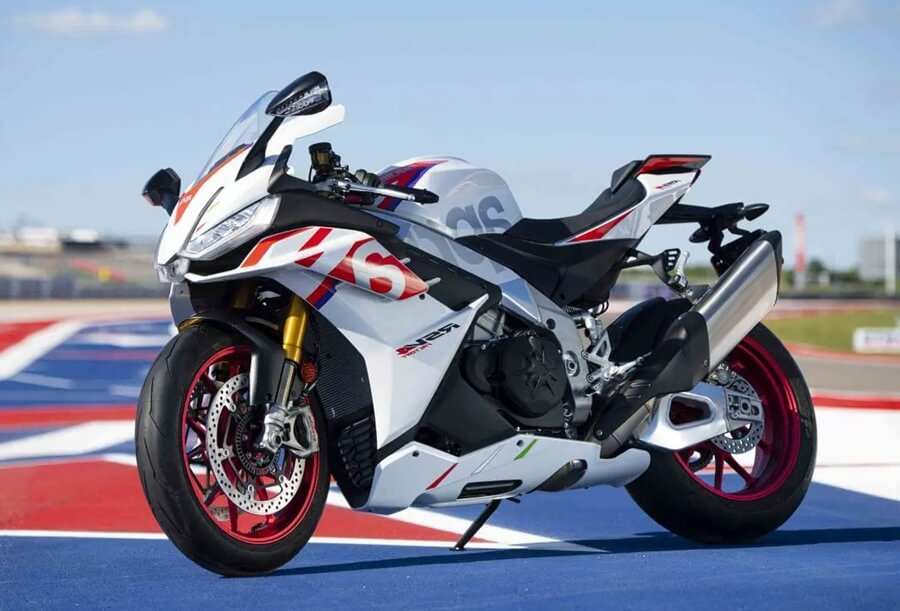
aprilia rsv4
At idle, it’s tight and controlled. Not wild. Not messy. Just a low, tense pulse that tells you it’s holding something back. Then you ease into the throttle.
Mid-throttle is where it really starts talking to you. The sound thickens. It’s not a flat inline-four scream. It’s deeper than that. There’s a layered tone to it — a muscular growl underneath and a smooth, almost silky note riding on top. It feels alive. Like the engine is breathing with intent.
Crack the throttle harder and the twin-outlet exhaust wakes up properly. The resonance fills out. You get that sharp V4 pulse — quick, tight firing intervals — but with a richness that most four-cylinders just don’t have. It doesn’t just get louder. It gets angrier. More urgent. But still refined.
That’s the beauty of the RSV4. It can sound controlled and precise one second, then raw and race-bred the next. On track, when you’re driving out of a corner and it climbs through the revs, the note turns into this fierce, metallic roar that makes the hairs on your arms stand up.
It’s not just noise. It’s character.
And when you roll off the throttle? That slight crackle, that mechanical tension still humming underneath — it reminds you this isn’t some ordinary superbike. It’s a V4 built with attitude.
That’s why riders don’t just talk about how fast the RSV4 is. They talk about how it sounds. Because once you’ve heard it in person, you don’t really forget it.
Technical Snapshot
- Engine: 1099cc 65° V4
- Power: 214 hp
- Redline: 13,600 rpm
- Crankshaft: Counter-rotating
- Layout: Compact race-derived V4
2. MV Agusta Brutale 1000
The Brutale 1000 isn’t the kind of bike that clears its throat quietly. The moment you hit the starter, you can already tell it’s not here to be polite. That 998cc inline-four feels tight and mechanical at idle, almost restrained — like it’s waiting for you to give it permission.
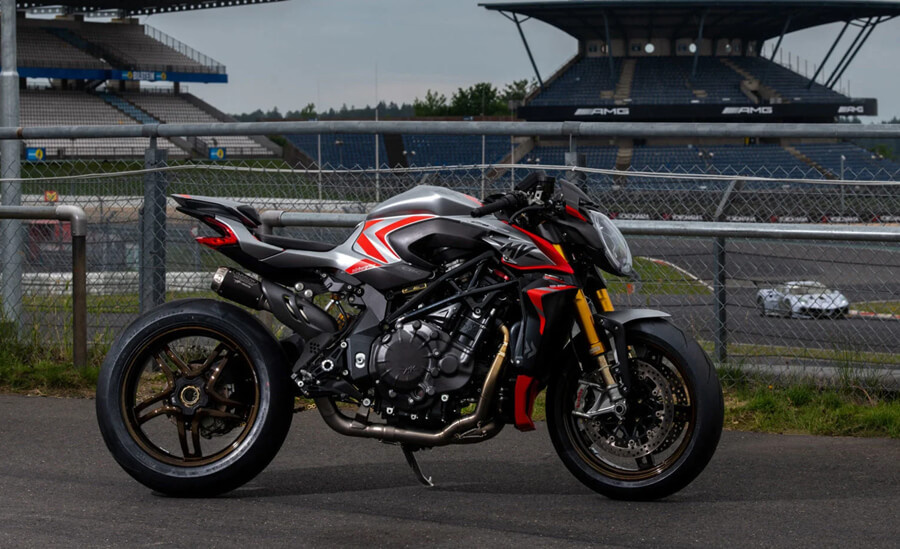
mv agusta brutale 1000
At lower revs, it’s sharp but controlled. Clean. Precise. Then you start climbing past midrange, and the whole character changes. The Arrow four-outlet exhaust starts to sing — and I mean really sing. It’s not a deep rumble like a big V-twin. It’s higher-pitched, more aggressive, almost surgical in the way it cuts through the air.
As the revs build toward that 13,000+ rpm redline, the sound turns into a full-on Italian scream. Metallic. Urgent. A little wild. It doesn’t just get louder — it tightens up and sharpens, like the engine is winding itself to the limit. And because this thing pushes around 208 horsepower, it revs fast and hard. The note climbs quickly, and when it does, it feels electric.
What I love about it is the contrast. Compared to something like a big Guzzi twin, the Brutale doesn’t rumble — it snarls. It howls. It almost sounds angry when you open it up. There’s this razor-edge tone in the top end that gives it that unmistakable “Italian superbike DNA.”
And when you roll off? You get that crisp deceleration bark. Not messy. Not sloppy. Just tight and purposeful.
It’s not a friendly soundtrack. It’s intense. Dramatic. The kind of sound that makes people turn their heads before they even see the bike.
That’s the Brutale 1000. It doesn’t whisper. It announces itself.
Technical Snapshot
- Engine: 998cc inline-four
- Power: ~208 hp
- Redline: 13,000+ rpm
- Exhaust: Quad-outlet Arrow system
3. Yamaha CP4 (MT-10 / YZF-R1)
If you’ve never heard a CP4 in person, let me explain it the way I would in the paddock.
It’s not your typical inline-four sound. It doesn’t have that smooth, sewing-machine whine. The CP4 — especially in bikes like the MT-10 or the R1 — feels alive in a different way. The crossplane crank changes everything.
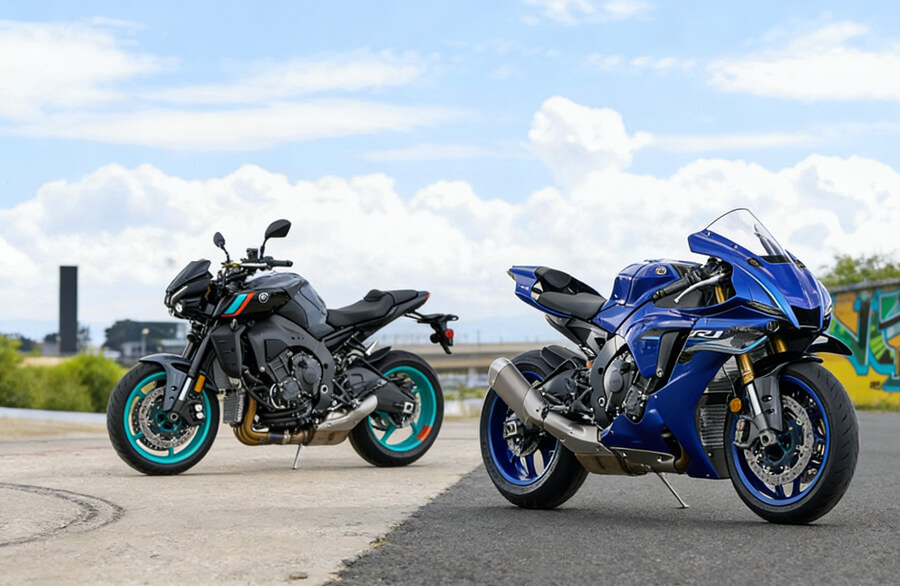
Yamaha CP4 engine models
Fire it up, and the first thing you notice is that uneven pulse. It has this off-beat rhythm, almost like a V4 hiding inside an inline-four body. At idle, it already has a little attitude. Blip the throttle and you get this deep, bass-heavy bark that feels raw and mechanical.
Now here’s where Yamaha got clever. On the MT-10, they didn’t just tune the exhaust — they tuned what you hear. The intake ducts and those acoustic grilles channel the induction noise straight toward the rider. So when you roll on the throttle, you don’t just hear the exhaust behind you — you hear this deep intake roar rising up in front of you.
At lower RPM, it growls. Thick. Guttural. Almost muscular. It doesn’t sound refined — it sounds intentional. Then you climb past midrange, and the whole thing tightens up. The growl turns into a sharper, more urgent howl. Push it toward redline, and it starts to scream like a proper superbike — but it never loses that crossplane character underneath.
That’s what makes the CP4 special. It gives you two personalities in one engine. A rumbling, bassy bottom end that feels like it’s punching out of corners — and a snarling, race-bred top end that just begs to be revved.
And with around 165 horsepower in the MT-10, it has enough muscle to make that soundtrack feel real, not just dramatic.
It’s not the prettiest sound. It’s not the smoothest. But it’s one of the most visceral. The kind of engine that makes you roll the throttle just to hear it again.
Technical Snapshot
- Engine: 998cc crossplane inline-four (CP4)
- Power: ~165 hp (MT-10) / ~200 hp (R1)
- Crankshaft: 90° crossplane
- Redline: ~14,000 rpm
4. Honda VTR1000 SP-2 (RC51)
The Honda VTR1000 SP-2 (RC51) wasn’t built to be polite. It was built to go after Ducati on the world stage. And the moment you fire up that 999cc 90-degree V-twin, you can feel that purpose.
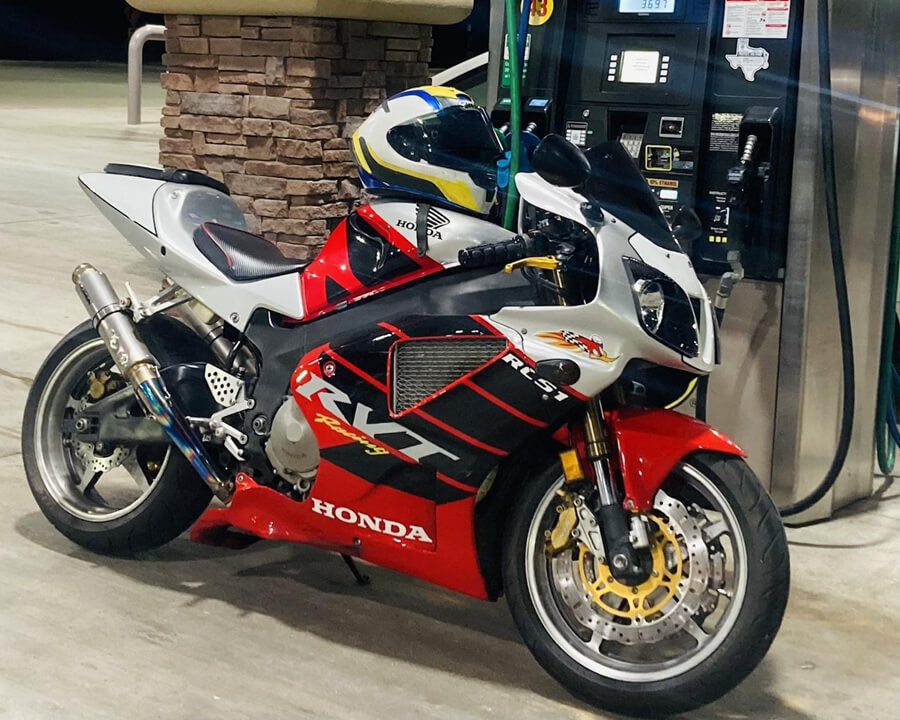
honda vtr1000 sp-2
At idle, it doesn’t explode into noise. It settles into this deep, steady pulse. There’s a heavy thump in the background, like a slow heartbeat with weight behind it. But then you notice something else — that mechanical whirr from the gear-driven cams. It’s subtle, but once you hear it, you can’t un-hear it. It gives the bike this layered personality: part muscle, part precision machine.
Blip the throttle and the whole thing tightens up. The low-frequency rumble becomes sharper, more focused. It doesn’t bark wildly like some Ducati twins. It’s more controlled than that. More disciplined. But it still carries that deep, chesty resonance that only a big V-twin can deliver.
Now roll it open under load. That’s when the SP-2 really shows itself. The exhaust note thickens and grows into a strong, rolling roar as it climbs toward redline. It’s not shrill. It’s not frantic. It feels planted and powerful, like the engine is pushing a solid wall of torque forward with every pulse.
Compared to some Italian twins, it might sound slightly less dramatic, less snarling. But what it has is substance. A bold, confident thump that feels mechanical and honest. You don’t just hear it — you feel it through the bars and the pegs.
It’s the kind of sound that reminds you this was a homologation race bike. Raw, purposeful, and built to compete.
The SP-2 doesn’t scream for attention. It stands there, idling with that deep twin rhythm, almost daring you to twist the throttle again.
Technical Snapshot
- Engine: 999cc 90° V-twin
- Power: ~133 hp
- Valvetrain: Gear-driven cams
- Redline: ~10,000 rpm
5. Ducati V2 (L-twin models)
When we talk about Ducati L-twins, we’re not just talking about engines. We’re talking about a sound that almost defines the brand.
Fire up a Panigale V2 or the new Monster V2 and you immediately know what it is. That 90-degree L-twin doesn’t hum — it pulses. There’s this tight, mechanical rhythm at idle, almost like the engine is breathing through its teeth.
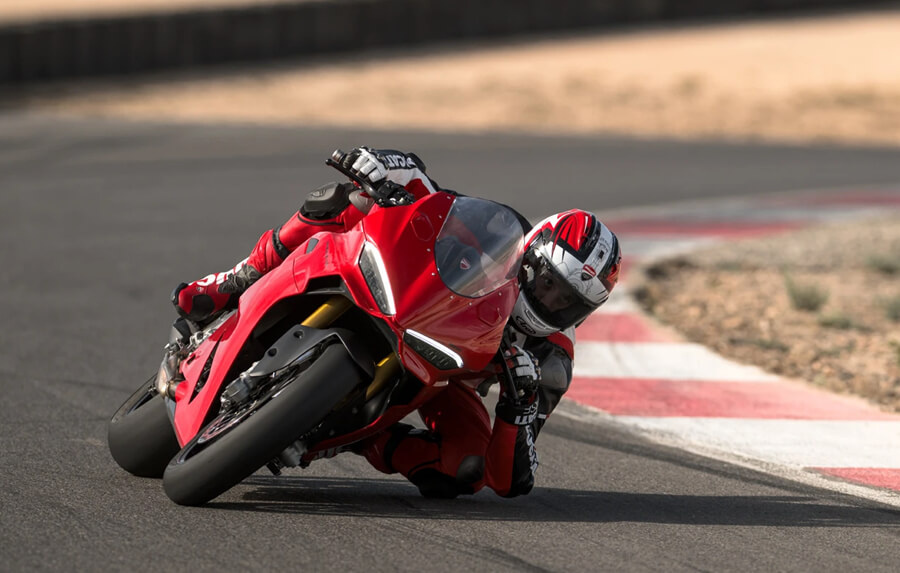
Ducati V2
Blip the throttle and you get that unmistakable Ducati response. Not smooth like a Japanese inline-four. Not lazy like some big cruisers. It snaps. It barks. There’s a sharp, raspy edge to it that riders usually sum up with one word: braaap.
Out on the road, especially in the midrange, that’s where the magic lives. Roll the throttle open and the exhaust note turns into this rich, brappy roar that feels alive and slightly rebellious. It doesn’t just make noise — it talks back to you. There’s a surge in the middle of the rev range that matches the sound perfectly. You hear the growl, and at the same time you feel that strong twin-cylinder punch pushing you forward.
What makes the Ducati V2 so addictive is the texture of the sound. It’s raw. A little raspy. Almost metallic at times. Through the stock two-into-one system, it already has a strong personality. But open it up with less baffling — like on track setups or with a proper aftermarket pipe — and it turns into something much more primal. Louder, deeper, more aggressive. The kind of roar that echoes off walls and makes people turn around before they even see the bike.
It’s not a polite soundtrack. It’s emotional. Dramatic. Very Italian.
And that’s why, even today, the Ducati L-twin remains one of the benchmarks for how a performance twin should sound. Not just powerful — but full of character.
Technical Snapshot
- Engine: 955cc 90° L-twin (Superquadro)
- Power: ~155 hp
- Valvetrain: Desmodromic
- Redline: ~11,500 rpm
6. Triumph Speed Twin 1200
The Speed Twin 1200 isn’t trying to scream like a superbike. It doesn’t need to. The moment you fire it up, that 1200cc parallel twin settles into this confident, off-beat pulse thanks to the 270-degree crank. It has that slightly uneven rhythm that makes it feel alive — almost like a big V-twin hiding inside a classic British frame.
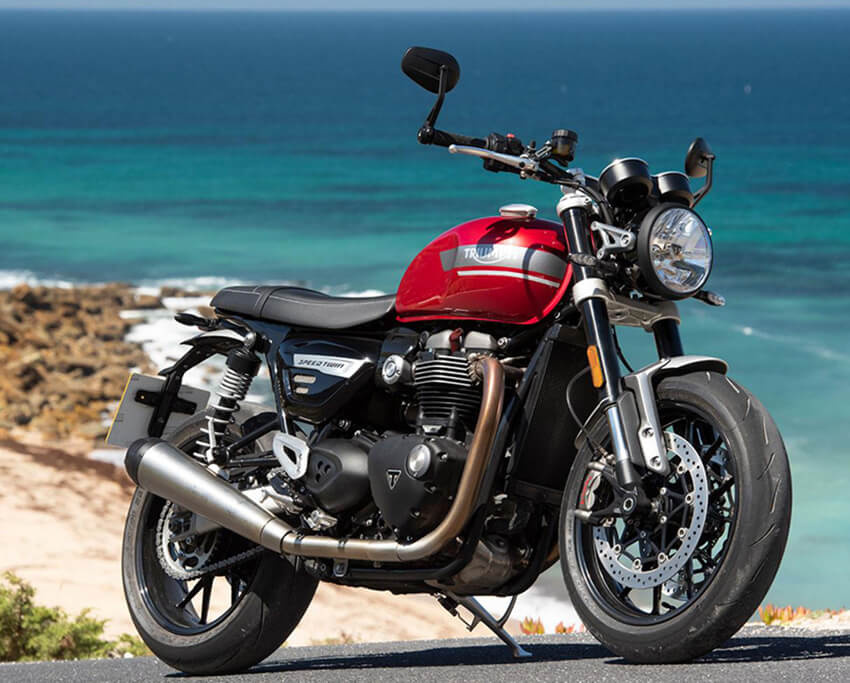
Triumph Speed Twin 1200
At idle, it’s deep and steady. Not loud. Not dramatic. Just a solid, reassuring thrum that you feel through the seat and bars.
Now roll away gently. Even at moderate speeds — say cruising through town around 60 km/h — you can clearly hear the exhaust note. It’s present, but never annoying. That’s the impressive part. It speaks, but it doesn’t shout. You don’t feel embarrassed riding past cafés, but you definitely know you’re on something with character.
Open the throttle harder and the tone changes. The low-end rumble thickens into a deeper, throatier growl. There’s a raw bark when you rev it out, especially in the midrange where the torque really wakes up. It doesn’t climb into a high-pitched scream like a four-cylinder sportbike. Instead, it stays muscular and earthy.
That 270-degree firing order gives it this demanding twin feel — you can sense each combustion pulse. It makes the engine feel engaged with you, not just spinning quietly in the background. Every twist of the throttle gets a response that feels mechanical and honest.
That’s what makes the Speed Twin special. It’s not about volume. It’s about texture. A deep, classic rumble at low revs, a lively bark when pushed, and a soundtrack that matches its modern-retro personality perfectly.
It’s the kind of bike that sounds exactly the way it looks — strong, confident, and full of character.
Technical Snapshot
- Engine: 1200cc parallel twin
- Crank: 270-degree
- Power: ~100 hp
- Redline: ~7,500 rpm
7. Moto Guzzi V100 Stelvio
Now this one… this one has presence.
The V100 Stelvio keeps that classic Moto Guzzi transverse twin layout, and you can feel it the second you hit the starter. The bike rocks slightly to the side — that familiar Guzzi handshake — and then it settles into this deep, confident rumble.
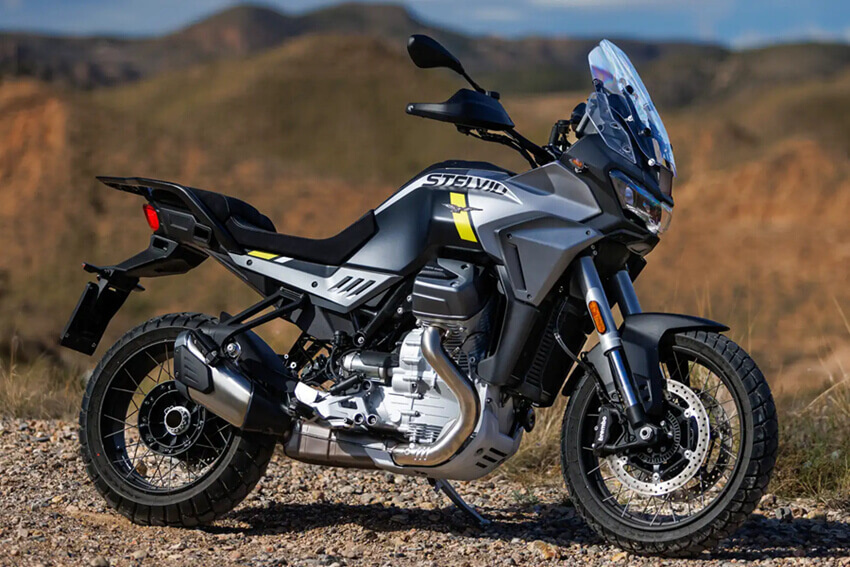
Moto Guzzi V100 Stelvio
At idle, it’s warm and heavy. Not sharp. Not frantic. Just a big 1042cc twin breathing slowly, almost lazily. There’s a richness to it that feels mechanical and old-school, even though the bike itself is modern.
Start rolling, keep the revs low, and you get that menacing undercurrent. It’s not loud in an obnoxious way — it’s just full. There’s weight in the sound. You feel it more than you hear it.
But here’s the part that surprises people.
As you climb through the rev range, the tone doesn’t just get louder — it transforms. That mellow burble tightens up and turns into a fierce, layered growl. There’s this complexity to it, almost like multiple notes blending together. Some riders even compare it to a small V12-style growl at higher revs. It has that smooth yet aggressive texture that feels bigger than a twin should.
A lot of that comes from the displacement and the way the headers are tuned. The sound builds in waves. It doesn’t spike — it swells.
And compared to older Guzzis, this one feels amplified. More refined, but also more dramatic. It keeps the traditional Guzzi rumble, but with modern sharpness layered on top.
The Stelvio doesn’t scream like a sportbike. It doesn’t snap like a Ducati. It growls. Deep. Confident. A little intimidating.
It’s the kind of sound that suits a big adventure machine perfectly — like it’s ready to cross continents, but it wouldn’t mind scaring a few tunnels along the way.
Technical Snapshot
- Engine: 1042cc transverse 90° V-twin
- Power: ~115 hp
- Cooling: Liquid-cooled
- Redline: ~9,500 rpm
8. Moto Guzzi V7
If you’ve ever stood next to a V7 when it fires up, you know it doesn’t try to impress you with volume. It wins you over with rhythm.
Hit the starter and the bike gives that classic little sideways shake from the transverse V-twin. It’s subtle, but it reminds you this isn’t just another parallel twin hiding in a retro frame. It’s pure Guzzi character.
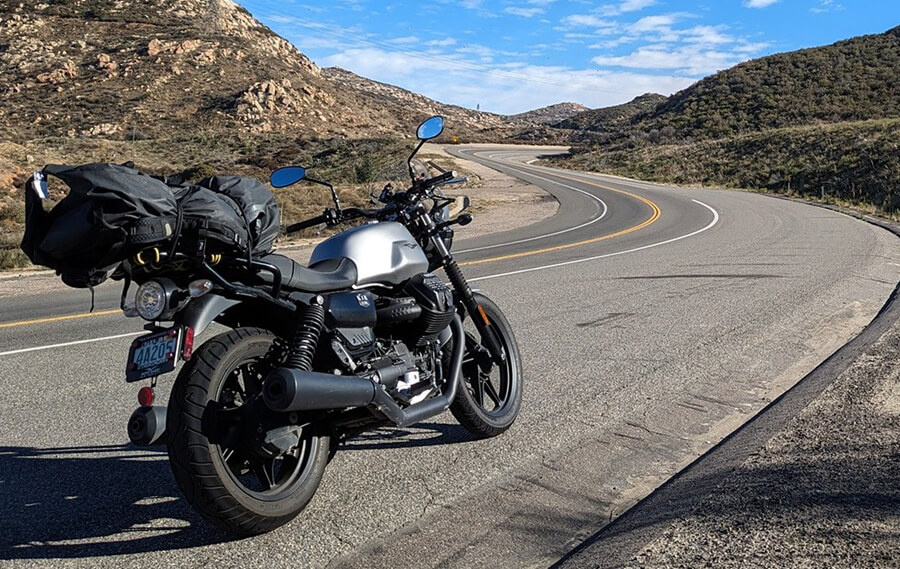
moto guzzi v7
At idle, the V7 settles into a warm, steady thump. Not aggressive. Not flashy. Just honest. It sounds mechanical in a very satisfying way — like you can hear each piston doing its job. There’s a gentle burble from the exhaust that feels almost old-school, like something from a different era but refined enough for today.
Ride it through town and keep the revs low, and the sound stays mellow. Deep but relaxed. It doesn’t demand attention, but people who know motorcycles will turn their heads anyway. There’s texture in the note — a soft, syncopated pulse that feels alive beneath you.
Open it up a bit more and that mellow burble turns into a fuller, rounder growl. It never screams. That’s not its personality. Instead, it builds a thick, earthy tone that matches the bike’s laid-back torque delivery. You roll on the throttle and the sound just swells naturally with the power.
The V7 doesn’t try to be dramatic. It’s confident. It sounds like a motorcycle that knows exactly what it is — classic, soulful, and full of personality without trying too hard.
Technical Snapshot
- Engine: 853cc transverse 90° V-twin
- Power: ~65 hp
- Cooling: Air-cooled
- Redline: ~6,800 rpm
9. Kawasaki Z900
The Z900 is a completely different conversation.
Fire it up and you immediately hear that inline-four smoothness, but there’s a sharp edge underneath. It doesn’t rumble like a twin. It hums — tight, precise, controlled.
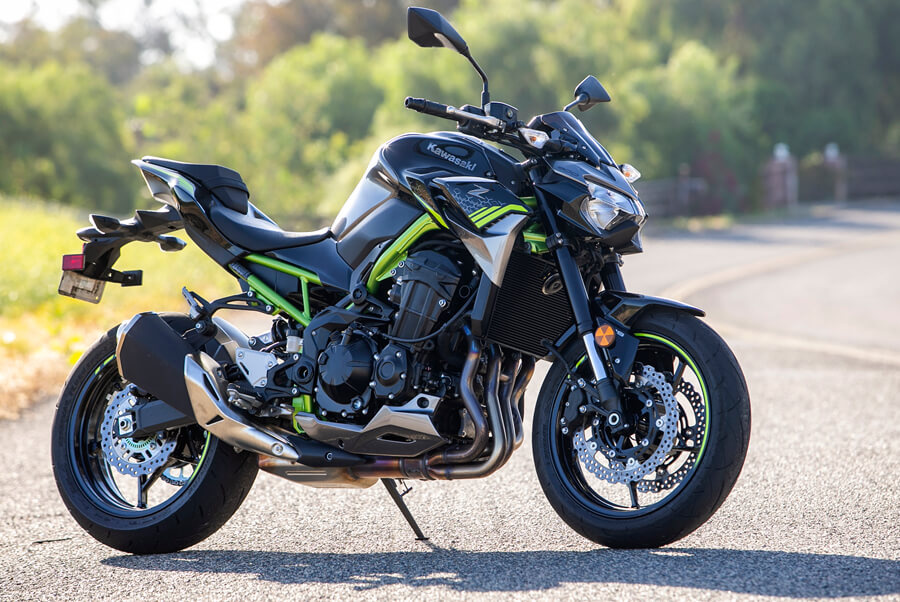
kawasaki z900
At idle, it’s clean and refined. But give it a quick throttle blip and you hear that classic four-cylinder snap. The revs climb fast, and the sound rises with them in a smooth, fluid sweep.
Cruising around town, it stays composed. The exhaust note is sporty but not overwhelming. There’s a crispness to it, like it’s always ready to spin faster. And that’s the key with the Z900 — it loves to rev.
Once you get into the midrange and start pushing harder, the tone sharpens. The smooth hum transforms into a higher-pitched, urgent howl. Not as wild as a supersport at 14,000 rpm, but aggressive enough to feel exciting. It has that unmistakable inline-four scream building as the tach climbs.
What makes the Z900 satisfying is how linear the sound feels. There’s no sudden spike or roughness. It just builds cleanly and confidently all the way through the rev range. Twist the throttle, and the soundtrack climbs in one smooth arc.
It’s not nostalgic like the V7. It’s modern. Precise. Athletic.
The V7 talks to you in a low, soulful voice. The Z900 speaks fast — and gets louder the more you push it.
Technical Snapshot
- Engine: 948cc inline-four
- Power: ~125 hp
- Redline: ~11,000 rpm
- Layout: 180° crank inline-four
10. CF Moto 450MT
Now this one surprises a lot of riders.
The 450MT doesn’t look like it should sound special. It’s a 449cc adventure bike. Not huge. Not exotic. But the moment you hear that 270-degree parallel twin, you realize there’s more character here than you expected.
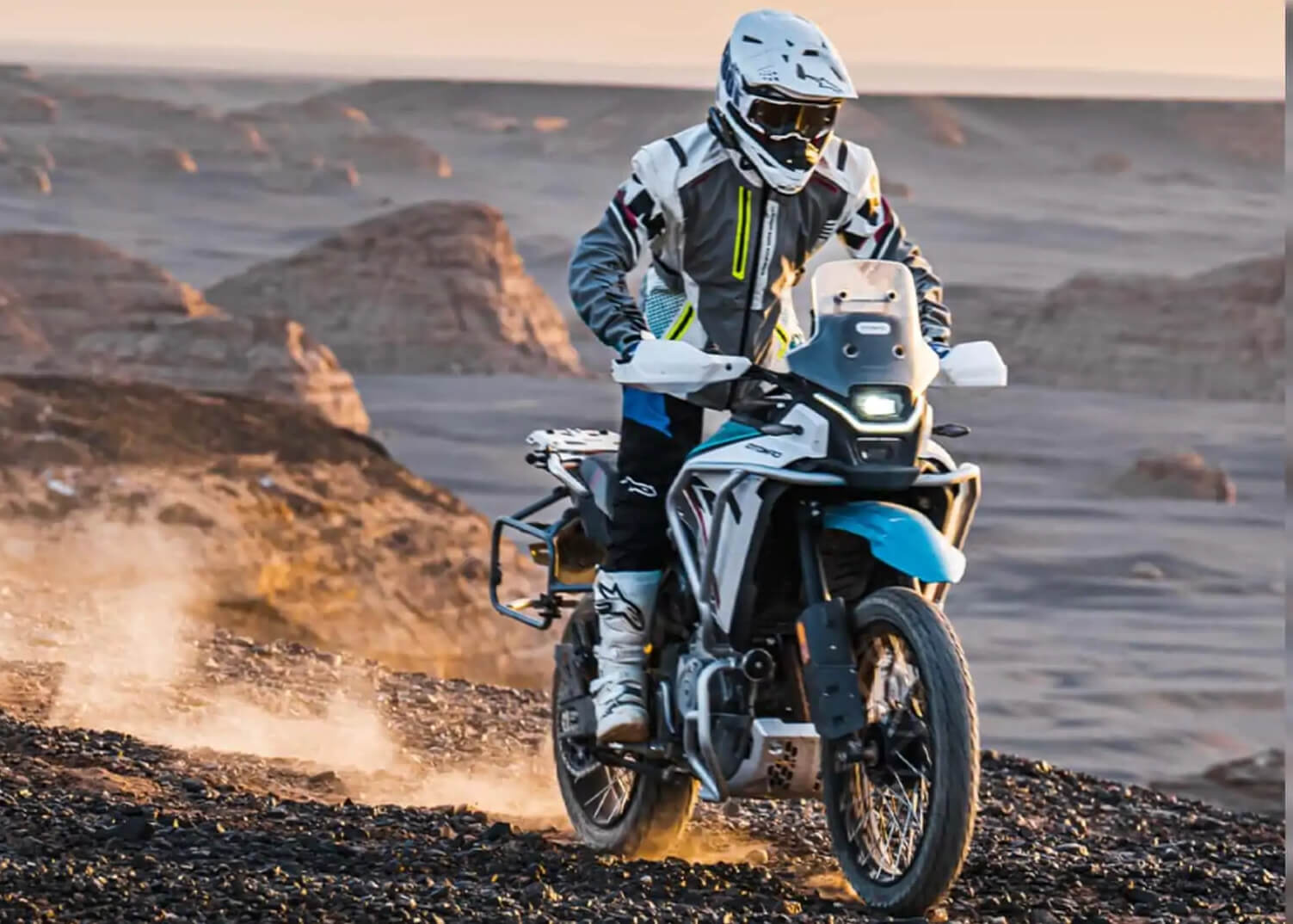
CF Moto 450MT
At idle, it has that slightly uneven, off-beat pulse that we all love from a 270° crank. It doesn’t hum like a small twin. It has a little thump to it. A small but confident heartbeat.
Roll the throttle open and you get this grumbly growl that feels bigger than 450cc. There’s a bit of rasp in there too — just enough edge to keep it interesting. It doesn’t sound like a budget bike trying too hard. It sounds intentional.
What makes it fun is how the firing order gives it personality. That uneven pulse creates texture in the exhaust note. It feels alive, not flat or sterile. In the midrange, where you’ll spend most of your time riding trails or back roads, the engine has a throaty punch that matches the sound perfectly. You hear the growl, and you feel that little surge pushing you forward.
And if you swap to a sports silencer? That’s when it really wakes up. The tone becomes fuller and more defined. Deeper. A bit more aggressive. The rasp sharpens slightly, and the overall sound gains weight. Suddenly, this small adventure bike starts sounding far more serious than its 42 horsepower would suggest.
It won’t roar like a liter bike. That’s not the point.
What it gives you is character in a compact package. A nicely textured twin rumble that makes every throttle input feel more engaging than you’d expect from a mid-capacity ADV.
It’s one of those bikes where you start riding for practicality — and end up blipping the throttle just to hear that little twin talk back to you.
Technical Snapshot
- Engine: 449cc parallel twin
- Crank: 270-degree
- Power: ~42 hp
- Redline: ~9,500 rpm
Best Sounding Motorcycles – Technical Overview
For readers who prefer hard data alongside emotion, here’s a technical overview of the bikes featured above.
| Model | Engine Layout | Displacement | Power (Approx.) | Redline | Sound Character |
|---|---|---|---|---|---|
| Aprilia RSV4 | 65° V4 | 1099cc | 214 hp | 13,600 rpm | Metallic V4 roar with layered midrange growl |
| MV Agusta Brutale 1000 | Inline-four | 998cc | 208 hp | 13,000+ rpm | Sharp Italian scream with aggressive top-end |
| Yamaha MT-10 / YZF-R1 | Crossplane inline-four | 998cc | 165–200 hp | ~14,000 rpm | Uneven pulse with deep intake roar and race-style howl |
| Honda VTR1000 SP-2 (RC51) | 90° V-twin | 999cc | 133 hp | 10,000 rpm | Deep twin thump with mechanical cam whirr |
| Ducati Panigale V2 / Monster V2 | 90° L-twin | 955cc | 155 hp | 11,500 rpm | Raspy, brappy midrange punch with metallic edge |
| Triumph Speed Twin 1200 | 270° Parallel twin | 1200cc | 100 hp | 7,500 rpm | Deep off-beat rumble with muscular bark |
| Moto Guzzi V100 Stelvio | Transverse 90° V-twin | 1042cc | 115 hp | 9,500 rpm | Heavy rumble that swells into layered growl |
| Moto Guzzi V7 | Transverse 90° V-twin | 853cc | 65 hp | 6,800 rpm | Warm, syncopated classic burble |
| Kawasaki Z900 | Inline-four | 948cc | 125 hp | 11,000 rpm | Clean, linear build into sharp high-rpm howl |
| CFMoto 450MT | 270° Parallel twin | 449cc | 42 hp | 9,500 rpm | Compact twin throb with grumbly growl |
🎵Which Engine Sounds the Best?
It really depends on your taste:
🔊 Deep rumble – V-twins like Ducati or Moto Guzzi
⚡ High RPM scream – MV Agusta or Yamaha R1
🎯 Balanced character – Aprilia RSV4
🕰️ Classic retro tone – Triumph Speed Twin 1200
💸 Character on a budget – CFMoto 450MT
Motorcycle sound is personal. The best bike is the one that makes you smile every time you twist the throttle.
💨 Stock vs Aftermarket Exhaust
Aftermarket exhausts from brands like Akrapovič, Termignoni, SC-Project, or Yoshimura can make your bike sound even better.
⚠️ But keep in mind:
📜 Follow local noise laws
✅ Ensure it is street legal
🚫 Don’t remove catalytic converters if it’s illegal
🌱 Modern motorcycles follow strict emissions rules. Ride responsibly!
Conclusion
At the end of the day, a motorcycle’s sound is more than noise — it’s character, emotion, and a connection between rider and machine. Whether it’s the throaty rumble of a Guzzi, the snarling scream of a Brutale, or the guttural howl of a Yamaha CP4, each of these best sounding motorcycles turns every ride into an experience worth remembering. So the next time you twist the throttle, don’t just feel the power — listen, and let the soundtrack of your ride speak for itself.
Recommended Reading

Motorcycle mechanic, writer. Interested in motorcycle gear for years. Like to stay up to date with the newest products and techniques of the motorcycle.
You maybe like to read:
Fodsports Brand Month: Unbeatable Deals and Top-Notch Service
Discover Fodsports Brand Month July and August mark a special occasion for motorcycle enthusiasts and tech lovers alike. Welcome to Fodsports Brand Month! This event is dedicated to celebrating everything that makes Fodsports a leading name in the motorcycle communication industry. Get ready for a fantastic promotions, exceptional service from Fodsports. Let's insights into Fodsports' […]
Grossglockner High Alpine Road in Fall: Austria Motorcycle Riding Guide
Autumn transforms Austria’s Grossglockner High Alpine Road into a spectacular mountain destination. Golden larch trees brighten the slopes, crisp Alpine air can reveal dramatic mountain views, and 36 hairpin bends make the journey memorable for motorcycle enthusiasts. Yet autumn also brings unpredictable weather, cold pavement, and possible road closures. For riders planning an Austrian Alps […]
Black Forest High Road Motorcycle Guide: Best Autumn Ride, Scenic Routes and Riding Tips in Germany
Few places in Germany combine flowing mountain roads, colorful forests, traditional villages, and peaceful viewpoints as perfectly as the Black Forest High Road (Schwarzwaldhochstraße B500). In autumn, this legendary route transforms into a spectacular motorcycle destination, with golden beech forests, misty valleys, and panoramic views stretching toward the Rhine Valley and even France on clear […]
Ultimate Dolomites Autumn Cycling Guide: Best Fall Foliage Routes & Expert Gear Blueprint
The Italian Dolomites in autumn transform into a sensory masterpiece. As the chaotic summer crowds dissipate between mid-September and late October, the entire Alpine region ignites with golden larches, fiery maples, and stark white limestone peaks. This fleeting shoulder season provides the ultimate window for an epic Dolomites cycling tour and foliage chasing. Compared to […]
Route des Grandes Alpes in Fall: France Motorcycle Riding Guide
Few motorcycle routes combine high mountain passes, autumn forests, dramatic valleys, and Mediterranean scenery as well as the Route des Grandes Alpes in France. Stretching about 720 km from Thonon-les-Bains near Lake Geneva to Nice, the route crosses 18 major Alpine passes and reaches 2,764 meters at the Col de l'Iseran. For motorcycle riders, autumn can […]