The motorcycle communication systems field just got a significant upgrade with the release of the Fodsports FX7. This state-of-the-art Bluetooth mesh intercom is packed with many advanced features and techs. It will revolutionize the way riders communicate and enjoy their rides. Whether you're a solo rider or part of a group, the FX7 offers unparalleled […]

Vermont Route 100 in Fall: Highlights and Motorcycle Riding Guide
September 15, 2026
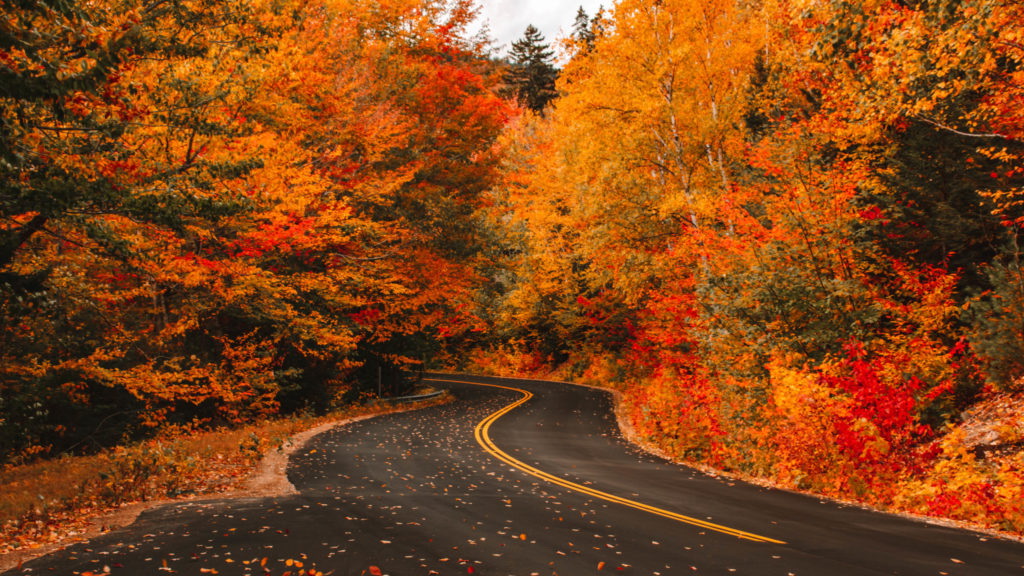
Vermont Route 100 is one of New England’s most rewarding roads for a fall motorcycle ride. Stretching roughly 216 miles through the Green Mountains, the route connects mountain scenery, colorful forests, farms, covered bridges, and small Vermont towns.
For motorcyclists, however, a great fall ride requires more than choosing a scenic road. Autumn brings colder mornings, wet leaves, low sunlight, changing weather, and heavier weekend traffic. Knowing when to go, which sections to ride, and how to prepare can make the trip safer and more enjoyable.
This guide covers the best of Vermont Route 100 in fall, including foliage timing, scenic sections, motorcycle preparation, group riding, current road conditions, and practical planning tips.
Table of Contents
🍁 Why Ride Vermont Route 100 in Fall?
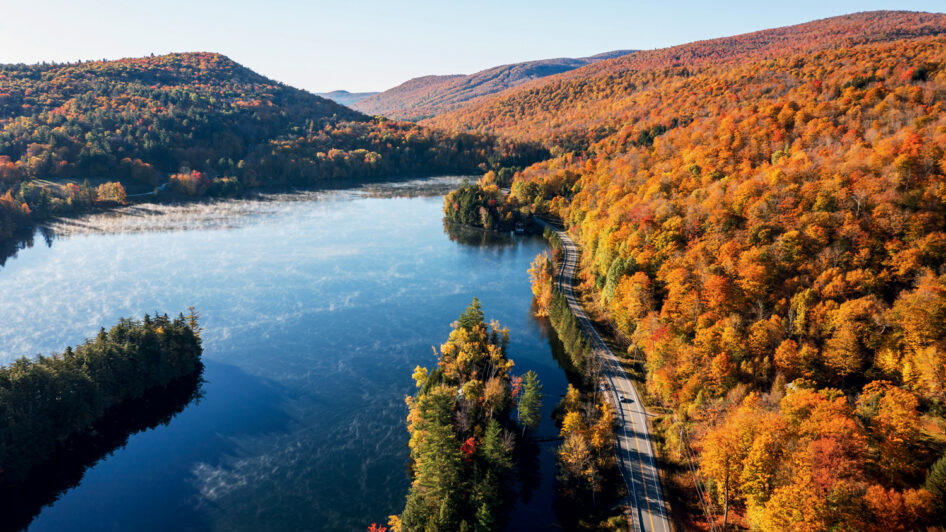
Vermont Route 100 fall motorcycle ride
Route 100 is appealing because the scenery changes constantly. Riders move through mountain forests, open valleys, farmland, rivers, old barns, and traditional New England villages.
Fall adds another layer to the experience. Foliage typically changes at different elevations and locations rather than reaching peak color everywhere at once. Higher and cooler areas generally change earlier, while lower and southern areas can peak later.
That makes Route 100 especially interesting for a motorcycle trip. With a flexible itinerary, riders can travel south as the season progresses and explore scenic side roads along the way.
📅 When Is the Best Time to Ride Vermont Route 100?
There is no single peak-foliage date for the entire route. A practical planning window is:
- Late September: Higher elevations and northern Vermont may begin showing strong color.
- Early October: Central areas around Stowe, Waterbury, Waitsfield, and Warren are often attractive.
- Mid-October: Southern areas such as Killington, Ludlow, and Weston may offer excellent fall color.
Weather can change the timing from year to year, so check current foliage reports before leaving.
If your schedule allows, consider riding on a weekday. Popular fall weekends can bring heavy traffic around major towns, scenic viewpoints, and attractions.
🗺️ Best Sections of Route 100 for Motorcycle Riders
You do not need to ride the entire 216-mile route to experience its highlights. These sections are useful for planning a Vermont Route 100 motorcycle trip.
🏔️ Stowe and Waterbury
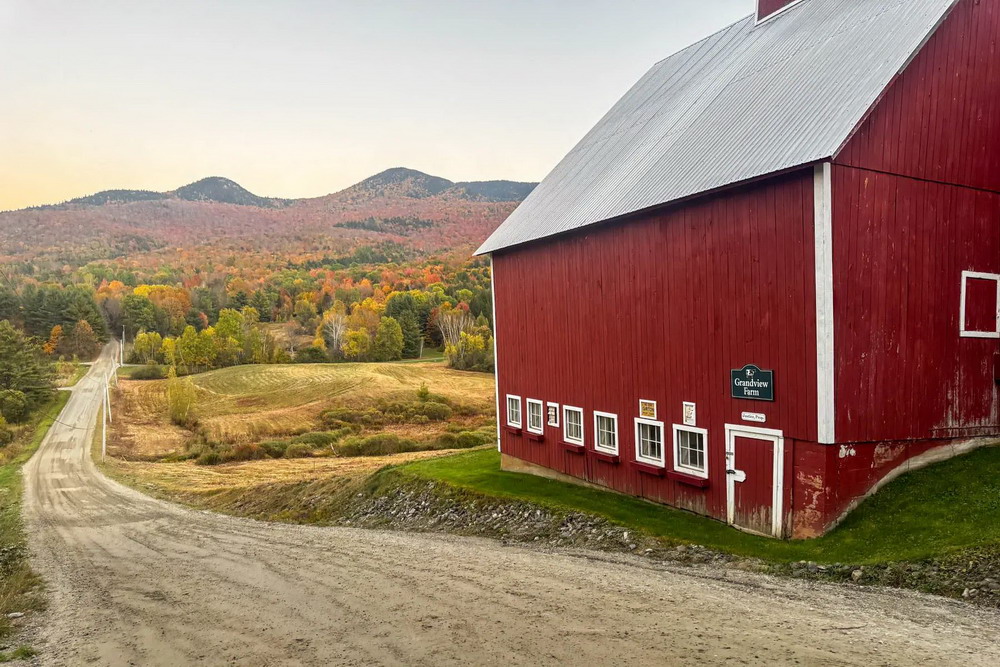
Stowe Waterbury Vermont Route 100 fall
The Stowe and Waterbury area combines mountain scenery with convenient access to fuel, food, lodging, and other services.
It is also a practical starting point for a shorter scenic loop. Riders who only have one day can use this area as a base rather than trying to cover the entire route.
🌄 Waitsfield and Warren
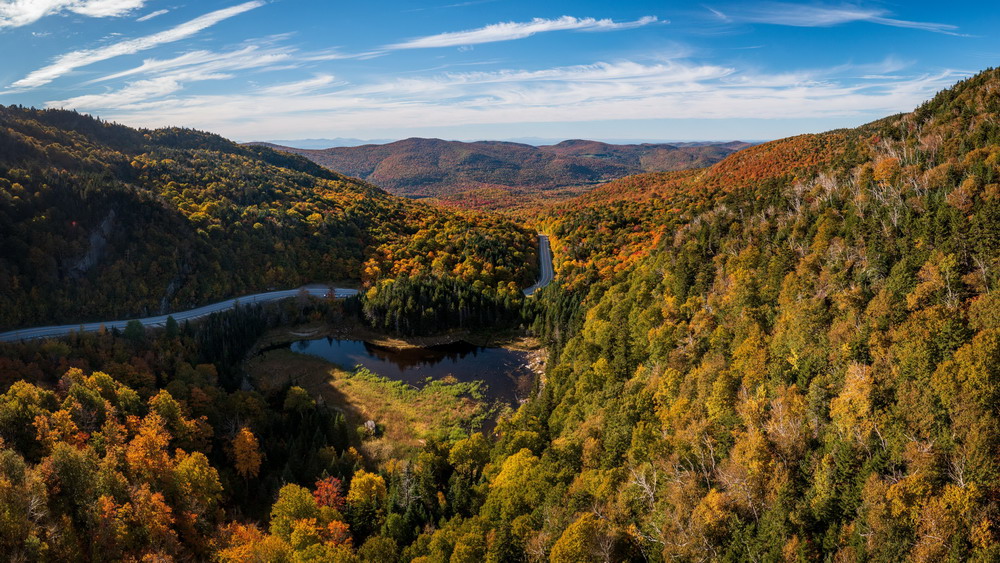
Waitsfield Warren Vermont fall road motorcycle
The Mad River Valley offers a classic Vermont countryside experience.
Here, riders encounter open valleys, farms, covered bridges, rural roads, and small communities. It is a good section for riders who prefer a relaxed pace and enjoy exploring roads away from major attractions.
🏍️ Killington and Ludlow
Further south, Killington and Ludlow provide another strong combination of mountain scenery and convenient stops.
Killington is useful for riders looking for mountain views, while Ludlow offers opportunities to refuel, eat, or stay overnight during a longer trip.
🏡 Weston
Weston makes a pleasant stop on a southbound ride. Its historic village atmosphere provides a natural break before continuing along Route 100.
🧭 How Many Days Do You Need?
The ideal length depends on whether you want to complete the route or actually experience it.
One-Day Ride
Choose one section instead of attempting the entire route. A Stowe–Waterbury ride or a central Vermont loop can provide plenty of scenery without turning the day into a race against the clock.
Two-Day Motorcycle Trip
Two days allow you to combine several central sections and make more scenic stops. This is a good option for riders traveling from outside Vermont.
Three Days or More
With three or more days, you can travel at a slower pace, adjust your direction according to foliage conditions, and add side roads, covered bridges, hiking areas, and small towns.
🍂 Fall Motorcycle Riding Conditions to Expect
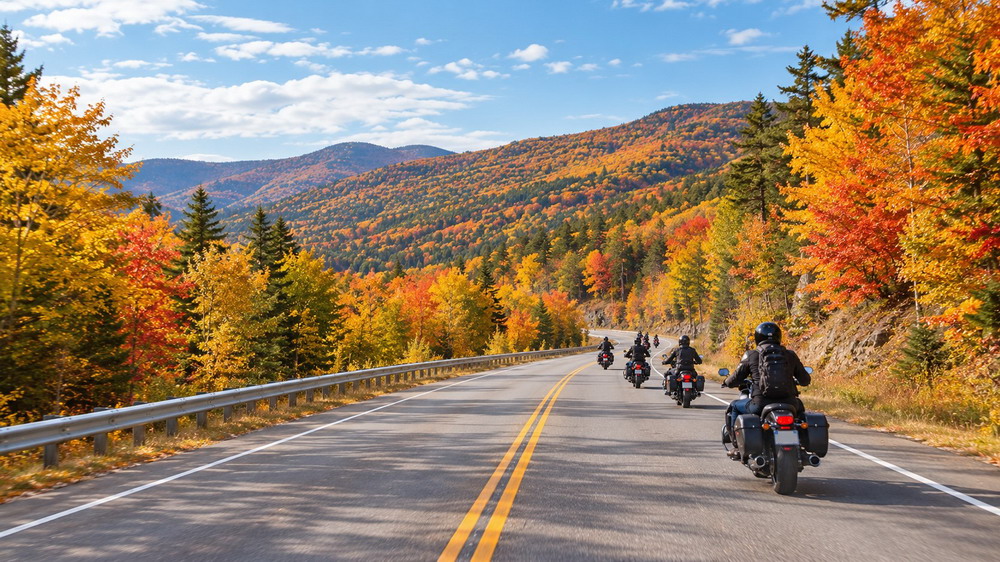
motorcycle riding Vermont fall road autumn
Fall scenery can be spectacular, but autumn also creates several riding challenges.
Wet Leaves and Road Debris
Leaves can accumulate on the pavement after wind or rain, and wet leaves can become slippery, particularly in corners.
Slow down before shaded turns and avoid sudden braking or acceleration when the road surface is uncertain. Also watch for gravel, branches, and other debris on rural roads.
🥶 Cold Mornings and Changing Temperatures
A comfortable afternoon can start with a cold morning, especially at higher elevations.
Layered riding gear makes it easier to adapt as temperatures change. Check the forecast for both your starting point and destination rather than relying on one temperature reading.
🌅 Low Sun and Shorter Days
Autumn brings lower-angle sunlight and fewer daylight hours.
Sun glare can become especially difficult when riding east or west. A suitable visor or sunglasses can help, but reducing speed when visibility is poor is more important.
🦌 Wildlife on Rural Roads
Route 100 passes through wooded and rural areas, so riders should remain alert for wildlife near the road.
Take extra care around dawn, dusk, wooded sections, and areas with limited visibility.
🔧 Prepare Your Motorcycle Before the Ride
Before a long fall ride, check the basics:
- Tire pressure and tread condition
- Brake pads and brake fluid
- Headlight, brake light, and turn signals
- Engine oil and other fluids
- Chain condition and lubrication, if applicable
- Battery condition
- Fuel range
- Luggage and mounting points
Offline maps are also useful. Rural areas may have inconsistent mobile coverage, and an unexpected detour can make navigation more difficult.
📡 Make Group Riding Easier With Simple Communication
Route 100 is a great choice for a group motorcycle trip, but riders can become separated by traffic, scenic stops, unfamiliar intersections, or changing road conditions.
The goal of communication is not constant conversation. It is making sure important information reaches the group when it matters.
A Helmet Communication system can help riders quickly share information about an upcoming turn, fuel stop, road hazard, or rider who needs to pull over.
A Bluetooth Intercom can also make group coordination easier when riders become separated or visibility changes.
Based on more than a decade of experience developing motorcycle communication systems, Fodsports has found that useful communication is often simple and timely. A quick warning about a hazard or a clear message about the next turn can be more valuable than continuous conversation.
Riders should still maintain safe following distances, stay focused on the road, and follow local traffic laws.
⚠️ Check Current Route 100 Road Conditions
Construction and weather can change a Route 100 itinerary quickly, so check current conditions before departure.
For the 2026 fall riding season, Vermont’s Agency of Transportation lists construction work affecting Route 100 in the Londonderry area. The project includes culvert replacement and a listed detour using Route 100, VT 30, and VT 11. The official detour is approximately 17 miles end-to-end.
VTrans also lists a Route 100 culvert project in the Waitsfield–Moretown area with construction beginning in fall 2026.
Because schedules can change, riders should verify the latest VTrans information shortly before the trip rather than relying on an older route plan.
📊 Vermont Fall Travel by the Numbers
Vermont’s fall scenery attracts significant tourism.
According to Vermont tourism research, the state welcomed approximately 16 million visitors in 2024, generating about $4.2 billion in visitor spending. Visitor spending represented about 9% of Vermont’s GDP that year.
Fall foliage is an important part of that tourism economy. A Vermont state report estimated approximately 2.5 million visitors during the 2024 fall foliage season, generating around $500 million in spending.
Motorcycle safety is equally important. According to the National Highway Traffic Safety Administration, 6,228 motorcyclists were killed in the United States in 2024, accounting for 16% of all traffic fatalities.
The numbers reinforce a simple point: scenic riding is most enjoyable when riders leave enough time to travel at a safe, comfortable pace.
📝 Vermont Route 100 Motorcycle Checklist
Before leaving, check:
Route
- Foliage conditions
- Weather forecast
- Construction and closures
- Fuel stops
- Offline maps
Motorcycle
- Tires and brakes
- Lights and fluids
- Chain and battery
- Luggage
- Fuel range
Riding
- Cold morning temperatures
- Wet leaves and debris
- Low sunlight
- Wildlife
- Shorter daylight hours
Group rides
- Regrouping points
- Shared route
- Communication plan
- Safe following distance
🍁 Final Thoughts
A Vermont Route 100 fall motorcycle ride is less about completing 216 miles and more about experiencing the changing landscape along the way.
If you have one day, choose one strong section and ride it slowly. With two or three days, you can follow the foliage south, explore side roads, and spend more time in Vermont’s mountain valleys and small towns.
Check the foliage forecast, verify current road conditions, prepare your motorcycle, and leave enough daylight for unexpected stops.
With the right planning, Route 100 can become more than a scenic drive—it can be one of the most rewarding fall motorcycle trips in New England.
❓ FAQ About Vermont Route 100 in Fall
1. What is the best month to ride Vermont Route 100?
Early to mid-October is generally a strong period for central and southern sections, but exact foliage timing changes each year.
2. How long is Vermont Route 100?
Route 100 stretches roughly 216 miles through Vermont. However, riders should allow additional time for scenic stops, fuel, meals, and possible detours.
3. Is Vermont Route 100 good for motorcycles?
Yes. Mountain scenery, rural roads, valleys, small towns, and scenic stops make it well suited to motorcycle touring.
4. What should I wear for a fall motorcycle ride in Vermont?
Wear layered motorcycle gear that can handle cold mornings and changing temperatures. A proper jacket, gloves, riding pants, boots, and weather protection are recommended.
5. Is Route 100 crowded during fall foliage?
Popular fall weekends can be busy. Weekday riding and an early start can help reduce traffic and give you more time to enjoy the route.
📚 Authoritative Sources
- Vermont Department of Tourism & Marketing — Tourism Research
- Vermont Department of Tourism — Fall Foliage Tourism Data
- Vermont Agency of Transportation — Route 100 Project Information
- National Highway Traffic Safety Administration — Motorcycle Safety
- University of Vermont — The Science of Fall Foliage

Rodney L is a technical writer and product consultant with over a decade of experience in the motor industry. Rodney is a fan of performance machines that run fast and loud and an expert in all things custom. His numerous articles and write-ups are available at our knowledge base. Whether it’s something wrong with your motorcycle or you are building a custom bike, you can trust Rodney’s experience.
You maybe like to read:
Fodsports Brand Month: Unbeatable Deals and Top-Notch Service
Discover Fodsports Brand Month July and August mark a special occasion for motorcycle enthusiasts and tech lovers alike. Welcome to Fodsports Brand Month! This event is dedicated to celebrating everything that makes Fodsports a leading name in the motorcycle communication industry. Get ready for a fantastic promotions, exceptional service from Fodsports. Let's insights into Fodsports' […]
Vermont Route 100 in Fall: Highlights and Motorcycle Riding Guide
Vermont Route 100 is one of New England’s most rewarding roads for a fall motorcycle ride. Stretching roughly 216 miles through the Green Mountains, the route connects mountain scenery, colorful forests, farms, covered bridges, and small Vermont towns. For motorcyclists, however, a great fall ride requires more than choosing a scenic road. Autumn brings colder […]
Kancamagus Highway Motorcycle Trip: Autumn Foliage, Route and Safety Tips
Few American motorcycle roads combine mountain scenery, flowing curves, forest color, and accessible riding as effectively as New Hampshire’s Kancamagus Highway. In autumn, the route changes from a beautiful mountain road into a moving landscape of red maple, golden birch, dark evergreen forest, rocky overlooks, and rushing river valleys. Known locally as “The Kanc,” this […]
Fall Motorcycle Riding Tips: How to Ride Safely in Autumn
Fall is a great season for motorcycle riding. Cooler temperatures, colorful scenery, and comfortable roads make autumn an ideal time to explore. However, the change of season also brings new riding challenges. Wet leaves can reduce traction, temperatures can change quickly, daylight becomes shorter, and wildlife may be active near roads. With a little preparation, […]
Top 10 Fall Motorcycle Rides in the USA: Scenic Routes & Foliage
Fall is one of the best seasons for motorcycle riding in the United States. Cooler temperatures, colorful forests, quieter roads, and spectacular mountain scenery make autumn ideal for a scenic motorcycle road trip. From New England's brilliant red and orange forests to the Appalachian Mountains and the colorful Ozarks, riders can find incredible fall foliage […]