The motorcycle communication systems field just got a significant upgrade with the release of the Fodsports FX7. This state-of-the-art Bluetooth mesh intercom is packed with many advanced features and techs. It will revolutionize the way riders communicate and enjoy their rides. Whether you're a solo rider or part of a group, the FX7 offers unparalleled […]

8 Main Different Types of Motorcycle Engines [2025 Update]
October 15, 2022
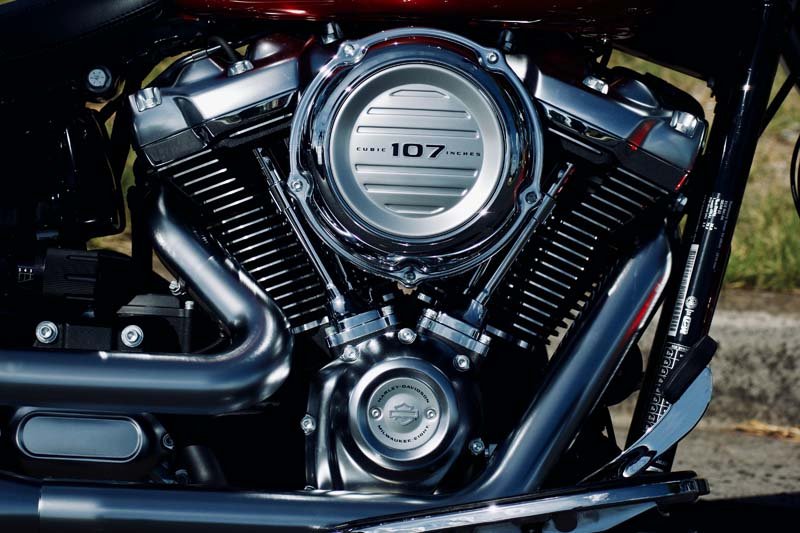
There are many different types of motorcycle engines on the marketplace, and also it can be tricky to learn just how to determine which is which.
In this write-up, we sum up whatever you require to understand about various types of motorcycle engines. No complicated terminology.
Let's enter it ...
Table of Contents
What are the Different Types Of Motorcycle Engines?
Motorcycle engines can be identified right into the following groups:
- Layouts
- Number of strokes: 2-stroke/ 4-stroke
- Cooling system: Air-cooled/ Liquid-cooled
- Variety of cylinders: 1,2,3,4,( 5 ),6.
- Variation: 50cc-7000+ cc.
1. Main Types of Layouts on Motorcycle Engines
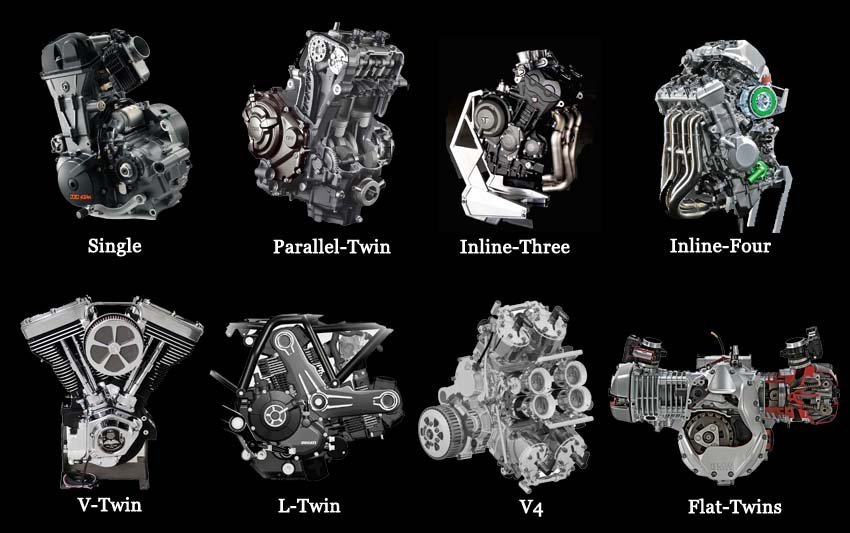
Most riders classify the various types of motorcycle engines by their design. The format of a motorcycle engine constantly describes the setup and variety of cylinders.
Put simply, these terms always consist of 2 components. The initial part refers to the plan while the 2nd is the variety of cylinders. Two instances:.
V-twin: "V": The cylinders are arranged in a V-shape. "Twin": the engine features two cylinders.
Inline-four: "Inline": The cylinders are prepared side-by-side in a row. "Four": the engine has 4 cylinders.
Single
Single cylinders are the most affordable as well as most basic kind of engine. A single-cylinder bike is powered by an engine that features just one cylinder in a straight, vertical, or perhaps inclined setting.
With fewer parts than other engine formats, singles are cost-effective to manufacture and simple to maintain.
Single cylinders provide themselves much better for smaller bikes, such as motocross, or if you just desire a bike to whizz around town in. They are possibly not as suited for long excursions or high-performance auto racing.
Pros: small dimension, light-weight, affordable, high torque at reduced revs.
Cons: high vibrations, hard balancing.
Parallel-Twin
Parallel doubles are a preferred engine kind for both contemporary as well as classic motorcycles.
Parallel-twin engines are comparable in approach to single cylinder engines yet make use of two pistons instead of one. The cylinders of parallel-twin engines share the same cylinder block. These engines are normally mounted transversally within the frame, however, in a few bikes, the cylinders are behind each other.
Parallel-twin engines have better balance than solitary cylinders, yet still struggle with high vibrations.
Pros: convenience, fluid operation, high performance, good equilibrium.
Cons: high vibrations.
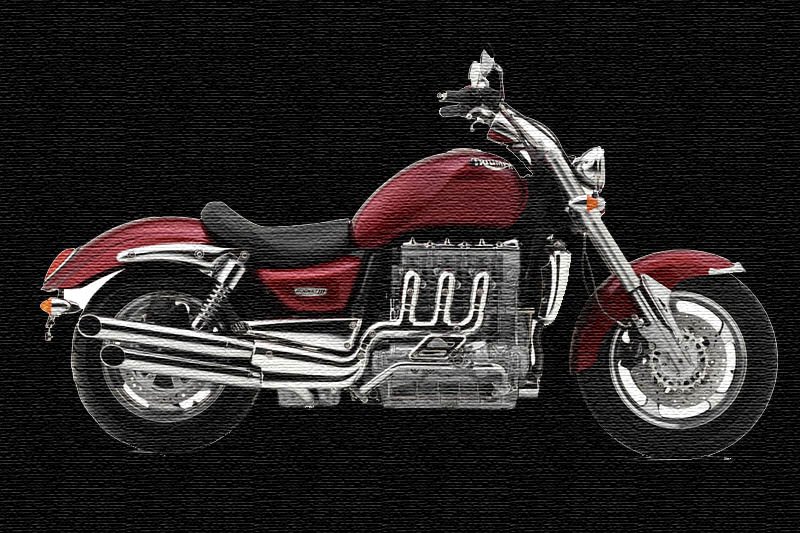
Inline-Three
The inline triple uses three cylinders. inline-three engines do not have premium power and insane rapid top-speeds, nevertheless, they are ridiculously torquey at reduced as well as medium RPM, making for really great road-goers.
Pros: comfort, fluid operation, high performance, discreet balancing, low vibrations.
Cons: medium overall measurements.
Inline-Four
Inline-four motorcycle engines have a single-cylinder block as well as feature four parallel cylinders. These engines are generally mounted transversely within the frame of the bike.
The smoothest, fastest-revving engines presently on the market, inline-fours are used to thrust the substantial bulk of supersport and superbikes. As a result of their design, inline-four engines are dramatically bigger than their 2 as well as three-cylinder siblings.
Pros: comfort, liquid operation, high power, great harmonizing, extremely low resonances.
Con: huge general dimensions, heavy.
V-Twin
As their name indicates, V-twin motorcycle engines feature two cylinders that go from an angle to every other.
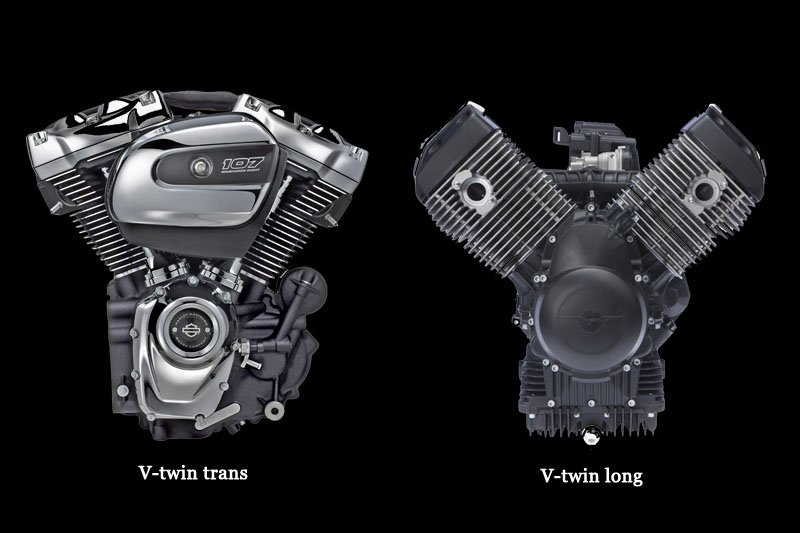
Simply put, both cylinders form a "V" shape. The most typical types of V-twins are called "V-twin trans" and also "V-twin long", terms that describe just how the engine is placed within the frame.
In addition to their V-shape, V-Twins also typically have their consumption placed in between the cylinders as where most inline-engines have the intakes placed behind the cylinders.
The most usual V-twin engine layout is understood as well as "V-twin trans," which indicates the cylinders are parallel with the bike's frame. This results in even more small dimensions in general as this engine fits nicely right into the bike's structure.
On the other hand, "V-twin long" engines are placed in a longitudinal placement.
V-twin trans
Pros: excellent power/size ratio, lightweight.
Cons: light vibrations, harmonizing (slim V angle).
V-twin long
Pros: superb air cooling, excellent balancing.
Cons: side dimensions.
L-Twin
L-twin motorcycle engines with the name denoting the cylinder's L-like form (opposed to the V-shape) that include one virtually upright and one almost horizontal cylinder. Because of this layout, the cylinders create an "L" as opposed to a "V" shape. Ducati's engines (with the exception of its new V4) are every one of these engine types.
Pros: excellent power/size proportion, lightweight, great balancing.
Cons: light resonances.
V4
V4 can be called two V-Twins that have been put together. Instead of having one cylinder at each end of the V, there're two. It includes four cylinders in a V setting.
Just like inline-four power plants, V4 engines deliver a lot of power. The main disadvantage of this style is the high expense of manufacturing and much heavier weight.
Because they're expensive to produce, these engines are generally found on high-dollar designs.
Pros: general measurement, high performance, excellent harmonizing, low vibrations.
Cons: intricacy constructive.
Flat-Twins
Likewise referred to as a "Boxer Twin". Flat-twin motorcycle engines feature two horizontal cylinders that are located on both sides of the crankshaft.
These engines produce a great deal of power throughout their whole rev-range and also are incredibly well balanced. They also use a very low center-of-gravity, nevertheless their tremendous size, considerably restricts lean-angle.
You can find these engines in some BMW road bikes.
Level 2 offers terrific cooling and excellent equilibrium, however as a result of the set-up is rather a complex engine, causing a higher cost and also more difficult to take care of.
Pros: outstanding air cooling, great harmonizing.
Cons: restriction in the degree of lean angle.
2-stroke/4-stroke
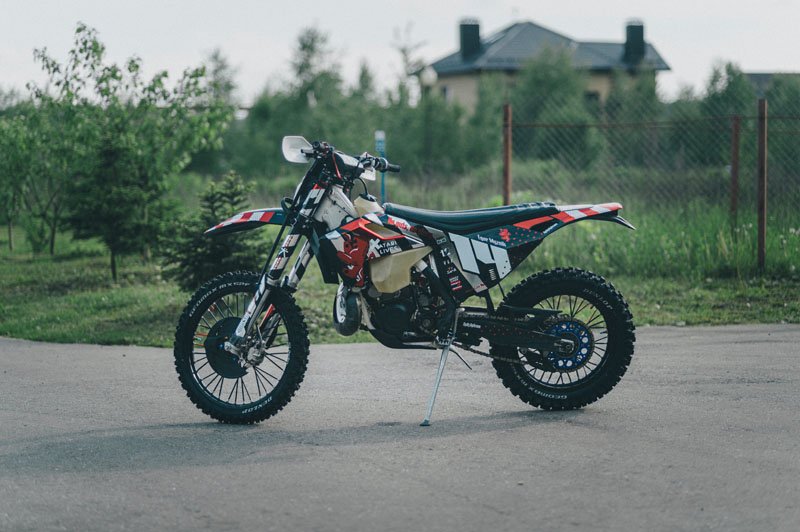
The two main sorts of motorcycle engines are the two-stroke and also four-stroke sources of power.
Two-stroke bikes can usually be determined by their special exhaust systems, typically referred to just as "two-stroke pipes" or "two-stroke growth chambers". Two-stroke pipes are pretty darn easy to find, with spheric development chambers normally culminating in tiny mufflers.
The substantial majority of motorbikes being generated today are of the four-stroke selection (with the exception being mostly dirtbikes). 4-stroke bike engines are cleaner, extra trustworthy, last much longer, as well as needless upkeep than 2-strokes. They are also extra fuel-efficient and also do not consume oil.
Cooling Systems
Bikes are often identified by their cooling system. Based upon this, the major types are air-cooled as well as liquid-cooled motorcycle engines.
Air-Cooled
Air-cooled sources of power, as their name suggests, are cooled down by air. In order to maximize this result, makers use "cooling down fins". These fins allow for more surface exposure to passing air, which in turn dissipates warmth much more successfully as well as keeps the engine at perfect operating temperature.
Liquid-Cooled
Liquid-cooled motorcycle engines make use of water or oil to move the heat from the engine. The air conditioning system of these engines is really similar to the system in your car.
The liquid coolant flows around the engine as well as transfers the warmth to a radiator, which is placed before the engine. As the radiator is revealed to wind, the passing air cools it down. The coolant streams through the radiator, its temperature level drops, and after that, it flows back to the cylinders.
While some liquid-cooled models also sport air conditioning fins, the existence of a radiator almost always informs us that a bike is liquid-cooled.
Liquid-cooled bike engines usually generate even more power thanks to a lower operating temperature level and tighter tolerances.
How to tell cooling type air cooled versus liquid cooled visually?
You can tell a motorcycle's cooling type by looking for specific components: air-cooled engines have prominent cooling fins on the cylinders and heads, while liquid-cooled engines have a visible radiator and associated hoses.
Capacity and Engine Power
Lastly, motorcycle engines are also classified by their engine variation, which is likewise referred to as a "CC" number. The main motorcycle engine classifications by their displacement are as complies with:
- 50cc.
- 125cc.
- 250cc.
- 300cc.
- 400cc.
- 500cc.
- 600cc.
- 750cc.
- 1000cc.
- 1000+ cc.
In this post, we won't go any type of deeper into this topic, yet you can find out more concerning What Does CC Mean Motorcycle.
Identifying Final Drive Systems
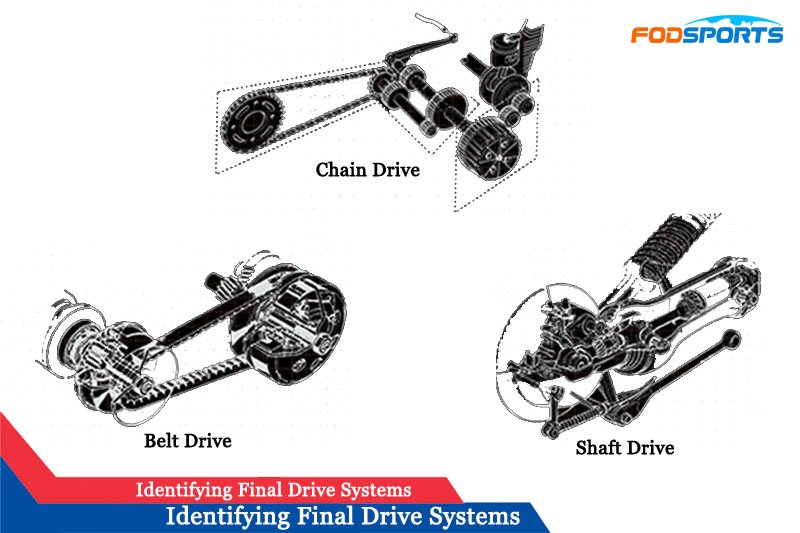
There are 3 major sorts of what are called "Last Drive" systems on a motorcycle:
- Chain Drive
- Belt Drive
- Shaft Drive
Chain Drive
Chain Drives are one of the most commonly discovered drive kinds for bikes. Chain drive makes up a basic chain of affiliations attaching two gears. The front sprocket is attached to the transmission output shaft. It is the driving gear and the one at the back wheel is the driven gear. Both these sprockets are linked through a chain, which additionally can be found in a range of layouts.
Chain, as well as sprockets, are one of the most reliable at transmitting power, with only 1-- 4 % transmission loss. That's dramatically less than belt drives & shaft drives. Chain drives are extremely basic in their working and also are very cost-effective to run as well as change. This is why this chain type is most commonly utilized.
However, it is that it needs regular lubrication (every 500-700km). Chain Drive systems have reduced life as contrasted to the other two drive systems.
Belt Driven
As the name indicates, belt-drive systems utilize grooved rubber belts enhanced with internal metal circuitry as opposed to chains and gears. Belt-drive arrangements don't need any kind of lubrication as well as have a remarkably long lifespan (frequently around 50K-100K-miles).
They're quieter than chains and also use smoother shipment also. Chains likewise extend quicker than belts, particularly under tremendous low-end torque as you'd locate on a big-bore cruiser or bike-- both styles of scoot that utilize belt drives. Belt drive systems likewise require sheaves which are normally also huge to fit (or make sense) on smaller-sized motorbikes.
While some power is always shed in between the crank and the back wheel, belt drive systems lose even more power than chain-driven configurations. Though upkeep does not require to be performed commonly, changing a belt-drive system normally calls for removing the entire swing arm.
Shaft Driven
Shaft drive systems are one of the most costly of the 3 systems. They are, nonetheless, the toughest of the 3. Shaft drives are extremely smooth and rarely require any kind of maintenance. Driveshafts frequently last the life of a motorcycle without requiring any servicing or upkeep whatsoever.
As the name suggests, shaft-driven motorbikes use a confined spinning shaft that transforms a gear attached to the back-rim which powers the bike. This setup is similar to what a normal car makes use of. Because these systems are confined, shaft drives are impermeable to water, mud, dirt, and also whatever other crud one could come across while out riding.
As a result of the high price of manufacturing and even more weight, shaft drive systems are utilized just in larger, extra expensive motorbikes.
Frequently Asked Questions about Motorcycle Engine Types
How to know the motorcycle engine type?
To check the engine type of the motorcycle, it is not hard. Here's how you can find out its engine type:
- Count the cylinders. Take a look at the engine itself or the exhaust pipes. If you only find one cylinder, it’s a single‑cylinder engine. If you spot two, it could be a parallel twin (sitting next to each other) or a V-twin (shaped like a V). More than that? Then this engine may be an inline-three, inline-four, or something even cooler.
- Check the cylinder's layout. Parallel twins have their cylinders right next to each other, sharing the same crankshaft. V-twins put those cylinders in a V shape around the crankshaft. And a boxer or flat-twin? Those stretch the cylinders out horizontally from each other.
- Inspect exhaust pipes or headers. For example, inline‑four engines often have four exhaust headers feeding into exhaust pipes.
- Check the documentation or stamping. The engine type and size are often stamped on the engine block or mentioned in your bike's handbook. You can easily find it.
So, put your eyes on the cylinders, the way they're set up, the exhaust pipes, plus info from the bike maker. You should be able to figure out what kind of engine your motorcycle sports.
How to identify 2-stroke versus 4-stroke by sound and smoke?
You can easily identify a 2-stroke engine from a 4-stroke by its unique sound and visible exhaust smoke. Here is a table to show you their differences:
What makes 2-stroke engines louder than 4-stroke ones?
Here’s the lowdown on why 2-stroke engines usually make more noise than 4-stroke engines and sound a bit twitchy:
- A 2-stroke engine fires on every crankshaft revolution, but a 4-stroke engine fires only every two revolutions. This means, those 2-stroke engines have twice as many combustion events per time. So, as a result, they will produce more frequent “pops” or “bangs.”
- 2-strokes typically don't have valves — they use ports instead. So, the exhaust gets released super quickly once the piston shows the exhaust port. This fast exhaust sends more of the engine noise out.
- Many 2-stroke engines also run at higher RPM and use freer, less restrictive exhaust systems (often tuned for performance). Thus, they make sharper sound and minimal muffling — making them noticeably louder.
What's the best engine type for motorcycle?
Honestly, there is no single "best" motorcycle engine type; each engine type has different features, functions, and potential use cases. The best choice depends on your priorities and intended use, such as commuting, touring, off-roading, or sport riding.
What's the most reliable motorcycle engine type?
For everyday use, simple, low‑stress engines like liquid‑cooled single‑cylinders and parallel twins are generally considered the most reliable, especially from Japanese brands such as Honda, Yamaha, Kawasaki, and Suzuki. These designs run lower compression and revs than high‑performance inline‑fours, have fewer moving parts, and are easier and cheaper to maintain. These advantages help them last high mileages when serviced on schedule. In real‑world owner surveys, brand quality and maintenance matter more than the exact layout, but a modestly tuned Japanese single or twin is a safe reliability bet.
What is the most common motorcycle engine type?
Parallel-twin engines are the most common engine type in today's motorcycles, especially in those bigger and mid-size bikes. But, if you look at the global market share, inline-four engines are the real champs. That's because tons of performance and standard motorbikes all over the globe use them. Now, single-cylinder engines are still popular in those smaller, cheaper bikes you see a lot in Asia. But manufacturers increasingly use parallel twins as a balance of cost, size, smoothness, and power.
Which is better, V-twin or parallel twin?
Neither V-twin nor parallel twin is absolutely better. You should choose based on your personal preference and riding style.
V-twin engines offer strong low-end torque and a distinctive "rumble," and their narrower block also improves handling. Therefore, they are well-suited for cruising, easy city riding, or long-distance touring.
Parallel-twin engines are generally lighter, more compact, and simpler in design. At higher revs, they tend to offer smoother, more linear power delivery and higher fuel efficiency. Therefore, they are suitable for daily riding, commuting, or sporty use.
Is v4 better than inline 4?
It depends — a V4 can be “better” than an inline‑4 for certain uses, but not universally, because each layout has trade‑offs.
Bottom line:
- A V4 engine tends to be “better” if you prioritize smooth power delivery, stronger torque, compact packaging (especially for bikes or performance‑oriented vehicles), and high RPM performance.
- An Inline‑4 engine is often “better” for everyday use — offering simpler design, lower maintenance cost, better fuel economy, and reliability.
(Latest Update: Nov. 28th, 2025)

Motorcycle mechanic, writer. Interested in motorcycle gear for years. Like to stay up to date with the newest products and techniques of the motorcycle.
You maybe like to read:
Fodsports Brand Month: Unbeatable Deals and Top-Notch Service
Discover Fodsports Brand Month July and August mark a special occasion for motorcycle enthusiasts and tech lovers alike. Welcome to Fodsports Brand Month! This event is dedicated to celebrating everything that makes Fodsports a leading name in the motorcycle communication industry. Get ready for a fantastic promotions, exceptional service from Fodsports. Let's insights into Fodsports' […]
Cherohala Skyway Tennessee and North Carolina: Fall Motorcycle Riding Guide
Few motorcycle roads in the Southeast combine elevation, open mountain views, and flowing curves quite like the Cherohala Skyway. Stretching about 43 miles between Tellico Plains, Tennessee, and Robbinsville, North Carolina, the National Scenic Byway climbs from lower valleys to elevations above 5,000 feet before crossing the Appalachian high country. In fall, the ride becomes […]
10 Best Autumn Motorcycle Routes in Europe: Scenic Roads, Fall Colors and Riding Tips
🍂 Why Autumn Is One of the Best Seasons for a European Motorcycle Road Trip Europe becomes a completely different riding destination in autumn. Alpine forests turn gold, mountain valleys develop deeper colors, vineyards become vibrant, and many popular roads become quieter after the summer peak. For motorcycle travelers, the biggest advantage is variety. In […]
Pig Trail Scenic Byway Arkansas in Fall: Motorcycle Riding Guide
Winding through the Boston Mountains, the Pig Trail Scenic Byway is one of Arkansas's most enjoyable fall motorcycle routes. AR-23 combines tight mountain curves, dense hardwood forests, and the Mulberry River, creating a ride where the road itself is part of the scenery. In autumn, the Ozarks become even more impressive as the forest changes from […]
Tunnel of Trees Michigan in Fall: Motorcycle Riding Guide
Red and gold forests, winding roads, and glimpses of Lake Michigan make the Tunnel of Trees in Michigan a memorable fall motorcycle destination. The roughly 20-mile M-119 route between Harbor Springs and Cross Village is best enjoyed at a relaxed pace, with plenty of time for scenic stops. Planning a ride in 2026 requires extra attention, […]