The motorcycle communication systems field just got a significant upgrade with the release of the Fodsports FX7. This state-of-the-art Bluetooth mesh intercom is packed with many advanced features and techs. It will revolutionize the way riders communicate and enjoy their rides. Whether you're a solo rider or part of a group, the FX7 offers unparalleled […]

What Is The Best Tire Pressure For ATV? Ultimate Guide 2025
October 10, 2022
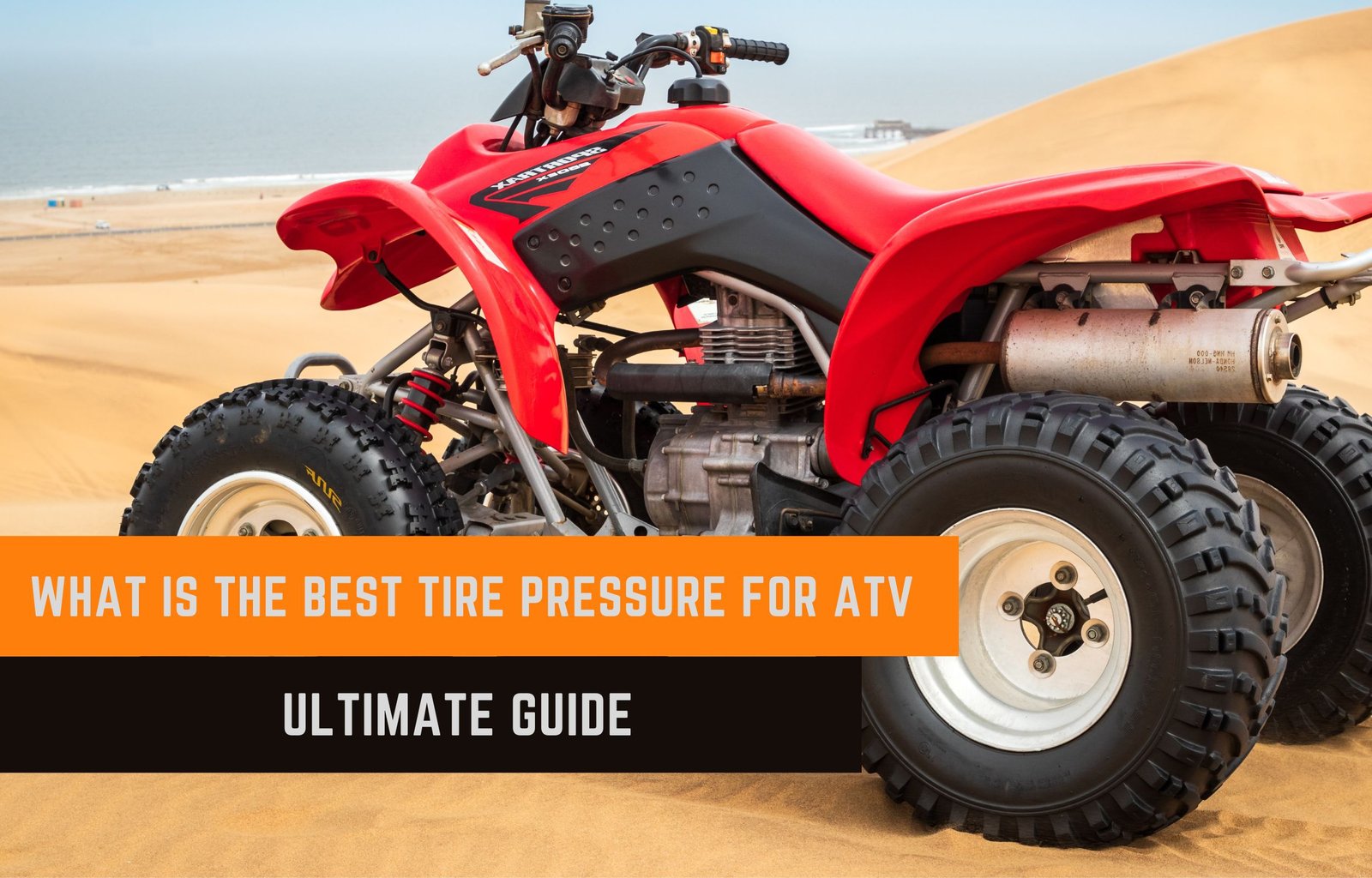
Maintaining the correct tire pressure for your ATV is essential for securely and also properly running your ATV.
Tire pressure is measured by determining the amount of air in the liner of the ATV tire in pounds per square inch (PSI). When your tires are blown up to the recommended tire pressure (PSI), you can delight in the maximum life as well as efficiency of the tire as well as the ATV.
Exactly how do you inspect your ATV or Quad tire pressure? At first, you need to recognize the recommended tire pressure for your tires. After that, you can utilize a low-pressure tire pressure gauge to gauge the air pressure of the tires, readjusting as required to fulfill the recommended PSI or to fulfill your demands in particular circumstances.
Read further to see exactly how to finest check and also preserve your tire pressure for each scenario.
Table of Contents
The Importance Of Correct Tire Pressure
No correct tire pressure for ATV can trigger a lot of problems. Whether it's higher, lower, or irregular tire pressure, your safety when operating the ATV as well as the durability of the tires will certainly be impaired.
Incorrect tire pressure gives you much less control over your ATV and also can put you in the danger of an accident.
The most noticeable threat the popping your tire. If your tire pressure is as well low or too high, it is a whole lot much easier to pierce the tire and also leave you with a puncture.
When the tire is flat, it is really simple to enter a negative accident, however also when your tire does not blow, incorrect tire pressure can place you at a higher risk of mishap. Improper tire pressure gives you less control over the ATV, making you more likely to be involved in a collision at high speeds, sharp turns or jumps
Lastly, even if you aren't bothered with getting in an accident, improper tire pressure will trigger uneven endure your tires. This will certainly require you to change the tires regularly, as well as no one such as squandering cash on tires! Uneven pressure in between your tires will certainly likewise cause your ATV to seem like the positioning is off, as the quad will pull towards the side of the less-inflated tire.
What PSI Should My ATV Tires Be?
ATVs require lower tire pressure than an auto or a UTV, with many owners preferring a worth of between 4 and 7 PSI. The best means to identify just how much air you ought to contribute to your quad's tires is by inspecting suggestions.
You initially need to view the side of the tires, especially if you made a decision to ditch the supply tires as well as buy your own a different kind. Make sure to examine all tires, as some ATVs feature various size tires in the front and also rear of the 4-wheeler.
Below you will discover a number that is fairly high, generally between 25 and 30 PSI. You ought to never ever inflate your tires to this value, since it stands for the optimum enabled tire pressure. This is just needed when you are first installing your tires. After that you will deflate them to worth between 2 and 10 PSI, relying on your needs.
The 2nd suggestion you need to consider remains in your ATV proprietor's guidebook. Each quad supplier has its own special style, and factors such as the total weight and also dimensions of the ATV can have an effect on the recommended stress. Because of this, relying on the particular quad version you have, the optimal ATV pressure can be anything between 3 and also 7 PSI.
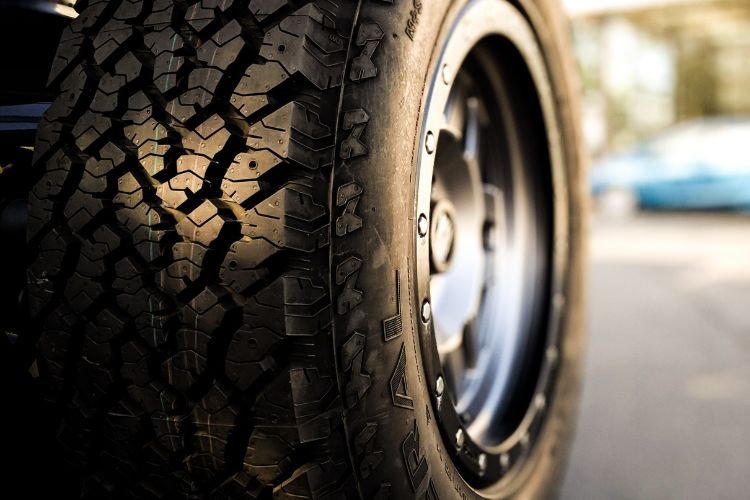
How much air should I put in my 4 wheeler tires?
The tire pressure of your four-wheeler usually sits between 5 and 15 PSI, but your owner's manual has the exact numbers you need. The right pressure depends on where you're riding, how heavy your ATV is, and how you ride.
Here's how to get it right:
- Check the Manual: A Polaris and a Can-Am may have different needs. A Yamaha Raptor 700 might want 4 PSI, while some Can-Ams want 15-25 PSI. Start with the recommended cold pressure.
- Inspect The Tire Sidewall: This shows the *maximum* pressure, not what you should use. Don't go over it.
- Adjust according to Terrain: Softer ground = lower pressure for grip. Harder ground = higher pressure for stability.
- Use Low-Pressure Gauge: Automotive tire gauges aren't accurate at the low pressures used in ATVs (often 3–7 PSI). Get a low-pressure one.
- Check When Cold: Measure your tire pressure before a ride. Heat from driving causes the air pressure to increase, leading to an inaccurate reading.
Rough PSI Guide According to Riding Environment (General ranges)
- Mud: 4–6 PSI
- Sand: 5–10 PSI
- Rocks: 6–8 PSI
- Trails: 7–12 PSI
- Pavement: 14–18 PSI
PS: These are just general ranges. I still suggest you check with your manufacturer's recommendations.
Safety Tips!
Front vs. Rear: Rear tires often suffer more weight and need 1-2 PSI more than the front. Check your manual.
Don't Under or Over Inflate: Both are bad. Under inflation can cause flats, over inflation can hurt the ride and risk punctures.
Pack a Compressor: Bring a small air pump to handle different terrains.
Factors Affecting Tire Pressure:
1. The size of the ATV and its load
2. Type of tire
3. Riding terrain
4. Rider Preferences
On the sidewall of your tire, there should be printed the certain tire pressure that is advised for your tire. The optimum suggested pressure is provided by the manufacturer. Do not exceed the maximum suggested tire pressure. If you do, you might trigger damage to the tire and take the chance of a tire erupting, which can cause injury.
What is the recommended ATV tire pressure for off-road riding?
For ATV off-roading, most experts will tell you to adjust your tire pressure to match the terrain you're riding on.
First, check the recommended settings. After that, mess around with the pressure based on your ATV and the trail to get it just right.
For general off-road riding of ATVs, keep your tire pressure between 5 and 10 PSI. Here's the breakdown:
- If the ground is soft, go with lower pressure: for mud, loose sand, or deep snow terrain,it is better to set at a lower tire pressure (approximately 3-8 PSI). Lower pressure means more tire's "contact area", so you get maximize grip. This helps you get better traction and prevents the vehicle from getting stuck in mud..
- If the ground is hard, add higher tire pressure: if you're riding your ATV on packed dirt, gravel, or rocks, pump your tires pressure up to around 10-12 PSI (or even 18 PSI if it's super hard). Higher tire pressure helps keep your ATV stable and makes it easier to steer. Plus, it helps keep sharp stuff from poking holes in your tires.
Keep in mind, ATV manufacturer and model may different. SO, follow the pressure range they tell you. You can usually find the max tire pressure in your owner's book, on the maker's site, or on the side of your tire. Just don't go over that number!
When Should You Adjust Tire Pressure?
While it is never recommended to add or deduct too much air from the advised minimum stress, there are times when a greater tire pressure can be much more useful.
Indeed, lots of quad racers will certainly add several PSI to their ATV tires prior to a race. The added pressure will certainly make your tires a little much more tight, which is useful when taking sharp turns at high speed and also when you are sliding.
Higher tire pressure can additionally help avoid a punctured tire when you are moving at high speed. When you struck a sharper thing, a fuller tire will certainly more easily disperse off the tire whereas a tire with lower pressure will certainly let that item sink deeper into the tire, more likely creating a leak
There are additional times when a somewhat reduced tire pressure can be beneficial. These situations are where you desire extra grip and need as much of your tread to grasp the ground as feasible.
A little reduced tire pressure will certainly add even more traction when you are riding through damp mud, snow or slush. You intend to be careful in the mud; nevertheless, with reduced pressure tires can collect more mud. So, if you observe your tires getting clogged with mud, you need to enhance the tire pressure to more effectively tossing that mud from the tire.
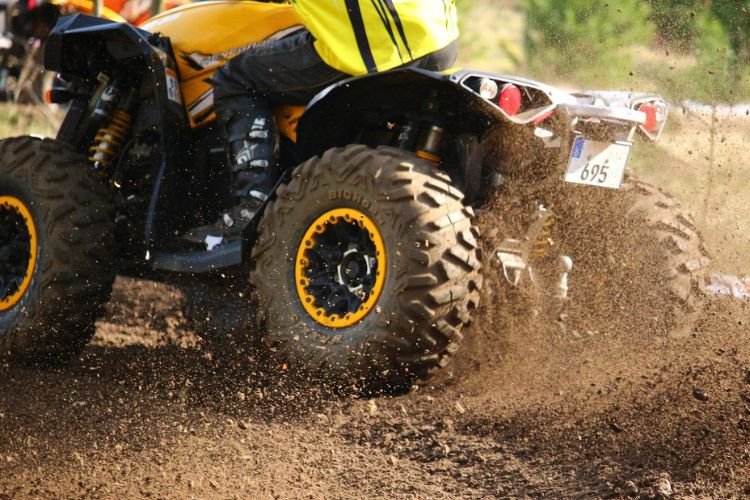
Top-rated tire pressure monitoring systems for ATVs?
There aren't many tire pressure monitoring systems (TPMS) specifically designed for all-terrain vehicles (ATVs) on the market. But some rugged and durable systems suitable for off-road or multi-purpose vehicles (UTVs) are highly rated and well-suited for four-wheeled use.
Here are some reliable TPMS systems for ATVs—especially suitable for multi-purpose ATVs or situations requiring real-time monitoring and alerts:
Just transforming your tire pressure by 1 psi can make a large distinction in just how your ATV deals with. Higher tire pressure is much better if you intend on riding with several individuals on one ATV or if you are carrying an additional load. Such as hunting equipment or outdoor camping equipment.
You might additionally add a little air to the tire if you intend on riding on a mostly solidified surface. Often with the really sloppy surface, a boosted tire pressure can aid you to acquire traction under the mud pit and also will help you venture out a little simpler. If there is no base for the tires to grip, less tire pressure will certainly help with acquiring traction in the mud itself.
Having higher tire pressure can likewise aid protect the edges of the ATV. Pumping up the tire too much can make it easier for a sharp rock or log to puncture the tire, so be careful.
If you're riding at higher speeds, lugging additional weight, or the surface is difficultly stuffed, I recommend 7-8 psi.
Advantages of higher tire pressure:
1. Higher speed
2. Secures tire and edge from influences
3. Great for larger riders or bring added weight
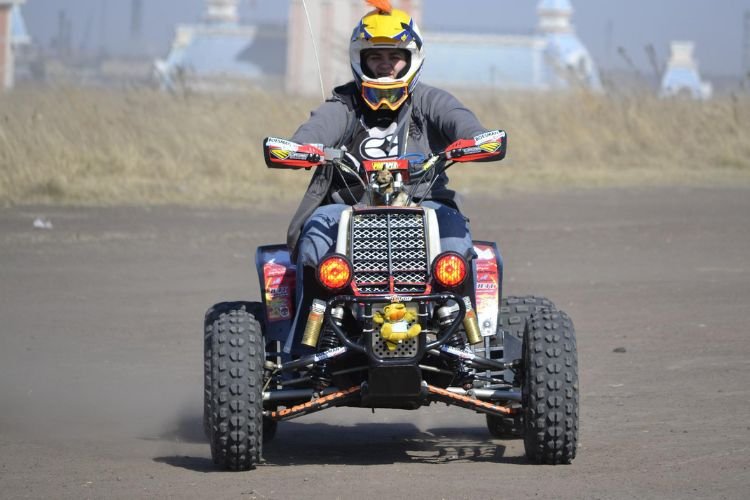
Lower Tire Pressure
Lower tire pressure is especially useful for places you require extra grip. Such as sandy locations or locations with loose dust or crushed rock.
If you're mosting likely to be riding through a great deal of sloppy surface, reduced tire pressure could be something to think about as well.
With reduced tire pressure, the tire is able to grab on the surface better, giving you much more grip in areas you require it. When riding in the snow, reduced tire pressure is also very useful. More of the tire is in contact with the ground, limiting the amount your tire will certainly slide.
If you're riding in rough, sandy, sloppy, snowy, or other loosened terrain, I suggest 3-4 psi.
Advantages of lower tire pressure:
1. Much better grip
2. Helpful for lightweight riders.
3. Great for the loose surface.
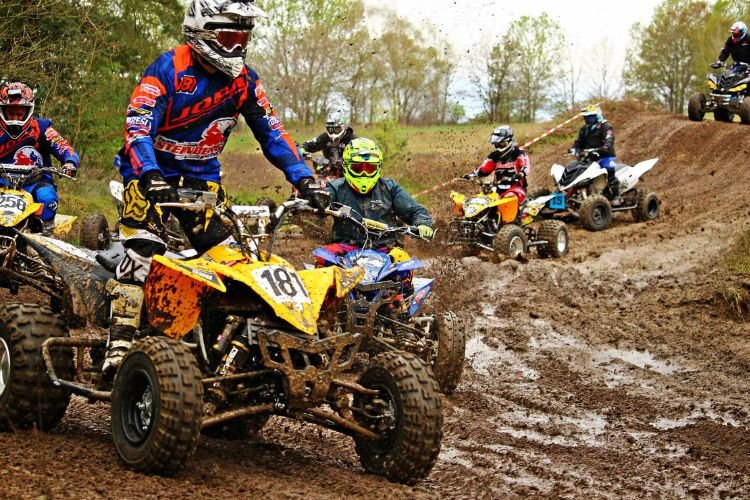
Is 40 psi too high for ATV tire pressure?
Yes—40 psi is too high for most ATV tires under any circumstances. This is significantly higher than the normal tire pressure for ATV tires.
To be honest, this is a very dangerous high psi for ATV tires.
Generally, depending on the terrain, the optimal ATVs tire pressure should be between 5 and 15 PSI.
First, overinflating ATV tires (e.g., up to 40 psi) reduces the tire's contact patch with the ground. This results in a bumpy ride, decreased grip, and an increased risk of blowouts or uneven tire wear.
In this situation, both the vehicle and the rider will be uncomfortable.
When riding on hard surfaces or hitting obstacles such as rocks or tree roots, overinflated tires become stiff, less flexible, and more prone to punctures or blowouts.
Many ATV manufacturers' manuals specify very low maximum operating tire pressures. For example, some manuals indicate a maximum tire pressure of only 11 psi. Exceeding the manufacturer's recommended operating range puts excessive stress on the tire's structure and components. This can lead to premature wear or even a blowout.
If your ATV tire pressure gauge shows a tire pressure of approximately 40 psi, immediately deflate the tire to a range of approximately 5-15 psi (or the tire pressure recommended by your vehicle/tire manufacturer).
Where to find ATV tire pressure charts by tire size?
ATV tire pressure isn't just related to terrain, vehicle load, and manufacturer recommendations.
The general operating range is typically between 5 and 10 PSI. But you need to adjust that a bit based on where you're riding.
Below is a general guide to recommended PSI for common ATV tire sizes according to different terrains:
Also, here is another ATV tire pressure chart by terrains:
How To Check Tire Pressure
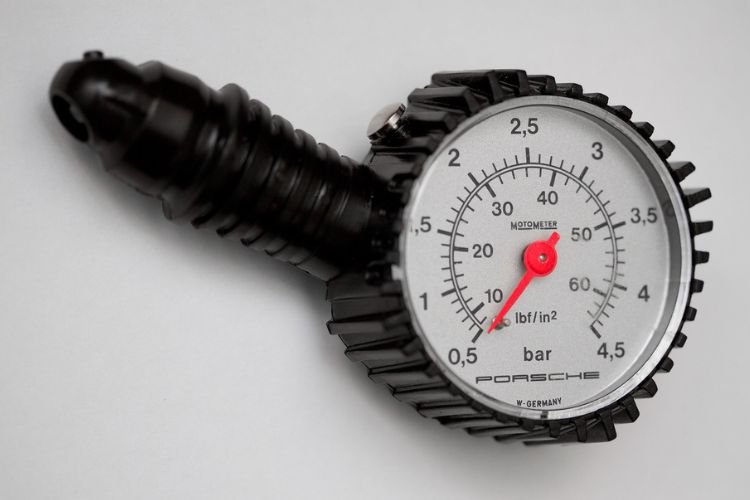
You don't want to eyeball your tire pressure when you are filling it. Particularly with off-road tires and large treads, it is really difficult to establish the tire pressure without a gauge. The only thing is you require to get a details gauge for your ATV.
You need to always examine your tire pressure when the tires are not hot. If you keep in mind high-school chemistry, it will make good sense to you that the air inside the tires will certainly expand as the tire gets hotter. This will certainly result in a greater tire pressure reading.
Due to the fact that advised tire pressures refer to the pressure at regular temperature levels, you will not obtain an exact read if your tires are too warm.
Likewise, you will get a reduced tire pressure value if you are examining the pressure at sub-freezing temperature levels. Due to this, you need to always examine your tire pressure before you ride or a few hours after you have quit riding.
Of course, if you observe your tire pressure is low throughout a ride, you naturally want to look after it as soon as possible, but just bear in mind that the tire pressure is mosting likely to read a little more than normal so you will certainly want a touch of extra air in the tires.
We suggest examining your tire pressure prior to every ride so you can always make sure the tire pressure is right. Now, the actual procedure of examining the tire pressure is rather easy.
The steps of the tires pressure check are as follows:
1. Remove the cap from the air shutoff on the tire, and also placed it someplace you won't lose it.
2. Press the tire gauge versus the open shutoff stem for a second or two. It's regular to listen to a hiss of air.
3. Read the pressure gauge. For hands-on determines, a dial points to the stress or a bar shows the stress by just how far it was pushed out. The stress will show up onscreen on an electronic tire gauge.
4. Contrast this number with the advised tire pressure.
5. Replace the tire's air valve cap. (Resist this action if you require to change the air pressure.).
6. Repeat this procedure for every tire.
Digital gauges can be easier to read. With the hand-operated ones, you might need to reconsider it if something interrupted the gauge when it was popping out since that would certainly make the outcome imprecise.
What Occurs If You Exceed Max PSI?
Too much air pressure can also misshape the shape of the tire, bring about lowered traction and boosted wear and tear down the center of the tire. Depending on the scenarios, repetitively overinflated tires could wear quicker.
Which ATV tire brands offer tires with optimal pressure ratings?
While the "optimal tire pressure" depends on the actual riding environment and intended use, it's not always absolute.
Some ATV tire brands consider specific characteristics when designing their products, and they are known for producing tires with low tire pressure and high flexibility suitable for off-road riding.
These brands' tires also perform well within the general optimal tire pressure range (typically 5-15 PSI for off-road use).
Here are some top ATV tire brands and their best models:
Well-known ATV tire brands with excellent low-pressure performance
Which Tires Are Best?
The optimal tires for your ATV rely on what you're planning to do with it. For example, all-terrain or all-purpose tires are similar to all-season ones on your automobile. They're great for driving on sand, grass, mud or sidewalk, yet they don't really shine on any type of surface.
Mud tires are constructed to control the muck. They feature much deeper aggressive steps to dig through mud and obtain a grip. While they succeed on sloppy trails and also crushed rock, and also succeed on hard snowpack and tough sand, they might not give you much grip on soft sand or sidewalk.
Off-road tires are really a balance in between all-purpose and mud tires. They feature more-aggressive tread than versatile tires, yet are not as hostile as mud tires. Off-road tire construction, as well as sturdiness strikes a comparable equilibrium.
Turf-saver tires provide the very best traction on sidewalks as well as other tough surfaces. Their level non-aggressive tread keeps them from messing up the lawn and helps them last longer on difficult surface areas. Sand tires, on the other hand, are made for soft sand. Back sand tires are wide for far better flotation protection, and also level ribs cross the entire width of the tire for grip, and also it's easy to see why they're commonly called "paddle tires." Front sand tires normally include no step at all, with a solitary or double rib for guiding.
Snow tires can be located in layouts comparable to both mud tires as well as sand tires, one more balance of grip and also flotation protection. Some also feature openings for studding.
Motocross tires are similar to all-purpose tires, yet optimized for shut dust tracks, whose surface areas are usually pretty uniform and loosened. Tight lugs and broad spacing create far better cornering, traction and also cleanout.
ATV & UTV Tire Guide: 7 Key Things to Know Before You Ride
How Fast 125cc ATV Go? Most Complete Overview

Rodney L is a technical writer and product consultant with over a decade of experience in the motor industry. Rodney is a fan of performance machines that run fast and loud and an expert in all things custom. His numerous articles and write-ups are available at our knowledge base. Whether it’s something wrong with your motorcycle or you are building a custom bike, you can trust Rodney’s experience.
You maybe like to read:
Fodsports Brand Month: Unbeatable Deals and Top-Notch Service
Discover Fodsports Brand Month July and August mark a special occasion for motorcycle enthusiasts and tech lovers alike. Welcome to Fodsports Brand Month! This event is dedicated to celebrating everything that makes Fodsports a leading name in the motorcycle communication industry. Get ready for a fantastic promotions, exceptional service from Fodsports. Let's insights into Fodsports' […]
Transfăgărășan in Autumn: Romania’s Ultimate Motorcycle Riding Guide
Autumn transforms Romania’s Transfăgărășan Highway into a dramatic mountain journey, with golden forests, rugged peaks, winding asphalt, and sweeping views across the Făgăraș Mountains. For motorcycle riders, it offers a memorable combination of technical corners, spectacular scenery, and opportunities to explore the Romanian countryside. But an autumn ride requires more planning than a summer trip. […]
Grossglockner High Alpine Road in Fall: Austria Motorcycle Riding Guide
Autumn transforms Austria’s Grossglockner High Alpine Road into a spectacular mountain destination. Golden larch trees brighten the slopes, crisp Alpine air can reveal dramatic mountain views, and 36 hairpin bends make the journey memorable for motorcycle enthusiasts. Yet autumn also brings unpredictable weather, cold pavement, and possible road closures. For riders planning an Austrian Alps […]
Black Forest High Road Motorcycle Guide: Best Autumn Ride, Scenic Routes and Riding Tips in Germany
Few places in Germany combine flowing mountain roads, colorful forests, traditional villages, and peaceful viewpoints as perfectly as the Black Forest High Road (Schwarzwaldhochstraße B500). In autumn, this legendary route transforms into a spectacular motorcycle destination, with golden beech forests, misty valleys, and panoramic views stretching toward the Rhine Valley and even France on clear […]
Ultimate Dolomites Autumn Cycling Guide: Best Fall Foliage Routes & Expert Gear Blueprint
The Italian Dolomites in autumn transform into a sensory masterpiece. As the chaotic summer crowds dissipate between mid-September and late October, the entire Alpine region ignites with golden larches, fiery maples, and stark white limestone peaks. This fleeting shoulder season provides the ultimate window for an epic Dolomites cycling tour and foliage chasing. Compared to […]