The motorcycle communication systems field just got a significant upgrade with the release of the Fodsports FX7. This state-of-the-art Bluetooth mesh intercom is packed with many advanced features and techs. It will revolutionize the way riders communicate and enjoy their rides. Whether you're a solo rider or part of a group, the FX7 offers unparalleled […]

Can You Increase ATV Tire Size? Main Things To Consider 2026
October 29, 2022
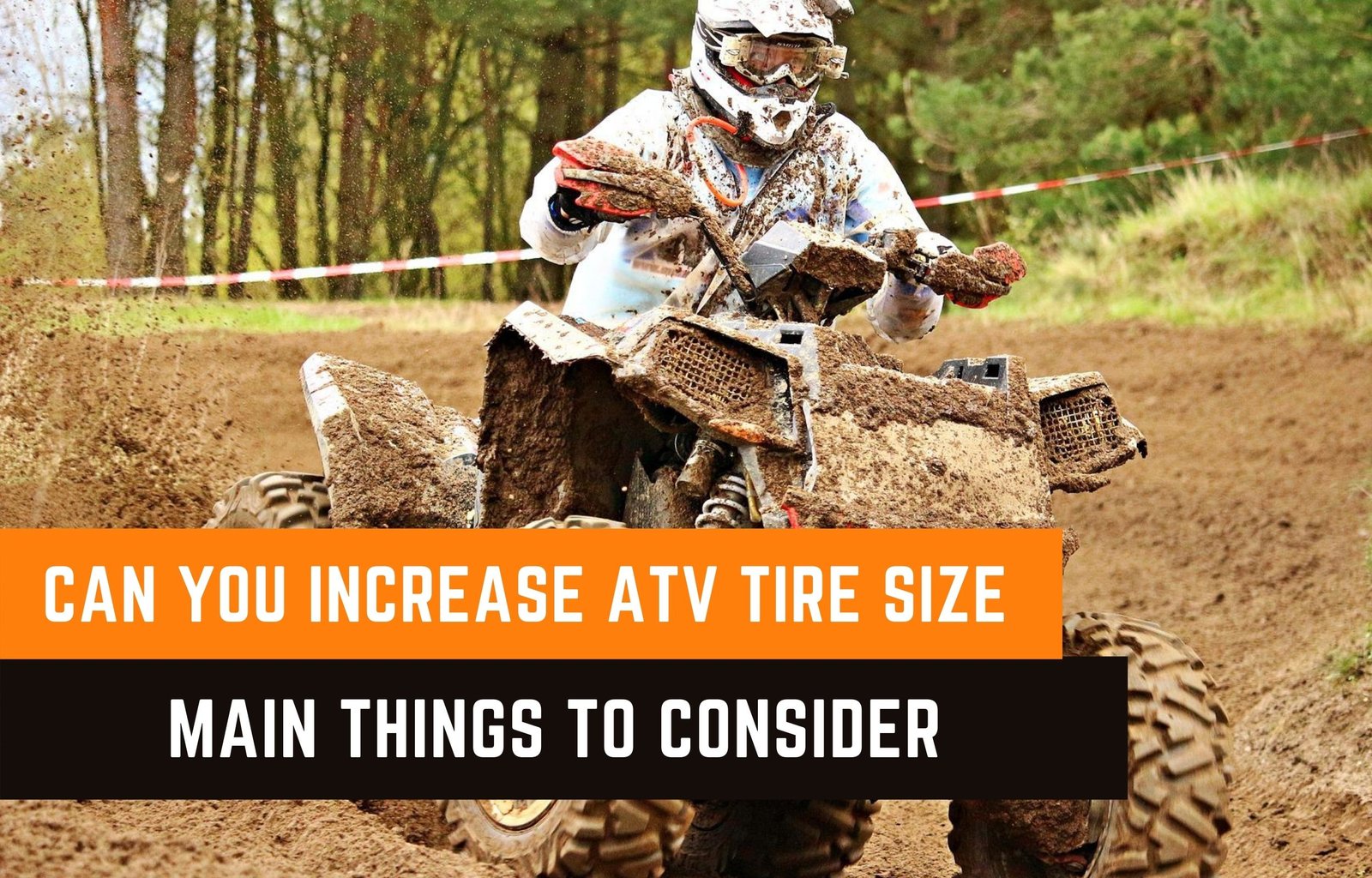
Increasing ATV tire size is one of the most common adjustments ATV owners make to their vehicles. Most of the riders do so to boost off-road efficiency. Some do it for looks, while others may wish to boost their ATV's top speed.
Yet when it comes to tires and speed, bigger is not always better. So do larger tires make an ATV better?
Installing larger tires on an ATV can enhance the top-end speed when riding on a straight flat. But it will certainly likewise adversely impact low and mid-range velocity as well as handling, making the bike slower in the majority of riding situations. It will add more stress to the ATV suspension as well as the drivetrain.
Table of Contents
Tire Size and ATV Efficiency
The expression "larger is far better" does not always hold, especially concerning ATV tires. There are special conditions, such as deep mud, heavy snow, or rugged terrain, where the extra ground clearance is handy.
Nevertheless, on a day-to-day basis, the advantage you get is purely cosmetic. If you make use of a bigger tire, you ought to make sure that your ATV can withstand the tension of bigger tires. You might also need to make some alterations to your ATV to suit much heavier tires.
Large-scale ATV tires are generally dramatically heavier than stock tires. This factor is a significant one to think about, as additional stress is put on numerous parts. The result is that the extra tire elevation and weight can have a bearing on vehicle efficiency.
What Dimension Tire Will Fit My ATV?
Bigger tires can assuredly aid you to push on clearance and also traction in sand, deep mud, snow, or irregular terrain. As a basic regulation, the majority of vehicles can safely manage an increase in tire dimension by one or even two sizes larger than stock.
From the manufacturing facility, our vehicles have actually been engineered to carry out and behave a certain way with a detailed dimension of wheel and tire combination.
An excellent general rule for an acceptable increase in tire size is 1 size bigger for vehicles 500cc or much less, as well as 2 sizes larger for automobiles between 500cc and 1000+ cc.
How Do I Read ATV Tire Sizes?
ATV Tire Size Explained
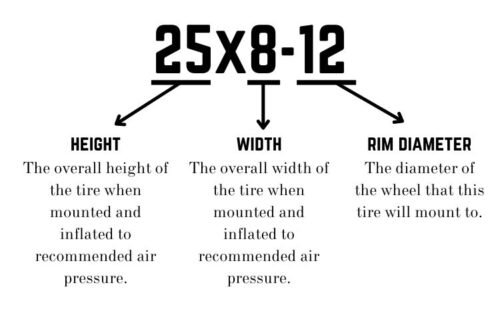
In this photo, you can see an ATV tire size example.
ATV tire sizes are typically expressed as a sequence of three numbers (e.g., 25x8-12) that represent the tire's height, width, and the rim size it fits, all measured in inches. Understanding these dimensions is critical for ensuring proper fitment and maintaining vehicle performance.
- 1st Number = The overall height of the tire. (such as a 25x8-12 tire is 25" tall.)
- 2nd Number = The overall width of the tire. (such as a 25x8-12 tire is 8" wide)
- 3rd Number = The rim diameter. (such as 25x8-12 tires are designed to mount on a 12" rim)
Standard ATV Sizing (Imperial)
The most common format for ATV tires uses three numbers separated by an "x" or a dash. Using 25x8-12 as an example:
- 25 (Tire Height): This is the first number. It is the overall diameter of the tire in inches when fully inflated.
- 8 (Tire Width): This is the second number. It is the width of the tire's tread in inches.
- 12 (Rim Diameter): This is the third number. It is the diameter of the wheel (rim) the tire is designed to fit.
- Construction Letter: You may see a letter like "R" (Radial) or "D" (Diagonal/Bias-ply) between the width and rim size. A simple dash often indicates a bias-ply tire.
Metric ATV Sizing
While rare for ATVs, some tires use a metric format similar to automotive tires (e.g., 205/80R12).
- 205 (Width): The width of the tire in millimeters.
- 80 (Aspect Ratio): This is a percentage indicating the sidewall height relative to the width. In this case, the sidewall is 80% of 205mm.
- R12 (Construction & Rim): "R" stands for radial construction, and "12" is the rim diameter in inches.
Performance Impacts of ATV Tire Size Changes
Changing your ATV tire size from the original equipment (OE) specifications can significantly alter how your ATV handles.
- Going Larger: Increasing tire height (e.g., from 25" to 27") improves ground clearance and helps overcome large obstacles. However, it can reduce low-end torque, increase stress on the drivetrain, and raise the vehicle's center of gravity, making it more prone to tipping.
- Going Smaller: Smaller tires provide better acceleration and more nimble handling, but reduce ground clearance.
- Wider vs. Narrower: Wider tires offer more traction and stability on soft surfaces like sand, while narrower tires often provide more precise steering. Most ATVs use a staggered setup, with narrower tires in the front (e.g., 8" wide) and wider tires in the rear (e.g., 10" wide) to balance steering and grip.
Adverse Impacts Of Putting Bigger Tires On Your ATV
Increasing the size of your ATV tires will definitely give your vehicle a much more aggressive appearance while boosting ground clearance and grip.
Nevertheless, there are some negative results, which will more than likely present themselves otherwise properly addressed with high-quality aftermarket components and accessories.
Several of the possible problems are as follows:
- Loss of Low-end Acceleration
- Boosted Clutch Wear
- Tire Rub on Body Panels/ Suspension Elements
- Raised Drive Belt Wear
- Premature Drive Line Failing - As A Result Of Increased Angles
- Premature Axle Failing
- Premature Wheel Bearing Failure
- Increased Roll-Over Rate
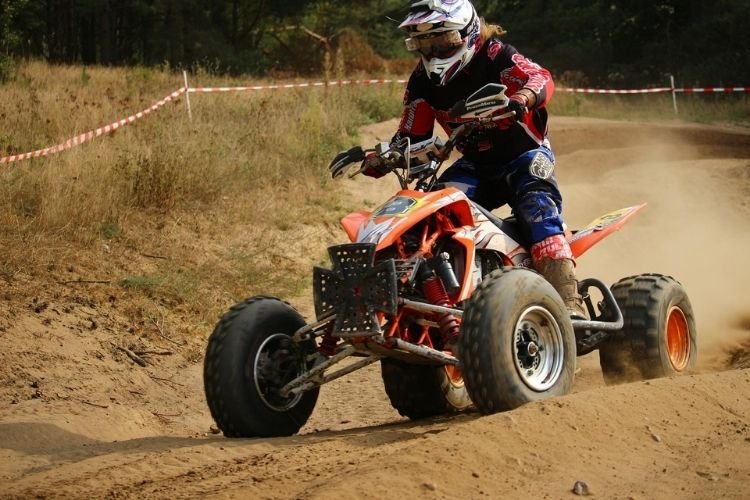
Low-end Acceleration
With a larger tire, you get a bigger turning mass. Your heels will certainly not turn quickly from a stationary setting. This modification implies that if you need to make a flying start in a race, you will be at a disadvantage.
In this instance, you may have to do the opposite, that is, make use of smaller-sized tires than stock tires. You will discover a smaller tire that is much easier to turn, and also there is likewise a reduction on duty to increase quickly. Your vehicle will certainly experience a decrease in the top-end speed.
Gearing/Low-end Torque/Clutch
With taller tires, the gear ratio is enhanced. A bigger ATV tire will certainly lead to a larger rotating mass from the boost in weight. The mix of both leads to a decrease in low-end torque.
Your engine will certainly require an extra initiative to get the wheels moving from a fixed setting. You may not have the ability to rotate tires in mud as efficiently, either.
Suspension And Drivetrain Stress
The standard drivetrain and also suspension components of ATVs will not typically take the additional tension of bigger size tires. Bigger tires increase the weight of these components and increase the frequency of repair and maintenance.
Moving Facility Of Gravity/Poor Handling
You install larger tires to enhance your ground clearance. With the raising of the framework, the center of gravity of your ATV will likewise get elevated. The result is that the ATV becomes much more unstable while making sharp turns. The transforming span additionally gets minimized as a result of increased elevation as well as the weight of the tires raising guiding effort. It ends up being harder to steer your ATV. So, the trail riding abilities of your ATV obtain adversely influenced by larger tires.
May Void Supplier's Warranty
Because of the issues that might happen as a result of altering tire size, makers put particular constraints. Although a slight increase in tire size might be able to examine the warranty terms.
Each supplier will have a different set of terms. Warranty that you are within permissible limits with any type of modifications that you propose to do. Also, inspect if the brand-new tires are able as per the warranty terms. Obviously, if your ATV has crossed the warranty duration, after that the option is your own.
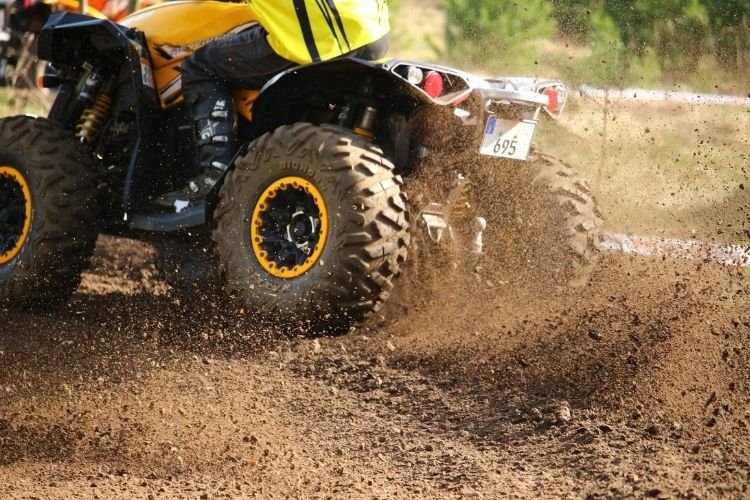
How To Solve ATV Tire Dimension Problems?
Since we understand the prospective negative effects, we are able to explore the remedies to these troubles to ensure that we can securely and successfully run those big, meaty, and hostile tires.
Gear Decrease And Clutch Kits
The taller or the larger the tire that you install on your ATV, the higher the gear ratio will become. Larger tires will additionally be heavier as well as will have a larger turning mass, which will certainly reduce low-end torque and power. Your engine will work harder to get the wheels rolling, as well as when at speed, you will be great up until you encounter a challenge such as deep sand or mud, where the capability to spin the tires quickly in mud will be reduced.
The solution to these issues will certainly be a gear decrease package or the installation of a clutch set. These services are various, so pick the kits that will best serve your needs.
- Gear Reduction Kits will certainly allow the wheels to spin much faster.
- Clutch Kits will permit the engine to rev higher prior to involvement.
KEEP IN MIND: Please keep in mind that both of the above repairs will certainly trigger a loss in total top speed.
Suspension Lift Kits
When you want to go with even larger ATV tires, you will certainly need to start changing your machine. The first thing that you will need to look at is a suspension lift kit. A lift kit will raise the suspension higher to offer more area for the tire to fit beneath. It will certainly also give you much more ground clearance.
The size of the lift kit that you set up depends on just how big the tires you desire. With a larger maker, the sky really is the limit if you are willing to purchase the sturdy components to support the lift package and the added weight of the bigger tires.
Wheel Spacers
ATV wheel spacers aren't just for bigger tires. They are usually helpful for taller tires, too. The larger size of the tire makes it a lot more vulnerable to scrubbing while turning. The wheel spacer can prolong the wheel even more from the shocks and shows off as well as the exhaust for correct clearance.
ATV wheel spacers can also help make your ATV extra secure. With the added ground clearance, the center of mass is additionally elevated, making the machine more vulnerable to tipping.
With the wheels spaced further apart, the weight of the ATV is distributed even more equally, which makes it extra stable on edges. This effect can also be achieved by readjusting the balance of your ATV wheel, but that does require it to be done very carefully.
Heavy-Duty Suspension And Drivetrain Components
With every one of the additional weight of a bigger tire and also the boosted angles from the added elevation, there is a great deal of additional stress being placed on the drivetrain and suspension.
It is a good suggestion to upgrade these parts, including axles, CV joints, and also shocks, to help stop sped-up wear triggered by the rise in anxiety. Without an upgrade, these parts will break a lot faster and can even fail under excessive stress.
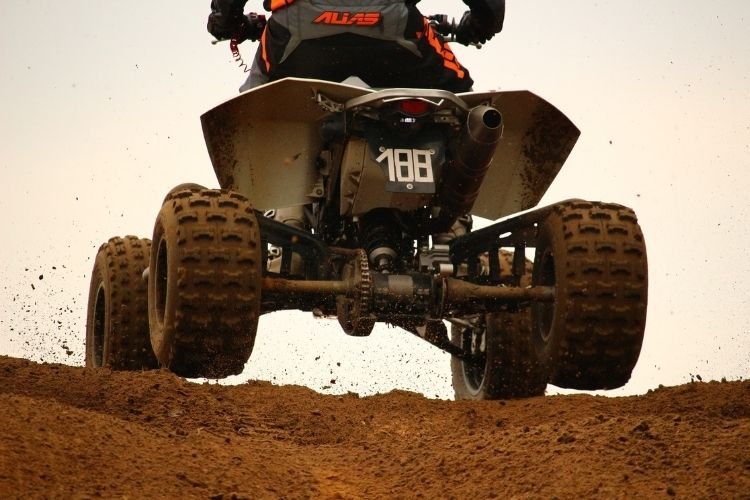
Things To Consider When You Increase ATV Tire Size
The stock tire dimension on your ATV is especially built as well as selected for the engine dimension, suspension geometry, and the transmission's capacity to spin that wheel and tire combo.
But in the future, you might wish to add a different set of wheels, and opportunities are you'll likewise intend to get a better-than-stock tire for those new rims. When you consider including a larger tire or choosing various rims, there are several things you must think about.
1. Keep in mind the offset of the wheel itself, and attempt to stay with the exact same or similar balance. In nonprofessional terms, the offset of the wheel is how far the edge embeds, as well as of its mounting factor when on the device. This number can determine just how the steering functions. Wheels that are more balanced out outside can make it tougher to turn the manage bars, while wheels that are way too much inward balanced out might bind on various other elements.
2. Pick an affordable tire size. Wanting a big 4X4 look can come with a high price, so make sure your maker has the space in the fender to roll as well as turn that large tire. The majority of stock-size ATVs can stand wheels that increase in size or two without scrubbing on a regular surface, but when the suspension begins to really strain, as well as the wheels bounce up and down, it's a different tale.
3. Take into consideration aftermarket heavy-duty axles to go with your brand-new wheels as well as tires. Oversized tires and wheels not only take a toll on the power plant but also on the driveline as well. CV axles will use quicker-- as well as some extremely too soon-- because they are currently needing to rotate the larger tire at your command, and simply can't take care of the strain. So think about the durable axles now (or at least sooner as opposed to later). If you have a belt-driven transmission, this too may require upgrading to rotate the bigger tires.
FAQs
Can I put bigger tires on my ATV?
Yes, you can typically put larger tires on your ATV, but there are limits. Most stock machines can handle tires one to two inches larger than the factory size without major modifications.
You can increase your ATV’s tire size a bit, but there are pros and cons you should know.
- Clearance: Too large tires will rub against fenders or suspension components. So, if you want larger tires, choose those that are just 1 - 2 inches larger than the original tire size.
- Balance the Performance: Larger tires can increase ground clearance but reduce low-end torque and acceleration. So, consider balancing them.
- Stress: The extra weight of larger ATV tires will bring more strain to the drivetrain, axles, and clutch.
- Modifications: For extremely large size tires, you may need a lift kit, wheel spacers, or a clutch kit to maintain performance.
Does tire size affect your speed?
Yes, ATV tire size significantly impacts your speed. Think of it like a bicycle's gears:
- Larger Tires: These have a higher top speed. Because the tire has a larger circumference, it covers more ground with every single rotation. However, they are heavier, which makes the engine work harder to get moving.
- Smaller Tires: These provide better acceleration. They are easier for the engine to turn, giving you more "punch" off the line, but your maximum top-end speed will be lower.
Can I get bigger tires without changing rims?
Yes, you can install larger tires on your stock rims, but there are limits.
- Size limit: Most ATVs can handle tires one to two sizes larger (about 1–2 inches in height) than stock without rubbing against the frame or suspension.
- Rim match: The tire’s inner diameter must exactly match your rim size (e.g., a 12-inch rim needs a tire ending in "12").
- Trade-offs: Bigger tires add weight, which can make your steering heavier and reduce low-end power.
Going even larger may require a lift kit or wheel spacers to prevent damage.
Four wheeler vs Quad vs ATV – What Is The Main Difference
ATV & UTV Tire Guide: 7 Key Things to Know Before You Ride

Rodney L is a technical writer and product consultant with over a decade of experience in the motor industry. Rodney is a fan of performance machines that run fast and loud and an expert in all things custom. His numerous articles and write-ups are available at our knowledge base. Whether it’s something wrong with your motorcycle or you are building a custom bike, you can trust Rodney’s experience.
You maybe like to read:
Fodsports Brand Month: Unbeatable Deals and Top-Notch Service
Discover Fodsports Brand Month July and August mark a special occasion for motorcycle enthusiasts and tech lovers alike. Welcome to Fodsports Brand Month! This event is dedicated to celebrating everything that makes Fodsports a leading name in the motorcycle communication industry. Get ready for a fantastic promotions, exceptional service from Fodsports. Let's insights into Fodsports' […]
Pig Trail Scenic Byway Arkansas in Fall: Motorcycle Riding Guide
Winding through the Boston Mountains, the Pig Trail Scenic Byway is one of Arkansas's most enjoyable fall motorcycle routes. AR-23 combines tight mountain curves, dense hardwood forests, and the Mulberry River, creating a ride where the road itself is part of the scenery. In autumn, the Ozarks become even more impressive as the forest changes from […]
Tunnel of Trees Michigan in Fall: Motorcycle Riding Guide
Red and gold forests, winding roads, and glimpses of Lake Michigan make the Tunnel of Trees in Michigan a memorable fall motorcycle destination. The roughly 20-mile M-119 route between Harbor Springs and Cross Village is best enjoyed at a relaxed pace, with plenty of time for scenic stops. Planning a ride in 2026 requires extra attention, […]
Blue Ridge Parkway Fall Motorcycle Trip: Route, Foliage, Stops and Riding Tips
Few motorcycle roads combine mountain scenery, flowing curves, historic landmarks, and autumn color as naturally as the Blue Ridge Parkway. Stretching 469 miles from Rockfish Gap, Virginia, to Cherokee, North Carolina, the Parkway crosses changing elevations and several Appalachian mountain ranges, creating a long seasonal window for fall foliage. The key to a great Blue […]
Adirondack Mountains in Fall: Highlights and Motorcycle Riding Guide
Few places in New York offer a better combination of mountain roads, lakes, forests, and fall color than the Adirondack Mountains. For motorcycle riders, autumn brings an extra layer of appeal: winding roads surrounded by red, orange, and golden foliage. The Adirondack Park covers about 6 million acres, with more than 3,000 lakes and roughly […]