The motorcycle communication systems field just got a significant upgrade with the release of the Fodsports FX7. This state-of-the-art Bluetooth mesh intercom is packed with many advanced features and techs. It will revolutionize the way riders communicate and enjoy their rides. Whether you're a solo rider or part of a group, the FX7 offers unparalleled […]

Kancamagus Highway Motorcycle Trip: Autumn Foliage, Route and Safety Tips
September 14, 2026
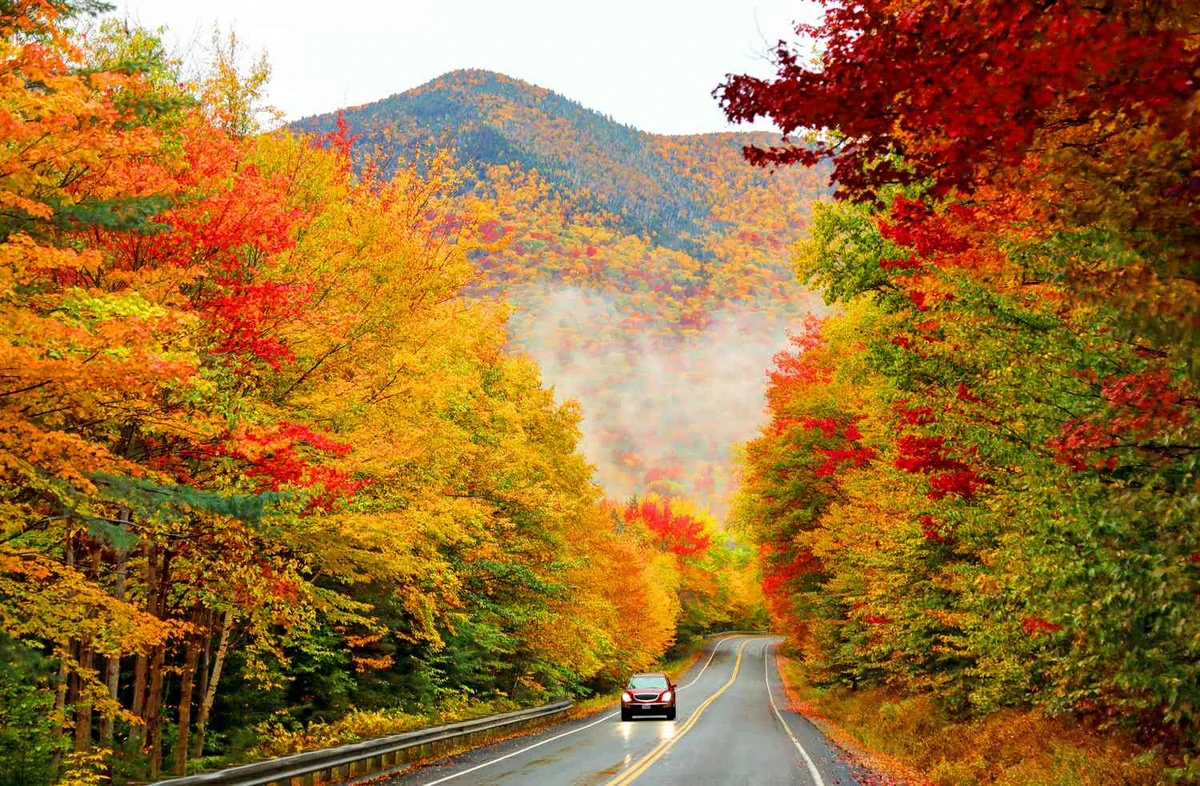
Few American motorcycle roads combine mountain scenery, flowing curves, forest color, and accessible riding as effectively as New Hampshire’s Kancamagus Highway. In autumn, the route changes from a beautiful mountain road into a moving landscape of red maple, golden birch, dark evergreen forest, rocky overlooks, and rushing river valleys.
Known locally as “The Kanc,” this scenic highway crosses the White Mountains between Lincoln and Conway. The ride is not especially long, but it deserves more time than a simple point-to-point trip. With scenic pull-offs, waterfalls, picnic areas, and changing elevations, the best experience comes from riding slowly, stopping often, and treating the highway as a full-day fall motorcycle adventure.
Table of Contents
🗺️ Kancamagus Highway Route Overview and Statistics
Route Length and Elevation
The Kancamagus Highway follows New Hampshire Route 112 through the White Mountain National Forest. Most travel guides describe the route as approximately 34 to 35 miles, while the Federal Highway Administration lists the designated scenic byway section as about 26.5 miles, reflecting differences in how the route is measured. The highway reaches nearly 3,000 feet at Kancamagus Pass.
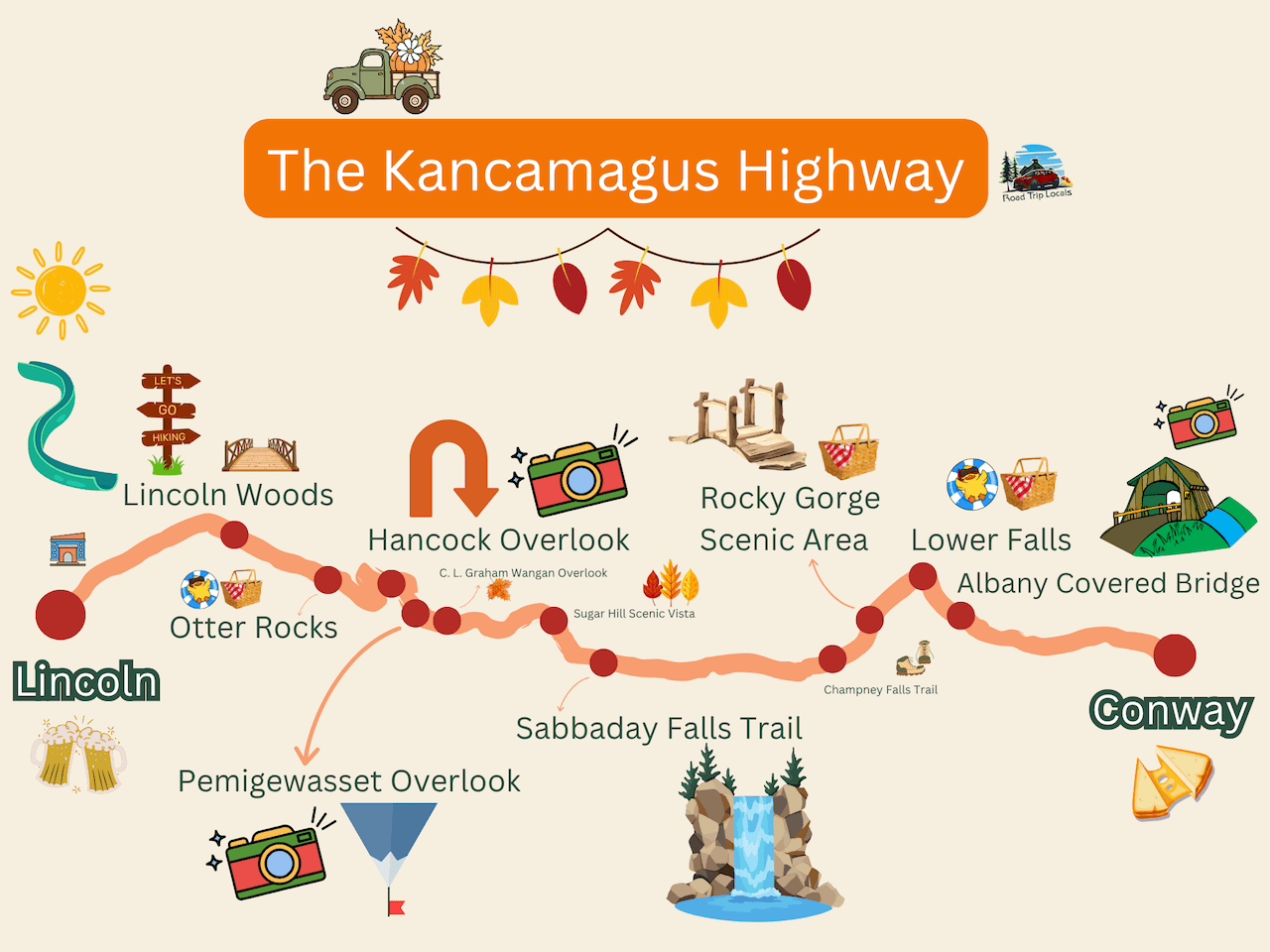
Kancamagus Highway Map
The road is paved and suitable for touring motorcycles, cruisers, sport-touring bikes, and adventure motorcycles. However, its mountain curves, changing weather, wildlife, and heavy seasonal traffic require more attention than the distance suggests.
No Gas Stations on the Highway
One of the most important planning facts is that there are no regular gas stations along the main Kancamagus Highway. Riders should fill up in Lincoln, North Woodstock, Conway, or another nearby town before entering the route.
Cellular service can also be limited or unavailable in sections of the White Mountains. Download offline maps, save emergency information, and avoid depending entirely on mobile data for navigation.
📅 When Is the Best Time to See Fall Foliage?
Typical Peak Foliage Period
The White Mountains usually experience their strongest fall colors from late September through the first two weeks of October, although the exact timing changes each year. Weather, summer temperatures, rainfall, and elevation all influence when leaves turn and how long peak color lasts.
Higher elevations and northern areas often change earlier, while lower areas may remain green longer. This means the Kancamagus Highway can offer attractive color before or after the official peak period, even when some sections have already lost their leaves.
Fall Foliage on Kancamagus Highway
For the best chance of seeing bright foliage, plan for late September to early October and check the official New Hampshire foliage tracker shortly before your trip. Do not assume that one fixed calendar date will produce peak color every year.
Best Days and Riding Times
Fall weekends, especially around Columbus Day, can become extremely crowded. Stop-and-go traffic is possible, and popular overlooks may fill quickly. A weekday ride is usually more relaxed.
Start early in the morning, ideally shortly after sunrise. Early riding provides cooler temperatures, softer light for photography, fewer vehicles, and a better chance of finding parking at major viewpoints. Late afternoon can also be attractive, but temperatures drop quickly after the sun moves behind the mountains.
📸 Autumn Highlights Along the Kancamagus Highway
Kancamagus Pass
Kancamagus Pass is one of the route’s most memorable high points. The road climbs through dense forest before reaching broad mountain views and a noticeable change in temperature. In fall, the surrounding slopes become a patchwork of orange, red, yellow, and green.
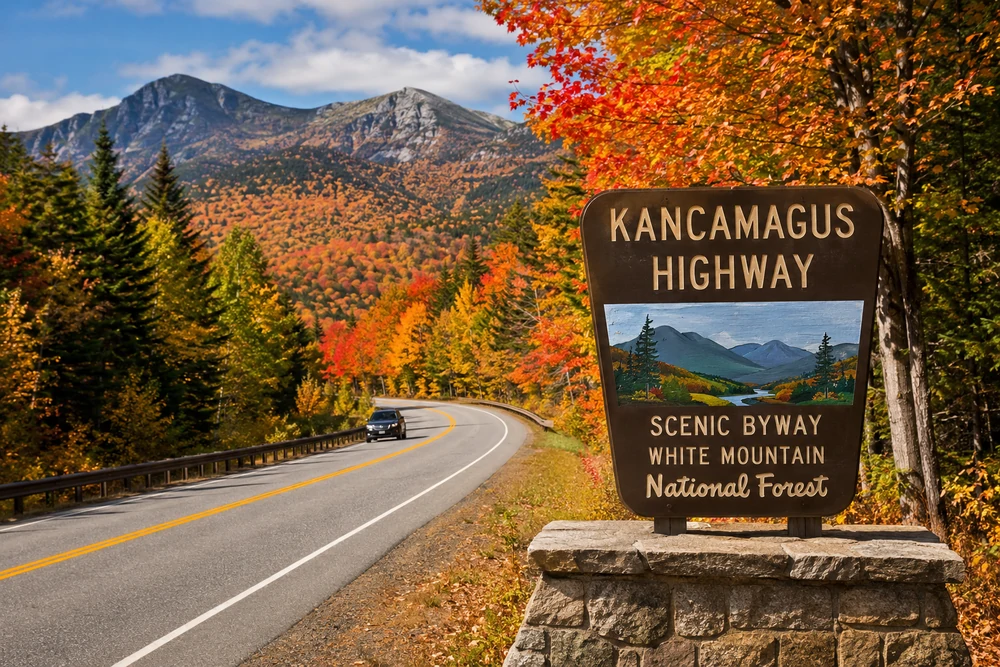
Kancamagus-Highway
Wind can be stronger at the pass, and the pavement may remain damp in shaded areas. Riders should reduce speed before entering overlooks and watch for vehicles stopping unexpectedly.
Sabbaday Falls
Sabbaday Falls is one of the most popular short stops on the route. A relatively easy walking path leads from the parking area to a waterfall flowing through a narrow rocky gorge.
The waterfall is especially attractive after rainfall, but wet leaves and slippery surfaces can make the trail more difficult in autumn. Secure your motorcycle, remove valuables, and take time to walk rather than attempting to view the falls directly from the roadside.
Lower Falls
Lower Falls is a convenient stop for riders who want to combine scenery with a short break. The Swift River flows over smooth rock formations, creating attractive water views framed by colorful trees.
This area can become busy during peak foliage. Follow posted parking instructions and never leave a motorcycle where it blocks traffic or emergency access.
Rocky Gorge and Swift River Views
Rocky Gorge offers another excellent opportunity to see the Swift River moving through a rocky landscape. The contrast between dark water, exposed stone, and bright autumn leaves creates some of the most distinctive scenery on the highway.
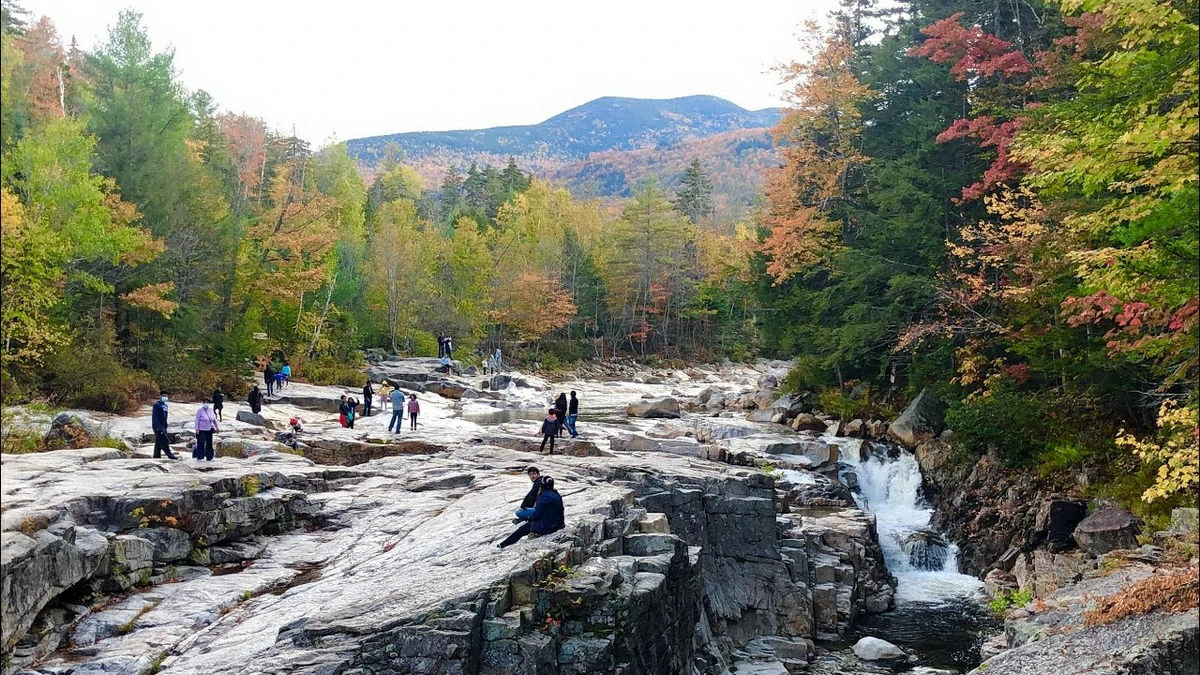
Rocky Gorge and Swift River Views
The river and surrounding rocks can be hazardous when wet. Stay within designated viewing areas and avoid climbing onto slippery surfaces for photographs.
Scenic Overlooks
Several overlooks provide wide views across the White Mountains. These stops are ideal for photography because the landscape changes noticeably as the road climbs and descends.
When taking photos, park completely off the travel lane, check for approaching traffic, and avoid standing near blind curves. A scenic road is still an active public highway.
🏍️ Motorcycle Riding Strategy for the Kancamagus
Ride for the Conditions, Not the Calendar
The Kancamagus is often described as an easy-to-moderate scenic ride, but difficulty depends on weather, traffic, rider experience, and road conditions. The curves are enjoyable when taken smoothly, but aggressive cornering is unnecessary.
Maintain a comfortable speed that allows you to stop within the visible distance. Use a lower gear on descents when appropriate, leave extra following distance, and expect cars to slow suddenly near overlooks.
Watch for Leaves, Moisture, and Wildlife
Wet leaves can reduce tire grip, particularly in shaded corners. Cold mornings may produce damp pavement, frost, or reduced visibility. Wildlife may also cross the road, especially near forest edges and during quieter morning or evening hours.
Avoid riding beyond your headlight or visibility limits. If the road becomes foggy, wet, or crowded, slow down rather than trying to maintain a planned schedule.
🧥 Gear and Preparation for an Autumn Motorcycle Ride
Autumn mountain weather can change quickly. Wear layered clothing that can be adjusted during the ride. A waterproof outer layer, warm gloves, and a neck gaiter are useful even on sunny days. Riders should also bring water, snacks, a basic first-aid kit, tire repair equipment, and a charged power bank.
A properly installed Motorcycle Intercom can help riders communicate about fuel stops, road hazards, or regrouping points without repeatedly stopping. A Bluetooth Intercom is useful for navigation instructions and rider-to-passenger communication, while a Helmet Communication system can support group coordination when several motorcycles travel together.
Before departure, pair devices, test microphones, set comfortable volume levels, and download navigation data. Communication equipment should reduce unnecessary distraction, not encourage riders to look at or operate their phones while moving.
⚠️ Traffic and Safety Advice
The Kancamagus Highway is heavily visited during fall foliage season. Drivers may stop suddenly, cross lanes to reach overlooks, or focus more on scenery than traffic. Motorcyclists should expect unpredictable behavior and avoid riding too close to large vehicles.
New Hampshire’s highway safety planning documents identify fall as a major travel period, and official motorcycle safety organizations consistently recommend maintaining visibility, managing speed, and staying alert around other road users.
Do not stop in the roadway for photographs. Use designated pull-offs, obey parking restrictions, and check whether a recreation pass is required for unattended vehicles in the White Mountain National Forest. Weather and road conditions should be checked before departure through official forest and state travel resources.
🧭 Suggested One-Day Motorcycle Riding Plan
Begin in Lincoln or Conway with a full fuel tank and a downloaded route map. Ride the highway at a relaxed pace, allowing several hours for scenic stops rather than relying on the short drive time shown by navigation apps.
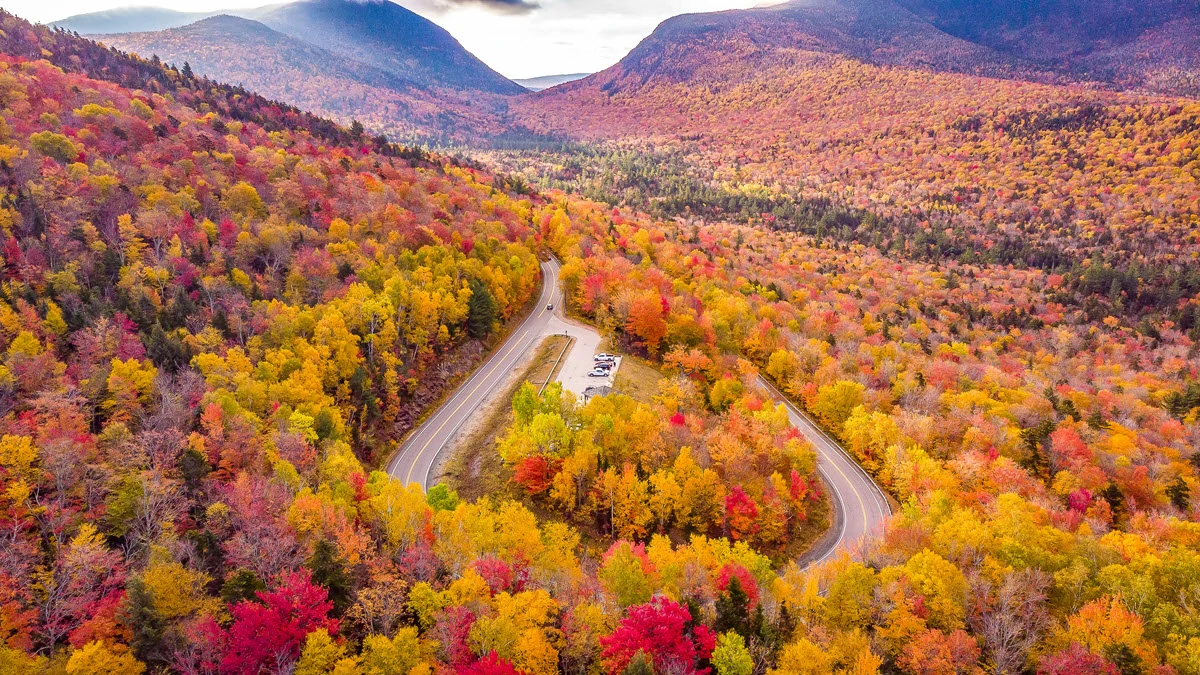
Kancamagus Highway
A practical sequence is to stop first at a major overlook, then visit Sabbaday Falls, continue toward Lower Falls or Rocky Gorge, and take additional short breaks near the pass. Carry lunch or snacks because food and fuel services are limited inside the scenic corridor.
If traffic is heavy, do not attempt to make up time by riding aggressively. The purpose of a fall foliage motorcycle trip is to enjoy the scenery, not to complete the route as quickly as possible.
❓ Frequently Asked Questions
How long does it take to ride the Kancamagus Highway?
The highway can be crossed in about one hour without stops and light traffic. During fall foliage season, allow three to five hours or more for traffic, overlooks, waterfalls, meals, and short walks.
What month is best for Kancamagus Highway fall foliage?
Late September and the first two weeks of October are usually the best starting point. Peak color varies by year and elevation, so check the New Hampshire foliage tracker before traveling.
Is the Kancamagus Highway difficult for beginner motorcyclists?
The road is paved and manageable for many newer riders, but mountain curves, wet leaves, wildlife, and heavy traffic require caution. Beginners should ride during daylight, avoid peak congestion, and maintain a conservative pace.
Are there gas stations along the Kancamagus Highway?
No regular gas stations are located along the main scenic highway. Fill up before entering from Lincoln, North Woodstock, Conway, or another nearby town.
Can I ride the Kancamagus Highway in the rain?
Yes, but rain can reduce visibility, increase stopping distance, and make leaves and road surfaces slippery. Check the forecast, use waterproof gear, reduce speed, and postpone the ride if conditions become unsafe.
📚 Authoritative Sources
- U.S. Forest Service — White Mountain National Forest Scenic Drives: https://www.fs.usda.gov/r09/whitemountain/recreation/opportunities/scenic-drives
- Recreation.gov — Kancamagus Scenic Byway: https://www.recreation.gov/gateways/13718
- Visit New Hampshire — Fall Foliage Map: https://www.visitnh.gov/plan-your-trip/fall/peak-foliage-map

Rodney L is a technical writer and product consultant with over a decade of experience in the motor industry. Rodney is a fan of performance machines that run fast and loud and an expert in all things custom. His numerous articles and write-ups are available at our knowledge base. Whether it’s something wrong with your motorcycle or you are building a custom bike, you can trust Rodney’s experience.
You maybe like to read:
Fodsports Brand Month: Unbeatable Deals and Top-Notch Service
Discover Fodsports Brand Month July and August mark a special occasion for motorcycle enthusiasts and tech lovers alike. Welcome to Fodsports Brand Month! This event is dedicated to celebrating everything that makes Fodsports a leading name in the motorcycle communication industry. Get ready for a fantastic promotions, exceptional service from Fodsports. Let's insights into Fodsports' […]
Kancamagus Highway Motorcycle Trip: Autumn Foliage, Route and Safety Tips
Few American motorcycle roads combine mountain scenery, flowing curves, forest color, and accessible riding as effectively as New Hampshire’s Kancamagus Highway. In autumn, the route changes from a beautiful mountain road into a moving landscape of red maple, golden birch, dark evergreen forest, rocky overlooks, and rushing river valleys. Known locally as “The Kanc,” this […]
Fall Motorcycle Riding Tips: How to Ride Safely in Autumn
Fall is a great season for motorcycle riding. Cooler temperatures, colorful scenery, and comfortable roads make autumn an ideal time to explore. However, the change of season also brings new riding challenges. Wet leaves can reduce traction, temperatures can change quickly, daylight becomes shorter, and wildlife may be active near roads. With a little preparation, […]
Top 10 Fall Motorcycle Rides in the USA: Scenic Routes & Foliage
Fall is one of the best seasons for motorcycle riding in the United States. Cooler temperatures, colorful forests, quieter roads, and spectacular mountain scenery make autumn ideal for a scenic motorcycle road trip. From New England's brilliant red and orange forests to the Appalachian Mountains and the colorful Ozarks, riders can find incredible fall foliage […]
Women in American Motorcycle Culture: How Women Shaped Its Evolution
Women in American motorcycle culture have played an important role in shaping the way motorcycling is experienced and represented in the United States. When people think of American motorcycle culture, they may picture leather jackets, open highways, motorcycle clubs, and groups of male riders. But women have been part of that culture for much longer […]