The motorcycle communication systems field just got a significant upgrade with the release of the Fodsports FX7. This state-of-the-art Bluetooth mesh intercom is packed with many advanced features and techs. It will revolutionize the way riders communicate and enjoy their rides. Whether you're a solo rider or part of a group, the FX7 offers unparalleled […]

What Is Lane Splitting? Where Is Lane Splitting Legal?
October 19, 2022
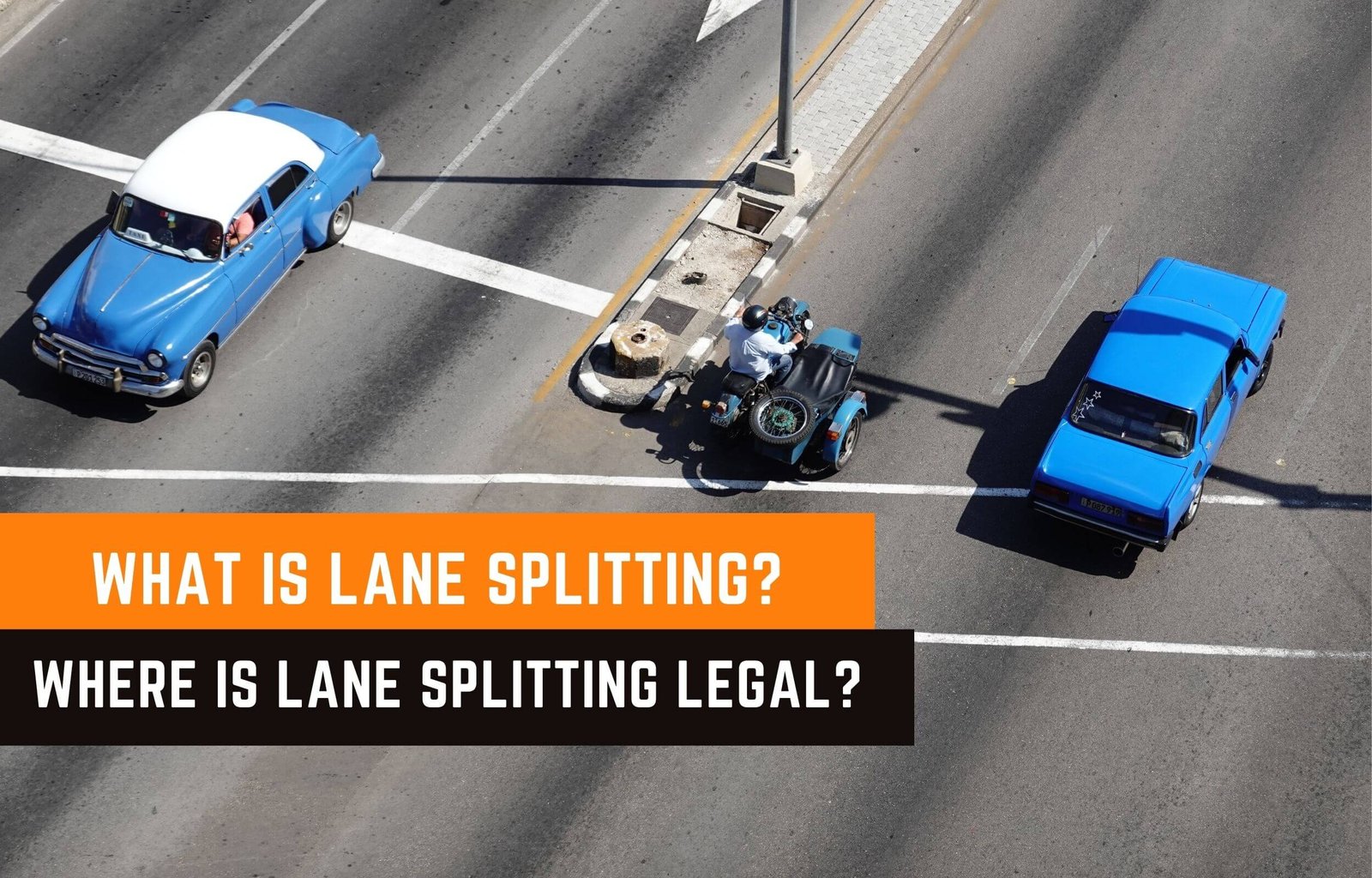
Motorcycle riders often face the frustration of being stuck in slow or stop-and-go traffic — especially in busy cities. That’s where “lane splitting” comes in: it’s when a motorcycle moves between lanes of traffic or rows of stopped cars going the same direction — slipping through the gaps to get ahead.
Some say lane splitting saves time, reduces congestion, and can even be safer than sitting in a lane where you might get rear-ended. But whether it’s legal — or safe — depends a lot on the rules in your region.
In this article, we’ll explain exactly what lane splitting is, how it differs from related practices, and — most importantly — where it’s legal in the United States (as of 2025).
We’ve synthesized definitions, legal status across U.S. states, safety considerations, and practical advice — drawing on the most up-to-date sources.
Table of Contents
What Is Lane Splitting (vs. Filtering, Sharing)
“Lane splitting” refers to the practice of a motorcyclist riding between two lanes of traffic (or between rows of vehicles) that are traveling in the same direction — typically to bypass slow-moving or stopped traffic.
Sometimes similar terms are used — but they’re not identical:
- Lane filtering (or “filtering forward”): when a motorcycle moves between stopped or very slow vehicles, e.g. to get to the front at a red light.
- Lane sharing: when more than one motorcycle (or bicycle + vehicle) occupy a single lane, traveling side-by-side (or in staggered formation).
- Shoulder surfing/passing on shoulder: using the road shoulder (rather than the lanes) to bypass traffic. This is sometimes allowed separately from filtering/splitting in some jurisdictions.
Because motorcycles are narrower than cars/trucks, riders sometimes use these maneuvers to save time in heavy traffic — but they also introduce different risk dynamics than normal lane-following or overtaking.
You may want to learn about: Lane Splitting vs Lane Filtering: The Safety and Legal Differences Riders Must Know
Why People Do It — Potential Benefits

The motorcycle in crowded lane
Advocates of lane splitting point to several advantages:
- Avoiding rear-end collisions: When riding in heavy traffic, motorcycles sitting in a lane between larger vehicles are at risk of being rear-ended. By moving between lanes instead of remaining stationary, lane splitting may reduce that risk.
- Reduced congestion & faster mobility: In stop-and-go traffic (especially urban commuting), lane splitting lets motorcycles make steady progress rather than being stuck behind slow or stopped cars.
- Efficiency for riders: Given motorcycles’ smaller footprint, splitting can make commuting or travel more practical when traffic is dense, without demanding the full lane of space that a car requires.
That said, the benefits come with caveats, as splitting reduces reaction time, depends on lane width and traffic awareness, and increases vulnerability.
Safety Considerations & Guidelines
Because lane splitting changes the dynamics of visibility, speed differentials, and spacing, there are recommended practices (especially where it is legal) to reduce risk. In jurisdictions where it’s allowed (or tolerated), guidelines emphasize:
- Keep speed difference modest: e.g., no more than ~ 10 mph faster than surrounding traffic.
- Avoid splitting when traffic is moving fast — many safety advocates recommend splitting only when traffic flow is slow (e.g., under ~ 30 mph).
- Prefer splitting between leftmost lanes (#1 and #2) rather than arbitrary lanes, where other drivers are more accustomed to watching for motorcycles.
- Always remain alert: watch for cars changing lanes, opening doors, merging, or making unexpected moves — riders must be ready to react.
Importantly: even where splitting is legal, it remains a higher-risk maneuver than staying in a lane — and many safety experts advise only experienced riders attempt it, under suitable conditions.
Is Lane Splitting Legal?
It depends on where you are — there’s no one-size-fits-all answer. In some U.S. states, lane splitting (or a related maneuver called “lane filtering”) is legal under certain rules.
For example, California and Minnesota officially permit lane splitting for motorcyclists.
In other states, including Illinois, lane splitting is explicitly illegal.
So yes — lane splitting can be legal, but only in some places.
Legal Status in the United States (as of 2025) — Where It’s Allowed, Filtered, or Prohibited
Because the U.S. has no federal law on lane splitting, legality is determined at the state level. That leads to a patchwork of different rules: some states explicitly allow lane splitting, others allow only lane filtering (or very restricted splitting), some prohibit it, and some leave it ambiguous.
Here is a table showing you the legal status of line splitting in the US as of 2025:
✅ States Where Lane Splitting (or Filtering) Is Legal under Conditions
- California — historically the first U.S. state to broadly permit lane splitting. As of 2017, a section (21658.1) in the California Vehicle Code codified it. While the law doesn’t define exact speed limits, the recommended practice (from California Highway Patrol, CHP) is a speed differential no more than ~ 10–15 mph faster than traffic, and caution on higher-speed roads or freeways.
- Minnesota — as of July 1, 2025, state law permits motorcycles to lane split or filter. Under the new law, motorcycles may pass slow or stopped traffic (e.g., when traffic under ~ 10 mph) or move while maintaining a modest speed differential (up to ~15 mph over surrounding traffic, and overall speed up to 25 mph).
In addition to full splitting (California) or splitting/filtering (Minnesota), several states allow lane filtering (i.e. between stopped or very slow vehicles), but not full lane splitting with moving traffic. Key examples:
- Arizona: Lane filtering allowed when traffic is stopped, at low speed (e.g. under ~ 15 mph), on roads with posted speed limit 45 mph or less. Full lane splitting is not permitted.
- Utah: Filtering is allowed under similar restrictions: only when traffic has stopped, on roads with posted speed limit 45 mph or less, and by motorcycles (not wide vehicles or sidecars).
- Montana — allows lane filtering when vehicles are stopped or moving very slowly (e.g. 10 mph or less), with restrictions on speed differential.
- Colorado — as of August 2024, passed a law legalizing lane filtering (not full lane splitting). Allowed only when traffic is completely stopped; motorcyclists must not pass moving traffic or ride on shoulders.
❌ States Where Lane Splitting Is Illegal (or Not Explicitly Allowed)
Many states explicitly prohibit lane splitting, or treat it as a dangerous/unlawful passing maneuver under existing traffic laws. Examples include (but are not limited to):
- Florida — has specific statutes forbidding motorcycles from operating between lanes or rows of vehicles.
- Illinois, Georgia, Louisiana, New York, and many others — state laws generally require all vehicles, including motorcycles, to remain within a single marked lane, which precludes lane splitting.
- Several states and jurisdictions fall in a legal gray area — where there is no statute explicitly permitting splitting or filtering, but also none explicitly banning it. In these states, riders may still be cited under general statutes (e.g., “unsafe passing,” “reckless driving,” or “not riding within a single lane”).
Because of this patchwork, a rider must check local law: just because lane splitting is legal in one state doesn’t mean riding across state lines is safe or lawful.
Why the Legal Patchwork — Challenges of Legislation & Safety
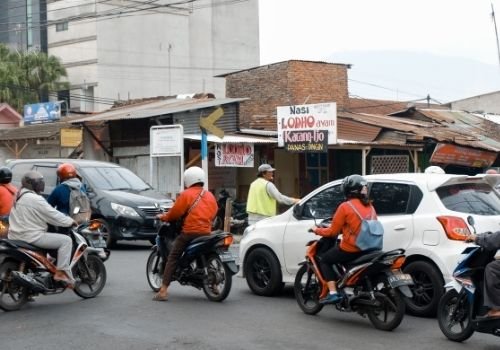
The disparity in laws reflects a balance between mobility, convenience for motorcyclists, and safety concerns for both riders and other drivers. Some factors:
- Risk vs. Benefit: While splitting can reduce rear-end collisions for stopped motorcycles, it introduces other hazards — like lane changes, unexpected openings of vehicle doors, merging traffic, and reduced reaction time, especially at higher speeds.
- Variation in traffic conditions and road design across states: What works safely in one environment (wide urban lanes, heavy congestion) might be dangerous in another (narrow lanes, higher speed limits, mixed rural/highway conditions).
- Legal ambiguity and enforcement difficulties: Many states never specifically addressed lane splitting in their traffic codes, which makes enforcement inconsistent. Law-enforcement officers may interpret lane splitting as reckless driving or unsafe passing — leading to citations even in states where there’s no explicit ban.
- Cultural and political attitudes toward motorcycles: In some states, policymakers and the public may view lane splitting as unfair or unsafe; in others, there’s growing recognition of motorcycles as part of urban congestion solutions. The evolving laws (e.g. recent passage in Minnesota, Colorado filtering laws) reflect shifting attitudes.
Recent Developments (2024–2025)
The legal landscape has shifted recently — showing some states are loosening restrictions or clarifying rules:
- As of July 1, 2025, Minnesota legalized motorcycle lane splitting and filtering under regulated conditions.
- In 2024, Colorado passed a law (effective August 7, 2024) permitting lane filtering when traffic is stopped — though full lane splitting remains prohibited under that law.
- Several long-standing filtering states — like Arizona, Utah, Montana — continue to operate under their respective restrictions, often allowing filtering (but not unrestricted splitting) under specified traffic conditions.
These legal shifts suggest a broader trend: lawmakers are increasingly open to regulated filtering/splitting, but with safety-focused limitations rather than an unrestricted right.
What This Means for Riders — Practical Advice & Checklist
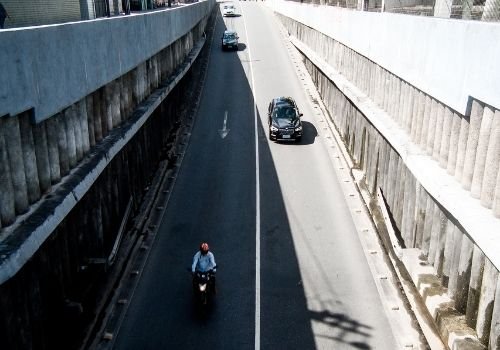
If you ride a motorcycle (or plan to), and are considering lane splitting or filtering — here’s how to approach it more responsibly and legally:
- Know your state’s law — and respect local variance. Before riding, check whether lane splitting or filtering is legal, and under what conditions (speed, traffic stopped vs. moving, roads allowed, etc.).
- When in a “legal state,” follow best-practice guidelines. That means modest speed differential (≈ 10 mph faster than traffic), only when traffic is slow or stopped, and be especially careful between leftmost lanes.
- Be highly visible. Use proper lighting/helmet, signal early, watch for lane changes, unpredictable cars (merging, dooring), and give yourself escape space.
- Assume others may not expect you. Not all drivers watch for motorcycles between lanes — especially in states where it’s uncommon. Anticipate unpredictable behavior.
- Avoid splitting in risky conditions. Bad weather(rain, snow), poor road surface, narrow lanes, high-speed traffic — these amplify danger and reduce rider reaction time.
- If you ride across state lines — adapt. What’s legal in one state may be illegal just over the border; you must adjust behavior to the applicable jurisdiction.
Is Lane Splitting a Good Idea?
Lane splitting is questionable and usually alarming for drivers.
If you ride fast, you can startle chauffeurs or distract them from focusing on the roadway before them.
In addition, while a lot of rear-end events in traffic are small fender-benders, bikers are at a higher risk of being harmed or seriously hurt in rear-end occurrences.
Because motorcyclists have reduced visibility on the road than other cars and trucks, it is additionally recommended that they wear intense colors.
Some additionally think that lane splitting can be advantageous, in spite of the drivers who get discouraged about bicycle riders not "waiting in line" in traffic.
If a motorcycle rider leaves their lane in traffic to lane split, it permits each lorry to be one spot closer to their location, enabling both the cyclist and the other motorists to take a trip quicker.
A 2012 Belgian study discovered that if 10% of chauffeurs switched over to motorbikes, travel times would certainly decrease by eight minutes per journey.
The Dangers of Lane Splitting
There are certain dangers that a motorcyclist can experience while lane splitting.
While some believe that, under specific circumstances, lane splitting can improve the safety and security of the biker, there are some severe dangers that a motorcyclist could experience:
- Other cars may make abrupt lane modifications.
- A chauffeur of a quiet or parked vehicle might open his or her door suddenly, and the motorcyclist may strike it.
- Chauffeurs in certain cities and states have a tendency to be a lot more aggressive. Some chauffeurs are notorious for their aggressive driving.
- The lanes on some roads are usually quite narrow, making lane-splitting unsafe.
- Large cities like New York have very heavy traffic, both in the city as well as on the highways.
- Many motorcyclists do not know the appropriate way to lane split. They not only failed to maintain proper lane markings, but they were also traveling too fast.
- A motorcycle is nearly unseen to tractor-trailers and also bigger cars. Lane splitting might make it much more harmful for a motorcyclist riding by or passing a big vehicle.
Who's at fault if a motorcycle is lane splitting?
Determining liability in lane-separation accidents largely depends on local laws and the specific circumstances of the accident.
Police, insurance adjusters, and courts will investigate, based on witness testimonies and video footage, whose actions were unreasonable or negligent before the accident.
In states where motorcycles are prohibited from crossing lanes, such as Illinois, the rider is often likely to be held liable, or at least partially liable, if an accident occurs while crossing lanes.
Even in states that allow lane splitting (such as California), liability depends on the safe actions of both the rider and the driver. Therefore, even in legal areas, riders must operate safely and cautiously.
Most states use a "comparative fault" approach, meaning both parties may share fault. Even if the motorcyclist was crossing a lane, if the driver changed lanes without using their turn signal or intentionally obstructed the rider, they may be held partially or fully liable.
In short, crossing a lane does not necessarily mean the rider is liable. Liability is determined by whose driving was reckless or negligent—and sometimes both are at fault.
How do police view line splitting?
Police views on lane splitting are guided by the law, focusing on safety, legality, and driver education. Their perspective and enforcement actions differ significantly based on whether the maneuver is illegal, legal, or a specific form of it (lane filtering) is permitted in their jurisdiction.
- Where it is Illegal: In those states where split lanes are widely prohibited, police will consider it unsafe and illegal. Officers may issue tickets for violations such as unsafe passing, not staying in a single lane, or reckless driving. In the event of an accident, the motorcyclist is usually identified as the party at fault.
- Legal/Regulated Areas: In a few states that allow lane separation or weaving (such as California, Colorado, and Utah), law enforcement agencies like the California Highway Patrol and Colorado State Patrol focus on education and safe operating procedures. Their goal is to ensure riders adhere to specific safety rules (e.g., speed limits of 15 mph in Colorado when traffic is stopped). Even in legal areas, officers can still issue tickets if a rider performs the maneuver unsafely.
- Accident Handling: After any traffic accident, the police document the scene and determine who violated traffic laws. If a motorcyclist violates a lane-splitting law, the police report will document the violation, which will have a significant impact on liability determinations in insurance and legal proceedings.
Is motorcycle lane splitting safe?
Yes — under certain conditions, motorcycle lane-splitting can be relatively safe.
- A major study by SafeTREC / UC Berkeley found that when motorcyclists lane-split in traffic moving ≤ 50 mph and don’t exceed surrounding traffic speed by more than ~15 mph, riders were less likely to suffer head or torso injuries — or fatal injuries — compared with riders who stayed in their lane.
- Also, splitting can reduce the chance of being rear-ended, which is a common crash type for motorcycles in slow or stopped traffic.
- But — safety depends heavily on how it’s done. If the motorcycle goes much faster than surrounding traffic, if traffic is dense with unpredictable lane changes, or if drivers aren’t alert, risk increases.
So — lane-splitting isn’t inherently unsafe. Under controlled, low-speed traffic conditions and with cautious riding, it can reduce certain risks. But if done recklessly or in inappropriate conditions, it can be dangerous.
How many motorcycle accidents are caused by lane splitting?
There is some data on how many motorcycle accidents involve lane splitting, but not a definitive “percentage caused by lane splitting” because of complexities in declaring cause. One of the most-cited studies found that of nearly 6,000 motorcycle crashes in California (2012–2013), 997 involved a rider lane-splitting at the time of collision — roughly 17%. (Source: Berkeley)
But that doesn’t mean lane-splitting “caused” all those crashes. The authors themselves noted they could not determine how many crashes were caused by lane-splitting rather than merely involved it.
So: lane-splitting is a factor in a noticeable share of accidents — in that study about one-in-six — but we don’t have reliable data showing what fraction of all motorcycle crashes are directly caused by it.
Conclusion: Lane Splitting — Useful, But Complex
Lane splitting is more than a “cool trick”: it reflects a practical adaptation by motorcyclists to traffic congestion, especially in urban or high-traffic settings. When done carefully, it can bring real benefits — reduced risk of rear-end crashes, better traffic flow, and convenience for riders.
But it's not straightforward. Because legality varies state by state, and because splitting introduces real safety trade-offs (reduced reaction time, higher vulnerability, unpredictability), it remains controversial. The recent uptick in filtering-permitting laws (e.g., Minnesota 2025; Colorado 2024) shows the debate is evolving: states are more willing to permit some version of splitting or filtering — but generally under restricted, safety-oriented frameworks, not open-ended.
For riders: lane splitting can be a valuable tool — but only if used with deep respect for safety, local laws, and the unpredictable nature of traffic.

Rodney L is a technical writer and product consultant with over a decade of experience in the motor industry. Rodney is a fan of performance machines that run fast and loud and an expert in all things custom. His numerous articles and write-ups are available at our knowledge base. Whether it’s something wrong with your motorcycle or you are building a custom bike, you can trust Rodney’s experience.
You maybe like to read:
Fodsports Brand Month: Unbeatable Deals and Top-Notch Service
Discover Fodsports Brand Month July and August mark a special occasion for motorcycle enthusiasts and tech lovers alike. Welcome to Fodsports Brand Month! This event is dedicated to celebrating everything that makes Fodsports a leading name in the motorcycle communication industry. Get ready for a fantastic promotions, exceptional service from Fodsports. Let's insights into Fodsports' […]
How Motorcycle Culture Evolved in America: From Harley-Davidson, Biker Clubs and Easy Rider to Modern Riding
🏍️ The Early Roots of American Motorcycle Culture Motorcycle culture in the United States has never been only about transportation. From early motorcycle clubs and racing events to cross-country touring, biker communities, rallies, and modern adventure riding, motorcycles have represented freedom, independence, competition, and community. The story began in the early 20th century, when motorcycles […]
Top American Motorcycle Events: Sturgis, Daytona, Americade & Scenic Rides
Motorcycle events are an important part of American riding culture. From historic rallies and scenic touring weeks to custom motorcycle shows and major racing events, these gatherings bring riders together to celebrate motorcycles, freedom, friendship, and the open road. For many riders, attending a major motorcycle rally in the USA is more than spending a […]
Women Motorcycle Riders: The Growing Female Rider Community
Motorcycling is becoming increasingly diverse, and women motorcycle riders are now a highly visible part of the riding community. Women are riding cruisers, sportbikes, touring motorcycles, adventure bikes, and off-road machines, while also participating in racing, motorcycle travel, charity events, and local riding groups. The American Motorcyclist Association (AMA) highlights the continued growth of women […]
Motorcycle Riding Tips for Beginners: Essential Techniques for Braking, Cornering & Safe Riding
🏍️ Start With the Fundamentals Learning to ride a motorcycle is not simply about balancing on two wheels. New riders must coordinate the throttle, clutch, brakes, steering, body position, and visual attention simultaneously. The best way to build these skills is through structured practice. The Motorcycle Safety Foundation (MSF) recommends formal hands-on training for beginning […]