Long-distance motorcycle touring is about freedom, rhythm, and endurance. Hours on the highway, changing weather, unfamiliar roads, and constant wind noise all test your gear — especially the communication system for touring. A touring motorcycle intercom is not the same as a short-ride or commuter intercom. On a multi-day trip, small weaknesses become big problems: […]

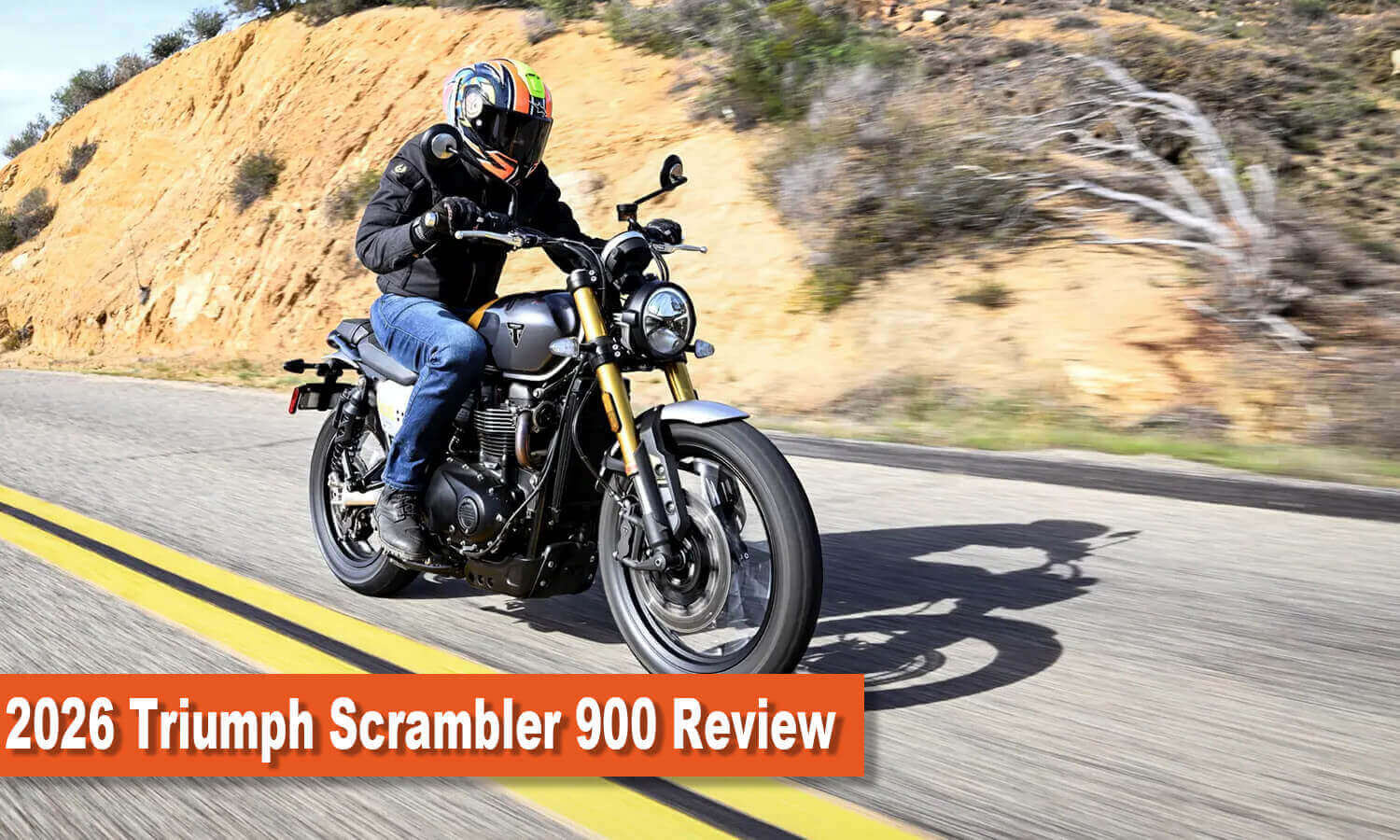
2026 Triumph Scrambler 900 Review
The 2026 Triumph Scrambler 900 feels immediately more controlled and confident than the outgoing model. Rather than a full reinvention, Triumph has focused on fixing the things that actually mattered.Below, I’ll break down what’s new for 2026, what remains familiar, and how the Scrambler 900 feels on the road.
Table of Contents
Design and Styling
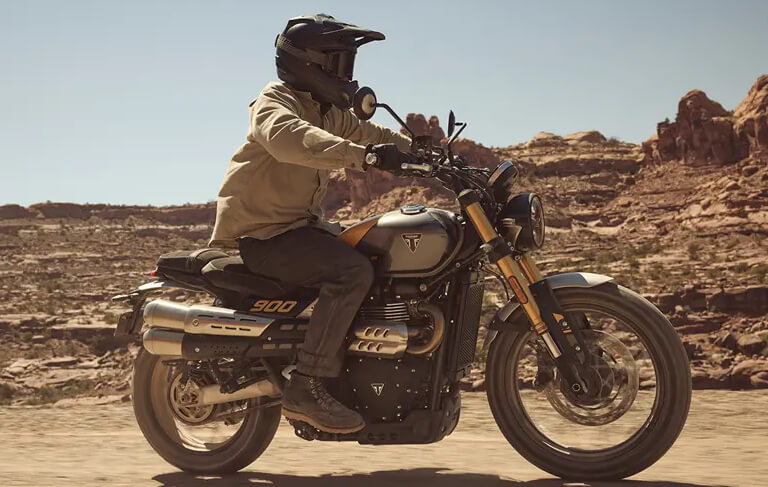
2026 Triumph Scrambler 900
At first glance, the 2026 Scrambler 900 still looks unmistakably like a Triumph, but spending time with the bike reveals a clear shift in attitude.
The classic Bonneville proportions are still there — upright stance, high-mounted exhausts, relaxed silhouette — yet the overall design feels tighter and more purposeful than before. The lines are sharper, the surfaces more defined, and the bike no longer leans as heavily into pure retro charm.
What stood out to me most was how the updated bodywork changes the bike’s visual weight. The slimmer front fender, more compact tail section, and squarer side panels give the Scrambler a more muscular presence, especially when viewed from the side.
The fuel tank, with its crisper edges and deeper knee cutouts, looks more sculpted and makes the bike feel visually closer to the larger Scrambler 1200 than the outgoing Street Scrambler.
Color choice also plays a big role in how modern the bike feels. In matte finishes such as Khaki Green paired with Phantom Black, the Scrambler takes on a rugged, almost utilitarian look that suits its scrambler intent well. Lighter options, such as Mineral Grey with contrasting accents, soften the bike’s appearance slightly, but still avoid the overly “cute” aesthetic of earlier models. In person, the paint quality and subtle detailing give the bike a premium feel without being flashy.
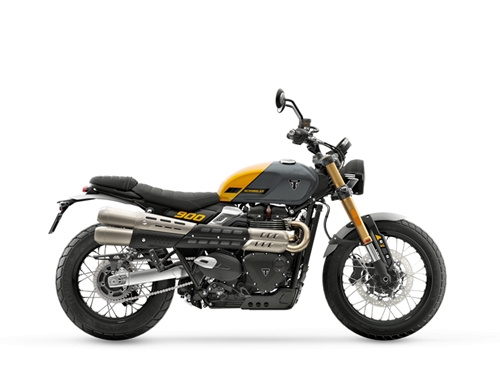
Mineral Grey / Cosmic Yellow
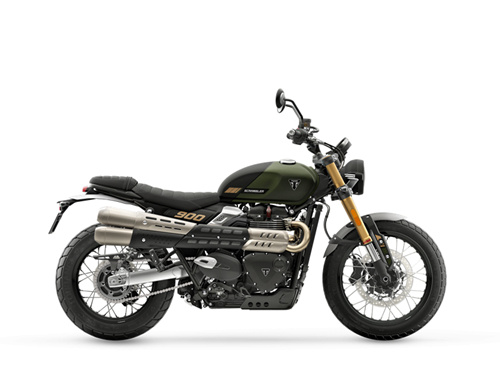
Matt Khaki Green / Matt Phantom Black
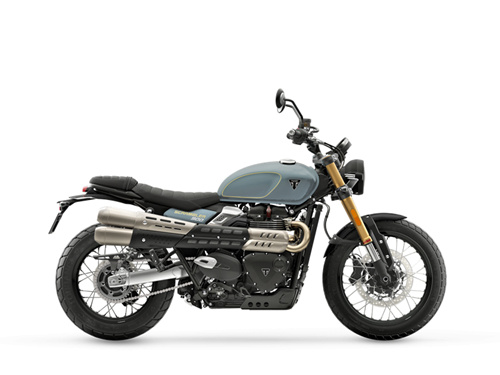
Urban Grey
From most angles, the design works very well. The upswept twin exhausts and piggyback rear shocks reinforce the scrambler identity, although they do expose some heat and visually dominate the right side of the bike. That said, the overall effect is cohesive: modern without being sterile, and classic without feeling dated.
Some longtime fans may miss the simpler, rounder lines of the older Street Scrambler, but to my eyes, the 2026 Scrambler 900 strikes a more confident balance between heritage and contemporary design.
What’s New for 2026 Triumph Scrambler 900
1. Chassis & Suspension Upgrades
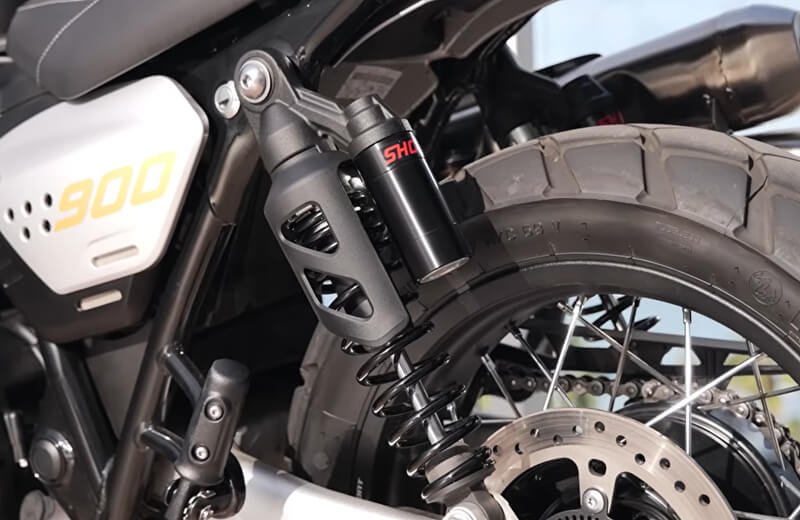
The steel frame is mostly the same, but Triumph has added a new cast-aluminum swingarm and upgraded suspension.
Triumph Scrambler 900 suspension
The bike now uses 43mm Showa upside-down forks (non-adjustable, 120 mm travel) and piggyback reservoir rear shocks (120 mm travel). This modern fork and shock setup significantly improves rigidity and handling compared to the old 41mm conventional forks.
The new swingarm and lighter aluminum wheels together save about 2 kg (4.4 lb) over the previous model.
2. Braking and Wheels
front brake disc
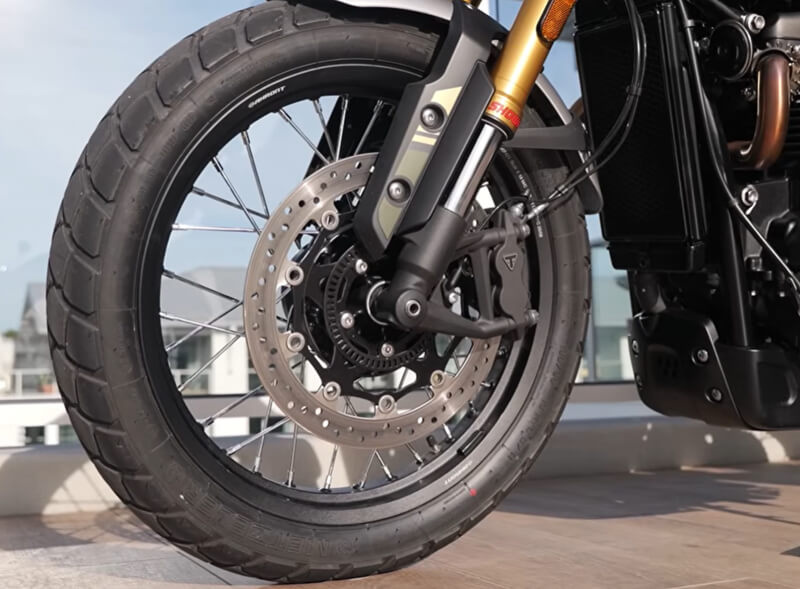
The Scrambler 900 gains a bigger 320 mm front brake disc with a radial-mount 4-piston caliper (Brembo). The rear brake is a 255 mm disc with a 2-piston caliper. These stronger brakes deliver firmer, more confident stopping power than before.
The wire-spoke wheels are now aluminum (instead of steel) and carry Metzeler Tourance 100/90-19 front and 150/70-17 rear dual-purpose tires, which reduce unsprung and rotating mass for quicker handling.
3. Modern Electronics
Triumph Scrambler 900 dashboard
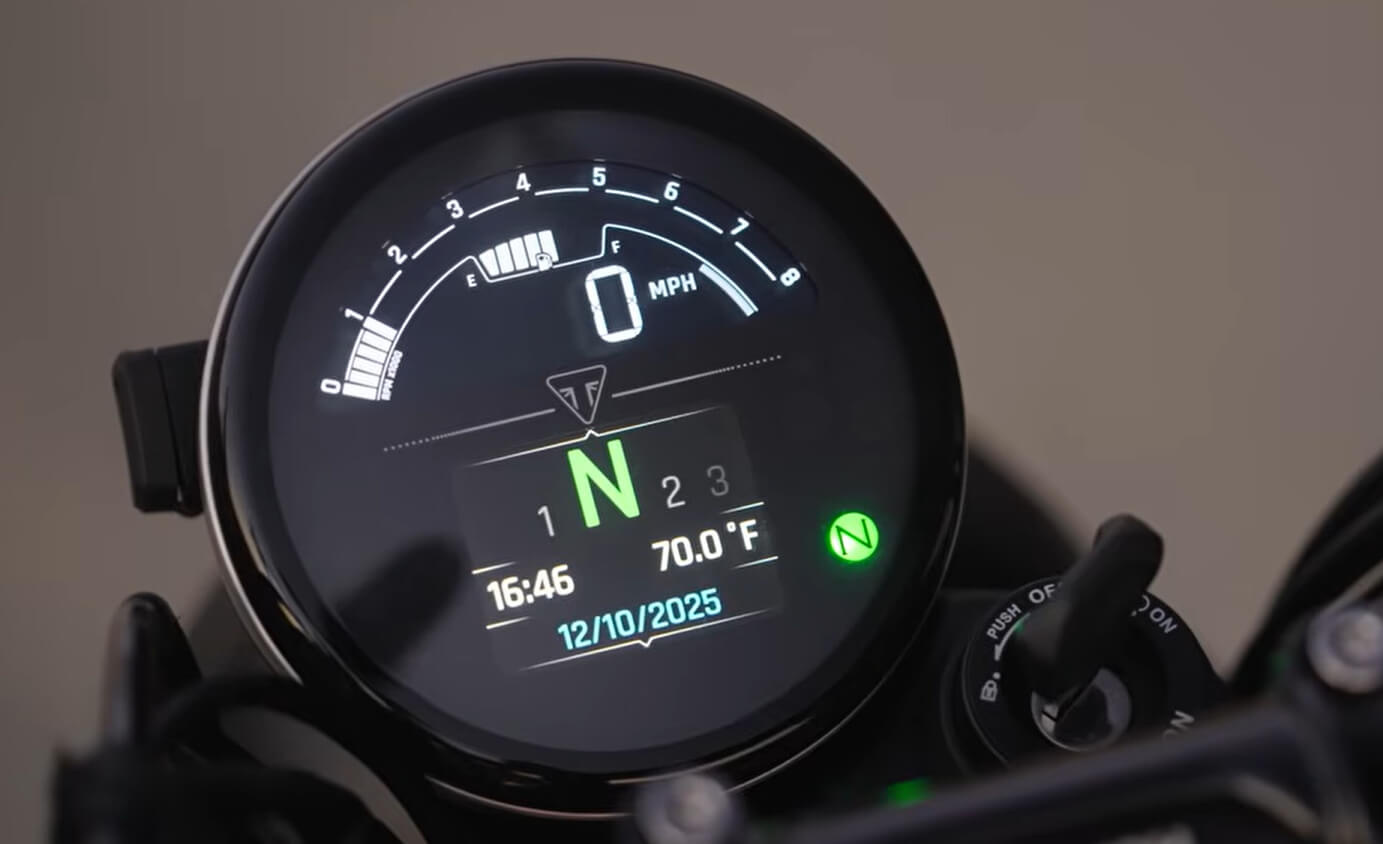
A key update is the all-new dashboard and rider aids. The bike replaces the single analog speedometer with a circular combo dial that incorporates an LCD tachometer and a 2.0-inch TFT display. This hybrid gauge can show speed, revs, gear position, riding mode, trip info and more.
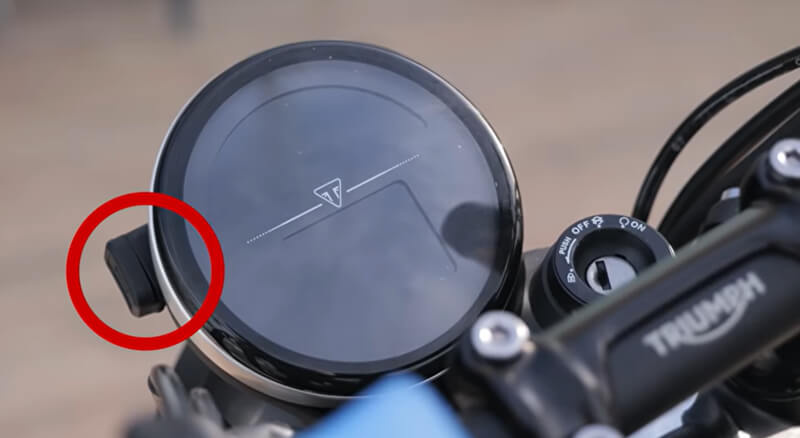
a standard USB-C charging port
Standard USB-C charging is fitted, and there is an optional Bluetooth module for smartphone integration (turn-by-turn nav and phone/music controls). An accessory cruise control kit is also available. Importantly, the 2026 Scrambler now has lean-sensitive cornering ABS and traction control as standard, thanks to a new IMU (Inertial Measurement Unit).
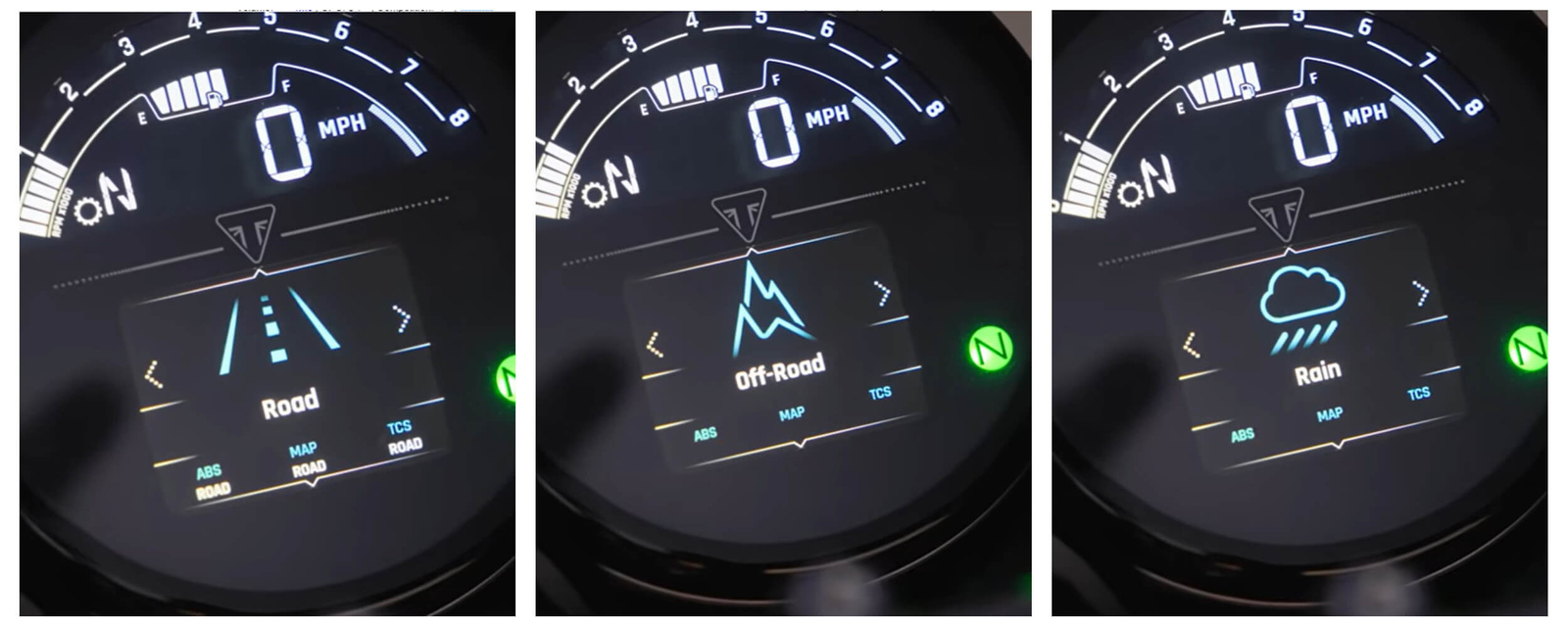
Three ride modes of the Triumph Scrambler 900
There are three ride modes – Road, Rain, and Off-Road. In Off-Road mode, the throttle response is softened, and rear ABS is deactivated to allow controlled slides. Full LED lighting with signature DRLs is standard on all models.
4. Styling Tweaks
Visually, the 2026 model is sharper and more modern. The fuel tank has a more sculpted shape with a new filler cap.
The seat is now a two-piece design with a narrower front section. Fenders are shorter, and the tail section is more tapered.
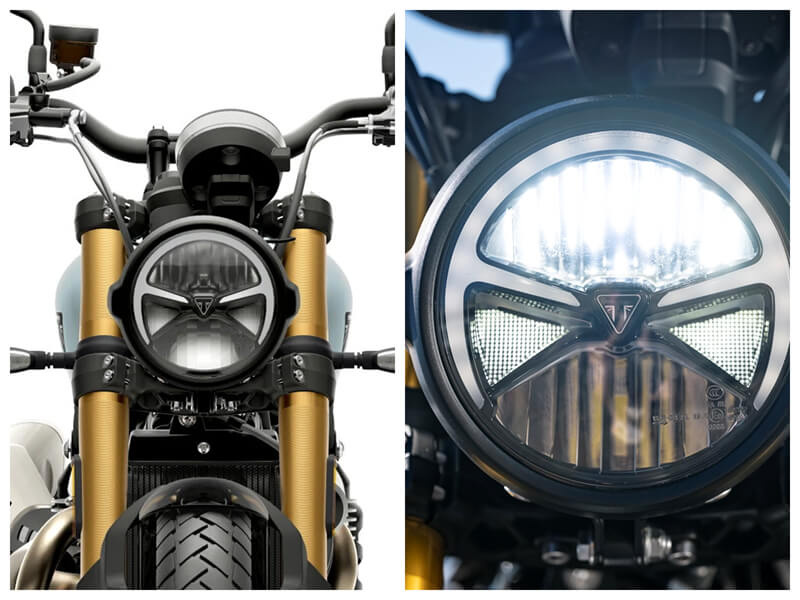
Triumph Scrambler 900 headlight
Minor styling changes — like new aluminum headlight brackets, camouflaged throttle-body covers, and revised side panels — give the bike a “muscular aesthetic” closer in spirit to the larger Scrambler 1200. The 2026 Triumph Scrambler 900 still looks unmistakably like a Scrambler, but with a more contemporary edge.
5. Engine Stays the Same
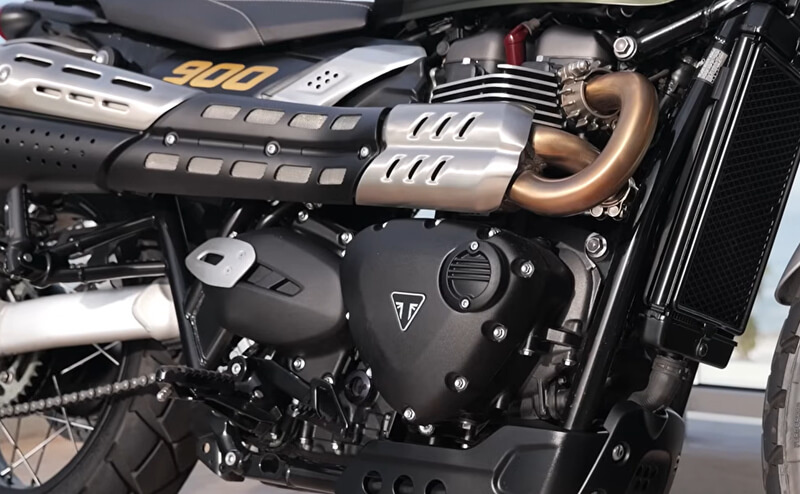
Triumph Scrambler 900 engine
The heart of the bike, the 900cc parallel-twin (with 270° crank), is largely carried over. It still makes about 64.1 bhp at 7,250 rpm and 59 lb‑ft (80 Nm) of torque at 3,250 rpm.
This isn’t blockbuster horsepower, but the engine is tuned for strong low-to-midrange grunt and a broad, usable power delivery. Emissions have been updated to meet Euro5+, but peak numbers and feel remain much the same as before.
The six-hole silencers now include a bit more heat shielding, which slightly improves things. But heat buildup is still noticeable on your right leg at low speeds.
6. Dimensions and Ergonomics
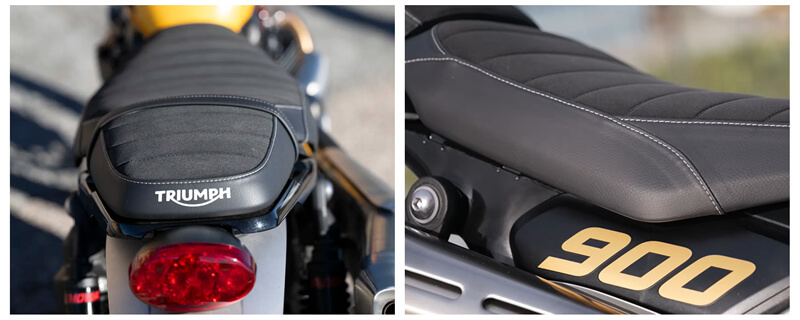
Triumph Scrambler 900 seat
The seat height is about 790 mm (31.1 in), which is very low for a scrambler and helps shorter riders flat-foot easily. The new seat is narrower at the front, which also aids low-speed confidence.
With a slim tank and a broadly upright riding posture (wide handlebars, mid-set pegs), the Scrambler 900 feels accessible and friendly. Despite the extra equipment, wet weight is around 221 kg (487 lb), about on par with the previous model.
Riding Experience
On the road, the 2026 Scrambler 900 immediately feels like a bike you can relax on and enjoy. The torque-rich engine, lighter chassis, and upgraded suspension work together to make it feel nimble and engaging without ever being demanding. From low revs, acceleration is smooth and confident, so overtakes and merges happen effortlessly.
I found myself short-shifting most of the time for an easy, laid-back ride, but when you wind it out, the parallel twin still delivers a satisfying surge of power. It handles both styles equally well.
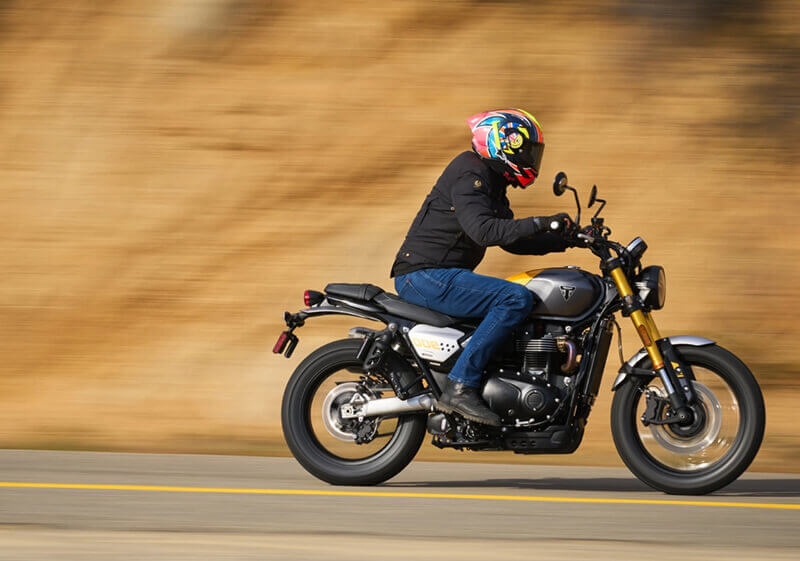
2026 Triumph Scrambler 900 riding experience
Handling is noticeably sharper than before. The USD forks and lighter wheels make turn-in feel quick and natural, and the bike tracks cleanly through corners. At low speeds—tight turns, U-turns, parking-lot maneuvers—it honestly feels almost comically light and obedient. You point it, and it simply goes. Once the pace picks up, the weight becomes more apparent, but it never feels cumbersome or resistant.
Riding it back-to-back with a Bonneville T100 really highlighted how much better the new suspension deals with broken pavement. The front end gives clearer feedback now, and as I pushed harder into corners, I felt more confident in the available grip.
Braking is another clear step forward. The first squeeze of the front lever makes it obvious that there’s more power on tap than before. It feels firmer and more reassuring than the old single-caliper setup, which gave me confidence to brake later when needed.
I did notice a slightly soft initial lever feel at first, but once loaded up, the stopping power is strong and predictable. Overall, the brakes finally feel like they match the engine’s lively character—you can scrub speed quickly and cleanly coming out of a corner.
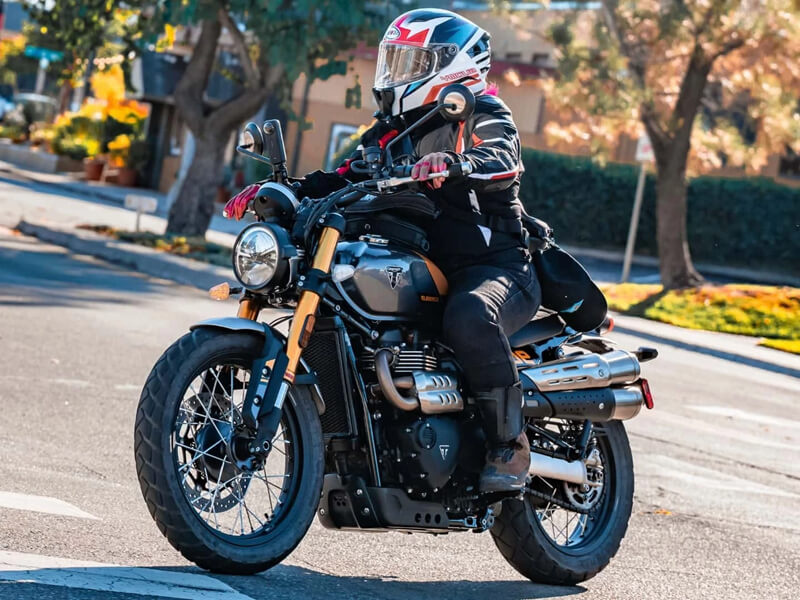
Triumph Scrambler 900 on city streets
The electronics fade nicely into the background during everyday riding. I left the bike in Road mode most of the time and let it do its thing. The TFT display is clear, with large speed and gear indicators that are easy to glance at on the move. Compared to the old, tiny LCD, this setup is far more intuitive and genuinely useful.
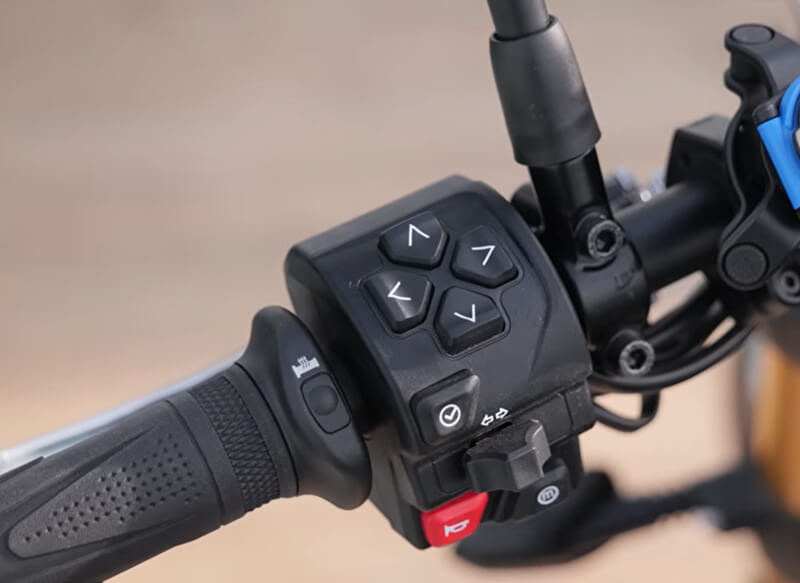
The four-way switch on the left handlebar
Switching modes or adjusting settings via the four-way switch on the left handlebar is straightforward. It does take a moment to adjust to everything being fully digital, but the extra information makes it worthwhile.
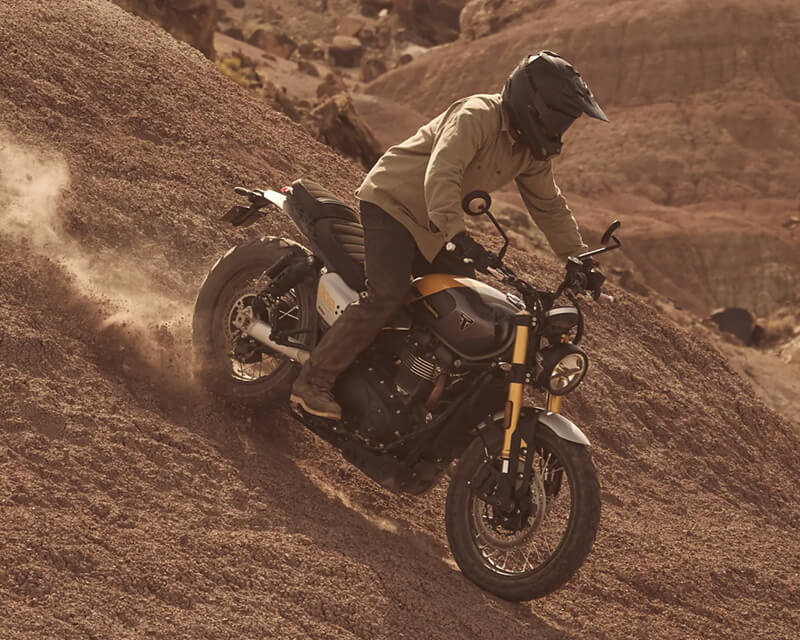
Triumph Scrambler 900 on a rough road
I also took the Scrambler onto some light gravel and rougher back roads, where the off-road mode and updated chassis add a bit of extra confidence. It’s not pretending to be a serious dirt bike—the 19/17-inch wheels and limited suspension travel set clear boundaries—but it copes with uneven surfaces far better than the previous model.
The lean-sensitive traction control and off-road mode make it easier to manage small slides if the rear steps out. That said, this is still very much a road-focused machine, and that’s where it feels most at home.
Overall, the 2026 Scrambler 900 feels like a genuine improvement over the bike it replaces. Triumph’s claim that they’ve refined every aspect of the riding experience doesn’t feel like marketing fluff here. It still has that easygoing Bonneville character. The satisfying engine burble and upright, relaxed stance are all still there, but now everything works just that little bit better.
2026 Triumph Scrambler 900 Specifications
| Core Specifications | |
| Engine size | 900cc |
| Engine type | Liquid-cooled, 8v, parallel twin |
| Max power | 64.1bhp @ 7,250rpm |
| Max torque | 59.1 lb ft @ 3,250rpm |
| Electronics | OC ABS, traction control, riding modes |
| Chassis, Suspension & Brakes | |
| Front suspension | 43mm Showa USD forks |
| Rear suspension | Twin shocks, adjustable preload |
| Front brake | 320mm disc, radial 4-piston caliper |
| Rear brake | 255mm disc, twin-piston caliper |
| Tyres | Metzeler Tourance (19"/17") |
| Dimensions & Performance | |
| Seat height / Weight | 790mm / 221kg |
| Fuel capacity | 12 litres |
| Top speed / Range | 120 mph / 186 miles |
| Pricing & Ownership | |
| Price | From $12,395 (£10,395) |
| Availability | March 2026 |
| Warranty | Two years |
Video Review
Pros and Cons
Pros
- Noticeably improved chassis, suspension, and brakes deliver a more planted, confident ride.
- Torquey 900cc engine remains friendly, flexible, and full of character.
- Modern electronics (cornering ABS/TC, ride modes, USB-C, full LED) add usability.
- Low seat height and upright ergonomics keep it accessible to a wide range of riders.
- Lighter wheels and chassis updates improve agility and overall balance.
Cons
- Styling leans more aggressively and less purely vintage than before.
- Still relatively heavy for a mid-size scrambler, and offers no wind protection.
- Exhaust heat remains noticeable in slow or hot conditions.
- Seat comfort and initial brake lever feel may disappoint some riders on longer journeys.
2026 Triumph Scrambler 900 – Rivals
Even though adventure motorcycles and those retro rides are still hot sellers, real scrambler-style bikes are still kinda rare. So, the Scrambler 900 chills in its own little spot. Most other bikes are either all about that retro look for the street or trying too hard to be adventure bikes.
Ducati Scrambler Icon
Even with the name, the Ducati Scrambler is more of a road bike than the Triumph. It doesn't have that old-school scrambler feel either.
Price and power-wise, the Icon is closest to the 900. It’s got a bit more oomph up top, but doesn’t have the low-down pull of the Triumph.
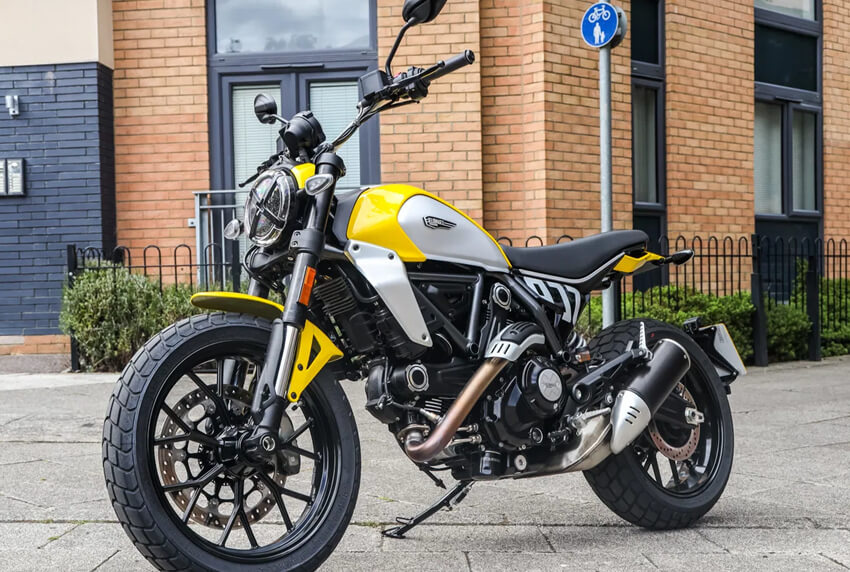
Ducati Scrambler Icon
Royal Enfield Bear 650
The Bear 650 is way cheaper than the Scrambler 900, but it's got some of the same vibes, mixing old-school looks with that scrambler stance.
Still, that air-cooled 650cc twin isn't as strong, so it’s more of a chill, less exciting ride.
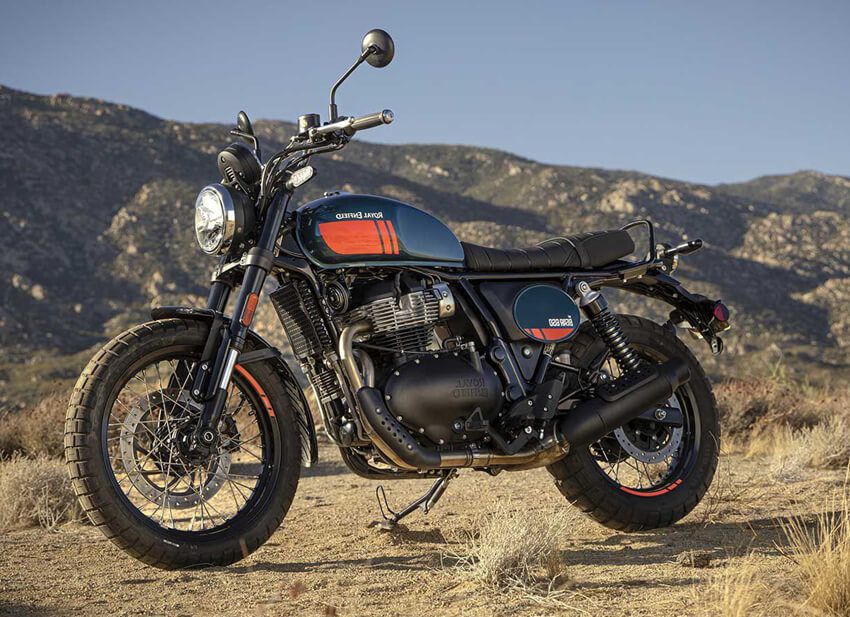
Royal Enfield Bear 650
Conclusion
The 2026 Scrambler 900 doesn’t try to redefine what a Scrambler is. It simply does the job better than before. By keeping the character that made the bike approachable while addressing its long-standing weak points, Triumph has turned the Scrambler 900 into a more rounded and convincing motorcycle.
It remains easy to live with, easy to ride, and easy to enjoy, but now offers the control and confidence to match its looks. For riders who liked the idea of the Scrambler 900 but wanted something more composed on the road, the 2026 update finally delivers.
Related Reading

With over 10 years of experience working on cars and trucks Item Training Supervisor Richard Reina is known around the office as one of our technical experts & real an "automobile person".
His rate of interest began, in his very own words, "at the age of two when his father educated him the distinction in between a Chevy and a Ford. Since then it's been cars regularly."
As a serious lover of practically all things with a motor Richard can address nearly any kind of inquiry related to car upkeep, fixing, or restoration & is a fact professional in electric motor background.
Subscribe
0 Comments
Oldest
You maybe like to read:
Adventure motorcycles, often called ADV bikes, are built to take you from smooth highways to rough backcountry trails. For new riders, picking the best adventure bikes for beginners can make all the difference. The right machine turns highways, gravel roads, forest tracks, and remote trails into places you actually want to explore, while the wrong […]
Riding in a group is thrilling, but without clear communication, even the best rides can turn chaotic. That’s where motorcycle intercom systems come in, letting you talk with your group, share GPS directions, listen to music together, and stay safer on the road. Whether you’re riding with a single friend or leading a pack of […]
I’ve used premium intercoms and budget ones on the same roads, in the same weather, on long touring days. The truth? Most riders don’t need a $400 system. Most riders still need the same basics: clear rider-to-rider talk, stable Bluetooth, and batteries that last a full day on the road. In 2026, budget motorcycle intercoms […]
What is the best motorcycle intercom for beginners? If you’re a new rider, the idea of adding another piece of tech to your helmet can feel overwhelming. I’ve been using motorcycle intercoms for years—on solo rides, long tours, group trips, and daily commutes—and I’ll tell you this upfront: A beginner motorcycle rider doesn’t need the […]
Mesh Intercom vs Bluetooth: Which Motorcycle Communication System Is Better? Mesh intercoms are best for riders who travel in groups because they automatically reconnect and stay stable, while Bluetooth intercoms are better for solo riders and two-up riding due to lower cost and simpler operation. As someone who both wrenches on bikes and rides long […]