The motorcycle communication systems field just got a significant upgrade with the release of the Fodsports FX7. This state-of-the-art Bluetooth mesh intercom is packed with many advanced features and techs. It will revolutionize the way riders communicate and enjoy their rides. Whether you're a solo rider or part of a group, the FX7 offers unparalleled […]

7 Types of Motorcycle Carburetors
June 9, 2025
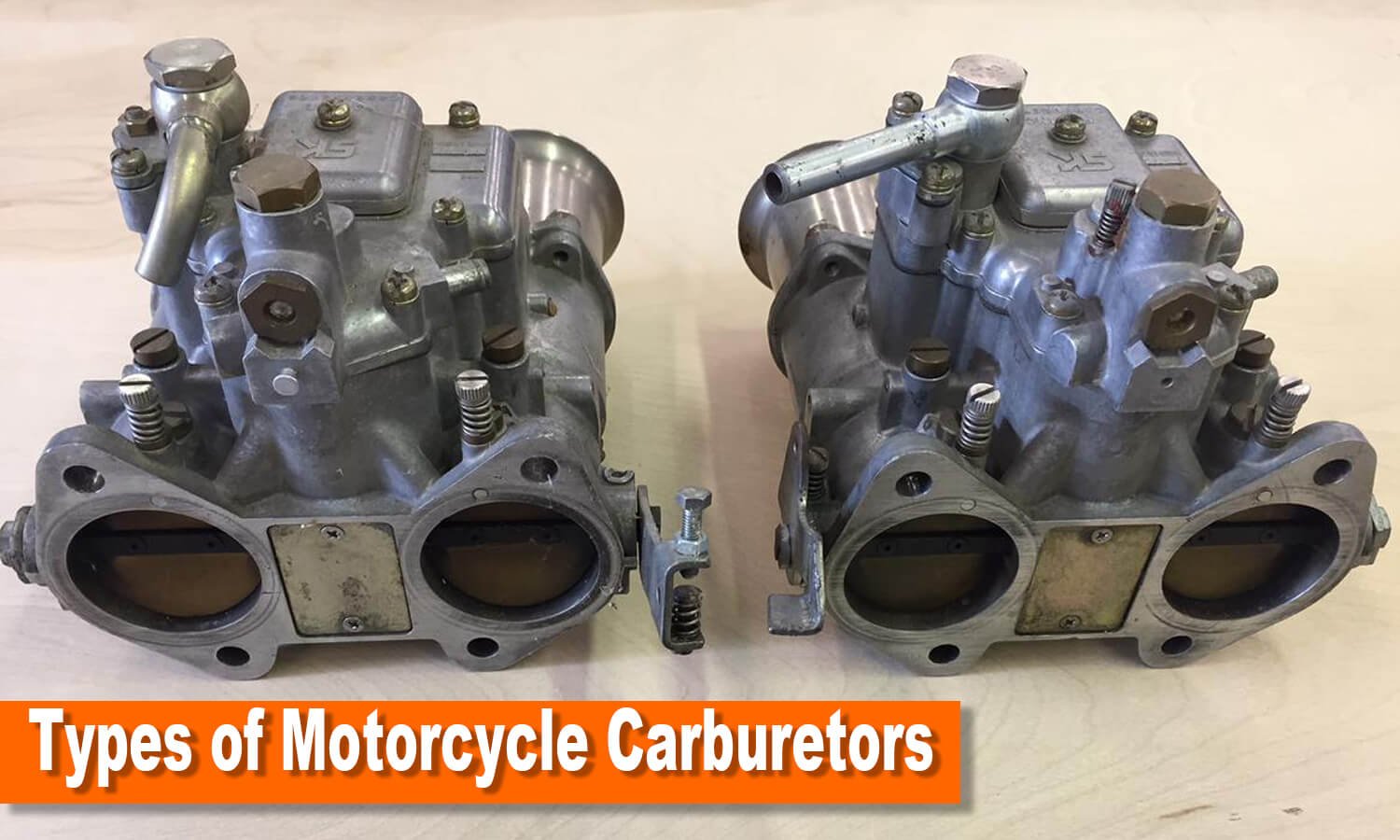
Motorcycle carburetors have long been the heart of fuel delivery systems in motorcycles. Even as electronic fuel injection (EFI) becomes prevalent, carburetors remain popular—especially in classic, off-road, and aftermarket-tuned motorcycles. Understanding different types, their operating principles, and their strengths is crucial for riders, mechanics, and enthusiasts.
Table of Contents
What a Carburetor Does and Why It’s Important
The carburetor's main job is to combine air and gasoline in the right proportion before the mixture goes into the engine cylinder. When the engine sucks in air, the carb forms a vacuum in the venturi (a narrowed throat), which draws fuel from the float bowl into the air flow. The air-fuel mix that results needs to be just right - not too rich (too much fuel) or too lean (too much air) - to burn well.
Opening the throttle allows more air to flow in and pulls in more fuel boosting power. On the flip side, shutting the throttle cuts down on airflow and fuel. The mix's makeup is crucial: a 14.7:1 air-to-fuel ratio is just right, perfect for full combustion. Any changes impact performance, gas mileage, and exhaust emissions.
Getting the mix right is key. If the carburetor gets blocked wears out, or isn't set up, the engine might run rough at idle, stumble when you step on the gas, cut out, or pump out black smoke.
For instance, a "lean" mix (too much air) can make the engine sputter or backfire, while a "rich" mix (too much fuel) can lead to black exhaust smoke and bad gas mileage. That's why an adjusted carburetor is key for smooth operation and why picking the right carburetor for your motorcycle is important..
Types of Motorcycle Carburetors
1. Float Carburetors (Butterfly Type)
The traditional float carburetor uses a float chamber to regulate fuel flow. When engine vacuum pulls air through the venturi, it draws fuel across the jet orifice. A butterfly valve regulates airflow, which in turn adjusts fuel delivery via fixed jets.
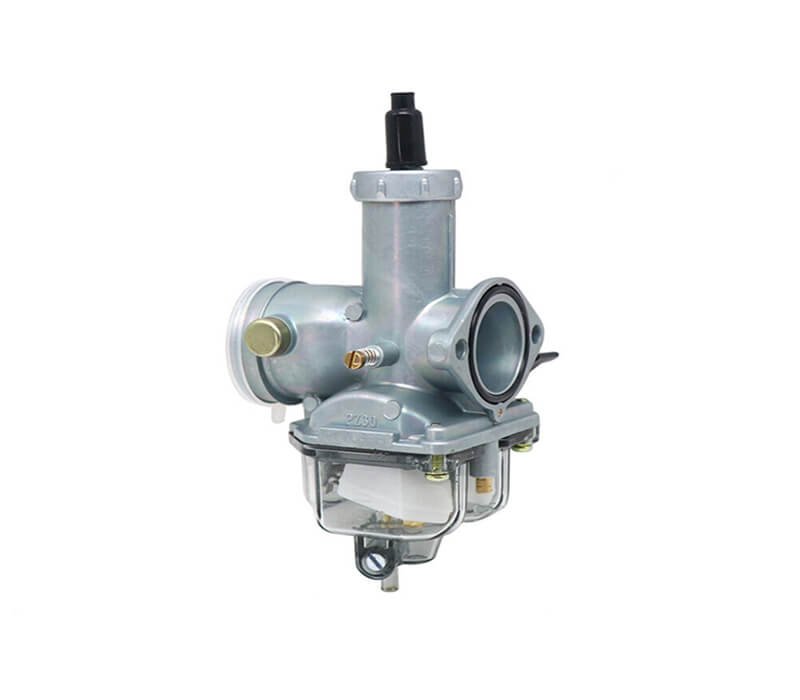
Float Carburetors
Pros
- Simple and robust: fewer moving parts make it easy to rebuild.
- Affordable: common on commuter bikes.
- Reliable: tough performance in a variety of conditions.
Cons
- Throttling lag: slower response compared to performance carbs.
- Less precise across RPM ranges: fixed jets limit optimization.
2. Slide-Valve (Mechanical) Carburetors
In mech-slide carbs, the throttle cable directly raises or lowers a slide (or piston), opening the venturi. A tapered needle increases fuel flow as the slide moves.
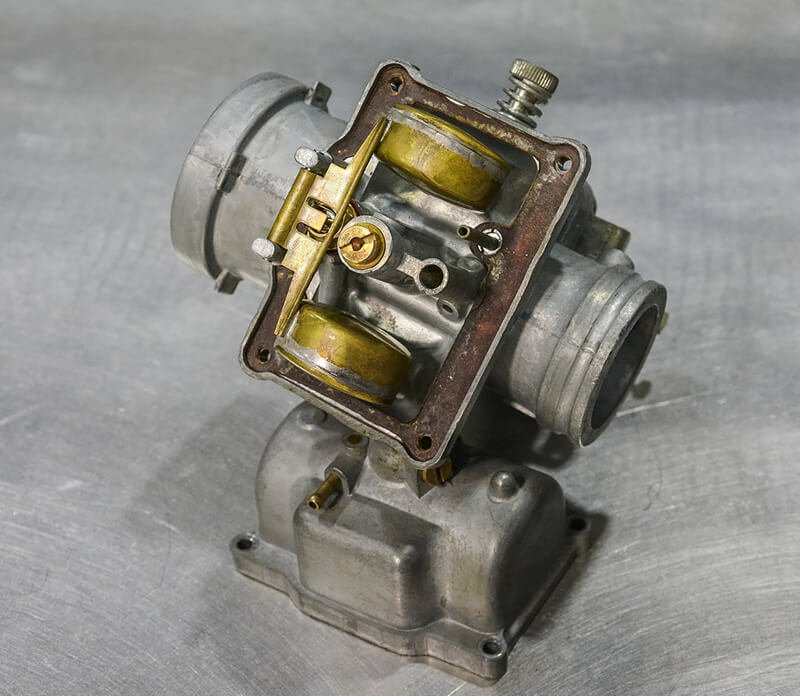
Mechanical slide carbs
Pros
- Quick throttle response: instant connection between rider input and engine output.
- Good performance: ideal for race and dirt bikes requiring immediate power.
Cons
- Fuel economy: can run richer than needed at partial throttle.
- Requires tuning: jets and needles must match engine conditions.
3. Constant Velocity (CV, Vacuum) Carburetors
CV carbs use a butterfly valve tied to throttle control and a vacuum-operated slide piston. Changes in vacuum dictate slide lift, maintaining consistent airflow velocity.
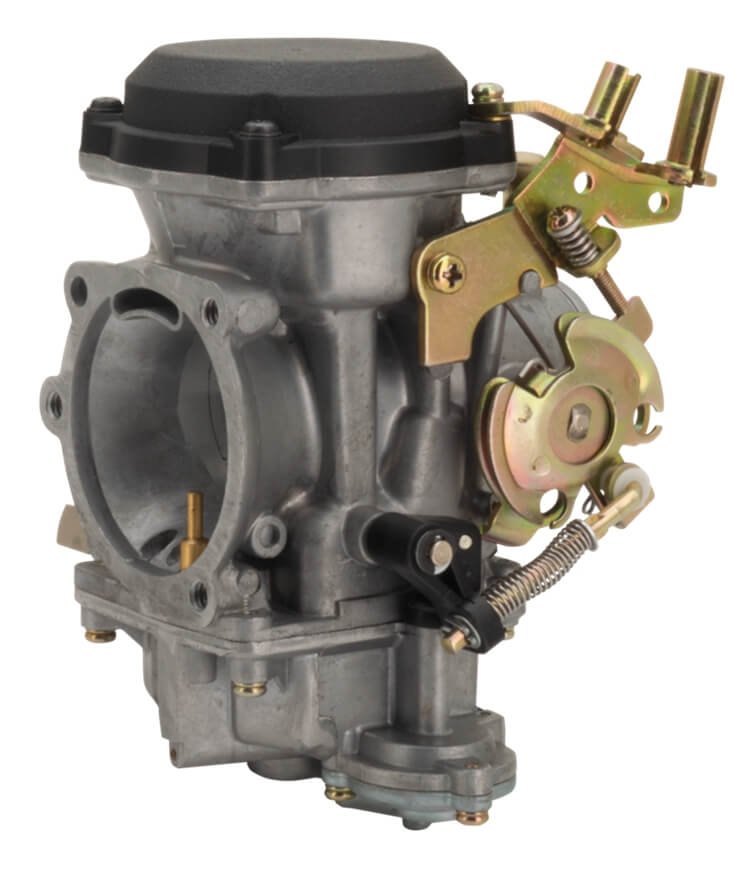
Constant Velocity Carburetors
Pros
- Smooth throttle transitions: vacuum control prevents jerky acceleration.
- Fuel efficient: adapts to throttle and vacuum demands.
Cons
- Slower initial throttle: slight lag before vacuum opens slide.
- Complex: diaphragms and springs require maintenance.
4. SU-Style Carburetors
Similar to CV carbs, SU carburetors use a floating piston and a tapered needle jet. However, they rely purely on airflow differential across the piston, without a throttle butterfly.
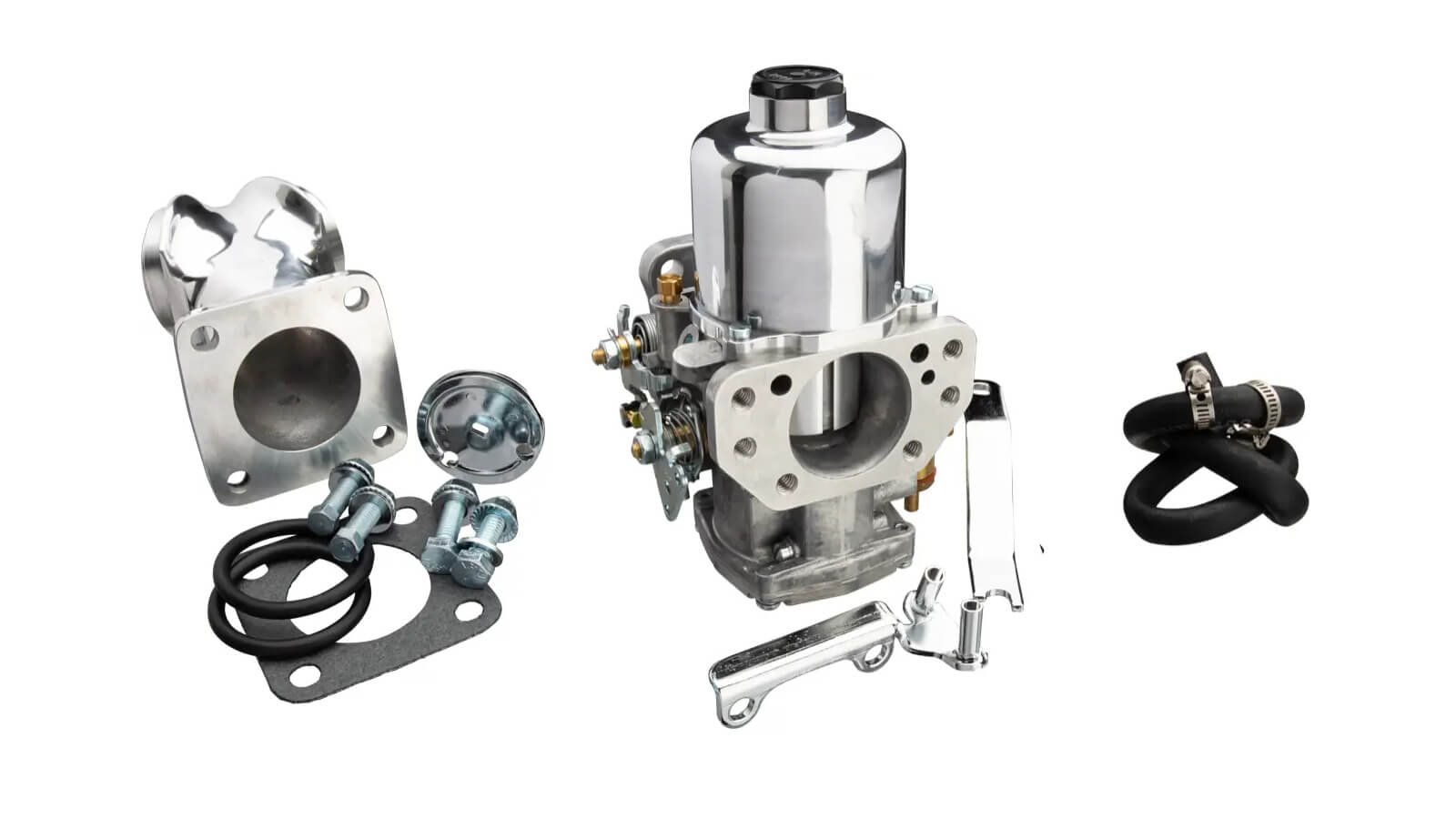
SU-Style Carburetors
Pros
- Automatic mixture balancing: adjusts seamlessly to demand.
- Simpler mixture tuning: one adjustment screw covers broader operation.
Cons
- Airbox reliance: low vacuum may affect performance off-boost.
- Not suited to high-performance demands: may lack throttle snap.
5. Specialized Racing Carburetors
Yoshimura’s MJN revolutionized fuel atomization by using a central nozzle with multiple holes, improving mid- to top-end response.
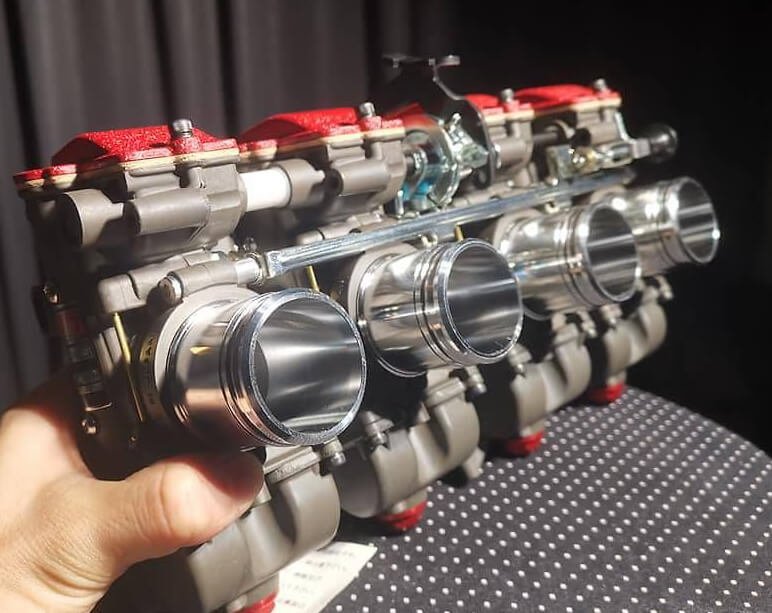
Motorcycle specialized racing carburetors
Pros
- Sharper throttle bite: instant response even with larger bores.
- Better fuel economy: efficient atomization allows smaller jets.
- Easy tuning: nozzle replacements simplify setup changes.
Cons
- Expensive, suitable for experienced riders for tuning.
Flat-Slide vs. Round-Slide Carbs
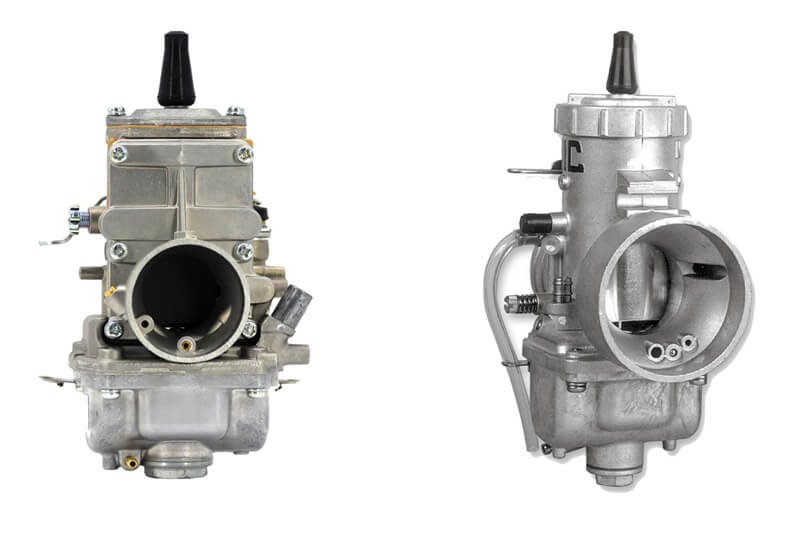
flat-slide vs. round-slide carbs
Flat-Slide Carbs
Flat slides present a flat throttle valve, improving power delivery by optimizing laminar airflow.
Pros
- Exceptional throttle control
- Performance upgrades for race bikes
Cons
- Requires careful jetting
- Less street-friendly without tuning
Round-Slide Carbs
Round slide carbs are common in vintage bikes and effective in everyday applications.
Pros
- Simple structure and low cost.
Cons
- Airflow is less smooth than flat-slide types, resulting in slightly slower power delivery.
7. Diaphragm (Pulse-Driven) Carburetors
Used chiefly in two-stroke dirt bikes, these carburetors regulate fuel flow based on engine pulse pressure through a flexible diaphragm.
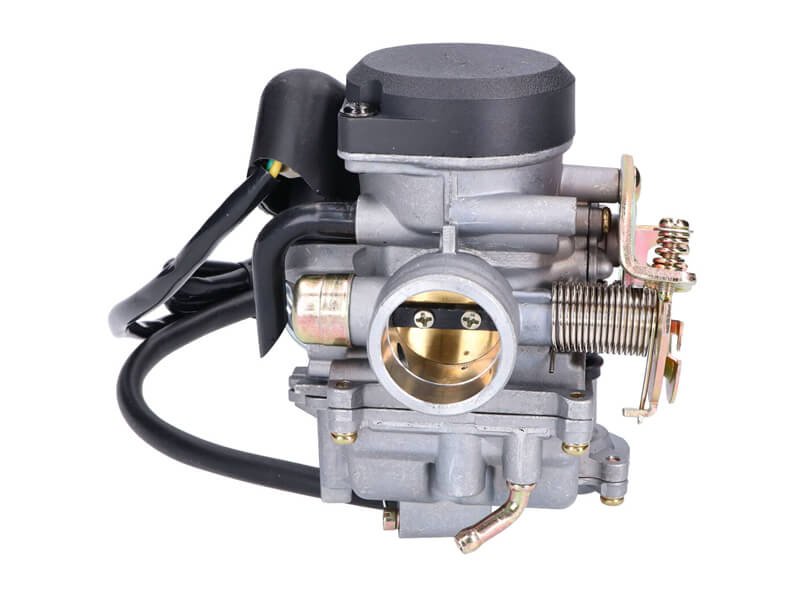
diaphragm carburetors
Pros
- Compact structure and not dependent on fuel tank position.
- Great for off-road and variable throttle
Cons
- Not suitable for high-performance vehicles; fuel delivery is less stable compared to float-type carburetors.
Installation & Tuning Basics
- Jetting: main, pilot, and needle position set fuel mixture.
- Idle/air screws: tune low-RPM callibration (CV/SU carbs).
- Balance across cylinders: multi-carb bikes require synchronized tuning.
- Regular maintenance: clean jets, inspect diaphragms, replace gaskets.
The Future of Carburetors
While EFI dominates new bikes, motorcycle carburetors still thrive:
- In developing/emerging markets where simplicity is valued.
- Among enthusiasts who appreciate tinker-friendly setups.
- Performance upgrades with tech like MJN keep carbs competitive.
Conclusion
Motorcycle carburetors come in many designs, each with unique traits. From traditional float types to cutting-edge MJN flat slides, riders have options to fit their needs—street, vintage, off-road, or performance. While EFI is modern, motorcycle carburetors endure thanks to their serviceability, customization, and charm. Choosing the right one means thinking about your bike, riding style, and mechanical skill.

With over 10 years of experience working on cars and trucks Item Training Supervisor Richard Reina is known around the office as one of our technical experts & real an "automobile person".
His rate of interest began, in his very own words, "at the age of two when his father educated him the distinction in between a Chevy and a Ford. Since then it's been cars regularly."
As a serious lover of practically all things with a motor Richard can address nearly any kind of inquiry related to car upkeep, fixing, or restoration & is a fact professional in electric motor background.
You maybe like to read:
Fodsports Brand Month: Unbeatable Deals and Top-Notch Service
Discover Fodsports Brand Month July and August mark a special occasion for motorcycle enthusiasts and tech lovers alike. Welcome to Fodsports Brand Month! This event is dedicated to celebrating everything that makes Fodsports a leading name in the motorcycle communication industry. Get ready for a fantastic promotions, exceptional service from Fodsports. Let's insights into Fodsports' […]
North Coast 500 Motorcycle Guide: Exploring Scotland in Autumn
Autumn transforms Scotland’s North Coast 500 into a memorable destination for motorcycle touring. Golden Highland forests, winding coastal roads, rugged mountains, and quiet fishing villages create a striking backdrop for an autumn ride. A North Coast 500 motorcycle trip, however, requires more than a scenic route. Rain, strong winds, wet leaves, and shorter daylight hours […]
Transalpina in Autumn: Romania’s Ultimate Motorcycle Riding Guide
Autumn brings a different atmosphere to Transalpina, Romania’s spectacular high-mountain road. Golden forests cover the lower slopes, open alpine ridges reveal sweeping Carpathian views, and winding asphalt makes this route a memorable destination for motorcycle touring. But an autumn ride requires more than choosing a scenic road. Temperatures can drop quickly at altitude, mountain weather […]
Motorcycle Camera Buying Guide: How to Choose the Right Camera for Your Ride
Every motorcycle ride has a story worth capturing: a winding mountain road, a weekend adventure with friends, or an unexpected moment in traffic. But choosing the right motorcycle camera is not simply about buying the model with the highest resolution. Shaky footage, poor audio, short battery life, and unreliable mounting can turn an exciting ride […]
Transfăgărășan in Autumn: Romania’s Ultimate Motorcycle Riding Guide
Autumn transforms Romania’s Transfăgărășan Highway into a dramatic mountain journey, with golden forests, rugged peaks, winding asphalt, and sweeping views across the Făgăraș Mountains. For motorcycle riders, it offers a memorable combination of technical corners, spectacular scenery, and opportunities to explore the Romanian countryside. But an autumn ride requires more planning than a summer trip. […]