The motorcycle communication systems field just got a significant upgrade with the release of the Fodsports FX7. This state-of-the-art Bluetooth mesh intercom is packed with many advanced features and techs. It will revolutionize the way riders communicate and enjoy their rides. Whether you're a solo rider or part of a group, the FX7 offers unparalleled […]

Long Distance Motorcycle Touring Tips for Beginners: Complete Guide
August 13, 2026
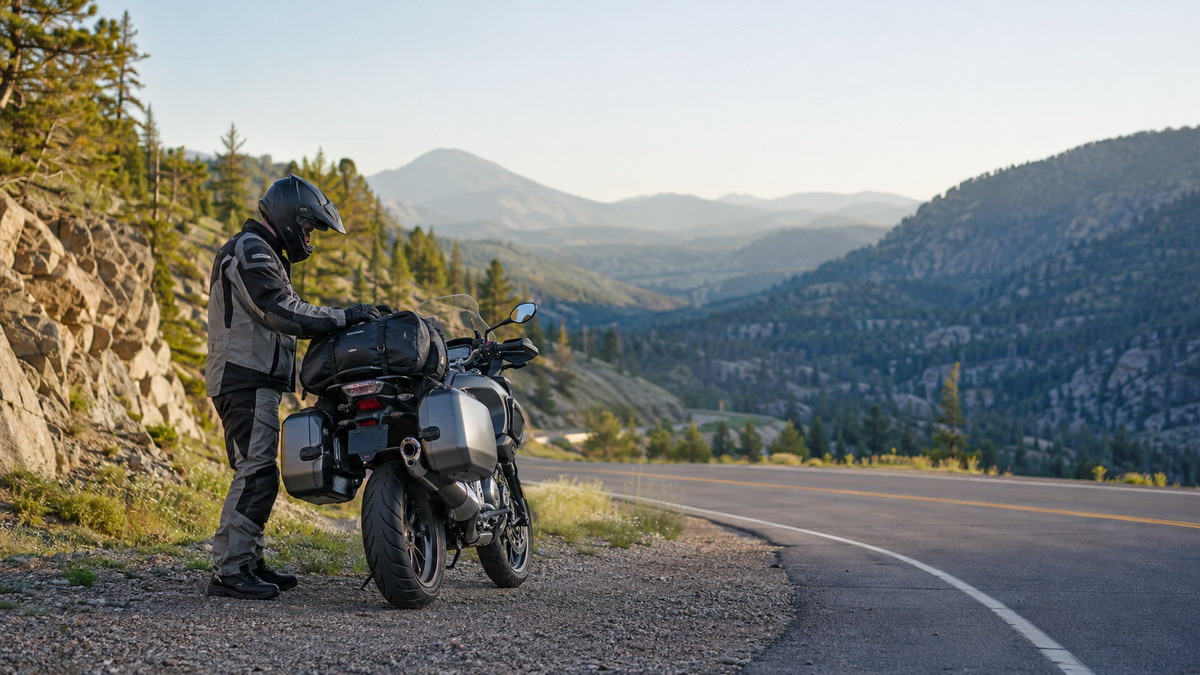
Long-distance motorcycle touring offers a unique combination of freedom, adventure, and exploration. Whether you're planning your first overnight motorcycle trip, a multi-state road trip, or dreaming of a cross-country motorcycle adventure, riding hundreds of miles on two wheels requires more preparation than a typical weekend ride. From choosing the right route and preparing your motorcycle to managing fatigue, packing efficiently, and dealing with changing weather, a little planning can make a major difference. This beginner-friendly guide covers the essential long-distance motorcycle touring tips you need to ride farther, safer, and more comfortably.
Table of Contents
🏍️ Why Long Distance Motorcycle Touring Is Different
The Difference Between a Day Ride and a Touring Trip
Long-distance motorcycle touring is one of the best ways to experience the open road. Instead of simply riding for a few hours and returning home, touring allows you to travel across states, explore scenic highways, discover small towns, and experience landscapes that are difficult to appreciate from inside a car.
However, a long motorcycle trip is very different from a short weekend ride. Spending six or eight hours in the saddle introduces new challenges, including fatigue, changing weather, navigation, fuel planning, luggage, and motorcycle maintenance.
For beginners, the biggest mistake is often trying to ride too far too quickly. A successful first motorcycle touring trip is not about covering the most miles. It is about learning how your motorcycle, body, riding gear, and travel routine perform over an extended period.
With realistic planning and the right preparation, even a two- or three-day motorcycle road trip can become an excellent introduction to long-distance riding.
🗺️ Choose the Right Route for Your First Motorcycle Tour
Start With a Manageable Distance
Your first long-distance motorcycle trip should be challenging enough to provide a new experience but not so difficult that you spend the entire day exhausted.
Instead of immediately planning a 500- or 600-mile riding day, consider starting with approximately 200–300 miles, depending on your experience and road conditions. If you normally ride 100 miles comfortably, doubling that distance is already a significant step.
Remember that your actual riding time will be longer than the estimated navigation time. Fuel stops, meals, traffic, photographs, construction, and scenic viewpoints all add time to the journey.
Build Your Riding Distance Gradually
A good way to prepare for long-distance motorcycle touring is to increase your riding distance over several trips.
Start with longer day rides, then try an overnight motorcycle trip. Once you know how your body responds to several hours of riding, you can move on to a multi-day motorcycle tour.
This process also allows you to test your motorcycle luggage, riding gear, navigation system, and communication equipment before committing to a much longer adventure.
Plan Fuel Stops Before You Leave
Fuel planning becomes especially important when riding through rural areas, mountains, deserts, or national forests.
Check your motorcycle's realistic fuel range rather than relying only on the manufacturer's maximum figures. Identify fuel stations along your route and consider filling up earlier when traveling through remote areas.
Running out of fuel far from the nearest town can quickly turn a relaxing motorcycle adventure into an expensive problem.
🔧 Prepare Your Motorcycle Before a Long Ride
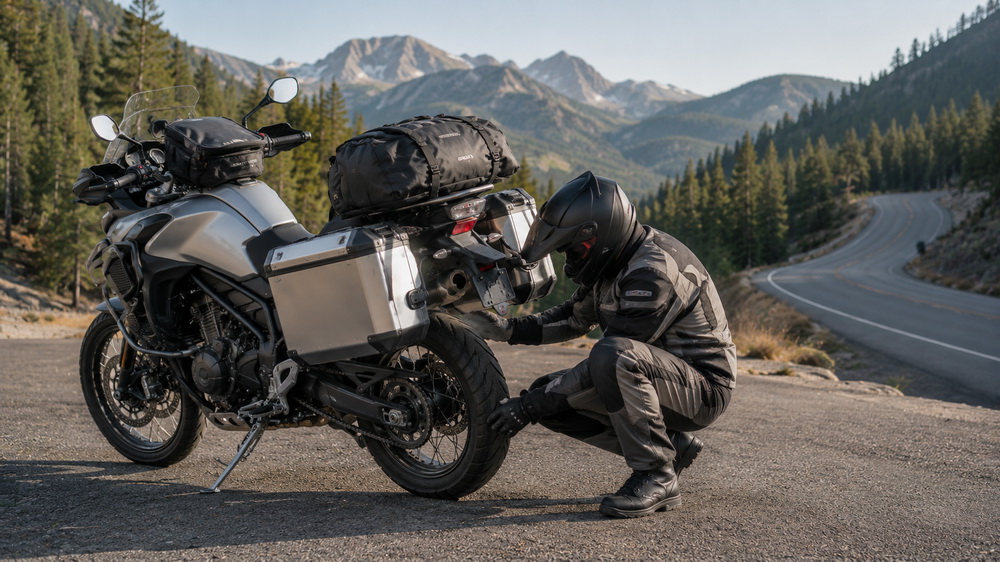
Motorcycle Pre-Trip Inspection for Long-Distance Touring
Perform a Pre-Trip Inspection
A reliable motorcycle is the foundation of any long-distance motorcycle trip. Before leaving, inspect the motorcycle carefully or schedule a professional service if necessary.
Pay particular attention to:
- Tire pressure and tread condition
- Brake pads and brake fluid
- Engine oil and coolant
- Chain tension and lubrication
- Drive belt or shaft-drive condition
- Battery
- Headlights and turn signals
- Suspension
- Loose bolts and fasteners
If your tires are already close to the end of their service life, replace them before the trip rather than hoping they will last another thousand miles.
Test Your Motorcycle With Its Full Load
A motorcycle can feel completely different after adding saddlebags, panniers, a top case, and camping equipment.
Before your trip, take a test ride with your luggage fully loaded. Check whether anything moves, rattles, interferes with steering, or affects your ability to balance the motorcycle at low speeds.
Make sure heavy items are positioned low and close to the motorcycle's center rather than high or far behind the rear axle.
Learn Basic Roadside Maintenance
You do not need to become a professional motorcycle mechanic, but every touring rider should understand basic maintenance.
Learn how to check tire pressure, inspect and lubricate the chain if applicable, identify warning lights, and perform simple roadside inspections.
A basic toolkit, a tire repair kit, and a portable air compressor can be extremely valuable when traveling far from home.
🎒 Pack Light and Organize Your Motorcycle Luggage
Avoid Taking Too Much
One of the most common mistakes for beginner motorcycle touring is overpacking.
Unlike a car, your motorcycle has limited storage space. Every extra item adds weight and can affect handling, acceleration, braking, and fuel economy.
Choose versatile clothing that can be used in different conditions rather than packing a separate outfit for every day.
Keep Important Items Accessible
Think about what you may need during the ride and where you store it.
Rain gear should be easy to reach because you may need it within minutes. Your wallet, phone charger, water, snacks, maps, and basic tools should also be accessible without completely unpacking the motorcycle.
A practical setup might include saddlebags or panniers for larger items, a tail bag for additional storage, and a small tank or handlebar bag for frequently used items.
What Should You Pack?
A basic long-distance motorcycle touring setup should include:
- Motorcycle riding gear
- Waterproof rain gear
- Extra layers
- Gloves
- Basic tools
- Tire repair kit
- Portable air compressor
- First-aid supplies
- Water
- Snacks
- Phone and charging cables
- Power bank
- Identification and payment cards
- Emergency contact information
The goal is not to prepare for every imaginable situation. Pack the items that are difficult or expensive to replace when you are hundreds of miles from home.
🌦️ Prepare for Changing Weather
Check Weather Along the Entire Route
Weather is one of the biggest challenges during long-distance motorcycle touring.
A trip can pass through several different climate zones in one day. You might leave a warm city in the morning, climb into a cold mountain pass at noon, and encounter heavy rain in the afternoon.
Do not rely on the forecast for your starting location alone. Check weather conditions at major points along your route, particularly if you are crossing mountains or large areas of open terrain.
Use a Layering System
Layering is much more practical than carrying one extremely heavy jacket.
A base layer can provide warmth, while a motorcycle jacket protects you from wind and road debris. A waterproof outer layer can then be added when rain arrives.
Even if the forecast looks perfect, carry rain protection. Getting caught in a storm several hours from your destination can make an otherwise enjoyable ride extremely uncomfortable.
🧠 Manage Fatigue on Long Motorcycle Rides
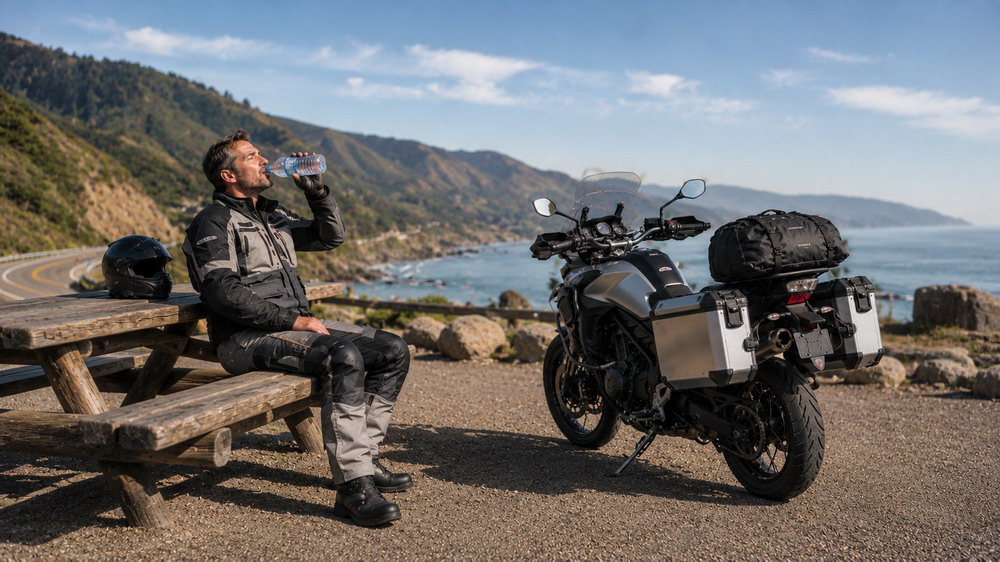
Motorcycle Touring Rider Taking a Break
Know Your Physical Limits
Fatigue is one of the most important issues for beginner motorcycle tourers.
When you are tired, reaction times become slower and concentration decreases. You may miss road signs, brake later than usual, or enter corners without properly assessing the road.
Unlike driving a car, motorcycle riding requires constant physical and mental involvement. Your hands, shoulders, back, legs, and core are all working throughout the ride.
Take Regular Breaks
Do not wait until you are exhausted before stopping.
Many riders find that taking a short break every 60–90 minutes works well, although the ideal interval depends on the rider and conditions.
Use your stops to stretch, drink water, eat a small snack, and check your motorcycle.
If you notice frequent yawning, poor concentration, missed turns, or difficulty maintaining a smooth riding line, stop immediately. Continuing simply to maintain your schedule is not worth the risk.
Stay Hydrated and Eat Properly
Dehydration can make fatigue worse, particularly during hot-weather motorcycle trips.
Carry enough water and drink regularly. Avoid relying exclusively on coffee or energy drinks to stay alert.
Choose relatively light meals during the riding day. A very heavy lunch can make you feel tired and uncomfortable shortly afterward.
🧭 Make Motorcycle Navigation Simple and Reliable
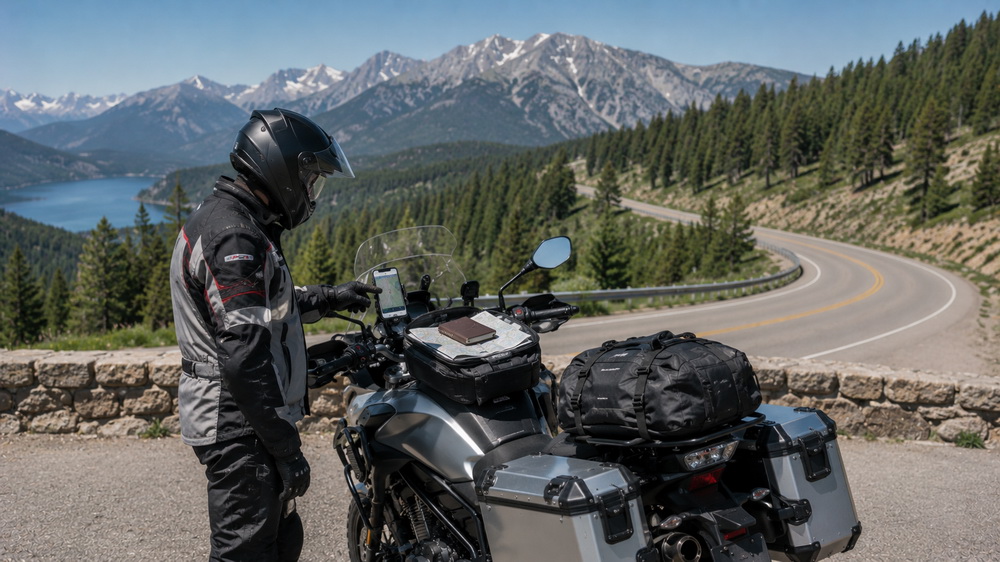
Motorcycle Navigation for Long Distance Touring
Download Offline Maps
Cellular coverage can disappear unexpectedly when traveling through mountains, deserts, forests, or remote highways.
Before starting your trip, download offline maps for the areas you will travel through.
A smartphone can be an excellent navigation tool, but do not make it your only backup. If possible, keep a second navigation option available or carry a physical map for remote areas.
Understand Your Route
Do not simply follow navigation instructions without understanding where you are going.
Know the major highways, towns, fuel stops, and destinations along your route. If your navigation system suddenly stops working, you should still understand the general direction of travel.
Plan Fuel, Food, and Accommodation
When planning a motorcycle touring route, mark important locations such as:
- Fuel stations
- Restaurants and supermarkets
- Hotels
- Campgrounds
- Motorcycle repair shops
- Scenic viewpoints
- Rest areas
This makes the trip much easier to manage and gives you alternatives if something goes wrong.
🎧 Choose the Right Motorcycle Touring Gear
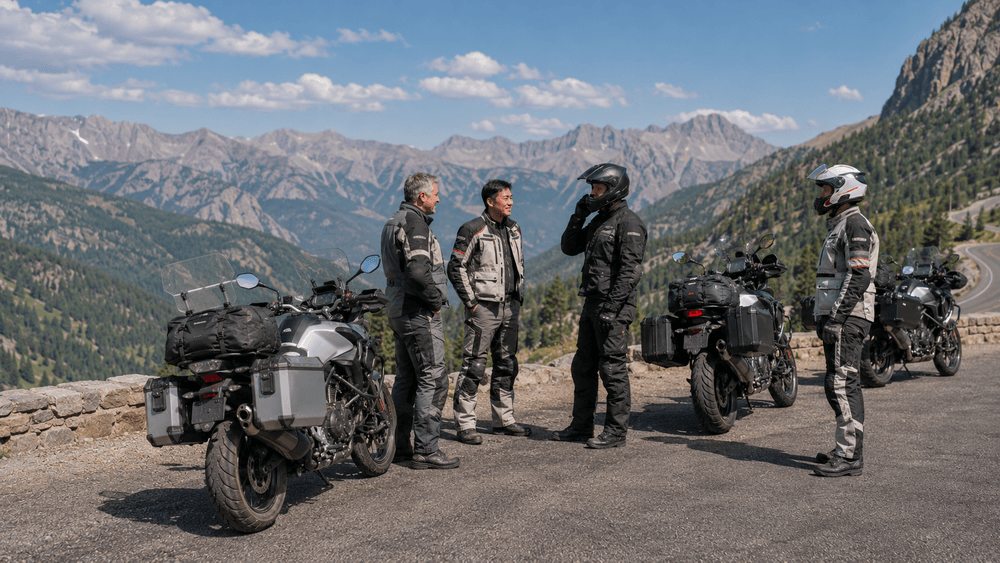
motorcycle riders bluetooth intercom communication
Prioritize Protection and Comfort
For long-distance riding, good equipment should provide both protection and comfort.
A properly fitted full-face helmet, armored motorcycle jacket, riding pants, gloves, and motorcycle boots should be considered essential equipment.
Do not wait until the day of your trip to test new gear. Wear your equipment on several shorter rides first. A jacket that feels comfortable for 30 minutes may become uncomfortable after five hours.
The same applies to your helmet, gloves, boots, and motorcycle seat.
Use Communication Equipment Wisely
For group motorcycle touring, communication technology can make long rides significantly easier.
A Helmet Communication system allows riders to communicate about fuel stops, road hazards, route changes, or mechanical problems without repeatedly stopping.
A Bluetooth Intercom can also provide hands-free navigation instructions and phone connectivity. For riders traveling in groups, a Motorcycle Intercom can make it easier to stay coordinated when traffic separates riders.
However, technology should support your riding rather than distract you. Keep your attention on traffic and avoid unnecessary interaction with devices while moving.
🏨 Plan Your Accommodation Without Making the Schedule Too Rigid
Choose a Comfortable End Point
For your first multi-day motorcycle trip, booking accommodation in advance can reduce stress.
Try to reach your hotel or campsite before dark, especially when traveling through unfamiliar areas. Searching for accommodation after eight hours of riding is much harder than doing it while you are fresh.
When selecting a hotel, consider motorcycle parking, security, nearby restaurants, and fuel availability.
Leave Some Flexibility
A motorcycle touring itinerary should be a guide, not a strict contract.
Road construction, traffic, weather, mechanical problems, and unexpected scenic stops can all change your schedule.
Leave some extra time in your itinerary so you do not feel pressured to ride faster when something delays you.
👥 Decide Whether to Ride Solo or With a Group
Advantages of Group Motorcycle Touring
Group riding can be helpful for beginners because other riders can assist with navigation, mechanical problems, and emergencies.
Before starting, agree on the route, riding pace, fuel strategy, communication method, and planned stops.
Do not feel pressured to ride beyond your ability just because another rider is faster.
Tips for Solo Motorcycle Touring
Solo touring provides more freedom, but it also requires additional preparation.
Tell someone you trust where you are going and provide your approximate itinerary. Check in periodically, especially when traveling through remote areas.
Carry enough water, fuel, basic repair equipment, and emergency supplies to handle unexpected delays.
🚨 Prepare for Problems Before They Happen
Have a Backup Plan
Even the best-planned motorcycle trips can encounter problems.
Common issues include:
- Flat tires
- Bad weather
- Road closures
- Mechanical problems
- Lost navigation
- Delayed accommodation
- Excessive fatigue
You cannot eliminate every risk, but you can prepare for common problems.
Keep emergency contacts available offline and know how to access roadside assistance if necessary.
Know When to Change Your Plans
One of the most important long-distance motorcycle touring tips for beginners is learning when to stop.
If weather becomes dangerous, you are too tired to ride safely, or road conditions exceed your experience level, change your route or stop for the day.
Completing your planned itinerary is never more important than getting home safely.
🛣️ Common Long-Distance Motorcycle Touring Mistakes
Riding Too Far on the First Day
Trying to cover an extreme distance immediately can cause severe fatigue. Start with a realistic mileage target and increase it as your experience grows.
Packing Too Much
Excessive luggage makes the motorcycle heavier and harder to handle. Pack only what you genuinely need.
Ignoring Weather
Conditions can change dramatically during a long motorcycle trip. Carry rain gear and check forecasts throughout the day.
Skipping Motorcycle Maintenance
Small mechanical problems can become major issues when you are far from home. Inspect your motorcycle before and during the trip.
Following the Schedule Too Strictly
Do not speed or skip breaks because you are behind schedule. Adjust the itinerary instead.
Forgetting to Enjoy the Journey
Motorcycle touring is not a race. Stop at scenic viewpoints, explore local towns, try regional food, and enjoy the road.
🏍️ Start With a Simple First Motorcycle Tour
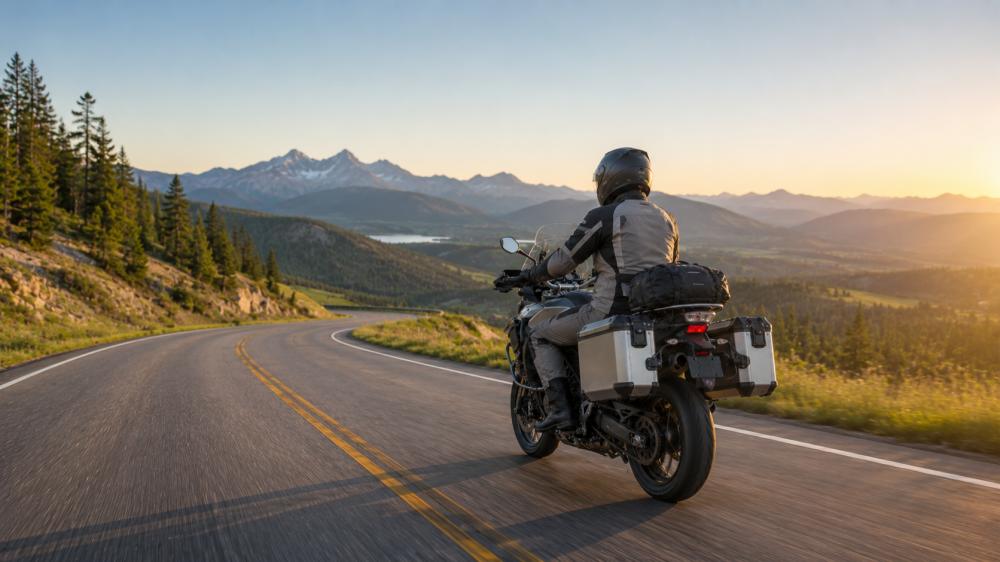
Beginner Long Distance Motorcycle Road Trip
A Two- or Three-Day Trip Is a Great Starting Point
If you have never completed a long motorcycle trip, start small.
Choose a destination a few hours away and stay overnight. If possible, return using a different route to gain more experience with unfamiliar roads.
A short trip allows you to discover how your body reacts to long hours in the saddle and whether your motorcycle luggage, riding gear, navigation system, and communication equipment work properly.
After several successful short tours, you can gradually increase your distance and eventually plan longer motorcycle road trips, multi-state adventures, or even a cross-country motorcycle tour.
🌎 Final Thoughts
Long-distance motorcycle touring is not about proving how many miles you can ride in one day. It is about discovering new roads, experiencing different landscapes, and enjoying the freedom of traveling on two wheels.
For beginners, the most important tips are simple: start with a manageable route, prepare your motorcycle, pack light, check the weather, plan fuel stops, take regular breaks, stay hydrated, and leave enough time for unexpected delays.
You do not need the most expensive touring motorcycle or a huge collection of accessories to begin. A reliable motorcycle, proper protective gear, realistic planning, and a willingness to adapt are enough.
Your first overnight motorcycle trip may only cover a few hundred miles, but it can teach you more about motorcycle touring than months of short local rides.
Ride at your own pace, respect your limits, and give yourself enough time to enjoy the journey. As your experience grows, longer motorcycle adventures will become more comfortable, more predictable, and much more enjoyable.
❓ Frequently Asked Questions
🏍️ How Many Miles Should a Beginner Ride on a Long-Distance Motorcycle Trip?
There is no universal mileage limit because experience, motorcycle type, road conditions, and weather all affect how far you can comfortably ride. For a first trip, 200–300 miles in a day can be a reasonable starting point for many riders, but beginners should choose a distance based on their own experience and comfort.
🎒 What Should I Pack for My First Motorcycle Touring Trip?
Pack protective riding gear, waterproof clothing, basic tools, a tire repair kit, water, snacks, charging equipment, identification, and emergency supplies. Avoid overpacking because additional weight can affect motorcycle handling and increase fatigue.
🧭 How Often Should I Stop During a Long Motorcycle Ride?
Many riders benefit from taking a short break approximately every 60–90 minutes, but there is no strict rule. Stop earlier whenever you feel tired, uncomfortable, dehydrated, or unable to maintain concentration.
🎧 Is a Bluetooth Intercom Useful for Long-Distance Motorcycle Touring?
Yes. A Bluetooth Intercom can provide hands-free navigation instructions and communication with other riders. For group motorcycle tours, communication equipment can also help riders coordinate fuel stops, road hazards, and route changes without repeatedly stopping.
🌦️ What Is the Most Important Tip for a Beginner Motorcycle Tour?
Do not overestimate yourself. Start with a manageable route, prepare your motorcycle, check the weather, ride at a comfortable pace, and leave enough time for rest and unexpected delays. A successful motorcycle tour is about returning home safely while enjoying the journey.

Rodney L is a technical writer and product consultant with over a decade of experience in the motor industry. Rodney is a fan of performance machines that run fast and loud and an expert in all things custom. His numerous articles and write-ups are available at our knowledge base. Whether it’s something wrong with your motorcycle or you are building a custom bike, you can trust Rodney’s experience.
You maybe like to read:
Fodsports Brand Month: Unbeatable Deals and Top-Notch Service
Discover Fodsports Brand Month July and August mark a special occasion for motorcycle enthusiasts and tech lovers alike. Welcome to Fodsports Brand Month! This event is dedicated to celebrating everything that makes Fodsports a leading name in the motorcycle communication industry. Get ready for a fantastic promotions, exceptional service from Fodsports. Let's insights into Fodsports' […]
Cherohala Skyway Tennessee and North Carolina: Fall Motorcycle Riding Guide
Few motorcycle roads in the Southeast combine elevation, open mountain views, and flowing curves quite like the Cherohala Skyway. Stretching about 43 miles between Tellico Plains, Tennessee, and Robbinsville, North Carolina, the National Scenic Byway climbs from lower valleys to elevations above 5,000 feet before crossing the Appalachian high country. In fall, the ride becomes […]
10 Best Autumn Motorcycle Routes in Europe: Scenic Roads, Fall Colors and Riding Tips
🍂 Why Autumn Is One of the Best Seasons for a European Motorcycle Road Trip Europe becomes a completely different riding destination in autumn. Alpine forests turn gold, mountain valleys develop deeper colors, vineyards become vibrant, and many popular roads become quieter after the summer peak. For motorcycle travelers, the biggest advantage is variety. In […]
Pig Trail Scenic Byway Arkansas in Fall: Motorcycle Riding Guide
Winding through the Boston Mountains, the Pig Trail Scenic Byway is one of Arkansas's most enjoyable fall motorcycle routes. AR-23 combines tight mountain curves, dense hardwood forests, and the Mulberry River, creating a ride where the road itself is part of the scenery. In autumn, the Ozarks become even more impressive as the forest changes from […]
Tunnel of Trees Michigan in Fall: Motorcycle Riding Guide
Red and gold forests, winding roads, and glimpses of Lake Michigan make the Tunnel of Trees in Michigan a memorable fall motorcycle destination. The roughly 20-mile M-119 route between Harbor Springs and Cross Village is best enjoyed at a relaxed pace, with plenty of time for scenic stops. Planning a ride in 2026 requires extra attention, […]