The motorcycle communication systems field just got a significant upgrade with the release of the Fodsports FX7. This state-of-the-art Bluetooth mesh intercom is packed with many advanced features and techs. It will revolutionize the way riders communicate and enjoy their rides. Whether you're a solo rider or part of a group, the FX7 offers unparalleled […]

Winter Motorcycle Visibility: How to Stay Seen on Shorter Days
November 12, 2026
When winter arrives, motorcycle visibility becomes more important than ever. Shorter daylight hours mean more riders commute in darkness, while rain, fog, cloudy skies, and wet roads can make motorcycles harder for other drivers to notice.
Even experienced riders can underestimate how difficult it is for motorists to recognize a motorcycle in poor lighting. A working headlight helps, but it is only one part of staying visible.
The best approach combines properly maintained motorcycle lights, high-visibility riding gear, reflective materials, and defensive riding habits. Here are practical motorcycle visibility tips to help you stay safer on winter roads.
🍂 Why Motorcycle Visibility Matters in Winter
Motorcycles are smaller than passenger vehicles and can easily disappear into surrounding traffic, particularly at intersections and in low-light conditions.
According to the National Highway Traffic Safety Administration (NHTSA), 6,228 motorcyclists were killed in U.S. traffic crashes in 2024, accounting for 16% of all traffic fatalities. NHTSA also identifies failure by other drivers to perceive motorcycles as a significant factor in many multi-vehicle motorcycle crashes.
Winter conditions make this visibility challenge more complicated:
- Shorter daylight hours: Morning and evening commutes increasingly take place in darkness.
- Poor weather: Rain, fog, and overcast skies reduce contrast.
- Wet roads: Reflections from streetlights and vehicle headlights can make it harder to distinguish motorcycles.
- Dark riding gear: Black jackets and helmets may blend into poorly lit surroundings.
- Dirty lighting equipment: Road grime, water, and salt can reduce headlight and taillight visibility.
Being visible does not guarantee that other drivers will react correctly, but it gives them a better opportunity to recognize you and respond.
💡 Keep Your Motorcycle Lights Visible and Functional
Your motorcycle's lighting system is your first line of defense in low-light conditions. Check it regularly, especially during winter when road grime and moisture can accumulate quickly.
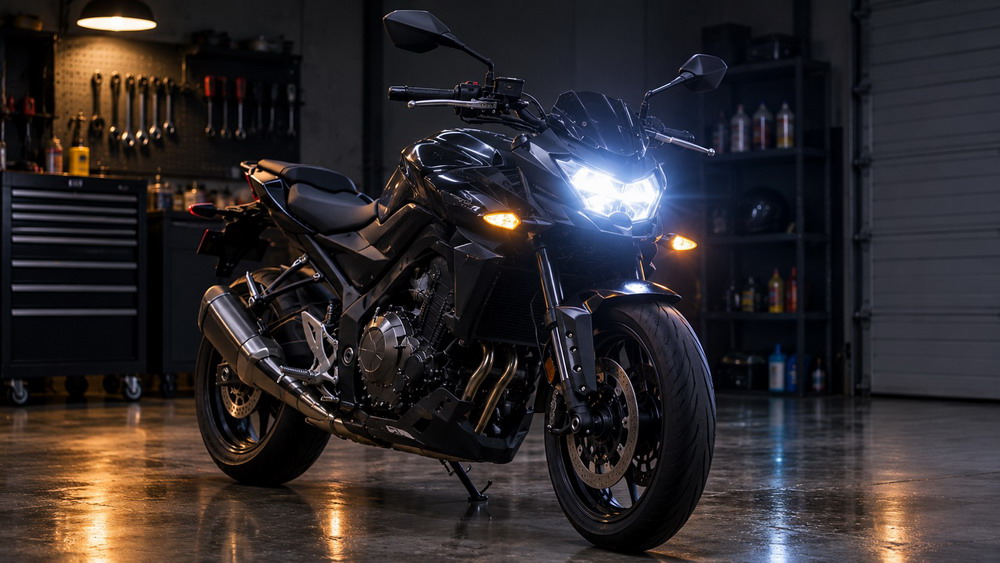
motorcycle headlight taillight night
Check Your Headlight and Taillight
Make sure your headlight works properly and is switched on whenever you ride. A clean headlight lens helps maintain its intended light output.
Check that the taillight is visible from behind and that its lens is not cracked, cloudy, or covered with dirt.
Use your high beam when appropriate on dark roads without nearby traffic. Switch to low beam when approaching or following other vehicles to avoid dazzling drivers.
Inspect Brake Lights and Turn Signals
Drivers behind you need enough time to recognize when you are slowing down or changing direction.
Before each ride, check:
- Front and rear turn signals
- Brake light activation from both brake controls
- Taillight operation
- Indicator lenses and wiring
Replace faulty bulbs or damaged components promptly. If your brake light does not activate consistently, repair the problem before riding.
Consider Auxiliary Lighting
Auxiliary driving lights or approved additional lighting can help make a motorcycle more noticeable, especially on poorly lit roads.
However, installation and use must comply with local lighting regulations. Aim lights correctly and avoid equipment that creates excessive glare or confuses other road users.
More lights do not automatically mean better visibility. Proper positioning, brightness, and responsible use matter.
🦺 Wear High-Visibility Motorcycle Gear
Your motorcycle lights help others identify your vehicle, but your riding gear makes your body more noticeable.
Choose Bright Colors During the Day
High-visibility yellow, orange, and white can create stronger contrast against many daytime backgrounds.
A brightly colored motorcycle jacket or vest is particularly useful in cloudy winter weather. A light-colored helmet can also make your head more noticeable to drivers approaching from different directions.
You do not need to replace all your riding equipment. Adding a high-visibility outer layer can improve the overall contrast of darker gear.
Use Reflective Materials at Night
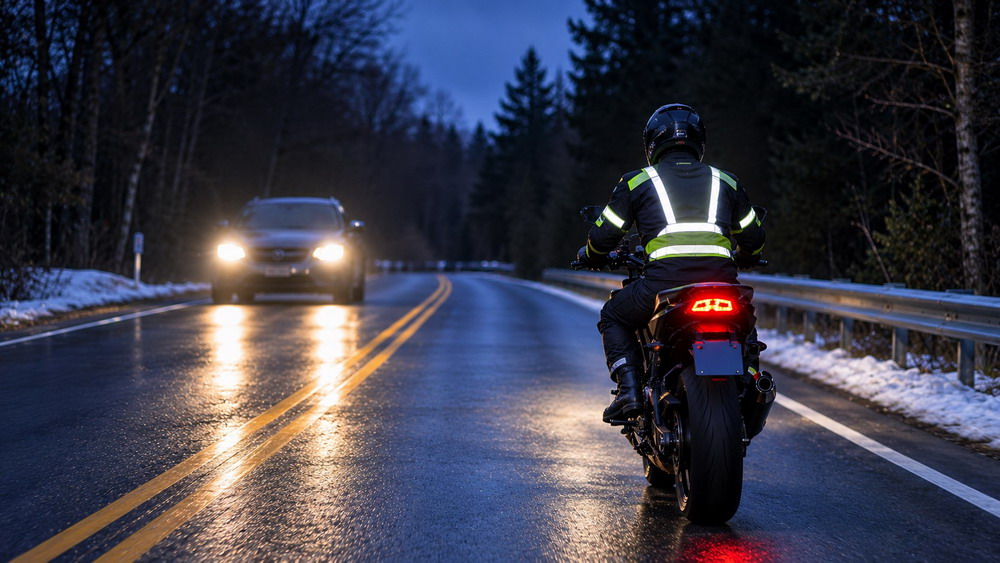
reflective motorcycle clothing night
Bright colors work best in daylight, while retroreflective materials are particularly useful after dark.
Unlike ordinary bright fabric, retroreflective strips return light toward its source. This makes them more noticeable when illuminated by vehicle headlights.
Consider adding reflective details to:
- Motorcycle jackets and pants
- Helmet surfaces
- Riding boots and gloves
- Backpacks and luggage
- Motorcycle side and rear panels
Place reflective materials where they can be seen from multiple directions. Avoid covering helmet vents, safety labels, or important motorcycle components.
NHTSA's motorcycle safety guidance identifies bright clothing, light-colored helmets, and retroreflective materials as ways to improve rider conspicuity.
🌫️ Improve Visibility in Rain, Fog, and Low Light
Winter visibility is not just about being seen. You also need a clear view of the road.
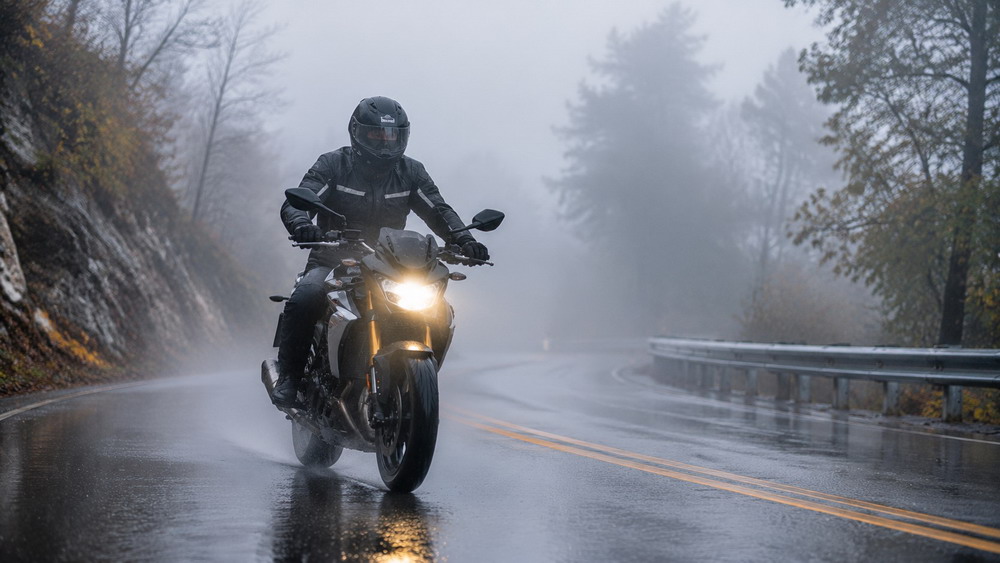
motorcycle riding in winter fog
Keep Your Visor Clean and Clear
A dirty or scratched visor can scatter light and make nighttime riding more difficult.
Clean your helmet visor with products approved by its manufacturer. Avoid household cleaners that may damage coatings.
For cold and humid conditions, consider a compatible anti-fog insert or treatment. Make sure your visor provides adequate ventilation and remains clear throughout the ride.
Adjust Your Riding Speed
Fog, heavy rain, and darkness reduce the distance at which you can identify hazards.
Reduce speed when visibility becomes limited. You should always be able to stop within the distance you can clearly see ahead.
Increase following distance to allow more time to recognize brake lights, road obstacles, and sudden changes in traffic.
Avoid relying on the taillights of the vehicle ahead as your only guide. Maintain enough space to see the road and respond independently.
Watch for Low-Angle Sunlight
Winter sunlight can sit close to the horizon during morning and evening commutes. Glare may affect both motorcycle riders and other drivers.
Use a clear or appropriately tinted visor for the conditions. Avoid dark visors when riding after sunset, and never sacrifice visibility for glare reduction.
🛣️ Use Smart Riding Positions to Be Seen
Good positioning can make a significant difference, particularly in traffic and at intersections.
Stay Out of Vehicle Blind Spots
Avoid riding alongside cars and trucks for extended periods. Drivers may not see you in their mirrors or may begin changing lanes without noticing your position.
When safe, adjust your speed or lane position to move into a more visible area.
Position Yourself Carefully at Intersections
Intersections are important risk areas because drivers turning left or entering traffic may fail to recognize an approaching motorcycle.
Approach intersections cautiously, reduce speed when necessary, and look for vehicles preparing to turn or pull out.
Do not assume another driver has seen you simply because you have the right of way.
Signal Early and Predictably
Use turn signals before changing lanes or turning. Avoid sudden movements, and give other road users enough time to understand your intentions.
Where appropriate and safe, a gentle brake application before slowing can help make your brake light noticeable to following traffic.
🎧 Choose Motorcycle Gear That Supports Safer Riding
Winter riding equipment should support visibility, comfort, and concentration.
A suitable helmet, reflective jacket, gloves, and weather-resistant riding layers help riders remain protected and focused during colder trips.
For group riders, Helmet Communication equipment can help coordinate stops and share road-condition information. A Bluetooth Intercom or Motorcycle Intercom can make communication between riders easier without relying on hand signals alone.
However, communication devices should never replace visual checks or distract riders from traffic. Keep audio at a reasonable level and follow local laws governing electronic devices while riding.
🏍️ Pre-Ride Motorcycle Visibility Checklist
Before every winter ride, take a few minutes to check the following:
- Headlight and taillight are clean and working.
- Brake lights respond to both brake controls.
- Turn signals operate correctly.
- Auxiliary lights are properly aimed and legally compliant.
- Helmet visor is clean and free from significant scratches.
- Reflective gear and materials are visible.
- Gloves allow proper control operation.
- Mirrors are adjusted correctly.
- Weather and road visibility are suitable for the trip.
If visibility is extremely poor, postpone the ride when possible. No equipment can fully compensate for dangerous road conditions.
❓ Frequently Asked Questions
1. How can I make my motorcycle more visible at night?
Use a properly functioning headlight and taillight, wear retroreflective clothing, and keep your motorcycle's reflective surfaces clean. Avoid vehicle blind spots and signal your intentions early.
2. Are bright motorcycle jackets better than black jackets?
Bright jackets generally provide better daytime contrast. At night, retroreflective materials are more useful because they reflect light from vehicle headlights toward other drivers.
3. Should I use high beams when riding a motorcycle at night?
Use high beams on dark roads when there is no nearby traffic that could be dazzled. Switch to low beams when approaching or following other vehicles, and follow local regulations.
4. Do auxiliary motorcycle lights improve visibility?
Properly installed and legally compliant auxiliary lights can make a motorcycle more noticeable and improve road illumination. Their effectiveness depends on correct positioning, aiming, and use.
5. What should I wear for winter motorcycle riding?
Choose protective, weather-appropriate gear with bright colors and retroreflective details. Wear a suitable helmet, gloves, boots, and layered clothing that allow unrestricted movement and control.
🏁 Make Every Winter Ride More Visible
Shorter days do not have to mean giving up motorcycle riding, but they do require more preparation. Check your lighting system, choose visible riding gear, keep your visor clear, and maintain a position where other drivers can recognize you.
Most importantly, never assume that other road users have seen you. Combine visibility equipment with defensive riding habits and adjust your plans when weather or lighting conditions become unsafe.
A more visible motorcycle and a more alert rider are both essential for safer winter journeys.
Authoritative Sources
- National Highway Traffic Safety Administration (NHTSA) – Motorcycle Safety
https://www.nhtsa.gov/road-safety/motorcycles - NHTSA – Strategies to Increase Rider Conspicuity and Use of Protective Clothing
https://www.nhtsa.gov/book/countermeasures-that-work/motorcycle-safety/countermeasures/other-strategies-behavior-change-0 - Motorcycle Safety Foundation (MSF) – Motorcycle Safety Awareness
https://msf-usa.org/motorcycle-safety-awareness-month/ - Ohio Department of Public Safety – Motorcycle Operator Manual: Preparing to Ride
https://motorcycle.ohio.gov/rider-safety-resources/motorcycle-operator-manual/preparing-to-ride - Insurance Institute for Highway Safety (IIHS) – Motorcycles and ATVs: Fatality Facts
https://www.iihs.org/research-areas/fatality-statistics/detail/motorcycles-and-atvs

Rodney L is a technical writer and product consultant with over a decade of experience in the motor industry. Rodney is a fan of performance machines that run fast and loud and an expert in all things custom. His numerous articles and write-ups are available at our knowledge base. Whether it’s something wrong with your motorcycle or you are building a custom bike, you can trust Rodney’s experience.
You maybe like to read:
Fodsports Brand Month: Unbeatable Deals and Top-Notch Service
Discover Fodsports Brand Month July and August mark a special occasion for motorcycle enthusiasts and tech lovers alike. Welcome to Fodsports Brand Month! This event is dedicated to celebrating everything that makes Fodsports a leading name in the motorcycle communication industry. Get ready for a fantastic promotions, exceptional service from Fodsports. Let's insights into Fodsports' […]
10 Best Motorcycle Road Trips in the USA for Winter: Warm Destinations and Scenic Highways
Winter doesn't have to mean putting your motorcycle away. While snow and freezing temperatures make riding difficult across much of the northern United States, several southern and southwestern regions offer milder weather, scenic highways, and enjoyable riding opportunities during the colder months. From the tropical views of the Florida Keys to the desert roads of […]
Winter Motorcycle Visibility: How to Stay Seen on Shorter Days
When winter arrives, motorcycle visibility becomes more important than ever. Shorter daylight hours mean more riders commute in darkness, while rain, fog, cloudy skies, and wet roads can make motorcycles harder for other drivers to notice. Even experienced riders can underestimate how difficult it is for motorists to recognize a motorcycle in poor lighting. A […]
How to Winterize a Motorcycle: A Complete Guide to Preparing Your Bike for Winter
When riding season ends, parking your motorcycle in the garage and throwing a cover over it is not enough. Months of inactivity can leave you dealing with a weak battery, deteriorated fuel, corrosion, or tire problems when spring arrives. Proper winter storage helps protect your motorcycle and reduces the maintenance it may need before your […]
Winter Motorcycle Riding: 15 Essential Tips for Cold Weather
Winter motorcycle riding can be exciting, but cold temperatures, wet roads, reduced daylight, and unpredictable weather create additional challenges for riders. Even experienced motorcyclists need to adjust their riding habits when temperatures drop. Cold weather affects more than comfort. It can reduce tire pressure, make hands less responsive, fog helmet visors, and increase the risk […]