The motorcycle communication systems field just got a significant upgrade with the release of the Fodsports FX7. This state-of-the-art Bluetooth mesh intercom is packed with many advanced features and techs. It will revolutionize the way riders communicate and enjoy their rides. Whether you're a solo rider or part of a group, the FX7 offers unparalleled […]

How Safe Are Flip up(Modular) Helmets? All You Should Know
October 26, 2022
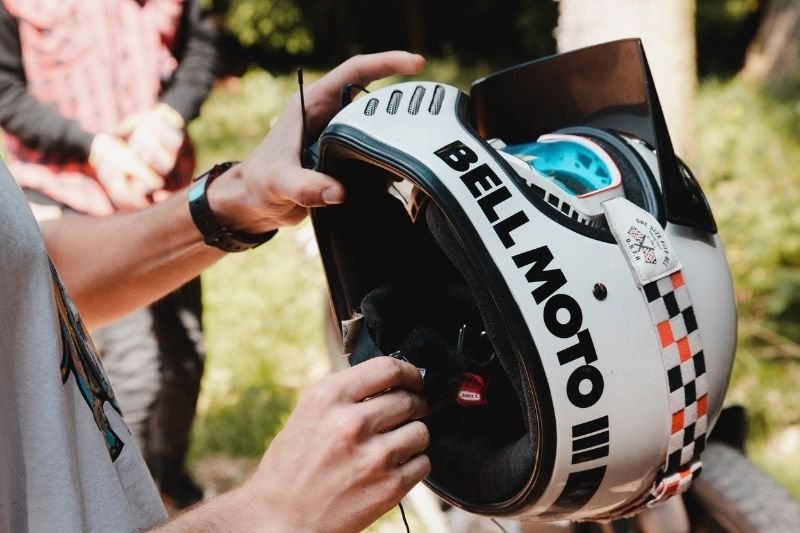
How safe are flip up helmets? Some cyclists will only use open-face safety helmets, some will just put on full-face helmets, while others put on flip-up or modular helmets. They wear different safety helmets for various circumstances.
So, which is the ideal helmet, and what are the benefits and downsides of the different sorts of safety helmets?
We do not wish to preach to you concerning what type of helmet you ought to put on. We have provided you with a list of advantages and disadvantages of each helmet type, so you can determine what to wear.
Simply ensure you do put on a helmet that is in good condition and properly approved for your place.
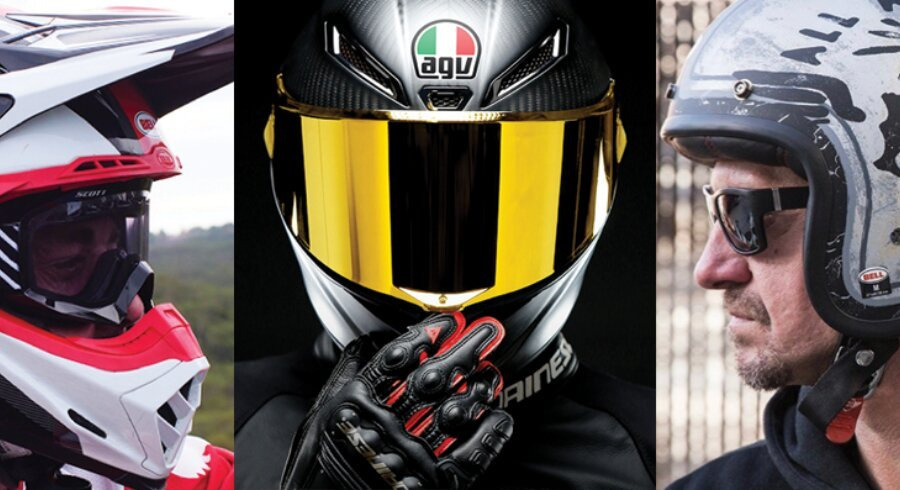
three kind of motorcycle helmet
Table of Contents
Flip-up Helmets (Modular Helmets)
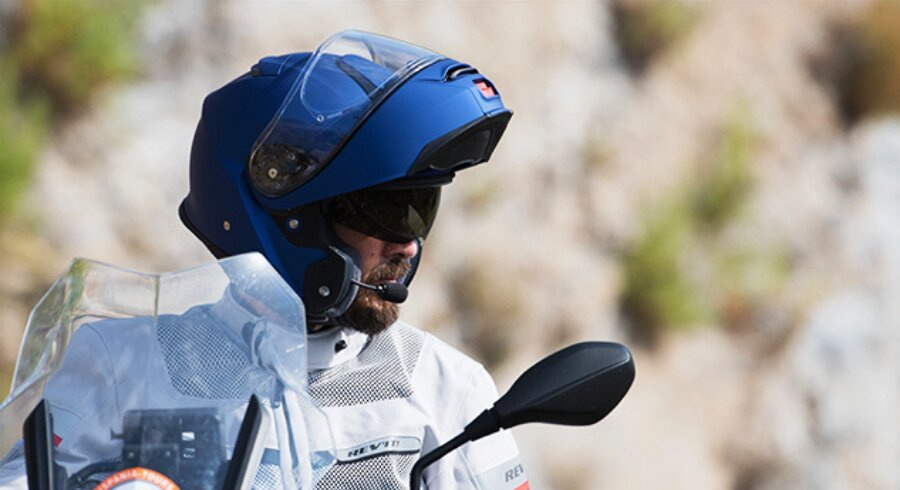
flip up helmet
Let's start with the main subject of this article - the flip-up motorcycle helmets. They are also called modular helmets by many motorcycle riders. This is actually a combination of a full-face helmet and an open-face helmet. The movable chin bar of the flip-up helmet truly makes it unique.
When the chin bar is shut, it is a full-face helmet. With the touch of a switch, and opening the front visor area, it becomes a type of open face helmet.
Let's talk about some things from a safety perspective. When the flip-up helmet is in the closed (and locked) position, the chin guard offers the same level of safety as a full-face helmet. All fasteners, buckles, and latches have been rigorously tested and should not open under any circumstances.
Some flip-up helmets (modular helmets) are also tested and authorized in both the open and closed positions. Under this circumistance, this flip-up helmet will simultaneously receive a unique open-face helmet certification, known as dual certification.
Would you like to check if your helmet has this certification? Then check if your helmet is classified with a "P" letter inside of your helmet. If there is, then this helmet is authorized as a full-face helmet. If it also has the letter "J", then it is also certified as an open-face helmet.
The Shark Evo-One 2 is a very special example. This helmet has an innovative system that allows the chin guard to be moved from the front to the back. The chin guard integrates seamlessly with the rear of the helmet, becoming an integral part of the helmet's design. Thanks to this, even when riding with the chin guard open, it won't obstruct your movement. As you can see in the video clip, the chin guards of all other (typical) flip-up helmets remain upright.
Advantages of a flip-up helmet
- The exact same benefits as full-face helmets
- Easy to open up throughout a break or a fuel-up
- Easier to interact with than a full-face helmet
Disadvantages of a flip-up helmet
- Can be much heavier than complete face helmets
- Less portable
- Not comfortable at high speed when the chin bar is open
Full-face Helmet
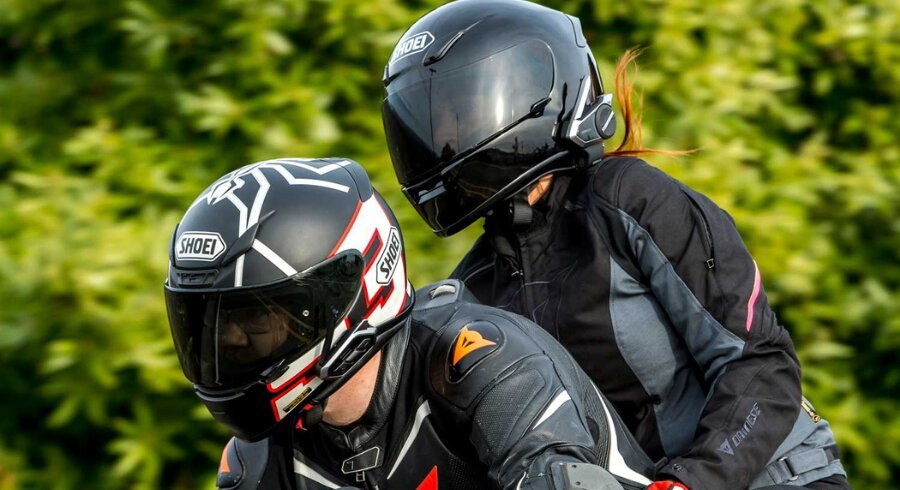
full face helmets
Now we will introduce full face helmets, the most preferred type of safety helmet in history. In fact, this is one of the most traditional helmets, including full face defense. The chin bar is a fixed part of this kind of helmet; only the helmet visor can be opened or closed.
A full-face helmet is commonly considered the best sort of helmet. This results from the truth that it safeguards all the parts of your head. All the helmets we offer are certainly provided with a European certification (unless specified or else).
Advantages of a full-face helmet
- Fully covers the face and the head.
- Safeguards against wind, chill, and rainfall
- Can quickly be made to be lightweight and also aerodynamic
- Can easily be made to be sound-decreasing
Disadvantages of a full-face helmet
- Can get very warm in summer
- Can give people a claustrophobic and isolated sensation
Open-face helmets
Open face helmets
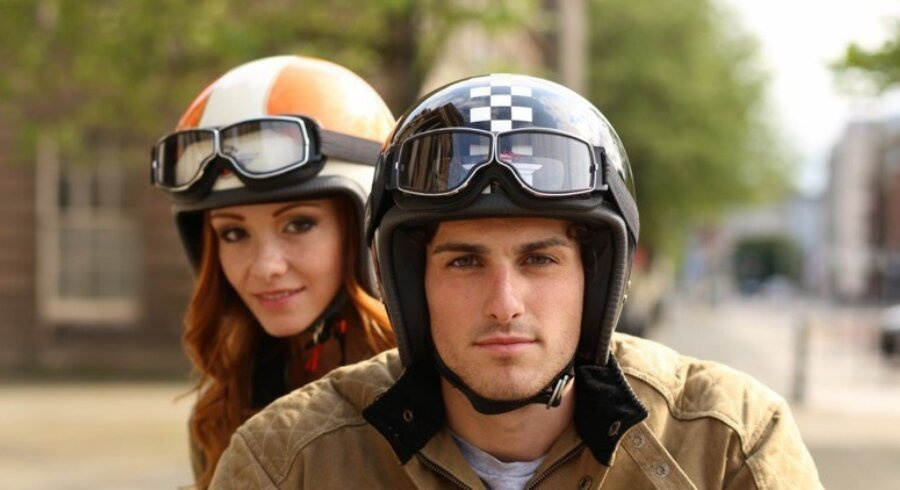
An open face safety helmet is recognizable by the absence of its chin bar. The helmet is totally open at the front and also at the base. That gives the helmet a distinct look.
All open-face helmets sold by Fortamoto.com have a European qualification (unless stated otherwise). Open face helmets are not less strong than full-face helmets. It just covers a smaller part of the head and face than a complete face helmet. Open face helmet are available in various sizes as well as colors. Price rates vary between € 99 and € 599.
Those high-priced helmets are made from lighter and stronger materials, with a higher degree of surface, and they usually have a much better fit. Of course, there will always be exemptions.
Within the classification of open face helmets, we can conveniently make a rough division: the modern open face helmets and the retro open face helmets.
The main differences between them are often the layout and the visor. Modern open face helmets usually have longer visors that drop as far as the chin. Retro open face helmets typically do not feature a visor at all or a small visor in front of the eyes.
Advantages of an open face helmet
- Offers the ultimate free motorcycling feeling
- Wide field of view
- Abundant fresh air
Disadvantages of an open face helmet
- Uses no chin protection
- Can be very cool in winter
- Not really developed for riding at high speed
Comparison of flip up helmet safety standards and certifications
Here, we will provide you with a clear comparison of flip-up (modular) motorcycle helmet safety standards and certifications.
🛡️ Key Helmet Safety Certifications
📊 Safety Standards Comparison (Modular Helmets)
More Details about Helmet Safety Standards
Affordable flip up helmets with high safety scores
Here are some affordable flip-up (modular) motorcycle helmets that offer high safety standards (look for ECE and/or DOT certifications and solid rider reviews). They are great option if you want good protection without spending a fortune:
🏍️ Best Affordable & Safe flip-up helmets Picks
💸 Budget & Value Flip-Up Helmets Options
Are modular (flip-up) motorcycle helmets as safe as full-face helmets?
Well, most flip-up helmets can be safe, but your regular full-face helmet is usually a bit safer if you crash.
Full-face helmets have a chin bar that's all one piece and doesn’t move. That gives your face and jaw a stronger protection.
Those flip-up helmets have a hinge that can be a weak spot. Some tests have shown they can pop open if you hit something, which means you’re more likely to hurt your face.
Both kinds meet basic safety rules, like DOT or ECE. But flip-ups don't usually pass the really tough Snell tests because of how they're made.
If you want the most protection possible, especially if you ride fast, a full-face helmet is the way to go. But a good flip-up helmet is still a handy choice – just make sure you keep the chin bar locked when you ride.
How safe are flip up helmets?
There is no conflict regarding the benefit of flip-up helmets. You can take photos, obtain plenty of air while riding in city web traffic, speak to friends and even load your fuel tank without needing to remove your helmet. (Note that there are a couple of helmets where the chin bar secures the up position and legitimately permits the motorcyclist to ride with the safety helmet in this placement.)
However, modular safety helmets have intrinsic style issues that decrease their safety and security levels.
As opposed to the crash-resistant honesty of a complete shell, they have 2 parts held together by a joint and also a clasping device that utilizes a mix of plastic, fiberglass as well as flimsy steel.
Can you ride with a flip up helmet open?
Most experts and helmet makers do not recommend riding with a flip-up (modular) helmet open.
When you flip that chin bar up, your face is out there in the wind, open to getting smacked by bugs or worse. Plus, that open chin bar can catch the wind, and your helmet will feel shaky, especially when you're going fast.
Now, there are some special flip-up helmets that are okay to ride with open—they've been tested that way. But most flip-ups are only safe when the chin bar is down and locked.
Therefore, to stay safe and follow the law in most areas, keep that chin bar down when you're riding. Flip it up when you stop.
What's the best flip-up motorcycle helmet?
Here are some highly recommended flip-up (modular) motorcycle helmets that riders and reviewers like for safety, comfort, and convenience:
🏆 Top Picks
- Shoei Neotec 3 Modular Helmet – Premium, highly rated flip-up helmet with excellent comfort and safety features.
- Bell SRT Modular Helmet – Great balance of quality, protection, and price with clear optics.
- LS2 Advant X Carbon Helmet – Lightweight and well-ventilated choice with strong user reviews.
💡 Great Value & Everyday Options
- LS2 Strobe II Modular Helmet – Excellent budget pick with smooth flip-up action.
- LS2 Advant X Helmet – Solid mid-range modular helmet with ECE/DOT certification.
- Nolan N120‑1 Classico Modular Helmet – Comfortable classic modular with reliable performance.
- Scorpion EXO AT960 Modular Helmet – Versatile flip-up for adventure and street riders.
- ILM Modular Bluetooth Helmet – Budget option with Bluetooth features.
These helmets are often on “best modular” lists and offer a range of prices and features for different rider needs.
Which type of helmet is safest?
Safest motorcycle helmet type:
Full-face helmets are generally the safest option. Because they cover your entire head, face, and chin with one solid shell and no moving parts that can fail in a crash.
According to a study:
The risk of head and cervical injuries for riders who used full-face helmets was 64% lower compared with those who used half-coverage helmets, 36% lower than in those who used open helmets, and 57% lower when compared with both those who used half-coverage helmets and those who used open helmets.
So, full-face helmets protect better against head and facial injuries than open-face or half-helmets, and they also outperform modular helmets on average in safety tests.
Here’s a comparison table to clearly show the differences:
Summary:
- Full-face helmets offer the strongest protection, especially for the chin and face.
- Modular(Flip-up) helmets are safer than open-face but slightly less robust than full-face because of the flip-up mechanism.
- Open-face helmets provide the least protection since they leave the front of your face exposed.
Is ECE or DOT better?
Both ECE and DOT are legal standards that show a helmet meets basic safety tests. But ECE (European) is generally considered more rigorous and consistent.
ECE helmets must be tested by independent labs before sale, with more impact points, rotational force testing, and stricter checks.
DOT (U.S.) relies on manufacturers self-certifying their helmets meet minimum standards and only random government checks afterward. This means helmets with a DOT label might not actually have been tested by a third party.
Comparison Table: ECE vs DOT Helmet Safety

Rodney L is a technical writer and product consultant with over a decade of experience in the motor industry. Rodney is a fan of performance machines that run fast and loud and an expert in all things custom. His numerous articles and write-ups are available at our knowledge base. Whether it’s something wrong with your motorcycle or you are building a custom bike, you can trust Rodney’s experience.
You maybe like to read:
Fodsports Brand Month: Unbeatable Deals and Top-Notch Service
Discover Fodsports Brand Month July and August mark a special occasion for motorcycle enthusiasts and tech lovers alike. Welcome to Fodsports Brand Month! This event is dedicated to celebrating everything that makes Fodsports a leading name in the motorcycle communication industry. Get ready for a fantastic promotions, exceptional service from Fodsports. Let's insights into Fodsports' […]
Cherohala Skyway Tennessee and North Carolina: Fall Motorcycle Riding Guide
Few motorcycle roads in the Southeast combine elevation, open mountain views, and flowing curves quite like the Cherohala Skyway. Stretching about 43 miles between Tellico Plains, Tennessee, and Robbinsville, North Carolina, the National Scenic Byway climbs from lower valleys to elevations above 5,000 feet before crossing the Appalachian high country. In fall, the ride becomes […]
10 Best Autumn Motorcycle Routes in Europe: Scenic Roads, Fall Colors and Riding Tips
🍂 Why Autumn Is One of the Best Seasons for a European Motorcycle Road Trip Europe becomes a completely different riding destination in autumn. Alpine forests turn gold, mountain valleys develop deeper colors, vineyards become vibrant, and many popular roads become quieter after the summer peak. For motorcycle travelers, the biggest advantage is variety. In […]
Pig Trail Scenic Byway Arkansas in Fall: Motorcycle Riding Guide
Winding through the Boston Mountains, the Pig Trail Scenic Byway is one of Arkansas's most enjoyable fall motorcycle routes. AR-23 combines tight mountain curves, dense hardwood forests, and the Mulberry River, creating a ride where the road itself is part of the scenery. In autumn, the Ozarks become even more impressive as the forest changes from […]
Tunnel of Trees Michigan in Fall: Motorcycle Riding Guide
Red and gold forests, winding roads, and glimpses of Lake Michigan make the Tunnel of Trees in Michigan a memorable fall motorcycle destination. The roughly 20-mile M-119 route between Harbor Springs and Cross Village is best enjoyed at a relaxed pace, with plenty of time for scenic stops. Planning a ride in 2026 requires extra attention, […]