The motorcycle communication systems field just got a significant upgrade with the release of the Fodsports FX7. This state-of-the-art Bluetooth mesh intercom is packed with many advanced features and techs. It will revolutionize the way riders communicate and enjoy their rides. Whether you're a solo rider or part of a group, the FX7 offers unparalleled […]

How To Tie Down A Motorcycle? The Ultimate Guide in 2025
October 13, 2022
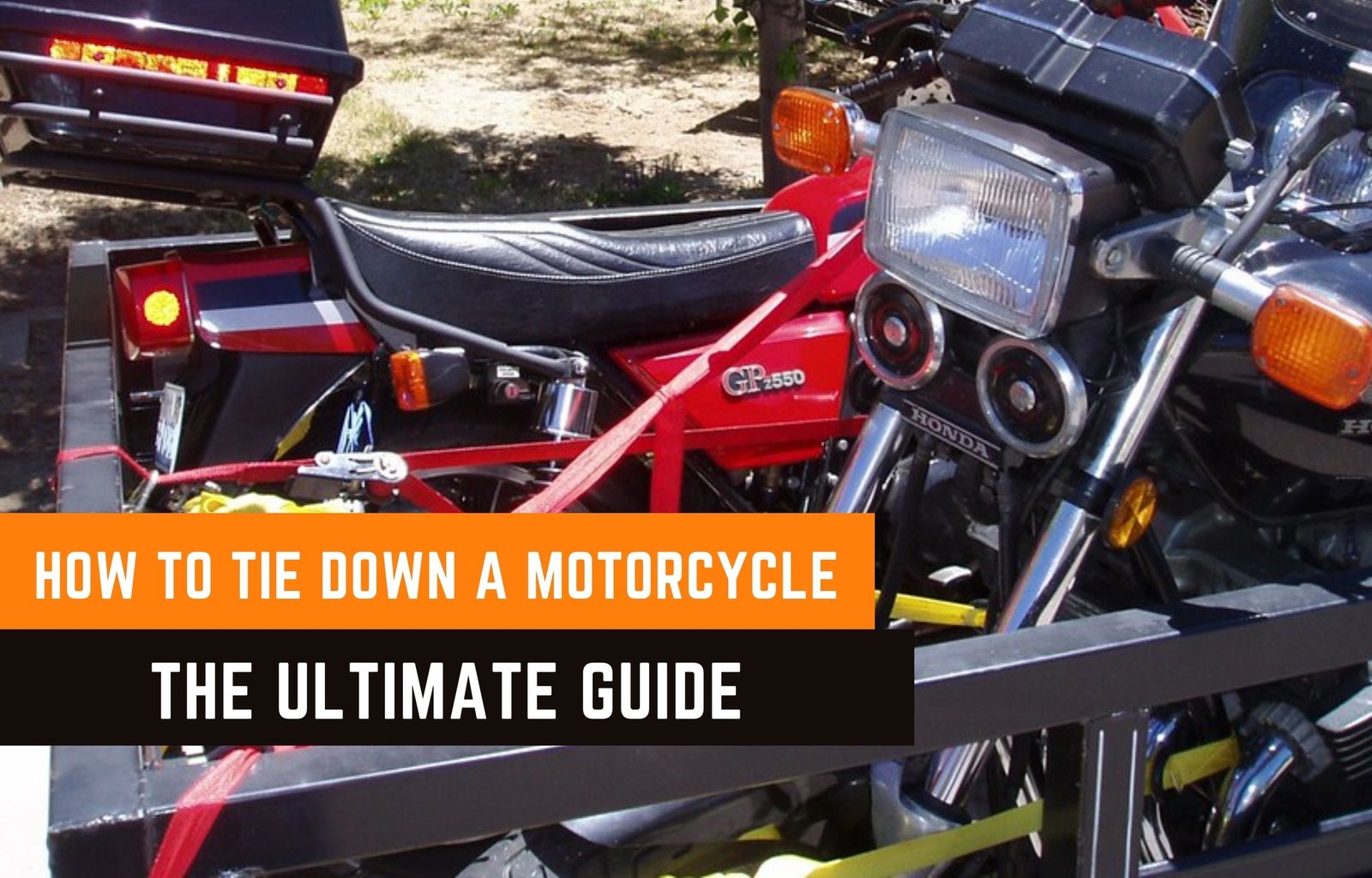
A comprehensive overview on just how to tie down a motorcycle!
Motorcycles have always been a symbol of liberty. Traveling down a vacant highway with the wind against you, and also the open road ahead of you is a genuinely priceless experience.
Yet, as several seasoned motorcyclists will certainly inform you, not every trip is smooth cruising!
If your motorcycle breaks down in the middle of no place, or if you require to relocate to a new place, you'll need to find out exactly how to tie down a motorcycle safely.
Continue reading our overview on the most effective means to tie down a motorcycle and reach where you require to be as securely and also safely as possible.
The best way to tie down your motorcycle may differ on the trailer dimension, pickup bed, or the hardware that you are utilizing to safeguard your motorcycle.
Nevertheless, most of the steps will relate to most motorcycle tie-down guides for any kind of motorcycle, dirtbike, sporting activities slide, Harley, or similar make.

Table of Contents
Why Proper Tie-Down Matters
Securing your motorcycle correctly isn’t just a matter of safety. It protects not only your bike, your gear, but also protects everyone on the road. If your tie-down technique is poor, it can lead to:
- Over-compressing the suspension (damaging fork seals or shocks)
- Scratching or denting paint or components
- Strap slippage, loosening, or failure mid-transport
- Bike tip-overs or shifting during transit
Getting it right means peace of mind, fewer trips back to re-tighten, and most importantly: arriving with your bike intact.
What Tools Will You Require?
Before you begin securing your motorcycle, prepare the appropriate tools.
Those cheap elastic ropes? Forget about them. Those ropes simply won't do. You need equipment specifically designed for this job.
If you've read many articles about motorcycle harnesses, you'll find that many experts recommend:
1. Shoulder Straps:
- Choose ratchet straps or high-quality cam buckle straps.
- Make sure these straps have a Working Load Limit (WLL) that can withstand a weight greater than your bicycle. Safety first.
- Polyester webbing is ideal: it hardly stretches and is unaffected by sunlight and water.
- Hooks: Choose styles with a vinyl coating or locking buckles. This prevents scratches or slippage.
2. Soft Loops (Soft Cords)
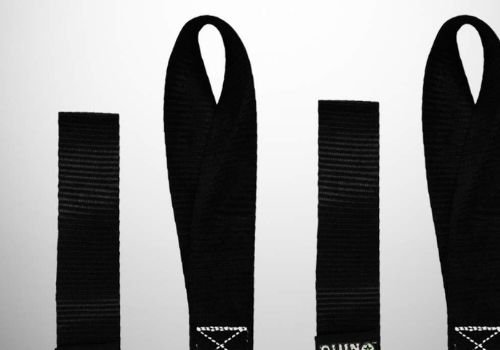
What type of soft loop straps are recommended for motorcycles?
There are some aspects you need to pay attention to:
- Material & Webbing Strength: Choose soft loops made of strong but gentle webbing (polyester or poly/silk blends).
- High Breaking Strength: Look for loops with a high minimum breaking strength (MBS) — this gives a big safety margin.
- Working Load Limit (WLL): Make sure the WLL is reasonable — many soft loops are rated for cargo control (e.g., 400 lb or more) so they work well with ratchet or cam straps.
- Width & Length: Typical motorcycle loops are ~12–18" long, wide enough to wrap securely around parts without chafing.
- Stitching Quality: Reinforced or “double-box” stitching ensures durability and prevents failure when under tension.
- Protective Design: No metal parts in the loop itself — the loop is “soft” to avoid scratching paint, chrome, or powder coat.
These are fabric loops that you can wrap around sturdy, durable parts of your motorcycle (e.g., lower triple clamp, handlebars). This prevents the metal hooks on the straps from scratching or twisting the controls.
Never wrap the straps around fragile parts: such as side mirrors, throttle lines, or plastic fairings.
3. Wheel Stops (You Really Need One)
A front wheel stop holds the front wheel in place, preventing it from moving forward or backward.
If your bike's front fork is a bit sensitive, consider installing a fork saver. It acts like a gasket, preventing you from overtightening the bolts.
4. Anchor Points
Your trailer or truck bed should have strong, rated anchor points (e.g., welded D-rings, E-rails, or L-rails).
Avoid using fragile, open hooks; use secure, closed hooks instead.
Step-By-Step: How to Tie Down Your Motorcycle on A Trailer
Here is a step-by-step process — combining advice from multiple expert sources — on how to tie down your motorcycle safely and effectively.
1. Load the Bike Onto the Trailer or Truck
- Use a ramp to roll the bike up carefully. If possible, have someone help you.
- Position the bike centered on the trailer or in the truck bed so the weight is balanced.
- Use the kickstand only during loading — final tie-down should be with the kickstand up.
- Park on a flat, level surface to make securing easier.
2. Secure the Front of the Bike
- Attach soft loops around the lower triple tree (the solid part just above the forks), not the delicate handlebars or grips.
- Hook your ratchet (or cam-buckle) straps from these soft loops to your trailer or truck anchor points. Use a 45° angle (forward + outward) for the straps.
- Gradually tighten the straps so that the front suspension compresses slightly — around 25%–30% of travel is suggested, though some recommend up to half.
- If you have a fork saver, use it now to avoid over-compression.
3. Secure the Rear of the Bike
- Use at least two more straps for the rear. Good anchor points: frame rails, passenger foot peg mounts, or swingarm — never use exhausts or plastic fairings.
- Route the straps backward and outward. Tighten them so the rear suspension compresses lightly, but don’t fully collapse it.
- If the rear is very soft suspension, double-check these after a few minutes — they may settle.
4. Perform the “Bounce Test”
- With everything tightened, gently bounce or push the bike — hold the handlebars and push to see how the trailer reacts.
- If the trailer moves with the bike: good — the tie-downs are taking load.
- If the bike moves independently: tighten the straps more.
- If the suspension is locked solid (no play), back off a little — that could indicate over-tightening.
5. Double-Check Everything
- Inspect all attachment points: are the hooks fully engaged? Are soft loops rubbing on anything sharp?
- Make sure no strap is twisted — keep webbing flat for maximum strength and safety.
- Lock ratchet handles so they don’t come undone while driving.
- Secure any loose tail ends of straps so they don’t flap in the wind (you can roll them up and use Velcro ties or a knot).
Pro Tips & Common Pitfalls for Motorcycle Tie Down
Here are some insights from seasoned haulers — things many people don’t think of until after a bad trip:
- Use Four Straps
- Two front, two rear is the standard, especially for long distances.
- More straps don’t always equal more safety; over-stress on weak points can actually hurt.
- Avoid Over-Compressing the Suspension
- Over-tightening can blow out fork seals or damage shocks.
- Use a fork saver or block if needed.
- Protect the Bike’s Finish
- Use soft loops to protect paint or chrome.
- If straps rub on anything metallic, consider padding (a cloth or rag between strap and bike).
- Anchor Point Quality Matters
- Make sure the anchor points on your trailer/truck are rated and properly secured.
- Avoid using flimsy or open hooks — they can slip.
- Watch Straps While Driving
- After ~10 miles, stop and recheck tension — straps may settle or stretch.
- Secure strap ends so they don’t flap, which can cause wear or failure.
- Drive carefully: avoid sudden maneuvers, tight turns, or extreme braking while hauling.
- Don’t Rely on the Kickstand
- Always tie down with the bike upright and the kickstand up. The kickstand can be stressed or damaged under load.
- That said, some recommend leaving the kickstand down as a backup during unstrapping, though it should never be the primary support.
- Label and Organize Your Straps
- If you haul often, mark your straps (e.g., “Front Left,” “Rear Right”) so setup is quicker and more consistent.
- Store the straps clean and dry; moisture or UV damage reduces strength.
Troubleshooting & Safety Checklist
Before you hit the road, run through this checklist:
Things to Stay Clear Of When tie-down Your Motorcycle
- Stay clear of inexpensive tie-down straps, wheel chocks, or ramps that could cause severe damages to your motorcycle or the safety of various other vehicle drivers that are sharing the roads with you.
- Stay clear of putting your ratchet strap on paint, chrome, rim, exhaust, or fender that could end up being harmed when tightening your straps. You can also use a Relocating Blanket or an item of material to stop the surface area from becoming damaged.
- Motorcycles can be extremely heavy when you are filling them in the rear of a pickup truck bed as it is incredibly steep. You will want to make use of somebody else if you are able in order to maintain the motorcycle from tipping over on the motorcycle ramp. You ought to never ride your motorcycle right into the back of a pickup truck bed as it can be exceptionally dangerous. You can avoid this by discovering a hill that you can make use of a ramp on or the tailgate of the pickup to avoid a few of the weight of the motorcycle entering into the truck bed.
Frequently Asked Questions About Tie Down A Motorcycle
What are some alternative ways to secure a motorcycle without a trailer or truck?
You can secure a motorcycle without a trailer or truck by using a cargo/box van.
Put the bike inside, use a wheel chock to hold the front wheel. And then attach ratchet or cam-buckle straps to solid frame points. Pay attention, do not tie on the exhaust or plastics.
When you tighten the straps, squish the suspension down a little(about 25–30%). That keeps the straps from getting loose on the way.
One more thing: only attach straps to sturdy spots like frame or axle mounts.
In short: If there is no trailer or truck, you can use a chock + four strong straps inside a van to tie down your motorbike. It’s a safe, effective way to transport your bike without a trailer.
Do tie downs damage motorcycles?
The tie straps themselves don't damage motorcycles. However, improper use can cause problems. Damage is usually caused by wrong equipment, incorrect anchoring points, or excessive force.
What may cause damage to the motorcycle?
- Cranking those ratchet straps super tight can mess up your suspension, like blowing out your fork seals or shocks.
- Those metal hooks can also scratch your paint job if you're not careful. Soft loops are good for keeping things safe.
- Also, don't hook straps to flimsy stuff like plastic or exhaust pipes, or you'll end up bending things.
- And hey, even though it's not super common, straps on the shoulder can, in theory, mess with your bike's balance if they're too tight or at a weird angle.
How to prevent tie down damage to motorcycle?
- Use the right straps: Use ratchet or cam-buckle straps that are high quality, and grab some soft loop extensions too.
- Pick the right anchor spots: Hook onto the frame, the lower triple clamp, or a strong point on the rear subframe. Keep away from the handlebars and parts that break easily.
- Tighten evenly: Go slow and tighten the straps on each side bit by bit. Make sure your bike is straight up.
- Keep checking: Pull over after a few miles and tighten the straps again. Check them often while you're on the road.
- Don't crank too hard: Tighten the suspension down about halfway. Enough to keep things tight when you hit bumps, but not so much you hurt the bike.
Taking Care Of Your Straps
When you do not "tuck" your excess strap, the wind will certainly pick it up throughout transportation.
Although it's rare, doing this can slowly loosen your ratchet strap.
Avoiding this is simple, simply cover your straps or locate a way to put the good and limited so they do not blow shed in the wind.
A Velcro strap is best for this, as you can simply roll the excess strap and secure it with a strip of Velcro. It's a straightforward, yet frequently overlooked thing when making use of tie-down straps.
We see many straps left in the bed of trucks or on trailers, this is terrible for the product as direct sunlight over an extended period of time can really harm the toughness of the straps.
We extremely recommend putting your straps away in a location you will keep in mind, and also out of the sun.
This goes with virtually any kind of strap material. Even even worse if it rainfalls and also your straps end up being water harmed! You don't want that, be sure to place them in a place for safekeeping.
You May Be Interested
How To Make Motorcycle Seats More Comfortable?
What Does A Rectifier Do On A Motorcycle?

Rodney L is a technical writer and product consultant with over a decade of experience in the motor industry. Rodney is a fan of performance machines that run fast and loud and an expert in all things custom. His numerous articles and write-ups are available at our knowledge base. Whether it’s something wrong with your motorcycle or you are building a custom bike, you can trust Rodney’s experience.
You maybe like to read:
Fodsports Brand Month: Unbeatable Deals and Top-Notch Service
Discover Fodsports Brand Month July and August mark a special occasion for motorcycle enthusiasts and tech lovers alike. Welcome to Fodsports Brand Month! This event is dedicated to celebrating everything that makes Fodsports a leading name in the motorcycle communication industry. Get ready for a fantastic promotions, exceptional service from Fodsports. Let's insights into Fodsports' […]
North Coast 500 Motorcycle Guide: Exploring Scotland in Autumn
Autumn transforms Scotland’s North Coast 500 into a memorable destination for motorcycle touring. Golden Highland forests, winding coastal roads, rugged mountains, and quiet fishing villages create a striking backdrop for an autumn ride. A North Coast 500 motorcycle trip, however, requires more than a scenic route. Rain, strong winds, wet leaves, and shorter daylight hours […]
Transalpina in Autumn: Romania’s Ultimate Motorcycle Riding Guide
Autumn brings a different atmosphere to Transalpina, Romania’s spectacular high-mountain road. Golden forests cover the lower slopes, open alpine ridges reveal sweeping Carpathian views, and winding asphalt makes this route a memorable destination for motorcycle touring. But an autumn ride requires more than choosing a scenic road. Temperatures can drop quickly at altitude, mountain weather […]
Motorcycle Camera Buying Guide: How to Choose the Right Camera for Your Ride
Every motorcycle ride has a story worth capturing: a winding mountain road, a weekend adventure with friends, or an unexpected moment in traffic. But choosing the right motorcycle camera is not simply about buying the model with the highest resolution. Shaky footage, poor audio, short battery life, and unreliable mounting can turn an exciting ride […]
Transfăgărășan in Autumn: Romania’s Ultimate Motorcycle Riding Guide
Autumn transforms Romania’s Transfăgărășan Highway into a dramatic mountain journey, with golden forests, rugged peaks, winding asphalt, and sweeping views across the Făgăraș Mountains. For motorcycle riders, it offers a memorable combination of technical corners, spectacular scenery, and opportunities to explore the Romanian countryside. But an autumn ride requires more planning than a summer trip. […]