Long-distance motorcycle touring is about freedom, rhythm, and endurance. Hours on the highway, changing weather, unfamiliar roads, and constant wind noise all test your gear — especially the communication system for touring. A touring motorcycle intercom is not the same as a short-ride or commuter intercom. On a multi-day trip, small weaknesses become big problems: […]

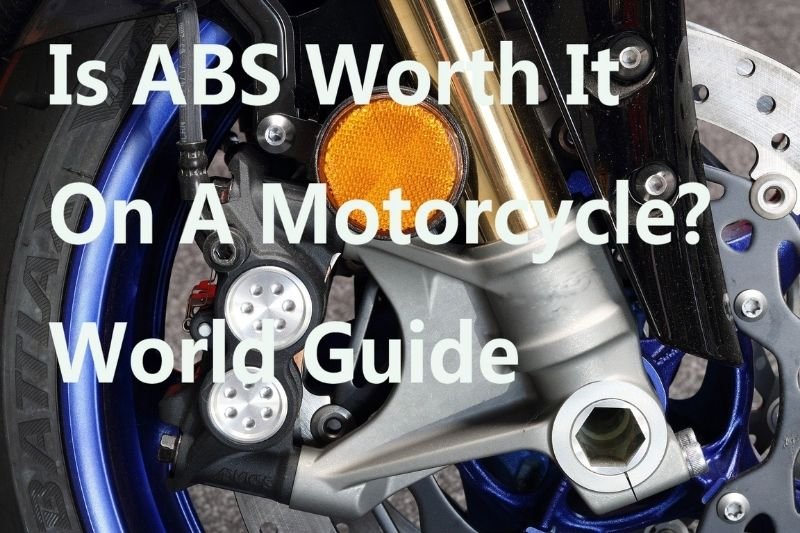
Is ABS Worth It On A Motorcycle? World Guide 2025
ABS motorcycles have actually become increasingly prominent throughout the years. Which makes sense thinking about automobiles and trucks come typical with it.
However, while numerous riders are eager to examine the abilities of this motorcycle feature, some are still not persuaded ABS is necessary.
Whether you're a seasoned rider or simply beginning, ABS comes with its very own set of benefits and also downsides.
Prior to we explore the pros and cons any type of even more, though, allow's start with what ABS is and also how it works.
ABS
When you utilize the brakes, sensors on both the front and rear wheels find if/when the wheels secure.
When this happens, the sensors send out a signal to the ECU, informing it to launch enough stress on the brake caliper(s) to permit the wheel to spin again.
This cycle is taking place numerous times a second, applying and also launching brake stress to stay clear of lockup and bring the motorbike to a quit.
Table of Contents
What Is ABS On A Motorcycle?
Motorcycle ABS is short for Anti-Lock Braking System. It's a safety thingy that stops your wheels from locking up when you brake hard. This is really useful when roads are wet, or something jumps out in front of you.
Here's how it works: sensors watch your wheel speed. If a wheel slows down super-fast, that means it's about to lock. The ABS will kick in, pump the brakes for you a bunch of times per second, way faster than you ever could.
When it's working, you might feel a pulse in your brake lever or hear a click.
Basically, ABS helps you brake hard while staying in control, so you don't skid or crash.
What does ABS on a motorcycle do?
Some beginners may wonder, What is the purpose of ABS on a motorcycle?
Basically, ABS on a motorcycle prevents your brakes from locking and also your tires from skidding.
They run the same way as standard brakes, just braking will certainly take place a lot more rapidly when ABS is engaged.
A basic ABS unit functions by determining the regularity of signals sent out by a magnetic sensing unit in the "tonewheel" of a motorcycle.
If there is a dramatic modification in the frequency of these signal pulses-- i.e. when the motorcycle brakes are being applied-- the ABS device begins to engage by slightly lowering the stress applied by the brake system to permit the wheels to rotate.
It then reapplies the braking pressure. The ABS will certainly repeat this action as long it discovers a locking scenario.
Thanks to ABS, riders can considerably decrease their stopping distance and also prevent possible serious situations.
Is ABS Worth It On A Motorcycle? Yes
Significantly reduce braking distance, especially on slippery roads
One of the big advantages of ABS is the reduced stopping distance you can accomplish because you no longer need to regulate brake stress.
However, highly proficient riders will certainly inform you they can drop in a shorter distance without ABS than they can with it.
Here's the thing: they may be right.
Perhaps they can break to a stop in a shorter distance without ABS-- but can they do it regularly, each and every time they use the brakes? Extra importantly, can you? There is a probability problem here
Chances are the solution is no. If you're in a panic stop scenario, having the comfort to simply get hold of a handful of brakes, knowing the ABS will certainly conserve you from a lockup, is very useful. Include the idea of braking in damp weather or over an unclean road surface.
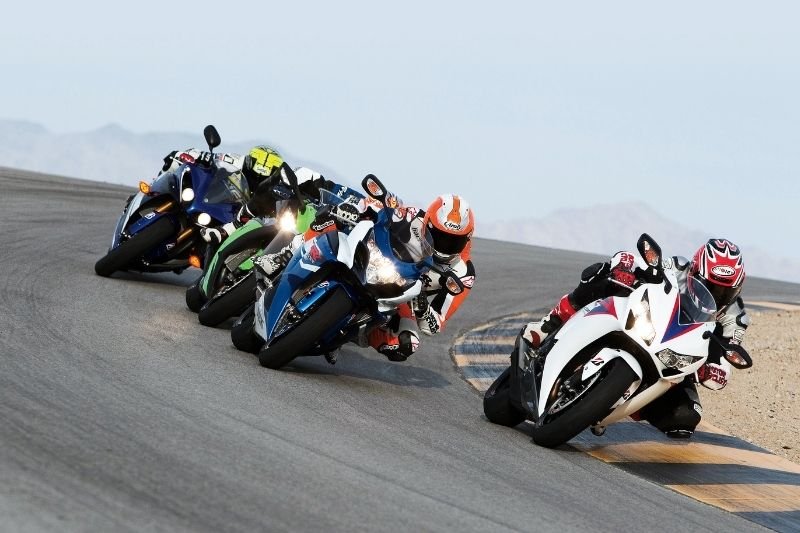
Confidence to brake in corners
Having to brake behind the corner-- like when there's debris in the roadway-- is frightening. You risk overwhelming the front tire and collapsing.
Increasingly more of today's new motorbikes come furnished with an IMU, which detects the pitch, yaw, and roll of the bike. If it's additionally furnished with C-ABS, it'll use that data to inform the ECU how much brake pressure to use whatsoever points of lean.
More control of your motorcycle
When your wheels are locked, you no more have any kind of guiding input over them.
This is an additional large advantage of ABS. Not only does ABS provide you shorter stopping ranges extra consistently, yet also due to the fact that the wheels are still rolling, you can still provide guiding inputs.
This is particularly crucial if when you need to make an emergency situation or an incredibly elusive maneuver. Once more, toss rain right into the formula, as well as you can understand ABS' significance.
A great deal of security for minimal weight and expense
There's no rejecting the reality that the parts required to run an ABS system include some weight to the motorcycle, yet contemporary ABS only includes a very little amount of weight-- as little as 10 lbs in some cases. Besides, for a street bike, the added weight is basically negligible.
ABS additionally raises the expense of the motorcycle, contrasted to non-ABS variations of the same model.
However, we're typically discussing a distinction in the price of $300-- $1000. In our viewpoints, the included security advantage far surpasses the weight or loss.
You have more chance of staying alive
According to the Insurance Institute for Highway Security, the rate of deadly accidents is 31 percent lower for motorbikes furnished with optional anti-lock brakes than for the same models without them.
If that's not nearly enough to persuade you, right here's one more number.
The Insurance Coverage Institute for Freeway Security released an additional report noting that motorcycles with engines 250cc and greater without ABS are 37% more likely to be involved in a deadly crash.
Equipped with these details, ABS needs to be an alternative you offer some significant ideas to with your next motorcycle purchase.
Out on the road, any type of viewed unfavorable is much exceeded by all the benefits it offers.
Pros and Cons of Motorcycle ABS
ABS on motorcycle has its advantages and disadvantages. This table will let you know its pros and cons in details:
Is it better to have ABS on or off?
Generally, yes, it's best to keep ABS on—especially for everyday street riding.
Why keep motorcycle ABS on?
Basically, ABS stops your wheels from locking if you have to slam on the brakes. You can still steer to avoid stuff. If you don't have ABS and brake hard, your wheels can lock, and you'll lose control and might crash. So, ABS makes hard stops way safer and keeps you steady.
Besides, ABS is more effective when riding in adverse conditions, such as wet or slippery surfaces. And most importantly, it prevents your motorcycle from losing traction and avoids accidents.
Numerous studies have shown that motorcycles equipped with ABS have a significantly lower rate of fatal accidents compared to those without the system.
Today, in many regions, including the EU and the US (for certain sizes), all new motorcycles sold are required to have ABS.
Therefore, if you are only doing everyday public road riding, keep ABS on. The safety benefits far outweigh any special situations where you might need to turn it off.
When can you consider turning off motorcycle ABS?
There are two situations where you can consider turn off ABS:
- If you are riding a dual-purpose or adventure motorcycle off-road on soft mud, gravel, or sand, you can consider turning off ABS. In these specific situations, allowing the rear wheel to lock up can sometimes help you control skidding or stop more quickly and in a controlled manner.
- If you are an experienced rider or a professional stunt motorcycle/track rider, you might turn off ABS in closed, high-performance environments (such as tracks or stunt courses). This is because you might be performing specific maneuvers that require wheel skidding or applying maximum braking force near traction limits.
FAQ About Motorcycle ABS
What's the distinction between ABS on motorcycles and ABS on cars?
While the standard principles of ABS, i.e. preventing wheel lock-up and also skidding, is basically the very same for all car kinds, stopping is far more complex for riders than chauffeurs.
The majority of motorcycles have different front and also back brake controls. The brake manages help to stabilize the braking force related to the front as well as back wheels to make certain optimum stopping.
If a wheel locks up on a car, this may result in vehicle skidding. If a wheel secures on a motorcycle, this can commonly lead to a loss of balance, triggering the motorcycle to fall.
Motorcycle ABS assists to stop the wheel securely and therefore can maintain the rider upright.
The innovation can help to reduce stopping range and in the event of an accident, can decrease the effect of speed.
Does the ABS technology take control away from the rider?
No, the ABS system will only run if it discovers a wheel will secure. Under typical riding conditions, you will not observe any kind of difference.
Can I purchase motorcycle ABS independently and also install it on my motorcycle?
Yes, nevertheless VicRoads recommends purchasing a motorcycle with ABS fitted at the point of manufacture.
VicRoads recognizes aftermarket ABS systems for motorbikes, nevertheless, the research study revealing the advantages of ABS is based on motorcycles fitted with ABS from the initial manufacturer. This initial tool is completely created and also carefully examined by the motorcycle maker as an incorporated part of the motorcycle.
Do I need extra training to ride a motorcycle with ABS?
No. A motorcycle with ABS will run the like motorbike without ABS under regular. As a result, VicRoads does not need that riders have any detailed training.
However, some motorcycling professionals believe it is a benefit if riders understand exactly how their motorcycle with ABS will run during an emergency situation quit and also as a result do recommend training. The selection depends on you.
Should a beginner get a motorcycle with ABS?
Yes—if you're a new rider, you should really consider buying a motorcycle equipped with ABS.
For beginners still learning braking techniques and reaction time, ABS is a lifesaver.
It helps you maintain balance and control the vehicle.
What's more, it boosts your confidence. You can brake harder with more peace of mind without worrying about skidding or losing control.
Finally
At the end of the day, even if having ABS is generally much safer than braking without, you never ever intend to make use of anti-lock brakes as a crutch.
As they as a backup safety feature in an automobile, that is all ABS acts as on a motorcycle, a backup in case of an emergency situation start.
While having ABS can bring satisfaction, it is not the end-all-be-all to avoid deadly motorbike accidents.
Yes, it does help reduce the threat of injury when riding conditions come to be harmful-- like when a driver stops or pulls out in front of you unexpectedly-- yet it is still the rider who is accountable for ensuring motorcycle security.
Related Information
10 Most Common Causes Of Motorcycle Accidents
When To Shift Gears On A Motorcycle At What Rpm?
How Often Should Change Motorcycle Brakes
Motorcycle Pre-ride Checklist: 7 Important Checks You Need To Do

Rodney L is a technical writer and product consultant with over a decade of experience in the motor industry. Rodney is a fan of performance machines that run fast and loud and an expert in all things custom. His numerous articles and write-ups are available at our knowledge base. Whether it’s something wrong with your motorcycle or you are building a custom bike, you can trust Rodney’s experience.
Subscribe
0 Comments
Oldest
You maybe like to read:
Adventure motorcycles, often called ADV bikes, are built to take you from smooth highways to rough backcountry trails. For new riders, picking the best adventure bikes for beginners can make all the difference. The right machine turns highways, gravel roads, forest tracks, and remote trails into places you actually want to explore, while the wrong […]
Riding in a group is thrilling, but without clear communication, even the best rides can turn chaotic. That’s where motorcycle intercom systems come in, letting you talk with your group, share GPS directions, listen to music together, and stay safer on the road. Whether you’re riding with a single friend or leading a pack of […]
I’ve used premium intercoms and budget ones on the same roads, in the same weather, on long touring days. The truth? Most riders don’t need a $400 system. Most riders still need the same basics: clear rider-to-rider talk, stable Bluetooth, and batteries that last a full day on the road. In 2026, budget motorcycle intercoms […]
What is the best motorcycle intercom for beginners? If you’re a new rider, the idea of adding another piece of tech to your helmet can feel overwhelming. I’ve been using motorcycle intercoms for years—on solo rides, long tours, group trips, and daily commutes—and I’ll tell you this upfront: A beginner motorcycle rider doesn’t need the […]
Mesh Intercom vs Bluetooth: Which Motorcycle Communication System Is Better? Mesh intercoms are best for riders who travel in groups because they automatically reconnect and stay stable, while Bluetooth intercoms are better for solo riders and two-up riding due to lower cost and simpler operation. As someone who both wrenches on bikes and rides long […]