Long-distance motorcycle touring is about freedom, rhythm, and endurance. Hours on the highway, changing weather, unfamiliar roads, and constant wind noise all test your gear — especially the communication system for touring. A touring motorcycle intercom is not the same as a short-ride or commuter intercom. On a multi-day trip, small weaknesses become big problems: […]

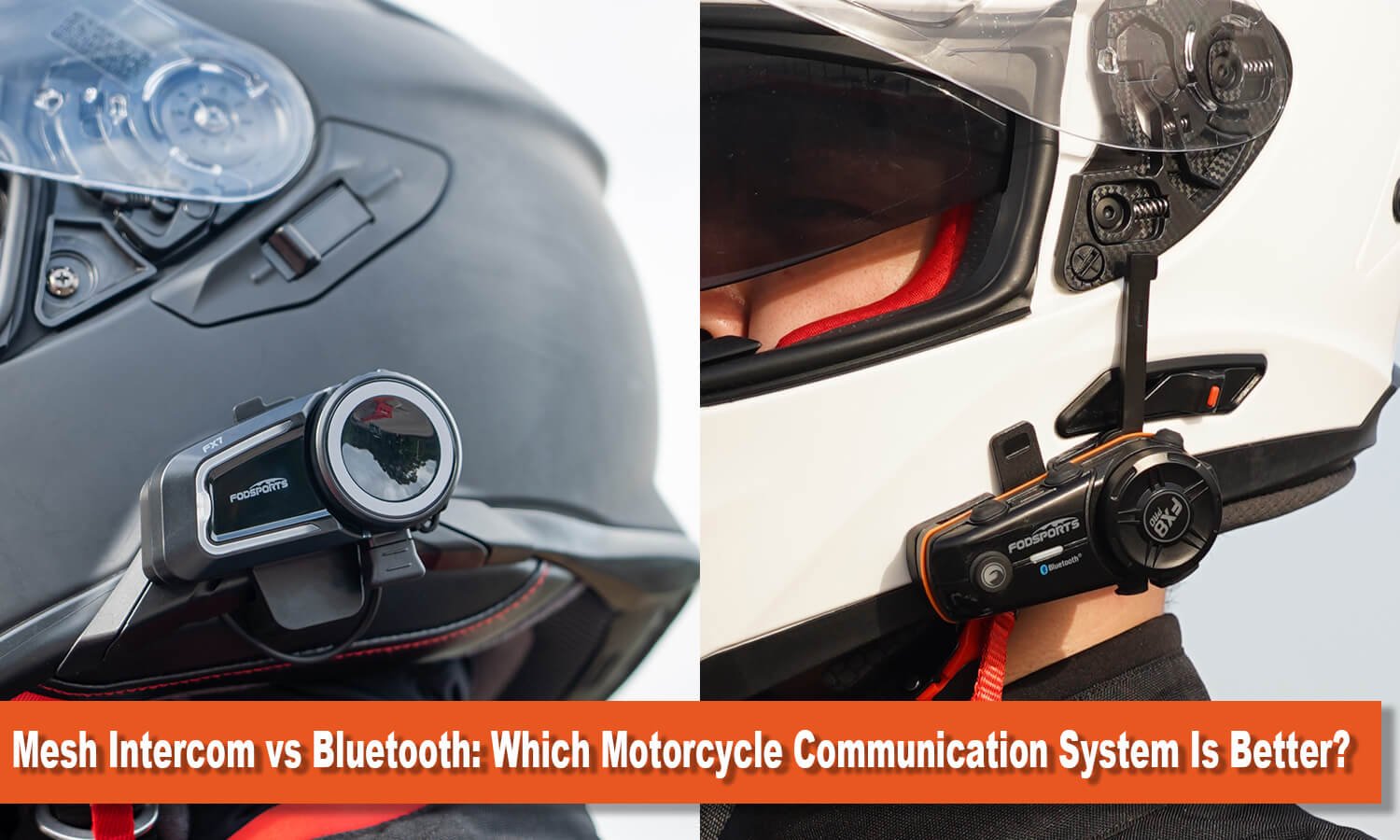
Mesh Intercom vs Bluetooth Intercom: Which Motorcycle Communication System Is Better?
Mesh Intercom vs Bluetooth: Which Motorcycle Communication System Is Better?
Mesh intercoms are best for riders who travel in groups because they automatically reconnect and stay stable, while Bluetooth intercoms are better for solo riders and two-up riding due to lower cost and simpler operation.
As someone who both wrenches on bikes and rides long miles, I’ll say this clearly:
Most intercom complaints don’t come from bad products—they come from riders using the wrong technology for their riding style.
This guide explains the difference in the way it actually shows up on the road, not just on spec sheets.
Table of Contents
Quick Answer: Mesh Intercom vs Bluetooth
Mesh intercoms and Bluetooth intercoms are two different motorcycle communication systems designed for different riding needs. Mesh intercoms are best for group riding because they automatically reconnect and support many riders, while Bluetooth intercoms are better for solo riders or pairs due to lower cost and simpler setup.
Mesh intercoms are better for group riding because they automatically reconnect and handle large groups smoothly.
Bluetooth intercoms are better for solo riders or pairs because they are cheaper, simpler, and more battery-efficient.
Motorcycle helmet intercoms have evolved from basic Bluetooth headsets into advanced communication networks. Today, riders must choose between traditional Bluetooth intercoms and modern mesh intercom systems. Understanding how each technology works—and when it actually matters—helps riders avoid overpaying or choosing the wrong system.
What Is a Bluetooth Intercom?

Mesh Intercom vs Bluetooth - Bluetooth intercom connects like a chain
A Bluetooth intercom is a helmet communication system that uses standard Bluetooth technology to connect riders directly. It works best for solo riders or small groups and requires manual pairing between devices.
How Bluetooth Intercom Works
- Devices are manually paired, usually in a chain (Rider A → Rider B → Rider C)
- Each unit connects directly to specific riders
- If one rider disconnects, it can break the chain
Typical Bluetooth Intercom Use Cases
- Solo riders
- Rider + passenger
- Two to four riders riding close together
- Daily commuting
From a mechanic’s standpoint, I think Bluetooth intercoms are simple systems:
- Fewer connection layers
- Less software complexity
- Better battery efficiency
Based on the long-time use of Bluetooth intercoms, I, as a rider, find that Bluetooth works great when:
- You ride alone
- You ride two-up
- You don’t change riding positions often
From a rider’s perspective, Bluetooth intercoms are simple, reliable, and affordable, but they weren’t designed for large or dynamic groups.
If your riding is mostly solo or with one partner, a quality Bluetooth intercom saves money without sacrificing usefulness.
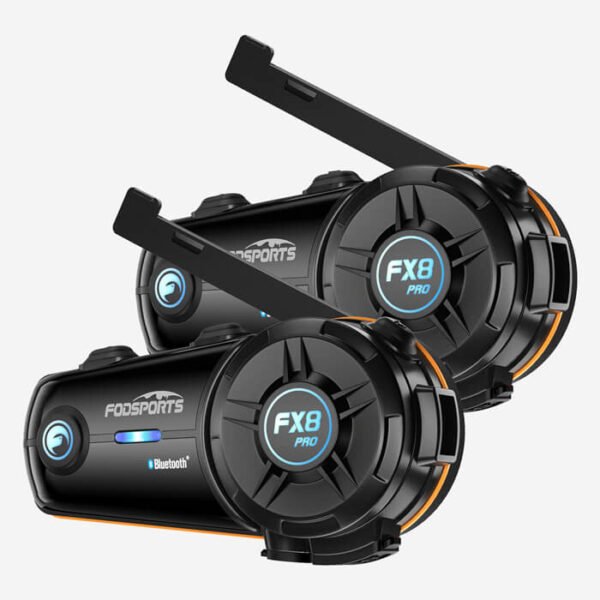
$109.99 $179.99
Code:
Limited Time Women's Day Extra 15% Off Code! Save Now!
WOMEN15
Dual Bluetooth Chip Design.
10 Riders Group Communication, 2000m Distance!
Optional HRSQ Mic and Speakers, CVC + ENC + DSP Noise Cancelation.
Listen to Music/GPS and Intercom At the Same Time.
IP67 Waterproof.
FM Radio, Music Sharing, Voice Commands.
10 Riders Group Communication, 2000m Distance!
Optional HRSQ Mic and Speakers, CVC + ENC + DSP Noise Cancelation.
Listen to Music/GPS and Intercom At the Same Time.
IP67 Waterproof.
FM Radio, Music Sharing, Voice Commands.
39%
OFF
OFF

More Intercom Options
5 Best Motorcycle Helmet Bluetooth Intercom Kit from Fodsports
8 Best Budget Motorcycle Bluetooth Helmet Intercom On Fodsports
The Ultimate Guide to Motorcycle Helmet Bluetooth Intercom
How To Choose The Best Half Helmet Bluetooth Headset?
Budget Motorcycle Intercoms from Fodsports: Honest 2026 Picks
What Is a Mesh Intercom?
A mesh intercom is a motorcycle communication system that creates a dynamic network where all riders stay connected. If one rider disconnects, the system automatically repairs itself without manual re-pairing.

mesh intercom connection way
How Mesh Intercom Works
- Every intercom acts as a node in the network
- If one rider drops out, the system automatically reroutes connections
- Riders can leave or join without stopping the group
Why Mesh Was Created
Mesh technology was built to solve the biggest Bluetooth problem: unstable group communication. That is why it performs better in real-world group riding.
For riders who regularly travel in groups, mesh intercoms feel like a massive upgrade—less setup, fewer dropouts, and far less frustration.
This is where touring experience matters.
On group rides:
- Riders spread out
- Someone hits traffic
- Someone pulls ahead
- Terrain interferes
Bluetooth chains break.
Mesh systems don’t care.
From my view, mesh intercom solves a design flaw Bluetooth was never meant to handle. And, it means no stopping, no button pressing, no yelling at helmets.

$129.99 $219.99
Code:
Limited Time Women's Day Extra 15% Off Code! Save Now!
WOMEN15
Bluetooth Mesh Intercom.
Dual Bluetooth Chip Design.
10 Riders Group Audio, 2000m Distance!
HRSQ Mic and Speakers, CVC + ENC + DSP Noise Cancelation.
Listen to Music/GPS and Intercom At the Same Time.
IP67 Waterproof.
FM Radio, Music Sharing, Voice Commands.
Dual Bluetooth Chip Design.
10 Riders Group Audio, 2000m Distance!
HRSQ Mic and Speakers, CVC + ENC + DSP Noise Cancelation.
Listen to Music/GPS and Intercom At the Same Time.
IP67 Waterproof.
FM Radio, Music Sharing, Voice Commands.
41%
OFF
OFF
More About Mesh Intercom
Mesh Intercom vs Bluetooth: Key Differences at a Glance
The main difference between mesh intercom and Bluetooth intercom is how they handle connections. Mesh intercoms automatically reconnect riders and support large groups, while Bluetooth intercoms rely on manual pairing and work best for small groups.
In general, if your group changes speed, spacing, or formation, mesh wins every time.
Mesh Intercom Pros and Cons
Mesh intercoms are ideal for group riding because they offer automatic reconnection, stable communication, and easy scalability. Their main downsides are higher cost and slightly increased battery usage.
Advantages of Mesh Intercom
From a rider’s point of view:
- You don’t need to re-pair devices mid-ride
- Riders can drop back or change position without losing audio
- Perfect for group tours, club rides, and off-road rides
- Voice quality stays consistent as the group spreads out
Drawbacks of Mesh Intercom
- Higher price
- Slightly higher battery use
- Best performance when riders use the same brand
Mesh is not overkill—it’s just purpose-built for group communication. It is time-saving and frustration-reducing, especially when there is a group of riders waiting for you.
Equip Fodsports Mesh Intercoms for Your Next Group Ride
Bluetooth Intercom Pros and Cons
Bluetooth intercoms are best for solo riders or pairs because they are affordable, battery-efficient, and simple to use. However, they struggle with larger groups and connection stability.
Advantages of Bluetooth Intercom
- Lower cost
- Longer battery life
- Simple operation
- Excellent phone, GPS, and music integration
Drawbacks of Bluetooth Intercom
- Group size is limited
- Chain pairing breaks more easily (compared with mesh intercom)
- Manual reconnection can be frustrating
- Less stable over long distances
Bluetooth intercoms are still an extremely option — practical, reliable, and budget-smart.
Use Fodsports Bluetooth Intercoms to Improve Your Riding Experience
Which Intercom Is Better for Your Riding Styles?
Bluetooth intercoms are better for solo riders and two-person communication, while mesh intercoms are better for large group rides talk, touring communication, and dynamic riding conditions.
Solo Riders
Winner: Bluetooth Intercom
If you ride alone most of the time, mesh offers little benefit. Bluetooth handles calls, music, and navigation perfectly.
Rider + Passenger
Winner: Bluetooth Intercom
Simple pairing, long battery life, and lower cost make Bluetooth ideal for two-up riding.
Small Groups (2–4 Riders)
Tie
Bluetooth works fine if riders stay close and don’t change positions often. Mesh is smoother but not mandatory.
Large Group Rides (5+ Riders)
Winner: Mesh Intercom
This is where mesh truly shines—no chain breaks, no re-pairing, no stress.
Touring & Adventure Riding
Winner: Mesh Intercom
Long distances, changing terrain, and rider movement all favor mesh technology.
Sound Quality: Mesh vs Bluetooth
Mesh and Bluetooth intercoms offer similar sound quality on modern systems. But mesh provides more consistent audio because the connection is more stable.
Audio Clarity
Both systems offer excellent sound quality when using modern intercoms with:
- Noise cancellation
- Wind reduction algorithms
- Quality helmet speakers
Stability Matters More Than Raw Audio
Bluetooth can sound great—but only while the connection holds.
Mesh prioritizes connection stability, which riders notice more than minor audio differences.
Real-World Range Comparison
Mesh intercoms provide better real-world range than Bluetooth. Because the network extends through multiple riders, while Bluetooth relies on direct device-to-device distance.
In the past, we have made a test between Fodsports FX7 and Fodsports FX8 Pro.
The FX7 is a mesh intercom, FX8 Pro is a Bluetooth intercom.
According to the description on their product page, these 2 devices have the same intercom distance(about 2000 meters under ideal environment).
We tested their range on the same road, at the same riding speed, and on the same model. So, the testing environment is the same.
Generally, whether it is a straight open road, with no obstacles among these riders, or a forest off-road with obstacles, the FX7 always has a longer intercom distance performance.
Bluetooth Range
- Advertised: up to 1–2 km
- Real-world: often much less
- Terrain, buildings, and rider position matter a lot
Mesh Range
- Advertised: similar per hop
- Real-world: extended through multiple riders
- Network expands as riders spread out
In practice, mesh feels like it has more range, even when specs look similar.
Is Mesh Intercom Worth the Extra Cost?
The mesh intercom is worth the extra cost for riders who frequently ride in groups, while the Bluetooth intercom offers better value for solo riders or small groups.
Mesh intercom is worth it if:
- You ride in groups often
- You participate in organized rides or tours
- You value convenience over budget
- You don’t want to troubleshoot connections mid-ride
Bluetooth intercom is better if:
- You mostly ride alone or with one partner
- Budget matters
- You want maximum battery life
- You don’t need large group communication
Common Myths About Mesh and Bluetooth Intercoms
“Bluetooth Is Outdated”
False. Bluetooth is still excellent for many riders—it’s just limited for groups.
“Mesh Drains Battery Too Fast”
Modern mesh systems are optimized and last all day for most riders.
“Mesh Works With Any Brand”
Mostly false. Mesh works best within the same ecosystem.
Quick Buying Guide: How to Choose the Right Intercom
Choosing the right intercom depends on your group size, riding style, budget, and ease of use.
Ask yourself:
- How many riders do I usually ride with?
- Do riders frequently change positions?
- Do I hate re-pairing devices?
- Is budget or convenience more important?
Rule of thumb:
Small group → Bluetooth
Big group → Mesh
Final Verdict: Mesh Intercom vs Bluetooth
Bluetooth intercoms are best for simple, affordable communication, while mesh intercoms are best for seamless group riding. The right choice depends on how and who you ride with.
There is no universal “better” system—only a better system for your riding style.
- Choose Bluetooth intercom for simplicity, affordability, and solo riding
- Choose Mesh intercom for stress-free group communication and modern riding convenience
From a rider’s seat, mesh feels like the future—but Bluetooth is far from obsolete.
FAQ (Optimized for Featured Snippets)
Is mesh intercom better than Bluetooth?
Mesh intercom is better for group riding because it automatically reconnects and supports more riders. Bluetooth is better for solo or two-person communication.
Can mesh and Bluetooth intercoms work together?
Most mesh intercoms support Bluetooth devices, but advanced mesh features usually work best within the same brand.
Do I need mesh intercom if I ride alone?
No. Bluetooth intercoms are more practical and cost-effective for solo riders.
Which intercom has better range?
Mesh intercoms offer more reliable real-world range due to multi-node networking.
Is mesh intercom worth the price?
Yes, if you ride in groups regularly. Otherwise, Bluetooth offers better value.

Rodney L is a technical writer and product consultant with over a decade of experience in the motor industry. Rodney is a fan of performance machines that run fast and loud and an expert in all things custom. His numerous articles and write-ups are available at our knowledge base. Whether it’s something wrong with your motorcycle or you are building a custom bike, you can trust Rodney’s experience.
Subscribe
0 Comments
Oldest
You maybe like to read:
Adventure motorcycles, often called ADV bikes, are built to take you from smooth highways to rough backcountry trails. For new riders, picking the best adventure bikes for beginners can make all the difference. The right machine turns highways, gravel roads, forest tracks, and remote trails into places you actually want to explore, while the wrong […]
Riding in a group is thrilling, but without clear communication, even the best rides can turn chaotic. That’s where motorcycle intercom systems come in, letting you talk with your group, share GPS directions, listen to music together, and stay safer on the road. Whether you’re riding with a single friend or leading a pack of […]
I’ve used premium intercoms and budget ones on the same roads, in the same weather, on long touring days. The truth? Most riders don’t need a $400 system. Most riders still need the same basics: clear rider-to-rider talk, stable Bluetooth, and batteries that last a full day on the road. In 2026, budget motorcycle intercoms […]
What is the best motorcycle intercom for beginners? If you’re a new rider, the idea of adding another piece of tech to your helmet can feel overwhelming. I’ve been using motorcycle intercoms for years—on solo rides, long tours, group trips, and daily commutes—and I’ll tell you this upfront: A beginner motorcycle rider doesn’t need the […]
Mesh Intercom vs Bluetooth: Which Motorcycle Communication System Is Better? Mesh intercoms are best for riders who travel in groups because they automatically reconnect and stay stable, while Bluetooth intercoms are better for solo riders and two-up riding due to lower cost and simpler operation. As someone who both wrenches on bikes and rides long […]