Long-distance motorcycle touring is about freedom, rhythm, and endurance. Hours on the highway, changing weather, unfamiliar roads, and constant wind noise all test your gear — especially the communication system for touring. A touring motorcycle intercom is not the same as a short-ride or commuter intercom. On a multi-day trip, small weaknesses become big problems: […]

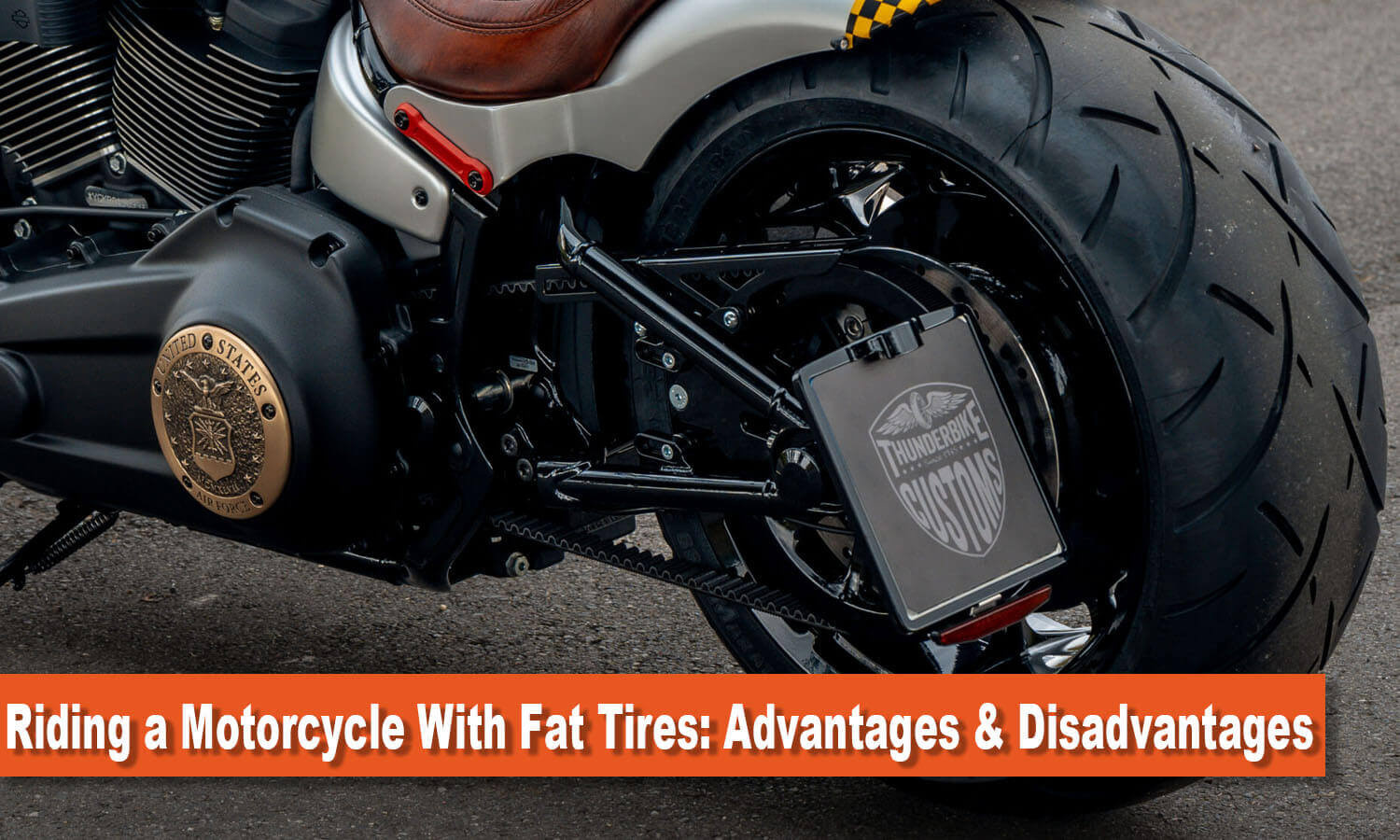
Riding a Motorcycle With Fat Tires: Advantages & Disadvantages
A motorcycle with fat tires is hard to miss. Its wide, muscular look commands attention, exuding a sense of power and confidence. But there’s more to fat tires than just their striking appearance. Beyond the visual appeal, they have a profound impact on how the bike handles, offering enhanced stability, comfort, and even improved stopping power in specific conditions.
In this article, we’ll break down the pros and cons of fat tires and explore which riders and bike styles benefit the most from these chunky rubber wheels. Ready to find out if fat tires are right for you? Let’s dive in!
Table of Contents
What Are Fat Motorcycle Tires?
motorcycle with a flat tire
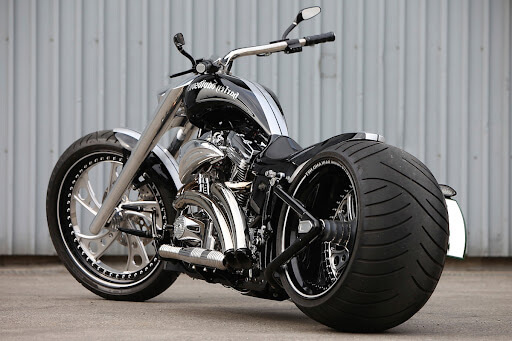
Fat motorcycle tires are simply much wider than typical motorcycle tires.
As a general rule:
- A rear tire wider than 200 mm (about 8 inches) is considered a fat rear tire
- Most street motorcycles use 140–180 mm rear tires
- On cruisers and custom bikes, fat front tires in the 130–160 mm range are also common
The key characteristics of fat motorcycle tires include:
- A larger contact patch, meaning more rubber touches the road
- A flatter tread profile compared to standard tires
- Increased weight and rotational inertia due to extra rubber and larger wheel rims
These features affect both handling and ride feel, making fat tires distinct from standard motorcycle tires.
Fat tires are popular on certain motorcycle styles because the extra width dramatically changes the bike’s stance and riding experience.

Harley-Davidson with a fat tire
Many Harley-Davidson cruisers—such as the Fat Boy, Fat Bob, and various custom choppers—come equipped with wide rear tires to match their strong engine torque and bold styling.
Bobber-style motorcycles also commonly use fat tires, often paired with wire-spoked wheels, to achieve a retro-custom look.
In addition, some dirt and trail bikes use fat tires to improve flotation on soft surfaces like sand, snow, and mud, helping the bike stay on top of the terrain instead of digging in.
Fat Tires vs Standard Motorcycle Tires

fat tires vs standard motorcycle tires
In contrast to fat tires, standard motorcycle tires are narrower (often 150–180 mm rear on cruisers, even thinner on sportbikes) and have more rounded profiles. Standard tires are lighter, easier to lean, and better at cornering precision.
A normal-sized tire gives sharper turn-in, clearer feedback, and is generally better for twisting roads and technical riding. The trade-off is that a standard tire has a smaller contact patch, which can feel twitchier on bumps and offers less pure traction on very loose surfaces.
Fat tires exaggerate these differences. Compared to a standard tire, a fat rear tire will grip better under power and smooth out bumps more – but it will also make steering heavier and turn-in slower. In a straight line, a fat tire is often more stable than a stock tire. But in corners, especially at high lean, a standard tire can be much more agile.
Designers of modern cruisers or baggers often purpose-engineer their bikes for fat tires: they put powerful V-twins and heavy frames on wide wheels to maximize highway comfort and style.
By contrast, sportbikes and most dirt bikes use standard or narrow tires to optimize handling. When thinking of fat vs. standard tires, consider how you ride: if your priority is straight-line comfort and grip (and you don’t lean hard), fat tires may suit you. If you want light steering and corner precision, standard tires are better.
Advantages of Fat Tires
A fat tire can improve grip and traction
Riding with fat motorcycle tires offers several distinct benefits, especially in certain scenarios.
These advantages stem from the extra rubber, larger air volume, and wider shape of the tire:
1. Improved Grip and Traction
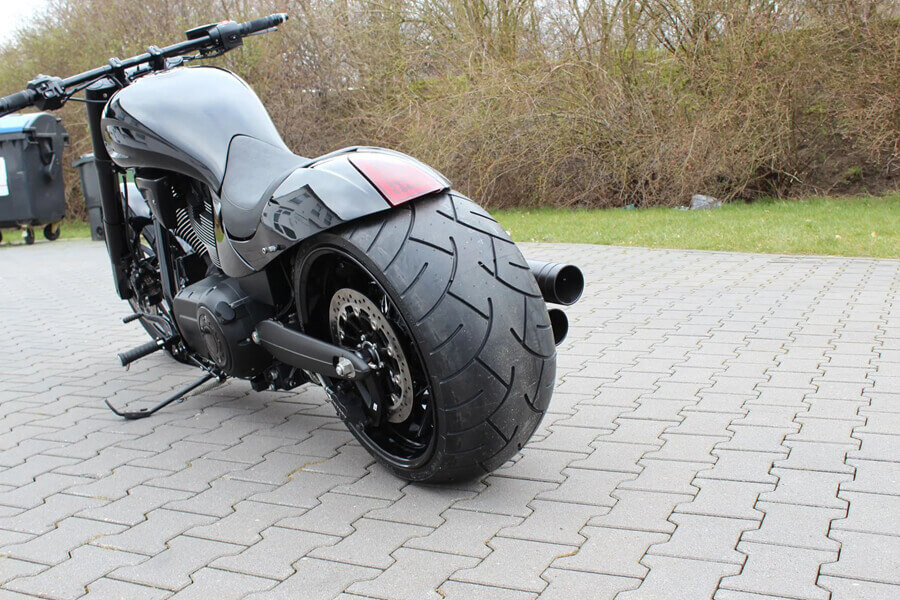
The enlarged contact patch of a fat rear tire provides greater traction on loose or uneven surfaces.
With more rubber on the ground, fat tires help powerful bikes send torque to the road without excessive spinning. This is especially useful when riding on gas (accelerating hard) or on slippery terrain: the wide tire is better at “biting” into gravel, sand or wet pavement.
Many riders install fat rear tires on V-twin cruisers because the low-RPM torque can otherwise cause a skinny tire to spin.
In practice, fat tires work well for casual cruiser riding, for riding in loose sand or snow on small dirt-bike-style machines, and even for light beach or trail riding where the tire can float over the surface.
2. Better Straight-Line Stability
A fat tire tends to make a motorcycle feel more planted and stable in a straight line.
The wide rear wheel acts like a long, flat rail that resists small perturbations, so the bike doesn’t feel twitchy over bumps at speed. This “smooth and steady” behavior is why many cruiser riders prefer fat tires on long highway trips.
In effect, the broad tire helps the bike track straight over irregular pavement, requiring fewer small steering corrections.
This stability is an asset for touring or relaxed riding on open roads.
3. Enhanced Comfort Over Bumps
Fat tires can act like additional suspension.
The larger tire volume and surface area cushion small shocks, so tiny bumps and road imperfections feel less harsh.
A fat tire flattens out small rocks and road joints that would otherwise jolt a rider on a rigid-frame cruiser or vintage bike. In other words, the tire itself does some of the shock absorption.
Riders often feel that a fat tire “smooths out” a rough road, making slow-speed riding or carrying a passenger more comfortable. This can be especially helpful on bikes without long-travel suspension.
4. Better Flotation on Soft Terrain
(Mostly for off-road/dirt-bikes.) Because fat tires have a larger volume and run at lower pressure, they can float on soft surfaces like sand or snow instead of digging in. This makes them great for beach riding, desert dunes, or snow trails – the bike rides on top of the sand rather than plowing through.
Many fat-tire dirt-bike kits advertise that the tires “hug the surface” so you don’t get stuck. The tradeoff is that the bike may feel sluggish, but on soft ground, the wide tire’s floatation is a clear advantage.
5. Increased Stability at Low Speed
The wide profile also improves low-speed balance.
Fat tires are very stable when the bike is almost upright, which can make new riders feel more confident.
Small dirt bikes with fat tires are often recommended for beginners: the short wheelbase, low seat height, and broad tires help a novice plant both feet firmly on the ground.
The fat tires “self-level” over small ruts or bumpy patches, so a new rider is less likely to be thrown off by an obstacle that would trip up a bike with skinny tires.
6. Bold Style and Visual Appeal
Aesthetically, fat tires give a mean, muscular look to a motorcycle.
Choppers and cruisers often use a huge rear wheel as the centerpiece of their design. Manufacturers even cite the “iconic fat tire style” as a selling point.
For riders who love the classic cruiser look, the thick wheel with a wide fender creates an unmistakably bold stance. In custom bike building, a fat rear tire is often the focal point that makes the bike look low and complete.
In short, fat tires can make a bike look custom, heavy-duty, and imposing, which many riders find appealing.
Disadvantages of Fat Tires

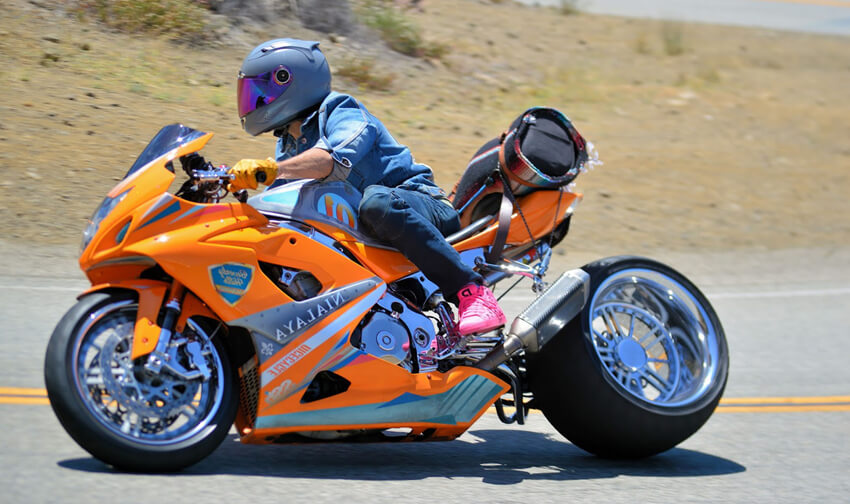
Fat tires cause slower, heavier steering
While fat tires have clear benefits, they also introduce notable drawbacks.
Many of these stem from the tire’s mass and shape, which affect handling and performance:
1. Slower, Heavier Steering
The primary downside is that wide, flat tires make the bike harder to lean and turn quickly. To initiate a lean, a rider must push harder on the bars and lean more over, because the fat tire resists rolling to the side.
In other words, corner entry feels “lazy” and sluggish: turns require more effort. On a twisty road or during quick direction changes, a fat-tire motorcycle will feel less nimble than a bike with standard tires.
Some Riders report that in tight S-curves or switchbacks, a fat bike demands extra muscle and can feel slow to respond.
Thus, if you enjoy aggressive cornering or fast sport riding, fat tires will blunt the bike’s handling. In city traffic with tight turns and U-turns, the sluggish steering can also be a nuisance.
2. Reduced Corner Feedback and Precision
A fat tire can obscure the “edge” of grip when cornering. Because the tread is broad and flat, it’s harder for a rider to sense how close the tire is to losing traction at high lean angles.
In practical terms, a fat-tire bike tends to “stay flat” longer under braking, and it may abruptly slide if pushed too far. This means the handling feel is less sharp: the rider gets less feedback on the limits of traction.
Cruisers may tolerate this because they rarely lean deeply in corners, but for sport-style riding, it’s a serious issue. The bike’s turning is less precise, so accuracy in a corner suffers.
Fat tires trade corner confidence for straight-line stability, and many riders feel the turn-in is “blunted” compared to a skinny, round profile tire.
3. More Weight and Rolling Resistance
Fat tires are heavier to spin up. Simply having more rubber and a larger wheel increases rotational mass and aerodynamic drag.
This extra weight means it takes more engine power to accelerate, and the bike’s engine (and brakes) must work harder to overcome the inertia of the heavy wheel.
On a big cruiser with lots of torque, this is usually fine – you may not notice. But on a smaller bike or one with limited power, you will feel the difference: acceleration and top speed can be slower.
Fuel economy might also drop slightly due to the added drag. Essentially, a fat-tire wheel is “work” for the bike’s drivetrain.
4. Higher Cost and Faster Tire Wear.
Fat tires and related motorcycle parts cost more. Specialty wide tires themselves are pricier than standard sizes, and because they are often softer compounds for grip, they tend to wear out faster if ridden hard.
There’s also a hefty cost to install them: converting a bike to accept a fat tire usually requires new rims, possibly a new swingarm or spacers, modified fenders, and different belt/chain alignment hardware.
Converting a bike can cost thousands of dollars. Even buying a stock bike that already has a fat rear, you often pay extra for the larger wheel option. The bottom line is that fat tires raise up-front costs and long-term maintenance bills.
5. Poor Performance in Rugged Off-Road or Technical Riding.
Although fat tires float well on soft sand or snow, they are actually not ideal for rough, rocky trails or deep ruts.
In deep ruts, a fat tire tends to “ride on top” and slide, instead of digging in and following the rut. The extra width can also make choosing a line difficult on narrow trail paths.
On loose, rocky, or root-covered surfaces, the wide tire can lose steering traction and feel vague. This is why purpose-built motocross and enduro bikes use tall, narrow knobbies – those tires can push through dirt, clear mud, and change direction quickly.
In contrast, a fat tire-equipped off-road bike would be best used slowly or on open sandy tracks; it is not suited to high-speed trail racing or tight mountain tracks.
6. Cumbersome in Tight Spaces or Traffic.
In city riding, fat tires demand more effort at very low speeds as well.
A fat front wheel makes pivoting into a sharp turn or spinning around in a parking lot more difficult – the bike resists turning at low speeds.
Even applying the brakes mid-turn in a narrow street can cause the wide front end to “stand up” and push off course.
New riders attracted by the look of fat tires often find urban riding and slow maneuvers surprisingly hard.
The handling quirks of fat tires simply make parking lots and traffic circles more tiring than they would be on a normal-sized wheel.
Best Riding Scenarios for A Motorcycle With Fat Tires
ride a motorcycle with fat tires on the road
1. Highway and Long-Distance Cruising
Fat tires are ideal for straight roads and highway riding.
The wide contact patch improves stability at higher speeds and reduces the feeling of road vibration.
This makes long rides more comfortable and less tiring, especially on heavy cruiser motorcycles.
2. Relaxed Urban Riding
For riders who commute at moderate speeds and prefer smooth, relaxed riding, fat tires provide good balance and comfort.
They handle uneven pavement, speed bumps, and worn city roads better than narrow tires.
However, they are less suited for heavy stop-and-go traffic.
3. Beach, Sand, and Soft Terrain Riding
Fat tires perform very well on soft surfaces such as sand, loose dirt, and snow.
The wide footprint helps the motorcycle float instead of sinking.
This makes fat tires popular for beach riding, desert trails, and winter riding on snow-covered paths.
4. Custom and Show Bikes
Fat tires are commonly used on custom motorcycles and show bikes.
Their bold appearance enhances the bike’s visual impact.
Riders who enjoy bike customization, events, and bike shows often choose wide tires for style rather than performance.
5. Straight-Line Acceleration Riding
Motorcycles with strong torque benefit from fat tires during acceleration.
The extra grip helps transfer power to the road more effectively, reducing wheel spin.
This is why many large-engine cruisers use wide rear tires.
6. Low-Speed Leisure Riding
Fat tires work well for slow, casual rides.
They offer good balance and stability at low speeds, making them suitable for scenic rides, coastal roads, and weekend cruising.
Riding Scenarios Where Fat Tires Are Not Suitable
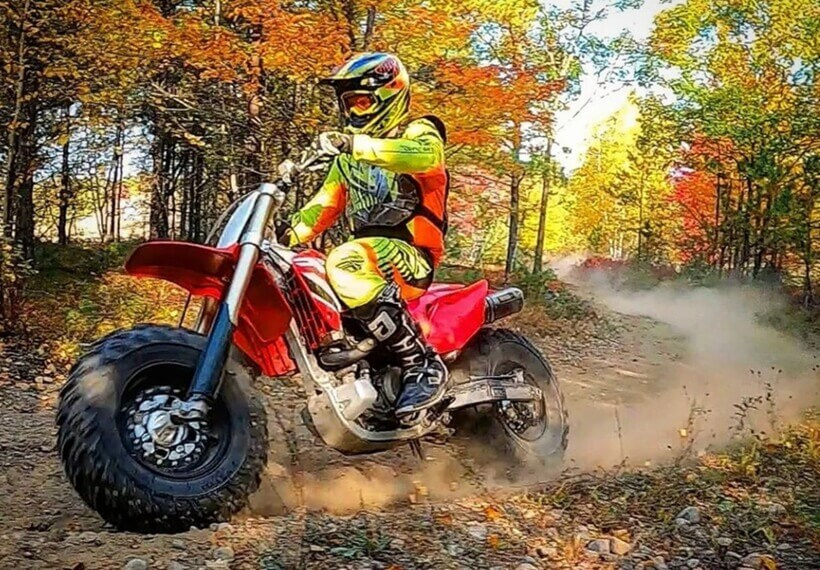
Fat tires are not ideal for every riding situation
While fat tires offer comfort, stability, and strong visual appeal, they are not ideal for every riding situation.
In some scenarios, wide tires can reduce performance, increase effort, and even affect safety.
Below are the most common situations where fat tires are not the best choice.
1. Aggressive Cornering and Sport Riding
Fat tires are not suitable for riders who enjoy fast cornering or sporty riding.
The wide, flat tire profile makes it harder to lean the motorcycle into turns.
Steering feels heavier, and the bike reacts more slowly when changing direction.
Sport motorcycles require quick turn-in and precise feedback.
Narrower tires provide better edge grip and clearer handling, which fat tires cannot match in these situations.
2. Twisties and Mountain Roads
On winding roads with frequent sharp turns, fat tires can feel tiring.
Riders must apply more steering effort, especially during repeated left-right transitions.
This can reduce riding enjoyment and increase fatigue over long mountain rides.
Motorcycles with standard-width tires are much better suited for twisty roads where agility and responsiveness are important.
3. Heavy Urban Traffic and Tight Spaces
Fat tires are not ideal for dense city traffic.
Low-speed maneuvers such as U-turns, lane filtering, and parking become more difficult.
The wide front tire can resist turning, making the bike feel bulky in tight areas.
Commuters who ride daily in crowded urban environments often prefer lighter motorcycles with narrower tires for easier handling.
4. Track Riding and Racing
Wide tires are unsuitable for track use or racing.
On the track, precise corner entry, consistent feedback, and fast transitions are essential.
Fat tires reduce lean-angle confidence and make it harder to ride at the limit.
Professional race bikes use narrow, rounded tires because they allow smoother lean angles and predictable grip at high speeds.
5. Technical Off-Road Riding
Although fat tires work well on sand and snow, they perform poorly in technical off-road conditions.
In rocky trails, deep ruts, mud, or root-covered terrain, wide tires struggle to track a clean line.
Narrow off-road tires can dig into the surface and maintain direction, while fat tires tend to slide or float uncontrollably.
6. Long-Distance Fuel-Efficient Riding
Fat tires are heavier and create more rolling resistance.
This can reduce fuel efficiency, especially on smaller-displacement motorcycles.
Riders who prioritize fuel economy or long-distance efficiency may find fat tires less practical.
7. Lightweight and Small-Engine Motorcycles
Motorcycles with smaller engines may not have enough power to handle the extra weight of fat tires efficiently.
Acceleration can feel slower, and overall performance may suffer.
In these cases, standard tires help maintain balance between power, weight, and handling.
8. Riders Who Prefer Quick and Precise Handling
Riders who enjoy a light, responsive feel will likely be disappointed by fat tires.
The added mass and wide profile reduce the bike’s ability to respond quickly to rider input.
If precision, speed, and agility are your priorities, fat tires are not the right choice.
Riders Who Are Best Suited for Fat Tires
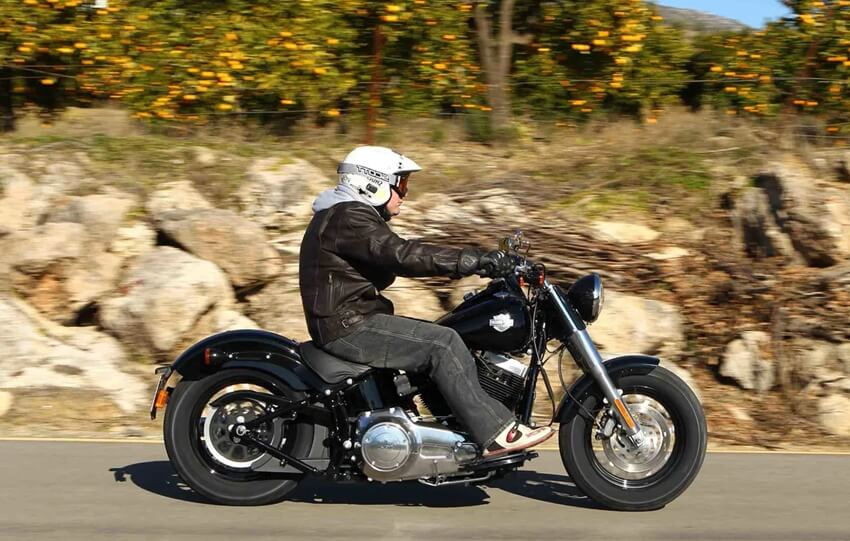
Fat tires are suitable for cruiser and touring riders
1. Cruiser and Touring Riders
Riders who own cruisers, baggers, or touring motorcycles are the best match for fat tires.
These bikes are designed for comfort, stability, and straight-line riding, which fits perfectly with the strengths of wide tires.
2. Riders Who Prioritize Comfort Over Performance
If comfort is more important than aggressive cornering or sporty handling, fat tires are a good choice.
They reduce road harshness and make long rides more enjoyable.
3. Style-Focused Riders
Riders who care about the look of their motorcycle will appreciate fat tires.
Wide tires give a strong, muscular appearance that stands out.
Many riders choose fat tires mainly for aesthetic reasons.
4. Casual and Weekend Riders
Fat tires suit riders who ride mainly on weekends or for leisure.
These riders often prefer smooth cruising over technical riding and do not need quick handling or sharp cornering.
5. Riders in Areas With Rough Roads
In regions with poor road conditions, cracks, or uneven pavement, fat tires provide a smoother ride.
The extra rubber helps absorb small bumps and vibrations.
6. Beginner or Less Aggressive Riders
Some beginners feel more stable on fat-tire motorcycles at low speeds. The bike feels planted and less twitchy.
However, beginners should still practice proper handling techniques due to heavier steering.
Riders Who May Not Benefit From Fat Tires
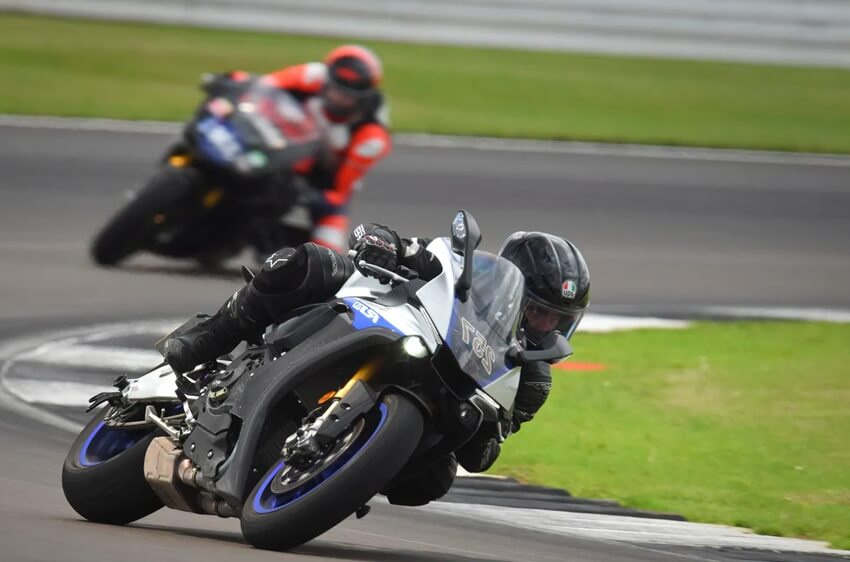
Fat tires are not ideal for sportbike riders who enjoy fast cornering
While fat tires are ideal for many types of riders, there are some who may not find them the best choice.
Here are some riders who might not benefit as much from wide tires:
1. Sportbike Riders Who Enjoy Fast Cornering
Sportbike riders typically prioritize agility and quick handling.
Fat tires, while providing stability, can make the bike feel less responsive in tight corners.
The increased width may hinder the quick transitions and sharp turns that sportbike riders crave.
2. Riders Who Frequently Ride on Tight Mountain Roads
Riders who navigate narrow, winding mountain roads may find that fat tires are not the best match for these conditions.
The added width of the tires can make the bike feel slower to turn and harder to maneuver in tight spaces, reducing the overall handling performance on these twisty routes.
3. Daily Commuters in Heavy Traffic
For riders who regularly commute in urban or congested environments, fat tires may not be the best choice.
They tend to make the motorcycle feel heavier and less nimble, which can be a disadvantage when navigating through stop-and-go traffic or squeezing between vehicles.
4. Riders Who Prefer Lightweight and Agile Motorcycles
Fat tires generally add weight and bulk to a motorcycle, which may not appeal to riders who prefer lighter, more agile bikes.
If quick handling and ease of maneuvering are more important than comfort or style, riders may want to stick to standard-width tires for a more nimble experience.
5. Competitive Off-Road or Track Riders
For those who engage in competitive off-roading or track racing, fat tires may not provide the performance needed for high-speed, precision riding.
Standard-width tires offer better traction, cornering capabilities, and overall performance on smooth surfaces or off-road tracks.
These riders usually benefit more from standard-width tires with quicker handling and better corner feedback.
Motorcycles With Fat Rear Tires: Riding Tips
Riding a motorcycle with a fat rear tire feels different from riding a bike with standard tires. These tips will help you ride more safely and comfortably.
1. Use Smooth Throttle Input
- Fat rear tires provide a strong grip, but sudden throttle changes can upset the bike’s balance.
- Apply the throttle smoothly, especially when exiting corners.
- Avoid aggressive or abrupt acceleration.
2. Allow More Time to Turn
- Wide rear tires make the motorcycle slower to lean.
- Begin your turns earlier than you would on a standard tire.
- Avoid sharp, last-second steering inputs.
3. Reduce Corner Speed
- Do not force the bike into deep lean angles.
- Fat tires are designed for stability, not aggressive cornering.
- Enter corners at a controlled and comfortable speed.
4. Countersteer With More Pressure
- Wider rear tires require firmer countersteering to initiate turns.
- This is normal behavior for fat-tire motorcycles.
- Stay relaxed and apply steady, consistent pressure on the handlebars.
5. Be Careful on Wet or Cold Roads
- Fat tires may feel stable, but traction limits still apply.
- Ride gently on wet, cold, or dirty road surfaces.
- Be especially cautious when accelerating.
6. Maintain Proper Tire Pressure
- Correct tire pressure is critical for safe handling.
- Overinflated tires reduce grip and ride comfort.
- Underinflated tires can cause vague steering and faster wear.
- Always follow the manufacturer’s recommended tire pressure.
7. Practice Low-Speed Maneuvers
- U-turns and parking-lot riding require more effort with fat tires.
- Practice slow-speed control regularly.
- Use clutch control, rear brake, and smooth throttle to maintain balance.
8. Check Tire Wear Regularly
- Fat rear tires may wear unevenly over time.
- Inspect the tire frequently for wear or damage.
- Replace the tire when traction begins to decrease.
What Should You Consider When Purchasing Fat Tires for Your Motorcycle?
Before choosing fat tires for your motorcycle, it is important to consider a few key factors to make sure they match your bike and riding style.
1. Bike Compatibility
Not all motorcycles are designed for fat tires. Check frame clearance, swingarm space, wheel size, and belt or chain alignment before buying.
2. Riding Style and Usage
Fat tires work best for cruising, straight-line riding, and relaxed use. If you ride aggressively, on twisty roads, or in heavy traffic, standard tires may be a better choice.
3. Handling Trade-Offs
Wide tires improve stability but reduce agility. Be prepared for heavier steering and slower corner response.
4. Cost and Maintenance
Fat tires are more expensive than standard tires and may wear faster. Conversion kits and installation can add a high cost.
5. Tire Size and Profile
Choose a size that balances appearance and performance. Extremely wide tires may look good, but can negatively affect handling.
6. Local Road and Weather Conditions
Consider the surfaces you ride on most. Fat tires perform well on rough roads and soft terrain but are less effective in technical or high-speed cornering.
Innovations and Trends in Motorcycles With Fat Tires (Up to 2026)
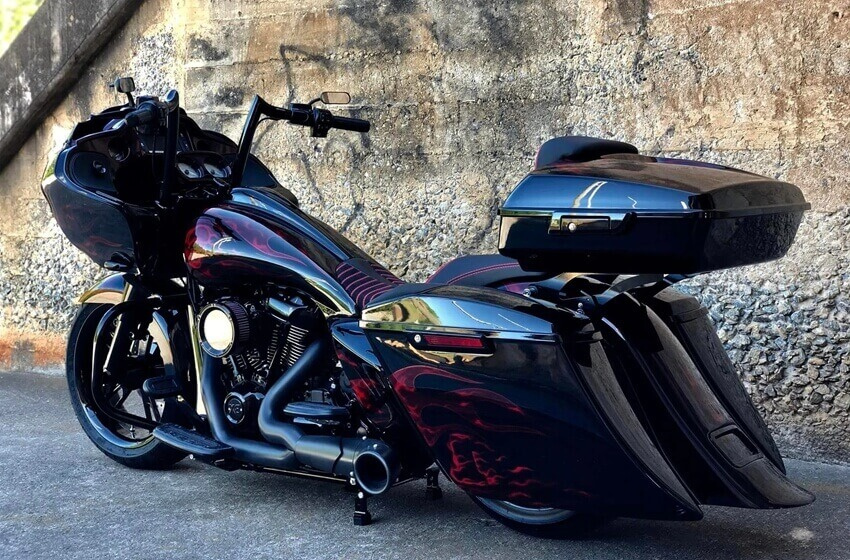
innovations and trends in motorcycles with fat tires
Fat motorcycle tires themselves are a mature idea, but recent years have seen some interesting developments:
1. Factory Integration
More manufacturers now offer fat tires as stock on certain models, rather than leaving it to custom shops.
For example, Harley-Davidson’s 2024–2025 lineup includes multiple Softail cruisers with 240 mm rears, and Indian’s Dark Horse series uses 180–200 mm tires. This means riders can buy new bikes designed for fat tires, with the correct frames and suspensions, rather than retrofitting.
The trend toward factory fat tires highlights their popularity in the cruiser/touring market.
2. Aftermarket Kits and Wheels
Companies like SMT Wheels, Vicious Cycle Works, and AllThingsChrome continue to supply bolt-on kits for fat tires (often called “big wheel kits”).
Innovations here include lighter wheels (for example, new alloy 18″ wheels that are lighter than older cast rims) and more complete kits that simplify installation. Some kits now allow fitment of up to 280–300 mm rear tires on various bikes.
However, installing a fat tire usually requires aftermarket swingarms, spacers, and fender modifications.
3. Tire Technology
Tire makers have improved compounds and constructions for fat tires.
Modern fat motorcycle tires can be tubeless with reinforced sidewalls, improving puncture resistance. Some now use stiffer belts or carcasses to handle the unique loads of a wide profile.
For adventure-oriented fat wheels, a few brands are experimenting with “GPS” (GripLimitFeedback) or variable construction to give a better feel despite the wide footprint (Michelin’s technology).
4. New Styles
A new wave of electric cruiser concepts (and e-bikes styled like motorcycles) often include fat tires for that classic look.
The lasting popularity of the retro/moto culture (inspired by shows like Sons of Anarchy) means fat tires remain a symbol of cruiser identity.
On the other hand, some performance bikes are pushing fat tires to new extremes for novelty – custom baggers with 300 mm slick rear tires, or extreme “fatty” front end kits stretching 23″ wheels.
These are niche but highlight the ongoing fascination.
5. Rider Electronics and Safety
One positive trend is that modern bikes with fat tires often add electronic aids to compensate.
For instance, Anti-lock Braking Systems (ABS) and traction control can help mitigate the potential for a fat tire to slide unexpectedly in a corner.
Onkyus of technology also leads to adjustable ride-height or steering damping on heavy cruisers, helping the rider manage the extra mass of fat wheels.
In summary, innovations around fat tires have focused on making them easier to integrate into bikes (lighter wheels, complete kits), safer (ABS, stiff sidewalls), and retaining their classic appeal.
As of 2026, fat tires remain largely a styling and comfort choice rather than a performance trend. But they have carved out a firm niche, with enough demand that new models and parts support them more than ever.
❓FAQ
🏍️1. Do fat tires make bikes slower?
Fat tires can make a motorcycle feel slower in certain situations, but not always.
Because fat tires are heavier and have more rolling resistance, they require more power to accelerate and change direction. On smaller or lower-powered motorcycles, this can reduce acceleration and top speed slightly.
However, on large-displacement cruisers with strong torque, the difference is often minimal. In straight-line cruising, most riders won’t notice a significant loss in speed.
🏙️2. Are fat tires good for city commuting?
Fat tires can work for relaxed city commuting, but they are not ideal for heavy traffic.
They handle rough pavement, potholes, and uneven roads well, providing good comfort and stability.
That said, fat tires make low-speed maneuvers harder. Tight U-turns, lane filtering, and stop-and-go traffic require more effort due to heavier steering. Riders who commute daily in dense urban traffic may prefer standard-width tires for easier handling.
🔧3. How often do fat tires need maintenance?
Fat tires require similar maintenance to standard motorcycle tires, but they may need closer monitoring.
Because of their width and softer compounds, fat rear tires can wear unevenly or wear out faster, especially during frequent straight-line riding or aggressive acceleration.
Regularly checking tire pressure, inspecting tread wear, and watching for flat spots is important. In general, expect slightly shorter tire life compared to standard tires, depending on riding style.
🛡️4. Can fat tires improve safety?
Fat tires can improve safety in certain conditions, but they are not universally safer.
They provide better straight-line stability, improved traction under acceleration, and more confidence on rough or loose surfaces like sand or uneven pavement.
However, in corners, fat tires offer less feedback and slower response. This can reduce confidence during aggressive riding or emergency maneuvers. Safety ultimately depends on riding style, environment, and proper technique rather than tire width alone.
💰5. Are fat tires more expensive?
Yes, fat tires are generally more expensive than standard motorcycle tires.
The tires themselves cost more, and they may wear faster depending on usage. In addition, motorcycles designed for fat tires often have larger wheels, which increases replacement costs.
If converting a bike, the total expense can be significant due to additional parts and labor.
🔩6. Can I convert my standard motorcycle to fat tires? What kits are available?
In many cases, yes—but conversion is not simple or cheap.
Most standard motorcycles are not designed to accept very wide tires. Conversions often require aftermarket wheels, spacers, swingarm modifications, new fenders, and belt or chain alignment changes.
Aftermarket “fat tire kits” or “big wheel kits” are available from custom motorcycle suppliers. These kits vary by bike model and tire size, with some allowing rear tires up to 240–300 mm. Professional installation is strongly recommended.
🎯7. Is a fat tire motorcycle easier to ride?
At low speeds and in straight lines, a fat tire motorcycle can feel easier and more stable.
Many riders feel more confident because the bike feels planted and less twitchy. This can benefit beginners or casual riders during relaxed cruising.
However, fat tires make steering heavier and cornering slower. For new riders, tight turns and parking-lot maneuvers may actually be more challenging than on a standard-tire motorcycle.
📏8. What is the 3% tire rule?
The 3% tire rule refers to keeping tire size changes within 3% of the original overall diameter.
This guideline helps maintain accurate speedometer readings, proper ABS and traction control function, and predictable handling.
When installing wider or taller tires, exceeding the 3% difference can negatively affect braking systems, electronics, and overall ride quality. Always check manufacturer recommendations before changing tire sizes.
Conclusion
Fat tires excel in providing stability, comfort, and a bold aesthetic, making them perfect for cruisers, beach riding, and long-distance trips. They offer a great grip on loose surfaces and smooth out rough roads. However, they can be sluggish in corners and challenging for aggressive riders or those navigating tight spaces.
Ultimately, fat tires are best for those who prioritize comfort, style, and straight-line stability over quick handling or precise cornering.
Recommended Reading

With over 10 years of experience working on cars and trucks Item Training Supervisor Richard Reina is known around the office as one of our technical experts & real an "automobile person".
His rate of interest began, in his very own words, "at the age of two when his father educated him the distinction in between a Chevy and a Ford. Since then it's been cars regularly."
As a serious lover of practically all things with a motor Richard can address nearly any kind of inquiry related to car upkeep, fixing, or restoration & is a fact professional in electric motor background.
Subscribe
0 Comments
Oldest
You maybe like to read:
Adventure motorcycles, often called ADV bikes, are built to take you from smooth highways to rough backcountry trails. For new riders, picking the best adventure bikes for beginners can make all the difference. The right machine turns highways, gravel roads, forest tracks, and remote trails into places you actually want to explore, while the wrong […]
Riding in a group is thrilling, but without clear communication, even the best rides can turn chaotic. That’s where motorcycle intercom systems come in, letting you talk with your group, share GPS directions, listen to music together, and stay safer on the road. Whether you’re riding with a single friend or leading a pack of […]
I’ve used premium intercoms and budget ones on the same roads, in the same weather, on long touring days. The truth? Most riders don’t need a $400 system. Most riders still need the same basics: clear rider-to-rider talk, stable Bluetooth, and batteries that last a full day on the road. In 2026, budget motorcycle intercoms […]
What is the best motorcycle intercom for beginners? If you’re a new rider, the idea of adding another piece of tech to your helmet can feel overwhelming. I’ve been using motorcycle intercoms for years—on solo rides, long tours, group trips, and daily commutes—and I’ll tell you this upfront: A beginner motorcycle rider doesn’t need the […]
Mesh Intercom vs Bluetooth: Which Motorcycle Communication System Is Better? Mesh intercoms are best for riders who travel in groups because they automatically reconnect and stay stable, while Bluetooth intercoms are better for solo riders and two-up riding due to lower cost and simpler operation. As someone who both wrenches on bikes and rides long […]