The motorcycle communication systems field just got a significant upgrade with the release of the Fodsports FX7. This state-of-the-art Bluetooth mesh intercom is packed with many advanced features and techs. It will revolutionize the way riders communicate and enjoy their rides. Whether you're a solo rider or part of a group, the FX7 offers unparalleled […]

Route des Grandes Alpes in Fall: France Motorcycle Riding Guide
October 8, 2026
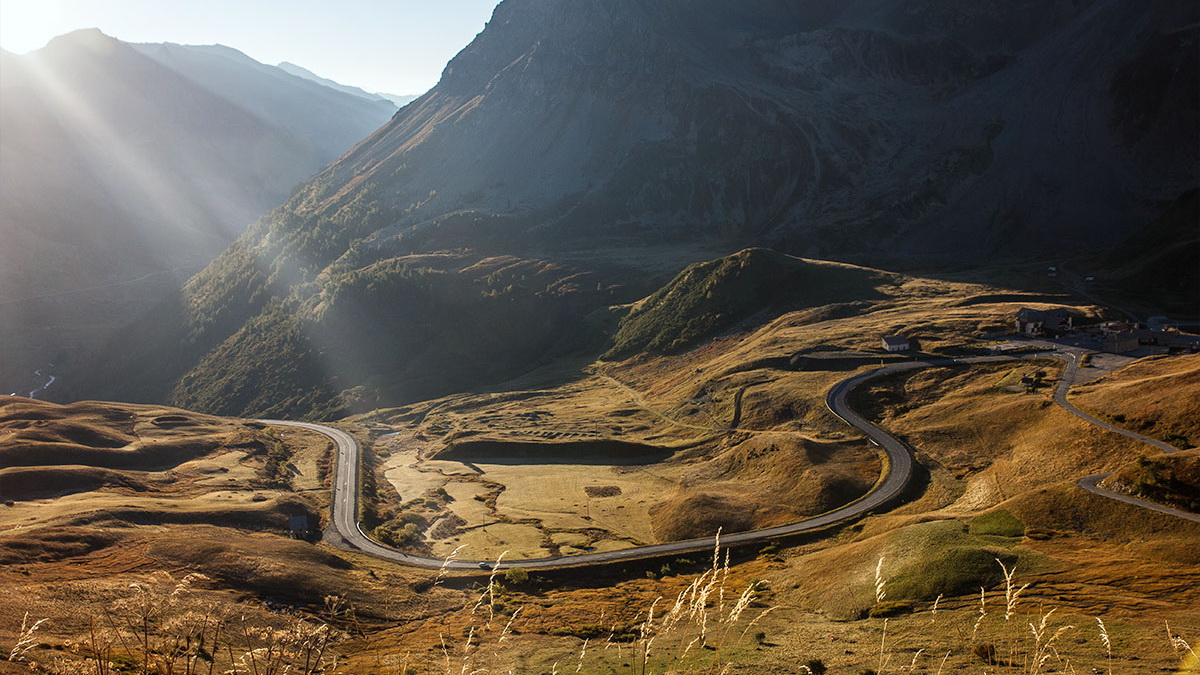
Few motorcycle routes combine high mountain passes, autumn forests, dramatic valleys, and Mediterranean scenery as well as the Route des Grandes Alpes in France. Stretching about 720 km from Thonon-les-Bains near Lake Geneva to Nice, the route crosses 18 major Alpine passes and reaches 2,764 meters at the Col de l'Iseran.
For motorcycle riders, autumn can be one of the most rewarding times to experience the route. Summer crowds begin to disappear, the mountain light becomes clearer, and lower valleys start showing fall color. But there is an important catch: high-altitude weather can change quickly, and some famous passes may close as snow arrives.
For that reason, the best Route des Grandes Alpes motorcycle trip is not about riding as fast as possible. It is about choosing the right season, allowing enough time, and staying flexible.
Table of Contents
🍂 Why Ride the Route des Grandes Alpes in Fall?
The Route des Grandes Alpes in fall offers a different experience from the busy summer season.
The official route organization recommends the shoulder season from late August through mid-October, with September being particularly attractive. Traffic is generally lighter than during July and August, while temperatures are often more comfortable for long motorcycle days.
Autumn also creates a changing landscape rather than one fixed foliage season. Lower valleys may still be green while higher areas have already turned brown or golden. As you descend toward the southern Alps, the scenery becomes drier and eventually transitions toward the Mediterranean coast.
That gradual change is one of the biggest attractions of a French Alps motorcycle tour.
📅 When Is the Best Time to Ride?
September: The Best Overall Choice
September usually offers the best balance between scenery, road access, and riding conditions.
Many high passes are still open, summer traffic has decreased, and the days remain long enough for comfortable mountain riding. Early autumn colors may also appear in forests and valleys.
If this is your first Route des Grandes Alpes motorcycle route, September is the month I would prioritize.
October: Beautiful but More Uncertain
Early October can be spectacular, especially in lower forests and the southern Alps. However, the higher passes become increasingly weather-dependent.
The complete route is generally associated with a June-to-October riding season, but opening and closing dates can change with snow and road conditions.
Never assume a pass is open simply because it was open on a previous trip.
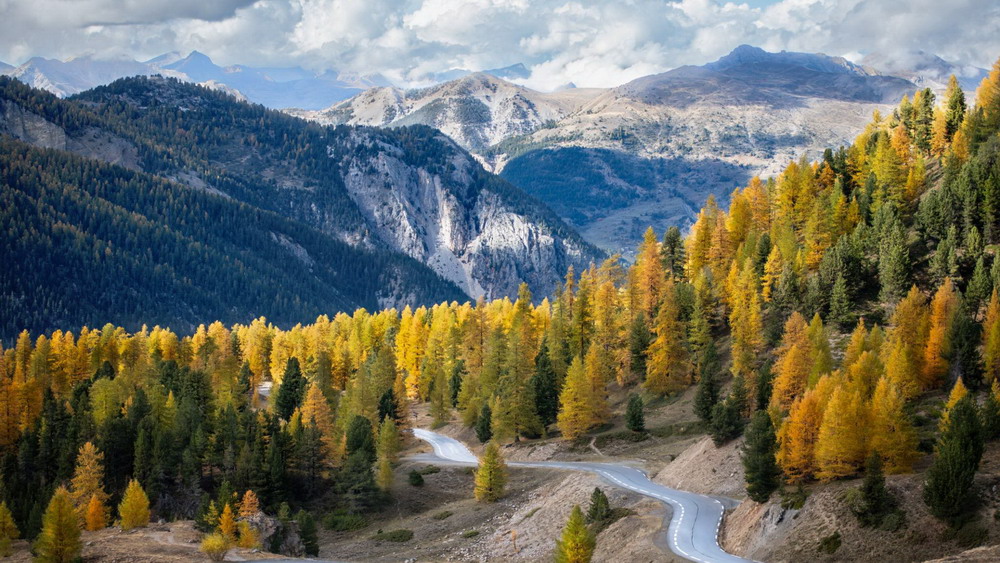
Route des Grandes Alpes
🏍️ How to Ride the 720 km Route
Although 720 km does not sound enormous on paper, Alpine roads make the distance feel much longer.
Hairpins, steep climbs, slow traffic, viewpoints, villages, and frequent photo stops all reduce average speed. For most riders, five to seven days is a comfortable itinerary.
Thonon-les-Bains to the Northern Alps
Starting at Thonon-les-Bains near Lake Geneva provides a gradual introduction to the mountains.
The route passes through areas around the Col des Gets, Col de la Colombière, Col des Aravis, and Col des Saisies before reaching the higher Alpine terrain.
This section combines forested roads, mountain villages, and open viewpoints and gives riders time to settle into the rhythm of Alpine riding.
Toward Col de l'Iseran
The landscape becomes more dramatic around Bourg-Saint-Maurice and the Cormet de Roselend.
Then comes one of the defining points of the trip: Col de l'Iseran, at 2,764 meters. It is the highest paved mountain pass on the route and one of the most weather-sensitive sections.
A sunny valley does not guarantee good conditions at the summit. Always check mountain weather before committing to the high passes.
Galibier, Izoard and the Southern Alps
After the Iseran, the route continues toward the Col du Télégraphe and Col du Galibier before reaching Briançon.
The Col d'Izoard offers a completely different landscape, particularly around the dramatic Casse Déserte rock formations.
Further south, the mountains gradually become drier and more Mediterranean. Depending on your itinerary and current road conditions, the route can include the Col de Vars, Col de la Cayolle, or the Cime de la Bonette area before eventually reaching Nice.
The transition from high Alpine terrain to Mediterranean scenery is one of the highlights of the entire journey.
📍 Autumn Highlights Worth Stopping For
Col de l'Iseran
At 2,764 meters, the Iseran is the highest point on the route. The contrast between the cool summit and greener valleys below can be dramatic in autumn.
Give yourself extra time here and avoid treating the pass as simply another checkpoint.
Cormet de Roselend
This section combines winding roads, open mountain landscapes, and views around the Roselend area.
It is particularly enjoyable for riders who prefer the road itself rather than simply collecting famous destinations.
Col du Galibier
The Galibier is one of the classic Alpine motorcycle roads. Its elevation also makes it vulnerable to sudden weather changes.
On autumn mornings, shaded sections can remain considerably colder than exposed roads. Ride the descent with the same attention as the climb rather than focusing only on the summit.
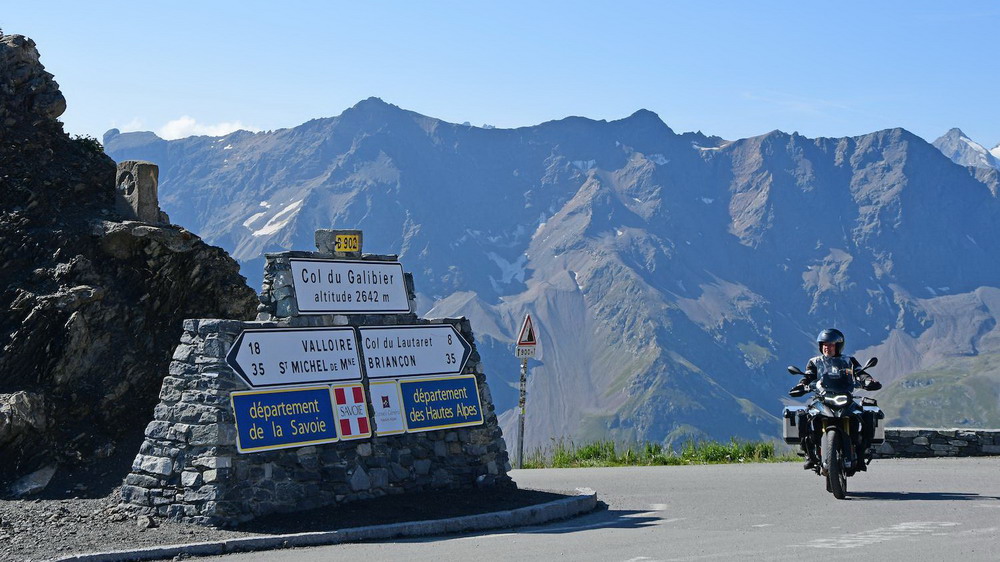
Col du Galibier motorcycle route
Col d'Izoard
The Izoard provides a striking contrast to the greener northern sections. The rocky Casse Déserte is one of the most recognizable landscapes on the route and makes an excellent photography stop.
🛣️ The Most Important Fall Planning Tip
Do not build your entire itinerary around fixed pass-opening dates.
Snow and weather determine access to the highest roads. Before each riding day, check current road conditions and mountain forecasts, especially for the Iseran, Galibier, Izoard, and other high passes.
A good autumn itinerary should always have a Plan B.
If a high pass is closed, a lower valley route may allow you to continue toward your next overnight stop. Your GPS should support your plan—not make the decision for you when an official road closure is in effect.
Météo-France is particularly useful for checking mountain conditions rather than relying only on the forecast for the town where you are staying.
📡 Motorcycle Communication on an Alpine Group Ride
The Route des Grandes Alpes can also be challenging for groups because riders naturally become separated on hairpins, climbs, and narrow mountain roads.
A Helmet Communication system can make it easier to communicate about a stopped vehicle, road hazard, fuel stop, or regrouping point without relying entirely on hand signals.
For smaller groups, a Bluetooth Intercom can keep communication simple while riders maintain their focus on the road. A Motorcycle Intercom is most useful when messages are short and practical rather than continuous conversation.
Based on more than a decade of experience developing motorcycle communication systems, Fodsports' approach is simple: communication should make the ride clearer, not more distracting.
🧤 What Matters Most in Autumn
A long equipment checklist is less useful here than being prepared for rapid elevation changes.
A rider can leave a mild valley in comfortable conditions and reach a 2,500-meter pass much later the same day. Keep warmer layers and rain protection accessible rather than buried in luggage.
Most importantly, plan your riding days around daylight.
On an autumn mountain trip, leaving earlier often gives you more flexibility than trying to squeeze another 100 km into the evening.
📊 Route des Grandes Alpes by the Numbers
- About 720 km: Thonon-les-Bains to Nice
- 18 major passes: official route information
- 2,764 m: Col de l'Iseran
- June–October: general full-route season, subject to conditions
- Late August–mid-October: recommended shoulder-season period
- September: one of the strongest choices for a complete motorcycle trip
There is also a strong safety reason to respect the mountain roads. France's 2025 road-safety report recorded 691 deaths among powered two-wheel users, representing 21% of all road fatalities. Official French safety data also shows that a significant share of motorcycle deaths occur in curves.
That matters on a route defined by hairpins and mountain bends. The best French Alps motorcycle tour is not the one with the highest average speed; it is the one that lets you arrive at every destination safely.
🌄 How Many Days Do You Need?
Four Days
Possible for experienced riders who want a faster trip, but expect longer riding days and fewer sightseeing stops.
Five to Seven Days
This is the better option for most riders. It gives you time for scenic viewpoints, mountain villages, photography, meals, and weather-related changes.
For an autumn trip, flexibility is more valuable than maximizing daily mileage.
🍁 Final Thoughts
The Route des Grandes Alpes in fall is more than a famous summer motorcycle route with fewer tourists.
September and early October can bring cooler riding temperatures, changing mountain colors, quieter roads, and spectacular light across the French Alps. At the same time, the mountains demand respect: high passes can close quickly, temperatures can change dramatically with elevation, and weather should always influence the day's route.
Check the passes before you ride, keep a lower-altitude alternative ready, start early, and give yourself enough days to enjoy the journey.
Ride the Route des Grandes Alpes as a journey—not a checklist—and the combination of Alpine passes, autumn forests, dramatic rock formations, mountain villages, and Mediterranean scenery can become one of Europe's most memorable motorcycle adventures.
❓ FAQ About Route des Grandes Alpes
1. How long is the Route des Grandes Alpes?
The main route from Thonon-les-Bains to Nice is approximately 720 km, although the actual distance can vary depending on detours and route alternatives.
2. Is September a good month for the Route des Grandes Alpes?
Yes. September generally offers a good combination of lower traffic, comfortable riding temperatures, and better chances of finding the major high passes open.
3. Can you ride the Route des Grandes Alpes in October?
Yes, especially in early October. However, the risk of snow and high-pass closures increases later in the month, so current road conditions are essential.
4. What is the highest point on the route?
The Col de l'Iseran reaches 2,764 meters and is the highest paved pass on the Route des Grandes Alpes.
5. How many days should a motorcycle trip take?
Five to seven days is a comfortable range for most riders. Four days is possible for a faster itinerary, but leaves less flexibility for weather and sightseeing.
📚 Authoritative Sources
- Route des Grandes Alpes — Official Route Information
https://www.routedesgrandesalpes.com/ - Auvergne-Rhône-Alpes Tourism — Route des Grandes Alpes
https://www.auvergnerhonealpes-tourisme.com/fiches/route-des-grandes-alpes/ - Nice Côte d'Azur Tourism — Route des Grandes Alpes
https://www.explorenicecotedazur.com/en/itinerary/route-des-grandes-alpes/ - Météo-France — Mountain Weather
https://meteofrance.com/meteo-montagne - French Road Safety Observatory (ONISR) — 2025 Road Safety Report
https://www.onisr.securite-routiere.gouv.fr/etat-de-linsecurite-routiere/bilans-annuels-de-la-securite-routiere/bilan-2025-de-la-securite-routiere

Rodney L is a technical writer and product consultant with over a decade of experience in the motor industry. Rodney is a fan of performance machines that run fast and loud and an expert in all things custom. His numerous articles and write-ups are available at our knowledge base. Whether it’s something wrong with your motorcycle or you are building a custom bike, you can trust Rodney’s experience.
You maybe like to read:
Fodsports Brand Month: Unbeatable Deals and Top-Notch Service
Discover Fodsports Brand Month July and August mark a special occasion for motorcycle enthusiasts and tech lovers alike. Welcome to Fodsports Brand Month! This event is dedicated to celebrating everything that makes Fodsports a leading name in the motorcycle communication industry. Get ready for a fantastic promotions, exceptional service from Fodsports. Let's insights into Fodsports' […]
Route des Grandes Alpes in Fall: France Motorcycle Riding Guide
Few motorcycle routes combine high mountain passes, autumn forests, dramatic valleys, and Mediterranean scenery as well as the Route des Grandes Alpes in France. Stretching about 720 km from Thonon-les-Bains near Lake Geneva to Nice, the route crosses 18 major Alpine passes and reaches 2,764 meters at the Col de l'Iseran. For motorcycle riders, autumn can […]
Talimena Scenic Byway in Fall: Oklahoma and Arkansas Motorcycle Riding Guide
A mountain road, two states, 54 miles of ridgelines, and some of the best late-season color in the South—Talimena Scenic Byway is the kind of motorcycle route that rewards riders who leave room for the scenery. Running from the Mena, Arkansas area to Talihina, Oklahoma, the byway follows the crests of the Ouachita Mountains through forest, […]
Cherohala Skyway Tennessee and North Carolina: Fall Motorcycle Riding Guide
Few motorcycle roads in the Southeast combine elevation, open mountain views, and flowing curves quite like the Cherohala Skyway. Stretching about 43 miles between Tellico Plains, Tennessee, and Robbinsville, North Carolina, the National Scenic Byway climbs from lower valleys to elevations above 5,000 feet before crossing the Appalachian high country. In fall, the ride becomes […]
10 Best Autumn Motorcycle Routes in Europe: Scenic Roads, Fall Colors and Riding Tips
🍂 Why Autumn Is One of the Best Seasons for a European Motorcycle Road Trip Europe becomes a completely different riding destination in autumn. Alpine forests turn gold, mountain valleys develop deeper colors, vineyards become vibrant, and many popular roads become quieter after the summer peak. For motorcycle travelers, the biggest advantage is variety. In […]