The motorcycle communication systems field just got a significant upgrade with the release of the Fodsports FX7. This state-of-the-art Bluetooth mesh intercom is packed with many advanced features and techs. It will revolutionize the way riders communicate and enjoy their rides. Whether you're a solo rider or part of a group, the FX7 offers unparalleled […]

An In-Depth Look at the Single Cylinder Motorcycle Engines (2024)
June 24, 2024

Single cylinder motorcycle engines are the mostly used engine on motorcycle. Have you wondered why? That's because they are popular for their simplicity and efficiency. Many smaller bikes, dirt bikes, and some commuter motorcycles are using this single cylinder engines. In this blog, we will explore the features, benefits, and drawbacks of single-cylinder motorcycle engines. We will also look at how they compare to other engine types and why they remain a popular choice for many riders.
Table of Contents
What is Single Cylinder Motorcycle Engine?
A single-cylinder engine, as the name implies, is a piston engine with only one cylinder. Many people also call it a thumper.
This motorcycle engine is the simplest of all engines. It has only one cylinder and is the basic form of the engine.
Single-cylinder engines can be roughly divided into two types: 4-stroke engines and 2-stroke engines.
This engine is the most common engine layout in motorcycles. You can see single-cylinder engines on many motorcycles, especially regular motorcycles.
The more classic Honda Super Cub uses a 49 cc (3.0 cubic inch) four-stroke single-cylinder engine. Today, it has become the highest-selling motorcycle in terms of total sales.
Compare between Single-Cylinder Engines And Other Types of Engine
Normally, there are single-cylinder engine, twin-cylinder engine, triple-cylinder engine and four-cylinder engine in the market.
Here is a table to show the key characteristics, advantages, and disadvantages of different types of motorcycle engines.
| Features | Single-Cylinder Engine | Twin-Cylinder Engine | Triple-Cylinder Engine | Four-Cylinder Engine |
| Configuration | One cylinder | Two cylinders in various configurations | Three cylinders in a row | Four cylinders in a row or V-configuration |
| Power Output | Moderate | Higher than single-cylinder | Balanced power | High power |
| Torque | High at low RPM | Balanced across RPM range | Smooth and linear | High at high RPM |
| Complexity | Simple | Moderate | More complex | Most complex |
| Maintenance | Easy | Moderate | More frequent | Requires more frequent and skilled service |
| Weight | Light | Moderate | Moderate | Heavier |
| Fuel Efficiency | High | Moderate | Moderate | Lower |
| Vibration | High | Lower than single-cylinder | Low | Very Low |
| Cost | Generally lower | Moderate | Higher | Highest |
| Typical Applications | Dirt bikes, small commuter bikes | Sportbikes, cruisers, adventure bikes | Sportbikes, high-performance bikes | High-performance sportbikes, touring bikes |
| Advantages | Lightweight, simple, easy to maintain | Good balance of power and torque, versatile | Smooth power delivery, good performance | High power output, smoothness, high RPMs |
| Disadvantages | High vibration, limited power range | Heavier, more complex than single-cylinders | More complex, higher maintenance needs | Heaviest, most complex, lower fuel economy |
| Sound | Thumpy, characteristic single-cylinder sound | Varied (depends on configuration: parallel, V) | Unique, distinctive triple sound | Smooth, high-pitched, inline-four sound |
After reading this table you might have a general understanding about these engines.
As you can see, single cylinder engines do have several features that are better than other engine types.
But it does not mean that a engine with 1 cylinder can always be the best option.
Choose the one best suit your needs is always the best and most cost-saving option.
Pros and Cons of Single Cylinder Motorcycle Engines?
Every kind of engine has its pros and cons. Here, we will show you the pros and cons of single cylinder ones.
This will give you an in-depth lesson to let you know about it ultimately.
| Pros of Single Cylinder Engines | Cons of Single Cylinder Engines |
| 01. They have relatively simpler structure, thus relatively easier to be produced. | 01. Their output power is relatively lower than other types of motorcycle engines. |
| 02. Their simple layout and design make it easier to work on and maintain. | 02. Large vibration during working. |
| 03. They need lower maintenance and repair cost. | 03. Intermittent power delivery. |
| 04. The ability to provide high power and appropriate low-end torque in limited space. | 04 Lack of power delivery and high-rpm comfort. |
| 05. Only need one carburetor, a single exhaust pipe, a single valve teach, one piston, and a single-cylinder head. | 05. Less pleasant exhaust note. (some riders may not like this sound.) |
| 06. Usually lighter in weight than multi-cylinder engines. | 06. Almost inevitably has a lower power-to-weight ratio. |
| 07. Cost friendly, less expensive than other kinds of engines. | 07. Limited capacity or displacement size (usually 650cc). |
| 08. Light weight make the whole motorcycle easier to maneuver and handle smoothly. | |
| 09. Bestly suitable for dirt motorcycles. | |
| 10. Energe saving, fuel efficient. | |
| 11. Beginner/entry-level motorcyclist's ideal choice. |
How does a single cylinder motorcycle engine work?

The working process of a single-cylinder engine can be divided into four stages: intake, compression, power and exhaust.
- Intake stage. The piston moves downward to inhale fresh air and fuel mixture for preparation. In the mean time, the valve opens and inhales the mixture into the cylinder through the air flow.
- Compression stage. The intake valve closes, the piston moves upward, compresses the mixed gas in the cylinder, and generates compression heat. This process is important as the temperature of the mixed gas increases when the mixture is compressed. This process helps to cause ignition.
- Power stage. During engine operation, the ignition system activates the spark plug at the top to ignite the mixed gas. The heat energy generated by the combustion process instantly increases the pressure, pushes the piston down. Then transmit to the crankshaft through the connecting rod, causing it to rotate and output power.
- Exhaust stage. When the piston reaches the bottom dead center, the exhaust valve opens and exhaust gas is generated. After the exhaust valve opens, fresh mixed gas enters the cylinder again. The whole process is repeated over and over again, generating continuous engine power.
The working process of a single-cylinder engine is cyclical. The energy converse and transmist through continuous intake, compression, combustion and exhaust.
18 Best single cylinder engine motorcycle
Many motorcycle brands has single-cylinder engine motorcycle. Here, we will give you a list of the best 18 of them after I have a full analize and comparision.
| Best Single-Cylinder Bikes | Photo | Manufacturer | Displacement | Power | Torque | Curb Weight |
| KTM Duke 390 |  | KTM | 373cc | 44.8 hp | 28.8 lb-ft | 364 lbs |
| Kawasaki Z125 |  | Kawasaki | 125cc | 8.3 hp | 7.1 lb-ft | 224 lbs |
| Royal Enfield Scram 411 |  | Royal Enfield | 411cc | 24 hp | 23 lb-ft | 407 lbs |
| Suzuki DR-Z400S |  | Suzuki | 398cc | 33.4 hp | 25.6 lb-ft | 317 lbs |
| Honda Grom |  | Honda | 124cc | 9.7 hp | 7.7 lb-ft | 224 lbs |
| BMW G 310 GS |  | BMW | 313cc | 34 hp | 20 lb-ft | 386 lbs |
| Royal Enfield Meteor 350 | 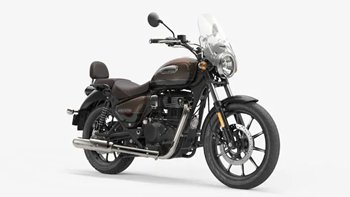 | Royal Enfield | 411cc | 20.2 hp | 19.9 lb-ft | 421 lbs |
| Kawasaki KLR 650 |  | Kawasaki | 652cc | 40 hp | 39 lb-ft | 456 lbs |
| Husqvarna Svartpilen 401 |  | Husqvarna | 373cc | 44 hp | 27.3 lb-ft | 335 lbs |
| KTM RC 390 |  | KTM | 373cc | 44 hp | 27 lb-ft | 379 lbs |
| Yamaha YZF-R15 |  | Yamaha | 148cc | 17 hp | 11.1 lb-ft | 313 lbs |
| Aprilia RS125 |  | Aprilia | 124.8cc | 34 hp | 18.4 lb-ft | 317 lbs |
| Kawasaki KX500 |  | Kawasaki | 499cc | 66 hp | 48.4 lb-ft | 220 lbs |
| KTM 690 |  | KTM | 693cc | 74 hp | 55 lb-ft | 306 lbs |
| BSA Gold Star |  | BSA | 348cc | 27 hp | 37.5 lb-ft | 436.5 lbs |
What's the biggest single cylinder motorcycle engine?
When talking about the biggest engings with single cylinder, the Suzuki DR Big is on the list. It is the "World's largest production single-cylinder engine", generated by Suzuki in 1990s. It has win this title for over 30 years. By now, there is no other engine manufacturer has supassed the engine cubic capacity that this engine has achieved.
Main parameters of Suzuki DR 800s Big:
| Parameters | Information |
| Engine Configuration | Single-Cylinder, SOHC |
| Stroke | four-stroke, four valves per cylinder |
| Cooling | Air-oil cooled |
| Engine Displacement | 779cc |
| Compression Ratio | 9.5:1 |
| Induction System | 2 Mikuni BST 33 SS carburetors |
| Maximum Power | 54 hp |
| Peak Torque | 45.7 lb-ft |
| Transmission | 5-Speed; Constant Mesh |
| Weight | 461 pounds |
| 0-60 mph acceleration time | under 5.5 seconds |
Besides, we also need to mention about Superquadro Mono, the most powerful single-cylinder engine in the world. This engine is the new member of Ducati engines family. It is a 659cc short-stroke single cylinder engine with desmodromic distribution. Generally, it is the best performance road-going single-cylinder engine.
Main parameters of Superquadro Mono
| Parameters | Information |
| Engine Configuration | Single-Cylinder, vertical |
| Engine Displacement | 659cc |
| Compression Ratio | 13.1:1 |
| Maximum power | 57 kW (77.5 hp) at 9,750 rpm – 85 hp at 9,500 rpm with Termignoni racing exhaust |
| Maximum torque | 63 Nm (6.4 Kgm) at 8,050 rpm – 6.8 Kgm with Termignoni racing exhaust |
| Homologation | Euro 5+ |
| Cylinder barrel | Aluminium |
| Gearbox | 6-speed gearbox with the possibility of fitting the Ducati Quick Shift (DQS) Up & Down |
| Weight | 332.9 lbs |
Frequently asked questions
Is 1 cylinder good for motorcycle?
Yes, a 1 cylinder engine can be a good choice for many motorcycles. 1 cylinder engines are often lighter, more simpler structure, budget friend, and easier to maintain. Besides, 1-cylinder engines also typically offer good low-end torque. Thus making them fun to ride in stop-and-go traffic. For city commuting and short trips, they are good choice.
However, they might lack the smoothness and power of multi-cylinder bikes. This is more obvious on 1-cylinder engine motorcycles at high speeds. So, if you need a bike for daily use and short distances, a 1-cylinder motorcycle can be a solid option.
Why mostly bikes are single cylinders?
Most bikes are single-cylinder because they are simpler, lighter, and cheaper to make.
Firstly, single-cylinder motorcycle engines have fewer parts than other types of engines. This makes them easier to maintain and repair.
Besides, they also tend to be more fuel-efficient, which is great for daily commuting.
Wha's more, single-cylinder bikes are usually lighter, easier to handle, so they are really nice and friendly for new riders.
And, they provide good torque at low speeds, which is useful for city riding.
They may not have the high power of multi-cylinder engines. But their simplicity and cost-effectiveness make them a popular choice for many riders.
Related reading:
What Is Best Motorcycle Engine Size To Start (Full List Size Include)
8 Main Different Types of Motorcycle Engines

Rodney L is a technical writer and product consultant with over a decade of experience in the motor industry. Rodney is a fan of performance machines that run fast and loud and an expert in all things custom. His numerous articles and write-ups are available at our knowledge base. Whether it’s something wrong with your motorcycle or you are building a custom bike, you can trust Rodney’s experience.
You maybe like to read:
Fodsports Brand Month: Unbeatable Deals and Top-Notch Service
Discover Fodsports Brand Month July and August mark a special occasion for motorcycle enthusiasts and tech lovers alike. Welcome to Fodsports Brand Month! This event is dedicated to celebrating everything that makes Fodsports a leading name in the motorcycle communication industry. Get ready for a fantastic promotions, exceptional service from Fodsports. Let's insights into Fodsports' […]
Grossglockner High Alpine Road in Fall: Austria Motorcycle Riding Guide
Autumn transforms Austria’s Grossglockner High Alpine Road into a spectacular mountain destination. Golden larch trees brighten the slopes, crisp Alpine air can reveal dramatic mountain views, and 36 hairpin bends make the journey memorable for motorcycle enthusiasts. Yet autumn also brings unpredictable weather, cold pavement, and possible road closures. For riders planning an Austrian Alps […]
Black Forest High Road Motorcycle Guide: Best Autumn Ride, Scenic Routes and Riding Tips in Germany
Few places in Germany combine flowing mountain roads, colorful forests, traditional villages, and peaceful viewpoints as perfectly as the Black Forest High Road (Schwarzwaldhochstraße B500). In autumn, this legendary route transforms into a spectacular motorcycle destination, with golden beech forests, misty valleys, and panoramic views stretching toward the Rhine Valley and even France on clear […]
Ultimate Dolomites Autumn Cycling Guide: Best Fall Foliage Routes & Expert Gear Blueprint
The Italian Dolomites in autumn transform into a sensory masterpiece. As the chaotic summer crowds dissipate between mid-September and late October, the entire Alpine region ignites with golden larches, fiery maples, and stark white limestone peaks. This fleeting shoulder season provides the ultimate window for an epic Dolomites cycling tour and foliage chasing. Compared to […]
Route des Grandes Alpes in Fall: France Motorcycle Riding Guide
Few motorcycle routes combine high mountain passes, autumn forests, dramatic valleys, and Mediterranean scenery as well as the Route des Grandes Alpes in France. Stretching about 720 km from Thonon-les-Bains near Lake Geneva to Nice, the route crosses 18 major Alpine passes and reaches 2,764 meters at the Col de l'Iseran. For motorcycle riders, autumn can […]