The motorcycle communication systems field just got a significant upgrade with the release of the Fodsports FX7. This state-of-the-art Bluetooth mesh intercom is packed with many advanced features and techs. It will revolutionize the way riders communicate and enjoy their rides. Whether you're a solo rider or part of a group, the FX7 offers unparalleled […]

Motorcycle Pants Buying Guide: Everything You Need to Know
January 14, 2026

A motorcycle crash doesn’t have to be high-speed to cause serious injury. In a split second, unprotected legs can be scraped, bruised, or broken on asphalt. That’s why motorcycle pants exist. They are not as fashion, but as essential safety gear designed to protect riders where ordinary jeans fail. This guide will explain what motorcycle pants are, why they matter for safety, and how to choose the right pair for your riding style and conditions.
Table of Contents
What Are Motorcycle Pants?

motorcycle pants
Motorcycle pants are durable riding trousers designed specifically to protect a rider’s lower body in the event of a crash.
Unlike regular jeans or work pants, they are built with safety as the primary goal, using reinforced materials and integrated protection to reduce injury.
Here’s what makes motorcycle pants different:
Tough, abrasion-resistant materials
Unlike normal jeans, which can shred almost instantly, riding pants are made from heavy-duty leather or technical fabrics.
Sometimes these fabrics are reinforced with Kevlar or Cordura. This makes them strong enough to handle sliding and scraping without falling apart.
Armor and padding
Most pants have pockets for CE-certified armor at the knees and hips.
These pads absorb impact and protect the joints that are most at risk in a crash.
Weather and comfort features
Many come with waterproof layers, removable liners, or vents to keep you cool in summer and warm in winter.
Staying comfortable helps you ride longer without getting tired or stiff.
Motorcycle Pants vs Regular Jeans
| Feature | Motorcycle Pants | Regular Jeans |
|---|---|---|
| Protection | Abrasion-resistant materials with CE armor at knees/hips. | No protection; denim tears easily in a slide. |
| Comfort | Ergonomic fit, stretch panels, and ventilation for riding. | Lightweight and flexible off-bike. |
| Durability | Built for crashes using tough materials like Cordura or leather. | Wears and rips quickly under impact or sliding. |
| Weather | Often includes waterproof and thermal liners. | No weather or wind protection. |
Types of Motorcycle Pants
Motorcycle pants come in several styles to suit different riding needs:
| Type | Description | Pros | Cons | Best For |
|---|---|---|---|---|
| Leather Motorcycle Pants | Full-grain leather (cowhide, buffalo, goatskin) offering top-level abrasion resistance. Ideal for high-speed slides. | • Extremely tough and abrasion-resistant. • Naturally insulating for cold weather. • Long-lasting durability if maintained. | • Heavy and less breathable. • Not inherently waterproof. • Requires regular cleaning and conditioning. | • Sport and track riders seeking maximum protection. • Riders in colder climates. |
| Textile Motorcycle Pants | Made from Cordura, ballistic nylon, or polyester blends. Lightweight, versatile, often waterproof with vents and liners. | • Lighter and more flexible than leather. • Can include waterproof liners. • Vents and stretch panels for comfort. | • Less abrasion-resistant than leather. • Lower-quality textiles may tear more easily. | • Touring and commuting riders. • Riders wanting multi-season versatility. |
| Motorcycle Jeans (Kevlar/Aramid) | Casual-looking denim reinforced with Kevlar/Aramid in knees, hips, and seat. Removable CE armor in some models. | • Stylish and casual; wearable off the bike. • Better abrasion resistance than regular jeans. • Slim CE-rated knee/hip armor pockets. | • Moderate protection; thinner fabric and less armor. • Not ideal for high-speed or long-distance rides. | • Urban riders and city commuting. • Riders seeking a “motorcycle-friendly casual” style. |
| Adventure & Touring Pants | Tough textile pants with reinforced panels, waterproof membranes, removable liners, cargo pockets, and adjustable fit. | • Durable and versatile; all-weather capable. • Armor at knees/hips for crash protection. • Adjustable features, cargo pockets, and reflective panels for comfort and safety. | • Bulkier; can feel heavy on short rides. • High-quality models can be expensive. | • Adventure riders covering long distances in varying climates. • Riders needing multi-season comfort and functionality. |
Leather Motorcycle Pants
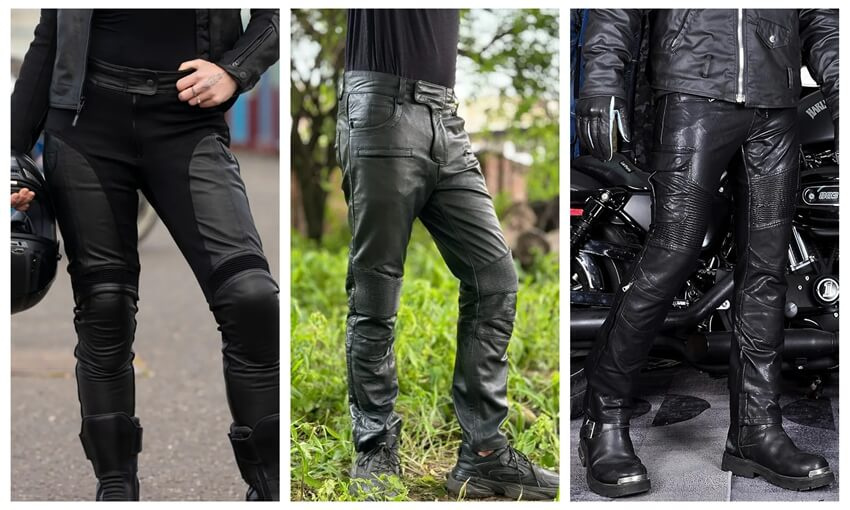
leather motorcycle pants
Leather pants are often considered the gold standard when it comes to abrasion protection. Full-grain cowhide—sometimes buffalo or goatskin—is incredibly tough if you end up sliding down the road.
That’s why track riders and sport riders keep coming back to leather. At high speeds and in long slides, it simply holds up better than almost anything else. A good pair of leather pants, or a one-piece suit, will usually earn the highest abrasion ratings, often CE AA or even AAA.
Of course, leather isn’t perfect. It’s heavy, it’s expensive, and it gets hot—really hot—especially once you’re off the bike. It doesn’t breathe much, it doesn’t stretch much, and walking around in leather pants can feel stiff and a bit awkward.
Still, if you’re the kind of rider who plans to push the limits—track days, fast canyon runs—and you want the best possible slide protection, it’s hard to beat a quality pair of leather pants zipped to a matching jacket.
Pros:
- Extremely tough and abrasion-resistant – can handle multiple slides without tearing.
- Naturally insulating – keeps legs warm in cold weather.
- Long-lasting durability when properly maintained.
Cons:
- Heavy and less breathable – can feel hot in summer.
- Not inherently waterproof – requires treatment or layering.
- Needs regular care – cleaning and conditioning to maintain flexibility and durability.
Best For:
- Sport and track riders seeking maximum protection.
- Riders in colder climates who need natural insulation.
Textile Motorcycle Pants

textile motorcycle pants
Textile pants are all about versatility and comfort. Made from modern materials like Cordura, ballistic nylon, or polyester blends, they’re surprisingly tough but a lot lighter and easier to handle than leather.
I’ve always liked textile pants for longer rides or when the weather is unpredictable. Many come with waterproof liners, removable thermal layers, and ventilation zippers that actually make a difference on hot days. Most also have armor at the knees and hips, and some can zip right into a matching jacket, which is really handy.
The beauty of textile pants is how practical they are. They keep you dry when it rains, let you cool off in summer with vents or mesh panels, and don’t wear you out over hours in the saddle. They won’t give you the same slide protection as full leather, but for day-to-day riding, touring, or adventure trips, they feel much more comfortable and forgiving.
Pros:
- Lighter and more flexible than leather – better for long rides and commuting.
- Can include waterproof liners or membranes for wet weather.
- Often features vents and stretch panels for comfort.
Cons:
- Generally, less abrasion-resistant than leather, high-speed slides can wear through faster.
- Durability depends on material quality; lower-end textile pants may tear more easily.
Best For:
- Touring and commuting riders who need comfort and weather protection.
- Riders who want versatility for different seasons and conditions.
Motorcycle Jeans (Kevlar/Aramid Jeans)
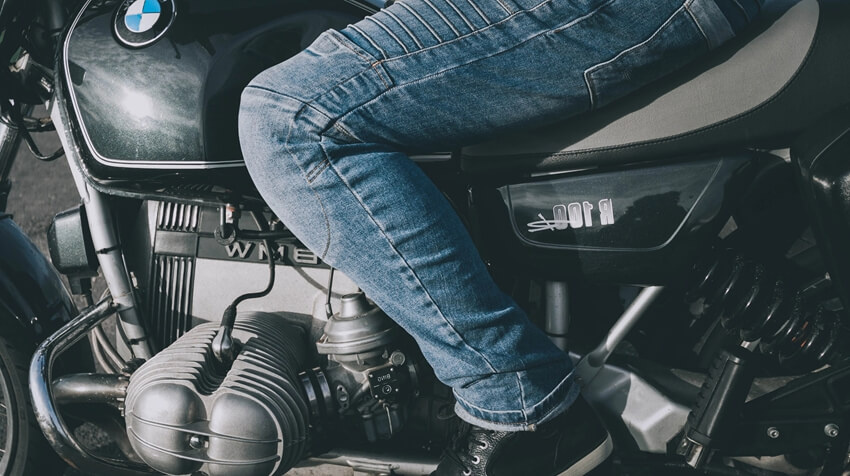
motorcycle jeans
Motorcycle jeans are all about blending casual style with a surprising amount of protection. From the outside, they just look like regular denim, but inside they’re lined with aramid or Kevlar in key areas—knees, hips, and seat. Many also have removable CE armor pockets at the knees and hips.
I’ve always liked riding jeans for commuting or casual rides. You get the safety of reinforced fibers without looking like you’re suited up for a track day. Some high-quality brands—like Revit, Pando Moto, or Saint USA—even hit CE AA or AAA abrasion ratings, which is impressive for something that looks just like everyday jeans.
Of course, they won’t protect quite as much as full leather or textile pants. But for daily riding, short trips, or when you want to keep a low profile while still staying safe, riding jeans are hard to beat. They strike a nice balance between style, comfort, and protection.
Pros:
- Stylish and casual – can be worn off the bike.
- Better abrasion resistance than regular jeans due to reinforced fibers.
- Often includes slim CE-rated knee and hip protector pockets.
Cons:
- Offers moderate protection – less armor and thinner fabric than dedicated riding pants.
- Not ideal for high-speed or long-distance rides where maximum protection is needed.
Best For:
- Urban riders and casual city commuting.
- Riders who want a dual-purpose “motorcycle-friendly casual” style.
Adventure & Touring Motorcycle Pants
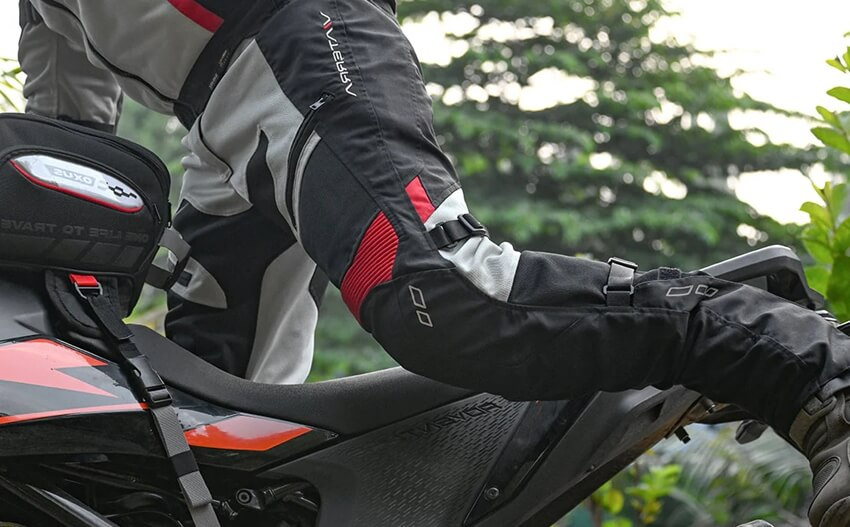
adventure & touring motorcycle pants
Adventure or touring pants are built for long days on the bike and all kinds of conditions. They’re basically a tougher, more practical version of textile pants.
I’ve always liked them for multi-hour rides or trips where the weather can’t be predicted. They usually have lots of pockets—cargo pockets, map pockets—and reinforced panels on the seat and thighs. Adjustable features at the waist and ankles make them fit better over layers.
Most adventure pants come with a waterproof membrane, like Gore-Tex, and some even have removable liners for warmth. The fit is generally looser than other pants, which makes layering easier and keeps you comfortable for hours on end. Armor is included at the knees and hips, but the main focus is on durability, comfort, and all-day usability, rather than outright slide protection.
If you’re touring or hitting the trails for an adventure ride, a good pair of adventure pants with built-in liners and ventilation makes a world of difference. They’re not about looking sleek—they’re about keeping you going no matter how long or rough the ride is.
Pros:
- Durable and versatile – handles all-weather conditions.
- Includes armor at knees and hips for crash protection.
- Adjustable features, cargo pockets, and reflective panels for long-distance comfort and safety.
Cons:
- Bulkier than regular pants or jeans – may feel heavy on shorter rides.
- High-quality models can be expensive.
Best For:
- Adventure riders cover long distances across different climates.
- Riders who need multi-season functionality and comfort over extended rides.
Materials Used in Motorcycle Pants
| Material | Description | Abrasion Resistance | Weight | Breathability | Water Resistance | Comfort / Flexibility | Typical Use |
|---|---|---|---|---|---|---|---|
| Leather | Thick natural leather, best-in-class slide protection | ★★★★★ | Heavy | Low | Moderate | Low stretch; stiff off-bike | • Track/sport riding • high-speed slides • long-lasting but requires maintenance |
| Cordura (Nylon) | High-denier nylon textile, durable and lightweight | ★★★★ | Medium | Medium | Moderate | Flexible; allows a good range of motion | • Touring, adventure • everyday textile pants • lighter than leather |
| Kevlar / Aramid | High-strength reinforcement fiber for impact zones | ★★★★★ | Medium | Low-Medium | Low | Stiff alone; usually combined with softer fibers | • Reinforcement in textile pants • adventure gear • protect against friction/heat |
| Mesh Panels | Open-weave fabric focused on airflow | ★★ | Light | High | None | Very breathable; minimal protection | • Summer-specific pants • Integrated with Cordura or Kevlar |
| Gore-Tex | Waterproof, breathable membrane layer | ★★ | Light | Medium | Excellent | Comfortable, minimal bulk | • Waterproof riding pants • touring, adventure • keep riders dry in rain |
Armor & Protection Explained (CE Ratings)
When it comes to motorcycle pants, armor and CE ratings are key to keeping you safe in a crash. Let’s break it down in simple terms so you know what to look for.
CE Level 1 vs Level 2 Armor
- Level 1: Thinner and lighter, maximum average transmitted force ~35 kN. Common in general motorcycle pants for comfort.
- Level 2: Thicker and stiffer, absorbs roughly double the impact energy (max ~20 kN transmitted). Recommended for high-speed or track use.
In short: Level 2 offers stronger protection, while Level 1 balances safety with comfort for everyday riding.
Knee Armor
- Designed to fully cover the kneecap and flex point.
- Quality pads (often D3O or foam) absorb energy and reduce bone injury.
- Ensure knee armor stays in place when seated on the bike.
Hip Armor
- Pads protect the pelvic bone, a vulnerable area in falls.
- Falls often result in the hip striking the ground or bike; armor absorbs impact and prevents injury.
- Proper pant fit keeps hip pads over the bone during riding.
Placement Matters
- Pants that are too loose can allow armor to shift, reducing effectiveness.
- Proper fit and pant length keep armor aligned over knees and hips.
- Always test armor placement by sitting on the bike and bending your knees.
CE Ratings and Safety Standards for Pants
- Motorcycle pants often carry CE certification, a European standard for abrasion and impact protection.
- CE Classes:
- Class A: Basic abrasion and impact protection—suitable for city or casual riding.
- Class AA: Higher protection for highway, sport, or serious riding.
- Class AAA: Highest protection, usually only full leather racing suits.
- Approximate abrasion test speeds:
- Class A ~45 km/h (28 mph)
- Class AA ~70 km/h (44 mph)
- Class AAA ~120 km/h (75 mph)
Even if you don’t ride at these speeds, higher CE ratings usually mean tougher fabrics and better armor.
Garment vs Armor CE Ratings
- Garment rating (A/AA/AAA): Overall material, stitching, and abrasion resistance.
- Armor rating (Level 1 or 2): Impact-absorbing pads inside the pants.
- Example: A CE AAA pant could still use Level 1 armor for comfort.
- Look for both CE markings (garment + armor) to ensure standardized protection.
Why CE-Rated Pants Matter
- Pants without CE marks may still use strong materials (e.g., 600D Cordura), but CE-rated motorcycle pants are independently tested for abrasion, tear strength, and seam durability.
- Wearing CE-rated pants means you choose protection that has been verified, not just claimed.
How to Choose the Right Motorcycle Pants
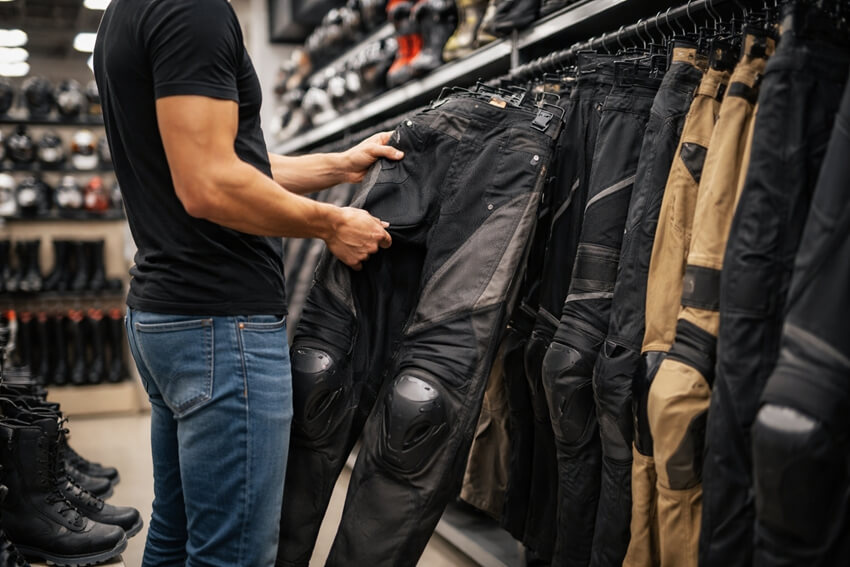
How to choose the right motorcycle pants
Selecting the right motorcycle pants involves balancing protection, comfort, and practicality. Consider the following factors:
1. Fit and Sizing
- Try pants on in a riding stance. They should be snug but not restrictive.
- Motorcycle pants are typically cut closer to the body (skinny or straight-leg styles) to prevent flapping.
- Check that armor is correctly aligned with knees bent.
- Waist size should match your measurements; some riders size up and use belts or suspenders, especially on sport bikes.
2. Riding Style
- Track/sport riders: Prefer one-piece or two-piece leather suits or leather pants for maximum abrasion resistance.
- Commuters and sport-tourers: Often choose textile or mesh pants with ventilation or waterproof features.
- Adventure riders: Look for durable, multi-season motorcycle pants with liners and vents.
- Casual riders: May opt for reinforced jeans that are safe on the bike and blend in off-bike.
3. Climate and Weather
- For hot climates, choose pants with large mesh panels or Ventilation Control System (VCS) zips.
- For cold or wet weather, look for thermal liners and waterproof membranes (e.g., Gore-Tex or laminated layers).
- Some riders invest in multiple pairs: one fully waterproof/touring pant and one breathable mesh pant.
- All-season motorcycle pants with removable liners can adapt to both hot and cold conditions.
4. Riding Frequency
- Daily riders or long-distance tourers benefit from higher-end motorcycle pants with CE armor and quality materials.
- Casual riders may start with more basic options.
5. Budget
- Avoid skimping on safety for the lowest price.
- Very cheap pants often cut corners on abrasion layers and lack certified armor.
- Look for well-known brands offering CE-certified motorcycle pants.
- Sales and closeout sites (e.g., Motorcycle Closeouts) can provide good deals on quality pants.
6. Quick Checklist
- Ensure pants:
- Fit well
- Cover ankles or fit over boots
- Include CE-rated knee/hip protectors
- Suit your typical riding conditions (venting, liners, waterproofing, etc.)
Motorcycle Pants for Different Weather Conditions
Choosing the right motorcycle pants for the weather keeps you comfortable, safe, and focused on the road. Here’s a breakdown by season and conditions:
1. Summer Pants
- Designed for maximum airflow to keep you cool in hot weather.
- Typically mesh textile motorcycle pants or lighter textiles with large vent openings.
- Mesh panels on thighs, shins, and knees allow air circulation while keeping abrasion-resistant fibers on skin-contact areas.
- Use lightweight liners or none at all.
- Ideal for hot-weather riding while still providing protection.
2. Winter Pants
- Insulated and windproof motorcycle pants retain heat and block cold wind.
- Look for pants with removable thermal liners (quilted or fleece) and wind-resistant outer shells.
- Leather naturally insulates, but many riders prefer textile motorcycle pants with zip-in thermal liners.
- Heated pants or pants with power leads are optional for extra warmth.
- Goal: trap body heat and prevent muscle fatigue and discomfort in cold conditions.
3. Waterproof / Rain Pants
- Fully waterproof motorcycle pants (rain pants or over-trousers) with sealed seams and membranes like Gore-Tex.
- Can be worn over regular pants or as the outer layer.
- Key features: fully seam-sealed construction and a reliable waterproof membrane.
- Some touring pants include a built-in waterproof layer plus removable liners, or come with separate overpant covers.
- Avoid zippers or vents that allow water in. Good rain pants keep you dry even in heavy downpours.
4. All-Season Pants
- Multi-season or 3-in-1 motorcycle pants combine several features for year-round use.
- Often include:
- Zip-out thermal liner for cold weather
- Waterproof membrane for rain
- Ventilation openings for warm weather
- In warm weather: remove the liner and open vents.
- In cold or rainy weather: add the liner and zip everything up.
- Versatility makes one pair usable year-round, especially for adventure-touring riders.
How Should Motorcycle Pants Fit?
try on motorcycle pants
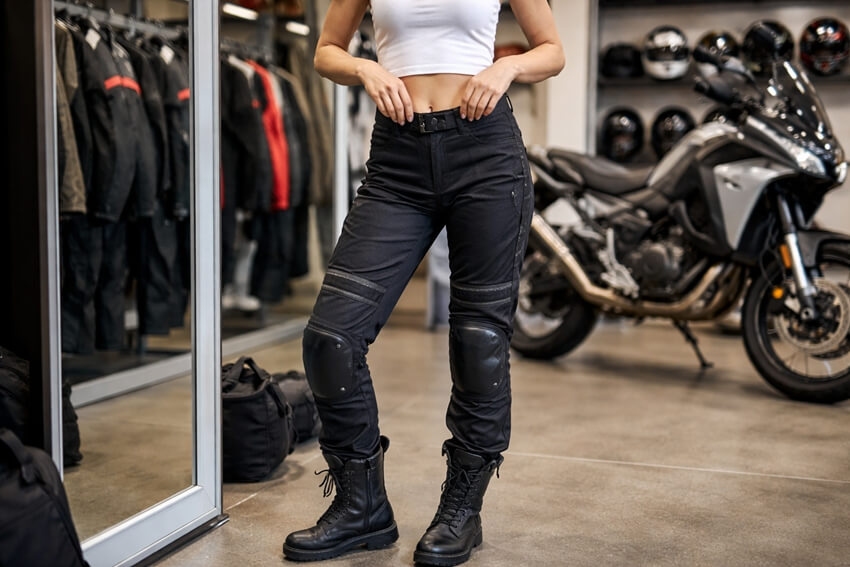
Proper fit is essential for both comfort and safety while riding.
Here’s what to consider when choosing motorcycle pants:
1. Leg Length
- Motorcycle pants are usually cut slightly longer than regular pants.
- When standing, they may bunch slightly at the bottom—this is intentional.
- Once seated on the bike, your knees bend and pull the pant legs up. Extra length ensures the pants aren’t too short while riding.
2. Armor Alignment
- Knee armor should fully cover your kneecaps when knees are bent in the riding position.
- Test by crouching or sitting on the bike. Guidelines suggest: “impact protection [should be] fully covering the joint and not slipping up or down.”
- A proper fit keeps protectors snug on knees and hips without bunching.
3. Snug vs. Loose Fit
- Pants should fit close to the body to reduce flapping in the wind.
- Motorcycle pants come in “close” or “more relaxed” fits but are generally relatively body-hugging.
- Think of them like straight- or skinny-leg pants rather than wide bootcut styles.
- Stretch panels or pre-curved knees allow movement, but avoid overly baggy cuts.
- Too-tight pants will restrict motion—always try them on and flex around before buying.
4. Waist
- Choose the correct waist size for comfort.
- Sport bike riders in a tucked position may need to size up slightly and use a belt or suspenders.
- Check that pants don’t pinch your abdomen when leaning forward.
- Cruiser riders usually find their normal waist size works fine.
5. Boot Fit
- Decide whether you’ll wear motorcycle pants over or inside your boots:
- Sport leathers often go over tall boots, sometimes zipped around them.
- Many textile or casual pants are worn inside short riding boots.
- Pants that go over boots should have narrow ankles or boot hooks.
- Pants worn inside boots often feature internal grippers or wider cuffs for a secure fit.
Care & Maintenance Tips for Motorcycle Pants
Motorcycle pants care and maintenance
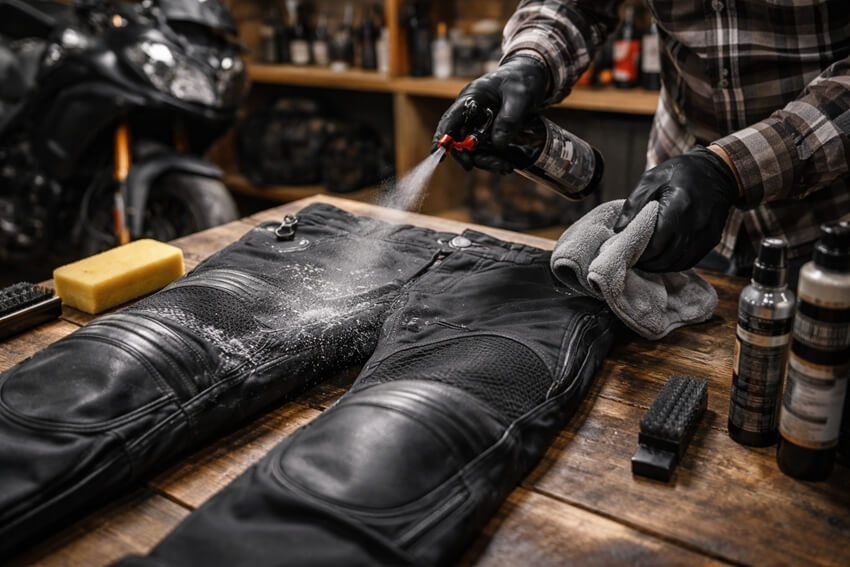
Proper care ensures that your riding pants remain protective, comfortable, and long-lasting. Follow these guidelines:
1. Washing
- Always follow the care label instructions.
- Textile and denim-style pants (with Kevlar or other liners) should be washed cold on a gentle cycle.
- Use a mild detergent; avoid bleach or dry cleaning, which can damage protective fabrics.
- Air-dry the pants fully; never use a tumble dryer, as heat can damage armor and fibers.
2. Leather Care
- Clean the exterior with a soft cloth or sponge and a leather cleaner. Avoid detergents, silicones, or waxes that can dry out the leather.
- After cleaning and drying, apply a quality leather conditioner to replenish oils and keep the leather supple. This helps prevent cracking and extends the life of your gear.
- Wipe off salt, dirt, or debris after each ride when possible.
3. Armor Maintenance
- Remove any CE-certified pads (knee, hip, etc.) before washing.
- Inspect pads regularly and replace any that are cracked or deformed.
- If armor is removable, store it separately when not in use.
- Modern pants usually have removable armor pockets for convenience.
4. Inspection & Repairs
- Periodically inspect stitching and seams for wear.
- Repair small rips or loose threads promptly.
- Reinforce areas of heavy wear (crotch, seat, knees) as needed to maintain protection.
5. Storage
- Store pants flat or hung in a cool, dry place away from direct sunlight.
- Avoid damp areas to prevent mold and odors.
- Ensure good ventilation to keep pants fresh.
Common Mistakes Riders Make
Motorcyclists sometimes make errors when selecting pants, compromising safety and comfort.
Avoid these common pitfalls:
Choosing Style Over Safety
- Prioritizing looks instead of protection is risky.
- Example: Soft jeans that appear motorcycle-ready but lack reinforcement leave you vulnerable.
Tip: Always check for reinforced abrasion layers and CE-certified impact protectors. Stylish and safe options are widely available today.
Wearing the Wrong Size or Fit
- Pants that are too loose can shift during a crash, exposing your skin.
- Too-tight pants restrict movement and may prevent armor from sitting correctly.
Tip: Try pants on and sit on your bike to ensure proper fit and comfort.
Ignoring Armor Ratings
- Some pants (especially cheap or off-brand) have no real armor or use flimsy foam.
Tip: Check for CE EN 1621-1 certified knee and hip protectors. If stock armor is inadequate, insert high-quality pads into the armor pockets.
Not Considering Climate
- Assuming one pair works for all seasons is a frequent mistake.
- Example: Heavy leather pants in summer can cause overheating; mesh pants in winter leave you freezing.
Tip: Choose season-appropriate pants, or invest in versatile, multi-season gear.
Skimping on Safety for Cost
- Opting for the cheapest pants often means sacrificing protection.
- Inexpensive pants may use low-quality materials or lack certification.
Tip: Invest in quality pants – the extra cost is worth the safety they provide.
❓ FAQ
Q: Are motorcycle pants worth it?
A: Yes. Motorcycle pants significantly reduce the risk of serious leg injuries and provide comfort and weather protection.
Q: Can I wear motorcycle pants every day?
A: Many textile pants and motorcycle jeans are designed for daily use and commuting.
Q: Do motorcycle pants protect against rain?
A: Many motorcycle pants are waterproof or include removable rain liners.
Q: Are motorcycle jeans safe enough?
A: Motorcycle jeans are safer than regular jeans but offer less protection than full motorcycle pants.
Q: How long do motorcycle pants last?
A: With proper care, quality motorcycle pants can last several years, depending on usage and material.
Conclusion
The right motorcycle pants aren’t just another piece of gear—they’re your shield on the road. Whether you’re cruising through city streets, hitting the track, or tackling long-distance tours, investing in pants with quality materials, proper armor, and the right fit can make the difference between a minor scrape and a serious injury.
So next time you gear up, think beyond style. Pick pants that protect, keep you comfortable, and suit the ride you love. Both you and your legs will thank you later.
Related Reading
Motorcycle Jackets: How to Choose and Size
How to Choose the Right Helmet: Type and Size
7 Different Types of Motorcycle Boots: How to Choose the Right Pair for You
How To Choose The Best Half Helmet Bluetooth Headset?
How To Choose the Best Motorcycle Helmet Intercom On Fodsports
Mesh Motorcycle Communication: Which One to Choose?
How to Stay Comfortable on Long Motorcycle Rides (Real Rider’s Guide)

With over 10 years of experience working on cars and trucks Item Training Supervisor Richard Reina is known around the office as one of our technical experts & real an "automobile person".
His rate of interest began, in his very own words, "at the age of two when his father educated him the distinction in between a Chevy and a Ford. Since then it's been cars regularly."
As a serious lover of practically all things with a motor Richard can address nearly any kind of inquiry related to car upkeep, fixing, or restoration & is a fact professional in electric motor background.
You maybe like to read:
Fodsports Brand Month: Unbeatable Deals and Top-Notch Service
Discover Fodsports Brand Month July and August mark a special occasion for motorcycle enthusiasts and tech lovers alike. Welcome to Fodsports Brand Month! This event is dedicated to celebrating everything that makes Fodsports a leading name in the motorcycle communication industry. Get ready for a fantastic promotions, exceptional service from Fodsports. Let's insights into Fodsports' […]
Grossglockner High Alpine Road in Fall: Austria Motorcycle Riding Guide
Autumn transforms Austria’s Grossglockner High Alpine Road into a spectacular mountain destination. Golden larch trees brighten the slopes, crisp Alpine air can reveal dramatic mountain views, and 36 hairpin bends make the journey memorable for motorcycle enthusiasts. Yet autumn also brings unpredictable weather, cold pavement, and possible road closures. For riders planning an Austrian Alps […]
Black Forest High Road Motorcycle Guide: Best Autumn Ride, Scenic Routes and Riding Tips in Germany
Few places in Germany combine flowing mountain roads, colorful forests, traditional villages, and peaceful viewpoints as perfectly as the Black Forest High Road (Schwarzwaldhochstraße B500). In autumn, this legendary route transforms into a spectacular motorcycle destination, with golden beech forests, misty valleys, and panoramic views stretching toward the Rhine Valley and even France on clear […]
Ultimate Dolomites Autumn Cycling Guide: Best Fall Foliage Routes & Expert Gear Blueprint
The Italian Dolomites in autumn transform into a sensory masterpiece. As the chaotic summer crowds dissipate between mid-September and late October, the entire Alpine region ignites with golden larches, fiery maples, and stark white limestone peaks. This fleeting shoulder season provides the ultimate window for an epic Dolomites cycling tour and foliage chasing. Compared to […]
Route des Grandes Alpes in Fall: France Motorcycle Riding Guide
Few motorcycle routes combine high mountain passes, autumn forests, dramatic valleys, and Mediterranean scenery as well as the Route des Grandes Alpes in France. Stretching about 720 km from Thonon-les-Bains near Lake Geneva to Nice, the route crosses 18 major Alpine passes and reaches 2,764 meters at the Col de l'Iseran. For motorcycle riders, autumn can […]