The motorcycle communication systems field just got a significant upgrade with the release of the Fodsports FX7. This state-of-the-art Bluetooth mesh intercom is packed with many advanced features and techs. It will revolutionize the way riders communicate and enjoy their rides. Whether you're a solo rider or part of a group, the FX7 offers unparalleled […]

Motorbike vs Motorcycle: What’s the Difference?
January 17, 2026
Motorbike vs. motorcycle is a debate that often confuses new riders. Okay, so people use the terms 'motorbike' and 'motorcycle' interchangeably, and most of the time, they do. But, depending on where you are, the bike scene, or just what you like, one word might just sound better.
Some riders will tell you that the words hint at different kinds of bikes – like how big the engine is, how fast it goes, how heavy it is, or what it's like to ride. That's normally where people start to get confused, especially if they're just getting started.
But does it even matter what you call it? Is there a real difference, or are motorbike and motorcycle just two ways of saying the same thing? If you've ever wondered which one makes more sense, this article will explain it simply for you.
Table of Contents
Motorbike vs Motorcycle: What’s the Difference?
There is no technical or legal difference between a motorbike and a motorcycle.
Both terms refer to the same type of two-wheeled, engine-powered vehicle. In most countries, they are classified, registered, and insured exactly the same way.
The difference is mainly about language, region, and everyday usage—not engine size, speed, or performance.
Motorbike vs Motorcycle Around the World
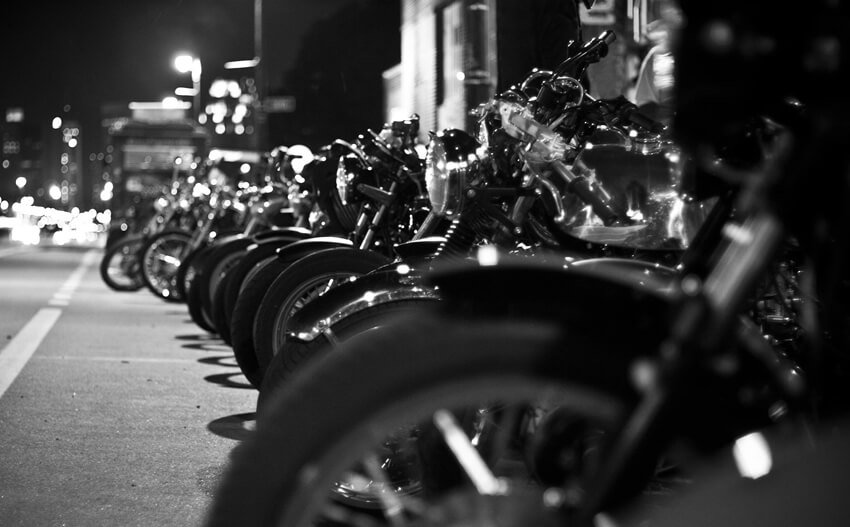
Motorcycle and motorbike mean the same thing
Motorbike
In countries like the UK and Australia, “motorbike” is the word you’ll hear most often in casual conversation.
People might say, “I’m taking my motorbike out for a spin this weekend” without thinking twice.
It’s friendly, informal, and rolls off the tongue easily—perfect for chatting with friends or describing your ride in day-to-day talk.
Motorcycle
On the other hand, “motorcycle” is the more formal term, especially in North America. It’s the word you’ll see on legal documents, titles, insurance papers, and DMV forms.
If you’re buying a bike, registering it, or talking to insurance companies, “motorcycle” is the term that will almost always be used.
So, while the two words mean the same thing, one feels casual, and the other formal, and your choice depends on context.
Common Perceptions and Informal Distinctions
Even though there’s no legal difference, some riders like to talk about bikes in a way that suggests distinctions.
These are mostly informal and based on perception rather than rules. But they’re worth knowing, especially if you’re talking to other riders.

motorbike vs motorcycle
Based on Engine Size
A lot of riders casually refer to big, powerful bikes as motorcycles and smaller, lighter ones as motorbikes.
In reality, a 125cc “starter bike” is legally a motorcycle just like a 1000cc sport bike.
But people like to categorize them this way when chatting or giving advice.
Based on Use
Some use the terms depending on where and how the bike is ridden.
- For long highway trips or touring, you’ll often hear “motorcycle.”
- For short city rides or casual commuting, “motorbike” feels more natural.
It’s about perception and context, not law.
Based on Size and Weight
Heavier and bulkier bikes, such as cruisers, touring bikes, and sport bikes, are often called motorcycles.
These bikes are usually larger and built for power, long-distance riding, or high speeds.
Smaller and lighter bikes are sometimes referred to as motorbikes. They are generally easier to handle in traffic and are often considered more beginner-friendly.
Many riders use this distinction as a simple way to set expectations for handling and comfort.
Top Speed and Power
High-speed, high-performance bikes are often called motorcycles.
When people use this word, they’re usually talking about something built for power and speed.
Slower and less powerful bikes, on the other hand, are more likely to be called motorbikes.
The difference isn’t official at all, but it helps riders quickly get a sense of what kind of bike someone is referring to.
Safety Gear Needs
Regardless of the term, this isn’t a hard rule—just a common way riders talk about different bikes.
When people think of a motorcycle, they often picture full protective gear: a proper helmet, riding jacket, pants, gloves, and boots.
Since these bikes are usually faster and more powerful, wearing full gear feels like the obvious choice.
Smaller or lighter motorbikes, especially those used in city traffic, are sometimes viewed differently.
Because they tend to run at lower speeds, some riders believe a helmet alone is enough.
This mindset is more about perception and habit than real safety. After all, even a small, low-powered bike can lose balance or go down in traffic.
Slang and Rider Culture
Enthusiast communities have their own slang.
For instance, Harley-Davidson riders rarely call their bikes motorbikes – they might say hog or chopper instead.
It’s all part of rider culture, but it doesn’t reflect any mechanical difference.
Motorbike vs Motorcycle vs Scooter vs Moped
Two-wheeled vehicles come in many forms.
At first glance, they can look similar, especially if you’re new to riding.
But once you understand the key differences, choosing the right one becomes much easier—and far less confusing.
| Type | Engine Size | Top Speed | Transmission | License Required | Best For |
|---|---|---|---|---|---|
| Motorcycle / Motorbike | 125cc – 1000cc+ | High (60–180+ mph) | Manual (mostly) | Motorcycle license | Highway riding, touring, performance |
| Scooter | 50cc – 250cc | Low to medium (30–80 mph) | Automatic (CVT) | Motorcycle license (varies by cc) | City commuting, beginners |
| Moped | Up to 50cc | Low (25–30 mph) | Automatic or single-speed | Permit or basic license (varies) | Short trips, urban transport |
License and speed limits vary by country and state. Always check local regulations before riding.
Motorcycle / Motorbike

motorcycle
“Motorcycle” and “motorbike” refer to the same category of vehicle. These are traditional two-wheeled machines with an engine mounted in a frame that the rider sits astride, with feet on pegs.
- Engine size: Ranges from small (around 125cc) to very large (1000cc or more)
- Riding position: Rider sits on top of the frame, usually leaning slightly forward
- Use: Everything from city riding to highway cruising and long-distance touring
- Legal definition: This is the broad category that technically includes scooters and mopeds as well
In everyday language, people often picture sport bikes, cruisers, or touring bikes when they hear “motorcycle,” but legally, the term is much broader.
Scooter

scooter
A scooter is a type of motorcycle with a different layout that focuses on comfort and ease of use.
- Frame: Step-through design with a flat floorboard
- Transmission: Usually automatic (CVT), making it beginner-friendly
- Engine size: Commonly 50–250cc
- Features: Leg shields, upright seating, and built-in storage
- Best for: City commuting and short trips
In many regions, scooters with engines of 50cc or smaller may legally be classified as mopeds.
Moped
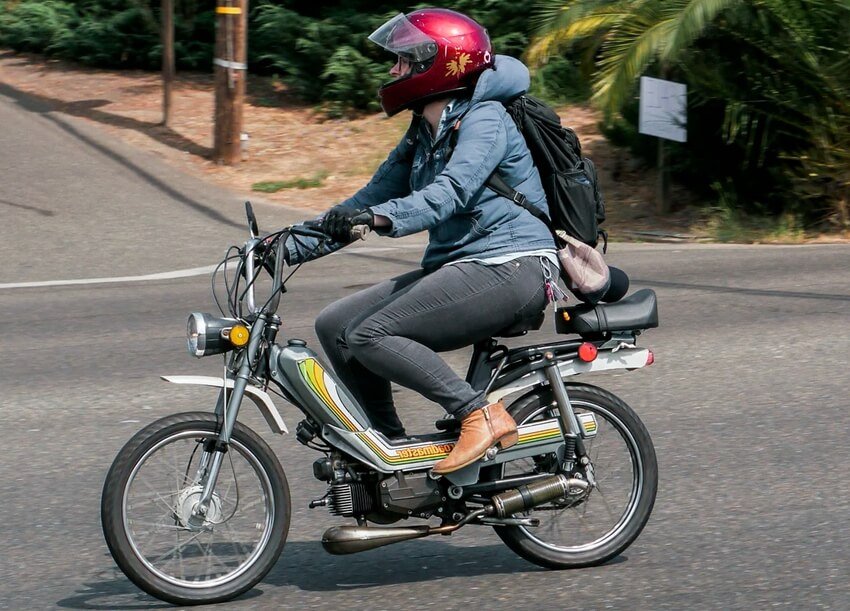
moped
The term “moped” comes from motor and pedal, and originally described a bicycle-style vehicle with a small engine.
- Engine size: Usually 50cc or less
- Top speed: Limited, often around 28–30 mph
- Design: May have pedals or resemble a very small scooter
- Use: Short, low-speed urban trips
- Licensing and insurance: Often simpler and cheaper
What Should You Choose: Motorbike Vs Motorcycle Vs Scooter?
So, you’ve learned the difference between a motorbike and a motorcycle, and maybe you’ve even peeked at scooters and mopeds. Now the big question is: which one should you actually get? Let’s break it down.
Motorcycle
If you’re after long rides, highway cruising, or even some spirited cornering on open roads, a “motorcycle” is usually your go-to.
Think sport bikes, cruisers, or touring machines. They tend to have bigger engines, more power, and longer ranges, so you can cover serious mileage without constantly stopping.
Sure, they can be heavier and need a bit more skill to handle, but the reward is smooth, confident riding at higher speeds.
If adventure and versatility are your priorities, a proper motorcycle is hard to beat.
Motorbike
Now, the term “motorbike” is often used casually, especially in the UK or Australia, but remember—it’s still legally a motorcycle.
When people say motorbike, they often mean smaller, lighter bikes: easy to maneuver in traffic, perfect for quick city rides, and beginner-friendly.
If you’re just commuting, popping around town, or don’t want a beast of a machine, a motorbike-sized ride is ideal. It’s nimble, fun, and won’t intimidate you on your first few rides.
Scooter
Then there’s the scooter. Automatic transmission, step-through frame, upright seating—scooters are made to be simple and practical.
They’re perfect if your rides are mostly short trips in the city, zipping through traffic, or if you want a very low-maintenance, approachable ride.
Don’t be fooled by their small size—they can still get you where you need to go, but they won’t give you that adrenaline rush of a bigger bike.
For beginners, or anyone who values convenience over power, scooters are often the easiest way to start riding.
❓FAQ
🏍️Q: Are motorbikes and motorcycles the same? Are motorbikes smaller or weaker than motorcycles?
A: There is no technical or legal difference between a motorbike and a motorcycle. Both terms describe the same type of two-wheeled, engine-powered vehicle.
The difference is mainly about language and regional usage, not engine size, speed, or performance.
🛵Q: Why do people say “motorbike” instead of “motorcycle”?
A: It’s mostly a regional and cultural habit. In the UK, Australia, and many other regions, “motorbike” is commonly used in everyday conversation.
In the U.S., “motorcycle” is more formal and appears on legal documents, insurance papers, and registrations. Both terms are correct.
🔧Q: Do big brands avoid calling their bikes “motorbikes”?
A: Not really. Manufacturers focus on branding and marketing language, while riders use slang.
Harley-Davidson riders might say “hog,” others just say “bike.” Technically, any two-wheeled engine-powered bike can be called a motorbike, regardless of brand.
🛴Q: Is a scooter the same as a motorbike?
A: Not exactly. A scooter is a subtype of motorcycle. Scooters usually have a step-through frame, automatic transmission, and smaller engines, making them ideal for city riding.
However, in legal terms, many scooters are still classified as motorcycles.
🚲Q: What is the difference between a scooter and a moped?
A: A moped is usually limited to around 50cc and has a much lower top speed, often under 30 mph.
Scooters typically have larger engines, higher speeds, and require a full motorcycle license. Regulations vary by country and state.
📜Q: Do I need a motorcycle license to ride a motorbike?
A: Yes. In most regions, riding any motorcycle or motorbike on public roads requires a motorcycle license or permit.
Some low-powered mopeds may have lighter requirements, but scooters and motorbikes generally require proper licensing.
🏙️Q: Are motorbikes or motorcycles better for city commuting in the US?
A: For city commuting in the U.S., smaller motorcycles or motorbikes are usually more practical.
Scooters can also be a convenient choice for short urban trips, especially if you prefer automatic transmission and low-maintenance riding.
⚡Q: Are electric motorbikes considered real motorcycles?
A: Yes. Electric motorcycles meet the same legal definition as gas-powered motorcycles.
Power source does not affect classification, and many electric bikes offer performance comparable to traditional motorcycles.
💰Q: Is it cheaper to insure a motorbike than a car?
A: Often yes, motorcycles can have lower premiums than cars because they are lighter and you usually carry less of a claim on them.
Small-engine bikes are typically cheaper to insure than big cruisers or sports bikes. However, factors like age, location, and driving record also affect cost.
🛡️Q: My friend says they need less gear for a motorbike. Is that true?
A: No. Any motorcycle rider should wear the same protective gear regardless of the bike’s name.
Safety gear should not depend on bike size. Even low-powered motorbikes can crash or lose balance in traffic.
Conclusion
In general, there is no real difference between a motorbike and a motorcycle. Both terms refer to the same type of two-wheeled vehicle, and they are often used interchangeably.
The words people choose usually depend on regional habits and everyday perception.
In the United States, “motorcycle” is the more common term, while in the UK and Australia, “motorbike” is used more frequently. Some riders also associate larger, more powerful bikes with the term motorcycle, and smaller, lower-powered bikes with motorbike, especially for city riding.
These distinctions, however, are based on common usage rather than technical or legal differences.
With over 10 years of experience working on cars and trucks Item Training Supervisor Richard Reina is known around the office as one of our technical experts & real an "automobile person".
His rate of interest began, in his very own words, "at the age of two when his father educated him the distinction in between a Chevy and a Ford. Since then it's been cars regularly."
As a serious lover of practically all things with a motor Richard can address nearly any kind of inquiry related to car upkeep, fixing, or restoration & is a fact professional in electric motor background.
You maybe like to read:
Fodsports Brand Month: Unbeatable Deals and Top-Notch Service
Discover Fodsports Brand Month July and August mark a special occasion for motorcycle enthusiasts and tech lovers alike. Welcome to Fodsports Brand Month! This event is dedicated to celebrating everything that makes Fodsports a leading name in the motorcycle communication industry. Get ready for a fantastic promotions, exceptional service from Fodsports. Let's insights into Fodsports' […]
Adirondack Mountains in Fall: Highlights and Motorcycle Riding Guide
Few places in New York offer a better combination of mountain roads, lakes, forests, and fall color than the Adirondack Mountains. For motorcycle riders, autumn brings an extra layer of appeal: winding roads surrounded by red, orange, and golden foliage. The Adirondack Park covers about 6 million acres, with more than 3,000 lakes and roughly […]
Vermont Route 100 in Fall: Highlights and Motorcycle Riding Guide
Vermont Route 100 is one of New England’s most rewarding roads for a fall motorcycle ride. Stretching roughly 216 miles through the Green Mountains, the route connects mountain scenery, colorful forests, farms, covered bridges, and small Vermont towns. For motorcyclists, however, a great fall ride requires more than choosing a scenic road. Autumn brings colder […]
Kancamagus Highway Motorcycle Trip: Autumn Foliage, Route and Safety Tips
Few American motorcycle roads combine mountain scenery, flowing curves, forest color, and accessible riding as effectively as New Hampshire’s Kancamagus Highway. In autumn, the route changes from a beautiful mountain road into a moving landscape of red maple, golden birch, dark evergreen forest, rocky overlooks, and rushing river valleys. Known locally as “The Kanc,” this […]
Fall Motorcycle Riding Tips: How to Ride Safely in Autumn
Fall is a great season for motorcycle riding. Cooler temperatures, colorful scenery, and comfortable roads make autumn an ideal time to explore. However, the change of season also brings new riding challenges. Wet leaves can reduce traction, temperatures can change quickly, daylight becomes shorter, and wildlife may be active near roads. With a little preparation, […]