The motorcycle communication systems field just got a significant upgrade with the release of the Fodsports FX7. This state-of-the-art Bluetooth mesh intercom is packed with many advanced features and techs. It will revolutionize the way riders communicate and enjoy their rides. Whether you're a solo rider or part of a group, the FX7 offers unparalleled […]

5 Common Motorcycle Cornering Mistakes Motorcyclists Make
July 15, 2025
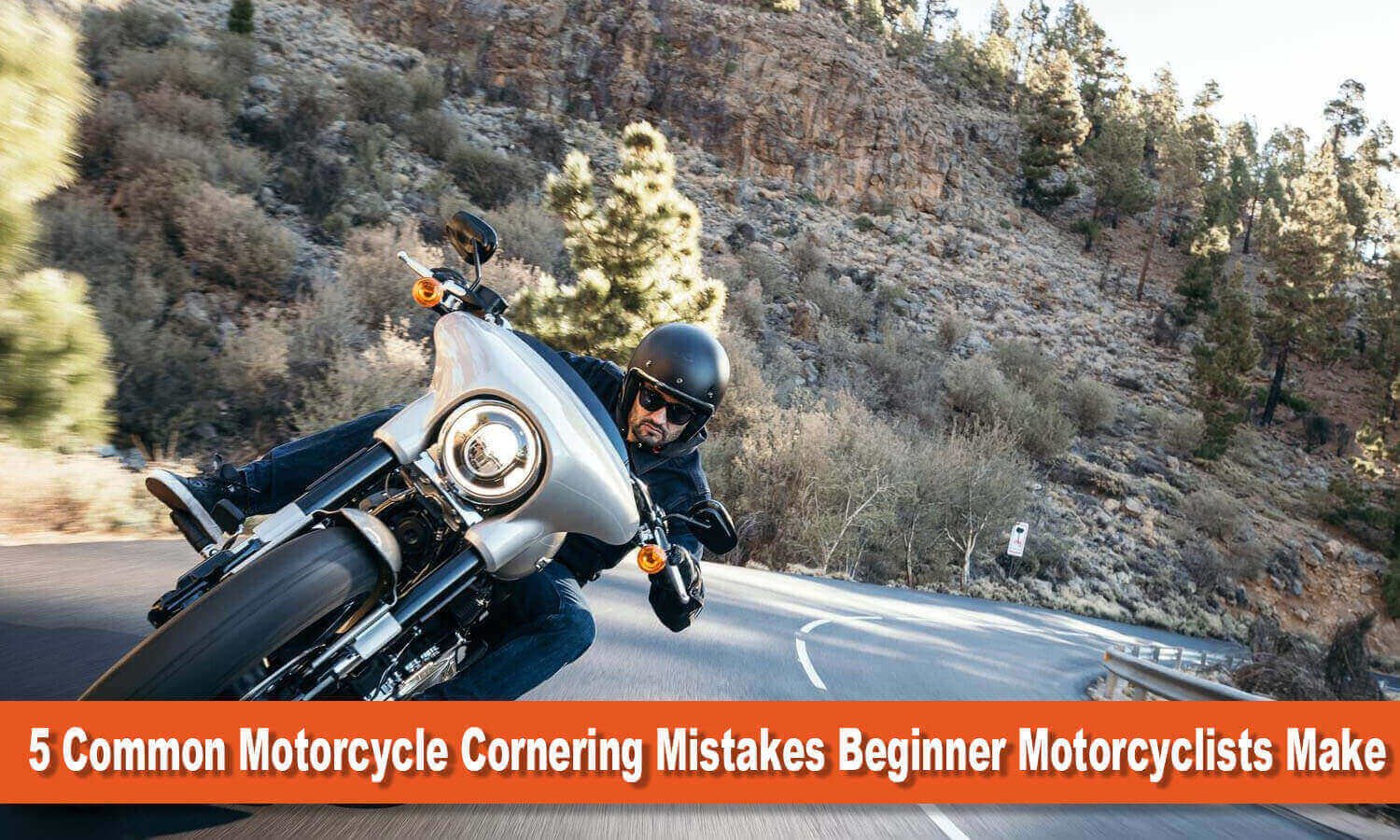
Cornering on a motorcycle is super fun, but it can be tricky, especially if you've only been riding for a few months. A lot of new riders mess up turns or lose control because they make common errors. Let's talk about five of the most common mistakes people make when cornering. Knowing what these are and how to fix them will not only keep you safer but also make you feel way more confident when you're going through turns.
Table of Contents
5 Common Motorcycle Cornering Mistakes
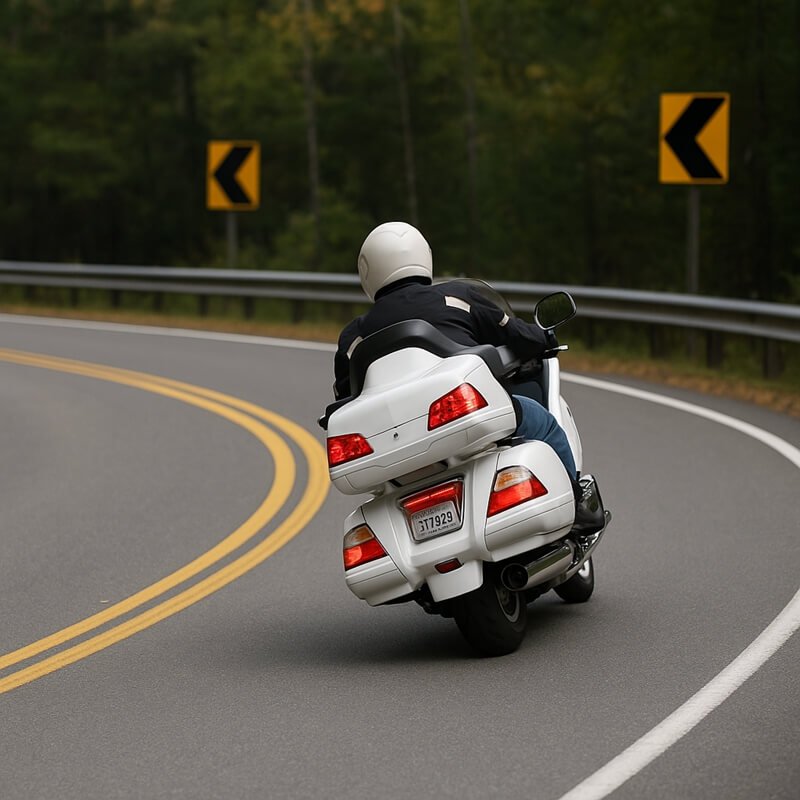
a rider on a touring motorcycle leaning into a curve.
1. Riding Too Fast (Improper Corner Entry Speed)
One of the biggest mistakes is coming into a turn going way too fast. If you do that, you'll quickly have to slam on the brakes or lean way over, which usually means you'll go off course or lose control.
The key is to start your turn at a speed where you can smoothly speed up as you come out of the corner. Basically, you should slow down a bit before you start turning. Like, maybe 10–15% slower than you would go on a straight part of the road. That way, you have some space to easily give it some gas through the curve.
One coach said that new riders often go into a turn too fast for how much they feel okay leaning. If you realize you're going in too fast, don't freak out and slam on the brakes. Instead, just try to let off the gas little by little to slow yourself with the engine braking, and then lean smoothly.
Trust that your bike will grip the road and lean a bit harder. This might be the only way to stay on the road if you're already going too fast for the turn.
Riding Advice
- Always brake before you get to the turn, not while you're in it. Once you start turning, keep the gas steady. Don't suddenly grab the brakes or let off the gas in the middle of the turn, because that can make your bike unstable.
- Keep some extra speed for when you exit the turn. If you start a little slower, you can speed up sooner and safely get out of the turn.
2. Poor Cornering Line (Bad Apex and Lane Choice)
Beginners often don't pick the right path through turns. Usually, the safest way to go is to start on the outside, hit the apex (tightest part) of the turn on the inside, and then go back out toward the outside of your lane.
A typical mistake is turning in too early. When riders cut the corner and hit the inside part too soon, their bike ends up pointing toward the outside edge of the road too early. To stay in their lane, they have to lean even more after they've already passed the tightest spot – which is exactly when they should be straightening up.
This often makes them slow down or even crash. But if you turn in a bit later, it naturally points your bike where you want to go when you exit the turn, which makes it safer and faster.
Common line errors include:
- Turning in too soon: Cutting inside too early sends the bike off the road on the way out.
- Staying too far outside: Forgetting to get close to the inside makes you turn more and kills your speed.
- Switching lanes a lot: Moving back and forth between different spots in linked turns can mess up your control and how you see things.
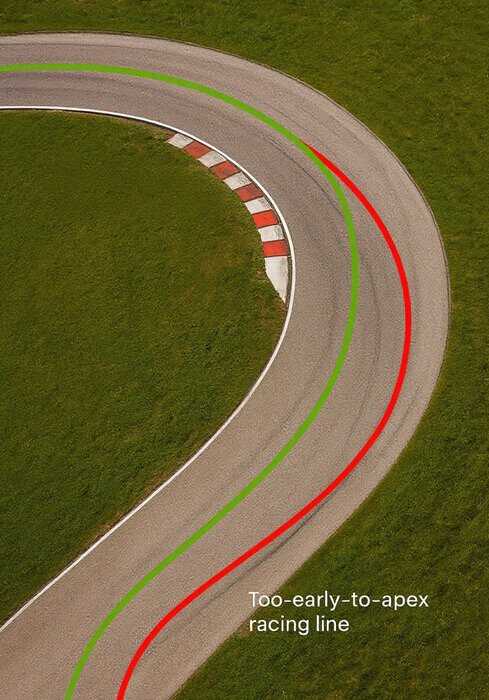
The green path straightens the curve, while the red path (too early to apex) leads off the road.
If you plan your path, you make the curve straighter and save some grip. Ken Condon, who has been teaching people how to ride for 25 years, says that riders who turn in too soon often end up going toward the outside of the road, and that's a common reason why people crash in corners.
A better idea is to wait a little bit to turn in. Look ahead to where you want to go, and then turn the bike so it naturally points where you want to exit. After a while, aiming for the right spot to start turning (usually near the outside edge of your lane) and the tightest spot in the middle of the turn will become easy.
3. Fear of Leaning (Stiff Body Position)
A lot of new riders are scared to lean the bike over enough. This fear often makes them stiff.
If your arms or body are stiff, the bike won't want to turn, and you won't lean as much as you need to. But the truth is, motorcycles need to lean to stay balance centripetal forces in a turn. When you're in the right position, it makes it way easier to lean and stay stable.
To avoid this, keep your upper body chill and look where you want to go. Bend your elbows and let the bike tilt under you. Slide your hip on the inside of the turn a bit toward the tightest spot, and point your knee on the inside toward where you're turning. Moving your body like this can actually make you lean 10–15° less for the same speed.
In other words, if you lean your body in and don't hold on so tight, the bike will lean more easily. Riders who stay stiff make the bike stay more upright, so it takes more effort to turn.
One coach says, If you fight the lean with your arms or body, the bike won't respond as well. Instead, trust that your motorcycle can lean safely. Start with small leans in easy turns and get more confident over time.
One rider with a lot of experience says that once you decide to lean, you can actually lean quickly and smoothly. Do some practice in a parking lot or do slow exercises like figure-8s to get used to how it feels when the bike is leaning.
4. Mid-Corner Throttle and Brake Errors
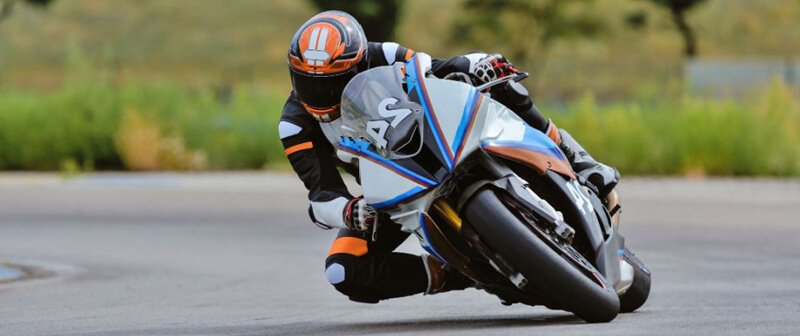
motorcycle leaning
If you're jerky with the gas or brakes while you're turning, that's a big reason why you might run wide. Once you're actually in the turn, try to keep the gas steady (or smoothly roll it on).
If you suddenly speed up or crank the throttle after you pass the middle of the turn, the bike will get pushed to the outside because the weight shifts off the front tire.
On the other hand, if you chop the throttle (close it super fast), the weight goes forward, which messes with the suspension and could make you lose traction in the front.
Same deal with grabbing the brakes when you're leaning – you could lock up the wheel or screw up the suspension.
Someone wrote in a riding guide, When you start a turn, keep the gas steady – speeding up fast pushes the bike wide, and closing the throttle too fast can cause compression and make you lose grip.
Don't slam on the brakes mid-turn: Braking hard when you're leaning over makes the suspension dip down, and the bike will drift. If you need to slow down, just let off the gas a little early, or use the engine to slow you down by staying in a lower gear.
Don't just kill the throttle: If you give it too much gas, you'll go wide. If you cut the gas completely, the front tire will dig in and maybe skid. Instead, if you're going too fast, just ease off the gas gently and trust the bike to slow down.
Being smooth with how you control things keeps the suspension balanced. If you mess up a bit and start going wide, keep looking where you want to go and steer a little to fix it. Don't freak out – small steering changes and keeping the gas steady can usually get you back on track without a problem.
5. Poor Vision (Target Fixation)
You go where you look. A lot of new riders mess up by only looking at the road right in front of the tire or staring at something they want to avoid. That’s called target fixation – your eyes lock on something (like the lane lines, some paint, or something in the road), and your bike goes right toward it.
The fix is to look through the turn: focus on where you want to end up (and check the middle of the turn) instead of the stuff you don’t want to hit. One training thing suggests looking at three points when you turn: look through to where you're going, glance at the middle of the turn, and then check where you are right now.
Looking where you should makes turning way safer. For example, starting on the outside of the lane gives you a better view of the turn, so you see problems and slow down before it's too late. If you look far ahead, you'll stay calm, and the bike will naturally follow where you're looking. But if you stare at a ditch or the side of the road, you might end up steering right into it without even meaning to.
Like one teacher said, Stare at the EXACT spot you want to go... and if you're doing okay, the bike will get you there.
Riding Advice
- Keep your head up and look through the turn to where you want to come out. Try moving your eyes a little from side to side as you go through the turn – from where you're going to the side of the road – so you aren't just staring at one thing.
- Start slowing down way before the middle of the turn. If you see rocks or oil, slow down even earlier. When you look ahead, you can change how you're turning or how fast you're going slowly, so you don't have to panic later.
- If you get good at looking ahead, you can fix problems early and not have to steer crazy in the middle of the turn, which could send you off the road.
Conclusion
If you're new to riding, you can get good at turning safely just by keeping these things in mind.
Always start turns at a safe speed (slower than you think you need to go). Pick a smooth path, starting outside, going inside, and then going outside again, waiting to turn in so the bike points to where you want to end up. Relax and let the bike lean by moving your weight slightly. Keep the gas steady and don't do anything sudden while you're turning. And look through the turn to where you want to go, not at the stuff you're scared of – that'll stop you from target fixation.
If you practice and pay attention to how you're doing things, every turn will feel controlled and confident instead of a gamble.
Everyone messes up sometimes, but if you know these five common mistakes, you can really cut down on the chances of it happening. Pay attention, ride safe, and let your eyes show you the way – you’ll be making smooth turns instead of ending up on the side of the road.

Rodney L is a technical writer and product consultant with over a decade of experience in the motor industry. Rodney is a fan of performance machines that run fast and loud and an expert in all things custom. His numerous articles and write-ups are available at our knowledge base. Whether it’s something wrong with your motorcycle or you are building a custom bike, you can trust Rodney’s experience.
You maybe like to read:
Fodsports Brand Month: Unbeatable Deals and Top-Notch Service
Discover Fodsports Brand Month July and August mark a special occasion for motorcycle enthusiasts and tech lovers alike. Welcome to Fodsports Brand Month! This event is dedicated to celebrating everything that makes Fodsports a leading name in the motorcycle communication industry. Get ready for a fantastic promotions, exceptional service from Fodsports. Let's insights into Fodsports' […]
North Coast 500 Motorcycle Guide: Exploring Scotland in Autumn
Autumn transforms Scotland’s North Coast 500 into a memorable destination for motorcycle touring. Golden Highland forests, winding coastal roads, rugged mountains, and quiet fishing villages create a striking backdrop for an autumn ride. A North Coast 500 motorcycle trip, however, requires more than a scenic route. Rain, strong winds, wet leaves, and shorter daylight hours […]
Transalpina in Autumn: Romania’s Ultimate Motorcycle Riding Guide
Autumn brings a different atmosphere to Transalpina, Romania’s spectacular high-mountain road. Golden forests cover the lower slopes, open alpine ridges reveal sweeping Carpathian views, and winding asphalt makes this route a memorable destination for motorcycle touring. But an autumn ride requires more than choosing a scenic road. Temperatures can drop quickly at altitude, mountain weather […]
Motorcycle Camera Buying Guide: How to Choose the Right Camera for Your Ride
Every motorcycle ride has a story worth capturing: a winding mountain road, a weekend adventure with friends, or an unexpected moment in traffic. But choosing the right motorcycle camera is not simply about buying the model with the highest resolution. Shaky footage, poor audio, short battery life, and unreliable mounting can turn an exciting ride […]
Transfăgărășan in Autumn: Romania’s Ultimate Motorcycle Riding Guide
Autumn transforms Romania’s Transfăgărășan Highway into a dramatic mountain journey, with golden forests, rugged peaks, winding asphalt, and sweeping views across the Făgăraș Mountains. For motorcycle riders, it offers a memorable combination of technical corners, spectacular scenery, and opportunities to explore the Romanian countryside. But an autumn ride requires more planning than a summer trip. […]