Riding in a group is thrilling, but without clear communication, even the best rides can turn chaotic. That’s where motorcycle intercom systems come in, letting you talk with your group, share GPS directions, listen to music together, and stay safer on the road. Whether you’re riding with a single friend or leading a pack of […]

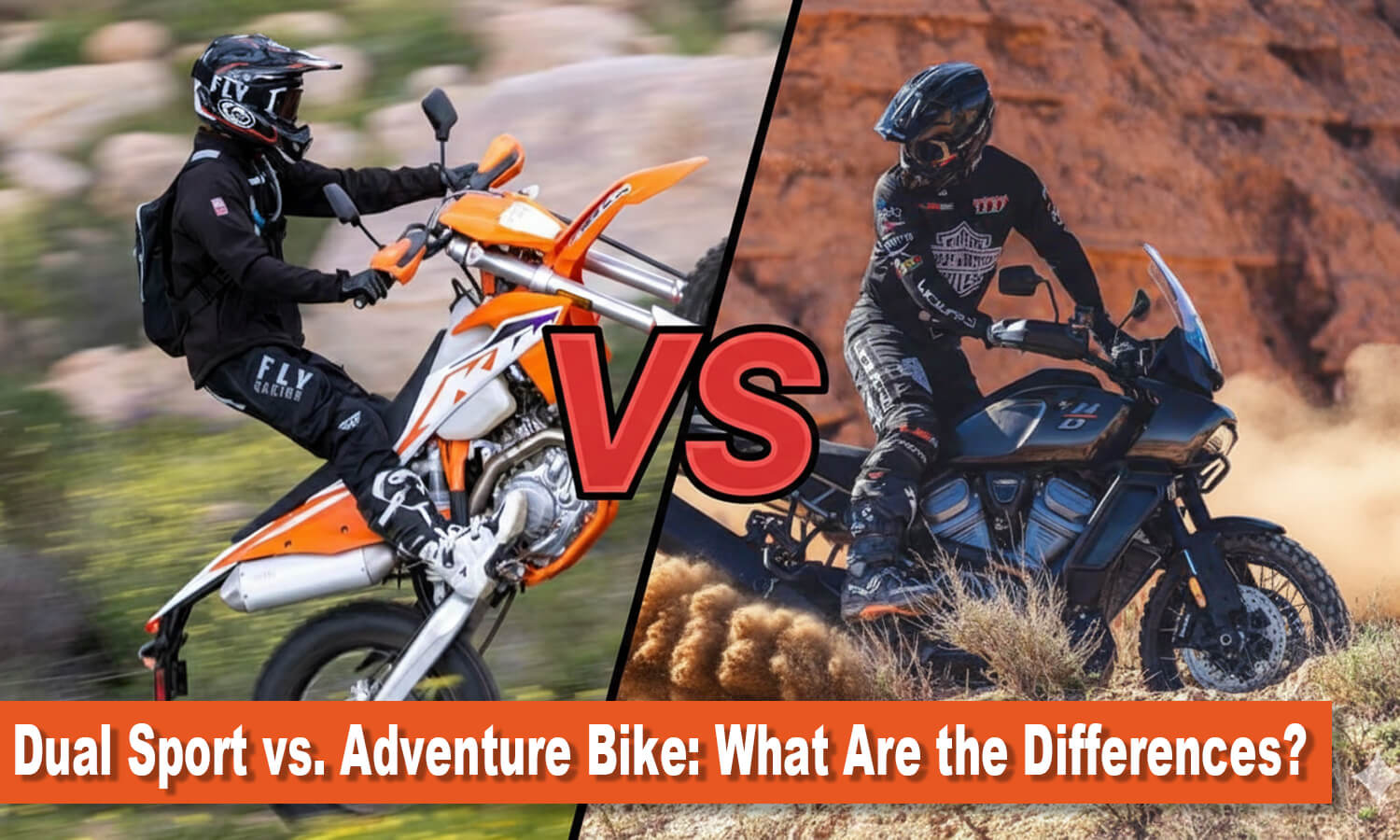
Dual Sport vs. Adventure Bike: What Are the Differences?
The adventure starts with choosing the right bike. Dual sport vs. adventure bike—which one fits your riding style? While both promise off-road freedom, their strengths are worlds apart. From tackling tough trails to conquering long highways, your choice makes all the difference.
This guide will tell you what makes each bike different, so you can pick the one that's best for you!
Table of Contents
What Is a Dual Sport Motorcycle?
A dual sport motorcycle is a lightweight, street-legal bike designed primarily for off-road riding while still being capable on public roads.
Born from dirt bikes, they're light, street legal, and built tough for off-road fun. They're pretty simple to keep running, too. Most can handle trails, gravel, back roads, and even a bit of highway driving.
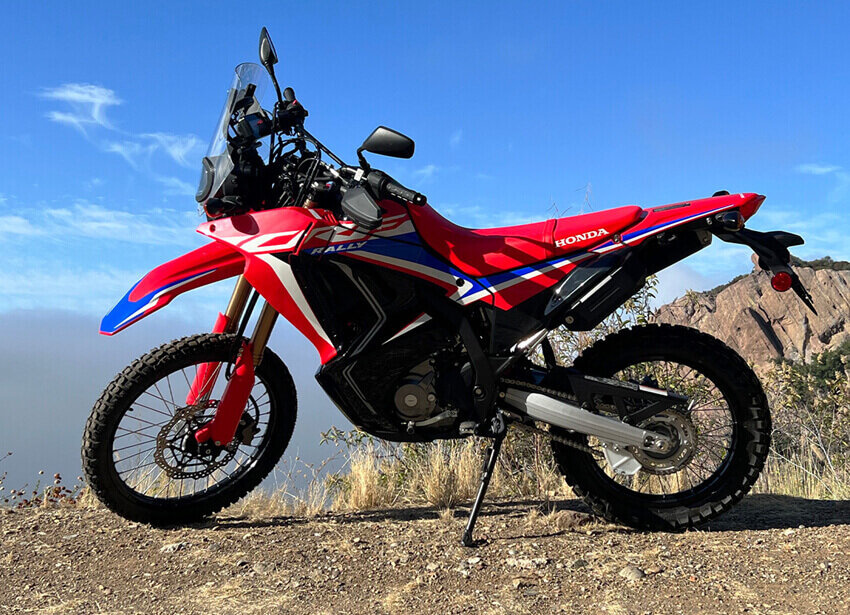
dual sport motorcycle
Key Characteristics of Dual Sport Bikes
- Lightweight and narrow design
- Long suspension travel
- High ground clearance
- Simple engines (usually single-cylinder) and minimal electronics
- Street-legal lights, mirrors, and signals
- Low fuel tank capacity (2–3 gallons)
Popular Dual Sport Models
- Honda CRF300L
- Yamaha WR250R
- Suzuki DR-Z400S
- Kawasaki KLX300
Dual sport bikes are often chosen by riders who want maximum off-road ability with basic road legality.
What Is an Adventure Motorcycle?
An adventure bike (ADV) is designed for long-distance travel across mixed terrain, including highways, dirt roads, gravel, and mild off-road trails.
They're all about being comfy, going far on a tank of gas, and having cool tech, not just tearing it up off-road. Usually, they're bigger, heavier, and pack more power than your average dual-sport bike.
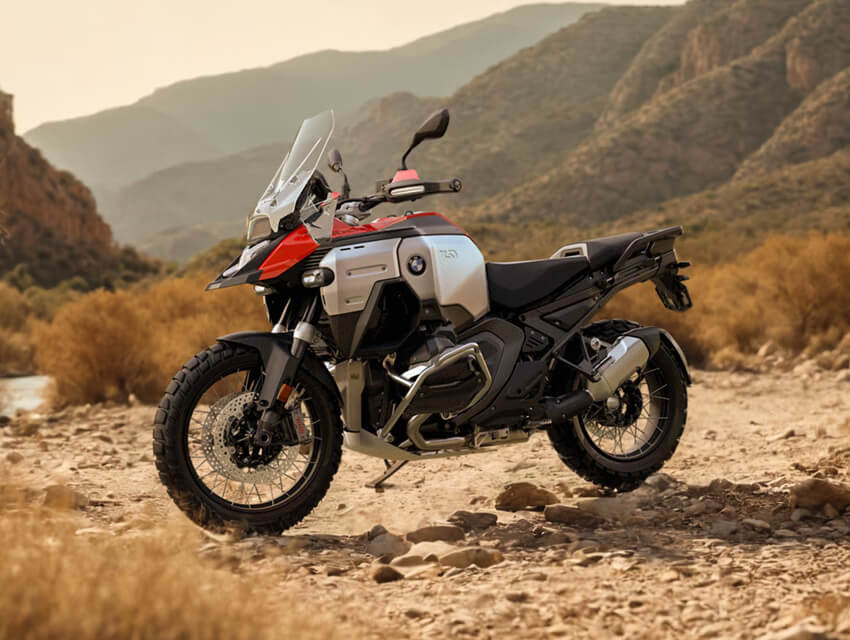
adventure bike
Key Characteristics of Adventure Bikes
- Larger engines (often 650cc–1300cc, twin or boxer engines)
- Comfortable upright riding position with adjustable seats
- Wind protection and full fairings
- Advanced electronics (ABS, traction control, riding modes)
- Designed for luggage and passengers
- Higher fuel capacity (4–6+ gallons)
Popular Adventure Bikes
- BMW R 1300 GS
- Honda Africa Twin
- Yamaha Tenere 700
- KTM 890 Adventure
- Suzuki V-Strom 800
Adventure bikes are ideal for long trips, touring, and mixed-surface travel.
Dual Sport Vs. Adventure Bike: The Key Differences
Both types of bikes have their own strengths in certain aspects. The most notable differences lie in their design and purpose.
The table below highlights the key differences between dual sport and adventure bikes
| Comparison Category | Adventure Motorcycles | Dual Sport Motorcycles |
|---|---|---|
| Primary Riding Focus | Long-distance touring, highways, light off-road | Off-road trails, dirt roads, technical terrain |
| Maneuvering Capability | Balanced on-road with limited off-road capability | Excellent off-road with basic on-road capability |
| On-Road Performance | Strong highway stability and comfort | Adequate, less stable at high speeds |
| Off-Road Performance | Capable on gravel and mild trails | Designed for aggressive off-road riding |
| Weight and Size | Heavyweight | Lightweight |
| Comfort Level | High comfort for long rides | Minimal comfort, performance-focused |
| Engine Displacement | Typically 650 cc and above | Typically 650 cc and below |
| Engine Configuration | Mostly twin-cylinder engines | Mostly single-cylinder engines |
| Suspension Travel | Moderate suspension travel | Long suspension travel |
| Fuel Tank Capacity | Large tank for extended range | Smaller tank for shorter rides |
| Typical Riding Range | Usually over 200 miles | Usually under 150 miles |
| Windscreen & Wind Protection | Large windscreen and fairings | Small or no windscreen |
| Ground Clearance | Moderate ground clearance | High ground clearance |
| Seat Design | Wide, cushioned seat for comfort | Flat, narrow motocross-style seat |
| Frame Construction | Stronger, more rigid frame | Lighter, more flexible frame |
| Braking System | Powerful road-focused brakes with ABS | ABS tuned for off-road control |
| Maintenance Frequency | Longer service intervals | More frequent maintenance required |
| Highway Comfort at Speed | Excellent for sustained high-speed riding | Less comfortable at highway speeds |
| Luggage & Touring Capability | Designed to carry panniers and luggage | Limited luggage options |
| Beginner Friendliness | Beginner-friendly for road-focused riders | Beginner-friendly for off-road-focused riders |
1. Weight and Size
Weight plays a huge role in how a motorcycle feels, especially once you leave the pavement.
Dual Sport
Dual sport motorcycles are relatively light, usually weighing around 280–350 lbs (127–159 kg).
On the trail, this makes a big difference. The bike feels easier to steer, easier to pick up after a fall, and far less intimidating in tight or technical sections.
Adventure
Adventure motorcycles are significantly heavier, often weighing 450–600+ lbs (204–272 kg) when fully fueled.
That extra mass isn’t a downside on the road. It helps the bike feel stable at highway speeds, more comfortable on long rides, and better suited for carrying luggage or a passenger.
If most of your riding involves trails and rough terrain, lighter is almost always better. If you spend long hours on the highway, the extra weight of an adventure bike becomes an advantage rather than a drawback.
2. Engine and Performance
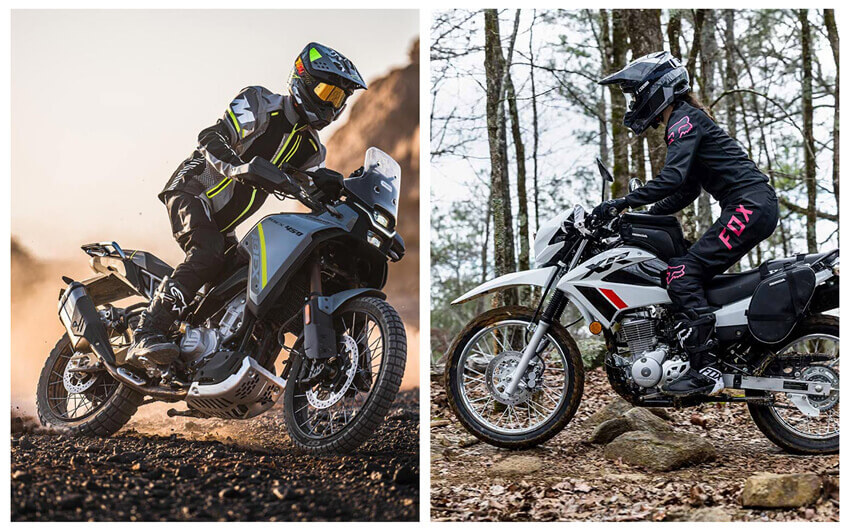
dual sport vs. adventure bike in engine and performance
Engine characteristics determine acceleration, cruising ability, and off-road control.
Below is a breakdown of engine size, power delivery, highway behavior, and gear ratio for dual sport vs. adventure bikes:
Engine Size
- Dual Sport: 250cc–450cc single-cylinder engines, prioritizing simplicity and reliability but limited in highway power.
- Adventure: 650cc–1300cc twin or boxer engines, designed for smooth power delivery, high-speed cruising, and long-distance touring.
Adventure bikes offer higher displacement for long-distance performance, dual sport bikes favor off-road reliability.
Power Delivery
- Dual Sport: Manageable low-end torque for trails, limited top-end for highway speeds.
- Adventure: Strong, smooth power across rev range, ideal for overtaking and carrying luggage/passengers.
Dual sport bikes excel in trail control; adventure bikes excel in consistent high-speed performance.
Highway Behavior
- Dual Sport: Less stable on highways due to light frame and smaller engine.
- Adventure: Stable and comfortable for long-distance highway riding thanks to heavier frame, larger engine, and advanced suspension.
Dual sport is adequate for short highway rides; adventure bikes are superior for long-distance stability.
Gear Ratio
- Dual Sport: Shorter gear ratios provide better low-speed control, quicker acceleration on trails, and improved climbing on steep or technical terrain.
- Adventure: Taller gear ratios optimize cruising at highway speeds, reduce engine RPM, and improve fuel efficiency for long-distance travel.
Dual sport bikes are geared for off-road agility and low-speed power, while adventure bikes are geared for highway comfort and fuel-efficient cruising.
3. Off-Road Capability
Off-road performance is affected by terrain handling, suspension, and ground clearance.
This section compares how dual sport and adventure bikes tackle rough terrain:
Terrain Types
- Dual Sport: Excellent on single-track trails, mud, sand, rocky terrain, and steep climbs.
- Adventure: Suitable for gravel roads, fire roads, and light trails, but heavy weight limits technical terrain performance.
Dual sport bikes are ideal for aggressive off-road riding; adventure bikes handle light off-road conditions.
Suspension
- Dual Sport: Longer travel suspension designed for rough trails and jumps.
- Adventure: Heavy-duty but shorter travel suspension, tuned for comfort on mixed surfaces.
Dual sport suspension favors technical off-road; adventure suspension favors comfort over rough terrain.
Ground Clearance
- Dual Sport: Higher ground clearance for rocks and uneven trails.
- Adventure: Moderate ground clearance suitable for mild off-road and highway use.
Dual sport is better for challenging terrain; adventure bikes are optimized for stability.
4. Comfort and Ergonomics
Long-distance rides can be tiring without proper ergonomics.
Here we compare seating, wind protection, and fatigue management between the two bike types:
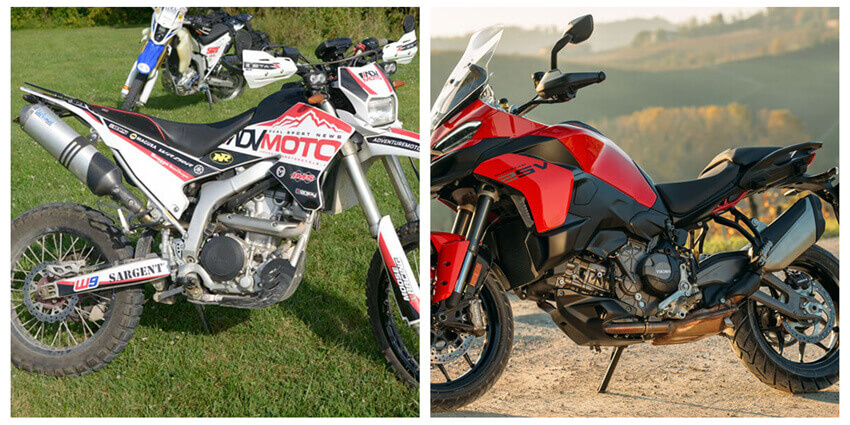
Seat
dual sport vs. adventure bike in seat
- Dual Sport: Narrow, flat motocross-style seat designed for mobility and trail control.
- Adventure: Wide, cushioned, adjustable seat for long-distance comfort.
Adventure bikes provide superior comfort; dual sport prioritizes maneuverability.
Wind Protection
- Dual Sport: Little or no windscreen, minimal fairings.
- Adventure: Large windscreen and fairings protect from wind and weather on long rides.
Adventure bikes reduce fatigue on highways; dual sport is better for short rides or off-road only.
Long-Distance Fatigue
- Dual Sport: Riders may experience discomfort after 2–3 hours on highways due to seat and wind protection.
- Adventure: Built for long-distance riding with ergonomic design and comfort features.
Adventure bikes are clearly superior for long-distance touring.
5. Fuel Range and Touring Ability
Fuel capacity affects how far you can ride without stopping.
- Dual Sport: Small fuel tanks (2–3 gallons) require frequent stops, limiting long-distance travel.
- Adventure: Larger tanks (4–6+ gallons) allow for extended range; some models can travel 300+ miles on a single tank.
Adventure motorcycles are better suited for long trips; dual sport bikes require careful planning for fuel stops.
6. Luggage and Practicality
dual sport vs. adventure bike in luggage
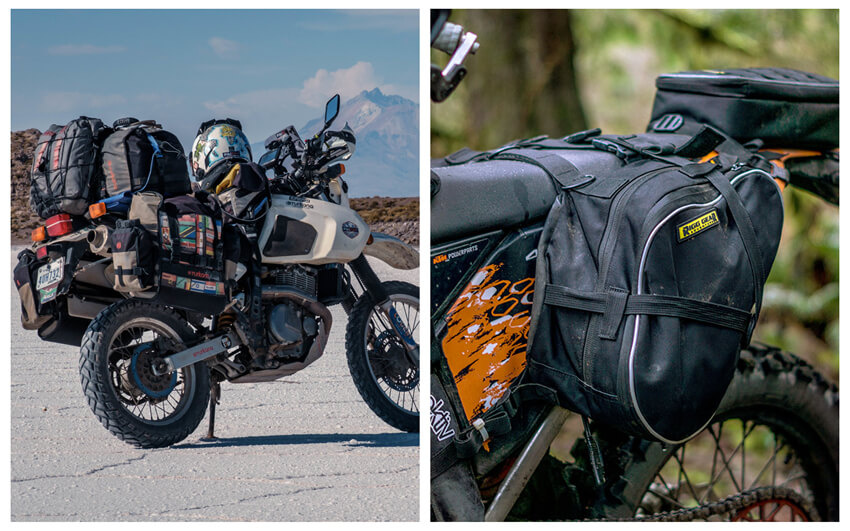
Touring capability depends on luggage options and carrying capacity.
Here’s how dual sport and adventure bikes differ in practical use:
- Dual Sport: Limited luggage capacity, lightweight subframes, best for solo riding or light packing.
- Adventure: Supports hard panniers, top cases, passenger seating, and heavier loads, ideal for touring and two-up riding.
Adventure bikes offer more practical touring options; dual sport is limited to minimal gear.
7. Maintenance and Ownership Costs
Maintenance frequency, repair costs, and mechanical complexity affect ownership.
- Dual Sport: Simple engines, fewer electronics, lower repair costs, easier to maintain in remote areas.
- Adventure: Complex engines and advanced electronics; higher maintenance and repair costs, especially outside major cities.
Dual sport bikes are simpler and cheaper to maintain; adventure bikes require more investment but offer more features.
8. Electronics and Safety Features
Modern motorcycles may include ABS, traction control, ride modes, and other aids.
- Dual Sport: Basic electronics, often limited to ABS, easy to repair and maintain.
- Adventure: Advanced safety features including ABS, traction control, ride modes, cruise control, and other electronic aids.
Adventure bikes prioritize safety and convenience; dual sport bikes prioritize simplicity and reliability.
Dual Sport Vs. Adventure Bike Pros & Cons
Basically, dual sport bikes are great off-road because they're light, while adventure bikes are all about comfort and staying steady on long trips. Here’s a quick look at what each one is good and bad at, so you can see why they handle so differently.
Dual Sport Motorcycle Pros & Cons
Dual Sport Motorcycle Pros
- Lightweight
- Better off-road performance
- Better handling
- Better durability
- Street legal
- Can maneuver on rough terrain
Dual Sport Motorcycle Cons
- Below average highway performance
- No windscreen for heavy wind protection
- Single-cylinder engines cause noise and vibrations
- Uncomfortable seat
- Smaller fuel tank capacity
- Limited luggage carrying capacity
- Require frequent oil changes
- Tires wear out quicker
Adventure Motorcycle Pros & Cons
Adventure Motorcycle Pros
- Powerful and larger displacement engines
- Twin-cylinder engines ensure comfortable high-speed rides
- Good on-road performance
- Equipped with an ABS and traction control
- Large windscreen
- Large fuel tank capacity
- More luggage carrying capacity
- Comfortable seat for longer trips
- Heavy duty suspension with longer wheel travel
Adventure Motorcycle Cons
- Much heavier than dual sport bikes
- Off-roading is more challenging
- Not a good choice for rough terrain
- Plastic bodywork can be easily damaged
- Difficult to pick up if fallen over
- Complex engines and advanced electronics are difficult to repair
- More expensive to repair
Which Is Better for Beginners: Dual Sport vs. Adventure Bike
The short answer is: Dual Sport.
Because they are lighter and easier to control, dual sport motorcycles are far more forgiving for beginners—especially at low speeds and on uneven terrain.
| Category | Choose a Dual Sport If... | Choose an Adventure Bike If... |
|---|---|---|
| Experience Level | Beginner-friendly; easy to learn and recover from falls. | Requires more experience; can be intimidating off-road. |
| Primary Terrain | Mostly off-road, trails, and technical terrain. | Long distances, highways, and mixed pavement. |
| Riding Style | Enjoys simple, lightweight, and agile handling. | Values comfort, advanced technology, and stability. |
| Load & Passengers | Typically ride solo with minimal gear. | Carry heavy luggage or frequently ride with passengers. |
| Budget & Maintenance | Smaller budget; want a simple and reliable machine. | Higher budget; comfortable with complex maintenance. |
When you're trying to decide between a dual sport bike and an adventure bike, your experience level is definitely something to think about, especially when it comes to off-roading.
Dual Sport for Beginners
Let’s talk about dual sport bikes first.
These are usually easier for beginners, especially if you're looking to spend a lot of time off-road. They're lighter, narrower, and just simpler to handle overall.
At low speeds, they feel way more manageable, and if you do tip over (which happens to everyone), picking it back up or recovering from a stall isn’t nearly as intimidating.
It’s a great way to build confidence and get a feel for off-roading without feeling too out of your depth.
Adventure Bike for Beginners
Now, adventure bikes are a bit of a different story.
While they’re still beginner-friendly on the road, off-road riding with an adventure bike can be a bit more challenging—especially if you're new to it.
They’re typically heavier, taller, and just bulkier overall. That can make things feel a little intimidating when you take them off the beaten path. You need a bit more experience, strength, and confidence to really handle an adventure bike off-road.
Honestly, it’s probably not the best bike for a complete beginner when it comes to dirt trails or rough terrain.
So, if you're more into road riding but still want some off-road capability, an adventure bike can be a solid choice.
But if you're mostly looking to dive into off-roading right away, a dual sport is probably going to feel more natural and manageable as you're starting.
❓Frequently Asked Questions (FAQ)
🏍️ Is a dual sport the same as an adventure bike?
No. Dual sport bikes are lighter and more off-road focused, while adventure bikes prioritize comfort, technology, and long-distance travel on mixed terrain.
🛣️ Can adventure bikes go off-road?
Yes, adventure bikes can handle gravel roads, fire roads, and mild trails. However, heavy adventure motorcycles can struggle on technical or aggressive off-road terrain.
💨 Are dual sport bikes good for highways?
Dual sport bikes can be ridden on highways, but long-distance highway travel is often uncomfortable due to smaller engines, narrow seats, vibrations, and minimal wind protection.
🧰 Which lasts longer, a dual sport or an adventure bike?
Both can last a long time if properly maintained. Dual sport bikes are mechanically simpler, while adventure bikes rely more on electronics, which can increase repair complexity over time.
🧠 Which is better for beginners, a dual sport or an adventure bike?
Dual sport motorcycles are generally better for beginners who want to ride off-road because they are lighter and easier to control. Adventure bikes can be beginner-friendly on pavement but are more challenging off-road due to their size and weight.
🌍 Can a dual sport be used for long-distance touring?
Yes, but with limitations. Dual sport bikes can handle long trips with modifications such as larger fuel tanks and more comfortable seats, but they lack the comfort, wind protection, and luggage capacity of adventure bikes.
⚖️ Are adventure bikes too heavy for off-road riding?
Larger adventure bikes can be difficult to manage off-road due to their weight, especially on technical trails. They perform best on gravel roads and mild terrain rather than aggressive off-road conditions.
💰 Is a dual sport cheaper to own than an adventure bike?
Yes. Dual sport bikes usually have lower purchase prices, lower maintenance costs, and simpler mechanical designs compared to adventure bikes, which are more expensive to buy and maintain.
🔄 Can one bike replace both a dual sport and an adventure bike?
Some mid-size adventure or lightweight adventure bikes can serve as a compromise, but no single motorcycle perfectly replaces both. Dual sport bikes excel off-road, while adventure bikes are better for comfort and long-distance travel.
Conclusion
So, when it comes to picking between a dual sport and an adventure bike, it really boils down to what floats your boat and the kind of riding you're into. Both are cool in their own way, so don't rush the decision – pick what feels right for you.
No matter which one you pick, get out there and have some fun!
Recommended Reading

Motorcycle mechanic, writer. Interested in motorcycle gear for years. Like to stay up to date with the newest products and techniques of the motorcycle.
Subscribe
0 Comments
Oldest
You maybe like to read:
I’ve used premium intercoms and budget ones on the same roads, in the same weather, on long touring days. The truth? Most riders don’t need a $400 system. Most riders still need the same basics: clear rider-to-rider talk, stable Bluetooth, and batteries that last a full day on the road. In 2026, budget motorcycle intercoms […]
What is the best motorcycle intercom for beginners? If you’re a new rider, the idea of adding another piece of tech to your helmet can feel overwhelming. I’ve been using motorcycle intercoms for years—on solo rides, long tours, group trips, and daily commutes—and I’ll tell you this upfront: A beginner motorcycle rider doesn’t need the […]
Mesh Intercom vs Bluetooth: Which Motorcycle Communication System Is Better? Mesh intercoms are best for riders who travel in groups because they automatically reconnect and stay stable, while Bluetooth intercoms are better for solo riders and two-up riding due to lower cost and simpler operation. As someone who both wrenches on bikes and rides long […]
As a rider who has logged hundreds of thousands of kilometers on everything from daily commutes to multi-week tours, I can say one thing with absolute confidence: choosing the best motorcycle intercom for modular helmets is critical. Get it wrong, and it can quickly ruin your riding experience. Modular (flip-up) helmets are incredibly versatile, but […]
Getting your snowmobile’s track adjusted correctly doesn’t have to be complicated. In this guide, we’ll show you the tools, step-by-step instructions, and troubleshooting tips for all major brands — Polaris, Ski‑Doo/Lynx, Arctic Cat, Yamaha, and more. If you do it right, your snowmobile will run great quickly. Why Track Tension Matters Track tension directly affects […]