The motorcycle communication systems field just got a significant upgrade with the release of the Fodsports FX7. This state-of-the-art Bluetooth mesh intercom is packed with many advanced features and techs. It will revolutionize the way riders communicate and enjoy their rides. Whether you're a solo rider or part of a group, the FX7 offers unparalleled […]

3 Off-Road Skills You Should Practice Before Your Next Ride
June 15, 2025
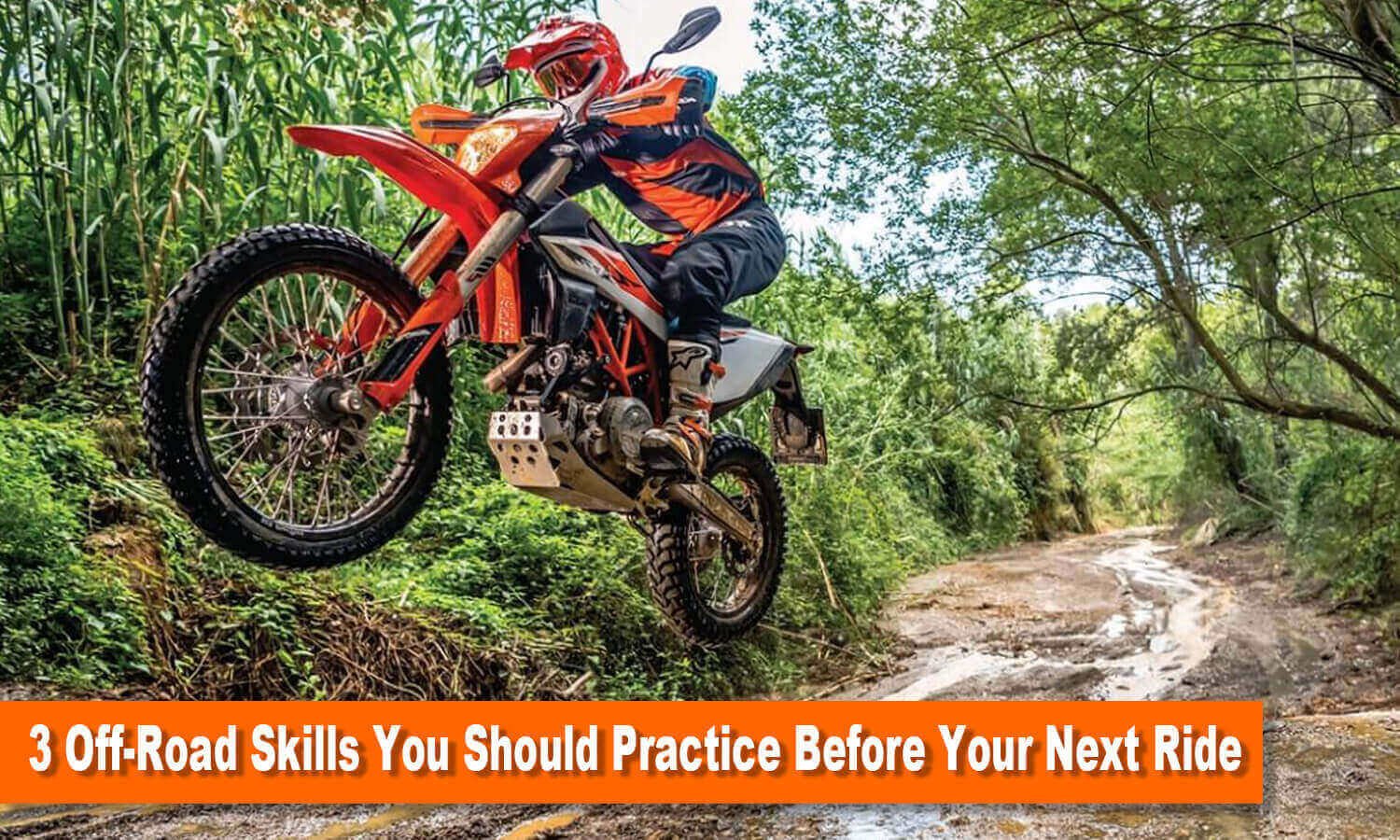
If you're planning your first big adventure bike expedition or looking to improve your off-road capabilities, one of the best things you can do is practice essential riding techniques. Riding with luggage, managing your bike on uneven terrain, and safely climbing steep hills are not just challenges — they are critical off-road skills that can make or break the success and safety of your adventure ride.
This guide will walk you through three crucial off-road skills every adventure rider should master:
- Counter-Steering and Chassis Control with Luggage
- Balance and Obstacle Absorption
- Hill Climbing and Weight Distribution
Let’s dive into each of these in detail.
Table of Contents
Off-Road Skills
1. Counter-Steering and Chassis Control with Luggage
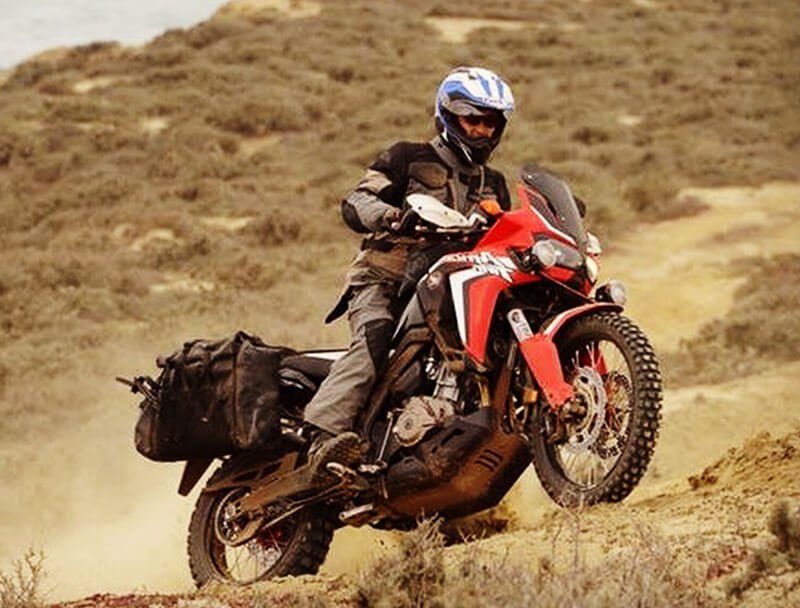
off-road bikes with luggage
One of the most underestimated aspects of off-road adventure riding is how your luggage affects the way your bike behaves. Think of your bike as a 4WD vehicle and your luggage as a 4-ton trailer. When you brake, corner, or accelerate, that extra weight is constantly trying to push, shift, and destabilize your chassis.
Why This Skill Matters:
- The front tire alone cannot manage the additional load.
- Without adjusting your steering technique, you risk front-end washouts.
- Poor control can lead to jack-knifing or loss of traction.
Key Techniques to Practice:
- Counter-Steering with Loaded Bags: Counter-steering is not just for high-speed road turns. On an adventure bike with luggage, gently push the left bar to go left and the right bar to go right. This technique engages the whole chassis to turn rather than overloading the front tire.
- Subtle Drift and Weight Bias: Learn to shift weight between wheels smoothly. When carrying luggage, avoid sharp turns and allow the bike to veer naturally. Practice at speeds of 20-30 km/h to feel the balance shift.
- Brake Management: Turn off ABS temporarily on suitable terrain to feel the natural sliding of the front wheel. Apply and release the front brake gently while in motion to teach your instincts when to let go.
- Emergency Evasion Drills: At higher speeds, practice aggressive counter-steering to dodge imaginary obstacles like animals or fallen branches. This builds trust in your bike's agility and your muscle memory for evasive actions.
Pro Tip:
Use soft bags with elastic straps. They move slightly and absorb mild impacts if you nudge a tree or wall. Knowing the width and flexibility of your gear can prevent nasty surprises.
2. Balance and Obstacle Absorption
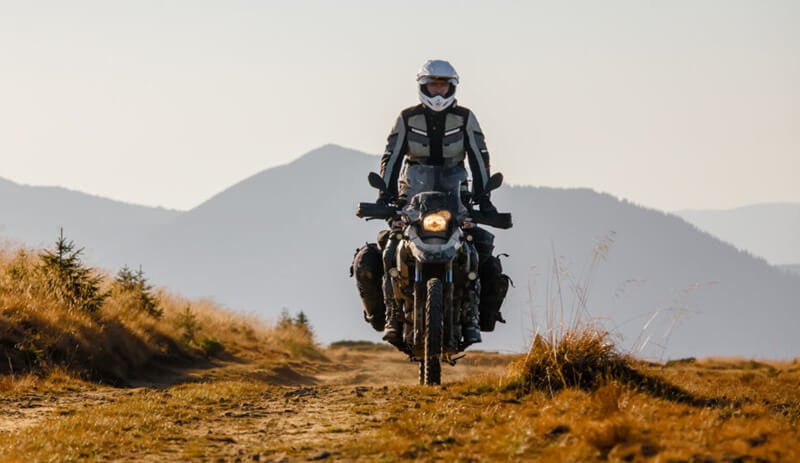
Mastering bike balance is a critical off-road skill
Adventure riding means constantly navigating ditches, erosion mounds, rocks, and random debris. Wherever you are, mastering bike balance is a critical off-road skill.
Why This Skill Matters:
- Uneven trails test your ability to stay upright.
- Smooth absorption prevents injury and damage to the bike.
- Maintaining momentum over obstacles increases safety and fun.
Key Techniques to Practice:
- Periphery Awareness Drill: In first gear, tip your bike gently from side to side between your knees. Try this near trees or poles to feel how close your panniers can get without causing imbalance. Learn the dimensions of your luggage setup.
- Erosion Mound Navigation: These are common on trails and often look like fun jumps. They can also be dangerous if not approached correctly.
- Upward Approach: Apply a bit of preload by squatting slightly just before the jump, then roll on the throttle evenly to maintain a level takeoff.
- Downward Absorption: When coming down steep erosion holes, roll off the throttle, stay off the brakes, and absorb impact with your knees and elbows.
- Jump Training: For more experienced riders, practice small jumps on uniform ramps. Focus on keeping the body centered and using preload to keep a flat trajectory.
Pro Tip:
Stay off the brakes while navigating steep descents or abrupt dips. Let the bike come up to you and absorb it with your body, not your handlebars.
3. Hill Climbing and Weight Distribution
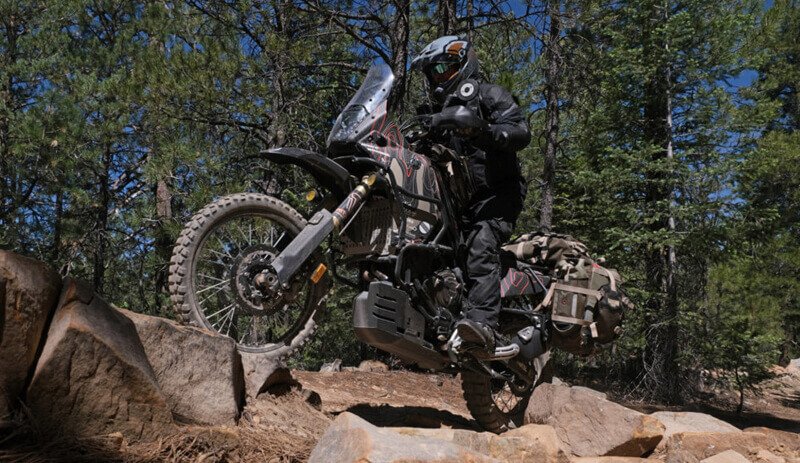
Off-road motorcycle climbing a steep rocky slope with luggage
Climbing steep, rocky hills with luggage is one of the biggest challenges for adventure riders. Too much weight in the wrong place, or poor throttle control, can cause you to lose momentum or flip backward.
Why This Skill Matters:
- You’ll encounter unexpected hill climbs in remote areas.
- Improper posture can cause a stall or crash.
- Good traction management is essential for climbing with gear.
Key Techniques to Practice:
- Hill Start from Mid-Slope: Simulate starting on a slope after stalling. Begin with your weight all the way back to maximize rear-wheel traction. As the bike begins to move, gradually shift forward to gain steering control.
- Body Positioning:
- Rear Weight: Keeps traction on the back tire.
- Head Forward: Maintains control of the front wheel. This dual approach keeps the bike balanced and prevents wheelies or losing line control.
- Clutch and Throttle Management: Without electronic aids like traction control, practice feathering the clutch and using smooth throttle input. Avoid sudden bursts of power.
- Steering Control on Hills: Most people lose their line and end up off the trail because they fail to guide the front wheel correctly. Keep your eyes up and your body slightly forward to steer around ruts and rocks.
Pro Tip:
If your bike is too top-heavy, re-evaluate your luggage setup before the ride. Keep heavy items low and centered.
Practice in a Safe, Controlled Environment
Before heading into remote wilderness, find a safe and open environment to practice these drills. Look for:
- Empty gravel lots
- Off-road parks
- Forest service roads
- Adventure riding schools

practice in a safe and controlled environment
Filming yourself can help you spot poor form, incorrect posture, or timing issues. Even 5–10 minutes of practice before each ride will dramatically improve your skill and confidence.
Final Thoughts
The best adventure rides come from preparation, not improvisation. These three off-road skills can be the difference between a thrilling experience and a dangerous one.
Before your next trip:
- Test your luggage setup under real conditions.
- Run these drills regularly.
- Get to know your bike's limits and capabilities.
And remember: it's not about riding harder; it's about riding smarter. The more confident and skilled you are, the more fun you'll have on the trails.
You may also be interested in: Top 3 Motorcycle Dangers and Prevention Strategies

Motorcycle mechanic, writer. Interested in motorcycle gear for years. Like to stay up to date with the newest products and techniques of the motorcycle.
You maybe like to read:
Fodsports Brand Month: Unbeatable Deals and Top-Notch Service
Discover Fodsports Brand Month July and August mark a special occasion for motorcycle enthusiasts and tech lovers alike. Welcome to Fodsports Brand Month! This event is dedicated to celebrating everything that makes Fodsports a leading name in the motorcycle communication industry. Get ready for a fantastic promotions, exceptional service from Fodsports. Let's insights into Fodsports' […]
Ultimate Dolomites Autumn Cycling Guide: Best Fall Foliage Routes & Expert Gear Blueprint
The Italian Dolomites in autumn transform into a sensory masterpiece. As the chaotic summer crowds dissipate between mid-September and late October, the entire Alpine region ignites with golden larches, fiery maples, and stark white limestone peaks. This fleeting shoulder season provides the ultimate window for an epic Dolomites cycling tour and foliage chasing. Compared to […]
Route des Grandes Alpes in Fall: France Motorcycle Riding Guide
Few motorcycle routes combine high mountain passes, autumn forests, dramatic valleys, and Mediterranean scenery as well as the Route des Grandes Alpes in France. Stretching about 720 km from Thonon-les-Bains near Lake Geneva to Nice, the route crosses 18 major Alpine passes and reaches 2,764 meters at the Col de l'Iseran. For motorcycle riders, autumn can […]
Talimena Scenic Byway in Fall: Oklahoma and Arkansas Motorcycle Riding Guide
A mountain road, two states, 54 miles of ridgelines, and some of the best late-season color in the South—Talimena Scenic Byway is the kind of motorcycle route that rewards riders who leave room for the scenery. Running from the Mena, Arkansas area to Talihina, Oklahoma, the byway follows the crests of the Ouachita Mountains through forest, […]
Cherohala Skyway Tennessee and North Carolina: Fall Motorcycle Riding Guide
Few motorcycle roads in the Southeast combine elevation, open mountain views, and flowing curves quite like the Cherohala Skyway. Stretching about 43 miles between Tellico Plains, Tennessee, and Robbinsville, North Carolina, the National Scenic Byway climbs from lower valleys to elevations above 5,000 feet before crossing the Appalachian high country. In fall, the ride becomes […]