The motorcycle communication systems field just got a significant upgrade with the release of the Fodsports FX7. This state-of-the-art Bluetooth mesh intercom is packed with many advanced features and techs. It will revolutionize the way riders communicate and enjoy their rides. Whether you're a solo rider or part of a group, the FX7 offers unparalleled […]

Ultimate Dolomites Autumn Cycling Guide: Best Fall Foliage Routes & Expert Gear Blueprint
October 10, 2026
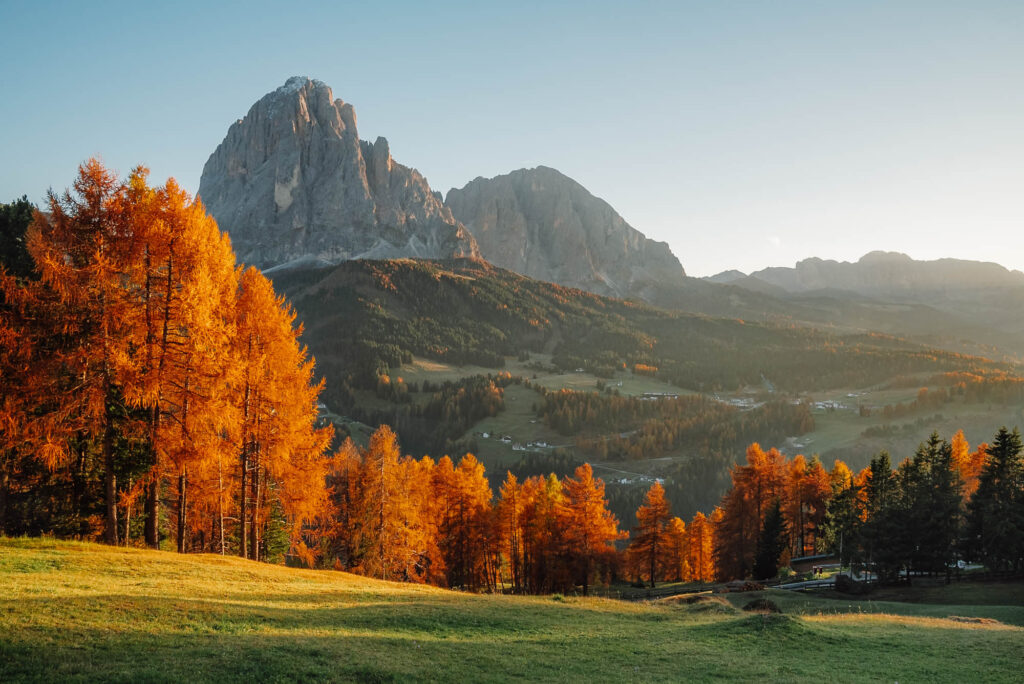
The Italian Dolomites in autumn transform into a sensory masterpiece. As the chaotic summer crowds dissipate between mid-September and late October, the entire Alpine region ignites with golden larches, fiery maples, and stark white limestone peaks. This fleeting shoulder season provides the ultimate window for an epic Dolomites cycling tour and foliage chasing.
Compared to the gridlocked summer months, autumn boasts crisp mountain air, high visibility, and virtually empty high-altitude alpine passes. Combining technical riding insights with authoritative regional logistics, this guide offers an essential roadmap to navigating the dramatic seasonal shifts, legendary climbs, and unpredictable weather of this UNESCO World Heritage site. Whether you travel by pedal power or motor horsepower, conquer the crisp autumn turns with professional preparation.
Table of Contents
🚴 Elite Autumn Cycling Routes for Foliage Chasing
The Legendary Sellaronda Loop
As a crowning jewel of alpine road cycling, the classic Sellaronda loop is an absolute bucket-list experience. Spanning approximately 52 kilometers with an elevation gain of around 1,650 meters, this route tackles four iconic mountain passes in immediate succession: Campolongo, Pordoi, Sella, and Gardena.
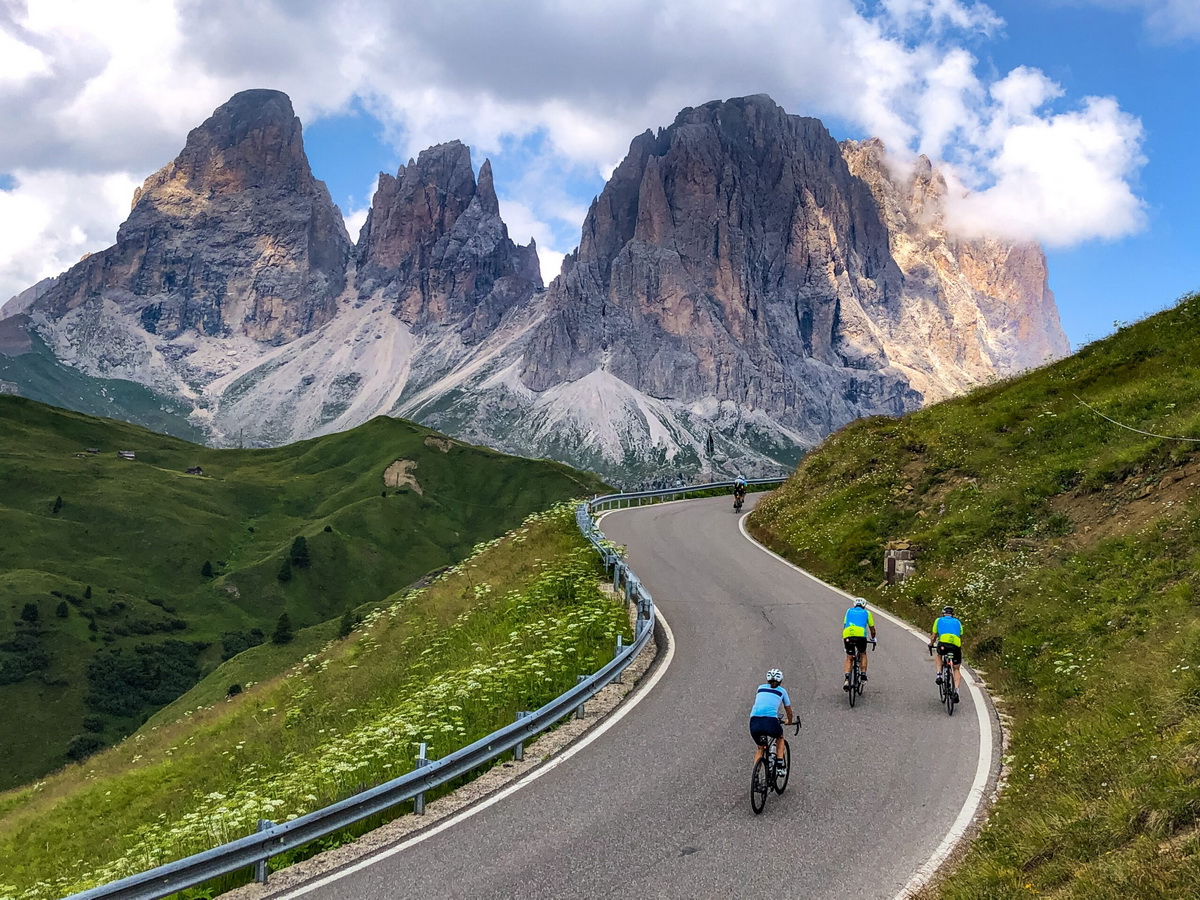
Sellaronda Loop
In October, the valley floors are carpeted in rich auburn and gold. As you ascend, the empty tarmac cuts through dense forests of changing larches, offering unobstructed views of the jagged peaks glowing with the famous pink hue known as "Enrosadira" during sunset.
The Ultimate Challenge: Passo Giau
For riders seeking an intense physical test, attacking Passo Giau from Cortina d'Ampezzo is unrivaled. This relentless climb stretches over 10 kilometers with a brutal, unforgiving average gradient of 9.3%. There are no flat sections to recover, but the reward at the 2,236-meter summit is a spectacular 360-degree autumn panorama. The sheer quietness of the autumn roads allows you to focus entirely on your rhythm, making this a deeply rewarding challenge.
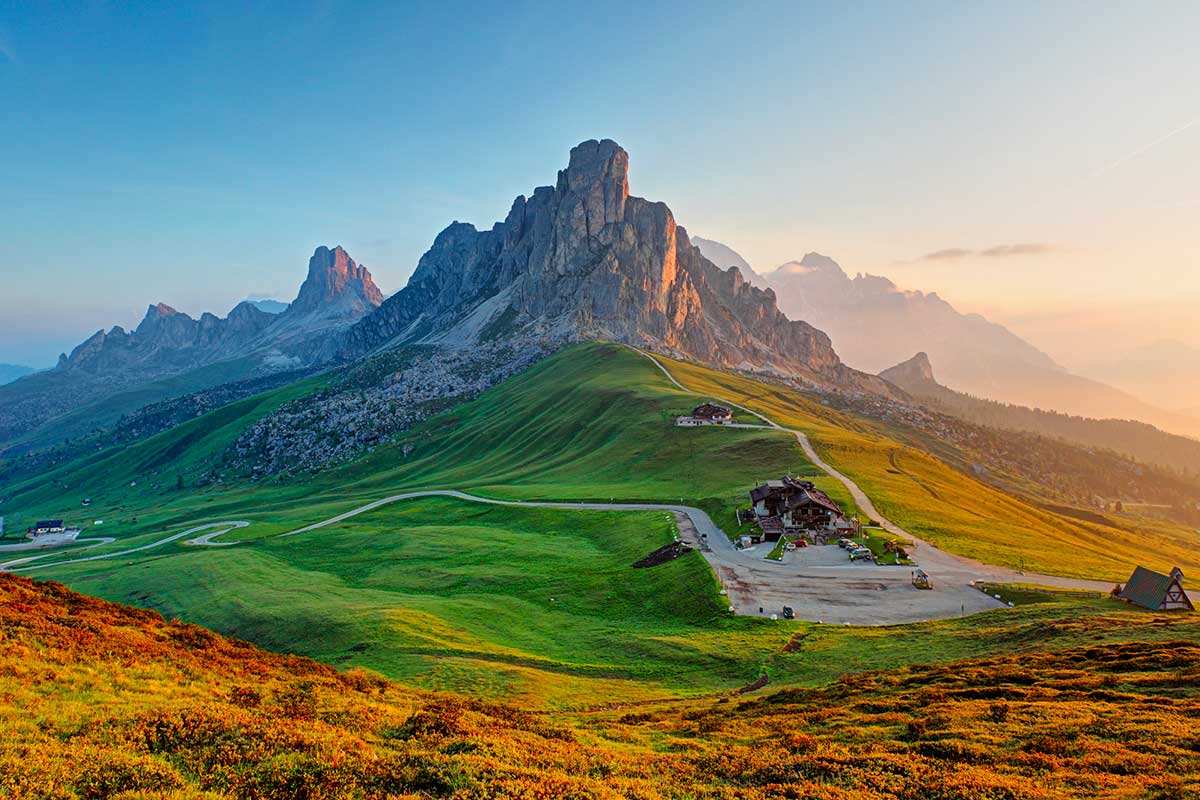
Passo Giau
Scenic Leisure: Val di Funes Landscape Route
If your priority is capturing world-class autumn photography rather than breaking a sweat, the winding paths of Val di Funes are ideal. Cycling past the iconic St. Johann Church (Chiesetta di San Giovanni) against the backdrop of the sharp Odle-Geisler peaks feels like riding through a postcard. The contrast of dark green pastures turning to gold under the limestone monoliths creates an exceptional visual layer.
🏍️ Two-Wheel Mastery: Personal Alpine Pass Reflections
Experiencing the Dolomites on two wheels, whether on a road bicycle or via motorcycle touring, builds a profound connection with the landscape that a tourist bus simply cannot replicate.
I distinctly recall a crisp mid-October morning launching from Alta Badia. A thick, low-lying valley fog hung over the villages, and temperatures hovered dangerously close to freezing. Peeling down the deserted tarmac, the hum of the engine and the biting alpine wind were the only sounds.
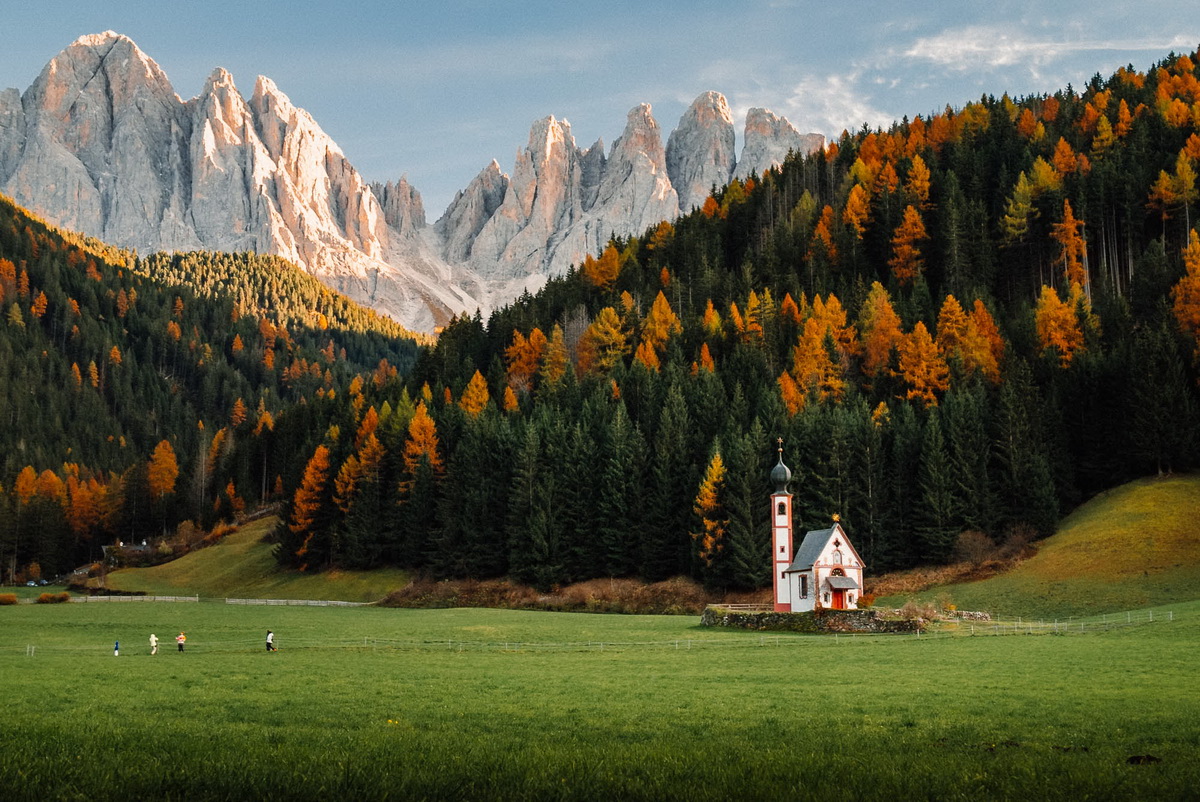
Autumn Dolomites Cycling Guide
Climbing higher, the road broke through the sea of clouds into brilliant sunlight. The sweeping hairpin turns required complete focus, especially where early morning shadows left damp patches on the asphalt. In those technical sectors, maintaining seamless coordination with your riding group is paramount for survival.
⚙️ Essential Gear and Layering for Unpredictable Autumn Weather
Weather at high altitudes is famously volatile; a bright sunny valley can quickly give way to sudden flurries over a 2,000-meter pass. Preparing a sophisticated gear checklist is non-negotiable.
- Three-Layer Clothing System: Utilize a high-wicking base layer, an insulating fleece mid-layer, and a windproof, waterproof outer shell.
- Thermal Accessories: Windproof winter gloves, thermal shoe covers, and anti-fog eyewear are mandatory to prevent severe wind chill during long, high-speed descents.
- Advanced Sports Communication Systems: Due to sharp blind curves, rugged mountain rock walls, and erratic cell service, clear group communication saves lives. Integrating a modern helmet bluetooth headset or a dedicated motorcycle bluetooth intercom into your setup allows you to warn trailing riders of loose gravel, fallen leaves, or unexpected black ice, transforming a high-risk descent into a controlled, safe adventure. Relying on wireless sports communication systems keeps your eyes firmly on the technical switchbacks without sacrificing safety.
📊 Statistics and Climate Data: Timing Your Expedition
Data compiled by the South Tyrol Meteorological Bureau and alpine phenological research institutes highlights why autumn is uniquely suited for riding:
- Peak Foliage Window: Historical data reveals that the European larches in the Dolomites reach their optimal golden saturation (exceeding 85% color change) between October 10th and October 25th.
- The Lapse Rate Factor: In October, valley temperatures average 4°C to 12°C. However, environmental studies dictate that temperature drops by roughly 6°C for every 1,000 meters of elevation gain. A comfortable valley start will feel freezing at the summit.
- Favorable Aridity: Statistically, October is among the drier months in the Southern Alps. It features a 62% average of clear-sky days and a 35% increase in atmospheric visibility compared to humid summer afternoons, providing unparalleled scenic vistas.
❓ Frequently Asked Questions (FAQ)
1. Do the mountain passes close during the autumn months?
Major passes like Passo Sella and Passo Giau remain open to vehicular traffic standardly until the first heavy, sustained winter snowfall arrives, which typically occurs in mid-to-late November. However, temporary closures of a few hours can happen in October during sudden, isolated autumn storms.
2. Are the mountain huts (Rifugi) open for food and water in October?
The majority of high-altitude alpine huts close their doors by the end of September or the first week of October. Cyclists must be entirely self-sufficient, carrying ample energy bars, hydration, and thermal flasks, or plan lunch stops in permanent valley towns like Cortina or Ortisei.
3. What specific hazards should cyclists watch out for during autumn downhills?
The primary hazards are accumulated damp leaf litter, loose gravel from road maintenance, and localized black ice in shaded mountain bends. Reduce downhill speeds significantly and avoid sudden hard braking on blind corners.
4. Can intermediate riders or beginners tackle these routes using E-bikes?
Absolutely. Local rental shops across South Tyrol remain operational through October and offer premium e-road and e-mountain bikes. The electrical assist flattens the daunting 9% gradients, allowing less-conditioned riders to enjoy the epic alpine passes safely.
5. Are there mandatory seasonal winter equipment laws for vehicles?
Yes. Italian traffic law mandates winter tires or onboard snow chains starting November 15th. However, in October, law enforcement can enforce temporary blockages on high passes for any vehicle lacking winter equipment if an unseasonal alpine snowstorm strikes.
🌐 Authoritative Sources & References
- Official South Tyrol Tourism Portal: https://www.suedtirol.info/en
- Dolomiti Superski Seasonal Lifts & Logistics Status: https://www.dolomitisuperski.com/en
- Brenner Pass & Regional Highway Live Traffic Services: https://www.autobrennero.it/en/

Rodney L is a technical writer and product consultant with over a decade of experience in the motor industry. Rodney is a fan of performance machines that run fast and loud and an expert in all things custom. His numerous articles and write-ups are available at our knowledge base. Whether it’s something wrong with your motorcycle or you are building a custom bike, you can trust Rodney’s experience.
You maybe like to read:
Fodsports Brand Month: Unbeatable Deals and Top-Notch Service
Discover Fodsports Brand Month July and August mark a special occasion for motorcycle enthusiasts and tech lovers alike. Welcome to Fodsports Brand Month! This event is dedicated to celebrating everything that makes Fodsports a leading name in the motorcycle communication industry. Get ready for a fantastic promotions, exceptional service from Fodsports. Let's insights into Fodsports' […]
Ultimate Dolomites Autumn Cycling Guide: Best Fall Foliage Routes & Expert Gear Blueprint
The Italian Dolomites in autumn transform into a sensory masterpiece. As the chaotic summer crowds dissipate between mid-September and late October, the entire Alpine region ignites with golden larches, fiery maples, and stark white limestone peaks. This fleeting shoulder season provides the ultimate window for an epic Dolomites cycling tour and foliage chasing. Compared to […]
Route des Grandes Alpes in Fall: France Motorcycle Riding Guide
Few motorcycle routes combine high mountain passes, autumn forests, dramatic valleys, and Mediterranean scenery as well as the Route des Grandes Alpes in France. Stretching about 720 km from Thonon-les-Bains near Lake Geneva to Nice, the route crosses 18 major Alpine passes and reaches 2,764 meters at the Col de l'Iseran. For motorcycle riders, autumn can […]
Talimena Scenic Byway in Fall: Oklahoma and Arkansas Motorcycle Riding Guide
A mountain road, two states, 54 miles of ridgelines, and some of the best late-season color in the South—Talimena Scenic Byway is the kind of motorcycle route that rewards riders who leave room for the scenery. Running from the Mena, Arkansas area to Talihina, Oklahoma, the byway follows the crests of the Ouachita Mountains through forest, […]
Cherohala Skyway Tennessee and North Carolina: Fall Motorcycle Riding Guide
Few motorcycle roads in the Southeast combine elevation, open mountain views, and flowing curves quite like the Cherohala Skyway. Stretching about 43 miles between Tellico Plains, Tennessee, and Robbinsville, North Carolina, the National Scenic Byway climbs from lower valleys to elevations above 5,000 feet before crossing the Appalachian high country. In fall, the ride becomes […]