Long-distance motorcycle touring is about freedom, rhythm, and endurance. Hours on the highway, changing weather, unfamiliar roads, and constant wind noise all test your gear — especially the communication system for touring. A touring motorcycle intercom is not the same as a short-ride or commuter intercom. On a multi-day trip, small weaknesses become big problems: […]

Parts of A Motorcycle | The Ultimate Guide to 2026 With Infographic
The globe's first motorized bike hit the sidewalk over 150 years back and also a number of the fundamental parts of a motorcycle still continue to be the exact same. A motorcycle needs an engine, a chassis, a transmission, and also a set of wheels to run.
Some lingo and technical terminology might appear a little bit frightening for unskilled bikers. Those who are new to the world of bikes might struggle to recognize how a motorbike functions.
Thus, we've put together a simple guide to aid you to obtain a company hold on the essential parts of a motorbike. It can help you ride your bike safely and you can additionally get the most out of what your automobile can do.
Trying to discover each and every single part could take years, however, these parts of a motorcycle name checklist will educate you on the most important in case you require to replace or upgrade them.

Main Parts of A Motorcycle
Table of Contents
Main Parts of A Motorcycle

Main parts of a motorcycle
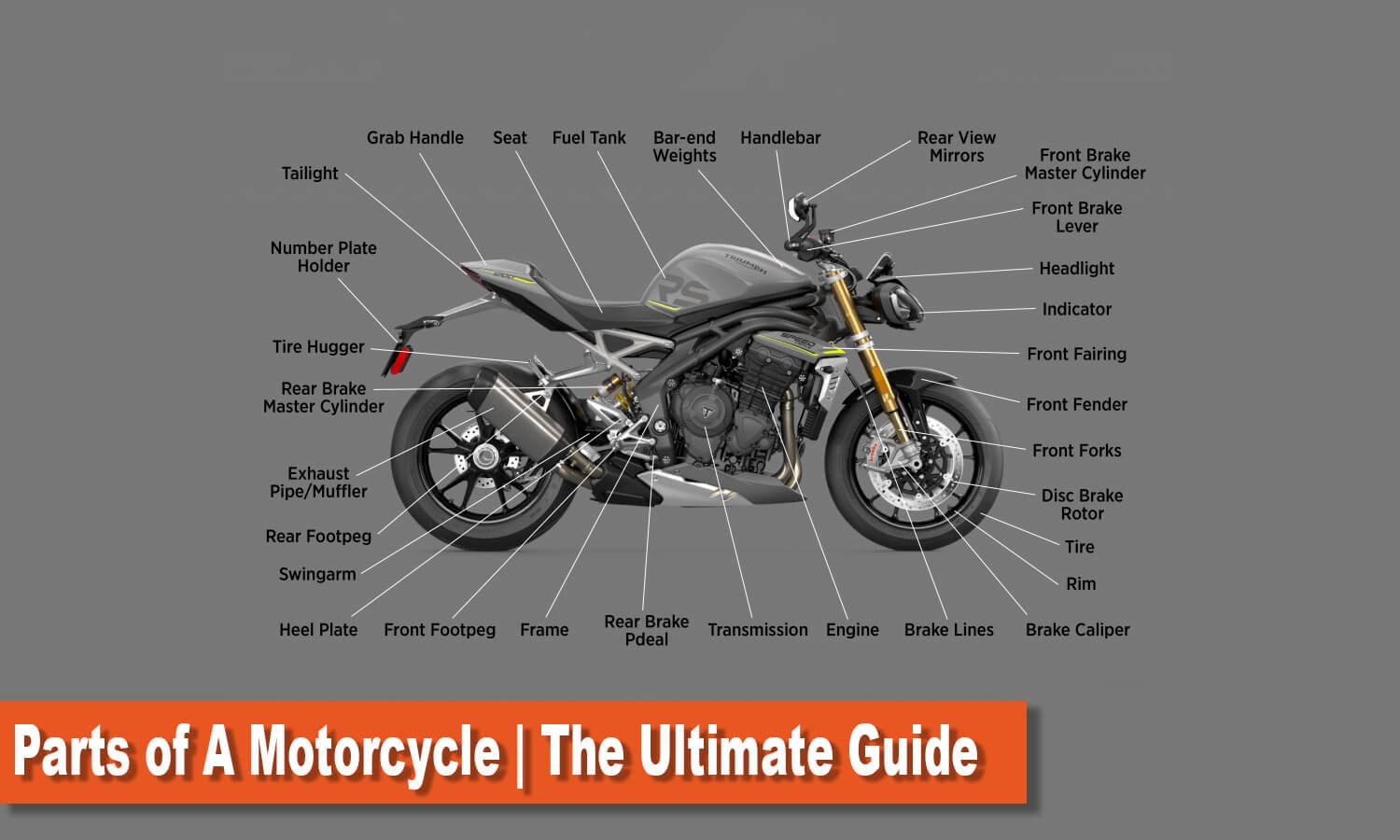
In this article, we will take a Triumph Speed Triple 1200 RS as an example and introduce you the major parts of a motorcycle.
1. The Heart of the Bike: The Engine and Powertrain
Engine (Powerplant)
The engine is the heart of every motorcycle; it is the most important part of the motorcycle. It burns fuel to produce mechanical power that turns the wheels.
Most motorcycles use gasoline internal-combustion engines, though electric motors are growing in popularity.
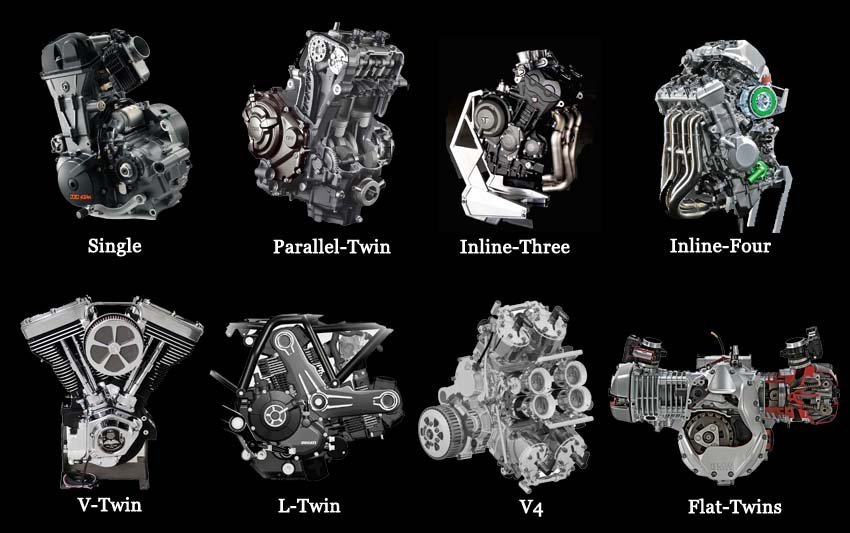
Engine types vary in configuration — single-cylinder, parallel twins, V-twins, inline fours, and more. Each engine type will influence power delivery, balance, weight, and character.
Here are the critical components inside the engine that you need to know:
- Cylinder Block & Head – It houses pistons, valves, and combustion chambers.
- Pistons & Rings – It moves up and down to compress the air-fuel mixture.
- Crankshaft – It converts piston motion into rotational power.
- Camshaft(s) – This part opens and closes the valves at precise times.
- Valves & Rocker Arms – It controls intake of fuel/air and exhaust gases.
If you are interested, you can learn some knowledge about the engine’s anatomy. This helps when diagnosing compression issues, valve noise, or performance problems.
Transmission & Clutch
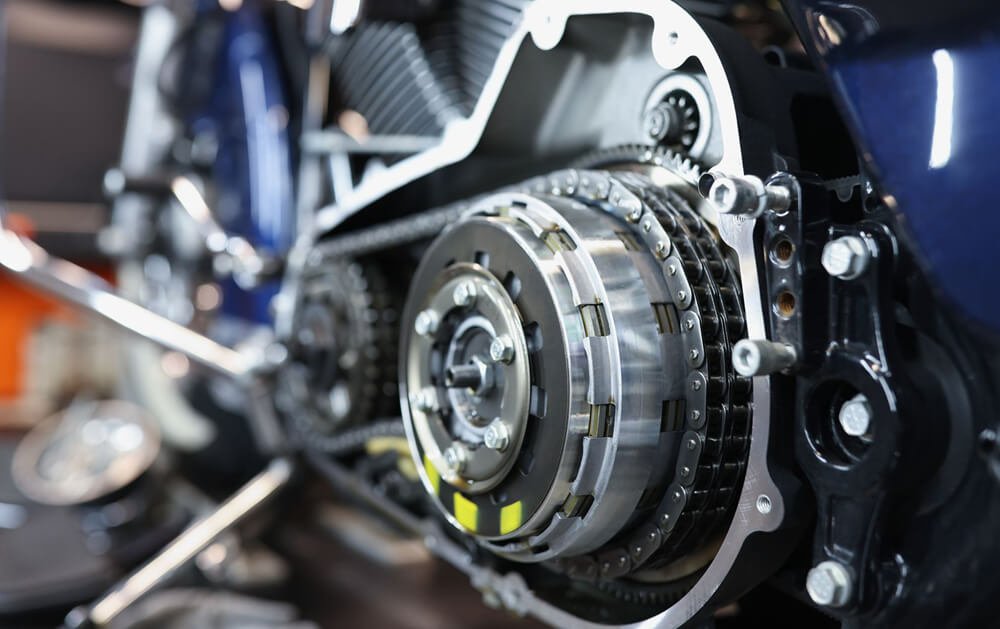
transmission area on the motorcycle
Directly connected to the engine is the transmission. It is a gear system that allows the rider to change speeds while keeping the engine in its most efficient power range.
Usually, it is a multi-speed gearbox with 5 or 6 gears. The main function of the gearbox is to transfer power from the engine to the rear wheel.
The clutch is what links your engine to the transmission. There are different kinds of clutches on the motorcycles. When you pull that clutch lever, it disconnects the engine so you can change gears without grinding them.
Key parts in this area include:
- Clutch Plates / Basket
- Shift Drum
- Gears and Shafts
- Shift Lever (Foot-lever)
You can learn something about the clutch feel, gear engagement, and linkage. This can dramatically improve your smooth shifting and long-term reliability.
Knowledge about Motorcycle Clutch
2. The Skeleton: Frame and Chassis
Frame
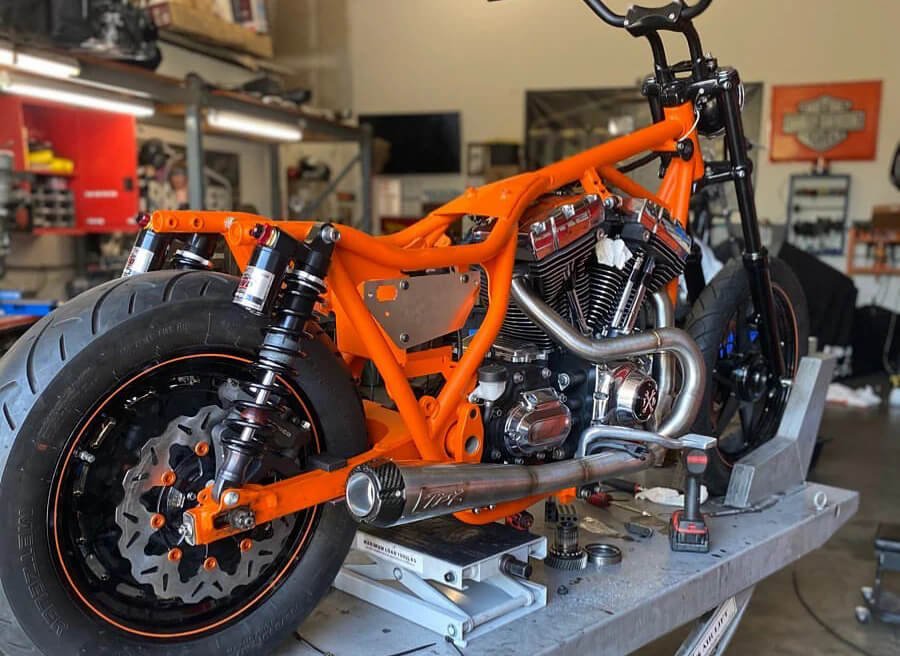
motorcycle frame(the yellow metal structure in this photo)
In this photo, you can see a yellow metal-made structure. Yes, that's the frame of this motorcycle.
The frame is the core structural component of a motorcycle; it is like the backbone of your motorcycle.
Basically, it holds everything together – the engine, the suspension, all that body stuff. It also has a big impact on how the bike handles.
Now, with better tech, frames are built from all sorts of materials. You'll see frames made of steel, aluminum, or even carbon fiber.
Besides, frames also have different design styles, such as:
- Cradle / Backbone frames
- Perimeter / Twin-spar frames
- Trellis frames
Each design balances strength, weight, and rigidity differently. A cracked or bent frame is a serious safety issue, so regular inspection is essential.
Swingarm

motorcycle swingarm
The swingarm is located at the rear of a motorcycle. It is a pivotal arm that links the motorcycle's rear wheel to the frame and houses the rear suspension.
It swings up and down to absorb bumps and maintain traction. So, yeah, how good your swingarm is will change how comfy your ride is.
Types include:
- Double-sided swingarm
- Single-sided swingarm
- Parallelogram designs in some shaft-drive bikes
A stiff, well-maintained swingarm improves stability, especially during acceleration and cornering.
3. Suspension System
Front Forks(Front Suspension)

front forks on a motorcycle
The front suspension usually consists of telescopic forks (the two tubes extending from the handlebars to the front axle). They absorb shocks and keep the front tire planted.
Parts include:
- Outer Tube (Fork Leg)
- Inner Tube / Stanchion
- Springs
- Seals
- Damping Mechanism
Front suspension is one of the most important parts of a motorcycle; it affects your braking behavior and ride comfort. So properly tuned forks are crucial for your riding confidence.
Rear Suspension (Shock Absorber)
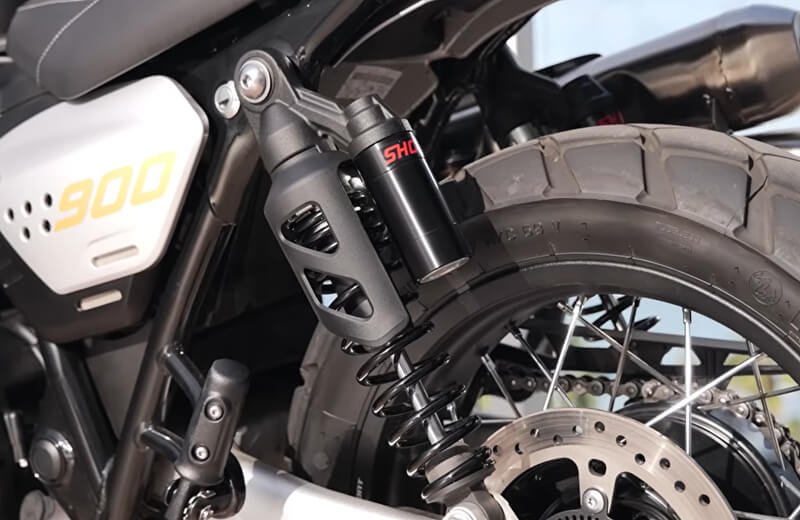
This is the rear suspension of triumph scrambler 900
At the back of your motorcycle, there is a shock absorber (sometimes dual shocks or a monoshock) works with the swingarm. Together, they aim to smooth out bumps, stabilize the rear wheel, and maintain traction.
Suspension settings — preload, compression, and rebound — are quite important. This drastically affects your riding comfort and handling.
4. Wheels, Tires, and Braking
Wheels and Tires
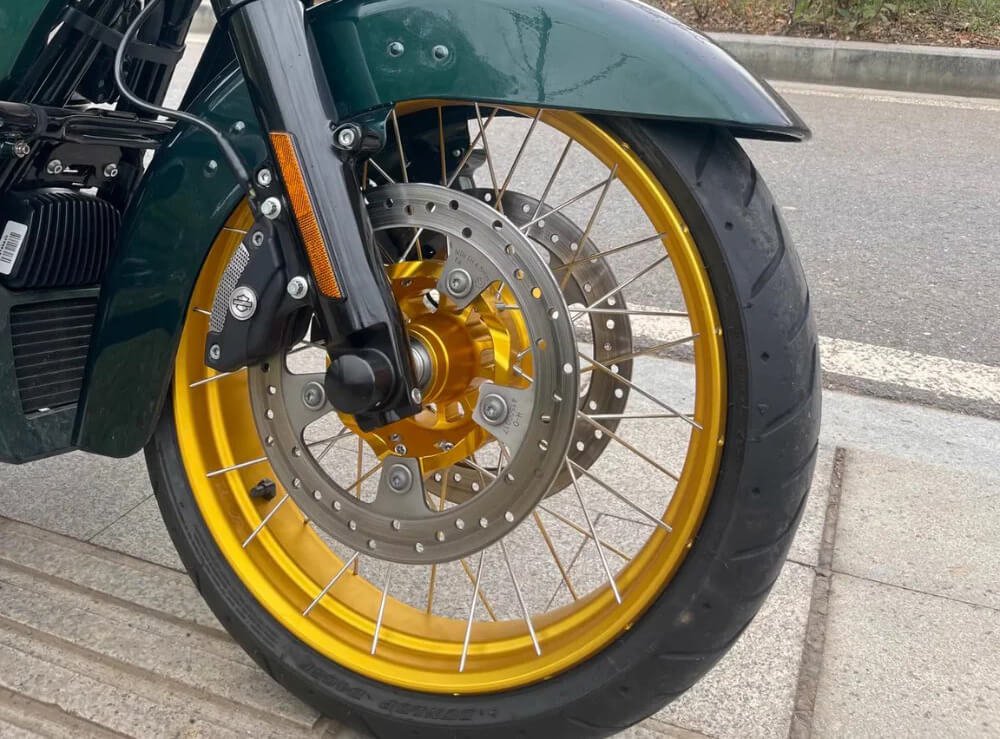
motorcycle wheel and tire
Motorcycle wheels are typically made from cast or spoked rims with tires mounted to them. I think you can easily find out them on your motorcycle.
Important subparts in this area include:
- Rims and Hubs
- Spokes
- Tires (front & rear)
- Inner Tubes (in some designs)
Tires are regarded as one of the most important safety components of a motorcycle. Their compound, tread pattern, and pressure determine grip under acceleration, cornering, and braking.
More Knowledge about Motorcycle Tire
Brakes — The Safety System
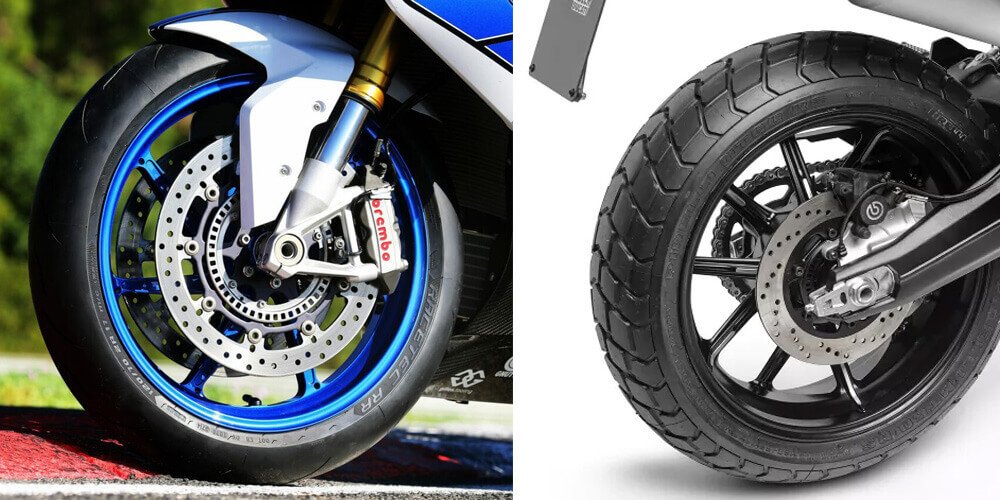
motorcycle front and rear brake
Stopping a motorcycle quickly and predictably is just as important as going fast. So, you should always know that the brakes are also important safety parts on a motorcycle.
Front braking system has:
- Brake Calipers – clamp brake pads onto the disc.
- Brake Disc (Rotor) – metal disc attached to wheel.
- Brake Lever (Hand) – controls front brake.
Rear braking system:
- Brake Pedal (Foot)
- Rear Caliper and Disc or Drum Brake
For the brakes, today's modern bikes are safer than those old motorbikes. They often feature dual-disc front brakes for high performance.
Remember to maintain your brakes properly; this is really critical. Worn pads or warped discs can severely degrade stopping power.
More To Learn
5. Fuel and Exhaust Systems
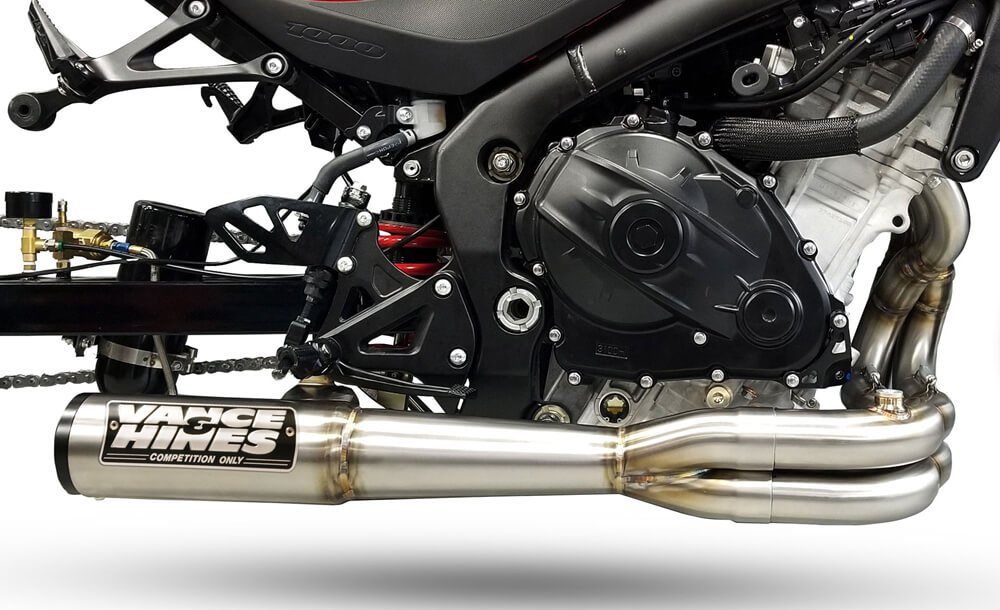
fuel and exhaust systems on a motorcycle
Fuel System
It is easy to understand the function of the fuel system part of a motorcycle. It delivers fuel from the tank to the engine.
Here are the key parts of the fuel system:
- Fuel Tank – It holds gasoline.
- Fuel Pump – It presses fuel toward the engine.
- Carburetor or Fuel Injectors – It mix fuel and air.
- Air Filter – It keeps air clean entering the engine.
As a professional motorcycle mechanic, I sincerely recommend that you check the fuel filter and injector regularly. These are essential checks to improve your fuel efficiency and prevent stalling.
More Basic Knowledge
Exhaust System
The exhaust system works with the engine and fuel system. It has two main purposes: pushes burned gases away from the engine and reduces noise.
You can find the following parts in the exhaust system:
- Exhaust Pipe
- Muffler
- Catalytic Converter (on some bikes)
The muffler and pipe design influence backpressure and performance. High-performance systems often balance sound and power output.
6. Electrical and Control Systems
Battery and Charging System
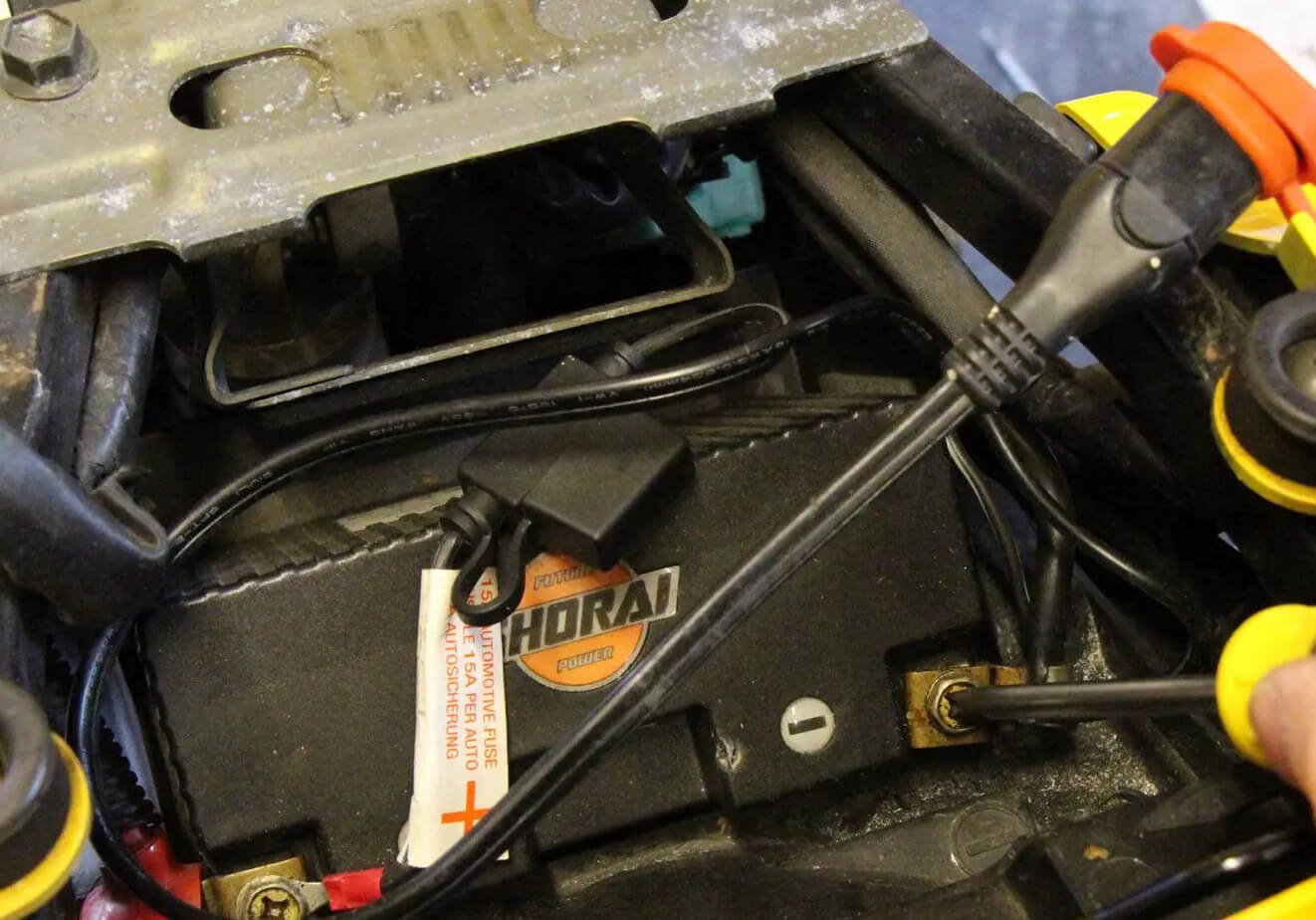
motorcycle battery charging
The battery stores electrical energy for starting the bike and powering electronics.
It’s supported by the:
- Stator / Alternator
- Rectifier / Regulator
- Wiring Harness
Good electrical health ensures reliable starts and stable lighting performance.
Lights & Indicators

Lights and indicators system on a motorcycle
Lights and indicators are critical safety parts on your motorcycle. They bring you light and improve your visibility, so that you can ride safely. These parts include:
- Headlight
- Tail Light
- Brake Light
- Turn Signals / Indicators
- Reflectors
These keep the rider visible in traffic and comply with legal requirements.
Dashboard / Instrument Cluster
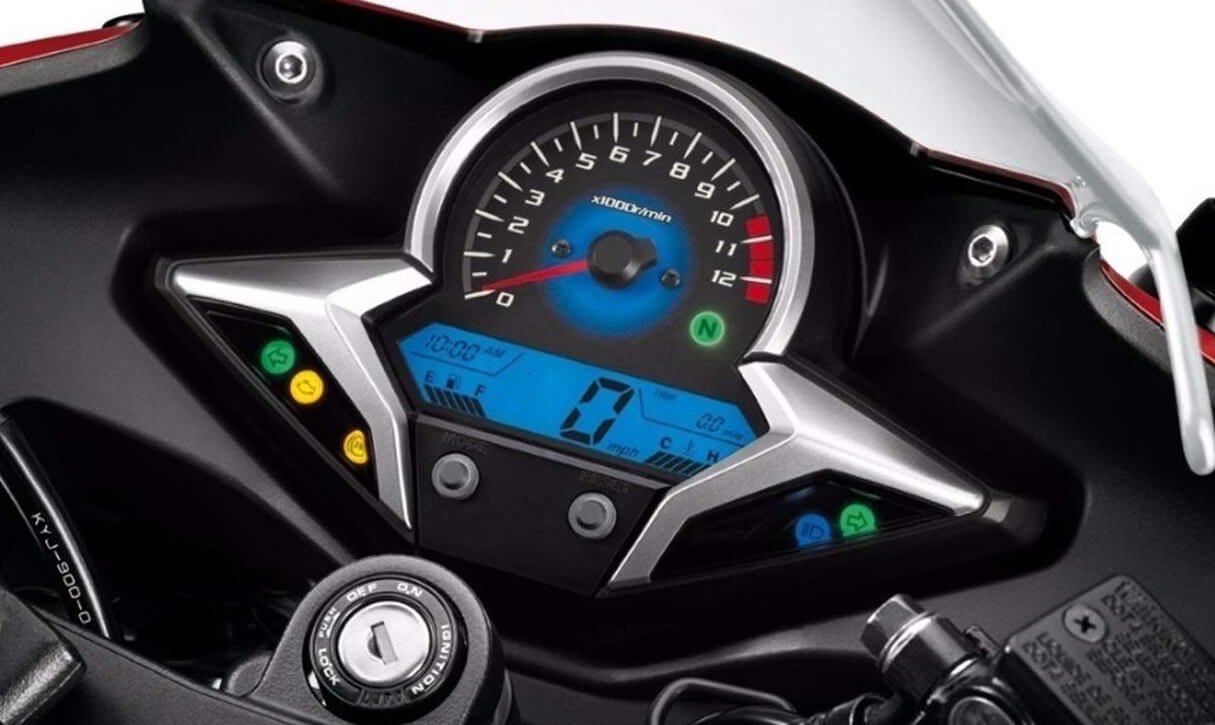
Dashboard / instrument cluster on the motorcycle
The dashboard and instrument cluster provide visible information on a motorcycle. It will displays vital information to you as soon as you power on the motorcycle. You can directly see the following information:
- Speedometer
- Tachometer
- Fuel Gauge
- Gear Indicator
- Temperature / Warning Lights
Make sure to have a look at the instrument cluster before your motorcycle starts go. A messed-up gauge can give you wrong info about your gas or how your engine's doing. If this happens, you should get it fixed.
7. Steering and Controls
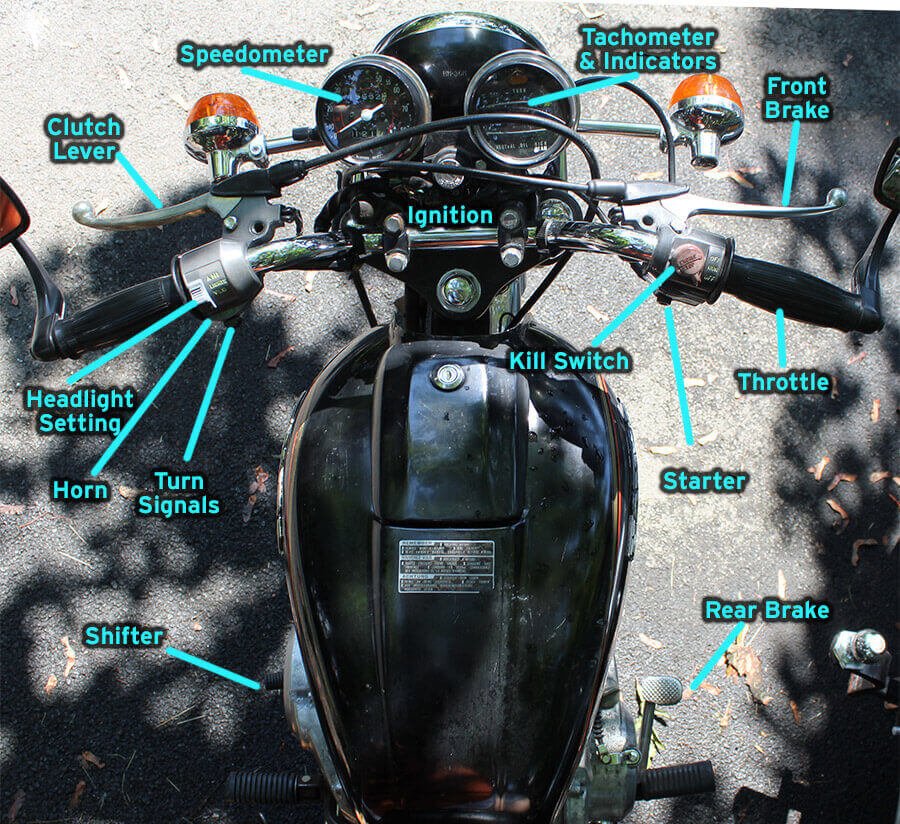
steering and controls parts of a motorcycle
Handlebars and Hand Controls
Handbars and hand controls may be the most used parts on a motorcycle. Every moment you are on the motorcycle, you will need to grab the handlebars, right?
The handlebar platform supports:
- Throttle (Right grip)
- Front Brake Lever
- Clutch Lever
- Switchgear (lights, horn, indicators)
- Mirrors
Hand controls allow the rider to command the motorcycle precisely.
Foot Controls
Foot controls include:
- Foot Pegs
- Rear Brake Pedal
- Gear Shift Lever
Comfortable and well-placed pegs improve ergonomics and control response.
8. Bodywork, Cowling, and Fairings

bodywork, cowling, and fairings parts on a motorcycle
Body Panels & Cowling
Fairings and cowling are protective and aerodynamic bodywork pieces:
- Front Fairing – It shields the rider from the wind.
- Side Panels – They cover mechanical parts.
- Cowling – It covers the engine area, reducing drag.
Sport bikes feature extensive fairings for aerodynamics, while cruisers might have minimal bodywork.
9. Stands and Convenience Parts
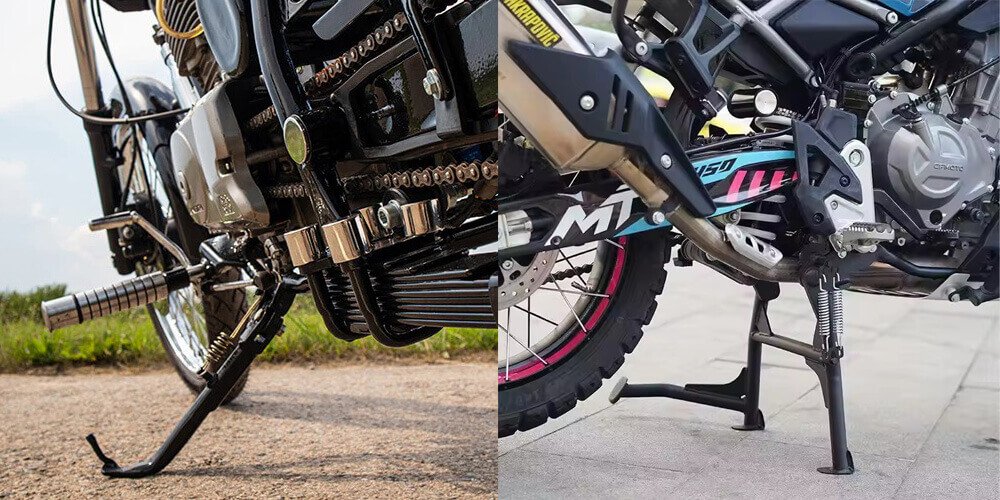
motorcycle kickstand and center stand
Kickstand and Center Stand
- Side Stand (Kickstand) – supports the bike at an angle when parked.
- Center Stand – lifts the rear wheel off the ground, useful for maintenance.
10. Safety and Comfort Accessories
Crash Protection
- Engine Guards
- Frame Sliders
- Skid Plates
These protect the bike (and rider) in falls and off-road conditions.
Rider Comfort
- Seat
- Passenger Pegs
- Windshield
- Saddlebags / Luggage Racks
Comfort accessories make long rides and touring more enjoyable.
Read More
Conclusion: Know Your Motorcycle Inside and Out
A motorcycle is not just about the engine and tires. It's a bunch of stuff like how it's built, how the engine works, the electrics, and how it fits you. If you know this basic knowledge about all the parts of a motorcycle, you can figure out what's wrong when things break. When you talk to your mechanic without sounding like a dummy, or do some repairs yourself, it will be easier and more convenient.
So, if you're just starting out or you've been fixing bikes for years, getting to know all the parts helps you ride safe, know what's going on, and feel good about your bike.
Sources:
Motorcycle Parts: 25 Different Parts of A Motorcycle (ESL Teacher Online Education)
Swingram (Wikipedia)
Motorcycle Handlebar (Wikipedia)
Cowling (Wikipedia)

Motorcycle mechanic, writer. Interested in motorcycle gear for years. Like to stay up to date with the newest products and techniques of the motorcycle.
Subscribe
0 Comments
Oldest
You maybe like to read:
Adventure motorcycles, often called ADV bikes, are built to take you from smooth highways to rough backcountry trails. For new riders, picking the best adventure bikes for beginners can make all the difference. The right machine turns highways, gravel roads, forest tracks, and remote trails into places you actually want to explore, while the wrong […]
Riding in a group is thrilling, but without clear communication, even the best rides can turn chaotic. That’s where motorcycle intercom systems come in, letting you talk with your group, share GPS directions, listen to music together, and stay safer on the road. Whether you’re riding with a single friend or leading a pack of […]
I’ve used premium intercoms and budget ones on the same roads, in the same weather, on long touring days. The truth? Most riders don’t need a $400 system. Most riders still need the same basics: clear rider-to-rider talk, stable Bluetooth, and batteries that last a full day on the road. In 2026, budget motorcycle intercoms […]
What is the best motorcycle intercom for beginners? If you’re a new rider, the idea of adding another piece of tech to your helmet can feel overwhelming. I’ve been using motorcycle intercoms for years—on solo rides, long tours, group trips, and daily commutes—and I’ll tell you this upfront: A beginner motorcycle rider doesn’t need the […]
Mesh Intercom vs Bluetooth: Which Motorcycle Communication System Is Better? Mesh intercoms are best for riders who travel in groups because they automatically reconnect and stay stable, while Bluetooth intercoms are better for solo riders and two-up riding due to lower cost and simpler operation. As someone who both wrenches on bikes and rides long […]