Long-distance motorcycle touring is about freedom, rhythm, and endurance. Hours on the highway, changing weather, unfamiliar roads, and constant wind noise all test your gear — especially the communication system for touring. A touring motorcycle intercom is not the same as a short-ride or commuter intercom. On a multi-day trip, small weaknesses become big problems: […]

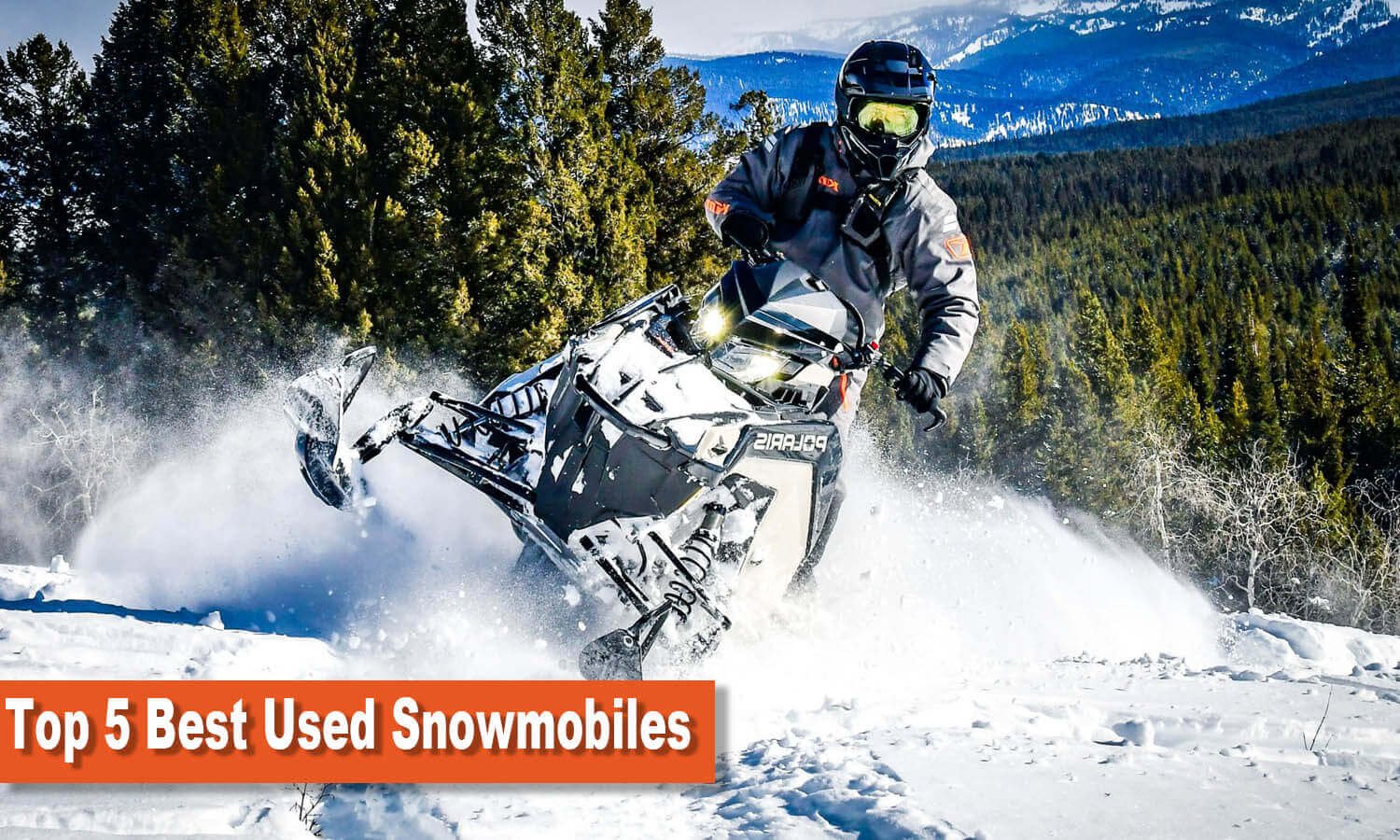
Top 5 Best Used Snowmobiles
If you’re shopping for a snowmobile and want the best bang for your buck, these tried‑and‑true models should be on your list. Used snowmobiles can save you a bundle, but it’s smart to pick reliable machines. Many older sleds offer great value, strong reliability and solid performance if you choose the right series. Below are five of the best options to consider when shopping on the second-hand market.
Table of Contents
Top 5 Best Used Snowmobiles
Polaris Indy (600 & 800)
Polaris Indy trail sleds have been around for decades and enjoy a reputation for reliability and simplicity. Popular in North America, the Indy series (especially the 600cc and 800cc versions with electric start) is often recommended as a great used choice. They are solid trail sleds that handle well in most conditions.
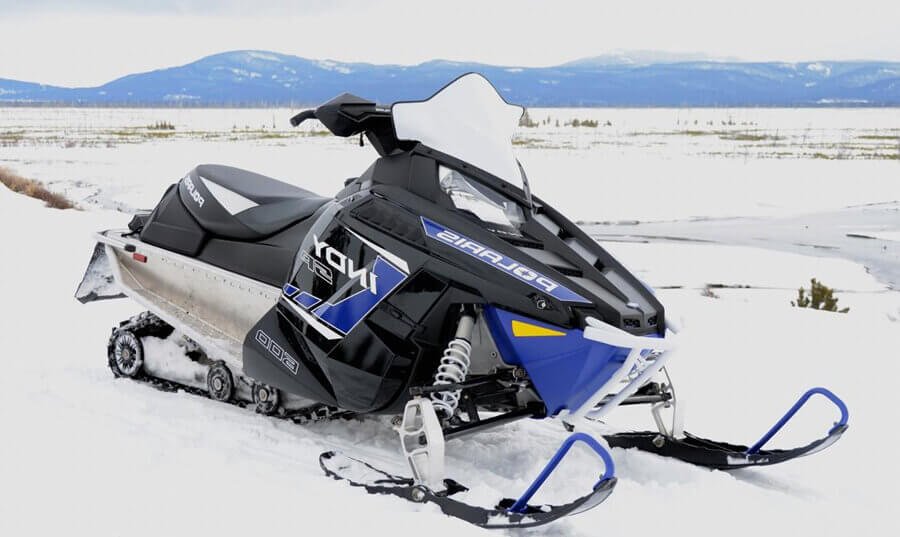
Polaris 2018 600 Indy SP ES
Pros
- Excellent reliability — The 600 HO and 800 Cleanfire engines are known for long life when maintained.
- Extremely easy to find parts — Polaris parts are everywhere in the U.S., Canada, and northern states.
- Versatile — Works as a daily trail sled, winter commuter, or weekend fun machine.
- Stable ride quality — Polaris’s Pro-Ride and later suspensions improved comfort and handling.
- Low running cost — Belts, filters, carb parts, shocks, and bushings are cheap compared to Ski-Doo or Yamaha.
- Beginner friendly — Not twitchy or hard to control; great starter sled for adults.
Cons
- Not as powerful as modern machines — Even the 800 Indy can feel mild compared to newer 850 E-TEC or 850 Patriot engines.
- Older 600 Indys may feel underpowered in deep snow or steep climbs.
- 2-stroke maintenance — Requires oil injection or premix, and power valves need periodic cleaning.
- Some early 800s had known issues (pre-2012 era). Always check compression and service history.
- Base models are basic — Many older Indys don’t have reverse, electric start, or high-end gauges.
Average Used Price
Used Polaris Indys are some of the best bargains on the market:
- 2006–2014 Indy 600: $2,000 – $3,500
- Indy 800 (2011–2015): $2,500 – $4,500
- 2015 Indy 600 ES: JD Power lists around $2,330 on average
- Long-track Indy 144 or “Adventure” models: slightly more, $3,500 – $5,000
Because Polaris built so many Indys, prices stay lower than Ski-Doo MXZ or Yamaha 4-strokes.
Years to Consider
- 2008–2012 Indy 600 / 600 HO — great engines, simple design, reliable electrics
- 2011–2015 Indy 800 (Cleanfire engine) — huge improvement over older Polaris 800s
- 2013–2016 Indy on Pro-Ride chassis — lighter and easier to control
- Indy 600/800 SP models — upgraded suspension, better shocks, sportier ride
Buying Tips
- Check belt wear — Indys can eat belts if clutches are out of alignment.
- Do a compression test — both 600 and 800 engines should have consistent PSI across cylinders.
- Test reverse and electric start if equipped — common issues on older models.
- Check suspension rails and slides — older Indys often need new sliders (cheap fix).
- Ask about oil type — using cheap oil on 2-strokes shortens engine life.
Because Polaris Indys use such common parts, even a “rough around the edges” sled can be brought back to life cheaply—another reason they’re such good second-hand purchases.
Ski‑Doo MXZ (Trail) and Summit (Mountain)
Ski‑Doo is the #1 snowmobile brand by sales, and their MXZ (trail) and Summit (mountain) series offer great options on the used market. The MXZ is a nimble trail sled, while the Summit is built for deep snow and hill-climbing. Both lines have long histories, so you’ll find plenty of older machines in good shape. In particular, the Summit Adrenaline or X models (for aggressive mountain riding) and MXZ X or Blizzard versions (for trail speed) have earned praise for reliability and performance.
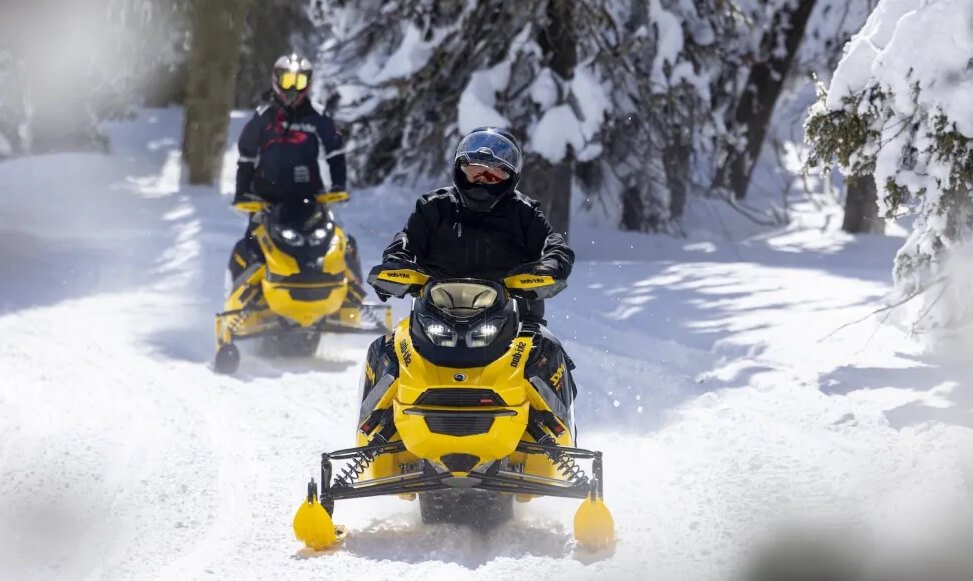
Ski‑Doo MXZ
Pros
- High-quality ride and performance. Ski-Doos are known for excellent suspension setups and refined handling, especially on REV-platform models (REV XP / REV XS / REV Gen4).
- Strong Rotax engines. Both 2-stroke and 4-stroke Rotax engines have good longevity.
- The 900 ACE 4-stroke is especially praised for outstanding fuel economy, quiet operation, and low maintenance.
- Easy parts and service availability. Ski-Doo is extremely common in North America, so replacement parts and dealer support are easy to find.
- Good used selection. Many MXZ (trail) and Summit (mountain) models from 2008–2016 are available with reasonable mileage and have proven reliability.
Cons
- Some 800R E-TEC issues. Early 800R E-TEC 2-strokes can need top-end work after high mileage. Service records are important.
- Suspension wear is common. Heavily ridden sleds can have worn bushings, shocks, or rails—especially on Summit mountain models.
- Track/stud damage. MXZ trail sleds with studs often show torn lugs or pulled studs.
- Advanced models cost more to repair. Higher-end versions (Summit X, MXZ X, X-RS) have more complex suspensions that are pricier if neglected.
Average Used Price
- 2015 Ski-Doo Summit SP 800 (163") – Around $4,000–$4,500 average used value.
- MXZ 600 (mid-2010s) – Often $2,000–$2,500 depending on condition.
- Older MXZ 600/800 (2000s–early 2010s) – Typically $1,500–$3,000.
- Summit models (long track) – Usually $3,000–$5,000, depending on year, mileage, and track length.
Years to Consider
- 2008–2015 REV XP / XS platform – Excellent ride quality, very popular for both MXZ and Summit.
- 2009+ 800R E-TEC – Good performance; just confirm maintenance.
- 2017+ 850 E-TEC (Gen4) – Extremely strong engines for mountain/snowsports riders; often pricier but worth considering if budget allows.
Avoid pre-2006 unless very cheap and well-maintained—suspensions and tracks on older units tend to be heavily worn.
Buying Tips
- Inspect the track carefully. Look for torn lugs, missing studs, or dry-rotted rubber.
- Check belts and clutches. Worn drive belts or noisy primary clutches are common maintenance items.
- For 2-strokes: Ask about top-end rebuilds, ring replacement, or E-TEC service history.
- For Summit models: Verify skis, sway-bar status, and shock condition (mountain riding is hard on suspension).
- Look for clean wiring and no aftermarket hacks. Ski-Doos with poorly done mods are common—avoid heavily tuned engines unless documented.
- Always test compression or have a dealer/mechanic do a quick health check before buying.
Arctic Cat F‑Series (F5 / F6)
The Arctic Cat F‑Series (F5 and F6) are classic trail/sport sleds from the 2000s. The F5 (around 585cc, two‑stroke) and F6 (around 600cc) were rugged, powerful machines of their day. They deliver strong acceleration and a solid chassis. Though Arctic Cat merged into Textron a few years back, these older Cats have a loyal following and many remain running well. Reviews have even called the 2009 F5 “one of the most underrated snowmobiles” – offering a great balance of power, handling and comfort.
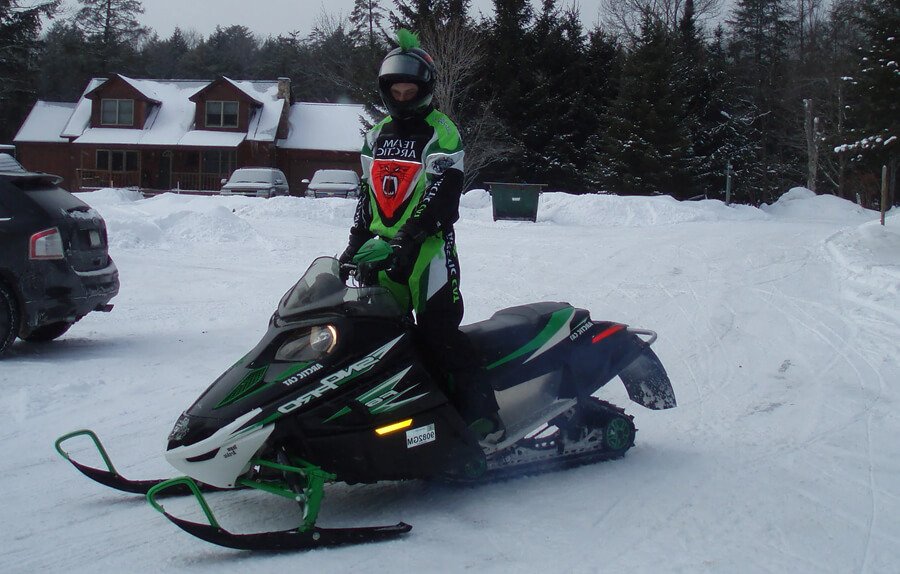
Arctic Cat F6
Pros
- Strong and responsive engines. The 2-stroke twins in both the F5 and F6 offer impressive acceleration for their class. The F6 EFI models especially deliver crisp throttle response and better fuel efficiency than carbureted sleds of the era.
- Light and agile Firecat chassis. Arctic Cat designed the F-Series for trail carving. They turn well, stay stable at speed, and feel playful without being unpredictable. Many riders still love how “flickable” these sleds are.
- Good aftermarket and parts availability. Arctic Cat parts are easy to source, and many items interchange with other Cat models from the 2000s. Suspension parts, clutches, plastics, and even complete engines are easy to find.
- Affordable and high value. Because these sleds fly under the radar, you can often get a well-maintained F5/F6 for significantly less than similar-year Polaris or Ski-Doo models.
- Straightforward mechanical design. Perfect for DIY riders. Most maintenance jobs—clutching, belts, suspension greasing, even top-end overhauls—can be handled in a garage with basic tools.
Cons
- Older suspension design. While good for its era, the F-Series suspension doesn’t match the plushness of 2015+ sleds. Expect a firmer ride on rough trails.
- Potential wear from aggressive riders. These sleds were marketed as sporty, so many were ridden hard. Look closely for signs of abuse: bent A-arms, cracked belly pans, or worn-out shocks.
- Track/stud wear is common. Many owners studded these sleds, and missing studs or torn tracks aren’t unusual on high-mileage units.
- EFI models have extra components to check. On F6 EFI versions, injectors, throttle bodies, and sensors add complexity compared to the basic carb models.
Average Used Price
The F-Series sits comfortably in the budget-friendly range:
- Typical price: $2,500 – $4,000
- Clean, low-mileage F6 EFI models might be listed slightly higher, but bargains appear often.
- Older or high-mileage F5 units sometimes fall below $2,000, making them one of the best true budget trail sled options.
- Condition impacts the price more than the year. A well-cared-for 2004 F6 is worth more than a beat-up 2009 F5.
Years to Consider
- 2003–2006 F5 / F6 (Firecat platform)
These years are considered the peak of the F-Series. They’re known for reliability and solid suspension geometry. - 2007–2010 models
Often similar mechanically, but may have more mileage. Still good buys if maintained well.
Buying Tips
Always check the bearings (suspension and crankshaft play) on older Cats. A compression test on two-strokes is smart too. Confirm the tunnel isn’t bent (Arctic Cat points on the chassis wear can tell you history). As with any used sled, insist on service records if available and beware of deals that are “too good to be true” – sellers claiming a rebuilt engine should provide proof.
Yamaha 700cc Series (SRX / Venture / Mountain Max)
Yamaha’s 700cc snowmobiles are classics in the used market—powerful, durable, and built with the typical Yamaha reputation for bulletproof engineering. Unlike the tiny 250cc Bravo, the 700cc lineup is made for riders who want real performance or strong utility capability. Whether it’s the legendary SRX 700 (speed king of the late ’90s), the comfy Venture 700 touring sled, or the deep-snow capable Mountain Max 700, Yamaha’s 700-class machines are consistently praised for reliability and long engine life.
These sleds often have triple-cylinder 2-stroke engines (Yamaha’s famous “triple”), known for their smoothness and power. They’re great options if you want a used machine that still feels strong on trails or in the mountains—without the price of newer 800cc or 850cc machines.
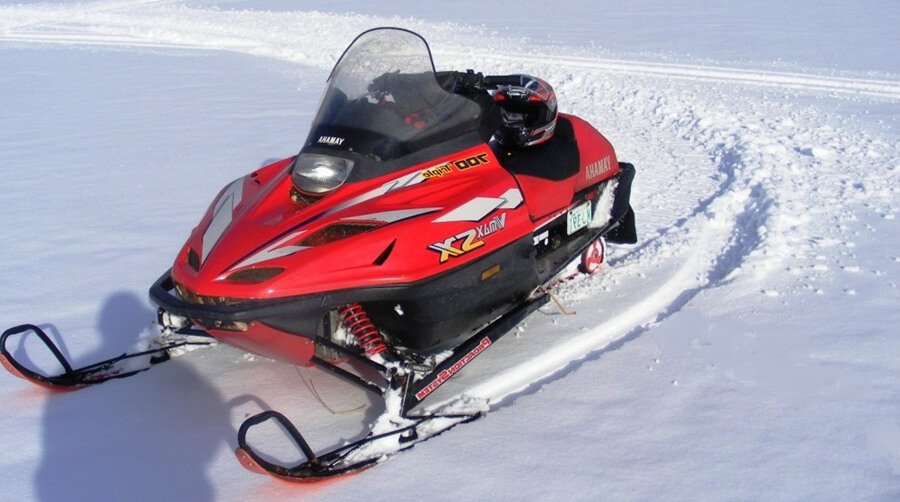
yamaha 700 sx
Pros
- Super reliable engines – Yamaha’s 700cc triples are known for longevity and smooth power delivery. Many exceed 8,000–10,000 miles with good maintenance.
- Strong performance – SRX models are fast, Mountain Max climbs decently, and the Venture 700 is excellent for two-up touring.
- Great build quality – Yamaha has a reputation for solid frames, quality plastics, and trouble-free electronics.
- Parts availability is still good thanks to Yamaha’s popularity and shared components across multiple model years.
- Good value in the used market—often cheaper than comparable 800cc Ski-Doo or Polaris models.
Cons
- Heavier than modern sleds – Yamaha sleds from this era tend to weigh more, especially the triple-cylinder models.
- Not as nimble in tight or deep-snow technical riding compared to lightweight Polaris RMK or Ski-Doo Summit models.
- Older suspension designs mean you don’t get the plush ride of post-2015 sleds.
- 2-stroke triples can be thirsty—fuel economy is not their strong suit.
- Some models lack reverse (depending on trim and year), which can be inconvenient.
Average Used Price
Prices vary depending on condition and whether it’s an SRX, Venture, or Mountain Max:
- $1,500 – $4,000 for most Yamaha 700cc sleds
(SRX 700 in mint condition may reach the high end) - Venture 700 is usually cheaper because it’s a touring sled:
$1,200 – $2,500 - Mountain Max 700 tends to be mid-range:
$1,800 – $3,500
In general, Yamaha’s 700-class machines hold value well because of their reliability.
Years to Consider
Yamaha built 700cc sleds for many years. Good ranges include:
- 1997–2002 SRX 700 – extremely popular, high-performance, cult following
- 1998–2005 Mountain Max 700 – well-rounded mountain/trail crossover
- 1999–2006 Venture 700 – great for touring and utility use
Condition matters more than the year because Yamaha’s design philosophy emphasized durability and consistency.
Buying Tips
- Check compression on all three cylinders—uneven compression is a sign of wear.
- Inspect the power valves (if equipped) for carbon buildup—common on older Yamaha triples.
- Examine the suspension rails and tunnel for cracks or corrosion, especially on Mountain Max models used in deep snow.
- Test the clutch engagement—Yamaha triples are smooth, so jerking or hesitation may signal clutch issues.
- If possible, avoid sleds with unknown modifications—some SRX owners race or tune their sleds heavily.
- Look for documented carb cleanings, chaincase oil changes, and regular plug replacements.
Polaris RMK (800 Pro‑RMK / RMK EVO)
If you ride deep snow or mountains, the Polaris RMK (formerly “RMK Assault” or “Pro-RMK”) series is legendary. RMK stands for “Rider’s Mountain King.” These are aggressive off-trail sleds with high‑power motors (typically 800cc 2‑stroke engines) and long, skinnier tracks for flotation. The 800 Pro-RMK and its EVO variant (introduced around 2013) are especially sought after on the used market. In fact, Polaris experts often list the Pro-RMK 800 as the #1 off-trail choice in its price class.
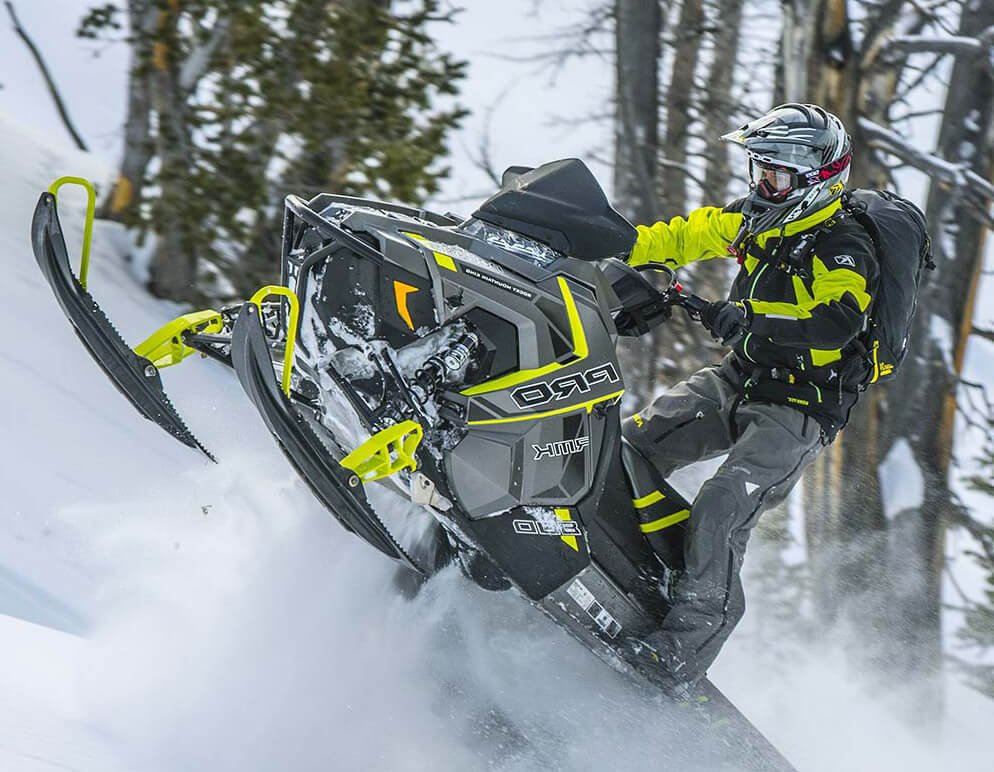
Polaris PRO RMK 800
Pros
- Elite deep-snow capability. RMKs excel in powder, sidehilling, boondocking and technical climbs thanks to their narrow stance, responsive front end and extremely light feel.
- Strong, proven 800 twins. Polaris refined this engine for many years; when well-maintained, it pulls hard and is relatively easy to service for a mountain motor.
- High-end mountain components. Pro-RMK models typically include premium skis, better shocks, and lightweight mountain-focused designs (tapered tunnel, powder-optimized running
- boards, etc.).
- Loved by the mountain community. Because of their agility and predictability, RMKs have huge aftermarket support and plenty of parts availability.
Cons
- Not ideal for casual trail-only riding. RMKs are built for deep snow; on groomed trails they feel twitchy, loud, and over-specialized.
- Higher maintenance expectations. Mountain sleds see harder hits, bigger climbs, and deeper powder—meaning suspension wear, bent A-arms, or fatigued tunnels are more common if the sled was ridden aggressively.
- Certain model-year quirks. Some early-2010s Polaris 800 engines had durability concerns unless properly maintained; clutching must be dialed in for altitude; and replacement parts (like
- long tracks or mountain shocks) cost more than trail equivalents.
Average Used Price
Used RMKs sit above typical trail sleds. Expect something like:
- 2013–2016 800 Pro-RMK: $6,000–$8,000 depending on miles and condition
- 2010–2012 models: generally $4,000–$6,000
- Older 2007–2009 RMKs: often $2,500–$4,000, but these usually lack the big chassis advancements
- RMK EVO: usually cheaper than a Pro-RMK, since it’s a lower-power, beginner-friendly light-mountain model
Actual prices vary a lot by region—mountain states (ID, MT, CO, WY) usually demand more, especially for long-track versions.
Years to Consider
Early models (2007–2012) have the older Axys chassis and 800R engine – still very good. The 2013 RMK EVO introduced a new frame and dual-spar chassis (lighter weight) – a great option if you find one. Check for model year quirks (for instance, 2014 saw an updated chassis). Generally, any 800cc RMK from 2010 onward is worth serious consideration.
Buying Tips
- Verify the clutch alignment and that the track cam chain (on older models) is intact.
- After a hard ride, look over the tunnel for scrapes.
- On used RMKs, also make sure the electric start and brake fan are working (deep snow operations stress these).
- As with any used Polaris, you can find expert guidance on year-specific issues (like clutch weights) online.
- Also note that Polaris engineers limited budgets differently – some good used-buy lists rank the RMK Pro as a top value in mountain sleds.
Summary Table of Best Used Snowmobiles
| Specification | Polaris Indy 600/800 | Ski-Doo MXZ / Summit | Arctic Cat F-Series (F5/F6) | Yamaha 700cc Triple | Polaris RMK (Pro-RMK / EVO) |
| Engine Type | 2-Stroke | 2-Stroke / 4-Stroke (Rotax) | 2-Stroke | 2-Stroke Triple | 2-Stroke |
| CC | 600 / 800 | 600 / 800 / 850 / 900 ACE | ~500–600 | 700 | 800 |
| Power | 110–150 HP | 110–165+ HP | 100–120+ HP | 120–140+ HP | 150–160+ HP |
| Best Use | Trail / All-around | Trail (MXZ) / Mountain (Summit) | Trail / Sport | Trail / Touring / Mountain | Deep Snow / Mountain |
| Strengths | Reliable, cheap parts, beginner-friendly | Excellent suspension & handling | Strong engines, easy to maintain | Extremely durable, smooth triple | Elite deep-snow performance |
| Weaknesses | Older models underpowered | Some 800R years need care | Older suspensions may be ridden hard | Heavy & thirsty | High wear from mountain riding |
| Used Price Range | $2,000–$4,500 | $1,500–$5,000 | $2,000–$4,000 | $1,200–$4,000 | $2,500–$8,000 |
Conclusion
If you're looking to buy a used snowmobile, stick with the series that are known to be reliable. The models I mentioned earlier? They're a good deal, work great, and spare parts are still around. Find one that the previous owner kept up well, and you'll end up with a snowmobile you can depend on without having to spend too much.
Related Reading

With over 10 years of experience working on cars and trucks Item Training Supervisor Richard Reina is known around the office as one of our technical experts & real an "automobile person".
His rate of interest began, in his very own words, "at the age of two when his father educated him the distinction in between a Chevy and a Ford. Since then it's been cars regularly."
As a serious lover of practically all things with a motor Richard can address nearly any kind of inquiry related to car upkeep, fixing, or restoration & is a fact professional in electric motor background.
Subscribe
0 Comments
Oldest
You maybe like to read:
Adventure motorcycles, often called ADV bikes, are built to take you from smooth highways to rough backcountry trails. For new riders, picking the best adventure bikes for beginners can make all the difference. The right machine turns highways, gravel roads, forest tracks, and remote trails into places you actually want to explore, while the wrong […]
Riding in a group is thrilling, but without clear communication, even the best rides can turn chaotic. That’s where motorcycle intercom systems come in, letting you talk with your group, share GPS directions, listen to music together, and stay safer on the road. Whether you’re riding with a single friend or leading a pack of […]
I’ve used premium intercoms and budget ones on the same roads, in the same weather, on long touring days. The truth? Most riders don’t need a $400 system. Most riders still need the same basics: clear rider-to-rider talk, stable Bluetooth, and batteries that last a full day on the road. In 2026, budget motorcycle intercoms […]
What is the best motorcycle intercom for beginners? If you’re a new rider, the idea of adding another piece of tech to your helmet can feel overwhelming. I’ve been using motorcycle intercoms for years—on solo rides, long tours, group trips, and daily commutes—and I’ll tell you this upfront: A beginner motorcycle rider doesn’t need the […]
Mesh Intercom vs Bluetooth: Which Motorcycle Communication System Is Better? Mesh intercoms are best for riders who travel in groups because they automatically reconnect and stay stable, while Bluetooth intercoms are better for solo riders and two-up riding due to lower cost and simpler operation. As someone who both wrenches on bikes and rides long […]