Long-distance motorcycle touring is about freedom, rhythm, and endurance. Hours on the highway, changing weather, unfamiliar roads, and constant wind noise all test your gear — especially the communication system for touring. A touring motorcycle intercom is not the same as a short-ride or commuter intercom. On a multi-day trip, small weaknesses become big problems: […]

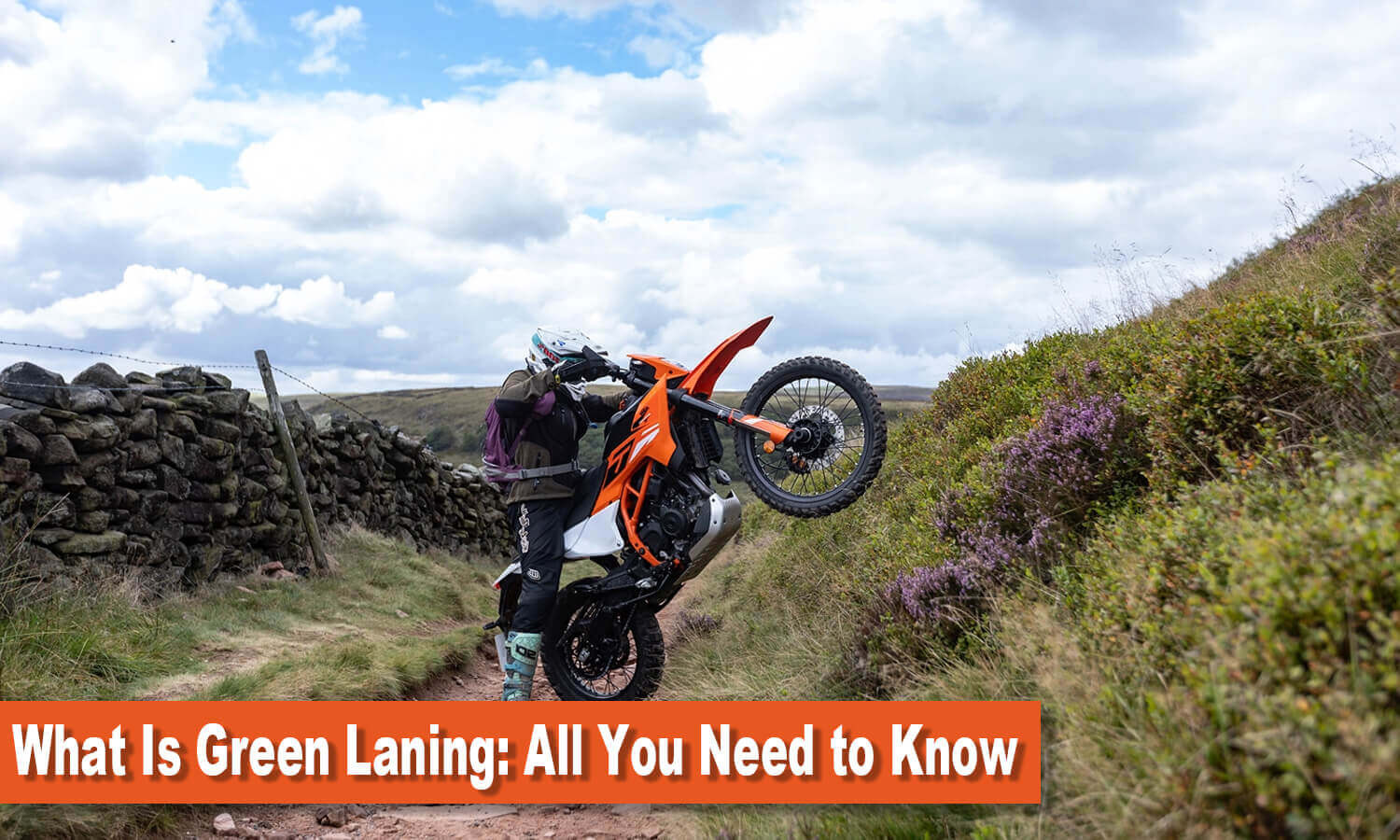
What Is Green Laning: All You Need to Know
Green laning is a popular countryside activity. From quiet countryside tracks to rugged trails hidden from main roads, it’s a hobby that lets you uniquely experience the land. But it’s often misunderstood. Different routes allow different vehicles, and the rules can vary depending on location and classification.
In this guide, you’ll learn about the background of green laning, the vehicles involved, the legal framework, and essential tips for safe and responsible riding.
Table of Contents
What Is Green Laning?
Green laning is basically hitting up old country roads that aren't paved. They're totally legal to use, but instead of smooth blacktop, you're dealing with grass, mud, rocks, and good old dirt. Because plants and grass grow over them, people call them “green lanes.”
Green laning isn't about going fast or doing crazy off-road stuff. It's about taking it slow, enjoying nature, and being cool to the land and everyone else using the path.
In the UK, green lanes are mainly found as Byways Open to All Traffic (BOATs) or Unclassified County Roads (UCRs). These routes are all over, and a lot of people probably live closer to one than they think.
A Brief History of Green Laning
history of green laning
Green lanes have been around way before they became a fun pastime. They popped up naturally as people walked, rode horses, or moved animals across the land.
Over time, these lanes turned into important links between farms, villages, and local markets.
Because these routes were used daily rather than built to modern standards, they were never paved. As folks started using newer roads, many of these old paths were left to chill out on their own. Slowly, grass, bushes, and trees took over again.
Later on, motorcycles and off-road vehicles got popular, and people began finding these forgotten routes.
Nowadays, green laning lets riders and drivers follow the same paths that have been used for ages. Plus, using them responsibly and legally helps keep them open for everyone.
Legal Considerations for Green Laning
Knowing the law is a key part of green laning. But before you do, it's super important to know the rules of the road (or, well, the trail).
Not every path is fair game for motorized vehicles. Messing up could mean fines and make green laning look bad overall.
1. Rights of Way
A right of way is a public route that people are legally allowed to use. However, only a small number of rights of way allow motor vehicles.
These routes are recorded by local councils and shown on official maps.
Always double-check if a green lane is legal before you take it. Don't just guess because it looks like a road!
2. Byways Open to All Traffic (BOATs)
Byways Open to All Traffic, often called BOATs, are public highways that allow all types of users. This includes cars, motorcycles, walkers, cyclists, and horse riders.
BOATs are usually your best bet for legal green laning. Since lots of people use them, drive slow, keep the noise down, and be polite to everyone else.
3. Restricted Byways
Restricted Byways are also public routes, but usually, no motor vehicles are allowed. They're mainly for walkers, cyclists, and horseback riders.
Unless a sign says otherwise, stay off restricted byways when you're green laning.
4. Road Traffic Act Compliance
Even off-road, green laning is still subject to UK road laws. Vehicles must be taxed, insured, and meet road safety standards if they are road-legal. Off-road-only vehicles must be used on trails where motor vehicles are allowed.
What Types of Vehicles Can Be Used?
Green laning can be done with different types of vehicles. Not every lane is cool with every vehicle.
Some paths are tight and bumpy, while others are more open and chill. Always double-check the rules beforehand.
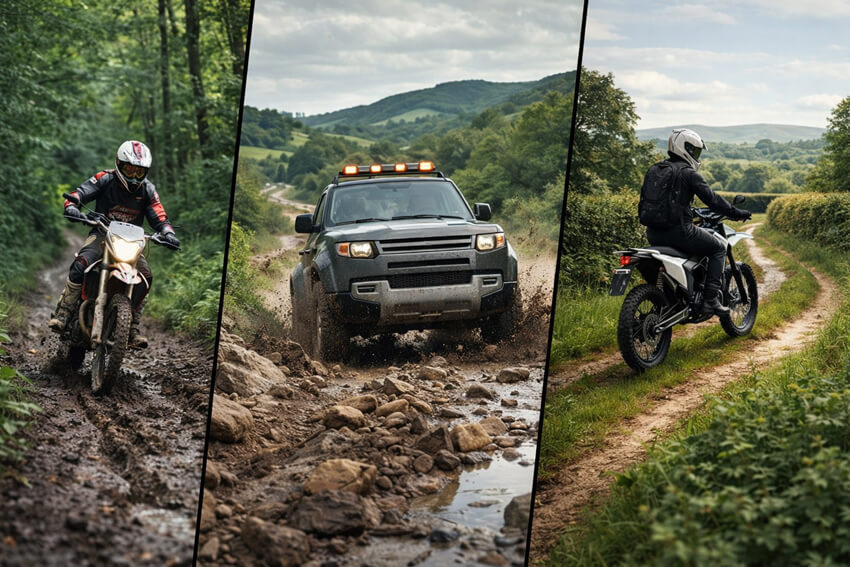
types of vehicles used for green laning
Here are the most common vehicles used for green laning.
1. Motorcycles and Trail Bikes
Trail bikes are a top pick. They're light, easy to handle, and great for those skinny, rough trails where bigger rides would have a tough time.
If you're on a street-legal bike, remember the usual rules apply. You gotta have your license, insurance, road tax, and a bike that's not a death trap.
2. 4x4s and Off-Road Cars
4x4s are often the go-to for the wider, tougher lanes. Think Land Rovers, Jeeps – those vehicles made for mud, rocks, hills, and splashing through water.
Some people trick out their rides with huge tires, lifted suspension, or even snorkels. These mods can be handy on super gnarly stuff, but you defo don't need them for the easier routes when you are starting out.
3. Electric and Hybrid Vehicles
You're starting to see electric and hybrid rides out on the lanes. They're quieter and cleaner, so they're a solid pick for areas where you want to keep things mellow.
Just plan ahead! Battery life, charging spots, and the type of land can all play a big role when you're bringing an electric ride.
Is Green Laning the Same as Off-Roading?
Green laning and off-roading are often confused, but they are not the same thing.
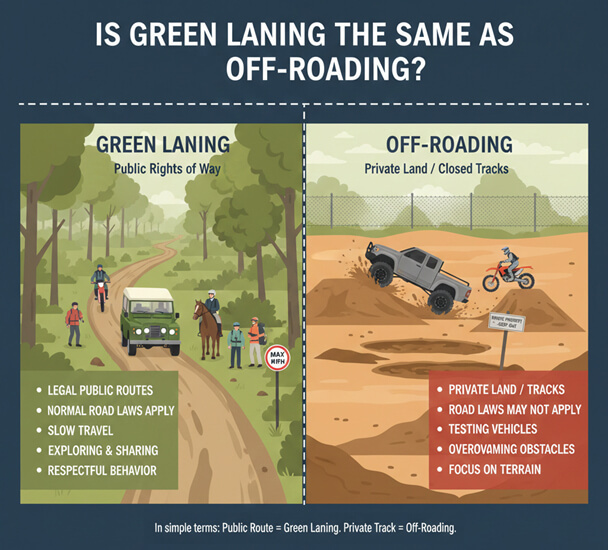
The difference between green laning and off-roading
Green laning is all about hitting up these legal, unpaved public roads. Think of them as part of the regular road system, just a bit rougher around the edges. You're still following the rules of the road out there.
Off-roading, on the other hand, usually goes down on private land, special tracks, or places where you pay to ride. These spots aren't public roads, and the vehicles don't always have to be street legal.
The whole vibe is different, too. Green laning is about taking it easy, checking out the scenery, and sharing the trail. Off-roading is often more about seeing what your vehicle can do, going over tough stuff, and pushing limits.
Since green lanes are for everyone, being a good sport is key. Stay on the path, don't go too fast, and be cool to other people out there.
Basically, if you're on a public, unpaved road that's legal to use, you're green laning. If you're on private land or a closed course, that's off-roading.
Green Laning for Beginners
If you’re new to green laning, here are some tips to help you get started:
- Start Small – Begin with easy lanes to get used to handling your vehicle on rough terrain.
- Join a Club – Many off-road clubs offer guided runs and training for beginners.
- Learn Basic Recovery Skills – Know how to use a winch or tow strap safely if your vehicle gets stuck.
- Use GPS or Maps – Mobile coverage may be poor, so bring a physical map and compass as backup.
- Travel With Friends – Having a companion can be a lifesaver in remote areas.
Getting started is one thing, but staying safe on the lanes is just as important once you’re moving.
Safety Tips for Green Laning
Green laning is great fun, but a little preparation goes a long way. Before you head out, think about these safety tips – they'll make your trip way better.
Check your ride fast
Give those tires, brakes, lights, and engine a quick once-over. Spotting problems early? Huge win.
Gear up right
Helmet, gloves, tough boots, and bright clothes aren't just for show. They keep you safe and help others see you on tight paths.
Stick to the path
Going around mud looks good, but leaving the trail wrecks the place and is often not allowed.
Easy on the gas
Green lanes hide rocks, ruts, roots, and thick mud. Slow and steady wins every time.
Look out for others
Hikers, bikers, and horses use these lanes too. Slow down, chill out, and give them room.
Watch the weather
Rain can make any lane super slick. If it looks sketchy, turning back is smart.
Pack must-haves
A map, a first-aid kit, water, and some basic tools might really save you if you're stuck way out there.
Green Laning Etiquette
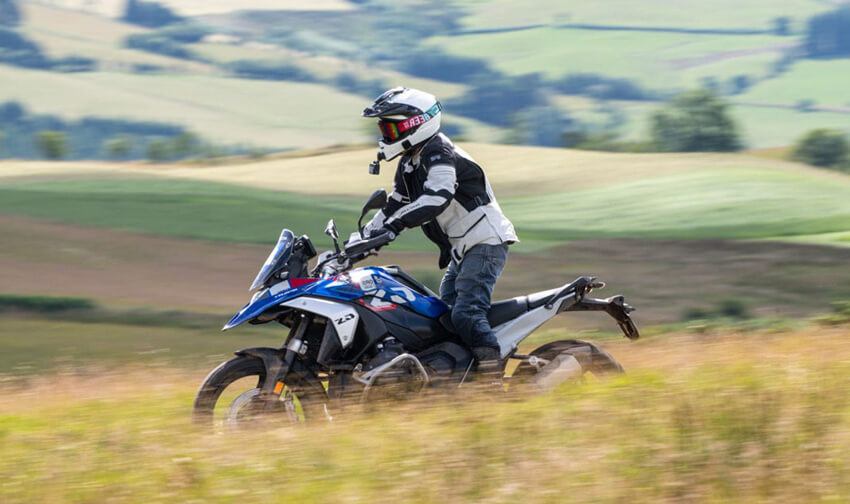
green laning etiquette
When you’re out on the lanes, it’s not just about having fun—you’re sharing the space with nature and other people.
Here’s how to keep things smooth and enjoyable:
- Stick to the lanes that are there – It keeps the ground from getting torn up and protects the countryside.
- Watch out for wildlife and sensitive spots – Some areas are fragile, so give them space.
- Take your rubbish with you – Leaving trash behind spoils it for everyone.
- Keep your engine quiet when you can – It’s nicer for the birds… and the walkers.
- Give way to others – Walkers, cyclists, and horses all have priority, so slow down and let them pass.
- Mind your noise – You don’t need to roar through every lane; a chill pace works just fine.
- Don’t make new tracks – Stick to the paths that exist; widening or making your own trail damages the land.
- Help out if you can – Pick up litter, tidy small bits of trail, or share tips with fellow riders—it keeps the lanes open and fun for everyone.
Popular Green Laning Routes in the UK
The UK has tons of green lanes, so there’s bound to be something perfect for you, no matter what you like to ride or how good you are.
Not sure where to begin? Lots of green laners love these areas.
- The Lake District: Get ready for amazing views of mountains, valleys, and lakes all around. Many lanes work for both motorcycles and 4x4s. Just take it easy – other people love these routes too.
- Exmoor National Park: If you like a challenge, this is a great pick. Think forest tracks, hills, and some tricky spots that will really test your skills.
- The Peak District: This place has it all. There are easy lanes for those just starting out, plus tougher stuff for more seasoned riders, and it’s all packed into one area.
- The New Forest: Things are slower and more chill here, with easy lanes going through woods and open fields. It is perfect for a relaxed day or for riding with friends who are newer to this.
- The Scottish Highlands: It’s remote, rugged, and so worth it. If you want a real, wild time, these lanes are perfect. Just be sure to plan well, since it is far away and conditions can be rough.
How to Find Green Lanes
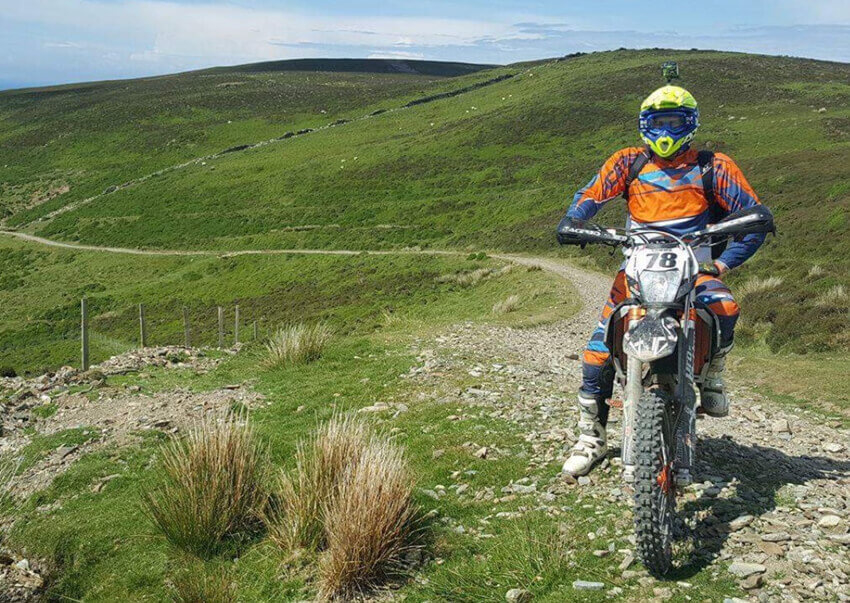
how to find green lanes
Finding green lanes is not rocket science, but you can't just wing it. Don't just head down any old track thinking it'll be alright.
Here's how most riders find the right lanes, the easy way.
1. Use Real Maps
The easiest thing to do is check the maps from the local council. These maps show all the routes that are okay for cars and bikes. It might take a minute, but it'll save you from getting into trouble later.
2. Use Green Laning Apps and GPS
Loads of riders use GPS apps made for green laning. These apps show you lanes where you're allowed to ride, track where you're going, and help you stay away from paths that are closed. Just remember—apps are good, but they aren't always spot-on.
3. Join a Club or Ride With People Who Know the Area
Riding with a club is a good way to learn. People who live nearby know which lanes are open, the best ones if you're new to this, and which ones to miss if it's been raining a lot.
4. Look for Signs
The signs at the start of a lane tell you what's what. A BOAT sign usually means you can drive or ride there. If you see signs that say you can't drive there, turn around and go somewhere else.
5. Check Before You Head Out
Lane rules can change because of bad weather or if the council changes them. Give it a quick check before you go, so green laning is safe for everyone.
Spending a bit of time finding the right lanes makes the ride way more chill. When you know you’re on the up-and-up, you can just enjoy the ride.
❓ FAQ – Green Laning Guide
🌿 What is green laning?
Green laning is the legal use of motor vehicles on unsurfaced public roads known as green lanes. These lanes are public highways, not private land, and are often found in rural areas.
Green laning is commonly enjoyed by riders on road-legal motorcycles and drivers of 4x4 vehicles who want to explore the countryside responsibly.
⚖️ Is green laning legal?
Yes, green laning is legal in the UK, but only on routes that have legal vehicular rights. These routes are usually classified as Byways Open to All Traffic (BOATs) or roads with proven motor vehicle access. Riding or driving motor vehicles on footpaths, bridleways, or restricted byways is illegal.
🛣️ What is the difference between a BOAT and a restricted byway?
A BOAT (Byway Open to All Traffic) allows all types of traffic, including motor vehicles.
A restricted byway does not allow motor vehicles, except in rare legal cases.
Confusing these two route types is a common cause of illegal riding, so it is important to check route classification carefully.
🚙 What vehicles are allowed on green lanes?
Only road-legal vehicles are allowed, including:
- Road-legal motorcycles and trail bikes
- Dual-sport and adventure motorcycles
- 4x4 vehicles
All vehicles must be registered, taxed, insured, and roadworthy. Off-road-only vehicles are not permitted on public green lanes.
🗺️ How do I know if a green lane is legal to use?
You can check legality by using:
- 📍 Local council Definitive Maps
- 🗺️ Ordnance Survey maps
- 📱 Trusted green laning GPS apps or route databases
Always check for Traffic Regulation Orders (TROs), as some lanes may be temporarily or permanently closed.
🌱 Can beginners do green laning?
Yes, green laning is beginner-friendly. Many lanes are easy and suitable for standard vehicles.
Beginners should start with simple routes, choose dry conditions, and avoid difficult terrain such as deep mud.
Riding or driving with experienced users or a local club is strongly recommended.
🎫 Do I need a special license for green laning?
No special license is required. You only need a valid UK driving or motorcycle license for the vehicle you are using. All normal road traffic laws apply on green lanes.
🚶♂️🐎 Are green lanes shared with other users?
Yes. Green lanes are shared with walkers, cyclists, horse riders, and farm vehicles. Motor vehicle users must slow down, give way, and be respectful at all times.
Pedestrians and horses always have priority.
🆚 What is the difference between green laning and off-roading?
Green laning takes place on public rights of way where motor vehicles are legally allowed. Off-roading usually happens on private land with the landowner’s permission.
Green laning focuses on access, scenery, and responsible use, while off-roading often involves technical obstacles and challenging terrain.
🌍 Is green laning bad for the environment?
Green laning is not harmful when done responsibly.
Staying on legal routes, avoiding damaged or waterlogged lanes, and following countryside codes help protect the environment.
Most environmental damage occurs when riders ignore rules or use illegal trails.
⛔ Can green lanes be closed?
Yes. Green lanes can be closed due to weather damage, safety concerns, or environmental protection.
These closures are usually enforced through Traffic Regulation Orders (TROs) and must always be respected.
🎒 What equipment do I need for green laning?
Basic equipment includes:
- 🧭 Maps or a GPS device
- 🩹 First aid kit
- 🧥 Suitable protective clothing
- 💧 Food and water
For vehicles, recovery gear such as a tow strap and basic tools is recommended, especially in remote areas.
🤝 Are green laning clubs worth joining?
Yes. Green laning clubs provide legal advice, route information, training, and organized group rides.
They also play an important role in protecting green lanes and maintaining long-term access for riders and drivers.
Conclusion
Green laning is a cool way to check out the countryside. You get to cruise on old trails and rough paths.
Whether you're on a bike or in a 4x4, just remember to be cool about it: respect the land, other people, and the animals you see.
If we play it safe, follow the rules, and keep these old routes in good shape, everyone can enjoy green laning for years.
So, get your stuff together, get out there, and have some fun. Your next awesome ride is waiting for you.
Recommended Reading

With over 10 years of experience working on cars and trucks Item Training Supervisor Richard Reina is known around the office as one of our technical experts & real an "automobile person".
His rate of interest began, in his very own words, "at the age of two when his father educated him the distinction in between a Chevy and a Ford. Since then it's been cars regularly."
As a serious lover of practically all things with a motor Richard can address nearly any kind of inquiry related to car upkeep, fixing, or restoration & is a fact professional in electric motor background.
Subscribe
0 Comments
Oldest
You maybe like to read:
Adventure motorcycles, often called ADV bikes, are built to take you from smooth highways to rough backcountry trails. For new riders, picking the best adventure bikes for beginners can make all the difference. The right machine turns highways, gravel roads, forest tracks, and remote trails into places you actually want to explore, while the wrong […]
Riding in a group is thrilling, but without clear communication, even the best rides can turn chaotic. That’s where motorcycle intercom systems come in, letting you talk with your group, share GPS directions, listen to music together, and stay safer on the road. Whether you’re riding with a single friend or leading a pack of […]
I’ve used premium intercoms and budget ones on the same roads, in the same weather, on long touring days. The truth? Most riders don’t need a $400 system. Most riders still need the same basics: clear rider-to-rider talk, stable Bluetooth, and batteries that last a full day on the road. In 2026, budget motorcycle intercoms […]
What is the best motorcycle intercom for beginners? If you’re a new rider, the idea of adding another piece of tech to your helmet can feel overwhelming. I’ve been using motorcycle intercoms for years—on solo rides, long tours, group trips, and daily commutes—and I’ll tell you this upfront: A beginner motorcycle rider doesn’t need the […]
Mesh Intercom vs Bluetooth: Which Motorcycle Communication System Is Better? Mesh intercoms are best for riders who travel in groups because they automatically reconnect and stay stable, while Bluetooth intercoms are better for solo riders and two-up riding due to lower cost and simpler operation. As someone who both wrenches on bikes and rides long […]