The motorcycle communication systems field just got a significant upgrade with the release of the Fodsports FX7. This state-of-the-art Bluetooth mesh intercom is packed with many advanced features and techs. It will revolutionize the way riders communicate and enjoy their rides. Whether you're a solo rider or part of a group, the FX7 offers unparalleled […]

Essential Motorcycle Group Riding Tips 2026: Complete Safety & Etiquette Guide
March 20, 2026
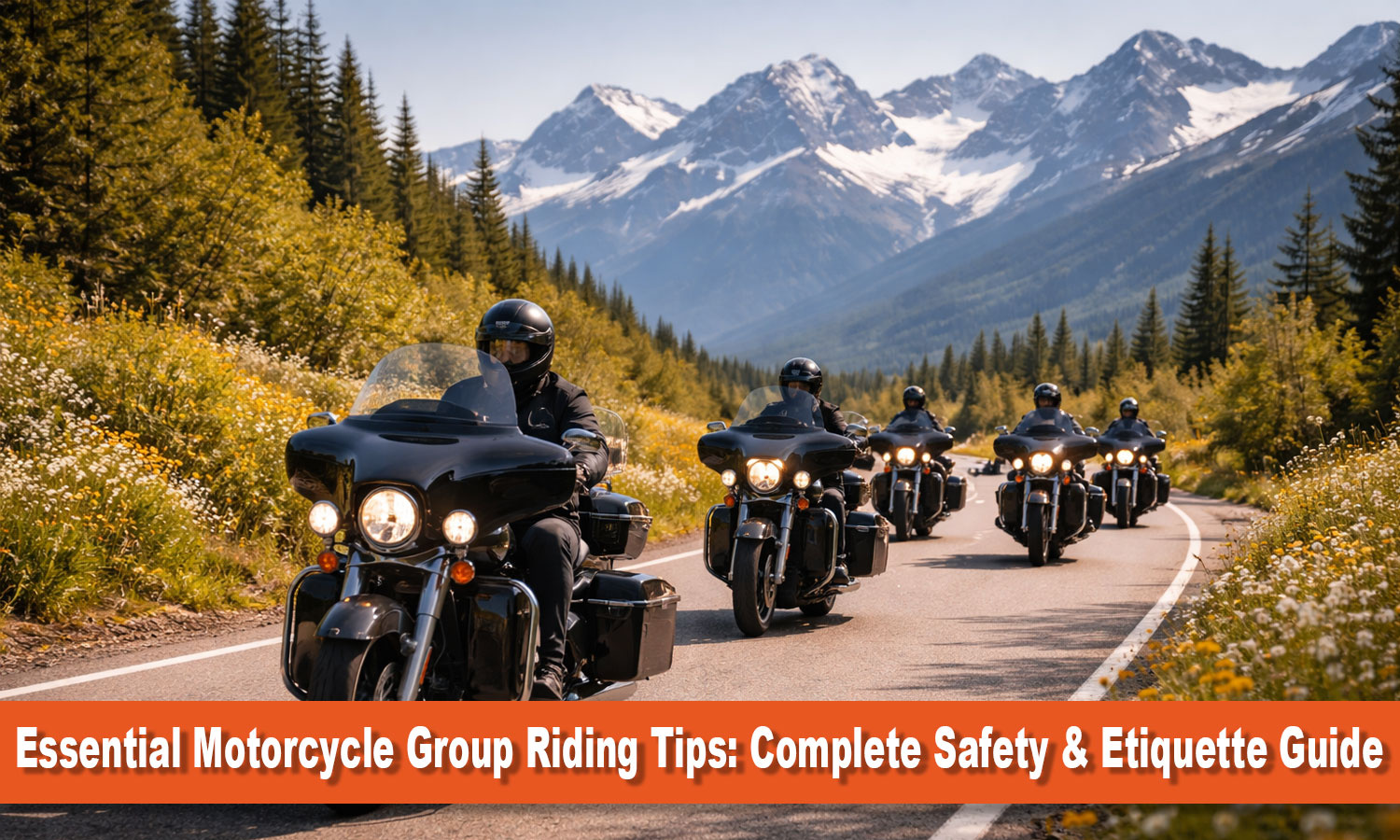
Riding motorcycles with friends is a unique experience. The sound of all those engines, the shared roads, and the camaraderie that comes with it all make group rides unforgettable. However, it's not all smooth sailing. Riding alone is one thing; navigating a group is another. Therefore, essential motorcycle group riding tips are needed.
You've got a mix of experience levels, bikes that behave differently, and less room to maneuver when something goes wrong.
Without a bit of structure, a day of fun can easily become something else entirely.
That's why experienced riders adhere to unwritten protocols, maintain proper formations, and typically have designated leaders steering the group. The goal is simple: keep everyone safe while still enjoying the ride.
In this post, I’ll share some down-to-earth tips for group riding, stories from actual rides, and the safety habits that help riders keep the whole crew rolling smoothly.
These motorcycle group riding safety tips will largely help the group riders.
Table of Contents
Top 15 Motorcycle Group Riding Tips for Safety and Control
- Ride in a staggered motorcycle formation for better spacing
- Keep at least a 2-second gap from the rider directly ahead
- Never pass the ride leader unless instructed
- Assign a ride leader and a sweeper before starting
- Always ride within your skill level
- Use clear hand signals for communication
- Avoid sudden braking or aggressive acceleration
- Maintain your position in the group formation
- Watch the rider behind you regularly
- Regroup at intersections to avoid splitting the group
- Switch to single file on twisty or narrow roads
- Plan fuel stops and rest breaks in advance
- Use Bluetooth intercoms for real-time communication
- Keep group sizes small (5–7 riders per group)
- Respect traffic laws and other road users at all times
💡 Pro tip: Experienced riders focus less on speed and more on smooth, predictable riding. Consistency keeps the entire group safe.
Why Motorcycle Group Riding Requires Special Skills?
Riding in a group is very different from riding alone. When multiple riders share the same lane space on the road, the possibility for mistakes increases considerably.
If one rider brakes suddenly, the other riders behind him could easily react instinctively and brake as well. The reaction travels through the whole riding group like a chain.
This is why inexperienced groups often experience “accordion effects,” where riders repeatedly accelerate and brake.
During a weekend ride I joined through the mountains, one rider entered a corner too quickly and tapped the brakes mid-turn. Within seconds, three riders behind him also had to brake abruptly. Fortunately, everyone maintained their balance and no accident occurred. This showed how quickly the mistakes spread in group riding.
Because of these risks, experienced groups rely on structure and discipline. Good planning, clear leadership, and proper formations make group rides safer and more enjoyable.
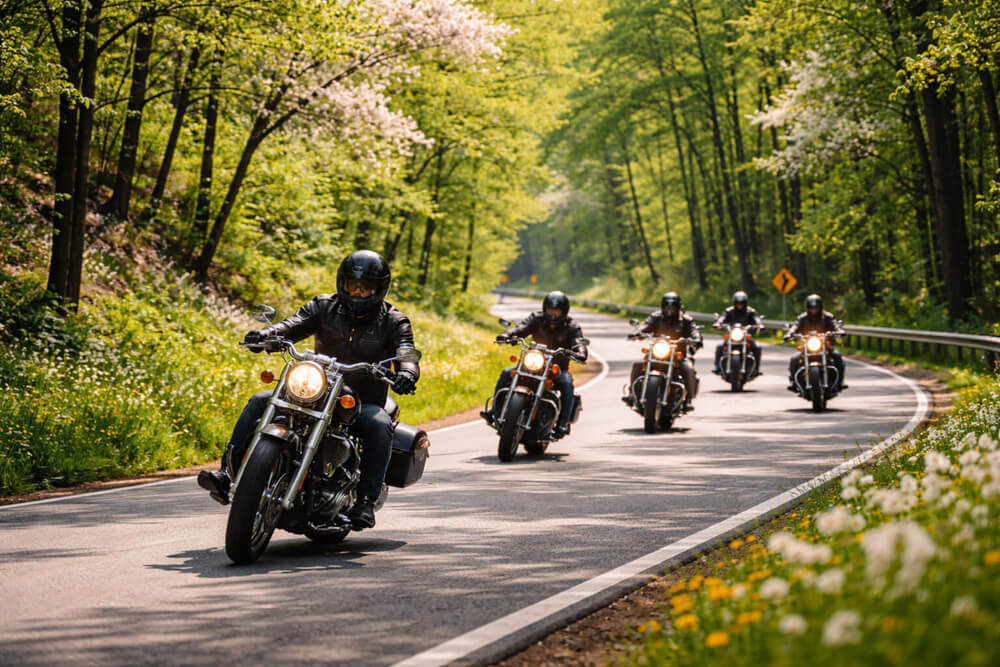
group motorcycle riding on spring days
Pre-Ride Planning: The Most Important Step for Safe Group Riding
Most group riding problems start before the ride even begins. Proper planning prevents confusion and ensures motorcycle group riding safety on the road.
Choose the Right Group Size
Large groups look impressive, but they are harder to manage.
Most experienced riders recommend 5 to 7 motorcycles per group.
If more riders join, it’s safer to split into smaller groups with separate leaders and sweepers.
Smaller groups have these advantages:
- react faster to traffic
- navigate intersections more easily
- reduce crash risk
Plan the Route in Advance
The ride leader should plan the route before the ride.
Important details include:
- fuel stops
- rest areas
- scenic stops
- construction zones
- difficult roads
Sharing the route through GPS apps or navigation systems helps prevent riders from getting lost.
Assign Leadership Roles
Clear leadership makes a huge difference during group rides.
Ride Leader
The ride leader controls the pace and direction of the whole group ride team.
Key motorcycle ride leader responsibilities include:
- planning the route
- maintaining safe speed
- signaling turns and hazards
- deciding when to stop or regroup
The leader should always ride smoothly and predictably.
Sweeper (Tail Rider)
The sweeper rides at the back of the group.
Their responsibilities include:
- monitoring the group
- assisting riders with mechanical issues
- communicating problems to the leader
- ensuring no rider gets left behind
Sweepers are often experienced riders with strong road awareness.
Hold a Pre-Ride Briefing
Before the ride begins, experienced groups gather for a quick briefing.
Topics usually include:
- planned route
- fuel stops
- riding formation
- communication signals
- regroup points
This short meeting prevents confusion once the group starts moving.
Motorcycle Group Riding Formations
So, how to ride in a motorcycle group?
Riding in a motorcycle group requires discipline, awareness, and proper motorcycle club riding formation. The most common and safest setup is the staggered motorcycle formation, where riders alternate left and right positions in the lane while keeping safe spacing. Always follow the ride leader, maintain your position, and avoid sudden movements. Keep at least a 2-second gap from the rider directly ahead, and watch the rider behind you. On twisty or narrow roads, switch to single file for better control. Most importantly, ride at your own pace and communicate clearly to keep the entire group safe.
Using the correct group riding motorcycle formation and best motorcycle group riding positions will largely improve safety and visibility.
Staggered Motorcycle Formation
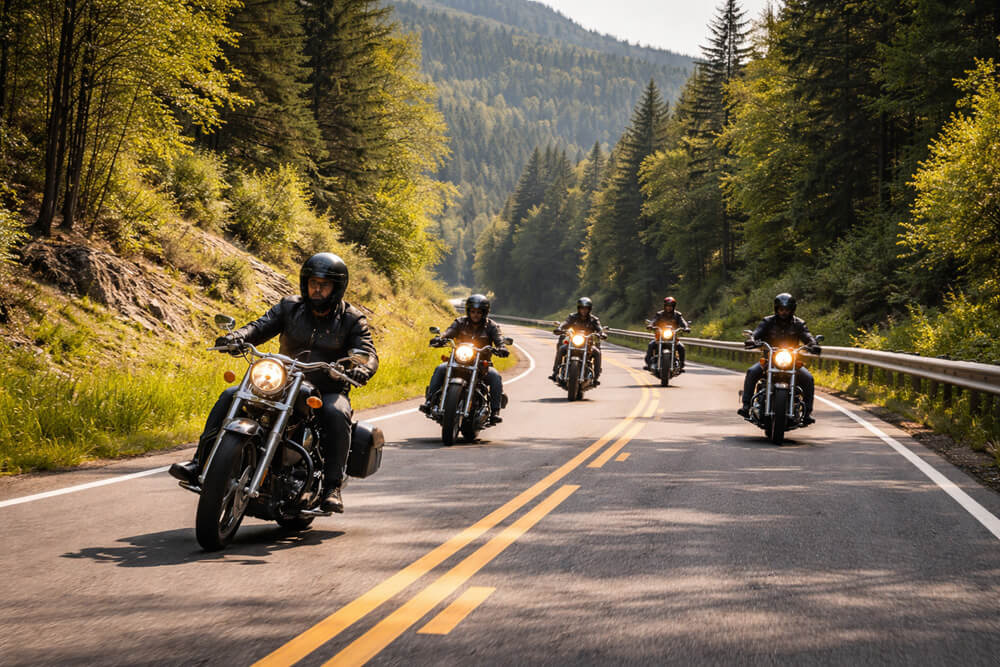
Staggered motorcycle formation - Motorcycle Group Riding Tips
The staggered motorcycle formation is the most common formation for street riding.
In this formation:
- the leader rides in the left portion of the lane
- the second rider rides in the right portion
- the pattern repeats behind them
Spacing typically follows this group ride rule:
- 1 second behind the rider in the opposite lane position
- 2 seconds behind the rider directly ahead
This formation provides:
- better visibility
- more reaction time
- efficient lane use
Single File Formation
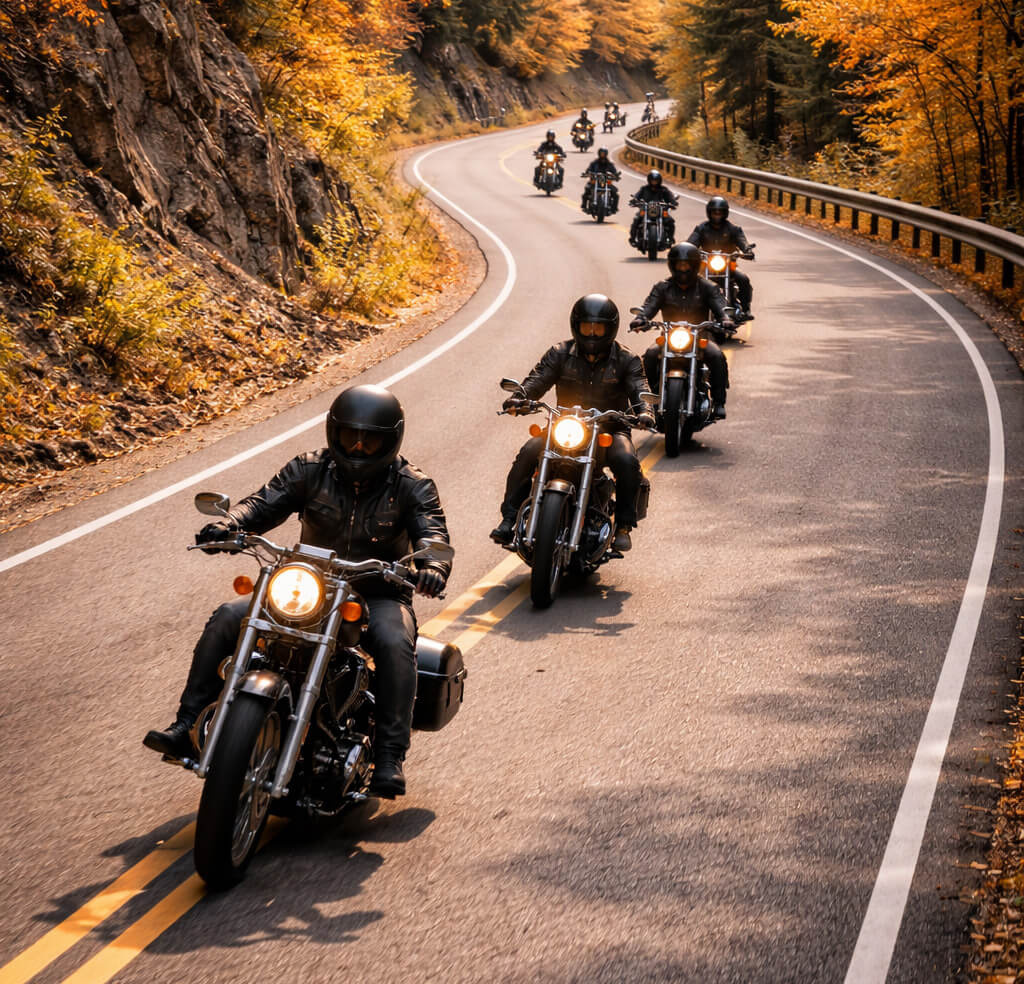
Single file formation on the road - group riding motorcycle formation
Sometimes staggered formation is not safe.
Switch to single file when riding on:
- twisty mountain roads
- narrow rural roads
- poor pavement conditions
- heavy traffic
Single file increases maneuvering space during corners.
Highway Riding Formation
Highway riding requires larger spacing.
Wind turbulence and higher speeds mean riders need extra reaction time.
Good highway practices include:
- increasing following distance
- avoiding blocking traffic
- making gradual lane changes
The 10 Essential Motorcycle Group Riding Rules
These motorcycle group riding rules are widely used by experienced riders.
- Never pass the ride leader
- Maintain your formation position
- Ride your own ride
- Keep a safe following distance
- Signal turns early
- Avoid overtaking within the group
- Watch the rider behind you
- Avoid sudden braking
- Regroup after intersections
- Follow traffic laws
One simple motorcycle group ride rules many riders follow is this:
If you lose sight of the rider behind you, slow down until they catch up.
This prevents riders from getting separated.
Motorcycle Hand Signals Every Group Rider Should Know

Group Riding Motorcycle Hand Signals (1)

Group Riding Motorcycle Hand Signals (2)
Communication is critical during group rides.
Basic hand signals help riders share information quickly.
Common signals include:
- Slow down – left hand moving up and down
- Stop – left arm raised with palm forward
- Hazard in road – pointing at the obstacle
- Fuel stop – tapping the gas tank
- Single file – one finger raised
- Staggered formation – two fingers raised
Clear motorcycle group riding hand signals allow riders further back to prepare for hazards.
More Detailed Knowledge about Motorcycle Hand Signals
Communication Tools That Make Group Riding Safer
Modern technology has made group riding much easier.
Motorcycle Bluetooth Intercom Systems
Bluetooth helmet intercoms allow riders to talk in real time.
Benefits include:
- warning about road hazards
- announcing turns
- coordinating stops
- helping lost riders reconnect
During one long-distance ride I joined, our leader used an intercom to warn us about gravel in a corner ahead. Every rider slowed before reaching the turn, avoiding what could have been several crashes.

Fodsports FX7 Bluetooth Mesh Intercom - motorcycle group riding communication system
Price: $129.99 $219.99
Code:
Limited Time Promo! Extra 10% Off Code! Save Now!
DJOW9
Bluetooth Mesh Intercom.
Dual Bluetooth Chip Design.
10 Riders Group Audio, 2000m Distance!
HRSQ Mic and Speakers, CVC + ENC + DSP Noise Cancelation.
Listen to Music/GPS and Intercom At the Same Time.
IP67 Waterproof.
Support pair with Fodsports Connect APP
FM Radio, Music Sharing, Voice Commands.
Dual Bluetooth Chip Design.
10 Riders Group Audio, 2000m Distance!
HRSQ Mic and Speakers, CVC + ENC + DSP Noise Cancelation.
Listen to Music/GPS and Intercom At the Same Time.
IP67 Waterproof.
Support pair with Fodsports Connect APP
FM Radio, Music Sharing, Voice Commands.
41%
OFF
OFF

Equip with Fodsports Intercoms to Enhance Your Group Ride Connection
Ride Planning Apps
Popular motorcycle route planner apps include:
- REVER
- Calimoto
- Scenic
- Google Maps route sharing
These apps help riders follow the same route without confusion.
More to Learn
GPS Route Sharing
Some groups share GPS files before the ride.
If someone becomes separated, they can easily navigate back to the group.
How to Handle Intersections Without Losing Riders
Intersections are one of the biggest challenges in group riding.
Traffic lights can quickly split the group.
Experienced groups often use the marker system.
Here’s how it works:
- The rider behind the leader stops at the intersection.
- They point the direction for the rest of the group.
- The sweeper picks them up after everyone passes.
This method keeps riders from getting lost.
Common Motorcycle Group Riding Mistakes
Many group rides become unsafe because of avoidable mistakes.
Common problems include:
Riding too close
Some riders reduce spacing to stay with the group.
Aggressive riding
Trying to impress other riders often leads to risky behavior.
Too many riders in one group
Large groups become difficult to manage.
Poor leadership
Inexperienced leaders may set unsafe speeds.
Lack of communication
Riders may miss turns or hazards.
Avoiding these mistakes significantly improves group ride safety.
Tips for Beginner Riders Joining a Group Ride
Group rides can feel intimidating for new riders.
These tips help beginners stay comfortable and safe.
Start near the back of the group.
This reduces pressure from faster riders.
Ride at your own pace.
Never try to match riders with more experience.
Leave extra following distance.
More space gives you more reaction time.
Speak up if you feel uncomfortable.
Most groups appreciate honesty.
Remember: safe riders are always welcome on future rides.
Advanced Group Riding Strategies Used by Experienced Riders
Experienced groups often use additional safety strategies.
Corner Entry Spacing
When approaching curves, riders increase spacing to allow independent cornering.
This prevents multiple riders from entering a turn too closely.
Controlled Lane Changes
The ride leader signals lane changes early.
Riders move one by one rather than all at once.
Managing Mixed Motorcycle Types
Different motorcycles accelerate and brake differently.
Sport bikes, cruisers, and touring bikes may need different spacing.
Good leaders adjust pace so every rider remains comfortable.
What to Do If a Rider in the Group Has a Problem?
Mechanical problems or accidents can happen during group rides.
If a rider pulls over:
- the sweeper stops with them
- the leader continues to the next safe location
- the group waits until the situation is resolved
This system prevents the entire group from stopping in unsafe locations.
Motorcycle Group Ride Safety Checklist
Before the ride:
- check tire pressure
- inspect brakes and lights
- fill the fuel tank
- wear full protective gear
During the ride:
- maintain motorcycle club riding formation
- communicate hazards
- keep safe spacing
After the ride:
- regroup at the destination
- confirm every rider arrived safely
Use Fodsports Group Talk Helmet Intercom to Keep Stable Communication in the Group
People Also Ask
Question: What is the safest formation for motorcycle group riding?
Answer: The safest formation is the staggered motorcycle formation. It allows riders to maintain safe spacing while maximizing lane visibility.
Question: How many motorcycles should ride in a group?
Answer: Most experts recommend 5 to 7 motorcycles per group. Larger groups should split into smaller teams with separate leaders.
Question: What does a motorcycle ride leader do?
Answer: The ride leader plans the route, controls the riding pace, signals turns and hazards, and manages the group during the ride.
Question: How far apart should motorcycles ride in a group?
Answer: In staggered formation, riders typically maintain 1 second behind the rider in the opposite position and 2 seconds behind the rider directly ahead.
Question: Should beginner riders join group rides?
Answer: Yes, beginners can join group rides, but they should ride at the back, maintain extra spacing, and avoid trying to keep up with faster riders.
Question: Can motorcycle groups stop traffic?
Answer: No. Motorcycle groups generally cannot legally stop traffic. Only police or authorized personnel can control traffic. Riders blocking intersections are usually breaking traffic laws, though permitted events with police escorts are exceptions.
Question: Can a motorcycle riding group wear patches?
Answer: Yes. Motorcycle riders can wear patches, and it’s generally legal. But club patches are usually only for members (you need to join a motorcycle club and win their patch). Wearing them without permission can cause problems or disrespect.
Final Thoughts: Enjoy Group Riding the Safe Way
Group rides can be some of the most memorable experiences in motorcycling. Riding through scenic roads with friends, sharing stops at small towns, and enjoying the journey together is what motorcycling culture is all about.
But great group rides don’t happen by accident.
They rely on clear motorcycle group riding rules, experienced leadership, and disciplined riders who respect the safety of everyone in the group.
Follow these motorcycle group riding tips, ride within your limits, and communicate clearly. When every rider works together, group rides become smoother, safer, and far more enjoyable.

Rodney L is a technical writer and product consultant with over a decade of experience in the motor industry. Rodney is a fan of performance machines that run fast and loud and an expert in all things custom. His numerous articles and write-ups are available at our knowledge base. Whether it’s something wrong with your motorcycle or you are building a custom bike, you can trust Rodney’s experience.
You maybe like to read:
Fodsports Brand Month: Unbeatable Deals and Top-Notch Service
Discover Fodsports Brand Month July and August mark a special occasion for motorcycle enthusiasts and tech lovers alike. Welcome to Fodsports Brand Month! This event is dedicated to celebrating everything that makes Fodsports a leading name in the motorcycle communication industry. Get ready for a fantastic promotions, exceptional service from Fodsports. Let's insights into Fodsports' […]
Cherohala Skyway Tennessee and North Carolina: Fall Motorcycle Riding Guide
Few motorcycle roads in the Southeast combine elevation, open mountain views, and flowing curves quite like the Cherohala Skyway. Stretching about 43 miles between Tellico Plains, Tennessee, and Robbinsville, North Carolina, the National Scenic Byway climbs from lower valleys to elevations above 5,000 feet before crossing the Appalachian high country. In fall, the ride becomes […]
10 Best Autumn Motorcycle Routes in Europe: Scenic Roads, Fall Colors and Riding Tips
🍂 Why Autumn Is One of the Best Seasons for a European Motorcycle Road Trip Europe becomes a completely different riding destination in autumn. Alpine forests turn gold, mountain valleys develop deeper colors, vineyards become vibrant, and many popular roads become quieter after the summer peak. For motorcycle travelers, the biggest advantage is variety. In […]
Pig Trail Scenic Byway Arkansas in Fall: Motorcycle Riding Guide
Winding through the Boston Mountains, the Pig Trail Scenic Byway is one of Arkansas's most enjoyable fall motorcycle routes. AR-23 combines tight mountain curves, dense hardwood forests, and the Mulberry River, creating a ride where the road itself is part of the scenery. In autumn, the Ozarks become even more impressive as the forest changes from […]
Tunnel of Trees Michigan in Fall: Motorcycle Riding Guide
Red and gold forests, winding roads, and glimpses of Lake Michigan make the Tunnel of Trees in Michigan a memorable fall motorcycle destination. The roughly 20-mile M-119 route between Harbor Springs and Cross Village is best enjoyed at a relaxed pace, with plenty of time for scenic stops. Planning a ride in 2026 requires extra attention, […]