
North America is one of the best places in the world for motorcycle road trips. Riders can experience everything from Pacific coastal cliffs and desert highways to high-altitude mountain passes and legendary twisty roads. Whether you enjoy technical cornering, scenic cruising, or long-distance touring, the continent offers unforgettable rides for every type of motorcyclist.
Some roads are famous for their curves. Others are known for breathtaking landscapes or epic long-distance touring routes. The most legendary ride is the Tail of the Dragon, which packs 318 curves into just 11 miles, making it one of the most technical motorcycle roads in the world.
This ultimate guide covers 20 of the best motorcycle roads in North America, including route statistics, riding tips, difficulty levels, and the best seasons to ride.
Quick Comparison Table among the Best Motorcycle Roads in North America
Here is a comparison table to let riders know briefly about the best motorcycle riding routes/roads in North America:
Detailed Introduction to the Best Motorcycle Roads in North America
North America offers some of the best motorcycle riding in the world. Riders can experience coastal highways, high-altitude mountain passes, desert landscapes, and endless twisty roads.
Some routes are famous for scenery, while others challenge riders with technical curves and elevation changes.
From the Appalachian Mountains to the Canadian Rockies, these roads are bucket-list rides for motorcyclists everywhere.
1. Tail of the Dragon

Tail of the Dragon - one of the most famous motorcycle roads in the world
📍Location: Tennessee / North Carolina
📏Distance: 11 miles
🔁Curves: 318
🏍Difficulty: Advanced
☀ Best Season: Spring–Fall
The Tail of the Dragon is one of the most famous motorcycle roads in the world, located on U.S. 129 at Deals Gap on the border of Tennessee and North Carolina. This legendary stretch packs 318 tight curves into just 11 miles, making it one of the most technical and thrilling rides in North America.
Surrounded by the Great Smoky Mountains and Cherokee National Forest, the road has no intersections, driveways, or traffic lights, creating a pure riding experience focused entirely on curves. Riders from around the world come here to test their skills and experience one of the most iconic twisty roads ever built.
Highlights
- Tight hairpin curves
- Dense Appalachian forest scenery
- Motorcycle culture and events
Riding Tips
- Ride early morning to avoid traffic
- Stay in your lane
- Avoid weekends
(Tail of the Dragon official web: https://tailofthedragon.com/)
2. Pacific Coast Highway
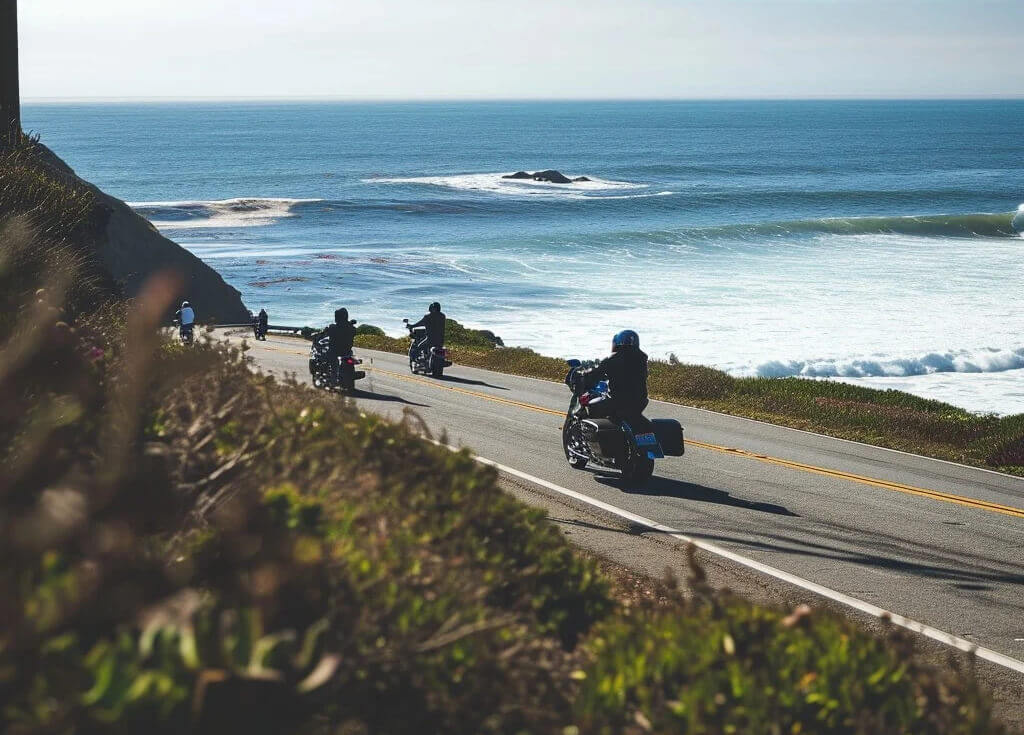
Pacific Coast Highway - one of the most scenic coastal motorcycle rides in the world
📍 Location: California
📏Distance: ~650 miles
🏍Difficulty: Moderate
☀ Best Season: Late Spring–Fall
The Pacific Coast Highway (Highway 1) is one of the most scenic coastal motorcycle rides in the world. The route follows California’s rugged coastline with dramatic cliffs, ocean views, and famous bridges. The route stretches for more than 650 miles, connecting coastal towns, dramatic sea cliffs, beaches, and forests while offering nonstop ocean views.
Riders experience legendary sections like Big Sur, where the road winds along steep cliffs above crashing waves and passes iconic landmarks such as Bixby Creek Bridge and Point Lobos. The combination of sweeping curves, cool ocean air, and scenic coastal towns makes it a bucket-list ride for touring motorcyclists.
Highlights
- Big Sur coastline
- Bixby Creek Bridge
- Monterey and Santa Barbara
Best Season
- Spring and fall offer the best weather and lighter traffic.
Fodsports Intercoms Support Clear Communication While Travelling on Motorcycle Roads
3. Beartooth Highway
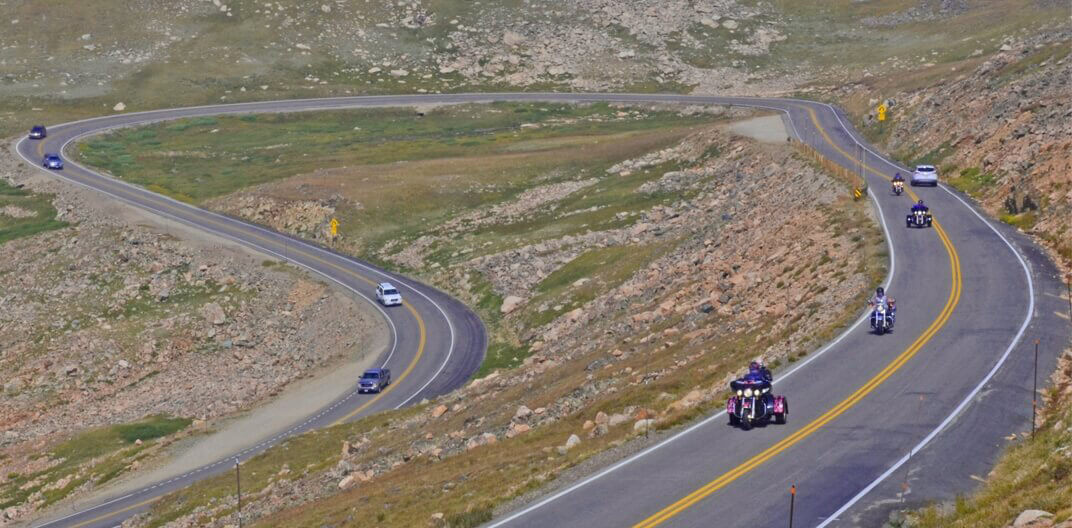
Beartooth Highway - one of the most spectacular motorcycle roads in North America
📍 Location: Montana / Wyoming
📏Distance: 68 miles
⛰Elevation: 10,947 feet
🏍 Difficulty: Moderate–Advanced
☀ Best Season: Late May–Early October
The Beartooth Highway is one of the most spectacular motorcycle roads in North America, running from Red Lodge, Montana to Cooke City near the northeast entrance of Yellowstone National Park. This legendary mountain route climbs dramatically from about 5,200 ft to nearly 11,000 ft through steep switchbacks, alpine plateaus, and rugged Rocky Mountain scenery.
Riders pass through the wild Absaroka–Beartooth Wilderness, where the road winds past high-altitude tundra, glacier-carved valleys, and dozens of sparkling alpine lakes. Many consider it one of the most beautiful drives in America because of its dramatic views and thrilling mountain curves.
Highlights
- Alpine lakes
- Snow-covered peaks
- Access to Yellowstone National Park
Riding Tips
- The weather can change quickly, so riders should bring warm gear even in summer.
Download the Map of the Beartooth highway (provided by Montana State website)
(For the latest pass condition and closure information about Beartooth Highway, please check the MDT 511 Traveler Information map.)
4. Blue Ridge Parkway
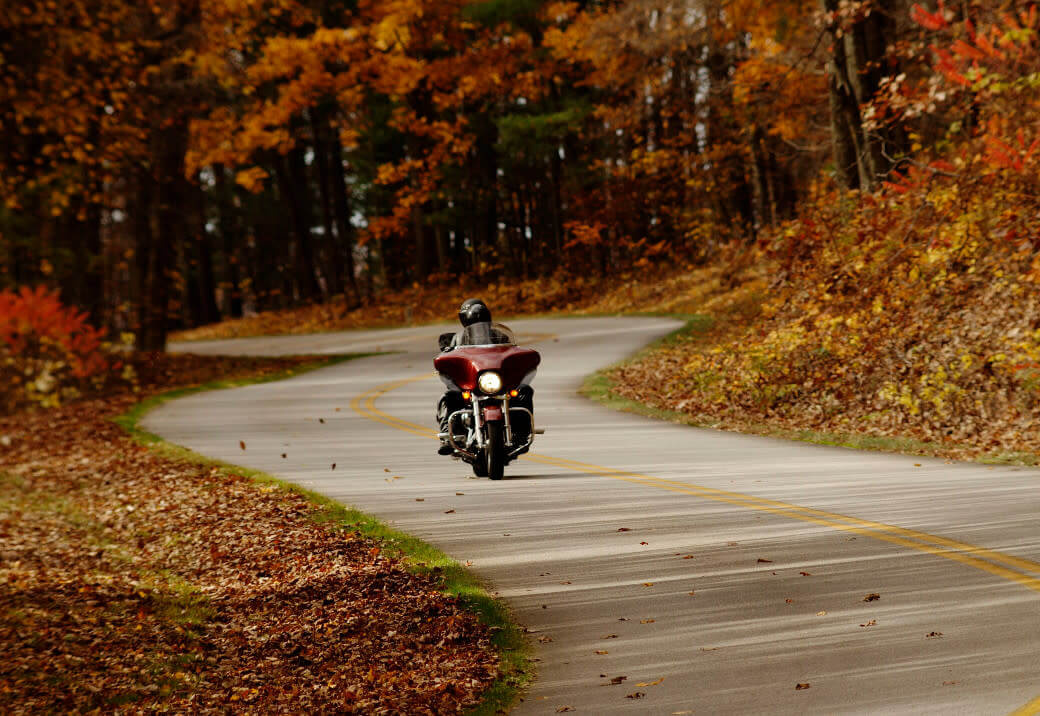
Blue Ridge Parkway
📍 Location: Virginia & North Carolina, USA
📏 Distance: 469 miles
🏍 Difficulty: Easy to Moderate
☀ Best Season: Spring and Fall
The Blue Ridge Parkway is one of the most famous scenic motorcycle routes in the United States. The road stretches 469 miles along the Appalachian Mountains, connecting Shenandoah National Park to Great Smoky Mountains National Park.
Designed for scenic driving, the parkway features smooth pavement, gentle sweeping curves, and hundreds of scenic overlooks. Commercial trucks are not allowed, making the ride quieter and safer for touring riders.
Highlights
- Panoramic Appalachian mountain views
- Famous stops like Mabry Mill and Linn Cove Viaduct
- Peaceful with flowing curves
Riding Tips
- Ride during fall for colorful foliage, and bring warm gear—elevations can exceed 6,000 feet, making temperatures much cooler than nearby valleys.
(Blue Ridge Parkway official web: https://www.blueridgeparkway.org/)
5. Cherohala Skyway
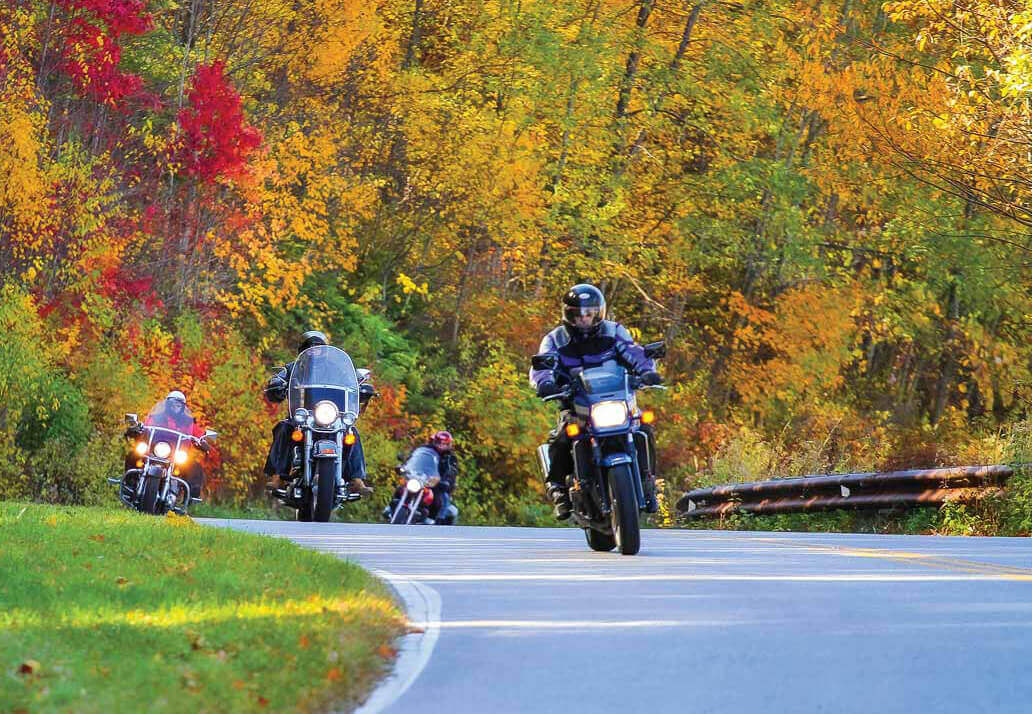
Cherohala Skyway
📍 Location: Tennessee & North Carolina, USA
📏 Distance: 43 miles
⛰ Highest Elevation: 5,390 ft
🏍 Difficulty: Moderate
☀ Best Season: Spring–Fall
The Cherohala Skyway is one of the best scenic motorcycle roads in the Appalachian Mountains. The 43-mile route connects Tellico Plains, Tennessee, with Robbinsville, North Carolina, crossing the Cherokee and Nantahala National Forests—which is how the road gets its name.
Unlike the tight curves of the Tail of the Dragon, the Cherohala Skyway features long sweeping corners, smooth pavement, and high-elevation views, making it ideal for scenic touring. The road climbs from about 900 feet to over 5,300 feet, offering breathtaking mountain overlooks along the way.
Highlights
- Sweeping curves and smooth pavement
- Scenic overlooks and mountain views
- Quiet, best motorcycle road trips with less traffic
Riding Tips
Bring fuel before entering—the Skyway has no gas stations or services along the route.
6. Going-to-the-Sun Road
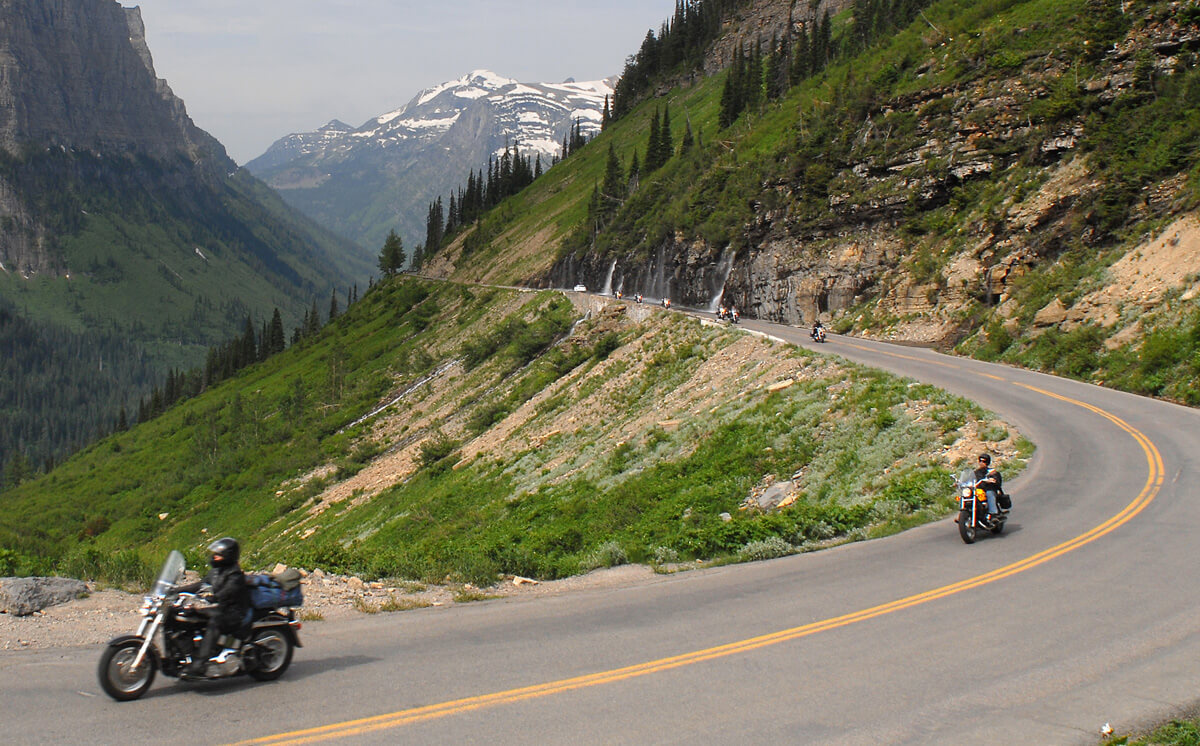
Going-to-the-sun Road
📍 Location: Montana, USA (Glacier National Park)
📏 Distance: About 50 miles
⛰ Highest Elevation: 6,646 ft (Logan Pass)
🏍 Difficulty: Moderate
☀ Best Season: July–September
The Going-to-the-Sun Road is one of the most spectacular motorcycle roads in the Rocky Mountains. This scenic highway crosses the heart of Glacier National Park, connecting the west entrance at Lake McDonald with the east entrance at St. Mary. The road climbs to Logan Pass at 6,646 feet, crossing the Continental Divide and offering incredible views of glaciers, alpine lakes, waterfalls, and rugged mountain peaks.
Highlights
- Glacier-carved mountains and alpine scenery
- Logan Pass overlook and visitor center
- Cliffside sections with dramatic views
Riding Tips
- The road is narrow and winding in some areas, so ride carefully and expect tourist traffic during summer.

Fodsports FX8 Pro Motorcycle Bluetooth Intercom - Intercom for motorcycle roads in North America
10 Riders Group Communication, 2000m Distance!
Optional HRSQ Mic and Speakers, CVC + ENC + DSP Noise Cancelation.
Listen to Music/GPS and Intercom At the Same Time.
IP67 Waterproof is suitable for all motorcycle roads in North America.
Compatible with Fodsports Connect APP.
FM Radio, Music Sharing, Voice Commands.
OFF

7. Million Dollar Highway
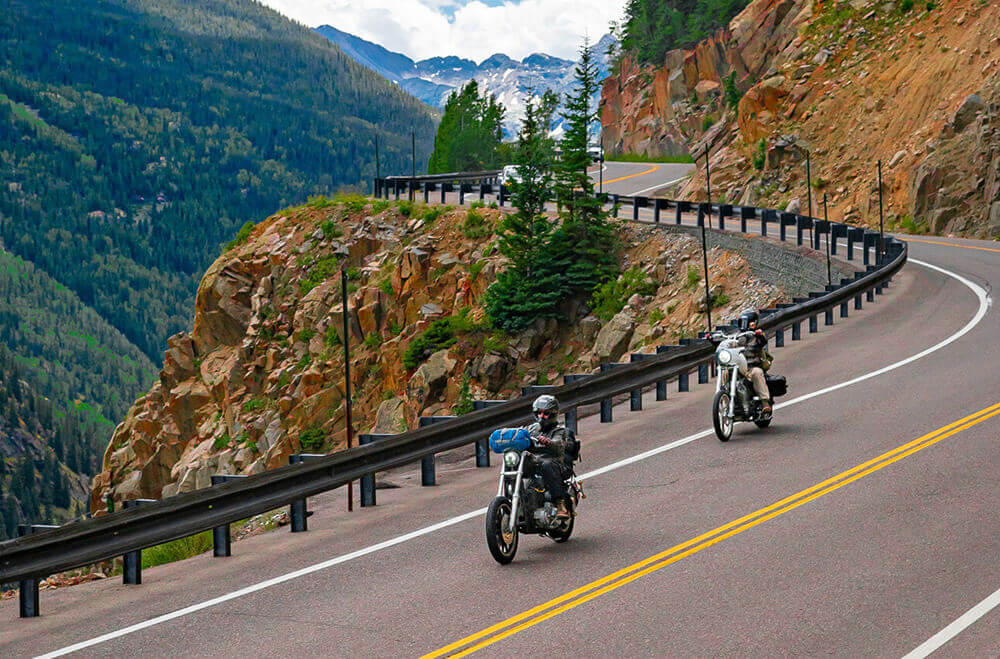
Million Dollar Highway
📍 Location: Colorado, USA
📏 Distance: About 25 miles (Ouray–Silverton)
⛰ Highest Elevation: 11,018 ft (Red Mountain Pass)
🏍 Difficulty: Advanced
☀ Best Season: June–September
The Million Dollar Highway is one of the most thrilling motorcycle roads in the Rocky Mountains. This famous stretch of U.S. Route 550 runs through the rugged San Juan Mountains, connecting the historic mining towns of Ouray and Silverton.
The road is known for its steep cliffs, tight switchbacks, and narrow mountain lanes, often with very few guardrails. Riders climb over 10,000-foot mountain passes and experience breathtaking views of alpine peaks, deep gorges, and waterfalls. It is also recommended as one of the best motorcycle roads in Colorado.
Highlights
- Dramatic mountain scenery in the San Juan Mountains
- Hairpin turns and high-altitude passes
- Historic mining towns along the route
Riding Tips
- Ride cautiously—some sections are narrow with steep drop-offs, and weather in the mountains can change quickly.
8. Cabot Trail

Cabot Trail
📍 Location: Nova Scotia, Canada (Cape Breton Island)
📏 Distance: ~186 miles (298 km) loop
🏍 Difficulty: Moderate
☀ Best Season: May–September
The Cabot Trail is one of the most scenic and celebrated motorcycle roads in North America. This loop follows Trunk 30 around the northern tip of Cape Breton Island, passing through the Cape Breton Highlands National Park and along rugged Atlantic coastlines with ocean views, forests, and coastal cliffs. Riders enjoy a mix of sweeping turns, elevation changes, and charming fishing villages along the way.
Highlights
- Stunning ocean vistas and highland landscapes
- Cape Breton Highlands National Park overlooks
- Small coastal towns and local culture
Riding Tips
- Fill up on fuel in Baddeck, Cheticamp, or Ingonish before starting the loop, and consider riding counter‑clockwise so most scenic viewpoints are on your left.
9. Icefields Parkway
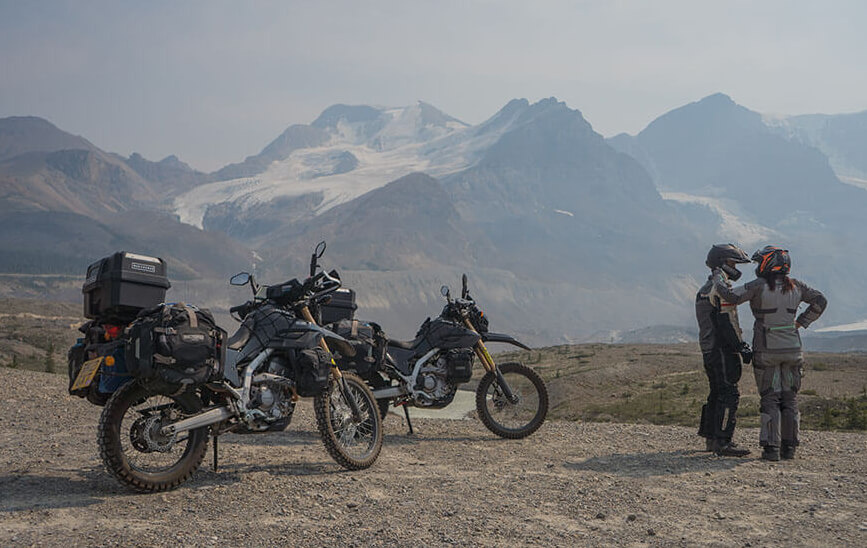
Icefields Parkway(Source: Mad or Nomad)
📍 Location: Alberta, Canada
📏 Distance: About 230 km (144 miles)
⛰ Highest Elevation: ~6,677 ft (Sunwapta Pass)
🏍 Difficulty: Moderate
☀ Best Season: June–September
The Icefields Parkway is one of the most scenic motorcycle road trips in North America, linking Banff National Park and Jasper National Park through the heart of the Canadian Rockies. This legendary route follows Highway 93 across dramatic alpine landscapes with towering peaks, turquoise glacial lakes, rushing waterfalls, and sweeping valleys. Riders will pass iconic highlights like Bow Lake, Peyto Lake, the Columbia Icefield, and Sunwapta Pass, with abundant wildlife sightings along the way.
Highlights
- Breathtaking mountain panoramas
- Glacier‑fed lakes & powerful waterfalls
- Plenty of scenic pull‑offs and photo spots
Riding Tips
- Fill up before departing and expect minimal services between Banff and Jasper; weather can change rapidly in the Rockies.
10. Sea-to-Sky Highway
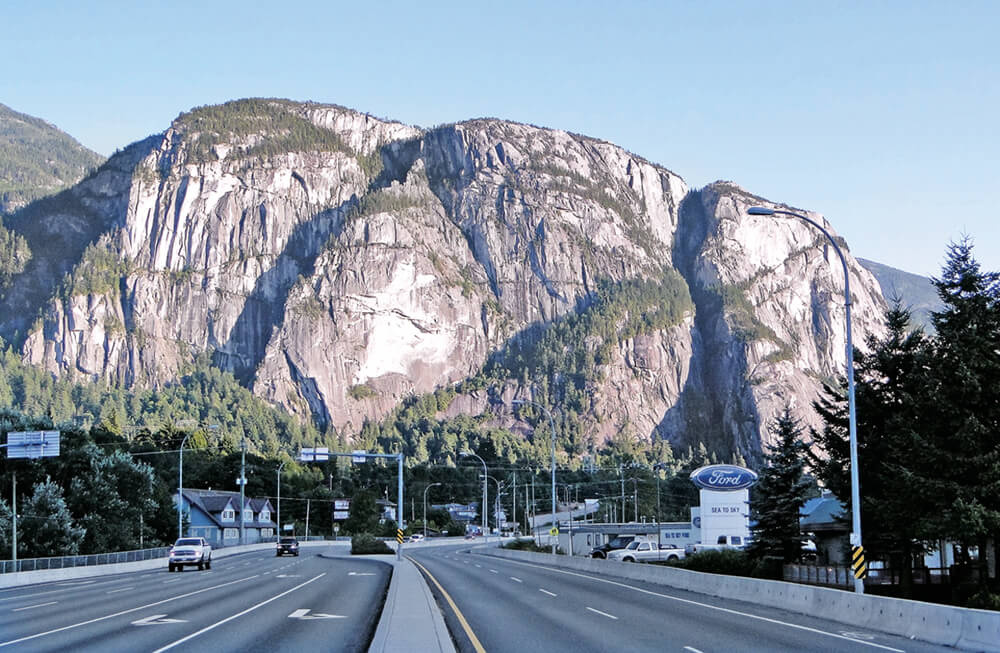
Sea-to-Sky Highway
📍 Location: British Columbia, Canada (Highway 99)
📏 Distance: ~102 miles / 165 km (Horseshoe Bay to Whistler)
🏍 Difficulty: Moderate
☀ Best Season: Late Spring–Early Fall
The Sea‑to‑Sky Highway (BC 99) is one of Canada’s most scenic motorcycle routes. This road for motorcycle trips winds from Horseshoe Bay near Vancouver through Howe Sound and the coastal mountains up to the resort town of Whistler. Riders experience a dramatic change in landscape—from ocean views and rugged cliffs to soaring alpine peaks. Thus making this a favorite for scenic rides and best motorcycle road trips.
Highlights
- Stunning ocean and mountain vistas along Howe Sound
- Shannon Falls and other waterfalls just off the highway
- Squamish rock formations and Whistler arrival views
Riding Tips
- Expect traffic during peak season, ride cautiously through twisty sections, and plan fuel before departing; winter conditions can be challenging north of Squamish.
11. Lolo Pass

Lolo Pass
📍 Location: Idaho & Montana, USA
📏 Distance: ~100–132 miles ride on U.S. Highway 12
⛰ Highest Elevation: 5,233 ft
🏍 Difficulty: Moderate
☀ Best Season: Late spring–early fall
Lolo Pass is a scenic motorcycle ride through the Bitterroot Range of the Rocky Mountains, following U.S. Highway 12 (Lewis and Clark Highway) between Idaho and Montana. The route’s smooth pavement and sweeping curves make it a favorite for riders seeking a long, remote, nature‑filled journey. The pass itself has deep historical significance, having been used by the Lewis and Clark Expedition and the Nez Perce Trail centuries ago. It is also one of the best motorcycle road trips in the us.
Highlights
- Historic Lewis and Clark trail corridor
- Sweeping mountain and forest scenery
- Lolo Pass Visitor Center with interpretive exhibits
Riding Tips
- Fuel up before the ride—services are limited—and expect occasional wildlife crossings and remote stretches with little cell reception.
12. Chief Joseph Scenic Byway
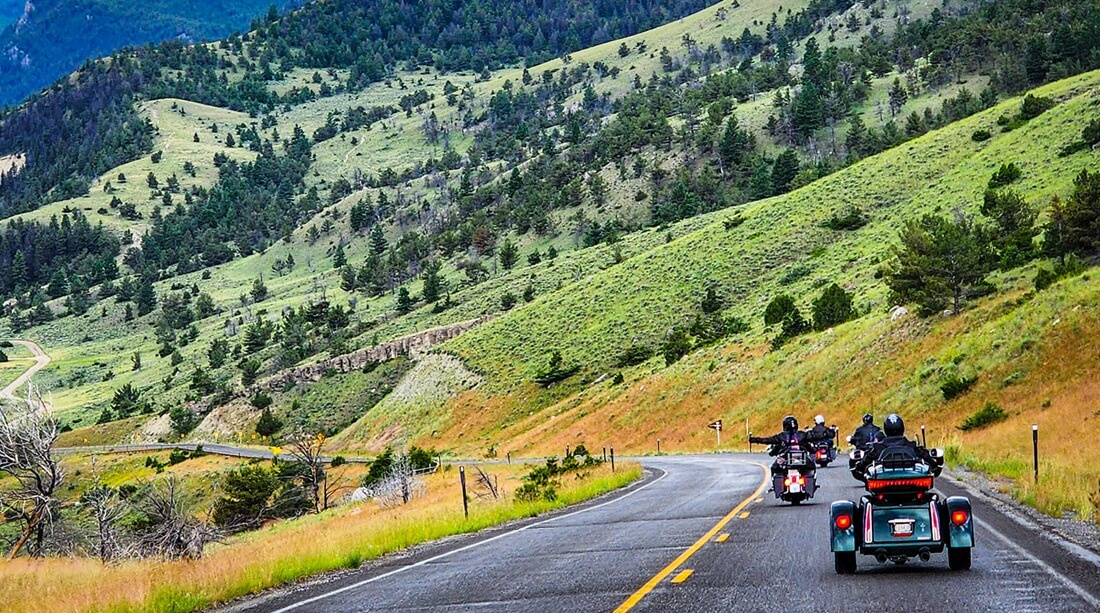
Chief Joseph Scenic Byway
📍 Location: Wyoming, USA
📏 Distance: ~46–47 miles (Wyoming Highway 296)
⛰ Highest Elevation: Dead Indian Pass ~8,071 ft
🏍 Difficulty: Moderate
☀ Best Season: Late Spring–Fall
The Chief Joseph Scenic Byway is a stunning mountain motorcycle route that connects Cody with the Beartooth Highway and the northeast gate of Yellowstone National Park through Wyoming’s Shoshone National Forest. It closely follows the historic path taken by Chief Joseph and the Nez Perce during their 1877 retreat, offering sweeping curves, dramatic elevation changes, and panoramic views of the Absaroka and Beartooth Mountains.
Highlights
- Spectacular mountain vistas and valley panoramas
- Historic Dead Indian Pass overlook
- Scenic Sunlight Creek Bridge over deep gorges
Riding Tips
- Fuel up in Cody before riding—services are scarce along the byway—and plan extra time for photos and wildlife viewing.

Fodsports FX 60C 4K camera intercom
4K, 2K, 1080P anti-shake & 360° rotation shooting video/photo.
Watch While Recording the video through the mobile APP.
8MP HD Photo Taking.
10 Way Group Communication.
HiFi Sound Quality, Noise Reduction Tech.
Music Sharing, FM Radio, Voice Commands.
Perfect communication system + Camera for motorcycle riding tours.
OFF
13. Needles Highway
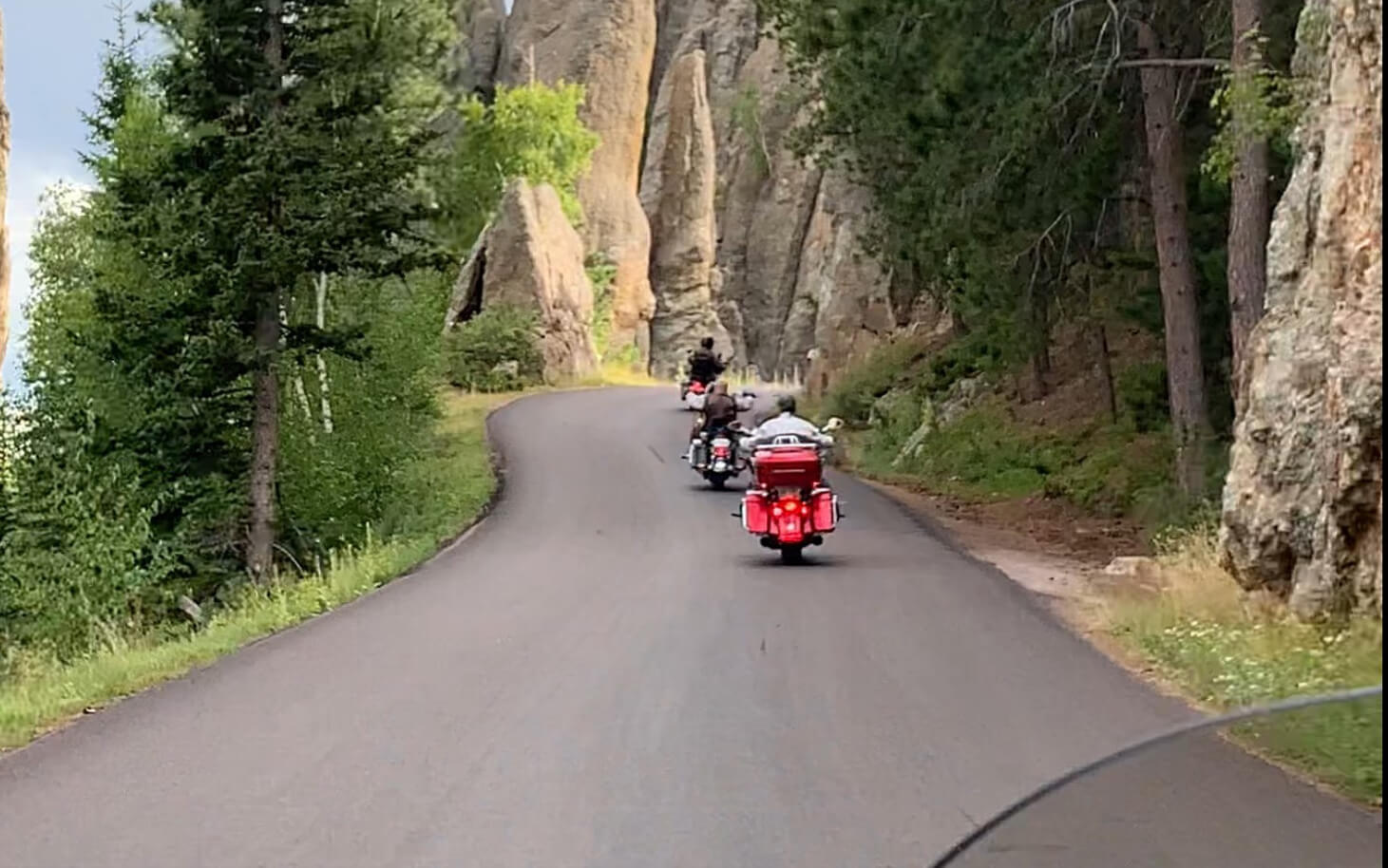
Needles Highway
📍 Location: Custer State Park, South Dakota, USA
📏 Distance: ~14 miles (part of SD‑87)
🏍 Difficulty: Moderate
☀ Best Season: April–October
The Needles Highway is a historic scenic motorcycle route through Custer State Park in the Black Hills. Named for the towering granite “needles” that line the road, this 14‑mile stretch winds through pine and spruce forests, open meadows, and rugged rock formations that seem to pierce the sky, creating a unique and dramatic landscape.
Highlights
- Narrow rock tunnels including the famous Needles Eye Tunnel
- Towering granite spires and scenic pull‑offs
- Sylvan Lake with hiking and photo opportunities
Riding Tips
- Take your time—this is a slow, winding road with sharp turns and narrow sections, and avoid large trailers or RVs due to tight clearances. Riders should also be aware that the highway closes in winter due to snow.
14. Talimena Scenic Byway
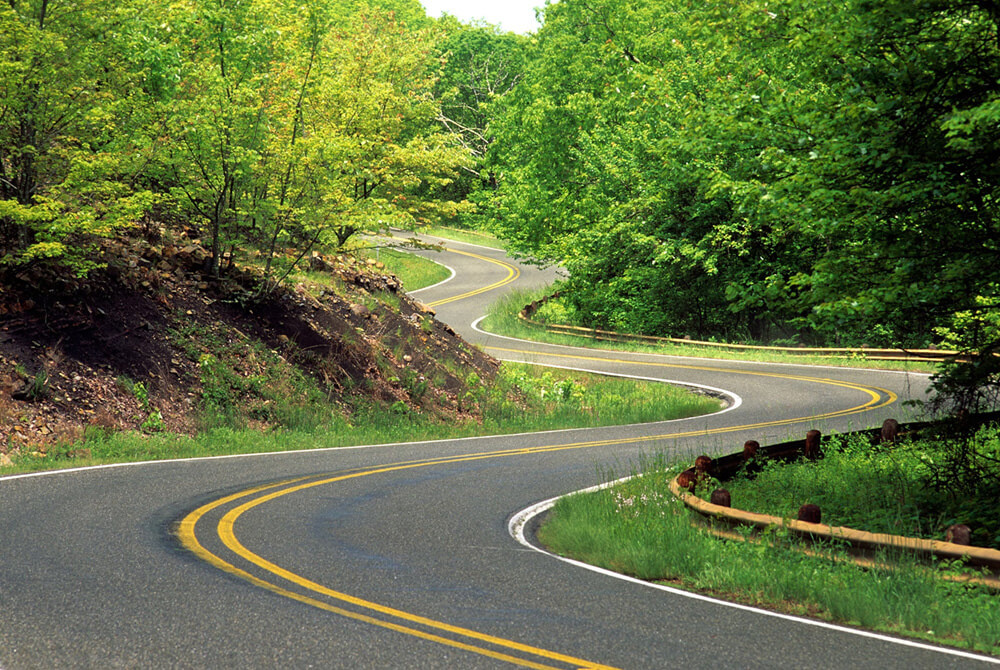
Talimena Scenic Byway
📍 Location: Oklahoma & Arkansas, USA
📏 Distance: ~54 miles (87 km)
⛰ Highest Elevation: ~2,681 ft
🏍 Difficulty: Moderate
☀ Best Season: Spring–Fall
The Talimena Scenic Byway is a gorgeous motorcycle road through the Ouachita National Forest, running from Talihina, Oklahoma to Mena, Arkansas along Oklahoma State Highway 1 and Arkansas Highway 88. This 54‑mile ride winds along the ridges of Rich Mountain and Winding Stair Mountain, offering spectacular panoramas of forested peaks, valleys, and distant ridgelines—especially beautiful in spring bloom and autumn foliage.
Highlights
- Panoramic mountain and forest views
- 22 scenic overlooks and pull‑offs
- Queen Wilhelmina State Park atop Rich Mountain
Riding Tips
- Fill up before the ride—there are no services or gas stations along the byway, so stock up in Talihina or Mena before you depart.
15. Twisted Sisters
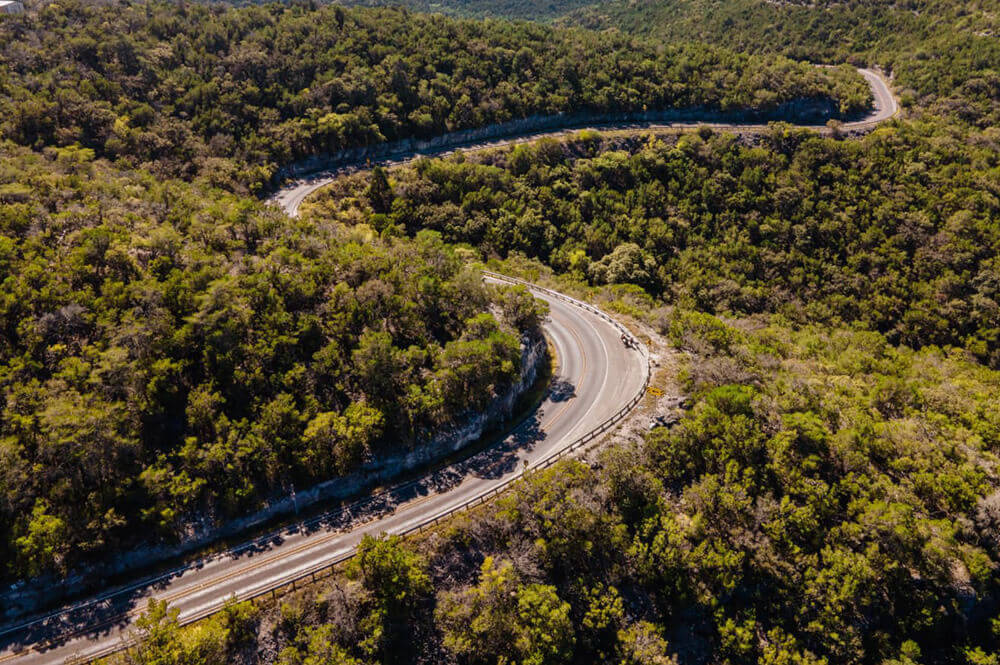
Twisted Sisters
📍 Location: Texas Hill Country, USA
📏 Distance: ~100 miles loop (170 miles including access from Medina)
🏍 Difficulty: Moderate to Advanced
☀ Best Season: Spring–Fall
The Twisted Sisters are a legendary set of three ranch roads—RR 335, RR 336, and RR 337. They are the best motorcycle road trips in Texas. Together, they form one of Texas’ best motorcycle loops, northwest of San Antonio through rugged Hill Country canyons and ridges. Riders traverse rolling terrain filled with tight curves, steep hills, elevation changes, and dramatic vistas of limestone bluffs and open valleys. In one 15‑mile stretch alone, there are more than 65 curves, making it a thrilling challenge for experienced riders.
Highlights
- Technical twisty roads with frequent bends and blind crests
- Panoramic views of hill country and canyon landscapes
- Classic biker stops like the Frio Canyon Motorcycle Stop and Lone Star Motorcycle Museum
Riding Tips
- Fill up before you start—fuel and services are scarce along the route—and focus on smooth, controlled cornering. The loop typically takes 4–6 hours to ride and rewards patience with its scenic beauty and technical thrills.
16. Mount Blue Sky Scenic Byway
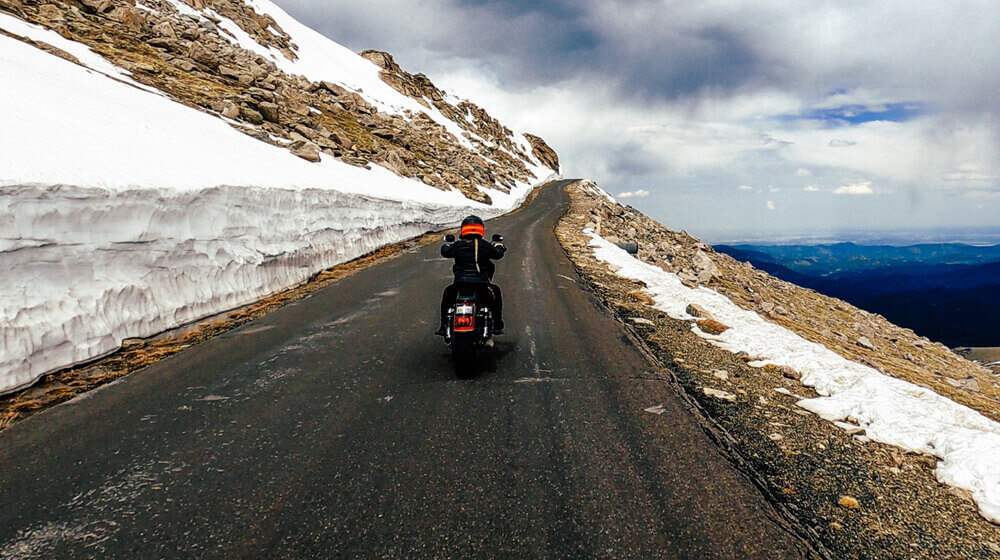
Mount Blue Sky Scenic Byway(Photo by: Ride to Food)
📍 Location: Colorado, USA
📏 Distance: 49 miles
⛰ Highest Elevation: 14,130 ft (highest paved road in North America)
🏍 Difficulty: Advanced
☀ Best Season: Summer (open Memorial Day–Labor Day)
The Mount Blue Sky Scenic Byway climbs from Idaho Springs into the Rocky Mountains, gaining more than 7,000 ft of elevation to reach the summit of Mount Blue Sky—formerly Mount Evans—making it the highest paved road in North America. Riders pass through pine forests, alpine tundra, and stunning mountain vistas, with wildlife such as mountain goats and bighorn sheep often seen along the route. The road features steep switchbacks and narrow sections with dramatic views, rewarding experienced riders with an epic high‑altitude ride.
Highlights
- Highest paved road in North America
- Alpine lakes, glacier‑cut valleys, and mountain wildlife
- Panoramic Front Range and continental views
Riding Tips
- Prepare for rapid weather changes and bring layers—at 14,000 ft temperatures can plummet even in summer.
17. Trail Ridge Road
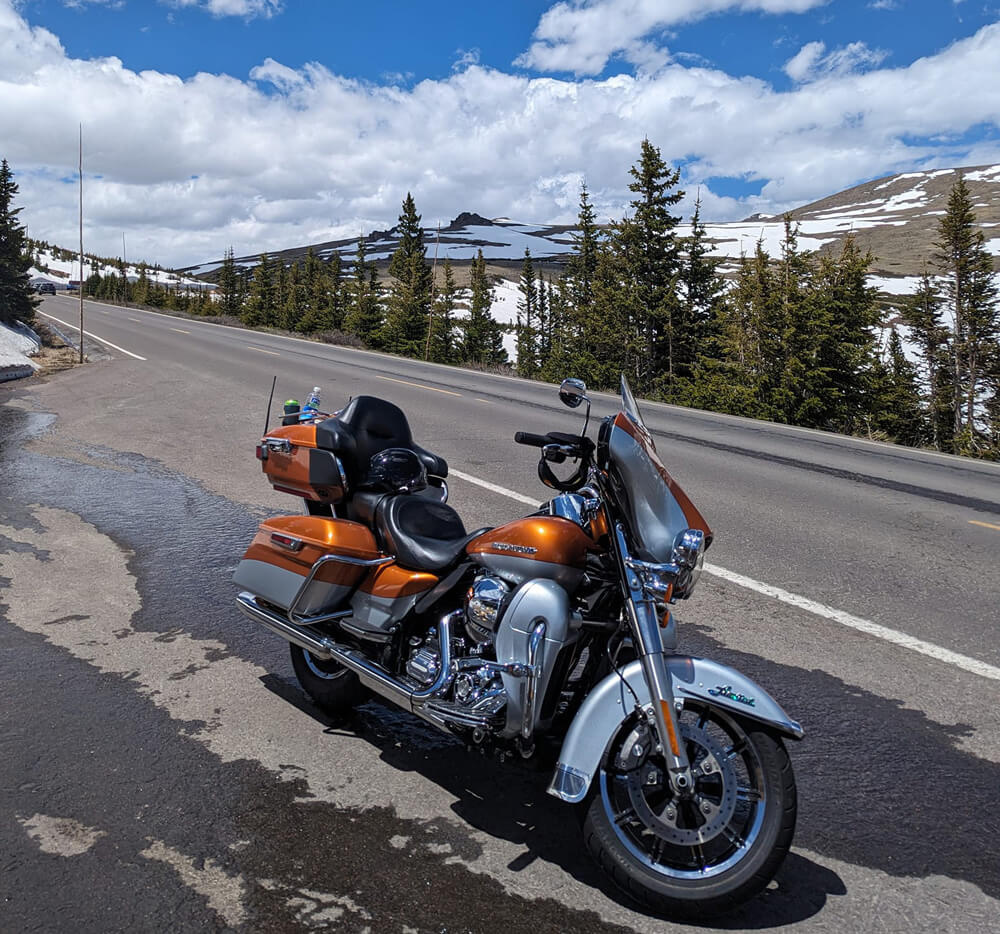
Trail Ridge Road
📍 Location: Colorado, USA (Rocky Mountain National Park)
📏 Distance: ~48 miles
⛰ Highest Elevation: 12,183 ft (above sea level)
🏍 Difficulty: Moderate–Advanced
☀ Best Season: Late May–Mid‑October
Trail Ridge Road is one of North America’s most iconic high‑altitude motorcycle roads, slicing through Rocky Mountain National Park between Estes Park and Grand Lake. It holds the title of the highest continuous paved road in the United States, with nearly 8 miles above treeline and dramatic views of alpine tundra, glacier‑carved valleys, and the Continental Divide. Riders also enjoy frequent wildlife sightings, including elk, bighorn sheep, and marmots on the roadside.
Highlights
- Sweeping mountain vistas above 12,000 ft
- Continental Divide scenery
- Scenic overlooks like Many Parks Curve and Forest Canyon
Riding Tips
- Start early to avoid afternoon thunderstorms, be prepared for rapid weather changes, and enjoy the numerous pull‑offs for photos and wildlife watching.
18. Angeles Crest Highway
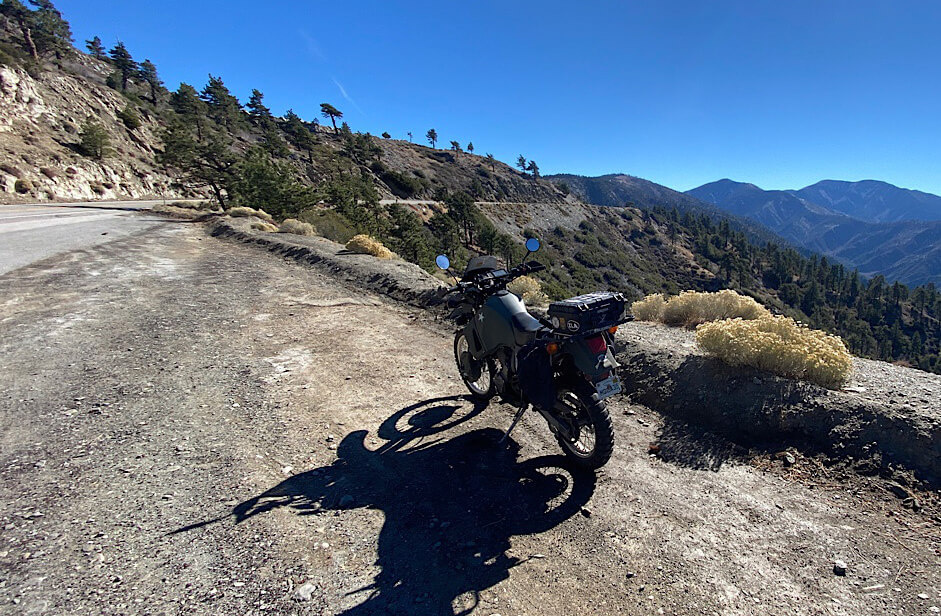
Angeles Crest Highway
📍 Location: Southern California, USA
📏 Distance: ~66 miles (106 km)
⛰ Highest Elevation: ~7,900 ft (Dawson Saddle)
🏍 Difficulty: Moderate
☀ Best Season: Spring–Early Fall
The Angeles Crest Highway (State Route 2) is a scenic mountain motorcycle road that climbs through the San Gabriel Mountains and the Angeles National Forest just outside Los Angeles. It winds for about 66 miles from La Cañada Flintridge to near Wrightwood, passing pine forests, chaparral, switchbacks, and high‑elevation ridges with panoramic valley views.
Highlights
- Alpine mountain scenery just minutes from LA
- Sweeping curves and high‑elevation viewpoints
- Classic biker meet‑ups at spots like Newcomb’s Ranch
Riding Tips
- Ride in spring through early fall to avoid winter closures due to snow and rockfall. Watch for wildlife crossing the road and be cautious of narrow sections with limited guardrails.
19. Arkansas Pig Trail
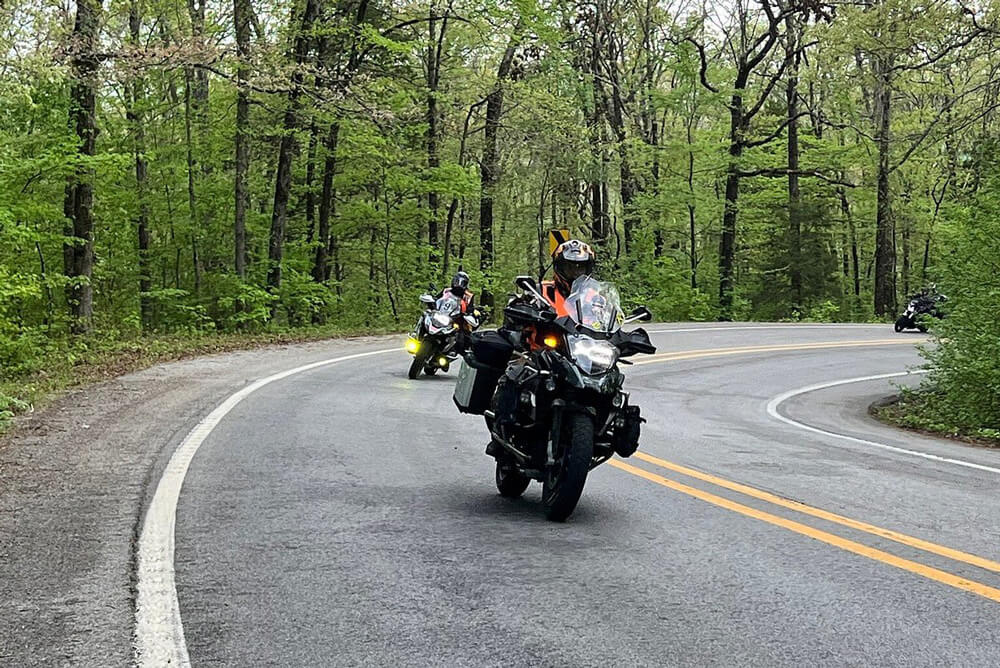
Arkansas Pig Trail
📍 Location: Northwest Arkansas, USA
📏 Distance: ~19–25 miles (Arkansas Highway 23 scenic section)
🏍 Difficulty: Moderate
☀ Best Season: Spring–Fall
The Pig Trail Scenic Byway is a legendary motorcycle traveling road through the Boston Mountains of the Ozark National Forest. This scenic section of Arkansas Highway 23 winds north from near Ozark through dense forests, steep hills, and hairpin curves that often feel like riding through a tunnel of trees. It’s known for its twisty pavement reminiscent of a hog’s tail, which has made it a top choice among riders and was even named one of America’s best rides by riders and publications.
Highlights
- Forest‑shrouded curves and valley views
- Seasonal wildflowers and brilliant fall foliage
- Quiet road with minimal development
Riding Tips
- Fuel up before you start—services are limited—and enjoy the Ozark Highlands scenery at a relaxed pace.
20. Vermont Route 100
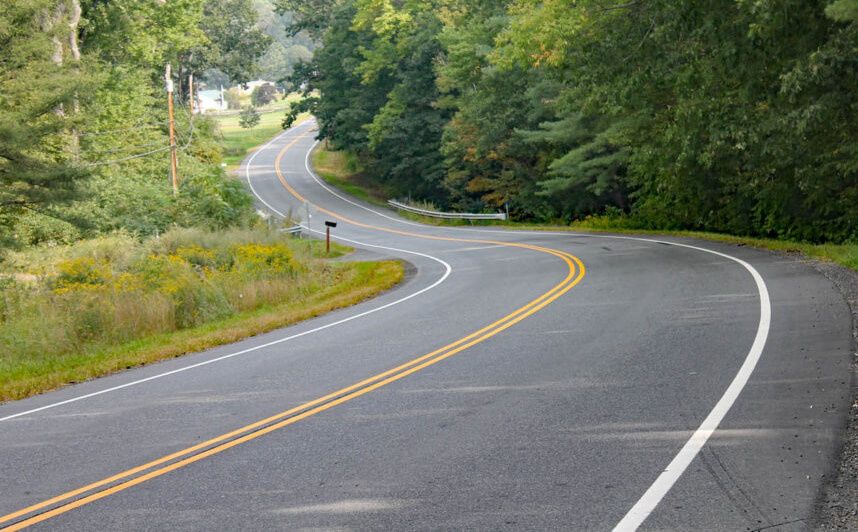
Vermont Route 100
📍 Location: Vermont, USA
📏 Distance: ~216 miles (full length of VT100)
🏍 Difficulty: Moderate
☀ Best Season: Late Spring–Fall
Vermont Route 100 is one of the most iconic and scenic motorcycle riding roads in New England, often called “Vermont’s Main Street” as it runs almost the entire length of the state from south to north. The route follows the eastern edge of the Green Mountains, winding through rolling farmland, dense forests, river valleys, and picturesque small towns like Wilmington, Ludlow, and Stowe.
Highlights
- Classic New England landscapes with rivers, covered bridges, and mountain views
- Quaint villages, roadside diners, and local farms
- Excellent fall foliage and iconic winter scenery
Riding Tips
- The route’s gentle curves and varied scenery make it enjoyable for riders of all levels—just plan fuel stops in towns along the way and enjoy local attractions like craft breweries and maple farms.
Tips for Riding the Best Motorcycle Roads
Riding some of the best motorcycle roads in North America is an unforgettable experience. However, scenic mountain highways and winding backroads also require preparation and smart riding habits. Knowing the best time to ride, staying safe on the road, and choosing the right type of motorcycle can make your trip much more enjoyable. Below are some practical tips to help you get the most out of your motorcycle road trip.
Best Time of Year
The best time to ride scenic motorcycle roads usually depends on the location and elevation. In most regions, spring and fall are ideal seasons because the weather is comfortable and the scenery is beautiful. Spring often brings blooming flowers and fresh green landscapes, while fall offers colorful foliage and cooler temperatures that make long rides more comfortable.
However, many famous riding roads in North America are located in high mountain areas. Routes such as alpine passes or national park roads may only be fully open during the summer months, when snow has melted and road conditions are safer. Some mountain highways close in winter due to snow and ice.
No matter the season, always check local conditions before your ride. Weather can change quickly in mountainous regions, and sudden rain, fog, or cold temperatures can affect road safety. Preparing for different weather conditions will help you stay comfortable and focused during the ride.
Safety Tips
Safety should always be the top priority when riding scenic roads. Many beautiful routes pass through forests, mountains, and rural areas where hazards can appear suddenly.
One of the most common risks is wildlife crossing the road. Animals such as deer, elk, or smaller wildlife may suddenly run onto the road, especially during early morning or evening hours. Riders should slow down in wooded areas and stay alert for wildlife warning signs.
It is also important to check weather conditions before starting your ride. Rain, strong winds, or fog can make twisty mountain roads much more dangerous. Wet pavement, fallen leaves, gravel, or rocks can reduce traction and increase the chance of losing control.
Another key rule is to ride within your skill level. Many famous motorcycle roads include tight curves, steep climbs, and blind corners. Take your time and maintain a comfortable speed. Remember that scenic roads are meant to be enjoyed, not rushed. Riding smoothly and staying in control will make the journey safer and more relaxing.
Best Motorcycles for Scenic Roads
Different types of motorcycles can work well for scenic road trips, but some models are especially suited for long and winding routes.
Sport touring motorcycles are one of the best choices. They combine comfortable riding positions with good handling on curves, making them ideal for long-distance rides through twisty mountain roads.
Adventure motorcycles are another great option. These bikes are designed to handle a variety of road conditions, including rough pavement or occasional gravel sections. Their upright seating position also provides better visibility during long rides.
Finally, touring cruisers are popular for relaxed road trips. These motorcycles offer comfortable seats, stable handling, and plenty of storage for luggage. They are perfect for riders who want to enjoy scenic routes at a slower, more comfortable pace.
No matter what motorcycle you ride, the most important factors are staying comfortable, reliability, and control. When your bike fits your riding style and the type of road you plan to explore, every scenic ride becomes a much better experience.
Planning a Motorcycle Road Trip in North America
Planning ahead is one of the most important parts of a successful motorcycle road trip. A good plan helps you enjoy the ride, avoid unexpected problems, and make the most of scenic routes. From choosing the right roads to packing proper gear, a little preparation can make your journey much smoother and safer.
Route Planning Tips
The first step in planning a motorcycle road trip is choosing the right route. Many riders use motorcycle route planner tools or travel apps to design their trips. These tools allow you to map your route, add stops, and discover scenic roads, attractions, restaurants, and places to stay along the way. Some route planners even help you find twisty roads or scenic highways that are more enjoyable for riders than regular highways.
It is also important to plan fuel stops in advance, especially when riding through rural or mountain areas. Gas stations may be far apart, so riders should never let their fuel level get too low. Many experienced riders recommend refueling when the tank reaches about two-thirds empty to avoid running out of fuel in remote areas.
When planning your daily route, it is smart to keep the riding distance reasonable. Many touring riders limit their daily rides to around 300–400 miles, which allows time for breaks, sightseeing, and photos along the way. Taking short breaks every 60–90 minutes can also reduce fatigue and keep you alert during long rides.
Gear for Long Scenic Rides
Having the right riding gear is essential for comfort and safety on long scenic rides.
One of the most important items is a comfortable motorcycle helmet. Since riders may wear their helmet for several hours each day, it should fit well, provide good ventilation, and reduce wind noise. Comfortable gear can greatly extend how long a rider can travel without feeling tired.
Another useful piece of equipment for road trips is a Bluetooth communication system. Many riders install Bluetooth headsets inside their helmets so they can listen to GPS directions, music, or talk with other riders during group rides. This makes navigation easier and improves the overall riding experience.

Fodsports FX7 Bluetooth Mesh Intercom
Dual Bluetooth Chip Design.
10 Riders Group Audio, 2000m Distance!
HRSQ Mic and Speakers, CVC + ENC + DSP Noise Cancelation.
Listen to Music/GPS and Intercom At the Same Time.
IP67 Waterproof.
Support pair with Fodsports Connect APP
FM Radio, Music Sharing, Voice Commands.
OFF
Finally, riders should always pack rain gear and weather protection. Weather can change quickly, especially in mountains or coastal areas. A lightweight rain jacket or riding suit helps keep you dry and warm if conditions suddenly change. Many experienced riders also pack extra layers so they can stay comfortable in both warm and cool temperatures.
With the right planning, route preparation, and riding gear, a motorcycle road trip across North America can become an unforgettable adventure. Good preparation allows riders to focus on what matters most—enjoying the road, the scenery, and the freedom of the ride.
People Also Ask
What is the most famous motorcycle road in North America?
The Tail of the Dragon on the Tennessee–North Carolina border is one of the most famous motorcycle roads. It features 318 curves in just 11 miles and attracts riders from around the world.
What is the most scenic motorcycle road in the United States?
Many riders consider the Pacific Coast Highway in California one of the most scenic routes because it follows dramatic ocean cliffs and coastal landscapes.
What is the best motorcycle road trip in North America?
The Blue Ridge Parkway is often considered the best long motorcycle road trip because it stretches nearly 469 miles through the Appalachian Mountains with continuous scenic views.
What time of year is best for motorcycle riding in North America?
Late spring through early fall is usually the best time. Mountain roads often open in summer because snow can close high-elevation routes during winter.
Are mountain roads safe for motorcycles?
Yes, but riders should watch for weather changes, wildlife, and sharp curves. Many scenic mountain roads have steep drop-offs and tight turns, so riding within your skill level is important.
Conclusion
The best motorcycle roads in North America offer unforgettable riding experiences—from coastal highways and alpine passes to twisty mountain roads.
Whether you want a relaxed scenic cruise or a technical riding challenge, these 20 legendary routes should be on every rider’s bucket list.

Rodney L is a technical writer and product consultant with over a decade of experience in the motor industry. Rodney is a fan of performance machines that run fast and loud and an expert in all things custom. His numerous articles and write-ups are available at our knowledge base. Whether it’s something wrong with your motorcycle or you are building a custom bike, you can trust Rodney’s experience.
The 2026 Honda CB1000F has officially cleared a major hurdle for American riders. Certification documents filed with U.S. regulatory agencies confirm that Honda’s retro-inspired liter-class naked bike is now approved for sale in the United States.
For enthusiasts who have been following the CB1000F’s debut in Japan and Europe, this development answers the biggest remaining question: Is it coming to the U.S.? Based on regulatory approval, the answer now appears to be yes.
What U.S. Certification Means for the 2026 Honda CB1000F
Before a motorcycle can be offered for sale in the United States, it must comply with a comprehensive set of federal emissions and safety regulations.
This includes certification under Environmental Protection Agency (EPA) standards, which govern exhaust and evaporative emissions, as well as compliance with California Air Resources Board (CARB) requirements for any model intended to be sold in California and other CARB-aligned states.
These standards ensure that the motorcycle meets strict environmental benchmarks designed to reduce pollutants and improve air quality.
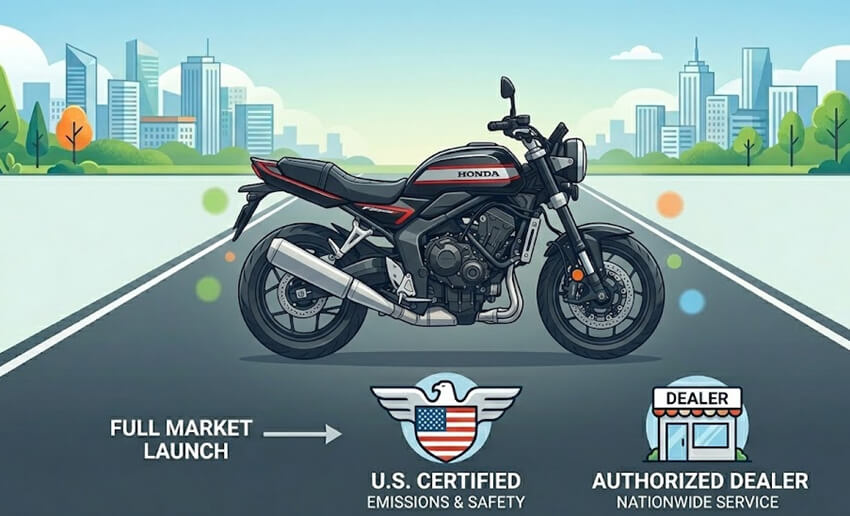
The Honda CB1000F has passed US certification
In addition to emissions compliance, the model must also satisfy Department of Transportation (DOT) safety regulations.
These rules cover critical components such as lighting systems, braking performance, mirrors, tires, reflectors, and overall roadworthiness.
Certification confirms that the motorcycle adheres to federally mandated safety specifications, allowing it to be legally registered and operated on public roads across the country.
In the case of the 2026 Honda CB1000F, the certification filings suggest Honda intends to distribute the motorcycle through official U.S. dealer networks rather than via limited or gray-market channels.
This typically indicates a full-scale market launch strategy, including factory-backed warranties, parts support, and nationwide service availability. For prospective buyers, such certification not only signals regulatory compliance but also reflects the manufacturer’s commitment to long-term support and integration into the U.S. market.
A Revival of the “F” Nameplate
The CB1000F designation marks a revival of Honda’s historic “F” naming convention, previously associated with performance-oriented standard motorcycles such as the Honda CB750F.
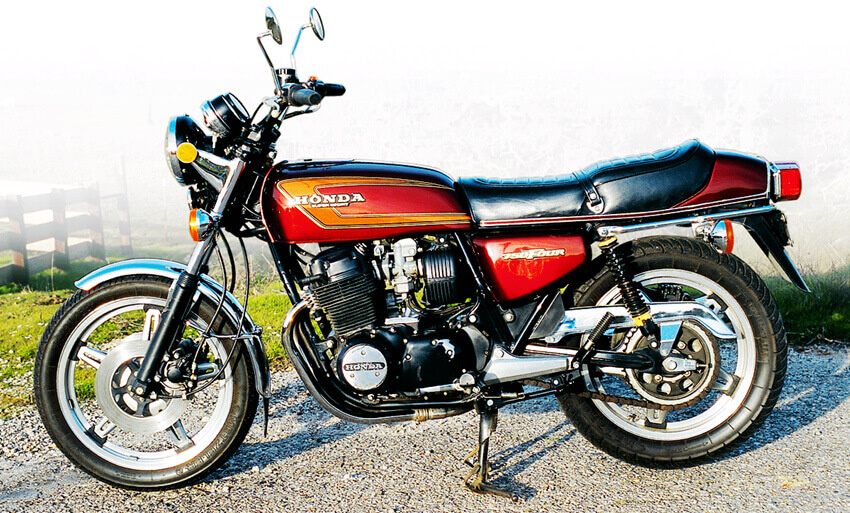
Honda CB750F
During the late 1970s and early 1980s, the “F” badge was used to distinguish sport-focused variants within Honda’s broader CB lineup, signaling sharper handling, more aggressive styling, and an emphasis on rider engagement compared to their more touring-oriented counterparts. The letter became shorthand for factory-backed performance within the universal Japanese motorcycle segment of that era.
By reintroducing the CB1000F name, Honda draws a deliberate connection between its heritage models and a new-generation platform.
The move reflects a broader industry trend in which manufacturers revive historically significant badges to reinforce brand continuity while appealing to both long-time enthusiasts and newer riders seeking authenticity.
The modern CB1000F adopts classic proportions that echo its predecessors, including a round LED headlamp, a sculpted fuel tank with pronounced knee cutouts, and a flat, horizontal seat profile.
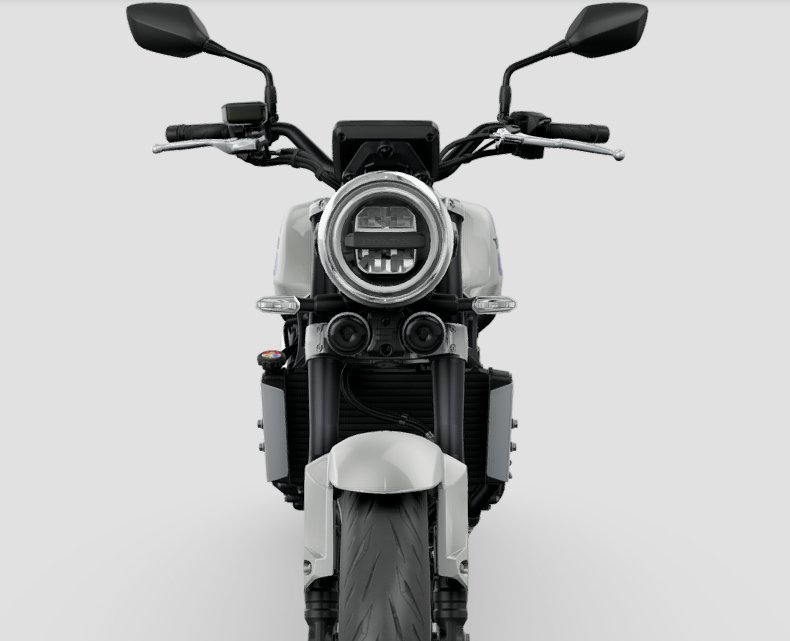
large circular LED headlamp on Honda CB1000F
At the same time, these retro design cues are paired with contemporary mechanical and electronic systems—such as advanced fuel injection, ride-by-wire throttle control, and modern chassis geometry—ensuring the motorcycle meets current performance and safety expectations.
The result is a model positioned squarely within the growing global demand for retro-styled motorcycles that blend nostalgic aesthetics with present-day engineering precision and everyday usability.
2026 Honda CB1000F Specifications
How the 2026 Honda CB1000F Compares to U.S. Competitors
In the U.S. retro performance segment, the 2026 Honda CB1000F will compete with popular models such as the Yamaha XSR900, Kawasaki Z900RS, and Suzuki GSX-S1000.
While each bike has its own strengths, the CB1000F stands out thanks to its smooth inline-four engine, balanced ergonomics, and Honda’s renowned reliability.
Estimated pricing in the U.S. places the CB1000F competitively in the liter-class retro segment.
If U.S. specifications follow the global model, riders can also expect advanced electronics like ride-by-wire throttle, traction and wheelie control, and a full-color TFT display.
2026 Honda CB1000F USA Price and Release Date
1. 2026 Honda CB1000F USA Price
Honda has not disclosed U.S. pricing for the 2026 CB1000F.
However, comparable retro-oriented motorcycles in the American market typically retail between $10,000 and $13,000, depending on specification and brand placement.
Final pricing will likely reflect the model’s equipment level and strategic role within Honda’s broader naked-bike lineup.
2. 2026 Honda CB1000F USA Release Date
No official U.S. release schedule has been confirmed.
Historically, Honda announces new street models several months prior to their arrival in dealerships.
With certification now complete, additional details may emerge in an upcoming model-year announcement cycle.
What This Means for the U.S. Market
The U.S. certification filing for the 2026 Honda CB1000F suggests Honda is preparing to strengthen its presence in the American retro-performance segment.
With growing demand for liter-class retro motorcycles in the United States, the Honda CB1000F USA launch could expand the brand’s lineup beyond previous offerings.
2026 Honda CB1000F U.S. Market FAQ
1. Has the 2026 Honda CB1000F been approved for sale in the United States?
Yes. Regulatory certification filings indicate that the 2026 Honda CB1000F has completed the necessary compliance process for U.S. road use. However, Honda has not yet issued a formal press release confirming pricing or dealership arrival dates.
2. When will the 2026 Honda CB1000F be available in U.S. dealerships?
Honda has not announced an official launch timeline. Historically, new street models are introduced several months before dealer arrival, suggesting additional details may be released in an upcoming model-year announcement cycle.
3. What engine does the 2026 Honda CB1000F use?
The CB1000F is powered by a 999cc liquid-cooled inline-four engine paired with a six-speed transmission and assist-and-slipper clutch. Output figures for the U.S. version have not been formally confirmed.
4. Is the CB1000F replacing the CB1000R in the United States?
Honda has not stated whether the CB1000F will directly replace the CB1000R. The certification suggests an expansion or repositioning within Honda’s liter-class naked lineup rather than a confirmed discontinuation of existing models.
5. How much is the 2026 Honda CB1000F expected to cost in the U.S.?
Official U.S. pricing has not been released. Comparable retro-oriented liter-class motorcycles currently retail between $10,000 and $13,000 in the American market, placing the CB1000F within a similar projected range.
6. Will the U.S. model include advanced rider aids?
International versions of the CB1000F are equipped with IMU-based electronics, traction control, selectable ride modes, and cornering ABS. Confirmation of identical specifications for the U.S. model is pending official release details.
Final Thoughts
The certification filing suggests Honda is preparing to strengthen its presence in the retro performance category at a time when demand for modern-classic motorcycles remains steady in the U.S. market. Further details are expected once the company issues a formal announcement.

With over 10 years of experience working on cars and trucks Item Training Supervisor Richard Reina is known around the office as one of our technical experts & real an "automobile person".
His rate of interest began, in his very own words, "at the age of two when his father educated him the distinction in between a Chevy and a Ford. Since then it's been cars regularly."
As a serious lover of practically all things with a motor Richard can address nearly any kind of inquiry related to car upkeep, fixing, or restoration & is a fact professional in electric motor background.