The motorcycle communication systems field just got a significant upgrade with the release of the Fodsports FX7. This state-of-the-art Bluetooth mesh intercom is packed with many advanced features and techs. It will revolutionize the way riders communicate and enjoy their rides. Whether you're a solo rider or part of a group, the FX7 offers unparalleled […]

Fall Motorcycle Maintenance Checklist: Prepare Your Bike for Winter
November 5, 2026
As temperatures drop, your motorcycle needs more than a quick wash before winter. Months of inactivity, temperature changes, and moisture can affect the battery, tires, fuel system, and exposed metal parts.
A little preparation in the fall can help prevent avoidable maintenance problems and make your first spring ride easier. This fall motorcycle maintenance checklist covers the essential inspections and storage steps, whether you plan to park your bike for the season or continue riding through colder weather.
🍂 Why Fall Motorcycle Maintenance Matters
Cold weather and long periods of inactivity can create several problems:
- Batteries gradually lose charge.
- Old fuel can deteriorate and leave deposits in the fuel system.
- Moisture can contribute to corrosion.
- Tires can lose pressure or develop flat spots during extended storage.
- Dirty or poorly lubricated components may deteriorate faster.
The American Motorcyclist Association recommends preparing the fuel system, battery, tires, and motorcycle surfaces before winter storage. Your motorcycle's owner's manual should remain the primary reference because storage requirements vary by model.
✅ The Essential Fall Motorcycle Maintenance Checklist
1. Check the Battery and Electrical System
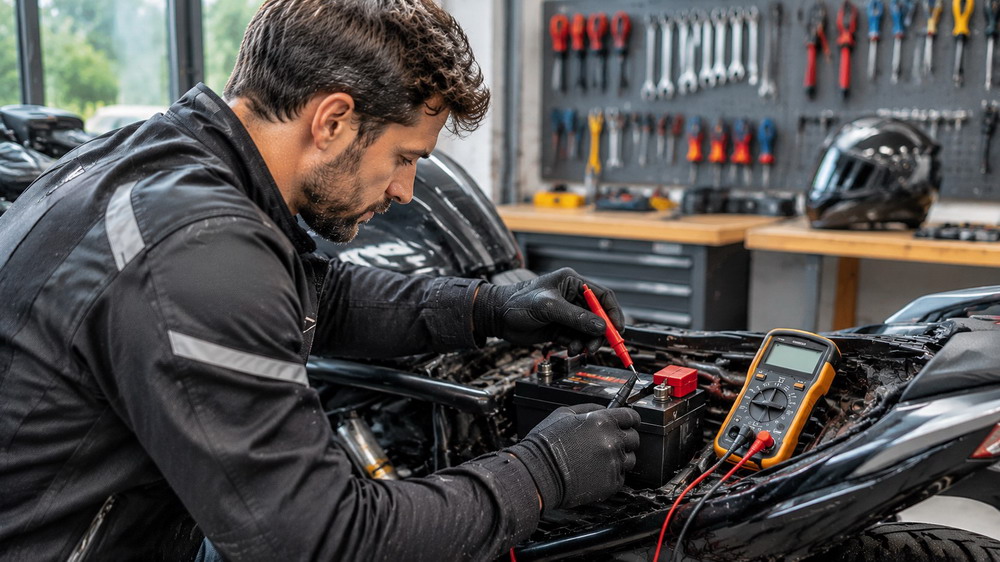
motorcycle battery maintenance before winter
Start by checking the battery's condition and charge. Look for corrosion around the terminals, loose connections, damaged cables, or signs of leakage.
If the motorcycle will be stored for several months, follow the manufacturer's battery-storage instructions. Depending on the battery type and motorcycle design, this may involve disconnecting or removing the battery and using a compatible battery maintainer.
Do not assume every battery needs the same charging method. Lithium, AGM, and conventional lead-acid batteries have different requirements. Use a charger designed for your battery chemistry.
2. Inspect Oil, Coolant, and Other Fluids
Check the engine oil level and condition. If an oil change is due, consider completing it before storage rather than leaving used oil in the engine throughout the winter.
Also inspect:
- Brake fluid level and condition
- Coolant level and freeze protection, if liquid-cooled
- Clutch fluid, if the motorcycle uses a hydraulic clutch
- Fork seals and other areas for fluid leaks
Follow the maintenance schedule in your owner's manual. If a fluid is contaminated, overdue, or leaking, address it before putting the motorcycle away.
3. Inspect Tires, Brakes, and Wheels
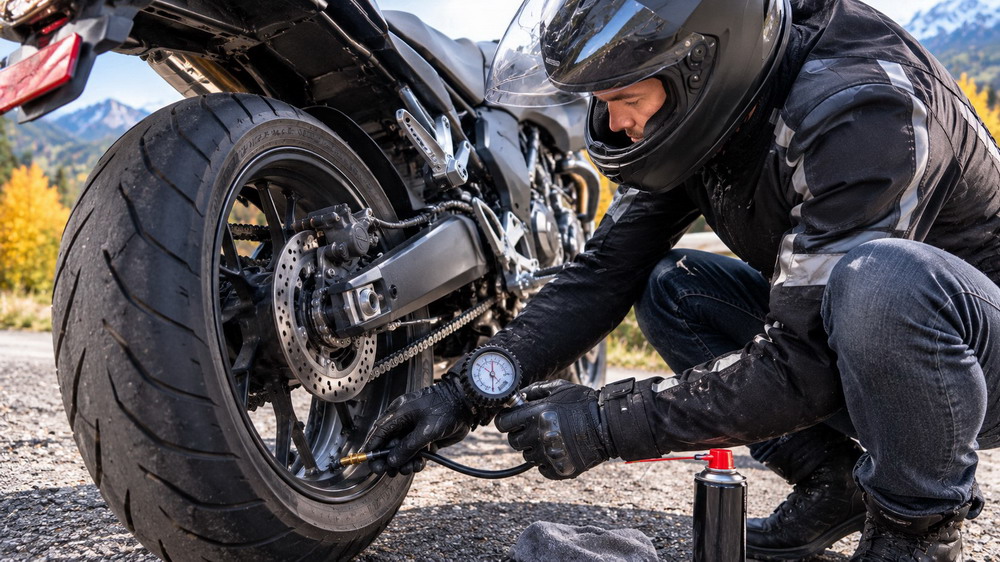
motorcycle tires brakes chain fall maintenance
Tires are especially important because cold temperatures can affect pressure.
Check the recommended tire pressure when the tires are cold. Inspect the tread for uneven wear, embedded objects, cracks, or other damage. Also examine the wheels for visible damage.
Check the brake pads, discs, hoses, and fluid level. If you notice unusual wear, leaks, or reduced braking performance, have the problem inspected before riding.
For long-term storage, keep the tires properly inflated and consider using suitable stands to reduce prolonged pressure on the same contact patches. Follow the motorcycle manufacturer's recommendations rather than adding extra pressure without checking the manual.
4. Clean and Lubricate the Motorcycle
Wash away dirt, road salt, insects, and other contaminants. Dry the motorcycle thoroughly, paying attention to areas where water can collect.
For chain-driven motorcycles, inspect chain slack and condition, then clean and lubricate the chain according to the manufacturer's instructions. Belt- and shaft-driven motorcycles require their own inspection procedures.
Apply suitable protective products to exposed metal and painted surfaces where recommended. Avoid getting lubricant or protective products on brake discs, pads, tires, or other surfaces that require traction.
5. Prepare the Fuel System
Fuel preparation depends on the motorcycle's design and the length of storage.
For many motorcycles, the manufacturer's storage procedure may recommend adding a suitable fuel stabilizer and running the engine long enough for treated fuel to circulate. Some models may also specify a particular fuel-tank level.
Carbureted motorcycles can require additional steps, such as draining the float bowls. Fuel-injected models generally have different procedures.
Do not apply one storage method to every motorcycle. Check the owner's manual and follow the fuel-stabilizer manufacturer's dosage instructions. Because gasoline is highly flammable, never store a motorcycle with fuel near open flames, pilot lights, sparks, or other ignition sources.
🛡️ How to Store Your Motorcycle for Winter
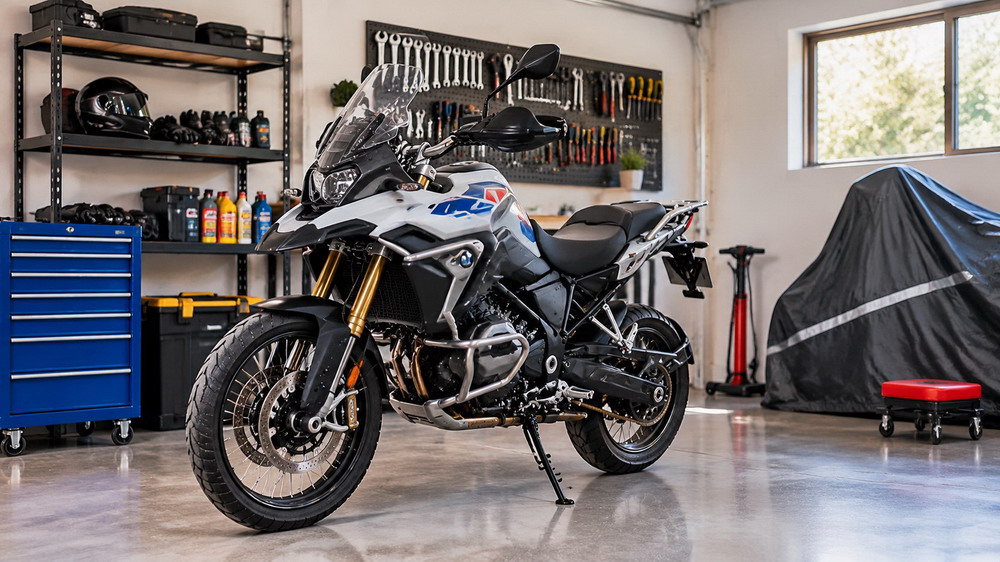
motorcycle winter storage preparation
Once maintenance is complete, choose a dry, secure, and well-ventilated storage location.
Before covering the motorcycle:
- Make sure the bike is completely clean and dry.
- Complete the battery and fuel-system preparation specified in the manual.
- Keep tires at the recommended pressure.
- Use a breathable motorcycle cover to reduce trapped moisture.
- Keep the motorcycle away from heaters, open flames, and other ignition sources.
Avoid starting the motorcycle briefly every few weeks just to let it idle. Short running periods may not bring the engine fully up to operating temperature and can introduce additional moisture. Follow the manufacturer's storage guidance instead.
Keep a written record of the work completed. This gives you a useful reference when preparing the motorcycle for spring.
🧤 Check Your Riding Gear and Accessories
Winter preparation should include your riding equipment.
Inspect your helmet for damage and check the visor, ventilation openings, and fastening system. Examine gloves, jackets, boots, and waterproof layers for worn seams or damaged closures.
If you use Helmet Communication equipment or a Bluetooth Intercom, check the battery condition, charging connection, speakers, microphone, and mounting hardware. Store electronic accessories in a clean, dry place and follow the manufacturer's battery-storage recommendations.
A properly maintained Motorcycle Intercom can also help riders stay connected when group rides continue in colder weather. However, communication equipment should never distract from road conditions or safe riding.
🌱 Spring Startup: What to Check Before Riding
Before taking the motorcycle out after winter storage, do not simply start the engine and ride away.
Use this short checklist:
- Reinstall and reconnect the battery if it was removed.
- Check tire pressure and inspect the tires again.
- Inspect brakes, lights, cables, and controls.
- Check engine oil, coolant, and other required fluids.
- Look for fuel, oil, or coolant leaks.
- Confirm the chain or final-drive system is in good condition.
- Start the motorcycle according to the owner's manual.
If anything looks damaged or does not operate normally, have it checked before riding.
🏁 Fall Motorcycle Maintenance Checklist at a Glance
Use this condensed list before winter storage:
- Inspect and prepare the battery.
- Check engine oil, coolant, and brake fluid.
- Inspect tire pressure, tread, and brakes.
- Clean and lubricate the chain, if applicable.
- Prepare the fuel system according to the owner's manual.
- Wash, dry, and protect the motorcycle.
- Store the bike in a suitable location with a breathable cover.
- Check riding gear and electronic accessories.
- Record completed maintenance for spring.
❓ Frequently Asked Questions
When should I winterize my motorcycle?
Prepare your motorcycle before temperatures become consistently cold and before you stop riding for an extended period. The right timing depends on your local climate and storage conditions.
Should I change motorcycle oil before winter storage?
If an oil change is due, completing it before long-term storage is generally a sensible option. Follow the service interval and storage instructions in your owner's manual.
Should I remove the motorcycle battery for winter?
Not always. Some motorcycles can remain connected to a compatible battery maintainer, while others may require battery removal or disconnection. Follow the instructions for your specific battery and motorcycle.
Should I fill the motorcycle gas tank before winter?
Some manufacturers recommend storing a motorcycle with a full tank and fuel stabilizer, while other designs or fuel systems may require a different procedure. Check your owner's manual before deciding.
How often should I start my motorcycle during winter storage?
Avoid starting it briefly just to let it idle. Follow the manufacturer's storage instructions. If the motorcycle is not intended to be ridden, proper battery and fuel-system preparation is usually more useful than occasional short starts.
🏍️ Prepare Now for an Easier Spring Ride
A good fall motorcycle maintenance routine does not need to be complicated. Focus on the essentials: battery condition, fluids, tires, brakes, fuel preparation, and protection from moisture.
Most importantly, follow the storage instructions for your specific motorcycle rather than relying on a universal winterizing method. A few careful checks before winter can reduce avoidable problems and help your bike return to the road in better condition.
Authoritative Sources
- American Motorcyclist Association — Tips for Storing Your Motorcycle During Winter Months
https://americanmotorcyclist.com/tips-for-storing-your-motorcycle-during-winter-months/ - Harley-Davidson — Service Information
https://serviceinfo.harley-davidson.com/ - Honda Powersports — Owner's Manuals
https://powersports.honda.com/downloads/owners-manuals - Yamaha Motorsports — Owner's Manuals and Support
https://www.yamahamotorsports.com/ - Kawasaki — Owner's Manuals and Support
https://www.kawasaki.com/

Rodney L is a technical writer and product consultant with over a decade of experience in the motor industry. Rodney is a fan of performance machines that run fast and loud and an expert in all things custom. His numerous articles and write-ups are available at our knowledge base. Whether it’s something wrong with your motorcycle or you are building a custom bike, you can trust Rodney’s experience.
You maybe like to read:
Fodsports Brand Month: Unbeatable Deals and Top-Notch Service
Discover Fodsports Brand Month July and August mark a special occasion for motorcycle enthusiasts and tech lovers alike. Welcome to Fodsports Brand Month! This event is dedicated to celebrating everything that makes Fodsports a leading name in the motorcycle communication industry. Get ready for a fantastic promotions, exceptional service from Fodsports. Let's insights into Fodsports' […]
Fall Motorcycle Maintenance Checklist: Prepare Your Bike for Winter
As temperatures drop, your motorcycle needs more than a quick wash before winter. Months of inactivity, temperature changes, and moisture can affect the battery, tires, fuel system, and exposed metal parts. A little preparation in the fall can help prevent avoidable maintenance problems and make your first spring ride easier. This fall motorcycle maintenance checklist […]
Best Motorcycle Helmet Bluetooth Speakers: How to Choose the Right Pair
Choosing the best motorcycle helmet Bluetooth speakers involves more than finding speakers that play music. They need to fit your helmet, sit comfortably near your ears, deliver clear audio, and work with your preferred Bluetooth device or communication system. Some riders mainly want music and GPS directions. Others need phone calls or communication during group […]
Bluetooth vs. Mesh Motorcycle Intercom: Range, Features and Key Differences
📡 What Is a Bluetooth Motorcycle Intercom? A Bluetooth motorcycle intercom is a wireless communication device that allows riders to talk to passengers or other motorcyclists through helmet-mounted speakers and microphones. It typically uses Bluetooth technology to establish connections between compatible communication devices. Bluetooth intercoms are widely used because they are relatively affordable, easy to […]
Pyrenees Motorcycle Routes in Autumn: A France and Spain Riding Guide
Autumn is an excellent time to explore the Pyrenees by motorcycle, with winding mountain roads, quieter villages, forested valleys, and spectacular views across France and Spain. As summer crowds begin to fade, the region offers a different kind of riding experience, from the legendary Col du Tourmalet to Spain’s scenic N-260 highway. However, an autumn […]