The motorcycle communication systems field just got a significant upgrade with the release of the Fodsports FX7. This state-of-the-art Bluetooth mesh intercom is packed with many advanced features and techs. It will revolutionize the way riders communicate and enjoy their rides. Whether you're a solo rider or part of a group, the FX7 offers unparalleled […]

Grossglockner High Alpine Road in Fall: Austria Motorcycle Riding Guide
October 13, 2026
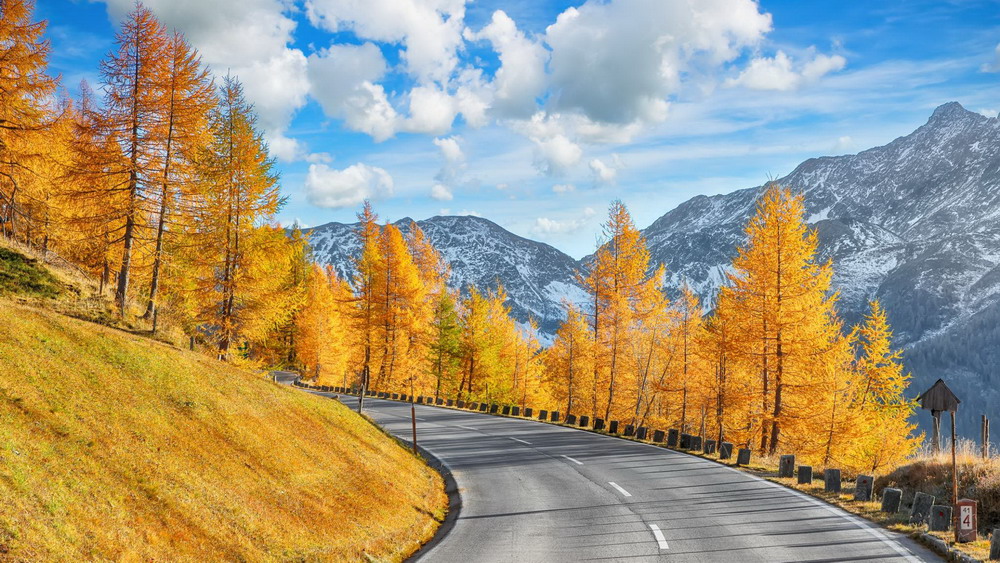
Autumn transforms Austria’s Grossglockner High Alpine Road into a spectacular mountain destination. Golden larch trees brighten the slopes, crisp Alpine air can reveal dramatic mountain views, and 36 hairpin bends make the journey memorable for motorcycle enthusiasts. Yet autumn also brings unpredictable weather, cold pavement, and possible road closures.
For riders planning an Austrian Alps motorcycle tour, preparation matters as much as the scenery. This guide covers autumn highlights, the best time to visit, scenic stops, route planning, and essential riding advice.
Table of Contents
⚠️ Important Motorcycle Access Notice
As of October 13, 2026, the official Grossglockner High Alpine Road website reports that motorcycle and bicycle access is temporarily closed until further notice. This restriction may change as weather and road conditions evolve.
Do not attempt to ride the route until the operator confirms that motorcycle access has resumed. Check the official website before travelling rather than relying on the usual seasonal opening schedule.
The road normally operates seasonally, generally from spring into early November, depending on weather and operating conditions. Its regular opening calendar does not guarantee access on a particular day.
The following guide is intended for trip planning and future visits when motorcycle access is permitted.
🍂 Why Ride Grossglockner in Fall?
The Grossglockner High Alpine Road crosses the Hohe Tauern mountain region between Fusch an der Großglocknerstraße in SalzburgerLand and Heiligenblut in Carinthia. Its combination of mountain scenery, technical corners, and panoramic viewpoints makes it one of Austria’s best-known scenic roads.
Autumn brings a distinctive atmosphere. Golden larches contrast with evergreen forests, while higher peaks may already carry early snow. Cooler temperatures can also make riding more comfortable than during a hot summer afternoon.
Wildlife, including marmots and ibex, inhabits the wider Alpine landscape, although sightings are never guaranteed. Autumn is also an opportunity to enjoy the surrounding landscape at a slower pace, with time for photography and short walks where conditions allow.
The trade-off is less predictable weather. Conditions at the summit can differ significantly from those in the valley, so flexibility is essential.
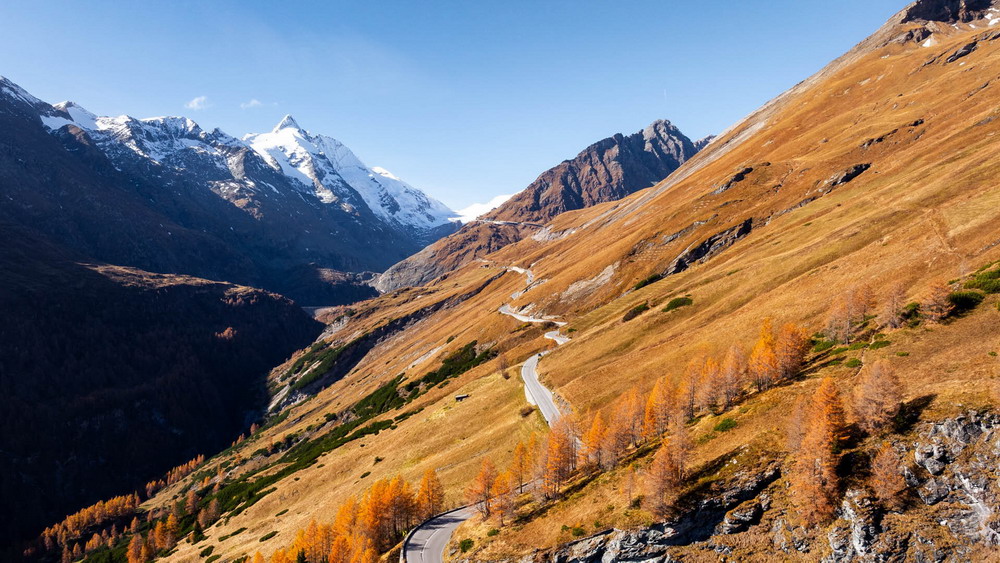
Grossglockner high alpine road autumn
📅 When Is the Best Time to Visit?
September: A Flexible Autumn Option
September is generally a practical month for planning an autumn visit. Daylight remains relatively generous, and early autumn colors may appear at lower elevations.
Conditions vary from year to year, however. Check the forecast and official road status shortly before travelling. Even during the usual operating season, cold mornings or unexpected weather can affect access.
October: More Color, Greater Uncertainty
October can bring stronger golden foliage and a more wintry Alpine atmosphere. It also increases the likelihood of frost, snow, shorter daylight hours, and temporary restrictions.
The road usually closes for winter around early November, but the exact date depends on conditions. Melting snow can freeze on the pavement, creating a particular risk for motorcycles during colder morning hours.
Before making travel arrangements, verify current opening times, ticket requirements, and motorcycle access. A published seasonal schedule or a purchased ticket does not override a temporary road closure.
🏍️ How to Plan the Motorcycle Route
The Grossglockner High Alpine Road is approximately 48 km (30 miles) long, with 36 hairpin bends. It crosses the Hochtor area at approximately 2,504 metres and reaches 2,571 metres at Edelweißspitze via a short side road.
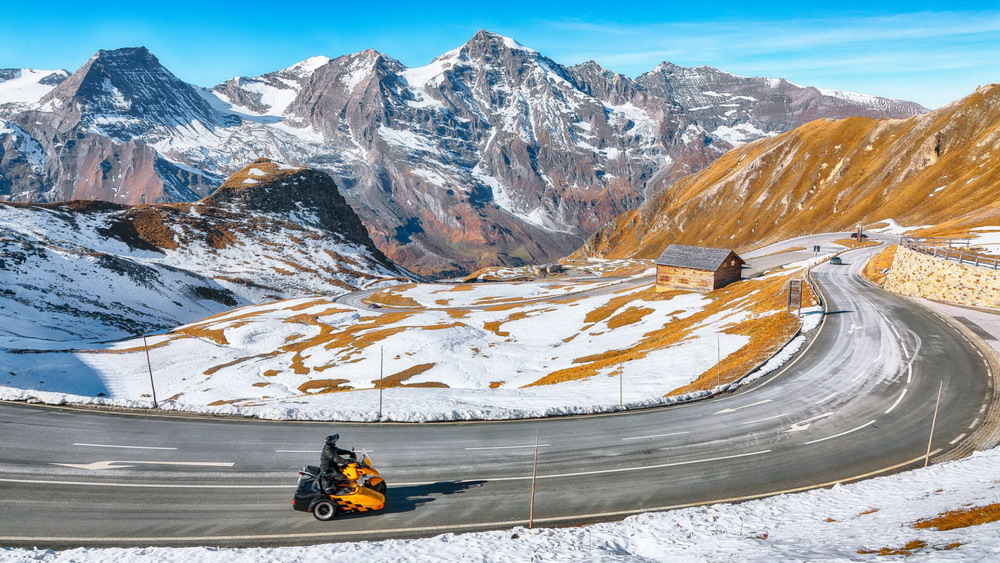
Grossglockner motorcycle hairpin road
Start from Fusch or Ferleiten
When motorcycle access is permitted, a common approach is from Fusch, continuing south toward the Ferleiten toll station.
Before entering, confirm the current motorcycle access status, opening hours, and ticket requirements. Allow several hours if you want to stop for photographs and visit the main viewpoints. Traffic, changing weather, and short walks can turn the crossing into a half-day outing.
Continue Toward Hochtor
As the road climbs, forested slopes give way to open Alpine terrain. The bends require concentration, particularly where visibility is limited or the pavement remains damp.
Hochtor marks the crossing between SalzburgerLand and Carinthia. Use designated stopping areas and avoid blocking the road while taking photographs.
Finish Toward Heiligenblut
Continue toward the Carinthian side for more mountain views. Depending on the weather and accommodation plans, Heiligenblut can serve as the end of the ride or a starting point for a wider Austrian Alps motorcycle tour.
Plan the return journey carefully. Do not assume that the road will remain open throughout the day if temperatures fall or weather conditions deteriorate.
📍 The Best Stops Along the Road
Edelweißspitze
At 2,571 metres, Edelweißspitze is the highest accessible point on the road. Its panoramic viewpoint offers broad views across the surrounding Alpine peaks.
The access road includes cobbled sections, so riders should slow down and assess the surface before taking the detour. Cold temperatures and strong winds can make even a short stop uncomfortable.
Fuscher Törl and Fuscher Lacke
Fuscher Törl is a memorable viewpoint along the northern section. Nearby Fuscher Lacke provides another opportunity to pause and learn about the road’s history.
These stops help break the journey into manageable sections, giving riders time to rest and appreciate the scenery instead of rushing from one viewpoint to another.
Kaiser-Franz-Josefs-Höhe
This viewpoint offers one of the best-known perspectives of the Grossglockner and the Pasterze Glacier. Allow extra time for panoramic views and the visitor centre when facilities are open.
Check facility opening hours separately from road operating hours, as exhibitions and restaurants may follow different schedules.
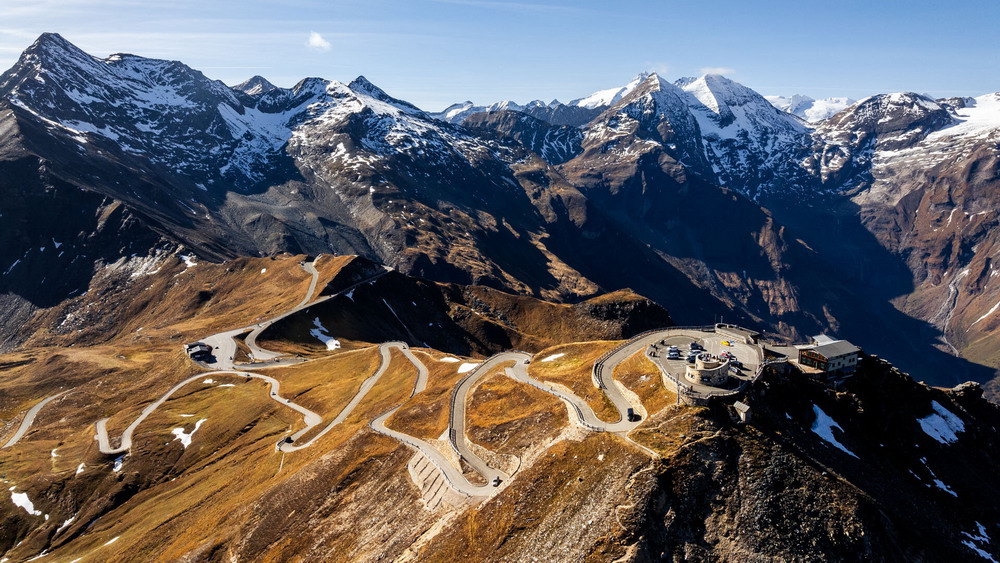
Edelweißspitze Grossglockner viewpoint
🛣️ Autumn Riding Tips That Matter
High-altitude conditions can change quickly. A sunny valley does not guarantee dry pavement near the summit.
- Check for frost and ice. Never ride on an icy road or attempt to enter a section officially closed to motorcycles.
- Ride within your sightline. Choose a speed that allows you to stop safely within the visible road ahead, especially on blind bends.
- Stay in your lane. Avoid cutting corners into oncoming traffic, even when the road appears empty.
- Manage descents carefully. Select an appropriate gear and avoid relying continuously on the brakes.
- Allow extra time. Traffic, wildlife, cyclists, and sudden weather changes can affect your pace.
- Recheck conditions. Review the road status on the day of travel and be prepared to postpone the ride.
The most important rule is to adapt your plans to the conditions rather than trying to complete a route at all costs.
📡 Group Riding and Motorcycle Communication
Group rides require clear coordination, particularly when riders become separated at viewpoints or visibility deteriorates. Agree on meeting points before departure, maintain safe following distances, and stop in designated areas if someone needs assistance.
A Helmet Communication system or Bluetooth Intercom can help riders share navigation updates and coordinate stops. A Motorcycle Intercom can make group communication more convenient, but it should never distract the rider from traffic or road conditions.
Keep messages brief, maintain awareness of your surroundings, and never handle a device while moving. Communication equipment complements safe riding practices; it cannot replace appropriate spacing, route planning, or decisions based on current conditions.
📊 Grossglockner High Alpine Road by the Numbers
The route’s dimensions explain why it deserves careful preparation:
- 48 km: approximate road length
- 36: hairpin bends
- 2,504 m: approximate elevation at Hochtor
- 2,571 m: highest accessible point at Edelweißspitze
- 3,798 m: height of the Grossglockner, Austria’s highest mountain
These figures are published in official and tourism destination information. They highlight the substantial elevation changes riders should prepare for: temperatures, visibility, and road grip can differ considerably between the valley and the upper road.
The figures describe the route and surrounding mountain landscape, not a guarantee of current road accessibility.
🧤 What to Prepare for an Autumn Ride
When motorcycle access is permitted, wear protective riding gear with a warm mid-layer, windproof outer layer, waterproof gloves, and suitable boots. Pack an additional dry layer and consider a neck warmer for exposed viewpoints.
Before departure, check tire condition and pressure, brakes, lights, and chain tension. Carry water, a charged phone, and offline navigation in case mobile coverage is unreliable.
Allow enough daylight for the journey and avoid planning a tight schedule around sunset. If the road is officially closed, or if ice, snow, or poor visibility makes riding unsafe, postpone the trip.
🍁 Final Thoughts
The Grossglockner High Alpine Road combines golden autumn foliage, dramatic mountain panoramas, and 36 hairpin bends across approximately 48 kilometres of Alpine road. September is generally easier to plan around, while October may offer stronger autumn colors alongside greater weather uncertainty.
As of October 13, 2026, motorcycle access is reported as temporarily closed. Check the latest official notice before making travel arrangements, and only ride when access is confirmed and conditions are safe.
Plan carefully, ride within your limits, and let the mountains set the pace.
❓ FAQ About Grossglockner High Alpine Road
1. Is the Grossglockner High Alpine Road good for motorcycle riding?
It is a well-known Alpine motorcycle route featuring 36 hairpin bends and extensive mountain views. Riders should be comfortable with mountain roads and prepared for changing weather. Always verify motorcycle access before travelling.
2. When is the best time to visit Grossglockner in autumn?
September is generally a flexible option for planning. October may offer stronger autumn colors, but frost, snow, and temporary restrictions become more likely.
3. Is the Grossglockner High Alpine Road open to motorcycles in October 2026?
As of October 13, 2026, the official website reports that motorcycle access is closed until further notice. The status may change, so check the official road status before departure.
4. How long should I allow for the route?
Allow several hours if you want to visit the main viewpoints, take photographs, and explore visitor facilities. Traffic, weather, and short walks may extend the journey.
5. What equipment should I bring for an autumn motorcycle trip?
Wear full protective riding gear with warm, windproof, and waterproof layers. Check your motorcycle before departure and carry navigation, water, and a charged phone. Do not ride if the road is officially closed or unsafe because of ice or snow.
📚 Authoritative Sources
- Grossglockner High Alpine Road — Official Website
https://www.grossglockner.at/en - Grossglockner High Alpine Road — Motorcycle Guide
https://www.grossglockner.at/en/the-high-alpine-road/on-the-road/motorcycle - Grossglockner High Alpine Road — Prices and Opening Times
https://www.grossglockner.at/en/for-your-visit/prices-opening-times - Austria Tourism — Grossglockner High Alpine Road
https://www.austria.info/en-gb/locations/grossglockner-high-alpine-road/ - Salzburg Tourism — Grossglockner High Alpine Road
https://www.salzburg.info/en/travel-info/infos/grossglockner-high-alpine-road_az_9427

Rodney L is a technical writer and product consultant with over a decade of experience in the motor industry. Rodney is a fan of performance machines that run fast and loud and an expert in all things custom. His numerous articles and write-ups are available at our knowledge base. Whether it’s something wrong with your motorcycle or you are building a custom bike, you can trust Rodney’s experience.
You maybe like to read:
Fodsports Brand Month: Unbeatable Deals and Top-Notch Service
Discover Fodsports Brand Month July and August mark a special occasion for motorcycle enthusiasts and tech lovers alike. Welcome to Fodsports Brand Month! This event is dedicated to celebrating everything that makes Fodsports a leading name in the motorcycle communication industry. Get ready for a fantastic promotions, exceptional service from Fodsports. Let's insights into Fodsports' […]
Grossglockner High Alpine Road in Fall: Austria Motorcycle Riding Guide
Autumn transforms Austria’s Grossglockner High Alpine Road into a spectacular mountain destination. Golden larch trees brighten the slopes, crisp Alpine air can reveal dramatic mountain views, and 36 hairpin bends make the journey memorable for motorcycle enthusiasts. Yet autumn also brings unpredictable weather, cold pavement, and possible road closures. For riders planning an Austrian Alps […]
Black Forest High Road Motorcycle Guide: Best Autumn Ride, Scenic Routes and Riding Tips in Germany
Few places in Germany combine flowing mountain roads, colorful forests, traditional villages, and peaceful viewpoints as perfectly as the Black Forest High Road (Schwarzwaldhochstraße B500). In autumn, this legendary route transforms into a spectacular motorcycle destination, with golden beech forests, misty valleys, and panoramic views stretching toward the Rhine Valley and even France on clear […]
Ultimate Dolomites Autumn Cycling Guide: Best Fall Foliage Routes & Expert Gear Blueprint
The Italian Dolomites in autumn transform into a sensory masterpiece. As the chaotic summer crowds dissipate between mid-September and late October, the entire Alpine region ignites with golden larches, fiery maples, and stark white limestone peaks. This fleeting shoulder season provides the ultimate window for an epic Dolomites cycling tour and foliage chasing. Compared to […]
Route des Grandes Alpes in Fall: France Motorcycle Riding Guide
Few motorcycle routes combine high mountain passes, autumn forests, dramatic valleys, and Mediterranean scenery as well as the Route des Grandes Alpes in France. Stretching about 720 km from Thonon-les-Bains near Lake Geneva to Nice, the route crosses 18 major Alpine passes and reaches 2,764 meters at the Col de l'Iseran. For motorcycle riders, autumn can […]