The motorcycle communication systems field just got a significant upgrade with the release of the Fodsports FX7. This state-of-the-art Bluetooth mesh intercom is packed with many advanced features and techs. It will revolutionize the way riders communicate and enjoy their rides. Whether you're a solo rider or part of a group, the FX7 offers unparalleled […]

Motorcycle Brake: Front VS Rear - When & Why 2025
February 13, 2025

For motorcycle riding safety, effective stopping rocks because it has an influence on how fast you stop how stable you are, and how much control you get. Figuring out when and how to use the front and back brakes can really bump up your riding game and keep you safe.
This guide is gonna show you the fundamentals of motorcycle braking, advanced techniques, common mistakes to avoid, and some pro tips for all sorts of weather and roads.
Table of Contents
The Front Motorcycle Brake
The front brake is like the superstar of motorcycle brakes. It's chilling at the front wheel, and you boss it around with a lever to the right of your handlebars. When you gotta slow your roll, this brake is your go-to because it's responsible for most of the braking action.
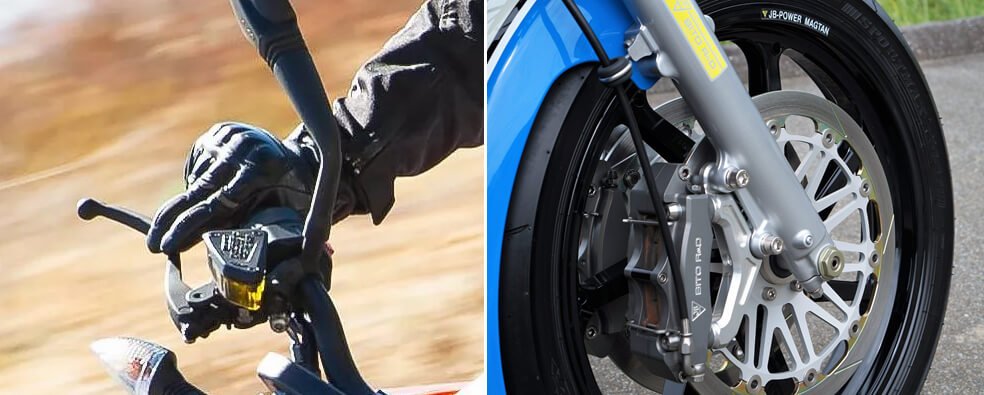
front brake of the motorcycle
How the Front Brake Works
Braking Force Distribution: Squeezing the front brake lever activates either a hydraulic or cable mechanism. This setup applies pressure on the brake pads up front. Then, the power shifts onto the front disc brake where the pads clamp down on the rotor (that flat circle thingy hooked up to your wheel).
Weight Transfer: When you hit the front brake, both you and your ride shift forward, bumping up the grip the front tire's got. That's how you get extra stopping muscle. That's also why the front brakes have more force delivering around 70% to 80% of the stopping action of your motorcycle.
When to Use the Front Brake
- High-Speed Braking: You ought to bank on the front stopper when you're zooming along and gotta slow your roll. This works because more weight shifts to the front wheel giving it a better grip and letting you brake more efficiently.
- Quick Stops: If things get wild you need to stop fast. The front brake plays a key role, keep it cool since hit it too hard or too hasty, and you’re asking for trouble, like having your wheel kiss the ground or doing a slip 'n’ slide in the rain.
- Braking in a Line: The front brake works best when you need to stop while going straight. It gives you steady strong slowing power when you use it right.
The Front Brake's Importance
Strongest Stopping Power: As we said before, the front brake does most of the work to stop you. This is because it works with the natural way your bike's weight moves forward making it better at stopping you fast.
Keeps Balance: Using the front brake helps the motorcycle stay balanced and steady when stopping. Smooth application allows the rider to stop in a controlled way without slipping or losing control.
The Rear Motorcycle Brake
The rear brake is on the motorcycle's tail end, and you mash a pedal on the right to make it do its thing. It's not a champ like the front brake when you wanna cut speed, but don't miss it—it's surely got its slice of the braking pie.
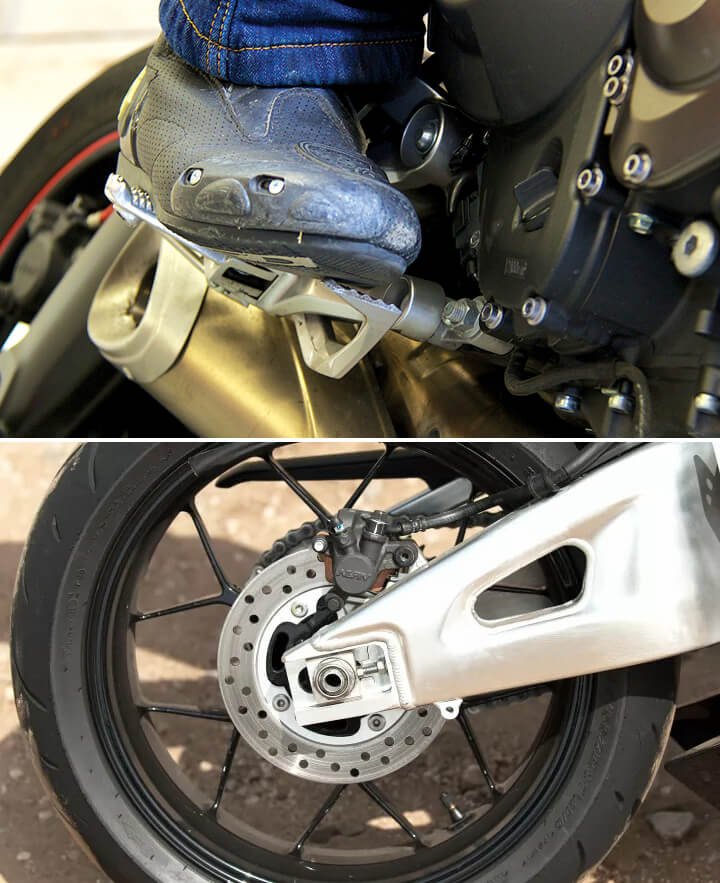
rear brake of the motorcycle
How the Rear Brake Works
Braking Force Distribution: Give that rear pedal a push, and you're triggering either a hydraulic or gear-based setup. This system gets the rear brake clamps hugging the rear disc rotor. It creates some serious grip to reel in the back wheel's roll.
Less Weight Shift: Unlike the front brake which relies on the weight transfer, the rear one is different. It's more about keeping things steady when you're cruising slow or turning.
When to Use the Rear Brake
- Slow-Speed Moves: In low-speed maneuvers, bikers often prefer the rear brake. This happens during U-turns, parking, or navigating cramped areas. Using the rear brake aids in maintaining balance and prevents the back wheel from skidding.
- Starting on Hills: The rear brake plays a key role when starting on a slope. It keeps the motorcycle from rolling backward. The rear brake holds the motorcycle in place while you engage the throttle and clutch to start moving forward.
- Keeping the Motorcycle Steady: The rear brake is useful when you need stability if you don't want to rely on the front brake. For example, when you're on gravel or slippery surfaces, it helps keep the back wheel grounded.
- Trail Braking (Pro Move): Skilled riders apply the back stopper in trail braking for speed regulation and keeping a tight grip on the situation as they lean into a curve. You see this a lot on the racing circuit or when they're pushing their rides to the max.
The Rear Brake's Importance
Boosts Control at Slow Speeds: When you're on the move, using the rear brake steadies the motorcycle. Grabbing the front brake in these situations might knock the motorcycle off balance.
Keeps the Back Wheel Down: Slamming on the brakes with powerful stoppers on bikes could raise the rear wheel. Using the rear one ensures it doesn't lift. This keeps the bike firm with both wheels touching the ground.
Better for New Riders: People just starting out find the rear brake easier to handle at low speeds. It gives them a smoother way to slow down without going overboard.
How the Front and Rear Brakes Work Together
Each brake has a distinct function, but they work better together.

front and rear brakes work better together
Here's how they complement each other
- Smooth and Gradual Braking: Riders gotta press both the front and back brakes gently when braking. Doing this divides the stopping power between both wheels making the motorcycle stop quicker and giving you better control.
- Balancing Stability and Stopping Power: The rear brake is your best bud for keeping things steady when you're going slow. The front brake is the muscle that helps you slow down fast. Using them both is like a magic combo for keeping your motorcycle stable when you hit the brakes.
- Preventing Skids: If you want to keep from sliding all over the place on wet or rough streets, be correct with both brakes. This move helps cut down on the odds of your wheels locking up and throwing you into a skid.
Efficient Braking Methods
1. Gradual Braking
Gradual braking requires a slow increase in brake pressure. Begin with a light touch and add more as you slow down. This approach stops sudden jolts, cuts down on skid risk, and keeps you in better control.
2. Using Front and Back Brakes Together
Though the front brake gives most of the stopping power using it can make the bike unstable. Always use both brakes at once. The back brake helps steady the motorcycle, while the front brake provides the needed force to stop.
Threshold braking is a skill where you push the brakes as hard as you can without locking the wheels. This method comes in handy during emergencies, as it gives you the most stopping power while keeping your tires gripping the road.
4. Downshifting While Braking
Downshifting while braking uses the engine to slow down, which helps stop the bike more. This trick works great when you're nearing turns or going down steep hills. It also gets the bike ready to speed up if needed.
5. Braking in Wet or Slippery Conditions

brake in wet condition
Slick or wet roads cut down on tire grip making your car take longer to stop. When you're riding in these conditions, press the brakes. Don't slam on the brakes, or your tires might slide. For wet roads, it's best to put 40% of your braking power on the front wheels and 60% on the back.
When To Shift Gears On A Motorcycle At What Rpm? 6 Gears You Must Know, The Ultimate Shift Guide
Common Braking Mistakes to Avoid
1. Relying Too Much on the Front Brake
If you use the front brake, your front wheel might lock up, and you could lose control. Always use both brakes together to stay as stable as possible.
2. Slamming on the Brakes
Hitting the brakes too hard or fast can make your wheels lock, which can make you unstable or cause crashes. Work on pressing the brakes to stop.
3. Not Taking Care of Brakes
Brake pads wearing out, brake fluid running low, or rotors getting damaged can make braking less effective. Check and fix your brake system often to keep it working well.
4. Wrong Body Position
How you position your body matters a lot when braking. Keep your elbows a bit bent and your weight in the middle. This stance lets you control better and react faster.
Advanced Braking Techniques
1. Trail Braking
Trail braking is a technique used when entering corners. It involves applying the front brake as you enter the turn and gradually releasing it as you lean into the corner. This method helps maintain stability and control, especially on twisty roads.
2. Emergency Braking
During emergencies fast and strong braking helps stop accidents. Apply both brakes hard, stay loose, and keep the bike under control.
3. Engine Braking
Engine braking slows the bike by closing the throttle and shifting down. This method cuts down on brake wear and works well on long downhills or slick roads. But it doesn't turn on the brake lights so use it.
Tips for Different Riding Conditions
1. Dry Conditions
On dry roads, the front brake does most of the stopping. Use a 60% front and 40% rear brake split for the best results.

brake on dry roads
2. Wet or Slippery Roads
When you're on wet or slick roads, press the brakes. To keep your bike stable, experts suggest using 40% front brakes and 60% rear brakes.
3. Gravel or Uneven Terrain
If you're riding on gravel or rough terrain, don't slam on the brakes. Instead, press both brakes and keep a steady pace to avoid sliding.
4. Downhill Riding
When you're going down steep slopes, use your engine to slow down along with a bit of brake pressure. This way, you'll stop your brakes from getting too hot and have better control of your bike.

downhill riding
Conclusion
Every motorcycle rider needs to get good at the right way to brake. Get to know how your motorcycle's brakes work and keep on practicing. You'll boost both your safety and the fun you have while riding.
Make it a habit to use both brakes together, dodge the usual slip-ups, and tweak how you brake when you're facing different kinds of road stuff. Stick with regular practice and keep your brakes in top shape to make sure you can bring your motorcycle to a stop with total confidence, no matter what comes your way.
More Brake Knowledge
With over 10 years of experience working on cars and trucks Item Training Supervisor Richard Reina is known around the office as one of our technical experts & real an "automobile person".
His rate of interest began, in his very own words, "at the age of two when his father educated him the distinction in between a Chevy and a Ford. Since then it's been cars regularly."
As a serious lover of practically all things with a motor Richard can address nearly any kind of inquiry related to car upkeep, fixing, or restoration & is a fact professional in electric motor background.
You maybe like to read:
Fodsports Brand Month: Unbeatable Deals and Top-Notch Service
Discover Fodsports Brand Month July and August mark a special occasion for motorcycle enthusiasts and tech lovers alike. Welcome to Fodsports Brand Month! This event is dedicated to celebrating everything that makes Fodsports a leading name in the motorcycle communication industry. Get ready for a fantastic promotions, exceptional service from Fodsports. Let's insights into Fodsports' […]
Top 5 Motorcycles for Women in 2026: Cruisers, Sport Bikes and Retro Styles
The best motorcycle for a woman is not necessarily the smallest, lightest, or lowest-powered bike. It is the one that fits her body, riding experience, performance expectations, and personal style. Whether you are a beginner looking for confidence in city traffic or an experienced rider planning weekend road trips, choosing the right motorcycle can make […]
North Coast 500 Motorcycle Guide: Exploring Scotland in Autumn
Autumn transforms Scotland’s North Coast 500 into a memorable destination for motorcycle touring. Golden Highland forests, winding coastal roads, rugged mountains, and quiet fishing villages create a striking backdrop for an autumn ride. A North Coast 500 motorcycle trip, however, requires more than a scenic route. Rain, strong winds, wet leaves, and shorter daylight hours […]
Transalpina in Autumn: Romania’s Ultimate Motorcycle Riding Guide
Autumn brings a different atmosphere to Transalpina, Romania’s spectacular high-mountain road. Golden forests cover the lower slopes, open alpine ridges reveal sweeping Carpathian views, and winding asphalt makes this route a memorable destination for motorcycle touring. But an autumn ride requires more than choosing a scenic road. Temperatures can drop quickly at altitude, mountain weather […]
Motorcycle Camera Buying Guide: How to Choose the Right Camera for Your Ride
Every motorcycle ride has a story worth capturing: a winding mountain road, a weekend adventure with friends, or an unexpected moment in traffic. But choosing the right motorcycle camera is not simply about buying the model with the highest resolution. Shaky footage, poor audio, short battery life, and unreliable mounting can turn an exciting ride […]