The motorcycle communication systems field just got a significant upgrade with the release of the Fodsports FX7. This state-of-the-art Bluetooth mesh intercom is packed with many advanced features and techs. It will revolutionize the way riders communicate and enjoy their rides. Whether you're a solo rider or part of a group, the FX7 offers unparalleled […]

Motorcycle Riding Tips for Beginners: Essential Techniques for Braking, Cornering & Safe Riding
August 20, 2026
Table of Contents
🏍️ Start With the Fundamentals
Learning to ride a motorcycle is not simply about balancing on two wheels. New riders must coordinate the throttle, clutch, brakes, steering, body position, and visual attention simultaneously.
The best way to build these skills is through structured practice. The Motorcycle Safety Foundation (MSF) recommends formal hands-on training for beginning riders, with basic courses covering starting, stopping, shifting, turning, emergency braking, and swerving.
Before practicing on public roads, find a safe, legal, low-traffic area where fundamental motorcycle riding techniques can be developed without unnecessary distractions..
Get Familiar With Your Motorcycle
Before riding, learn the location and operation of every major control.
Riders should be able to operate the:
- Throttle
- Clutch lever
- Front brake lever
- Rear brake pedal
- Gear shifter
- Turn signals
- Horn
- Engine kill switch
Read the owner's manual and understand the motorcycle's recommended tire pressure, controls, and basic operating procedures.
🛞 Master Throttle and Clutch Control
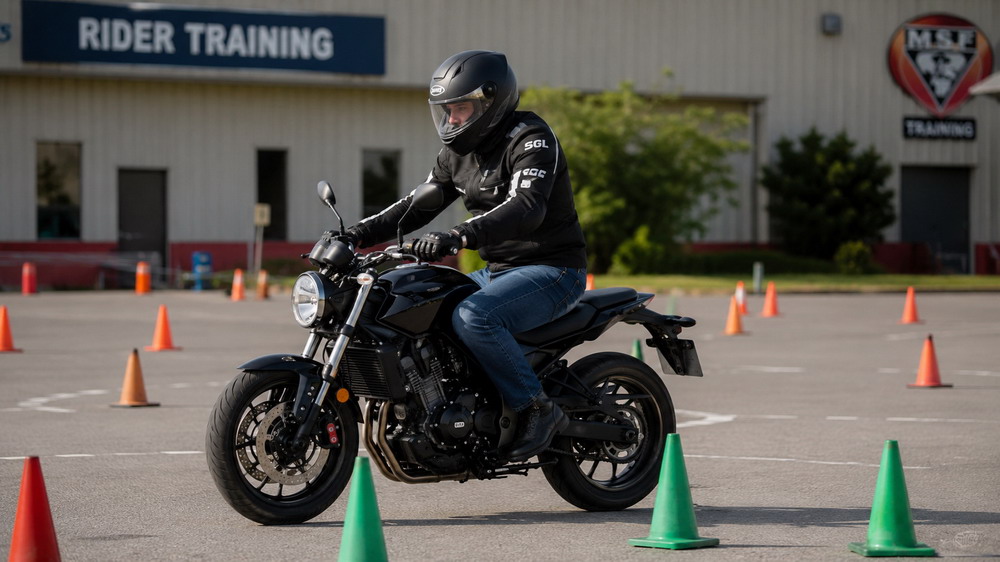
Motorcycle Clutch Throttle Gear Control
Learn the Friction Zone
For riders using a manual transmission, understanding the clutch friction zone is one of the most important beginner motorcycle riding skills.
The friction zone is the area where the clutch begins transmitting engine power to the rear wheel. Learning to control this area smoothly allows riders to start, stop, and maneuver at low speeds without repeatedly stalling.
Practice slowly releasing the clutch while applying a small amount of throttle. Avoid suddenly releasing the clutch or opening the throttle aggressively.
Practice Smooth Acceleration
Good throttle control should feel predictable rather than abrupt.
When accelerating:
- Look ahead.
- Gradually open the throttle.
- Release the clutch smoothly when changing gears.
- Keep arms relaxed.
- Increase speed progressively.
Smooth inputs improve traction and make the motorcycle easier to control.
⚙️ Learn to Shift Gears Smoothly
Match the Gear to Your Speed
New riders often concentrate too much on the gear indicator. Instead, learn to recognize how the motorcycle feels. If the engine is struggling at low RPM, a lower gear may be needed. If the engine is revving excessively at higher speed, an upshift may be appropriate.
Practice shifting on a straight, quiet road before attempting complicated traffic situations.
Downshift Before a Corner
Whenever practical, select an appropriate gear and reduce speed before entering a corner. Harley-Davidson's beginner cornering guidance similarly recommends braking and downshifting before the turn, then maintaining a controlled speed through the corner.
Avoid entering a corner too quickly and then making sudden braking or gear changes while heavily leaned over.
🛑 Practice Motorcycle Braking Techniques
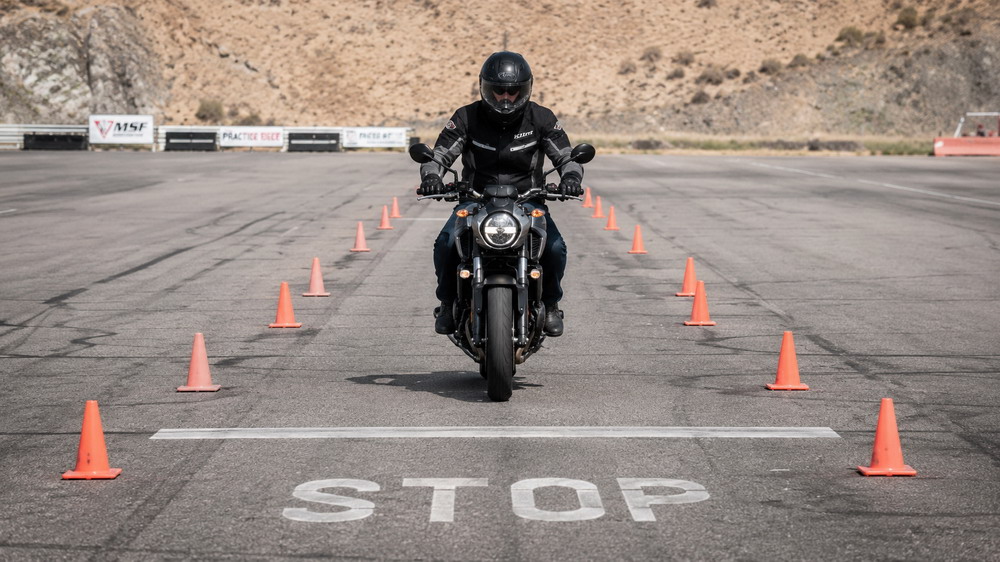
Motorcycle Emergency Braking Exercise
Use Both Brakes Correctly
New riders should become comfortable using both the front and rear brakes. The front brake provides a significant portion of the motorcycle's stopping power, while the rear brake contributes additional stability and control.
Apply braking progressively rather than grabbing the controls suddenly. Practice gradually increasing brake pressure in a controlled environment to understand how the motorcycle responds.
Practice Emergency Braking
Emergency braking is a skill that should be practiced before it is actually needed. MSF training includes quick-stop exercises specifically designed to develop progressive braking pressure and reduce stopping distance.
Practice emergency stops at moderate speeds in a controlled area:
- Keep the motorcycle upright.
- Look toward the intended stopping area.
- Apply the brakes progressively.
- Keep both hands firmly on the controls.
- Avoid locking the wheels.
If the motorcycle has ABS, understand how the system feels during hard braking. Emergency braking should still be practiced rather than assuming ABS will solve every situation.
🏔️ Learn Motorcycle Cornering Techniques
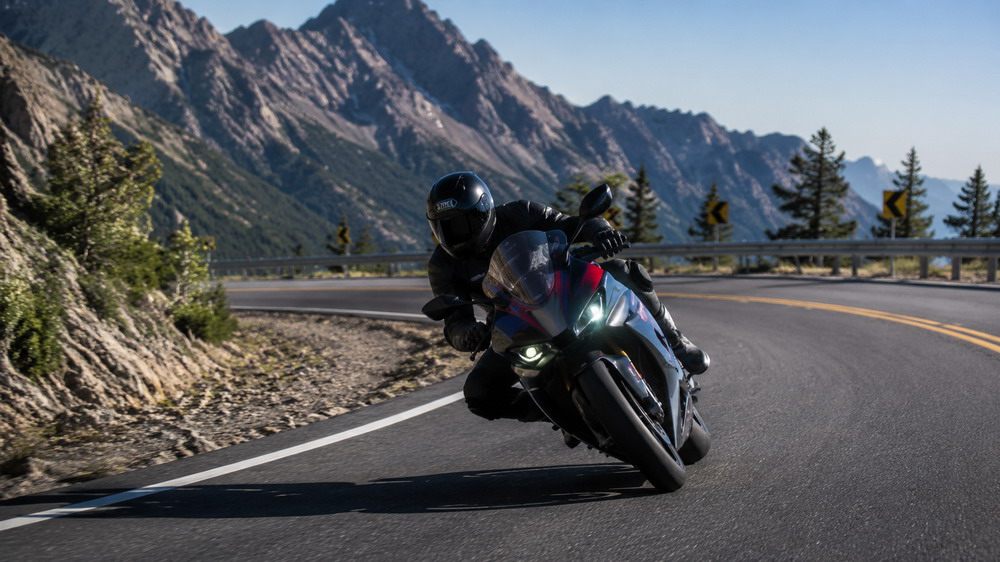
Motorcycle Corner Entry and Exit Technique
Slow Before the Turn
One of the most important motorcycle riding techniques for new riders is controlling speed before entering a corner.
A simple approach is:
Slow → Look → Press → Roll
Reduce speed before the corner, look through the turn, use appropriate steering input to initiate the lean, and then smoothly roll on the throttle as the exit approaches.
MSF's beginner curriculum specifically teaches speed adjustment, counter-steering, cornering, and path-of-travel selection.
Look Through the Corner
The eyes should scan toward the road the rider wants to travel rather than staring at the object being avoided.
This helps identify:
- Oncoming vehicles
- Road debris
- Potholes
- Changing road conditions
- The direction of the curve
Do not ride faster simply because the motorcycle can physically lean farther. Cornering speed should remain within visibility, traction, and skill limits.
Understand Counter-Steering
At normal road speeds, motorcycles turn through steering and lean inputs. A gentle press on the handlebar helps initiate the motorcycle's lean in the desired direction. For example, to initiate a left turn, a rider applies a slight forward pressure to the left handlebar. The motorcycle begins leaning left and turning.
This technique can feel strange to beginners at first, so practice it gradually in a controlled environment.
👀 Develop Better Visual Skills
Look Far Ahead
Good riders do not focus only on the few meters immediately in front of the motorcycle. Continuously scan farther down the road to identify potential hazards before they become emergencies.
Look for:
- Vehicles entering intersections
- Pedestrians
- Animals
- Potholes
- Gravel
- Wet pavement
- Sudden traffic changes
MSF recommends using a Search-Evaluate-Execute approach to identify hazards, assess risk, and respond before a situation becomes critical.
Avoid Target Fixation
When approaching an obstacle, staring directly at it can make it harder to steer around it. Instead, identify the hazard and then focus on the clear path to follow. This is especially important when practicing emergency swerving.
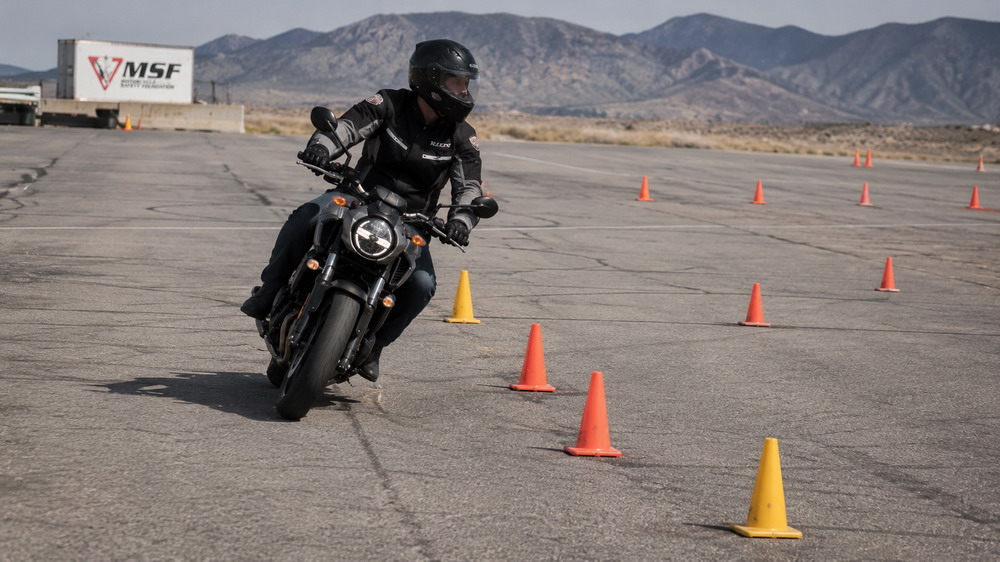
Motorcycle Hazard Avoidance Training
🚧 Practice Emergency Swerving
Know When to Brake and When to Swerve
Sometimes an obstacle can be avoided by stopping. In other situations, there may not be enough distance to stop safely. Emergency avoidance skills include both braking and swerving, and the correct response depends on speed, available space, traction, and the specific hazard.
MSF training specifically includes collision-avoidance practice involving quick braking and swerving.
Practice swerving only in a controlled environment with sufficient space.
Do not practice emergency maneuvers aggressively on public roads.
Keep Your Eyes on the Escape Path
If an obstacle needs to be avoided, identify the available escape path and look toward it.
Avoid making abrupt steering inputs beyond skill level. Emergency maneuvers require practice, which is why formal motorcycle training is strongly recommended for new riders.
🛣️ Improve Lane Positioning
Ride Where You Can See and Be Seen
Motorcycles are smaller than cars and can easily disappear in vehicle blind spots.
Use lane positioning to improve visibility and maintain an escape route.
Avoid staying beside vehicles for long periods, especially near intersections and lane changes.
MSF recommends maintaining space, considering escape paths, using lane positioning for visibility, and watching carefully for vehicles that may turn across the motorcycle's path.
Maintain a Safe Following Distance
Do not follow cars too closely.
A larger following distance provides more time to react if the vehicle ahead brakes suddenly, encounters an obstacle, or changes lanes.
More space also provides better visibility around the vehicle ahead.
🌧️ Adjust Your Riding for Road Conditions
Wet Roads
Wet pavement can reduce available traction, especially during the first part of rainfall when contaminants may mix with water on the road.
Reduce speed, increase following distance, and make smooth steering, braking, and throttle inputs.
Gravel and Uneven Surfaces
Gravel, sand, painted road markings, metal surfaces, and potholes can affect traction and stability.
Slow down before reaching the hazard when possible and avoid sudden control inputs while crossing it.
Strong Wind
Crosswinds can push a motorcycle sideways, particularly on bridges and exposed roads.
Maintain a relaxed grip and allow the motorcycle to respond naturally while making controlled adjustments.
MSF specifically recommends learning how to handle wet roads, sand, high winds, and uneven surfaces as part of safe motorcycle riding.
🧤 Use the Right Motorcycle Riding Gear
Wear Protective Equipment
New riders should treat protective equipment as part of their riding technique rather than an optional accessory.
Essential motorcycle gear includes:
- Properly certified helmet
- Motorcycle gloves
- Protective jacket
- Riding pants
- Over-the-ankle motorcycle boots
- Eye protection
MSF recommends protective clothing, gloves, boots, eye protection, and a quality helmet as part of safe motorcycle riding.
Consider Motorcycle Communication
Communication equipment can also make group riding easier. A Helmet Communication system allows riders to communicate and receive navigation instructions without repeatedly stopping. A Bluetooth Intercom can help riding partners discuss navigation, road conditions, fuel stops, and unexpected changes. For larger groups, a Motorcycle Intercom can help riders remain connected during longer motorcycle trips.
Communication equipment should support safe riding rather than distract the rider. Attention should remain on the road, and unnecessary interaction should be avoided while dealing with complex traffic situations.
🧠 Develop Defensive Riding Habits
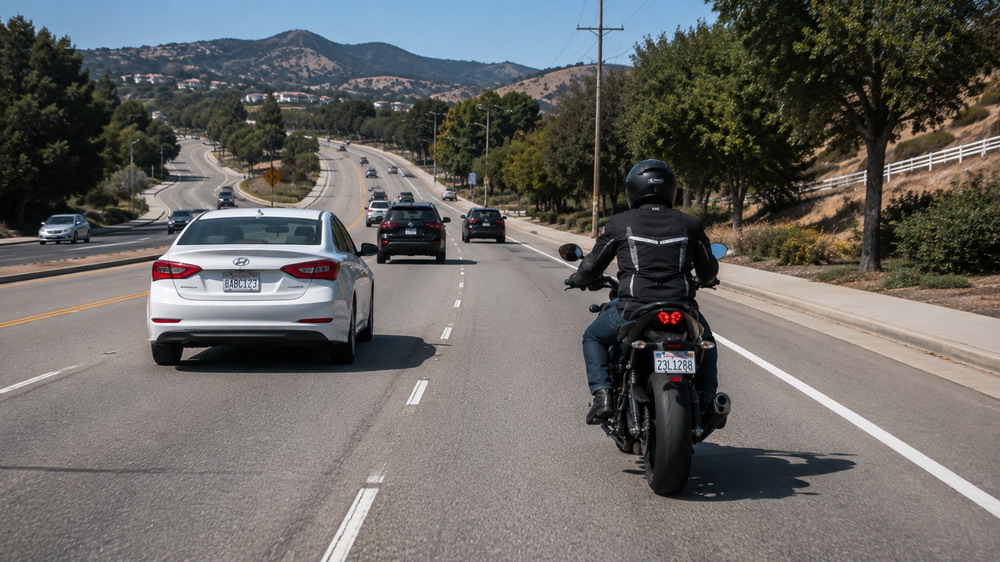
Defensive Motorcycle Riding on Public Roads
Ride With a Safety Margin
One of the most important skills for new riders is learning not to use all available performance.
Speed does not need to reach the limit in every situation. Adjust speed according to visibility, traffic, weather, road surface, and experience.
MSF advises riders to corner within their skill limits and emphasizes that aggressive cornering can increase crash risk.
Expect Other Drivers to Make Mistakes
Never assume another driver has seen the motorcycle.
Be particularly cautious around:
- Intersections
- Left-turning vehicles
- Lane changes
- Parking lots
- Driveways
- Large trucks
Keep an escape route available whenever possible.
🏁 Practice These Skills Regularly
Becoming a confident motorcycle rider takes practice rather than simply accumulating miles.
A useful practice session can include:
Low-speed control: Practice clutch friction-zone control and smooth turns.
Braking: Practice controlled stops and progressively stronger braking.
Cornering: Practice selecting an appropriate entry speed and looking through turns.
Swerving: Practice emergency avoidance only in a safe, controlled environment.
Slow-speed turns: Practice U-turns and tight turns without rushing.
The goal is not to ride aggressively. The goal is to make basic motorcycle controls feel automatic so there is more mental capacity to observe traffic and identify hazards.
❓ Motorcycle Riding Techniques FAQs
What is the most important motorcycle riding technique for beginners?
Smooth control is one of the most important fundamentals. New riders should focus on coordinated throttle, clutch, braking, steering, and visual skills before increasing speed.
How should a beginner take a motorcycle corner?
Reduce speed before the corner, select an appropriate gear, look through the turn, use controlled steering input to initiate the lean, and smoothly accelerate as you exit.
Should beginners practice emergency braking?
Yes. Emergency braking is an essential motorcycle riding skill and should be practiced in a controlled environment before it is needed in traffic.
What is counter-steering on a motorcycle?
Counter-steering is a steering technique used to initiate a motorcycle's lean and turn at normal road speeds. A gentle press on the handlebar helps initiate the desired direction of lean.
How can new riders improve their motorcycle skills?
Regular practice and formal training are the best approaches. MSF recommends hands-on rider training and continued practice of braking, cornering, swerving, and other fundamental skills.
How long does it take to become a confident motorcycle rider?
There is no fixed timeline. Confidence should come from consistent practice and experience in different conditions, not from simply riding for a certain number of miles.
🏍️ Build Skills Before Building Speed
The best motorcycle riding techniques for new riders are not about riding faster. They are about developing control, awareness, smooth inputs, and good judgment.
Start with basic exercises in a controlled environment, take a professional motorcycle safety course, and gradually introduce more complicated traffic and road conditions.
As skills improve, continue practicing emergency braking, cornering, swerving, low-speed control, and hazard recognition. Good riders refine these skills throughout their riding lives.
Most importantly, ride within personal abilities, leave time and space to react, and never let confidence grow faster than experience.

Rodney L is a technical writer and product consultant with over a decade of experience in the motor industry. Rodney is a fan of performance machines that run fast and loud and an expert in all things custom. His numerous articles and write-ups are available at our knowledge base. Whether it’s something wrong with your motorcycle or you are building a custom bike, you can trust Rodney’s experience.
You maybe like to read:
Fodsports Brand Month: Unbeatable Deals and Top-Notch Service
Discover Fodsports Brand Month July and August mark a special occasion for motorcycle enthusiasts and tech lovers alike. Welcome to Fodsports Brand Month! This event is dedicated to celebrating everything that makes Fodsports a leading name in the motorcycle communication industry. Get ready for a fantastic promotions, exceptional service from Fodsports. Let's insights into Fodsports' […]
Grossglockner High Alpine Road in Fall: Austria Motorcycle Riding Guide
Autumn transforms Austria’s Grossglockner High Alpine Road into a spectacular mountain destination. Golden larch trees brighten the slopes, crisp Alpine air can reveal dramatic mountain views, and 36 hairpin bends make the journey memorable for motorcycle enthusiasts. Yet autumn also brings unpredictable weather, cold pavement, and possible road closures. For riders planning an Austrian Alps […]
Black Forest High Road Motorcycle Guide: Best Autumn Ride, Scenic Routes and Riding Tips in Germany
Few places in Germany combine flowing mountain roads, colorful forests, traditional villages, and peaceful viewpoints as perfectly as the Black Forest High Road (Schwarzwaldhochstraße B500). In autumn, this legendary route transforms into a spectacular motorcycle destination, with golden beech forests, misty valleys, and panoramic views stretching toward the Rhine Valley and even France on clear […]
Ultimate Dolomites Autumn Cycling Guide: Best Fall Foliage Routes & Expert Gear Blueprint
The Italian Dolomites in autumn transform into a sensory masterpiece. As the chaotic summer crowds dissipate between mid-September and late October, the entire Alpine region ignites with golden larches, fiery maples, and stark white limestone peaks. This fleeting shoulder season provides the ultimate window for an epic Dolomites cycling tour and foliage chasing. Compared to […]
Route des Grandes Alpes in Fall: France Motorcycle Riding Guide
Few motorcycle routes combine high mountain passes, autumn forests, dramatic valleys, and Mediterranean scenery as well as the Route des Grandes Alpes in France. Stretching about 720 km from Thonon-les-Bains near Lake Geneva to Nice, the route crosses 18 major Alpine passes and reaches 2,764 meters at the Col de l'Iseran. For motorcycle riders, autumn can […]