The motorcycle communication systems field just got a significant upgrade with the release of the Fodsports FX7. This state-of-the-art Bluetooth mesh intercom is packed with many advanced features and techs. It will revolutionize the way riders communicate and enjoy their rides. Whether you're a solo rider or part of a group, the FX7 offers unparalleled […]

Motorcycle Lane Positioning Guide
June 18, 2025
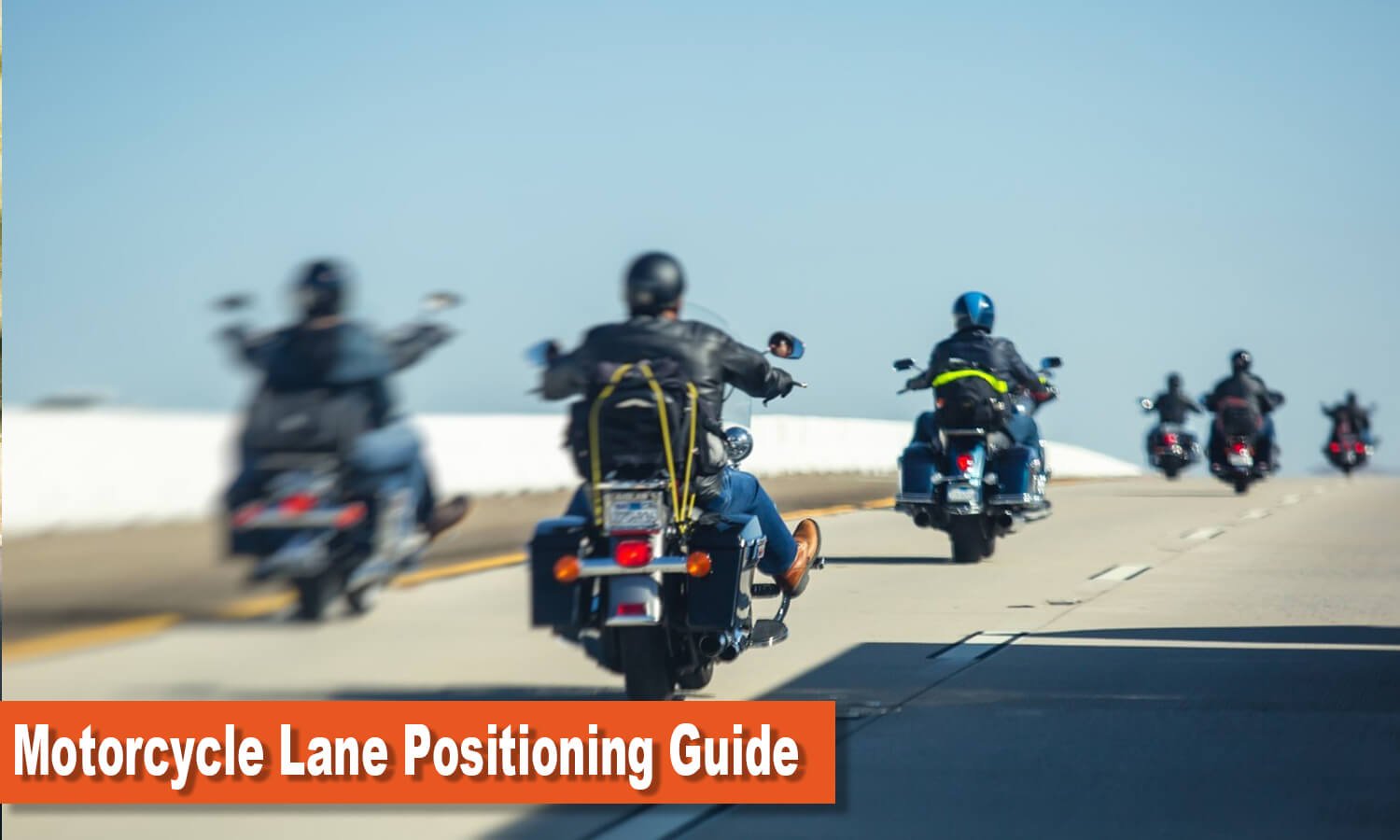
When riding a motorcycle, your lane position is one of the most powerful tools to stay safe, visible, and in control. Many riders underestimate its importance, yet the way you place yourself within a lane can mean the difference between avoiding danger and ending up in an accident.
This guide explores how to master lane positioning, when to use each option, common mistakes to avoid, and how to adapt in real-world conditions.
Table of Contents
Why Lane Position Matters
- Visibility: Motorcycles are slim and easy to miss. Choosing the right spot makes it harder for drivers to ignore you.
- Room to react: A smart position gives you a way out if a car drifts or traffic suddenly shifts.
- Hazard avoidance: Cars can roll over small debris or oil without issue; for a motorcycle, that same hazard can ruin your day.
- Influence: Your placement can subtly guide how drivers around you behave.
Think of it less like a fixed rule and more like a strategy in a game—every move changes what options you have next.
The Three Lane Positions
A helpful mental model is to break the lane into three zones:
- Position 1 (Left third): Closest to the centerline or yellow line
- Position 2 (Center third): In the middle of the lane
- Position 3 (Right third): Closest to the road edge or shoulder
Position 1: Left Side (Near the Centerline)
This is often the default choice for experienced riders.
Advantages:
- Maximum visibility to oncoming traffic.
- Best view ahead, especially around vehicles.
- Allows you to discourage cars from drifting into your lane.
Risks:
- Close to oncoming vehicles – dangerous if someone crosses the centerline.
- Less buffer if the car in front swerves left.
When to use it:
- On two-lane roads with moderate traffic.
- When you want to be clearly visible to oncoming cars.
- In flowing traffic, where you need a wide forward view.
Position 2: (Center of Lane)
This is often the least desirable choice, though many beginners naturally ride here.
Advantages:
- Equal spacing from both sides.
- Neutral position that feels natural to new riders.
Risks:
- Collects oil, coolant, and debris from cars. Especially slippery in the rain.
- Poor visibility – you can “blend in” with traffic and become invisible to cars.
- No clear escape route if danger comes from either side.
When to use it:
- Rarely, but it can be useful at very low speeds or in narrow lanes.
- When preparing to change lanes or merge, take a temporary neutral position.
Position 3: Right Side (Near the Curb or Shoulder)
This spot is often overlooked, but it has its role.
Advantages:
- Maximum buffer from oncoming traffic.
- Useful when passing large trucks – lets you avoid their wind turbulence.
- It can be safer on multi-lane highways where most vehicles are to your left.
Risks:
- Easily hidden in the blind spot of cars.
- Puts you near pedestrians, parked cars, and merging traffic.
- Reduced visibility to vehicles ahead and behind.
When to use it:
- On highways with multiple lanes, especially when slower traffic is merging from the right.
- When riding in the far-right lane and you want extra space from faster traffic.
Adapting Lane Position to Different Driving Environments
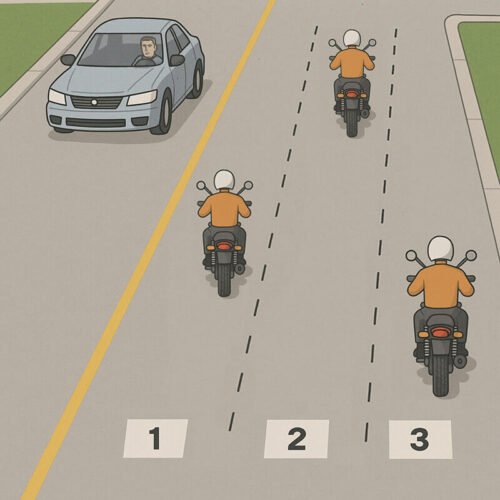
Three Lane Position
1. City Streets
Urban riding is full of unpredictable hazards: taxis pulling over, pedestrians stepping off curbs, and delivery trucks double-parked.
- Use Position 1 at intersections to be seen by oncoming cars turning left.
- Shift to Position 3 when avoiding buses or parked cars.
- Avoid Position 2 unless traffic or lane width forces you there.
2. Highways
High-speed environments require longer sight lines and buffer zones.
- In the left lane, Position 1 helps visibility and discourages cars from cutting in.
- Around trucks, use Position 3 to avoid wind turbulence and blind spots.
- Always keep an escape route to either shoulder or an open lane.
3. Curves and Winding Roads
Your lane position dictates your line of sight.
- Enter curves from the outside (Position 1 in left curves, Position 3 in right curves).
- Transition smoothly to the inside for the apex, then return to the outside.
- This widens your view, smooths your line, and reduces lean angle.
4. Intersections and Stoplights
Most motorcycle accidents happen at intersections.
- At red lights, stop in Position 1 or 3, not 2 – it keeps you visible and gives you space if a car approaches from behind too fast.
- Always watch your mirrors, keep the bike in gear, and plan an escape path (like moving between cars).
Common Mistakes Riders Make
1. Riding Too Long in Position 2
Many beginners “center up” because it feels symmetrical. But this exposes them to slippery conditions and makes them invisible.
Fix: Learn to treat Position 2 as temporary, not permanent.
2. Never Changing Position
Some riders stick to one side no matter the situation.
Fix: Lane position should be dynamic. Shift often to adapt to traffic, visibility, and hazards.
3. Ignoring Blind Spots
Even if you’re in the best lane position, you can vanish in a car’s mirror.
Fix: Always check mirrors, stay out of blind spots, and flash headlights or tap your horn when needed.
Advanced Defensive Techniques: Lane Positioning
1. Maintain a Buffer Zone
- Keep at least 2–3 seconds of following distance.
- On highways, extend this to 4–5 seconds.
- Side-to-side, leave at least half a lane of space from cars.
2. Always Have an Escape Path
Before committing to a lane position, ask: “If this car swerves, where do I go?”
- Shoulders, empty lanes, or gaps between cars can all be options.
- Keep scanning so you always know your exit.
3. Use Lane Position as Communication
- A slight shift toward Position 1 signals you may turn left.
- Hugging Position 3 shows the intention to exit or merge right.
- Your body language influences how drivers react.
Pro Tips for Staying Safe: Mastering Lane Position
- Scan far ahead: anticipate lane changes and road hazards early.
- Adapt constantly: treat lane position as fluid, not fixed.
- Avoid following directly behind vehicles: stagger slightly to see ahead.
- Practice in low-traffic areas: build muscle memory before tackling busy streets.
Quick Reference: Lane Positioning
- Position 1 (Left) → Best for visibility, general use, watch for oncoming traffic.
- Position 2 (Center) → Use only temporarily, avoid in wet conditions.
- Position 3 (Right) → Safer buffer from oncoming cars, but beware of blind spots.
Golden Rule: Stay visible, stay adaptable, and always leave yourself an out.
Conclusion
Mastering lane positioning is not about memorizing rules—it’s about thinking ahead, reading the road, and adapting in real time. By using each lane position strategically, you can stay visible, avoid hazards, and maintain control in any riding environment.
Your motorcycle gives you the agility that cars lack. Lane positioning is how you turn that agility into safety. Ride smart, ride visible, and make the road work for you.
Top 3 Motorcycle Dangers and Prevention Strategies
With over 10 years of experience working on cars and trucks Item Training Supervisor Richard Reina is known around the office as one of our technical experts & real an "automobile person".
His rate of interest began, in his very own words, "at the age of two when his father educated him the distinction in between a Chevy and a Ford. Since then it's been cars regularly."
As a serious lover of practically all things with a motor Richard can address nearly any kind of inquiry related to car upkeep, fixing, or restoration & is a fact professional in electric motor background.
You maybe like to read:
Fodsports Brand Month: Unbeatable Deals and Top-Notch Service
Discover Fodsports Brand Month July and August mark a special occasion for motorcycle enthusiasts and tech lovers alike. Welcome to Fodsports Brand Month! This event is dedicated to celebrating everything that makes Fodsports a leading name in the motorcycle communication industry. Get ready for a fantastic promotions, exceptional service from Fodsports. Let's insights into Fodsports' […]
Ultimate Dolomites Autumn Cycling Guide: Best Fall Foliage Routes & Expert Gear Blueprint
The Italian Dolomites in autumn transform into a sensory masterpiece. As the chaotic summer crowds dissipate between mid-September and late October, the entire Alpine region ignites with golden larches, fiery maples, and stark white limestone peaks. This fleeting shoulder season provides the ultimate window for an epic Dolomites cycling tour and foliage chasing. Compared to […]
Route des Grandes Alpes in Fall: France Motorcycle Riding Guide
Few motorcycle routes combine high mountain passes, autumn forests, dramatic valleys, and Mediterranean scenery as well as the Route des Grandes Alpes in France. Stretching about 720 km from Thonon-les-Bains near Lake Geneva to Nice, the route crosses 18 major Alpine passes and reaches 2,764 meters at the Col de l'Iseran. For motorcycle riders, autumn can […]
Talimena Scenic Byway in Fall: Oklahoma and Arkansas Motorcycle Riding Guide
A mountain road, two states, 54 miles of ridgelines, and some of the best late-season color in the South—Talimena Scenic Byway is the kind of motorcycle route that rewards riders who leave room for the scenery. Running from the Mena, Arkansas area to Talihina, Oklahoma, the byway follows the crests of the Ouachita Mountains through forest, […]
Cherohala Skyway Tennessee and North Carolina: Fall Motorcycle Riding Guide
Few motorcycle roads in the Southeast combine elevation, open mountain views, and flowing curves quite like the Cherohala Skyway. Stretching about 43 miles between Tellico Plains, Tennessee, and Robbinsville, North Carolina, the National Scenic Byway climbs from lower valleys to elevations above 5,000 feet before crossing the Appalachian high country. In fall, the ride becomes […]