The motorcycle communication systems field just got a significant upgrade with the release of the Fodsports FX7. This state-of-the-art Bluetooth mesh intercom is packed with many advanced features and techs. It will revolutionize the way riders communicate and enjoy their rides. Whether you're a solo rider or part of a group, the FX7 offers unparalleled […]

Moped vs Scooter vs Motorcycle: What’s the difference?
October 14, 2022
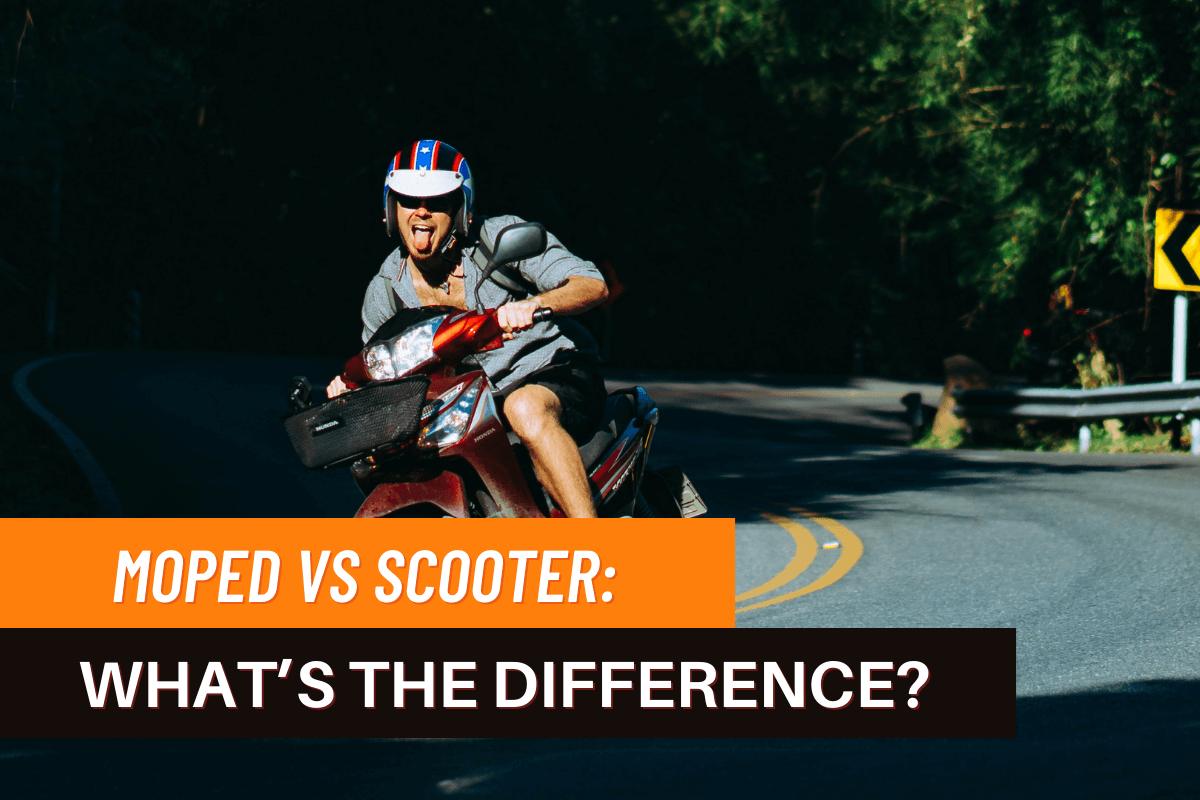
Moped vs Scooter vs Motorcycle, many riders may want to know their differences when choosing them.
Are you thinking about getting a two-wheeled ride? Cool! There are tons of them out there, but the most popular are mopeds, scooters, and motorcycles.
At first glance, they might seem alike, but each one is made for different things.
Mopeds are small and not super strong perfect and usually have pedals.
Scooters? They're easy to get on and off, have okay engines, and drive themselves.
Motorcycles are the big boys – fast, big, and you have to change gears yourself.
Let's look closer at each one – we'll compare engine size, how they look, how fast they go, and what the law says about them. That way, whether you're new to riding or you've been doing it for years, you can pick the one that's right up your street.
Table of Contents
What Is a Moped?
Moped
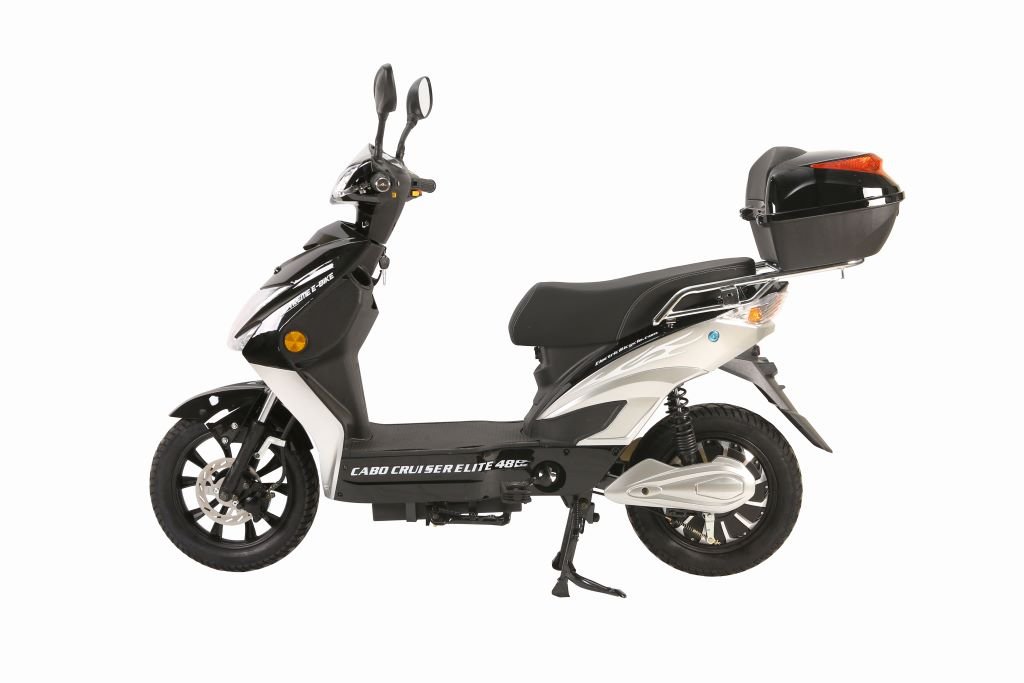
Basically, a moped (from “motor” + “pedal”) is a motorized bicycle with a very small engine. Usually, they've got pedals and a small frame that's easy to get on and off. Though, some new ones don't have pedals anymore.
Traditionally, mopeds have a 50cc engine or smaller, and they only go about 28–30 mph.
What this means is that mopeds aren't for highways. They're best for getting around town or short trips.
Since they have pedals and not much power, you can even pedal to help out when going uphill.
Mopeds usually have a simple automatic thing going on, and they’re all about saving money on transportation.
A 50cc moped can get, like, 130 miles per gallon!
The law can be weird when it comes to mopeds. Some places let you ride a moped with a regular car license (if it's under 50cc), or don't ask for any license at all.
Other places want you to have a special moped or motorcycle thing on your license (usually when you're 15–16 years old). A lot of states in the U.S. don't even make you get insurance or register if the moped is super low-power.
Bottom line: mopeds are light and slow, which makes them good for crowded city streets and if you're just starting out. You're not going to be winning any races or hauling a lot of stuff, but they are easy to use and cheap to run.
What Is a Scooter?

Scooter
A scooter (or motor scooter) is a two-wheeled vehicle with a step-through frame and a flat platform or footrest for the rider.
Scooters evolved from mopeds but generally have larger engines and modern conveniences.
Most scooters use automatic (CVT) transmissions – the rider just twists the throttle (“twist-and-go”) instead of shifting gears.
They usually have small wheels (often around 10–16 inches) and an upright seating position.
Because of the step-through chassis and lighter weight, scooters are very maneuverable in traffic.
Typically, scooter engines range from 50cc up to 250cc (some maxi-scooters even reach ~800cc), allowing top speeds around 60–70 mph.
For example, a 150cc scooter can cruise at ~60 mph, and a 250cc scooter around 75 mph.
This makes them well-suited to both city commuting and moderate highway riding (where permitted).
Scooters also tend to have built-in lights, turn signals, and storage compartments, adding convenience for daily use.
Their fuel efficiency remains high (often 60–100+ mpg depending on engine size), and they strike a balance between the simplicity of a moped and the performance of a motorcycle.
Legally, scooters are usually classified the same as motorcycles. In many places, riders must hold a motorcycle endorsement if the engine is 50cc or larger.
They also require insurance and protective gear just like larger bikes.
In short, scooters are easy-to-ride, economical vehicles with more power than mopeds – making them popular worldwide (especially for commuters in Europe and Asia)
What Is a Motorcycle?
A motorcycle is a true power vehicle: it’s a two-wheeler with no pedals, a large gas tank between the rider’s legs, and enough power for highway speeds and beyond. Motorcycles are built for acceleration and stability at speed.
Most modern bikes have engine displacements of 250cc or larger – far more than scooters or mopeds – and many engines exceed 1000cc.
The rider must sit astride the bike (you cannot “step through” the frame) and use a hand-operated clutch with foot-operated gear shifts.
As a result, motorcycles are heavier and more complex machines.
They almost always have manual transmissions (with multiple gears and a clutch). A typical motorcycle wheel is also larger (16″ or more) for stability at speed.
Safety gear and training are crucial, since motorcycles can exceed 100 mph easily.
Motorcycles typically have upright or slightly forward-leaning riding positions, and the engine and fuel tank are clearly between the rider’s knees.
Because of their power, motorcycles can tackle freeways, long distances, and performance riding.
Accordingly, riders must possess a full motorcycle license or endorsement, and insurance requirements are strict.
In short, motorcycles offer maximum speed, cargo capacity, and highway capability, at the cost of weight and complexity
Key Differences and Comparison
While these categories overlap (all are two-wheeled motor vehicles), the fundamental differences lie in engine size, speed, design, and usage. Below is a summary of how mopeds, scooters, and motorcycles typically compare:
- Engine & Speed: Mopeds have the smallest engines (usually ≤50cc) and top out around 28–30 mph. Scooters fall in the middle (commonly 50–250cc) and can reach roughly 60–70 mph. Motorcycles generally start around 250cc and often exceed 100 mph for highway use.
- Frame & Design: Mopeds often resemble bicycles or small underbone scooters with pedals, emphasizing a lightweight frame. Scooters have a step-through chassis with a floorboard for feet and usually a continuous body shell. Motorcycles have a central fuel tank and engine with a straight top tube (no step-through); riders sit astride the bike.
- Transmission: Mopeds may use very simple gearing or automated clutches (some even rely partly on pedaling). Scooters almost always use an automatic CVT drive (no manual gear shifting). Motorcycles use manual transmissions – the rider operates a hand clutch and shifts gears with their foot.
- Wheels: Mopeds and scooters typically have smaller wheels (around 10–16 inches). Motorcycles have larger wheels (16″ or larger) for stability at speed.
- Highway Use: Mopeds are generally not permitted on highways due to their low speed. Scooters (especially >50cc) can often legally use faster roads if powerful enough, though they shine in city/commute riding. Motorcycles are built for highway travel and are always highway-legal.
- Licensing & Regulations: In many regions, a low-power moped may only require a standard driver’s license (or a simple moped endorsement). Most scooters (≥50cc) legally count as motorcycles – requiring a motorcycle license, registration, and insurance. Motorcycles always require a full two-wheeled vehicle license (often after a skills test or training course). Helmet and safety gear laws apply across the board, but enforcement varies (e.g. some places exempt mopeds or small scooters from helmet rules).
- Usage & Cost: Mopeds are cheapest to buy and operate – ideal for short-distance city trips. They have low top speeds and carry little, but their maintenance and fuel costs are tiny. Scooters cost more (especially higher-cc models like Vespas) and weigh more, but offer better performance and comfort for commuting. Motorcycles are the most expensive and powerful, suited to long-range touring or high-speed riding. Generally, motorcycles consume more fuel (though still better than cars), and insurance can be higher.
The table below highlights these distinctions side by side:
Moped vs Scooter vs Motorcycle: Choosing Between Them
Okay, so you're trying to figure out what kind of two-wheeled machine to get? Let's break it down simply.
Mopeds are your go-to if you just need something super cheap and easy for quick hops around campus or a few city blocks.
Scooters? They're the in-between option. You get a bit more power and comfort for getting to work, but they're still easy to zip around town. Some can even hit 60+ mph if you need them to.
Now, motorcycles give you the most oomph and can go the distance, but they'll hit your wallet harder and take some practice to get used to.
Like the Motorcycle Legal Foundation notes, scooters “[are] more maneuverable” than motorcycles at low speeds, while motorcycles “are designed for higher speeds” with “better acceleration”
Basically, the best ride depends on what you need. Bigger engines mean higher prices and insurance, while saving gas and being easy to ride usually means a smaller engine.
Whatever you pick, stay safe and make sure you know the local rules. Understand the basics – engine size, how it's built, speed limits, and what kind of license you need – and you'll nail the right choice for you.
Typical maintenance costs for mopeds scooters and motorcycles?
Here’s a simple table that shows low / average / high maintenance-cost scenarios for scooters/mopeds vs motorcycles (in the U.S.). The numbers vary a lot depending on how much you ride, how often you do maintenance, and whether you DIY or use a shop.
*Note: These estimates cover routine maintenance and common repairs — not things like accidents, aftermarket modifications, or major engine rebuilds.
Some extra notes
- For scooters, simple maintenance tasks (oil changes, brake checks) are often cheap — sometimes only $20–$60 if you do them yourself.
- For motorcycles: oil changes generally happen every 3,000–5,000 miles costing $50–$100 (parts & labor) if done professionally.
- Tires, brake pads/shoes, belt/chain or drive train maintenance are among the most significant costs, especially if you ride often or ride fast.
Safety gear recommendations specific to each vehicle type
Safety gear should match what you ride. Below is a breakdown of recommended gear for scooters/mopeds and motorcycles.
🛵 For Scooters / Mopeds
Because scooters and mopeds are usually lighter, slower, and used in urban traffic, basic protective gear still matters — especially if you get in traffic or hit a patch of road. Recommended gear includes:
- Helmet — A properly-fitting, certified helmet (ideally full-face or at least ¾) protects against head injuries. Even if speed is lower, head protection is essential.
- Eye protection / visor — Especially if your helmet doesn’t have a face shield: glasses, goggles, or shield protect you from wind, dust, insects, and debris.
- Gloves — Full-fingered gloves help protect your hands from scrapes or cuts if you fall or slide. Even simple gloves are better than none.
- Long pants & jacket (or long sleeves) — At minimum, clothes that cover your skin completely. Preferably a jacket and pants made from tougher material, to reduce risk of “road rash.”
- Closed-toe shoes / over-the-ankle footwear — Avoid sandals or sneakers. Even basic sturdy shoes help protect your feet if you drop the scooter or slip.
- Optional but smart — high-visibility or reflective gear — Because scooters are small and less visible to cars, brighter or reflective clothing can improve safety, especially in traffic or at night.
✅ Why this level: Scooters are often used at lower speeds and for shorter trips, so heavy-duty armor isn’t always considered necessary — but basic protection (helmet, gloves, decent clothing) still reduces risk significantly.
🏍️ For Motorcycles
Because motorcycles travel faster and are more powerful, the gear standard rises. Proper protective—and ideally armored—gear is strongly recommended every ride. Typical gear includes:
- DOT-approved helmet (or equivalent)— Full-face (or modular) helmet is best, with impact-resistant shell and secure retention. Helmets are by far the most important safety gear.
- Eye / face protection — Face shield, goggles, or shatter-proof glasses to guard against wind, debris, bugs, and weather.
- Riding jacket — Made of abrasion-resistant materials (like leather, Cordura, or Kevlar), often with built-in armor at shoulders, elbows, back for impact protection.
- Riding pants or reinforced pants / jeans — Pants made for motorcycling — ideally with padding or Kevlar lining — to reduce road-rash and protect legs in crashes.
- Full-fingered gloves — Durable leather or reinforced textile gloves with padding/armor on knuckles and palm to protect hands and wrists.
- Over-the-ankle boots — Sturdy boots with ankle support, oil-resistant and non-slip soles, ideally with reinforced toe/heel to protect feet and lower legs.
- Optional / strongly recommended extras
- Body armor / spine/kidney protection — Built into jackets/pants or added separately to guard critical areas in a crash.
- High-visibility/reflective elements — Bright-colored gear or reflective strips help other drivers see you — important in any traffic.
- Weather-appropriate gear — Rain suits, insulated layers, windproof gear, or ventilated jackets depending on climate/season.
- Hearing protection (earplugs) — On long rides or high speeds to protect hearing from wind/engine noise.
- Helmet Intercoms — For communicating with other riders, listening to music/GPS/FM Radios, and making/answering phone calls easier.
✅ Why this level: Motorcycle crashes (or even simple slides) at high speeds can cause severe injuries. Armor + abrasion-resistant materials + proper helmet drastically reduce risks of road rash, fractures, head trauma, and long-term harm.
Is a scooter more comfortable than a motorcycle?
For this question, it really depends on your intended use and personal preferences.
Scooters are generally more comfortable for short, quick city trips. They have an upright riding position, automatic transmission, and low-speed maneuverability.
Motorcycles are usually better if you're going on a long ride or hitting the highway. They're steadier, have better suspension, bigger tires, and you can set them up to be comfy for hours on end.
Are mopeds safer than motorcycles?
Not exactly. Mopeds usually have less severe crashes, but they crash more often per mile than motorcycles.
According to a study Comparison of moped, scooter and motorcycle crash risk and crash severity, per mile ridden, mopeds actually have a higher crash rate than motorcycles.
However, when crashes occur, injuries tend to be less severe on mopeds than on motorcycles, likely because mopeds are slower.
In short, mopeds tend to have less severe crashes than motorcycles but may crash more often per mile, so “safer” depends on what you measure and how you ride.
For you as a rider, the biggest safety factors are the same on both:
- Wear a quality helmet and protective gear.
- Get proper training and ride defensively.
- Avoid high speeds, riding impaired, and risky conditions like night and bad weather.
Do you require a permit for a moped or scooter?
Your state governs the rules. Examine local regulations. They may differ in one location to the one that follows and a scooter's licence age and rules may differ from the moped's license age. State laws may provide two-wheeler training courses or require a test of skills.
- In the majority of states, drivers must be of a certain age before they can drive mopeds, and any engine with a capacity of 50cc or more must have a valid driver's license or permit usually with a motorcycle license or endorsement. Some states don't require a motorcycle license under 50cc. It is recommended to consult with the Department of Motor Vehicles regarding the requirements in the state you reside in.
- Registration requirements and license plates can be determined in part by the engine size.
Do you require a safety helmet and a policy of insurance?
A lot of states require helmets, however even if they're not mandatory, it is always recommended to ensure that your passenger and you are wearing a helmet to ensure safety. Make sure you check your state and local laws to find helmet requirements as well as motorbike insurance requirements.
What are the required licenses to operate a moped or scooter?
You'll need two documents to be able to legally drive mopeds or scooters on the open roads as a student. They include a provisional motorcycle license as well as the Certificate of Compulsory Basic Training (CBT) certification.
They will allow you to drive a motorcycle or moped up to 125cc, but not more than 11kw. At 16, you are able to be riding a 50cc motor, and at 17 you are able to ride up to the 125cc limit. It is mandatory to wear L-plates all the time and are not allowed to ride on the motorway and from transporting passengers.
The CBT is valid for two years. At that, the expiration date is when you must decide whether to repeat the test or obtain an AM moped license or an A1 motorcycle license.
Check out: Your first moped All you should be aware of about CBT
Moped AM license
The AM permits you to ride a moped that has the maximum engine capacity of 50cc with a top speed of 28mph without needing plates for L plates. You can also ride with passengers.
A1 motorcycle license A1 motorcycle license
With an A1 license, you are able to take motorcycles as small as 125cc but not more than 11kw which includes scooters, without having to have plates with L plates. You are also able to carry passengers.
You'll also require an insurance policy that covers you and your scooter in the event of an accident.
Moped vs. Scooter: Which One Is Best to You?
What's the smallest-displacement solution that best meets your needs? Here are some points to consider:
- Mopeds have better gas mileage as high as triple digits in some instances. However, they usually have smaller engines than scooters.
- If you're looking to get some exercise in your commute, moped pedals could offer a moderate to a mild amount of physical exercise.
- If you're planning to be able to drive at highway rates, an electric scooter would likely be the only alternative. But, many scooters aren't able to keep pace with roads and may not be allowed to ride in the area, so make sure you be sure to check local laws and make sure to keep your ride short, even if it's legal.
- True mopeds can be difficult to come across in the market today and, in reality, what you'll end up with might be something akin to motorized bicycles or an e-bike.
Communication Devices for Moped and Scooter Riders
As mentioned previously that you must always wear a helmet while driving a scooter or moped. To ensure that you can communicate hands-free while riding, it's a good idea to utilize a Bluetooth motorcycle helmet communication device to keep connected with the world.
With a helmet-mounted communication device such as one like the M1S PRO you can take calls, access the GPS as well as stream music completely hands-free, while keeping your eyes on the roadway. Additionally, the 40mm Bluetooth helmet for motorcycle speakers provides you with powerful audio for listening to your favorite music on your commute or on a long weekend bike ride. Whichever you choose on the moped or. scooter debate, being safe, and enjoying yourself should be the main priority.
You maybe want to know more :
Source:
State of Wisconsin Department of Transportation
Georgia Department of Driver Services
California Department of Motor Vehicles
Missouri Motorcycle Safety Program
Maryland Department of Transportation -- Motor Vehicle Administration
With over 10 years of experience working on cars and trucks Item Training Supervisor Richard Reina is known around the office as one of our technical experts & real an "automobile person".
His rate of interest began, in his very own words, "at the age of two when his father educated him the distinction in between a Chevy and a Ford. Since then it's been cars regularly."
As a serious lover of practically all things with a motor Richard can address nearly any kind of inquiry related to car upkeep, fixing, or restoration & is a fact professional in electric motor background.
You maybe like to read:
Fodsports Brand Month: Unbeatable Deals and Top-Notch Service
Discover Fodsports Brand Month July and August mark a special occasion for motorcycle enthusiasts and tech lovers alike. Welcome to Fodsports Brand Month! This event is dedicated to celebrating everything that makes Fodsports a leading name in the motorcycle communication industry. Get ready for a fantastic promotions, exceptional service from Fodsports. Let's insights into Fodsports' […]
Tunnel of Trees Michigan in Fall: Motorcycle Riding Guide
Red and gold forests, winding roads, and glimpses of Lake Michigan make the Tunnel of Trees in Michigan a memorable fall motorcycle destination. The roughly 20-mile M-119 route between Harbor Springs and Cross Village is best enjoyed at a relaxed pace, with plenty of time for scenic stops. Planning a ride in 2026 requires extra attention, […]
Blue Ridge Parkway Fall Motorcycle Trip: Route, Foliage, Stops and Riding Tips
Few motorcycle roads combine mountain scenery, flowing curves, historic landmarks, and autumn color as naturally as the Blue Ridge Parkway. Stretching 469 miles from Rockfish Gap, Virginia, to Cherokee, North Carolina, the Parkway crosses changing elevations and several Appalachian mountain ranges, creating a long seasonal window for fall foliage. The key to a great Blue […]
Adirondack Mountains in Fall: Highlights and Motorcycle Riding Guide
Few places in New York offer a better combination of mountain roads, lakes, forests, and fall color than the Adirondack Mountains. For motorcycle riders, autumn brings an extra layer of appeal: winding roads surrounded by red, orange, and golden foliage. The Adirondack Park covers about 6 million acres, with more than 3,000 lakes and roughly […]
Vermont Route 100 in Fall: Highlights and Motorcycle Riding Guide
Vermont Route 100 is one of New England’s most rewarding roads for a fall motorcycle ride. Stretching roughly 216 miles through the Green Mountains, the route connects mountain scenery, colorful forests, farms, covered bridges, and small Vermont towns. For motorcyclists, however, a great fall ride requires more than choosing a scenic road. Autumn brings colder […]