The motorcycle communication systems field just got a significant upgrade with the release of the Fodsports FX7. This state-of-the-art Bluetooth mesh intercom is packed with many advanced features and techs. It will revolutionize the way riders communicate and enjoy their rides. Whether you're a solo rider or part of a group, the FX7 offers unparalleled […]

Top 3 Motorcycle Dangers and Prevention Strategies
July 27, 2025
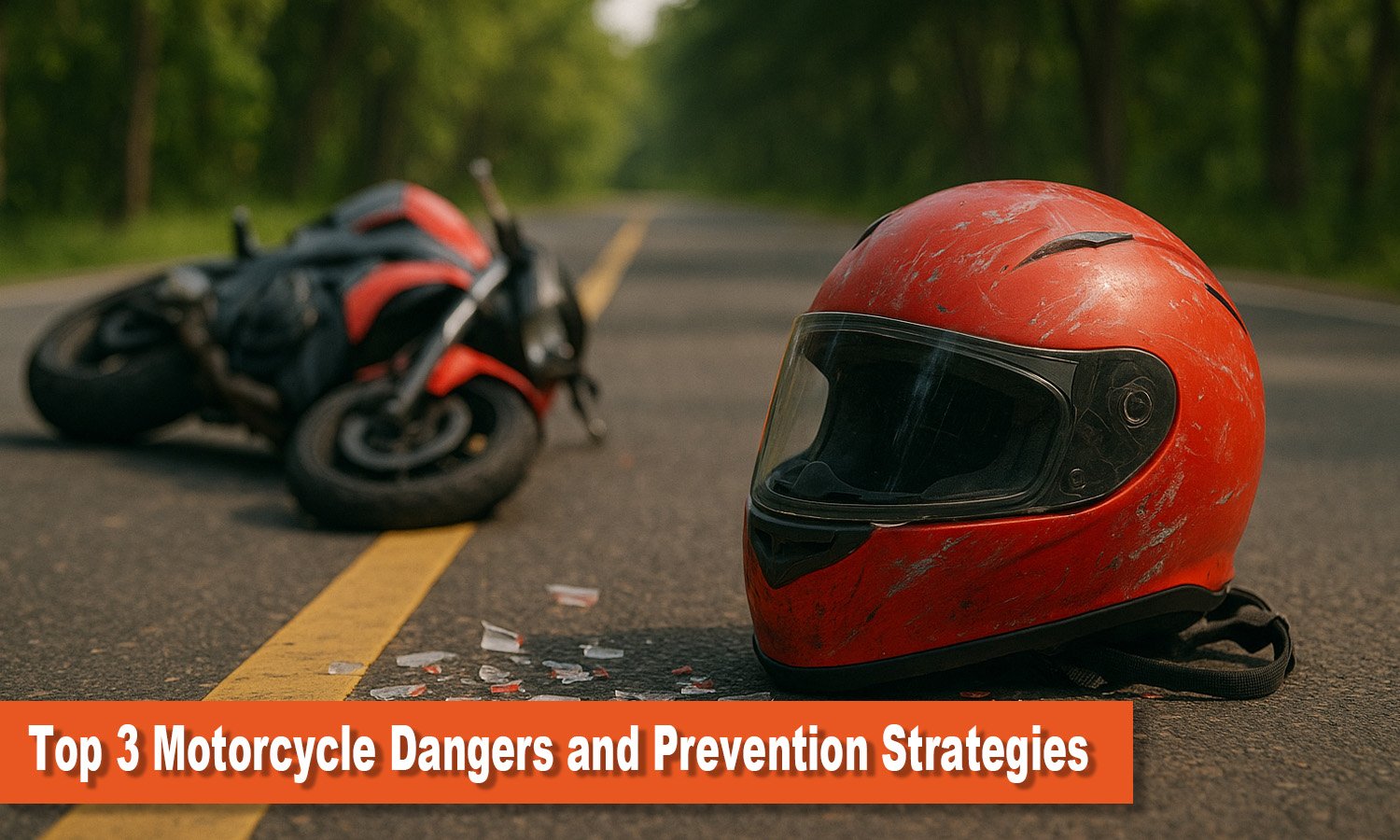
Motorcycling is fun and liberating, but motorcycle riders are more vulnerable on the road due to its hazards. Motorcyclists, as per U.S. traffic statistics, are roughly 29 more times inclined compared to car drivers to end up dying in a crash on a given mile traveled. Indeed, almost half of fatal two-vehicle motorcycle accidents consist of a car making a left-hand turn into a rider. For safety, riders should be informed of common motorcycle dangers and use intelligent riding techniques.
This article shines a light on top motorcycle hazards – collisions from left turns, cornering accidents, and improper protection wear – and some practical advice for avoiding them.
Table of Contents
Top 3 Motorcycle Dangers
1. Left-Turn Collisions (Vehicles Making a Turn Across)
Left-turn collisions occur when a car turns into a motorcyclist’s direction of travel, frequently at intersections. This is responsible for more motorcycle crash as well as being the most fatal. Based on 2022 United States statistics, 44% of fatal two-vehicle motorcycle crashes occurred when a vehicle was turning left to its right with the motorcycle going in a straight line. In this type of crash, a car often doesn’t see a bike in time.
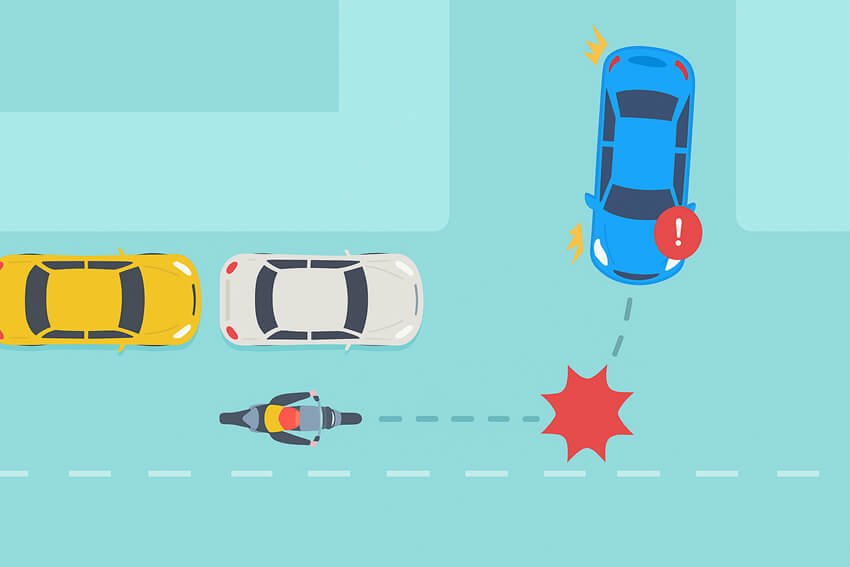
left-turn collision
Ride with care at intersections.
Always be ready to stop. Hold your front brake lever with your hand ("hang on the brake") as you come up to an intersection, so you can easily brake if a car is going to pull out.
Use your lights and position strategically.
If your motorcycle has a daytime running tail light, keep it on to make yourself more visible. Also, stay a safe distance behind the vehicle ahead and, when possible, move slightly toward the left side of your lane. This off-center position makes you more visible to left-turning drivers and gives you space to maneuver if needed.
Keep an eye on wheels of approaching vehicles.
Look for cross-traffic with caution. If you notice a car’s front wheels turning or its turn signal flashing, it’s considering turning. Even if a driver hasn’t signaled, the alignment of wheels can be an indication that it’s going to cut in your path.
Make a “SMIDSY” wiggle.
If you believe a driver doesn’t see you, a bike waggle from side-to-side (the “SMIDSY” or “Sorry Mate I Didn’t See You” action) can attract a driver’s attention. It’s a slight motion that makes you more noticeable without destabilizing the bike.
Be prepared to brake at all times.
Have both hands available on the grips and your eyes up. Even a good stance and alertness can’t avoid all collisions, so be prepared to jam on the brakes hard if some turning vehicle comes into your lane unexpectedly.
These preventive measures – extra vigilance, correct placement, and poised brakes – can significantly lower the risk of a surprise crash on a left turn. Keep in mind, drivers tend to underestimate how fast a motorcycle is approaching and tend to mistakenly think there’s more time. Remaining noticeable and predicting their action puts you at an advantage.
2. Cornering Crashes (Losing Control on a Turn)
Even veteran riders can crash in a curve. Cornering collisions frequently occur when a rider comes into a corner too fast or estimates a curve as too mild. Unknown or twisty roads are particularly hazardous. A sharper-than-recommended turn or a patch of loose gravel can take a rider by surprise, sending the bike wide across the road or skidding out. Safe cornering involves scoping ahead of you and controlling your speed and line smoothly.
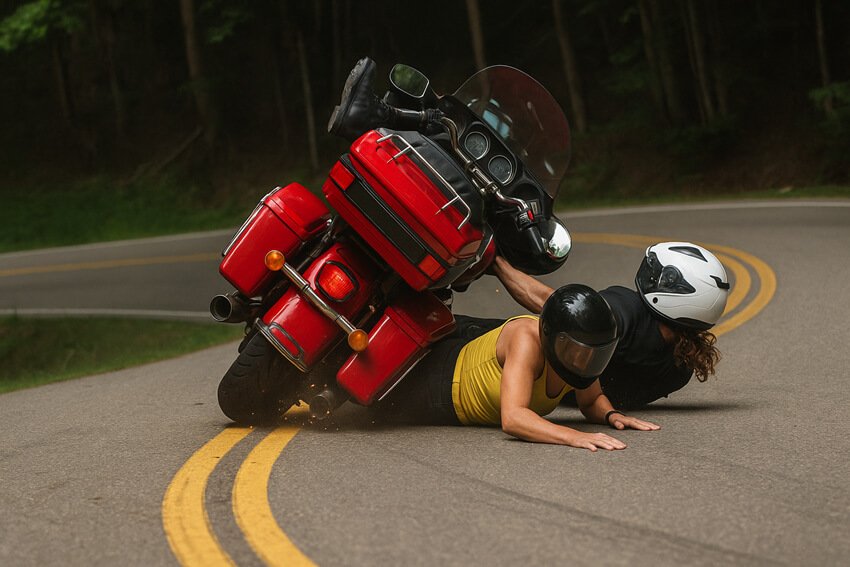
motorcycle loses control on a turn
Use the vanishing point technique.
Look well ahead toward where the road seems to disappear (the “vanishing point”). As you enter a bend, notice how the vanishing point moves:
- If it is coming towards you, the curve is closing in – slow down.
- If it stays at the same distance, the turn is a constant radius – maintain speed.
- If it is approaching you, the road is closing – you can ease up a bit as you get closer.
This visual cue helps you judge the turn’s severity without guessing.
Brake BEFORE the turn, not during.
Avoid heavy braking while leaned over, because tires have limited grip and can slide if you brake mid-turn. Slow down to a safe speed before entering the curve, then roll on the throttle gently through the turn. If you find yourself still too fast, easing off the throttle or gently tapping the rear brake can help – but full brakes during a lean usually cause a loss of traction.
Keep to your lane and don’t cut the apex on unfamiliar roads.
An early turning instinct is to “straighten” the curve, but on an unknown road, this is a recipe for disaster. The inner edge of a curve can be home to incoming traffic, unseen driveways, or road hazards. Instead, choose a safe, predictable line: remain to the outside of your lane on entry (so you can see further into the curve) and go for a smooth arc, leaning into the lane’s center rather than crossing the centerline.
Look where you want to go.
Point your eyes at the far side of the turn. Your bike will naturally go in the direction your eyes point. If you look at a piece of gravel on the side of the road or at a car entering from the outside lane, you will tend to steer towards them. Pointing your eyes down through the turn keeps you on a steady line.
Be particularly careful on new roads.
If you are negotiating a new road for the first time, allow lots of room. Brake sooner before blind curves, anticipate unexpecteds (such as tighter turns or uneven pavement), and assume slow speeds until you have “read” your curve.
With smooth throttle control and an understanding of what you should be seeing, you can negotiate corners safely. Good technique – slow in, fast out – makes you balanced and predictable, minimizing the chance of running wide or losing control.
3. Lack of Proper Riding Gear (Inadequate Protection)
Many riders underestimate how important their gear is. In a crash, good protective clothing can mean the difference between minor bruises and life-changing injuries. Research shows that motorcyclists wearing proper jackets, pants, gloves and boots are significantly less likely to be hospitalized after a crash. For example, a study found that riders with armored jackets were about 20% less likely to be admitted to the hospital after a wreck, and those with armored pants were about 50% less likely. In short, wearing quality gear saves lives and limbs.
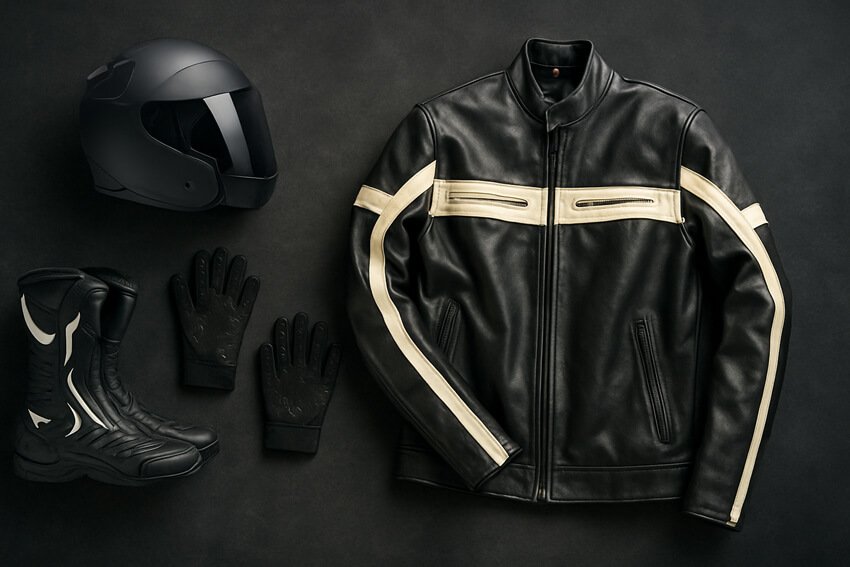
motorcycle riding gear
Invest in high-quality gear.
Ride-ready gear isn’t cheap, but it pays off. As a rule of thumb, allocate at least as much budget to protective gear as you do to the motorcycle itself. This means a top-quality helmet, jacket, pants, gloves, and boots. Make sure jackets and pants have built-in armor (CE-rated protectors on shoulders, elbows, back, hips, knees). A textile or leather suit with armor is far better than casual clothes. Motorcycle boots (at least mid-calf with ankle support) and full gauntlet gloves protect ankles and wrists – injuries common in crashes. The investment can drastically cut medical bills and long-term costs.
Always wear a helmet (and replace it after any crash).
Helmets are the most critical gear. They block lethal head trauma and brain injury. Studies show a helmet reduces a rider’s chance of death by about 37% and cuts head injury risk by about 69%. After any crash—even a minor drop—a helmet should be replaced. Helmets are designed for one impact only; even without visible damage, the integrity of the inner liner can be compromised. Do not ride another day with a helmet that’s been in an accident.
Consider an airbag-equipped suit or vest.
Airbag systems are becoming more popular. These electronic or mechanical suits inflate rapidly in a crash, protecting the neck, spine, chest and sometimes hips. They can greatly reduce injury in high-impact falls. Note that most airbag suits or vests can only inflate a few times (often 3–5 deploys) before needing replacement, so check the manufacturer’s specs. Also, individual inflator cartridges are inexpensive, but replacing a suit can cost around $1,200 or more. Still, for frequent riders or those on fast bikes, an airbag layer adds extra peace of mind.
Check safety certifications.
Gear should meet recognized safety standards. In the U.S., helmets should be DOT or Snell certified; in Europe, look for ECE certification. Gloves and boots should have abrasion-resistant material and armor. Spending a bit more on certified gear is worth it, because uncertified “bargain” gear may fail in a crash.
Use insurance to cover your gear.
Finally, make sure your insurance policy helps replace gear if you crash. Many motorcycle insurers offer an add-on for “protective gear” or “custom parts and equipment.” For example, State Farm includes coverage for your riding gear (helmets, jackets, etc.) up to $3,000 under collision/comprehensive policies. If you have such coverage, keep receipts of your gear, and after a crash you can get reimbursed for repair or replacement.
Riding gear is your mobile safety net. Without it, even a slow-speed slide can result in road rash, broken bones, or worse. By suiting up completely – helmet on head, jacket and pants on body, boots on feet, gloves on hands – you give yourself the best chance to walk away from a fall.
Conclusion
Motorcycling carries inherent risks, but many accidents are preventable.
The three motorcycle dangers above – being struck by left-turning vehicles, losing control on corners, and riding with insufficient gear – account for a large share of serious motorcycle injuries and deaths. By adopting defensive habits (like covering your brake and scanning intersections), refining your riding skills (using visual cues and smooth throttle through turns), and always wearing certified protective gear, you can greatly reduce those risks.
Remember: ride within your limits, stay visible, and never skimp on safety equipment. These steps won’t eliminate all motorcycle dangers, but they stack the odds in your favor and help ensure you arrive home safely after every ride.

Rodney L is a technical writer and product consultant with over a decade of experience in the motor industry. Rodney is a fan of performance machines that run fast and loud and an expert in all things custom. His numerous articles and write-ups are available at our knowledge base. Whether it’s something wrong with your motorcycle or you are building a custom bike, you can trust Rodney’s experience.
You maybe like to read:
Fodsports Brand Month: Unbeatable Deals and Top-Notch Service
Discover Fodsports Brand Month July and August mark a special occasion for motorcycle enthusiasts and tech lovers alike. Welcome to Fodsports Brand Month! This event is dedicated to celebrating everything that makes Fodsports a leading name in the motorcycle communication industry. Get ready for a fantastic promotions, exceptional service from Fodsports. Let's insights into Fodsports' […]
Ultimate Dolomites Autumn Cycling Guide: Best Fall Foliage Routes & Expert Gear Blueprint
The Italian Dolomites in autumn transform into a sensory masterpiece. As the chaotic summer crowds dissipate between mid-September and late October, the entire Alpine region ignites with golden larches, fiery maples, and stark white limestone peaks. This fleeting shoulder season provides the ultimate window for an epic Dolomites cycling tour and foliage chasing. Compared to […]
Route des Grandes Alpes in Fall: France Motorcycle Riding Guide
Few motorcycle routes combine high mountain passes, autumn forests, dramatic valleys, and Mediterranean scenery as well as the Route des Grandes Alpes in France. Stretching about 720 km from Thonon-les-Bains near Lake Geneva to Nice, the route crosses 18 major Alpine passes and reaches 2,764 meters at the Col de l'Iseran. For motorcycle riders, autumn can […]
Talimena Scenic Byway in Fall: Oklahoma and Arkansas Motorcycle Riding Guide
A mountain road, two states, 54 miles of ridgelines, and some of the best late-season color in the South—Talimena Scenic Byway is the kind of motorcycle route that rewards riders who leave room for the scenery. Running from the Mena, Arkansas area to Talihina, Oklahoma, the byway follows the crests of the Ouachita Mountains through forest, […]
Cherohala Skyway Tennessee and North Carolina: Fall Motorcycle Riding Guide
Few motorcycle roads in the Southeast combine elevation, open mountain views, and flowing curves quite like the Cherohala Skyway. Stretching about 43 miles between Tellico Plains, Tennessee, and Robbinsville, North Carolina, the National Scenic Byway climbs from lower valleys to elevations above 5,000 feet before crossing the Appalachian high country. In fall, the ride becomes […]