The motorcycle communication systems field just got a significant upgrade with the release of the Fodsports FX7. This state-of-the-art Bluetooth mesh intercom is packed with many advanced features and techs. It will revolutionize the way riders communicate and enjoy their rides. Whether you're a solo rider or part of a group, the FX7 offers unparalleled […]

How Motorcycle Culture Evolved in America: From Harley-Davidson, Biker Clubs and Easy Rider to Modern Riding
August 27, 2026
Table of Contents
🏍️ The Early Roots of American Motorcycle Culture
Motorcycle culture in the United States has never been only about transportation. From early motorcycle clubs and racing events to cross-country touring, biker communities, rallies, and modern adventure riding, motorcycles have represented freedom, independence, competition, and community.
The story began in the early 20th century, when motorcycles started appearing on American roads and manufacturers such as Harley-Davidson and Indian helped establish a domestic motorcycle industry. Organized riding also developed quickly. In 1903, the Federation of American Motorcyclists was formed to promote motorcycling, touring, motorcycle rights, and better roads. The American Motorcyclist Association (AMA) followed in 1924.
These early organizations helped transform individual motorcycle ownership into a broader American motorcycle culture built around clubs, races, touring, and social events.
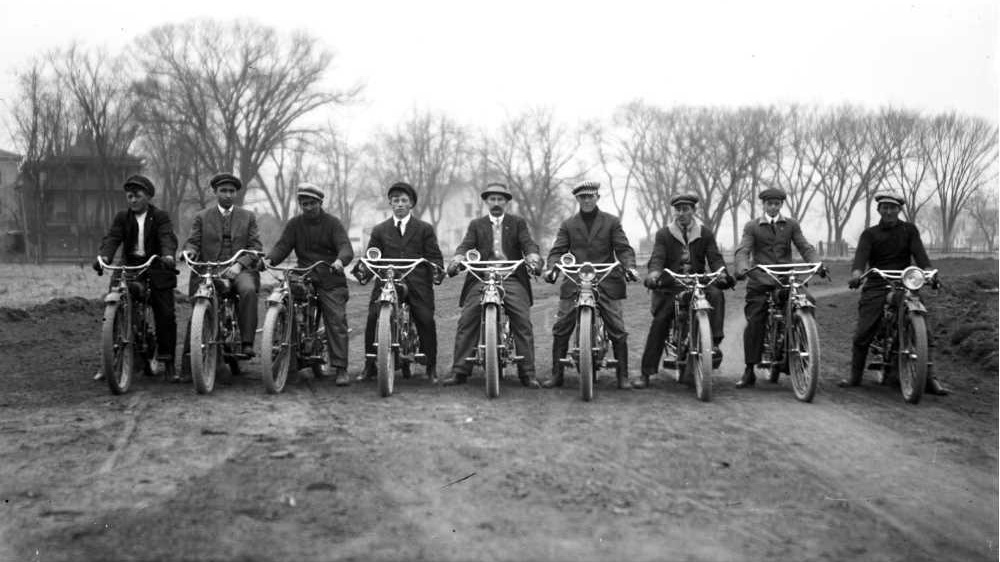
early-american-motorcycle-riders-1910
🏁 Racing, Clubs and the Growth of Motorcycle Communities
Motorcycle Clubs Become Part of American Life
During the 1910s and 1920s, motorcycle clubs became an important part of American riding culture. Clubs organized group rides, competitions, social events, and touring activities.
Early motorcycle organizations also cared about the public image of riders. Motorcycle clubs adopted coordinated clothing and uniforms to create a stronger sense of identity and present themselves as organized and responsible groups.
The AMA's predecessor organizations also supported events such as Gypsy Tours, where riders traveled to scenic destinations for picnics, competitions, and social gatherings. In 1925 alone, more than 200 Gypsy Tours were held around the country.
This tradition remains visible today in motorcycle rallies, organized group rides, charity rides, and touring events.
Racing Shapes Motorcycle Identity
Motorcycle racing also became a major part of American motorcycle culture.
Dirt-track racing, hill climbs, endurance events, and road racing allowed manufacturers and riders to demonstrate performance and reliability. Racing helped create a culture in which motorcycles were viewed not only as transportation but also as machines capable of competition and adventure.
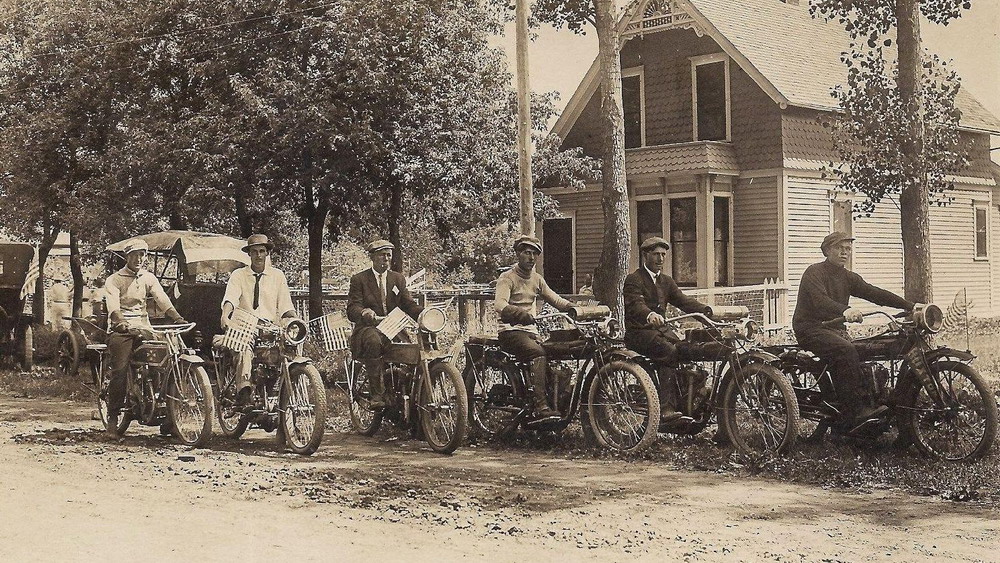
A group of motorcyclists in the early 1900s
🇺🇸 World War II and the Rise of the American Biker
World War II dramatically changed the American motorcycle industry and its rider community.
Harley-Davidson produced military motorcycles such as the WLA for the U.S. armed forces, while Indian also supplied motorcycles to Allied forces. Thousands of servicemen learned motorcycle riding or gained additional experience while serving.
Returning Veterans Change Motorcycle Culture
When World War II ended in 1945, many veterans returned home with mechanical knowledge, riding experience, and a strong interest in motorcycles.
Military motorcycles and surplus machines also became available to civilians. Motorcycle clubs and organized riding experienced a postwar resurgence. The Motor Maids, for example, expanded their activities around rallies, club rides, and motorcycle events during the postwar period.
For many veterans, motorcycles provided affordable transportation as well as a way to reconnect with friends and maintain a sense of independence.
This period helped establish some of the visual and social characteristics that would later become associated with the American biker.
🔥 Hollister and the Birth of the Biker Image
One of the most important moments in motorcycle culture came during the 1947 Hollister Gypsy Tour in California.
Thousands of motorcycle enthusiasts gathered in the small town during the Fourth of July weekend. While most riders were participating in an organized motorcycle event, disorder involving a smaller number of participants received enormous media attention.
From Motorcycle Rider to “Biker”
The media coverage of Hollister helped create a new image of the American biker: leather clothing, powerful motorcycles, rebellious behavior, and resistance to conventional society.
This image was far more complicated than reality. Motorcycle culture already included ordinary enthusiasts, families, racers, touring riders, and organized clubs.
Nevertheless, the Hollister story became a powerful part of American motorcycle mythology.
It also influenced how motorcycle clubs and riders were portrayed in newspapers, magazines, movies, and later television.
🎬 The 1950s and 1960s: Motorcycles Enter Popular Culture
During the 1950s, motorcycles became increasingly visible in American popular culture.
Films such as The Wild One helped reinforce the image of the rebellious motorcycle rider. In the 1960s, motorcycles became increasingly connected with youth culture, counterculture, music, and personal freedom.
Easy Rider and the Open Road
The 1969 film Easy Rider became one of the defining cultural moments for American motorcycles.
The movie connected motorcycles with freedom, individualism, road travel, and questioning social conventions. Its influence went beyond motorcycle enthusiasts and helped make the American motorcycle road trip a recognizable cultural symbol.
At the same time, motorcycle culture was never limited to the outlaw image. Touring riders, racers, commuters, family-oriented clubs, and motorcycle rights organizations continued developing alongside the counterculture movement.
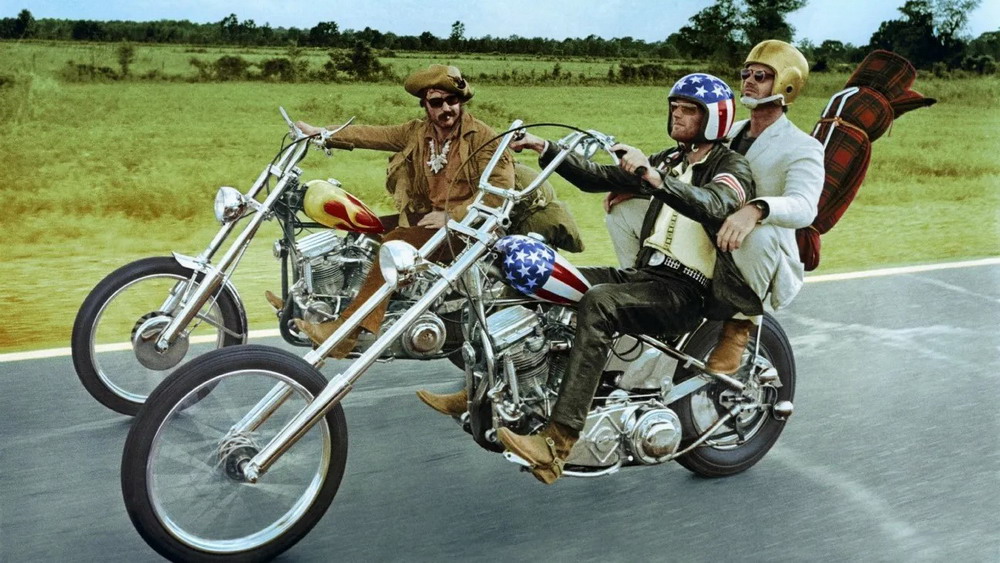
Easy-Rider-Motorcycle-Trip
🏍️ The 1970s and 1980s: A More Diverse Motorcycle Culture
The motorcycle market became significantly more diverse during the 1970s and 1980s.
Japanese manufacturers such as Honda, Yamaha, Kawasaki, and Suzuki introduced motorcycles that competed strongly with American and European brands.
New Motorcycle Styles Attract New Riders
Different motorcycle categories began attracting different communities:
- Cruisers for relaxed road riding
- Sport bikes for performance
- Touring motorcycles for long-distance travel
- Dual-sport motorcycles for mixed surfaces
- Off-road motorcycles for recreational riding
- Standard motorcycles for everyday transportation
This diversification changed American motorcycle culture.
Being a motorcycle enthusiast no longer meant belonging to one particular lifestyle. Riders could choose motorcycles based on performance, touring, commuting, adventure, or personal style.
🛣️ The Rise of Long-Distance Touring
Long-distance motorcycle travel became another defining part of American motorcycle culture.
The country's huge road network provided endless opportunities for cross-country motorcycle trips. Roads such as Route 66, the Pacific Coast Highway, the Blue Ridge Parkway, and numerous mountain routes became popular destinations for motorcycle touring.
Motorcycle rallies also became major cultural events. Riders traveled hundreds or thousands of miles to meet other enthusiasts, display motorcycles, participate in organized rides, and experience the community.
The AMA's road-riding program, formally established in 1976, further supported organized road riding and mileage-based riding activities.
🤝 Motorcycle Culture Becomes More Inclusive
Women and New Rider Communities
American motorcycle culture has gradually become more diverse.
Women have played an important role in organized motorcycling for decades. The Motor Maids, founded in the 1940s, became one of the best-known women's motorcycle organizations in the United States.
Today, motorcycle communities include riders from different generations, professions, backgrounds, and riding styles.
Motorcycle culture has also expanded beyond traditional motorcycle clubs through charity organizations, adventure riding groups, online communities, riding schools, and local meetup groups.
📱 Modern Motorcycle Culture in the Digital Age
The internet has transformed how American riders connect.
Instead of relying entirely on local motorcycle clubs and dealerships, riders can now find routes, maintenance information, riding groups, motorcycle events, product reviews, and technical advice online.
Social media has also created communities around specific motorcycles and riding styles.
Technology Changes the Riding Experience
Modern motorcycle technology has introduced features that previous generations could not have imagined.
Navigation systems, smartphones, action cameras, GPS devices, and Helmet Communication systems have become part of modern motorcycle touring.
A Bluetooth Intercom can allow riders to communicate with passengers or other riders while traveling. Larger riding groups can also use a Motorcycle Intercom system to stay connected during long-distance trips.
Technology has therefore added a new layer to motorcycle culture without eliminating the traditional appeal of riding together.
🏕️ Adventure Riding and the New Motorcycle Lifestyle
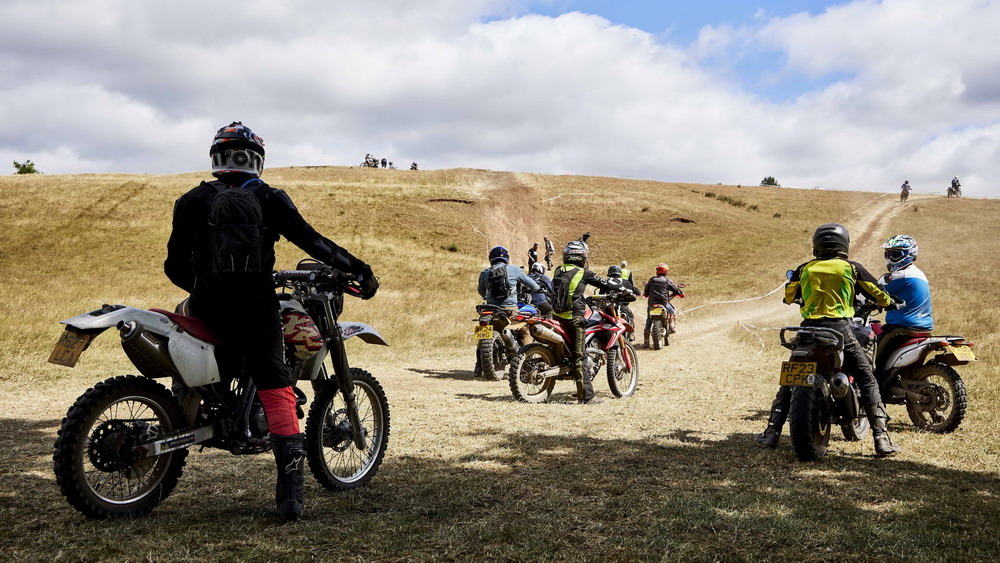
American adventure motorcycle riders camping
Adventure riding has become another important part of modern American motorcycle culture.
ADV riders combine paved-road touring with gravel roads, forest routes, camping, and long-distance exploration.
The attraction is similar to the touring culture of earlier generations: the motorcycle becomes a tool for discovering places rather than simply traveling from one destination to another.
Motorcycle camping, overlanding, scenic road trips, and multi-state adventures have become popular ways for riders to experience the United States.
🇺🇸 What American Motorcycle Culture Means Today
American motorcycle culture has changed dramatically over more than a century.
It began with early motorcycle clubs, racing, touring, and mechanical enthusiasm. It was shaped by World War II veterans, postwar motorcycle clubs, media portrayals, Hollywood, Japanese motorcycle manufacturers, long-distance touring, and the growth of diverse riding communities.
Today, there is no single definition of an American motorcyclist.
A rider might be a daily commuter, weekend cruiser, sport-bike enthusiast, ADV traveler, motorcycle camper, racer, collector, or long-distance touring rider.
What connects these communities is the experience of riding.
❓ Motorcycle Culture in the United States FAQs
When did American motorcycle culture begin?
American motorcycle culture began developing in the early 1900s as motorcycle ownership, clubs, racing, and organized touring expanded. The formation of national rider organizations helped establish a broader motorcycle community.
What happened at Hollister in 1947?
The 1947 Hollister motorcycle gathering attracted thousands of enthusiasts, while disorder involving some participants received extensive media coverage. The event became an important moment in the development of the American biker image.
How did World War II influence motorcycle culture?
Military motorcycle use gave many Americans riding and mechanical experience. Returning veterans also contributed to the postwar growth of motorcycle clubs, riding events, and motorcycle communities.
Did Japanese motorcycles change American motorcycle culture?
Yes. Japanese manufacturers significantly expanded the American motorcycle market during the 1970s and beyond, giving riders more choices in sport, standard, touring, dual-sport, and other motorcycle categories.
What is American motorcycle culture like today?
Modern American motorcycle culture is highly diverse. It includes traditional motorcycle clubs, touring communities, sport-bike riders, ADV enthusiasts, motorcycle campers, racers, collectors, charity riders, and large online communities.
🏁 From Rebellion to Community
The evolution of motorcycle culture in the United States is ultimately a story about change.
Motorcycles have represented transportation, competition, rebellion, freedom, friendship, exploration, and personal identity at different points in American history.
The leather-clad biker image remains part of the country's motorcycle heritage, but modern riders have expanded the culture far beyond that stereotype.
From an early Sunday club ride to a cross-country adventure, the fundamental attraction remains remarkably consistent: the freedom to ride, explore, and connect with other people on two wheels.

Rodney L is a technical writer and product consultant with over a decade of experience in the motor industry. Rodney is a fan of performance machines that run fast and loud and an expert in all things custom. His numerous articles and write-ups are available at our knowledge base. Whether it’s something wrong with your motorcycle or you are building a custom bike, you can trust Rodney’s experience.
You maybe like to read:
Fodsports Brand Month: Unbeatable Deals and Top-Notch Service
Discover Fodsports Brand Month July and August mark a special occasion for motorcycle enthusiasts and tech lovers alike. Welcome to Fodsports Brand Month! This event is dedicated to celebrating everything that makes Fodsports a leading name in the motorcycle communication industry. Get ready for a fantastic promotions, exceptional service from Fodsports. Let's insights into Fodsports' […]
Grossglockner High Alpine Road in Fall: Austria Motorcycle Riding Guide
Autumn transforms Austria’s Grossglockner High Alpine Road into a spectacular mountain destination. Golden larch trees brighten the slopes, crisp Alpine air can reveal dramatic mountain views, and 36 hairpin bends make the journey memorable for motorcycle enthusiasts. Yet autumn also brings unpredictable weather, cold pavement, and possible road closures. For riders planning an Austrian Alps […]
Black Forest High Road Motorcycle Guide: Best Autumn Ride, Scenic Routes and Riding Tips in Germany
Few places in Germany combine flowing mountain roads, colorful forests, traditional villages, and peaceful viewpoints as perfectly as the Black Forest High Road (Schwarzwaldhochstraße B500). In autumn, this legendary route transforms into a spectacular motorcycle destination, with golden beech forests, misty valleys, and panoramic views stretching toward the Rhine Valley and even France on clear […]
Ultimate Dolomites Autumn Cycling Guide: Best Fall Foliage Routes & Expert Gear Blueprint
The Italian Dolomites in autumn transform into a sensory masterpiece. As the chaotic summer crowds dissipate between mid-September and late October, the entire Alpine region ignites with golden larches, fiery maples, and stark white limestone peaks. This fleeting shoulder season provides the ultimate window for an epic Dolomites cycling tour and foliage chasing. Compared to […]
Route des Grandes Alpes in Fall: France Motorcycle Riding Guide
Few motorcycle routes combine high mountain passes, autumn forests, dramatic valleys, and Mediterranean scenery as well as the Route des Grandes Alpes in France. Stretching about 720 km from Thonon-les-Bains near Lake Geneva to Nice, the route crosses 18 major Alpine passes and reaches 2,764 meters at the Col de l'Iseran. For motorcycle riders, autumn can […]