The motorcycle communication systems field just got a significant upgrade with the release of the Fodsports FX7. This state-of-the-art Bluetooth mesh intercom is packed with many advanced features and techs. It will revolutionize the way riders communicate and enjoy their rides. Whether you're a solo rider or part of a group, the FX7 offers unparalleled […]

Top 7 Motorcycle Defensive Riding Tips to Stay Safe on the Road
April 3, 2025

Riding a motorcycle offers unparalleled freedom, but it also demands heightened awareness and proactive safety measures. Defensive riding isn’t just a skill—it’s a mindset. By anticipating risks and prioritizing safety, you can significantly reduce your chances of accidents. Below, we break down the top 7 motorcycle defensive riding tips, combining expert advice, practical strategies, and the latest insights to keep you safe on the road.
Table of Contents
Top 7 Motorcycle Defensive Riding Tips
1. Assume Everyone Is a “Dumbass” (Including You)
The golden rule of defensive riding: never trust other road users. Drivers might fail to check blind spots, run red lights, or make sudden turns without signaling. Even seasoned riders can make mistakes, so adopt a mindset where you expect the unexpected.
- Anticipate Mistakes: Scan intersections, watch for cars pulling out of driveways, and avoid lingering in drivers’ blind spots. As noted in defensive riding guides, "surprises can force a freeze reaction"—staying alert prevents this.
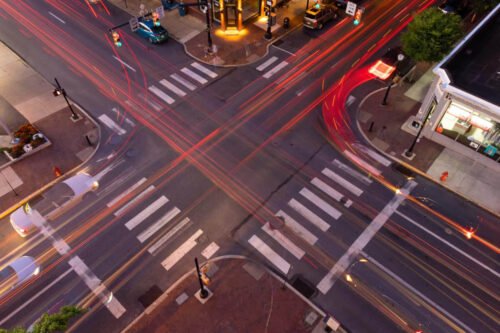
Scan intersections and watch for cars pulling out of driveways
- Own Your Errors: Regularly assess your riding habits. Are you speeding, tailgating, or neglecting signals? Self-awareness keeps you accountable.
- Practice the “What If?” Game: Mentally rehearse responses to scenarios like a car swerving into your lane or a pedestrian stepping onto the road. This builds split-second decision-making skills.
2. Ride on the Left Side of Your Lane

Ride on the left side of your own lane
Lane positioning is critical for visibility and escape routes. While laws vary, staying to the left (in left-driving countries) offers strategic advantages:
- Improved Visibility: Drivers in oncoming lanes or at intersections can see you better. This reduces the risk of left-turn collisions, a leading cause of motorcycle accidents.
- Escape Route Creation: Positioning yourself slightly left creates space to maneuver right if a car drifts into your lane.
- Avoid Road Hazards: The left side often has fewer oil spills, gravel, or debris compared to the center or right.
Exception: On multi-lane highways, adjust based on traffic flow. For example, move right to avoid merging vehicles.
3. Maximize Visibility at All Times
Motorcycles are smaller and harder to spot than cars. Make yourself unmissable:
- Wear High-Vis Gear: Opt for reflective jackets, helmets, or strips. Bright colors like neon yellow or orange stand out in daylight and low light.
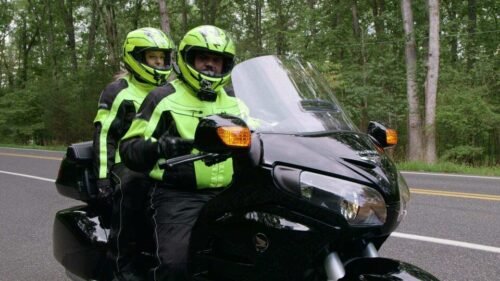
wear high-vis gear to keep visible
- Use Headlights: Even during the day, keep your headlights on. Some riders install auxiliary lights for added visibility.
- Position for Line of Sight: Avoid riding directly behind large vehicles. If a driver can’t see you in their mirror, they won’t know you’re there.
Pro Tip: At night, use your bike’s high beams judiciously and angle them slightly downward to avoid blinding others.
4. Let Angry Drivers Go By
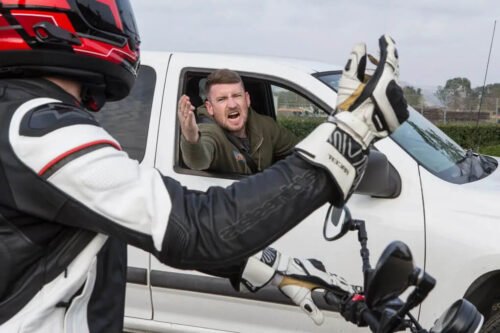
Don't argue with other drivers.
Road rage is a reality, and motorcyclists are especially vulnerable. De-escalate conflicts to stay safe:
- Avoid Eye Contact: Aggressive drivers may interpret this as a challenge. Stay calm and focus on the road.
- Create Space: Slow down or change lanes to let tailgaters pass. A 3–4-second following distance gives you time to react.
- Don’t Engage: Honking or gesturing can escalate tensions. Remember, your goal is to reach your destination safely, not to “win” an argument.
Key Insight: As one safety guide notes, “You can’t control others’ behavior, but you can control your response”.
5. Get Away From Dangerous Situations

Get away from dangerous situations to avoid accidents
When danger arises, act decisively. Common threats include erratic drivers, road debris, or sudden weather changes.
- Escape Routes: Always identify an exit path—e.g., a shoulder, empty lane, or gap in traffic.
- Accelerate or Brake: If a car behind you isn’t stopping, speed up to create space. If an obstacle appears ahead, practice emergency braking: squeeze the front brake progressively while applying light rear brake pressure.
- Swerve Smoothly: For sudden obstacles, push the handlebar in the direction you want to go (counter-steering) and keep your eyes focused on the escape path.
Practice Drill: Set up cones in a parking lot to simulate swerving and braking scenarios. Muscle memory saves lives.
6. Squishables vs. Non-Squishables: Prioritize Risks
This quirky term refers to categorizing hazards:
- Squishables: Pedestrians, cyclists, or animals. Hitting them could cause severe harm to both parties.
- Non-Squishables: Cars, guardrails, or parked vehicles. Collisions here are often fatal for riders.
How to React:
- Avoid Non-Squishables First: Swerve around stationary objects or brake hard. Use techniques like throttle blipping (briefly revving before downshifting) to stabilize the bike during maneuvers.
- Slow for Squishables: Reduce speed near crosswalks or areas with high pedestrian activity.
Case Study: Hitting a pothole (non-squishable) at speed can throw you off balance. Stand on the pegs, shift weight back, and maintain throttle control to glide over it.
7. “Loud Pipes Save Lives”—But Don’t Rely on Them
The debate over loud exhausts rages on. While they may increase auditory awareness, they’re not a substitute for proactive safety:
- Pros: Loud pipes can alert distracted drivers to your presence, especially in blind spots.
- Cons: They often annoy communities and may not be heard by cars with closed windows or loud music.

Use motorcycle horn sparingly
Better Alternatives:
- Use Your Horn Sparingly: A quick beep can warn drivers encroaching on your lane.
- Rev Match: Blip the throttle when filtering through traffic to signal your position.
Expert Verdict: “Visibility and positioning trump noise. Loud pipes are a backup, not a primary strategy”.
Final Thoughts
Defensive riding is about preparation, awareness, and adaptability. By mastering these 7 motorcycle defensive riding tips, you’ll significantly reduce risks. Remember, practice is non-negotiable. Regularly drill emergency stops, swerves, and slow-speed maneuvers to build confidence.
Stay visible, stay calm, and always have an escape plan. As motorcycle safety courses emphasize, “It’s better to arrive late than not at all”.

Motorcycle mechanic, writer. Interested in motorcycle gear for years. Like to stay up to date with the newest products and techniques of the motorcycle.
You maybe like to read:
Fodsports Brand Month: Unbeatable Deals and Top-Notch Service
Discover Fodsports Brand Month July and August mark a special occasion for motorcycle enthusiasts and tech lovers alike. Welcome to Fodsports Brand Month! This event is dedicated to celebrating everything that makes Fodsports a leading name in the motorcycle communication industry. Get ready for a fantastic promotions, exceptional service from Fodsports. Let's insights into Fodsports' […]
Ultimate Dolomites Autumn Cycling Guide: Best Fall Foliage Routes & Expert Gear Blueprint
The Italian Dolomites in autumn transform into a sensory masterpiece. As the chaotic summer crowds dissipate between mid-September and late October, the entire Alpine region ignites with golden larches, fiery maples, and stark white limestone peaks. This fleeting shoulder season provides the ultimate window for an epic Dolomites cycling tour and foliage chasing. Compared to […]
Route des Grandes Alpes in Fall: France Motorcycle Riding Guide
Few motorcycle routes combine high mountain passes, autumn forests, dramatic valleys, and Mediterranean scenery as well as the Route des Grandes Alpes in France. Stretching about 720 km from Thonon-les-Bains near Lake Geneva to Nice, the route crosses 18 major Alpine passes and reaches 2,764 meters at the Col de l'Iseran. For motorcycle riders, autumn can […]
Talimena Scenic Byway in Fall: Oklahoma and Arkansas Motorcycle Riding Guide
A mountain road, two states, 54 miles of ridgelines, and some of the best late-season color in the South—Talimena Scenic Byway is the kind of motorcycle route that rewards riders who leave room for the scenery. Running from the Mena, Arkansas area to Talihina, Oklahoma, the byway follows the crests of the Ouachita Mountains through forest, […]
Cherohala Skyway Tennessee and North Carolina: Fall Motorcycle Riding Guide
Few motorcycle roads in the Southeast combine elevation, open mountain views, and flowing curves quite like the Cherohala Skyway. Stretching about 43 miles between Tellico Plains, Tennessee, and Robbinsville, North Carolina, the National Scenic Byway climbs from lower valleys to elevations above 5,000 feet before crossing the Appalachian high country. In fall, the ride becomes […]