The motorcycle communication systems field just got a significant upgrade with the release of the Fodsports FX7. This state-of-the-art Bluetooth mesh intercom is packed with many advanced features and techs. It will revolutionize the way riders communicate and enjoy their rides. Whether you're a solo rider or part of a group, the FX7 offers unparalleled […]

How to Stay Comfortable on Long Motorcycle Rides (Real Rider’s Guide)
February 20, 2026
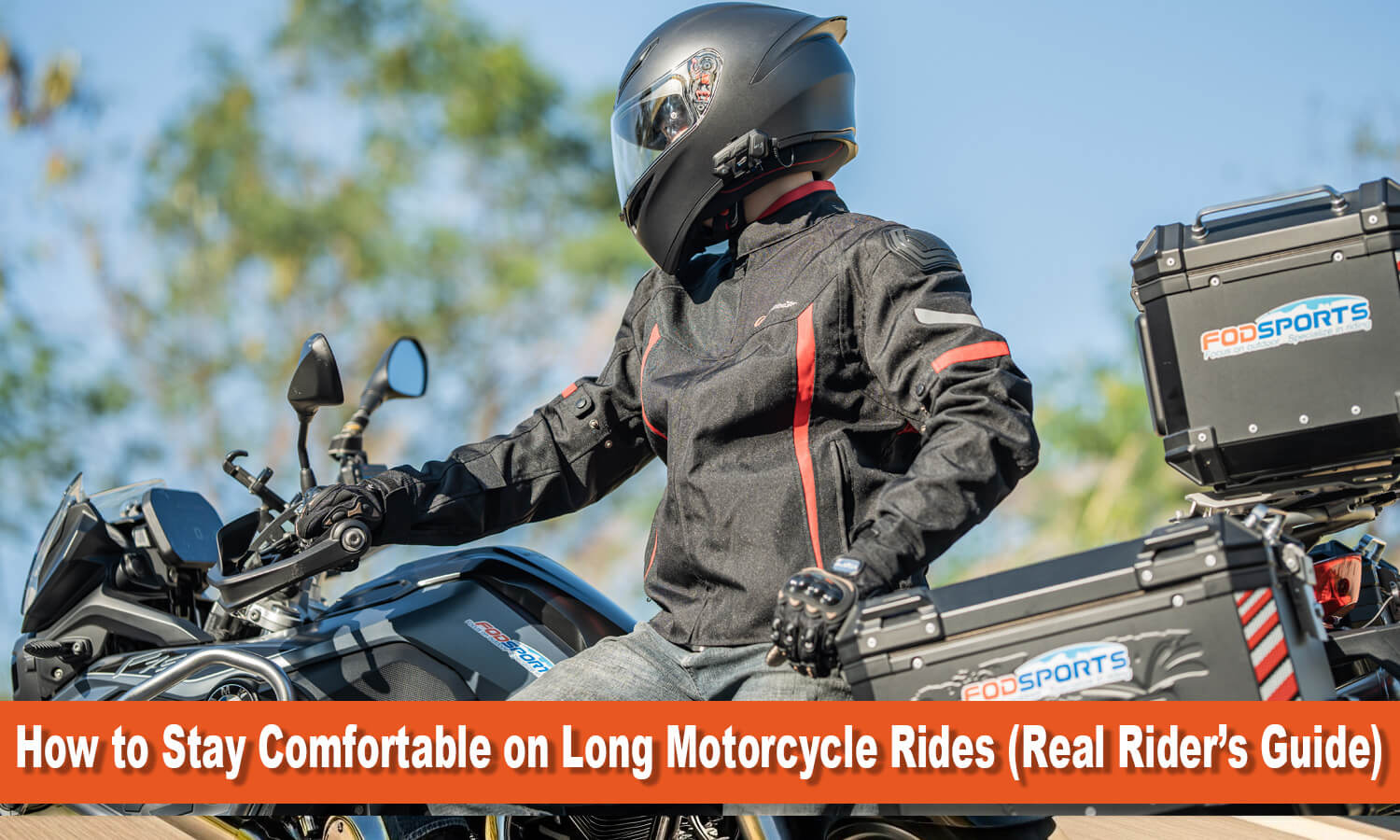
Long motorcycle rides sound romantic. You can enjoy the open roads, endless horizons, and hours of throttle therapy. But how to stay comfortable on long motorcycle rides?
Anyone who’s actually done 300, 500, or 1,000 miles in the saddle knows the truth: comfort is the difference between a great ride and a miserable one.
I’ve done long highway slogs on touring bikes, dusty all-day ADV rides, and slow, relaxed cruiser trips. But, somehow, it still left me sore by sunset. Over time, I learned that comfort isn’t about one magic upgrade. It’s a system—your body, your bike, your gear, and how you ride all working together.
This guide breaks down exactly how to stay comfortable on long motorcycle rides, based on my real-world riding—not theory.
Table of Contents
Why Long Motorcycle Rides Become Uncomfortable
On long motorcycle rides, you’re in a mostly static posture for hours. This strains your back, neck, shoulders and legs, reducing blood flow, increasing pressure on contact points. And eventually, this causes muscle fatigue.
Besides, the constant wind resistance and vibrations from the bike and road are other problems. They make your muscles tense and even numb your hands or feet.
If the motorcycle you ride has poor ergonomics, you will also feel uncomfortable. For example, a seat that puts pressure on your sit bones or awkward handlebar/footpeg positions will add to your discomfort.
Moreover, if you are exposed to the elements and needing constant focus during long distance motorcycle ride, it also tires you physically and mentally.
Usually, after a few hours of long distance ride, I will feel:
- Pressure points build up (seat, hands, feet)
- Blood circulation slows, causing numbness
- Wind and vibration fatigue your muscles
- Mental focus drops, even if you don’t feel “tired”
On a bike, even small ergonomic problems get amplified with time. A slightly forward lean feels fine for 30 minutes—but brutal after 5 hours.
01. Prepare Your Body Before the Ride
Most riders focus on the bike and forget the rider. This is a big mistake.
I prefer to get my body well prepared before the long ride. Here I will share to all riders:
Firstly, do some cardio or core work in advance.
I will do some light cardio or core work in the weeks before a long ride. This aims to build my body's stamina and endurance.
Usually, you may plan to have a long-distance motorcycle rider a few weeks or months before it really starts. So, do some cardio or core work, make sure your body is in a good state.
Don't ignore this! I've tested this several times, and after doing these things, my physical condition during motorcycling was indeed much better than before.
Secondly, do some stretches.
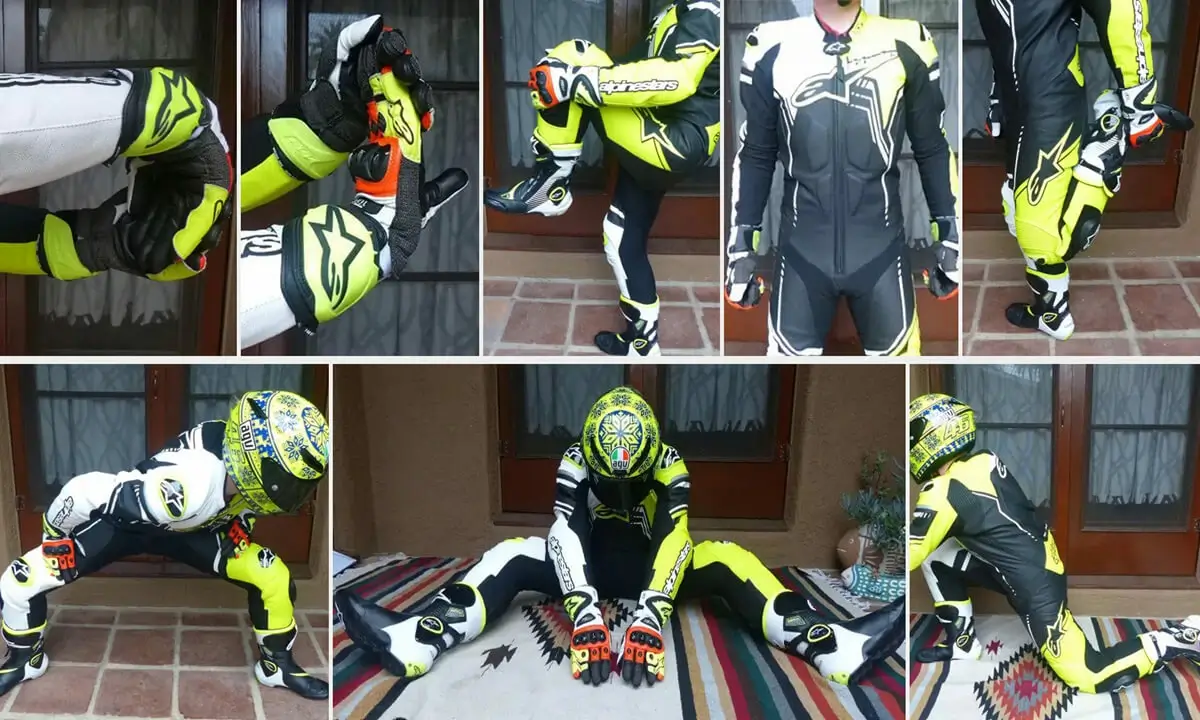
Do some stretches before you start a long ride - Improve Comfort on Long Motorcycle Rides
I will stretch my legs, back, shoulders, and arms before I leave. This aims to warm up my muscles and helps reduce stiffness and fatigue once I’m on the road.
I used to skip stretching. Now I don’t leave without it. With just five to ten minutes of stretching, it makes a noticeable difference by midday.
I usually focus on neck rolls, shoulder shrugs, hip flexor stretches, hamstrings, and wrist circles.
This is especially important for ADV and sport-touring riders, who move around more on the bike.
Thirdly, sleep, hydration, and food
Sleep, hydration, and food are important parts of prepping your body before a big ride.
Usually, I will get a good night’s sleep for several nights leading up to my trip. This helps my muscles recover and keeps my focus sharp on the road.
If it is a hot weather day, I will try to stay well hydrated in the hours before I start riding and sip water often.
And, I will eat a balanced meal before I go. This gives my body steady energy and helps avoid mid-ride crashes or sluggishness.
Here are some tips that are best for me:
- Light breakfast with protein
- Small snacks during fuel stops
- Constant hydration (camelback or tank-bag bottle)
02. Choose Proper Bike: Touring vs ADV vs Cruiser Ergonomics
For long-distance motorcycle rides, ergonomics make a huge difference. Different motorbike styles feel very different on your body.
Here’s a simple comfort comparison table for long rides between Touring, ADV (Adventure), and Cruiser motorcycles
Touring bikes
Touring bikes are built for long days in the saddle. They have an upright, neutral seating position, big comfortable seats, wind protection, and turned suspension. They are designed for smooth cruising, so you stay fresh mile after mile.
Pay attention to the following 2 aspects when riding with touring motorbike:
- Often need bar risers or seat height tweaks
- Wind management is key
ADV bikes
ADV (adventure) bikes also sit you upright with higher handlebars and supportive seats, plus great suspension for varied roads. That upright posture reduces strain on your back and wrists and helps comfort on long rides.
2 details you need to pay attention to if you choose ADV bikes for touring:
- Peg-to-seat distance matters most
- Standing occasionally helps circulation
Cruisers
Cruisers feel relaxed at first with their laid-back feet-forward position. However, over many hours, that posture can load your lower back and limit leg movement. This makes you more tired than a tourer or ADV on extended trips.
Be careful about the following when riding with cruisers:
- Forward controls can cause lower back strain
- Lower seats increase tailbone pressure
Motorcycle Types
03. Pay Attention to Riding Position: Small Adjustments, Huge Comfort Gains

Standard Riding Position
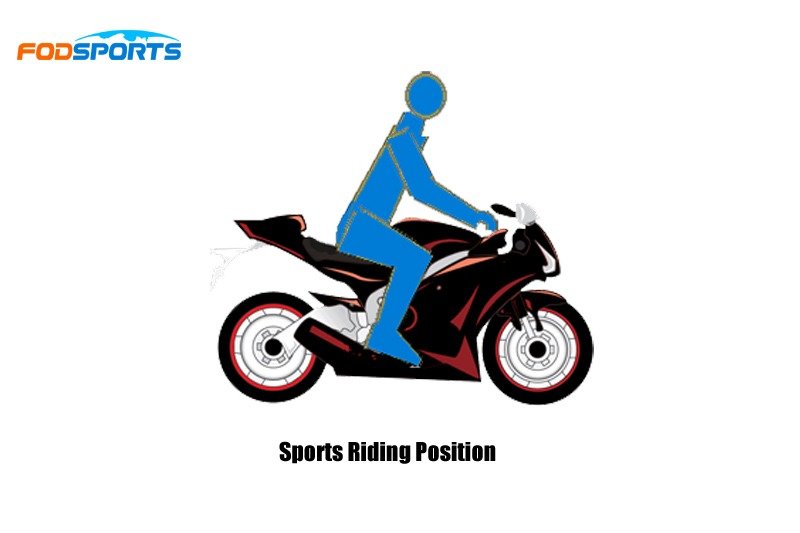
Sports motorcycle Riding Position
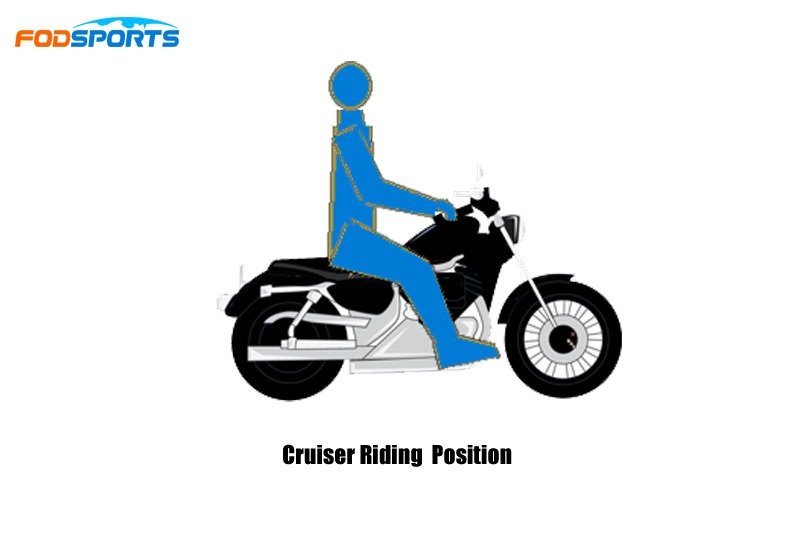
Cruiser Riding Position
A comfortable motorcycle riding position keeps your spine neutral, elbows slightly bent, wrists straight, and knees relaxed—not locked.
Neutral Riding Posture Explained
When things feel wrong, look for these signs:
- Wrist pain → bars too low or too far
- Knee pain → pegs too high
- Lower back pain → seat shape or reach problem
- Neck strain → too much wind pressure
On long rides, I consciously check my posture every 30–45 minutes. A quick reset helps more than you’d think.
More about Riding Position
04. Improve Seat Comfort: The #1 Pain Point on Long Rides
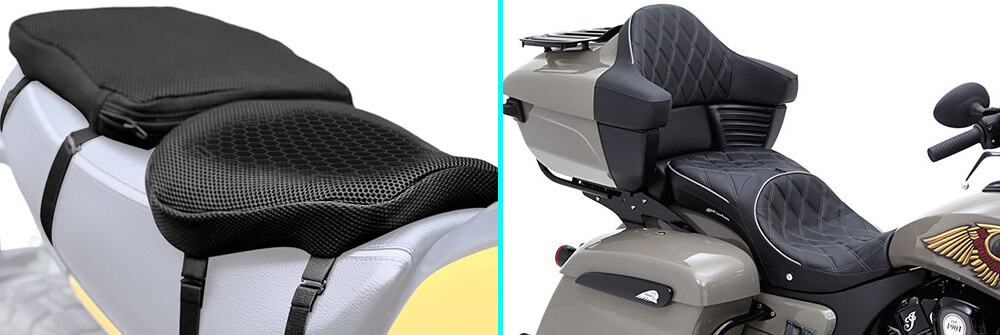
improve seat comfort to stay comfortable on long motorcycle rides
Seat comfort is the #1 pain point on long rides. The fastest way to make your trips more enjoyable is to improve your motorcycle seat comfort.
Stock Seats vs Aftermarket Seats
Stock seats are designed for cost, looks, and short test rides. They are not designed for 8-hour days.
Comfort is not the first thing the factory seat considers. They often concentrate pressure on your tailbone and sit bones, causing numbness and soreness after a couple of hours in the saddle.
Aftermarket seats or gel/foam upgrades spread your weight more evenly, reduce pressure points, absorb road vibration, and let you ride longer with less fatigue.
Here are some popular aftermarket seat options riders swear by:
- Sargent – balanced comfort for touring
- Corbin – firm but supportive for long days
- Seat Concepts – excellent for ADV bikes
- Mustang – cruiser comfort king
I resisted buying a seat for years. Once I did, I wondered why I waited.
Seat Pads and Cushions (Budget Fix)
If a new seat isn’t in the budget, then you can consider air cushions, gel pads, or sheepskin covers.
They’re not perfect—but they can extend comfort by 1–2 extra hours.
More Motorcycle Seat Comfort Tips
05. Reduce Wind, Vibration, and Fatigue
Wind Protection Matters More Than Speed
Constant wind pressure will slowly drain your energy. And this will sneak up on you during long highway miles.
A good windshield or fairing can redirect the air over and around you so your chest and head don’t take the full blast.
Once there is a long-distance motorcycle ride, I will install the windshield on my motorbike.
Believe me or not, this truly reduces the muscle fatigue in my neck, shoulders and arms. It also helps cut the wind noise and buffeting that wears me down over hours in the saddle.
So even if you’re not going faster, better wind protection keeps you more comfortable and less tired on long rides.
Here, I will give you a brief recommendation about reducing wind for different motor types:
Touring riders: Adjustable windscreens are worth it
ADV riders: Look for turbulence reduction, not total block
Cruiser riders: Even a small screen helps more than you expect
Vibration Control
Buzzing feeling through the bars is usually what makes your hands go numb — not how hard you’re gripping. Motorcycle engine and road vibrations travel straight through the handlebars into your hands and can irritate nerves and reduce blood flow. These will lead to numbness, tingling, and fatigue on long rides.
To improve comfort, I have several simple but useful tips. You can use vibration-damping grips (such as foam or rubber grips), padded gloves, bar-end weights, and make sure your suspension is set up right. Besides, properly balanced tires are also useful.
Earplugs = Less Fatigue
This one may surprise new riders, because they may ignore this.
But I still want to recommend it as a good option because wind noise causes mental fatigue.
Earplugs don’t block important sounds—but they reduce exhaustion dramatically.
06. Choose Gear That Keep You Comfortable for Hours
Helmet Comfort Is Everything
A helmet that feels “okay” for 20 minutes may be torture at hour four.
When I'm about to embark on a long-distance cycling trip, I choose a helmet that fits properly, with the main goal being a snug but not tight fit.
This type of helmet prevents pressure points and discomfort around my head and cheeks.
In addition, high-quality padding and moisture-wicking lining are also factors I consider. They help reduce sweat, heat, and irritation during long rides.
Another detail I consider is the helmet's weight; a lighter helmet reduces strain on my neck during extended rides.
Furthermore, a good ventilation system keeps my head cool, minimizing fatigue. Better sealing and a snug fit also reduce wind noise and buffeting, allowing me to stay energized during long rides.
In general, long distance motorcycle riders should look for helmets with:
- Proper fit (no pressure points)
- Good ventilation
- Lightweight shell
Touring riders benefit most from:
- Modular helmets
- Internal sun visors
Jackets, Pants, and Temperature Control
Comfort isn’t about armor alone—it’s airflow.
What works on long rides:
- Layering systems
- Zip-open vents
- Moisture-wicking base layers
ADV riders especially benefit from adjustable venting, since conditions change constantly.
Equip Touring Motorcycle Intercoms for Your Next Long Ride
07. Keep Smart Riding Habits on Long Trips

Keep smart riding habits to stay comfortable during long-distance motorcycle ride
Most experienced riders stop every 60–90 minutes on long motorcycle rides to stretch, hydrate, and reset focus.
How Often Should You Stop?
My personal rule:
- Fuel stop = body stop
- Stretch every stop, even if you feel fine
Ignoring early discomfort always backfires later.
Micro-Movements While Riding
While riding:
- Shift on the seat
- Stretch one leg at a time
- Loosen grip occasionally
ADV riders have an advantage here—stand up when safe. It restores circulation instantly.
More Detailed about Riding Habits
08. Comfort Tips by Ride Length
2–3 Hour Rides
- Focus on posture
- Minimal gear changes needed
Full-Day Rides (300–500 miles)
- Seat comfort matters
- Hydration is critical
- Wind protection becomes essential
Multi-Day Touring
- Recovery matters as much as riding
- Good sleep setup (hotel or camping)
- Stretching morning and night
This is where touring bikes truly shine—but any bike can do it with the right setup.
Common Long-Ride Discomforts (and Fixes)
Numb Hands
- Reduce vibration
- Relax grip
- Adjust bar position
Sore Butt
- Seat upgrade
- Seat pad
- Stand or shift often
Knee Pain
- Lower pegs
- Stretch at stops
Neck Pain
- Better wind management
- Helmet fit check
Frequently Asked Questions (FAQ)
How often should you take breaks on a long motorcycle ride?
Most riders stop every 60–90 minutes to stretch, hydrate, and reset focus. Short, regular breaks prevent fatigue better than long, infrequent stops.
What causes saddle soreness on motorcycles?
Saddle soreness comes from pressure points, poor blood circulation, and seat shape. Stock seats are a common cause on long rides.
Is a touring seat worth it?
Yes. For riders who regularly ride more than 3–4 hours, a quality aftermarket seat is one of the most effective comfort upgrades.
How do you avoid numb hands while riding?
Reduce vibration, keep wrists neutral, relax your grip, and adjust handlebar position if needed.
What is the most comfortable motorcycle for long rides?
Touring motorcycles are designed for long-distance comfort, but ADV and cruiser bikes can be just as comfortable with proper setup and gear.
Final Thoughts: Stay Comfortable on Long Motorcycle Rides
After years of long rides, here’s the biggest lesson I’ve learned:
No single upgrade fixes everything.
Comfort comes from:
- A prepared body
- A properly set-up bike
- Smart gear choices
- Good riding habits
Get those right, and long motorcycle rides stop being something you “endure”—they become something you look forward to.
Related Reading

Motorcycle mechanic, writer. Interested in motorcycle gear for years. Like to stay up to date with the newest products and techniques of the motorcycle.
You maybe like to read:
Fodsports Brand Month: Unbeatable Deals and Top-Notch Service
Discover Fodsports Brand Month July and August mark a special occasion for motorcycle enthusiasts and tech lovers alike. Welcome to Fodsports Brand Month! This event is dedicated to celebrating everything that makes Fodsports a leading name in the motorcycle communication industry. Get ready for a fantastic promotions, exceptional service from Fodsports. Let's insights into Fodsports' […]
Grossglockner High Alpine Road in Fall: Austria Motorcycle Riding Guide
Autumn transforms Austria’s Grossglockner High Alpine Road into a spectacular mountain destination. Golden larch trees brighten the slopes, crisp Alpine air can reveal dramatic mountain views, and 36 hairpin bends make the journey memorable for motorcycle enthusiasts. Yet autumn also brings unpredictable weather, cold pavement, and possible road closures. For riders planning an Austrian Alps […]
Black Forest High Road Motorcycle Guide: Best Autumn Ride, Scenic Routes and Riding Tips in Germany
Few places in Germany combine flowing mountain roads, colorful forests, traditional villages, and peaceful viewpoints as perfectly as the Black Forest High Road (Schwarzwaldhochstraße B500). In autumn, this legendary route transforms into a spectacular motorcycle destination, with golden beech forests, misty valleys, and panoramic views stretching toward the Rhine Valley and even France on clear […]
Ultimate Dolomites Autumn Cycling Guide: Best Fall Foliage Routes & Expert Gear Blueprint
The Italian Dolomites in autumn transform into a sensory masterpiece. As the chaotic summer crowds dissipate between mid-September and late October, the entire Alpine region ignites with golden larches, fiery maples, and stark white limestone peaks. This fleeting shoulder season provides the ultimate window for an epic Dolomites cycling tour and foliage chasing. Compared to […]
Route des Grandes Alpes in Fall: France Motorcycle Riding Guide
Few motorcycle routes combine high mountain passes, autumn forests, dramatic valleys, and Mediterranean scenery as well as the Route des Grandes Alpes in France. Stretching about 720 km from Thonon-les-Bains near Lake Geneva to Nice, the route crosses 18 major Alpine passes and reaches 2,764 meters at the Col de l'Iseran. For motorcycle riders, autumn can […]